
Table of Contents
- It is the most common question every new player asks:
- What Should I Look for in a Guitar Tuner?
- Why Do Some Tuners Work Better Than Others?
- What Is the Difference Between a Strobe Tuner and a Digital Tuner?
- Pedals vs. Clip-Ons vs. Phone Apps: Which is Best?
- How Do I Tune My Guitar Using These Tools?
- Our Top Recommended Tuners at The Acoustic Shoppe
- Why Does Professional Setup Help Tuning Stability?
- Frequently Asked Questions about Tuning Your Guitar
- Acoustic Shoppe FAQ
It is the most common question every new player asks:
"How Do I Tune My Guitar"?
At The Acoustic Shoppe, we believe that understanding how to pitch your instrument is the single most important skill you can learn after your first three chords. An out-of-tune guitar doesn't just sound bad—it can actually discourage you from practicing. Whether you are playing a budget-friendly Eastman PCH-D or a world-class Martin D-28, keeping those six strings in harmony is essential for your musical growth. In this guide, we will break down the different types of tuners, what to look for when buying one, and the step-by-step process to get your guitar sounding perfect.
What Should I Look for in a Guitar Tuner?
Why Do Some Tuners Work Better Than Others?
Not all tuners are created equal. The difference usually comes down to the sensor and the processing power.
Microphone-based tuners (like phone apps) "listen" to the air. They are great for convenience but struggle in noisy environments.
Vibration-based tuners (like clip-ons) "feel" the guitar. They pick up the vibrations directly from the wood of the headstock, making them much more reliable when other people are talking or playing nearby.
High-end processors can detect the pitch faster and with less "flicker," giving you a stable reading that doesn't jump around.
What Is the Difference Between a Strobe Tuner and a Digital Tuner?
If you’ve browsed our shop, you’ve likely seen the term "Strobe Tuner." But what does it mean?
Digital (Needle) Tuners: Most standard tuners use a digital needle. When the needle is in the middle, you are "close enough." They are easy to read but often have a margin of error of +/- 1 to 3 cents.
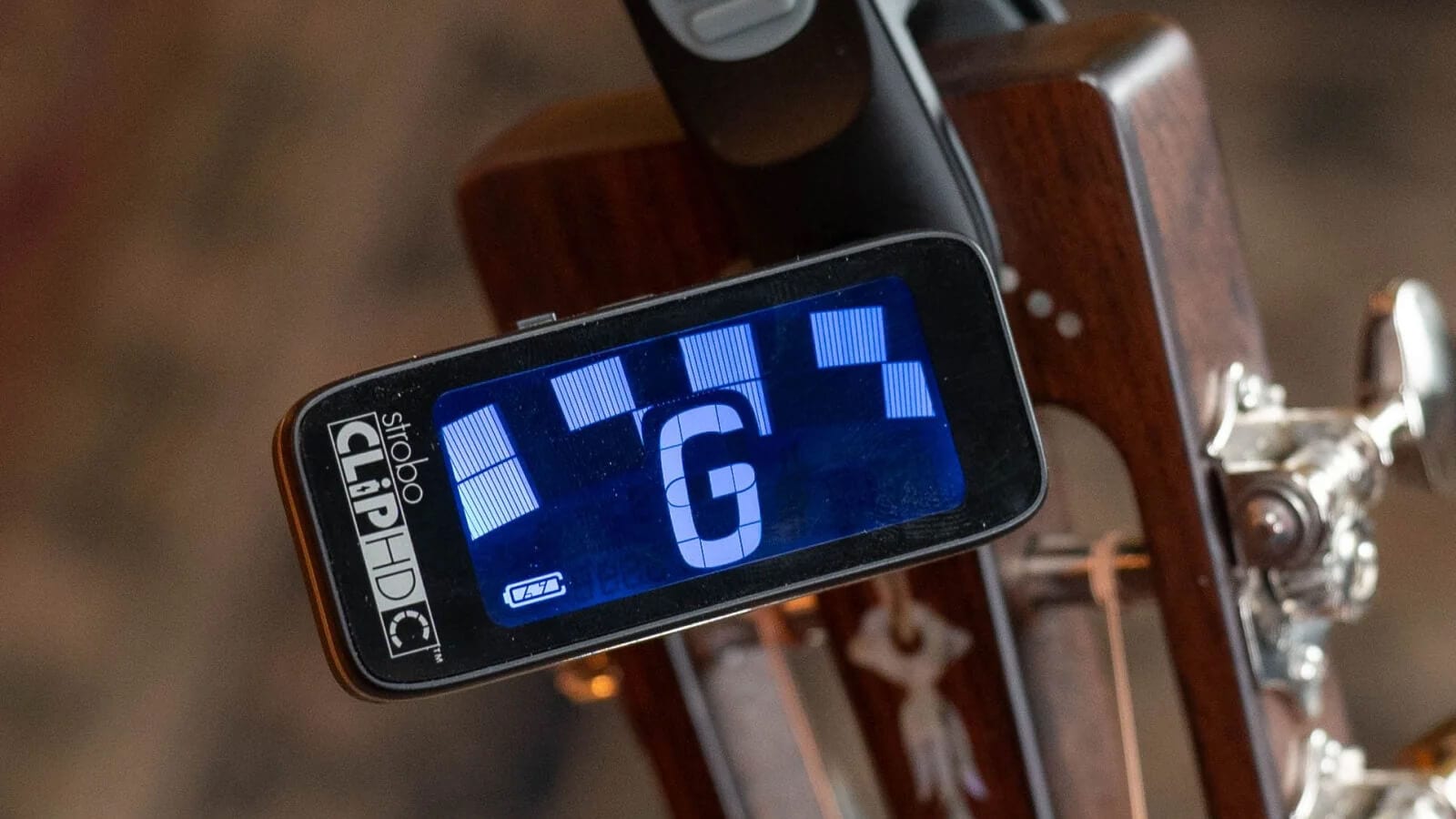
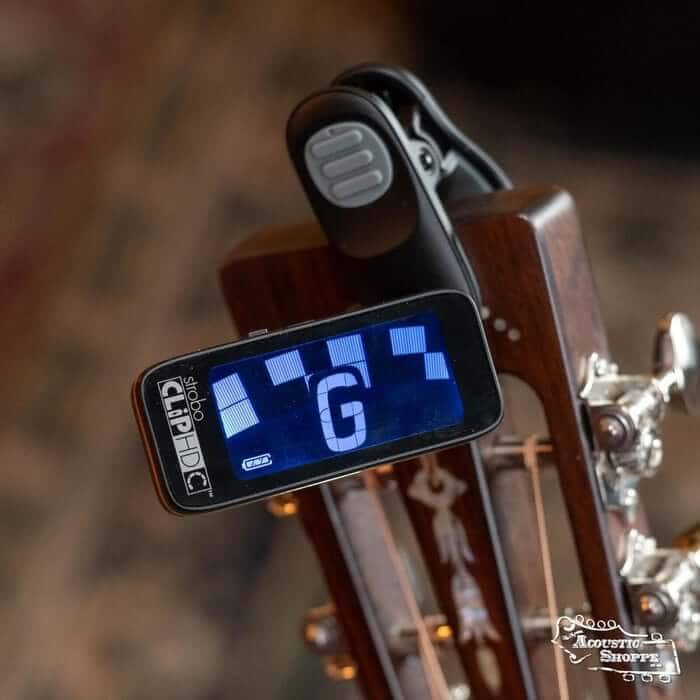
Strobe Tuners: A strobe tuner, like the Peterson StroboClip HDC High-Definition Color Rechargeable Clip-On Tuner, uses a rotating display. It is significantly more accurate, often down to 0.1 cents. Instead of a needle that settles, the strobe pattern only stops moving when the pitch is 100% perfect. This is the gold standard for setting intonation or recording in a studio.
Pedals vs. Clip-Ons vs. Phone Apps: Which is Best?
Each type of tuner has a specific home in a musician’s workflow. Use the table below to see which fits your needs:
| Tuner Type | Best For | Pros | Cons |
| Phone App | Beginners / Quick Checks | Always in your pocket; Free | Inaccurate in loud rooms |
| Clip-On | Acoustic Players | Convenient; Picks up vibrations | Can be lost easily |
| Pedal Tuner | Performing Musicians | Extremely durable; Mutes signal | Requires cables & power |
How Do I Tune My Guitar Using These Tools?
Regardless of the device you choose, the process for how do I tune my guitar remains the same:
Identify the String: Start with the 6th string (the thickest one).
Pluck and Observe: Pluck the string firmly. Look at your tuner.
Adjust the Peg: If the tuner says the note is "Flat," tighten the string. If it is "Sharp," loosen it.
Tune Upward: Always finish your tuning by tightening the string into the note to ensure it stays locked in the nut slot.
Our Top Recommended Tuners at The Acoustic Shoppe
If you are ready to move past basic phone apps and want the best for your instrument, these are our top-selling, staff-verified recommendations:
Peterson StroboClip HDC High-Definition Color Rechargeable Clip-On Tuner: The ultimate in accuracy. The high-def color screen makes strobe tuning easier than ever.
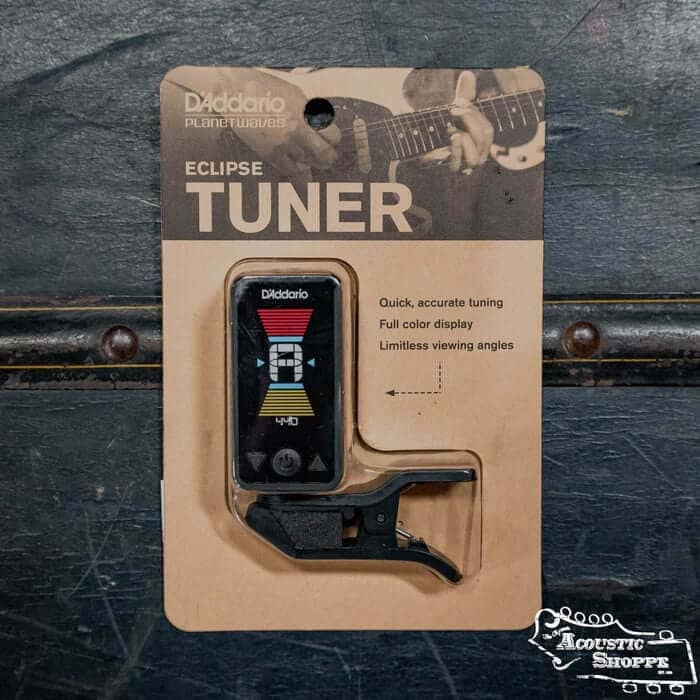
D'Addario Eclipse Headstock Tuner: Affordable, fast, and accurate. The go-to choice for a reliable everyday tuner.
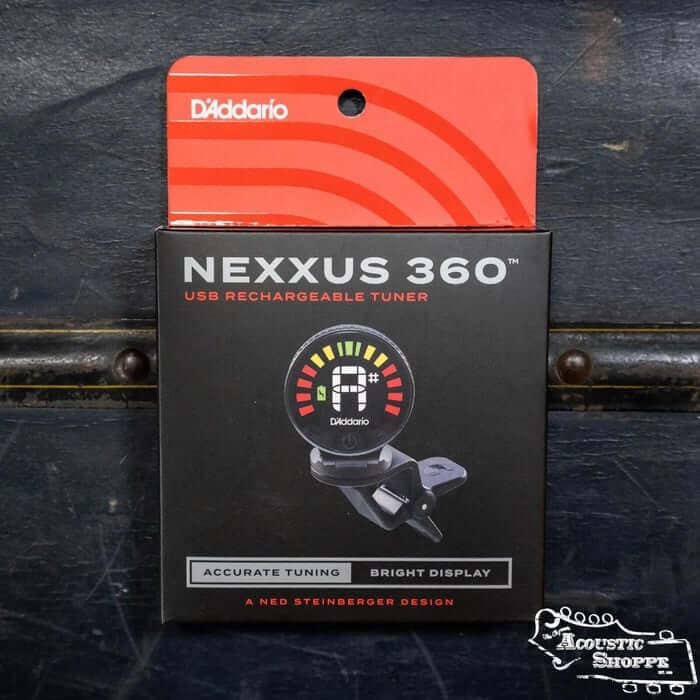
D'Addario Nexxus 360 Rechargeable Tuner: No more batteries! This rechargeable unit offers a 360-degree rotating screen for the perfect viewing angle.
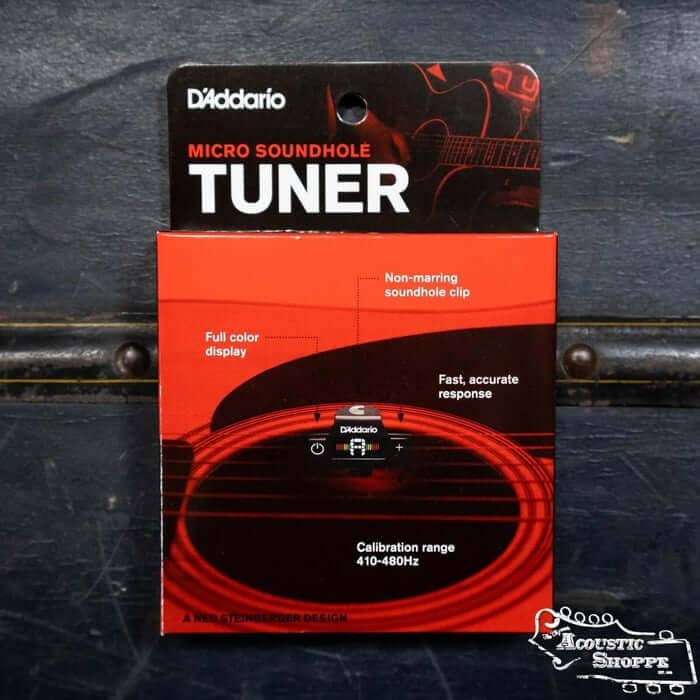
D'Addario PW-CT-15 Micro Soundhole Tuner: Designed specifically for acoustics, this hides inside your soundhole for a completely discreet look.
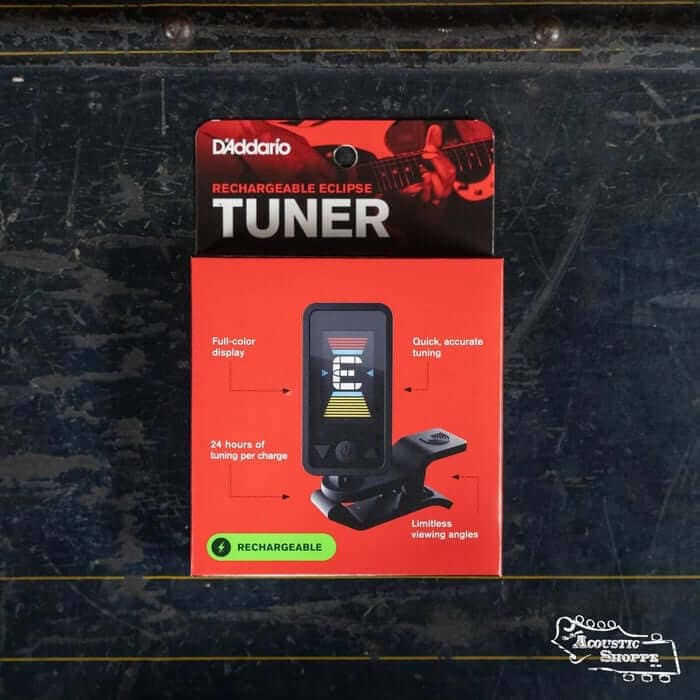
D'Addario Eclipse Rechargeable Tuner: All the speed of the Eclipse series with the modern convenience of USB charging.
Why Does Professional Setup Help Tuning Stability?
Sometimes the answer to "how do I tune my guitar" isn't about the tuner—it's about the guitar itself. If your strings are sticking in the nut or the bridge saddle is too high, the guitar will never stay in pitch. That is why every instrument from The Acoustic Shoppe undergoes a 23-Point Professional Inspection. We ensure the mechanical parts of your guitar are working in harmony with your tuner.
Frequently Asked Questions about Tuning Your Guitar
How often should I tune my guitar?
You should check your tuning every single time you pick up the instrument. Temperature and humidity changes can cause wood to move, shifting your pitch even if the guitar has just been sitting in its case.
Why does my guitar sound out of tune even when the tuner says it's right?
This is often an "intonation" issue. It means the guitar is in tune on the open strings but goes out of tune as you move up the neck. This is a sign that you need a professional setup.
Ready to stop wondering "how do I tune my guitar" and start playing? Explore our full collection of high-accuracy tuners and find the perfect partner for your acoustic journey.
Acoustic Shoppe FAQ
How do I tune my guitar for the first time without breaking a string?
The key is to make small, slow adjustments to the tuning pegs. Always look at your tuner while turning the peg and ensure you are turning the correct one for the string you are plucking. If the tension feels unusually tight but the tuner says you are still "flat," double-check that you aren't an octave too high.
Why does my guitar sound out of tune even when the tuner says it is correct?
This is usually an issue of "intonation." If your guitar is in tune on open strings but sounds "sour" when playing chords higher up the neck, your bridge or saddle may need adjustment. This is a standard part of our 23-Point Professional Inspection at The Acoustic Shoppe.
Is a strobe tuner worth the extra money for a beginner?
Yes. While a standard digital tuner is great for getting close, a strobe tuner like the Peterson StroboClip HDC is ten times more accurate. Using a high-accuracy tuner helps train your ears to recognize perfect pitch much faster than a standard tuner would.
How do I tune my guitar if I'm in a noisy room?
In noisy environments, phone apps and microphone tuners struggle. You should use a clip-on vibration tuner, such as the D'Addario Eclipse. These tuners ignore background noise and "read" the pitch directly from the vibrations of the wood.
What is the difference between a chromatic tuner and a guitar tuner?
A standard guitar tuner only recognizes the notes E-A-D-G-B-E. A chromatic tuner recognizes all 12 notes of the musical scale. We always recommend chromatic tuners because they allow you to explore alternate tunings and can be used for other instruments like mandolins or banjos.
Do I need to buy batteries for my tuner?
Many modern tuners, like the D'Addario Nexxus 360, are now rechargeable via USB. This is highly recommended as it eliminates the need for expensive button-cell batteries and ensures your tuner is always ready for a session.
Why do my strings "ping" or jump in pitch while I'm tuning?
That "pinging" sound means the string is getting caught in the nut slot. This causes the string to jump in pitch suddenly rather than moving smoothly. A professional luthier can widen or lubricate the slots to ensure smooth, stable tuning.
Can I leave my clip-on tuner on the headstock all the time?
While convenient, it is best to remove clip-on tuners when you aren't playing, especially on guitars with nitrocellulose finishes. Long-term contact with the rubber pads can occasionally mark the finish of high-end instruments.
How do I tune my guitar to "Drop D"?
Drop D is achieved by lowering only the 6th string (the thickest one) from an E down to a D. A chromatic tuner makes this easy by showing you exactly when you’ve hit that lower D note.
How often should I replace my strings to help with tuning?
If you play daily, you should change your strings often. Old strings lose their elasticity and become "dead," making them physically impossible to tune accurately, even with the best equipment.