
Table of Contents
- A bearclaw top and the new amber tone burst
- Why only the Bluegrass Goose gets torrefied mahogany
- Ultimate pack: Macassar ebony, quilted maple and koa
- Torrefied vs. non-torrefied: which one you want
- Grand Reserves, bubinga and the SG-51MV
- Studio Goose vs. Bluegrass Goose: the difference you feel first
- 12-fret triple-Os and the favorite guitar of the show
- What to buy now, and which new Boucher guitars to order
- Acoustic Shoppe FAQ
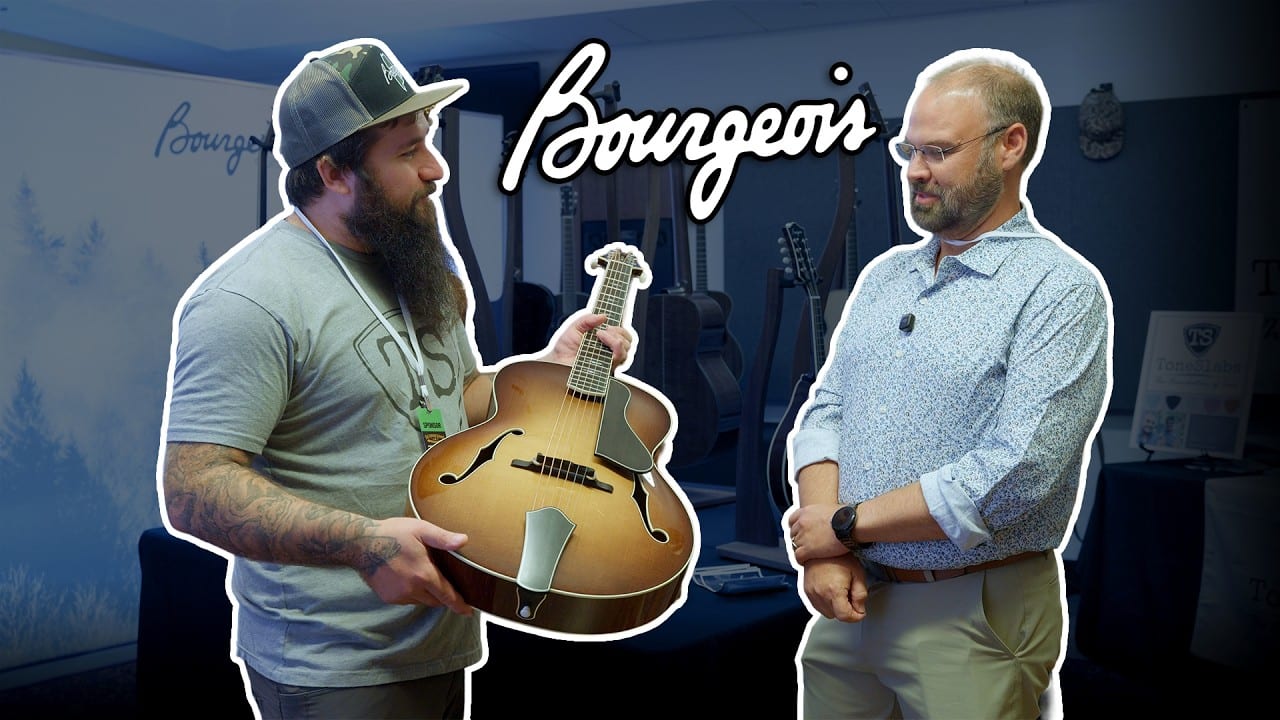
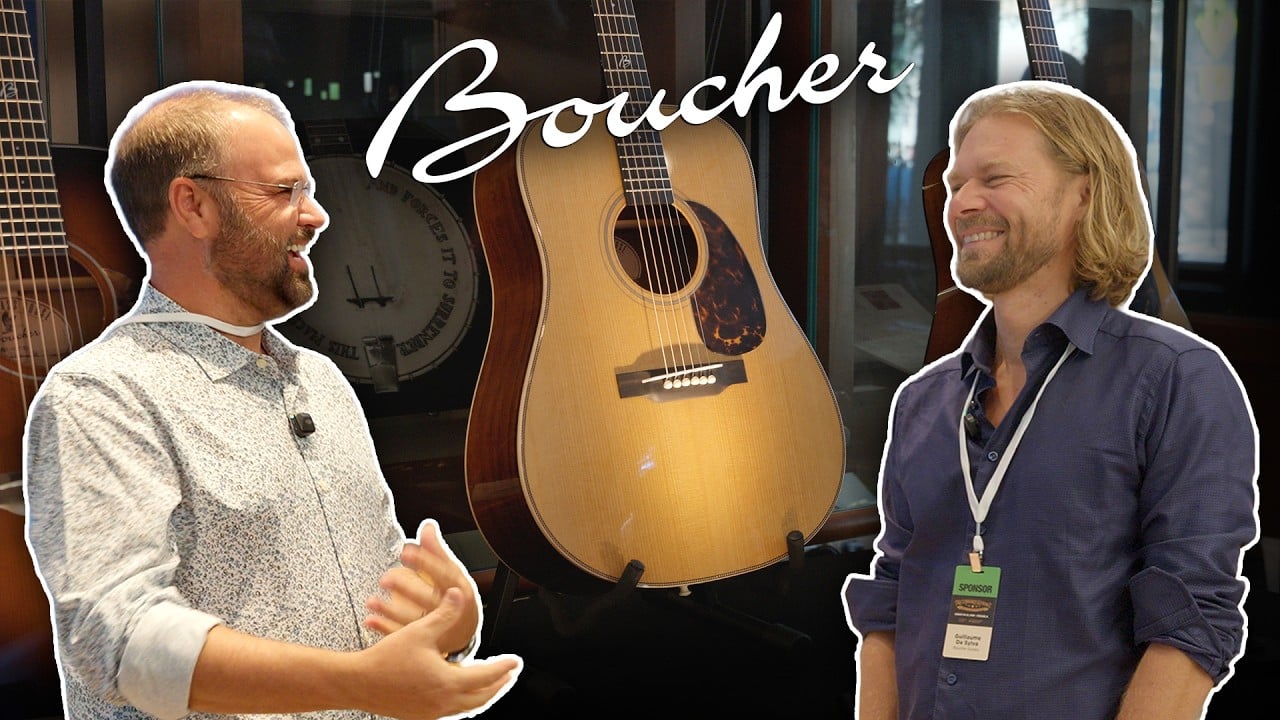
The rarest top among the new Boucher guitars at Fretboard Summit 2026 was a bearclaw red spruce top on a Brazilian rosewood BG-252, and Boucher has a letter for it: X. John spent the afternoon with Guillaume from Boucher going through that guitar, an Ultimate pack in Macassar ebony, a quilted maple build from a stash of 15 sets, the Grand Reserves and a 24.5-inch-scale parlor that ended up as the favorite guitar of the show. We've marked the Boucher guitars you can buy from us today, and the ones you'd order.
A bearclaw top and the new amber tone burst
The first guitar on the table was another BG-252, Boucher's Brazilian rosewood Bluegrass Goose, with the X designation. Guillaume told us Boucher doesn't talk about the X very often, because there are so few of them. The X is a bearclaw-figured, torrefied red spruce top. Red spruce is already scarce, the grade Boucher uses is scarcer, and a bearclaw set in that grade is the rarest of the lot. If you want the full story on the regular 252, our BG-252 review from NAMM 2026 covers it.
The other news on the visual side is the burst. Boucher calls it an amber tone, and Guillaume said it's now going on almost every one of the new Boucher guitars, from the ACGs to the BGs. He thinks it looks classiest on the BG-41T and BG-42T, where black-and-white multi-ply purfling meets the burst. Boucher's darker grain filler ties the burst to the dark mahogany sides.
Timestamps for the new Boucher guitars: torrefied mahogany at 2:18, the Ultimate pack at 3:33, torrefied vs. non-torrefied at 6:40, Studio Goose vs. Bluegrass Goose at 14:52, and the parlor at 19:09.
Why only the Bluegrass Goose gets torrefied mahogany
John made the point for anyone new to Boucher: Boucher is the only company he knows of that builds with torrefied mahogany as a standard spec, and the BG-42T is where you find it. Guillaume explained why Boucher keeps it to the Bluegrass Goose line. Torrefied mahogany is hard to bend, not every builder can do it, and the risk of cracking a set is high. To manage that, Boucher limits it to one series. That's also the series where it does what they want: it takes away some of the overtones, which is the sound the new BGs were voiced for.
"I'm a huge, huge fan of the 42Ts. I think they're absolutely fantastic." — John Chapman
That's the guitar we keep on the wall. Our Boucher BG-42T-G #1082 is a torrefied Adirondack top over torrefied mahogany with the Gold pack, $6,239. Our Bluegrass Goose redesign post goes through the 2026 bracing, bridge and neck changes in more detail.

John also called out the 52G, a guitar we see often in our shop: "If you've not tried any of those guitars, you need to definitely do that."
Ultimate pack: Macassar ebony, quilted maple and koa
The exotic woods on the new Boucher guitars all came from one place. Boucher supplies tonewood to wood suppliers, so those suppliers return the favor: when new sets come in, Boucher gets the first look before anything goes online. Guillaume picks those sets himself, and he was candid that he loves buying beautiful wood.
The first was an SG-191U in Macassar ebony, an African ebony. Guillaume decoded the name for us:
- The 190 numbers are for woods that don't fit Boucher's usual model structure, and 191 means ebony.
- U is the Ultimate pack and V is the Vintage pack.
- The Ultimate pack gets you the exotic tonewoods plus new binding and purfling on the neck and headstock. It arrived this year alongside Boucher's limited edition.
- Because of the binding work, Boucher can build only about eight Ultimate pack guitars a month.
The second was quilted maple. A supplier Guillaume knows bought 15 quilted maple sets years ago, Boucher kept them, and this year they built a guitar around them. The maple isn't torrefied. The sets are expensive, and torrefied wood breaks more easily in bending, so they didn't risk it. A third Ultimate pack guitar paired koa back and sides with koa binding.
John played the maple and the ebony back to back. His read on the maple: "It's a big sounding maple and it's not overly bright or chimey," with some comfort to it. The ebony was a little heavier. He also pointed the camera at a detail you'd only see in person, the color match running from the ebony on the neck to a lighter brown at the heel. He called it very classy.
Torrefied vs. non-torrefied: which one you want
The quilted maple question led to the best conversation at the booth. John's take on the new Boucher guitars in both camps: torrefaction doesn't make a guitar better, it changes the style of the sound.
| What we heard | Torrefied | Non-torrefied |
|---|---|---|
| Overtones | Fewer resonant overtones, drier | More of them |
| Note | Note-forward | Blossoming, big and rounded |
| Where Boucher uses it | Bluegrass Goose mahogany, Gold pack tops, Grand Reserve maple | The quilted maple Ultimate pack |
"They're both great sounds," John said, and some players will always prefer one. Guillaume compared it to shades of red, dark red against cherry against Ferrari red: subtle in the end, but real. He also credited the maple builds with showing people how good Boucher is at maple.
Grand Reserves, bubinga and the SG-51MV
John is a big fan of the Grand Reserves in torrefied maple, finished in the wood's natural color. We've had quite a few maple Grand Reserve dreadnoughts through the shop, and he said they have a really cool tonality. If you get a chance to play one, take it.
Next to them sat an SG-51MV, which Guillaume called a classic Boucher: East Indian rosewood back and sides, a torrefied master grade top, the master grade and Vintage packs, a square headstock, koa binding and an abalone rosette. Our closest in-stock guitar is a Bluegrass Goose, the Boucher BG-51-GM #1093, a torrefied Adirondack top over rosewood with the Gold and Master packages, $7,219.
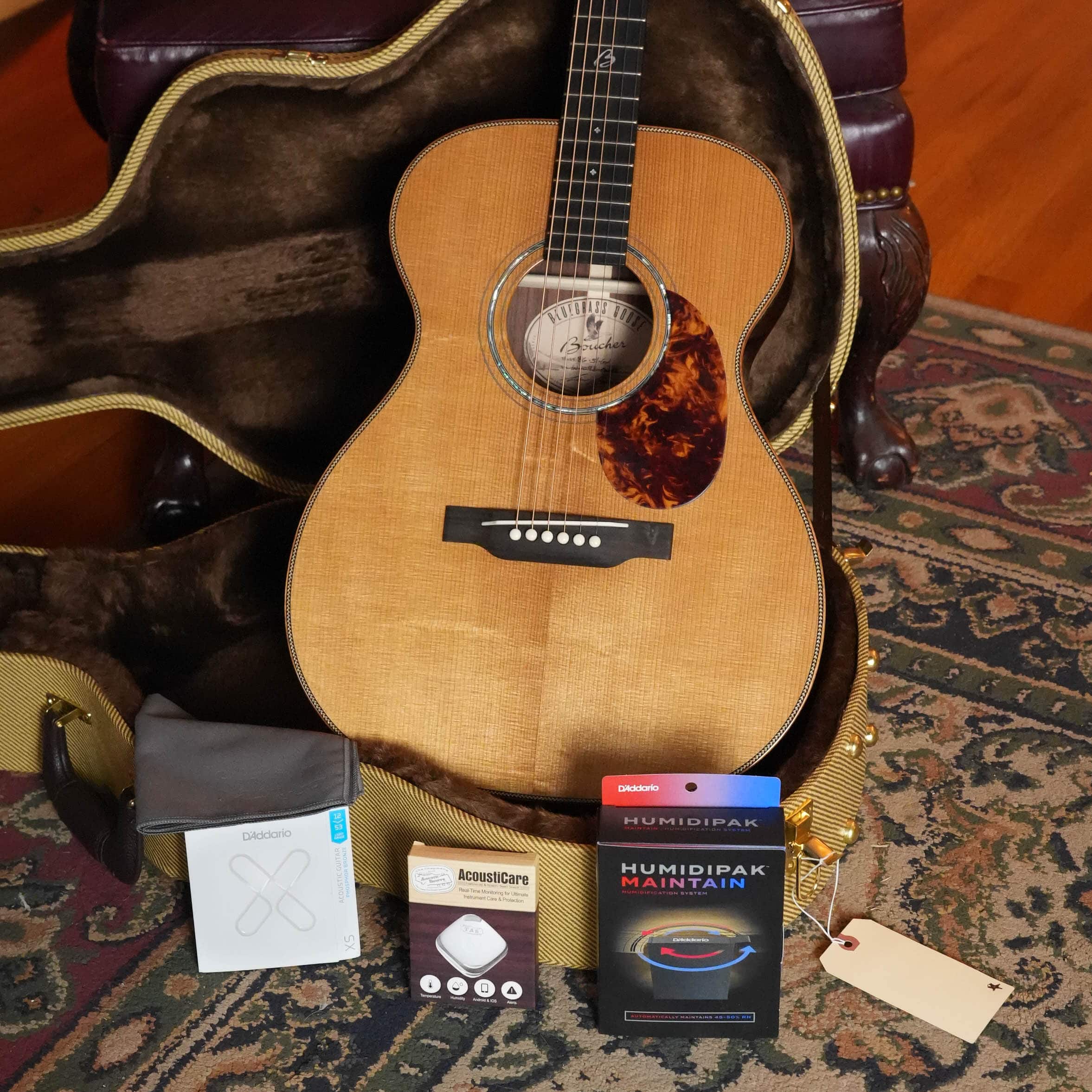
That rosette is the tell. Guillaume told us master grade is usually identified by the abalone rosette. The Grand Reserves are the exception, since they come trimmed that way as standard, sometimes with koa binding too.
Then the bubinga. Boucher now runs a black grain filler on every guitar, and on bubinga it darkens a wood that can look pinkish. Guillaume described it as "powerful, not so much dipped in the mids," and said it's one of Robin's favorite tonewoods. John said the pairing with a torrefied top is really good. After playing a bubinga dreadnought with a master grade pack: "What a great sounding guitar." His advice was the same as Guillaume's. Don't be afraid of woods outside mahogany and rosewood.
Studio Goose vs. Bluegrass Goose: the difference you feel first
Halfway through, John stopped on an SG to ask Guillaume the question we get most about Boucher. Here are the differences as he laid them out, starting with the one you notice first:
- Neck shape. The Bluegrass Goose has a V profile and the Studio Goose has a C. That's the one you feel the second you pick it up.
- Strings and action. The Studio Goose ships with 12s or lights. The Bluegrass Goose gets 13s and higher action.
- Under the hood. The new BGs have new bracing, a slot-through saddle and a different bridge shape, and the 52s get a different volute.
- Voicing. The Bluegrass Goose is about power and fundamental focus, with the overtones coming in behind. The Studio Goose is a full sound built for strumming.
If you're deciding between a Bluegrass Goose and another boutique bluegrass dreadnought, our Boucher vs. Collings comparison is the next read.
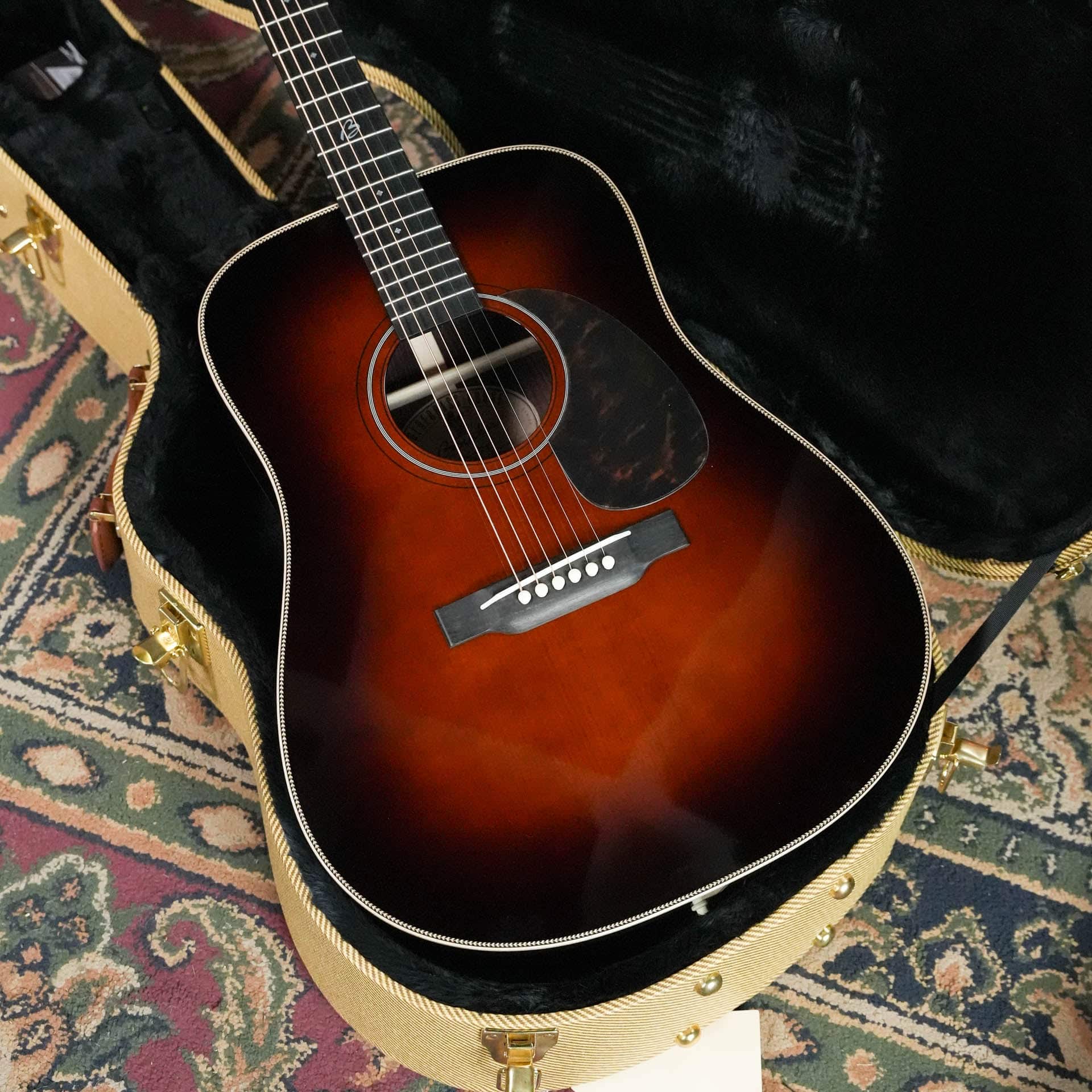
The BG-52 is the Bluegrass Goose rosewood dreadnought. If you'd rather not wait on the new Boucher guitars, we have the BG-52-B #1418 in the Burst pack at $6,069, and a step up in the same woods, the BG-152-G #1098, Adirondack over rosewood with the Gold pack, $8,239.
12-fret triple-Os and the favorite guitar of the show
Two more of the new Boucher guitars stood out. An SG-41V OM came in mahogany with the black filler, which Guillaume said darkens the wood to a grayish tone and makes the grain pop. It's super light. An HG-26, a Heritage Goose triple-O 12-fret in bubinga, stood for a trend: Guillaume said 12-frets have been very popular this year. Boucher narrowed the string spacing and went to a satin neck, which he thinks makes them more comfortable for a lot of players. The wider spacing is still available.
The last guitar was Tony Polecastro's favorite of the show. It's a little Heritage Goose parlor, and Boucher brought the same guitar last year. The parlors are the only Boucher guitars built in a short 24.5-inch scale. This one is part of the Grand Reserve series, with 5A torrefied maple back and sides. John called it a great little couch guitar, and we've sold a couple of them. The tinted gold logo is part of the Grand Reserve package. John joked that until now, the only way to get it on a guitar in our shop was a gold marker.
What to buy now, and which new Boucher guitars to order
Here's how we'd sort it, based on what John said at the booth:
- If you play bluegrass and want the dry, note-forward sound, start with the BG-42T-G #1082. It's the guitar John is the biggest fan of.
- If you want rosewood over mahogany, try the BG-52-B #1418, or step up to the BG-152-G #1098.
- If you want master grade trim, the BG-51-GM #1093 has the abalone rosette.
- If you want an X top, a quilted maple or ebony Ultimate pack, a Grand Reserve parlor or a 12-fret HG, ask us about ordering one. Boucher builds only about eight Ultimate pack guitars a month.
- If you strum more than you flatpick, ask about a Studio Goose. The C neck and lighter strings suit you better than a BG.
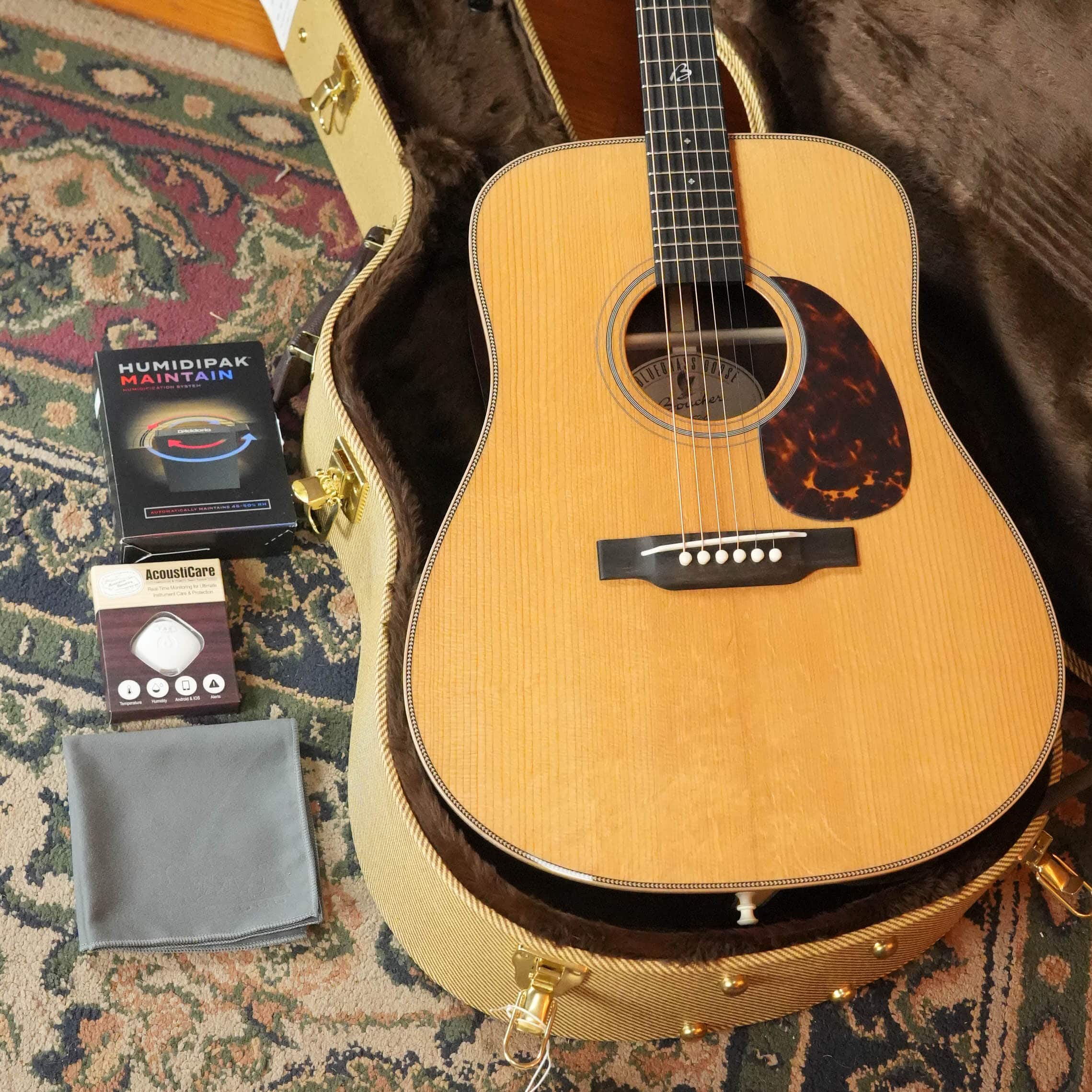
When the new Boucher guitars reach us, each one goes through our 23-Point Professional Inspection before it ships, the same as every other guitar on our wall.
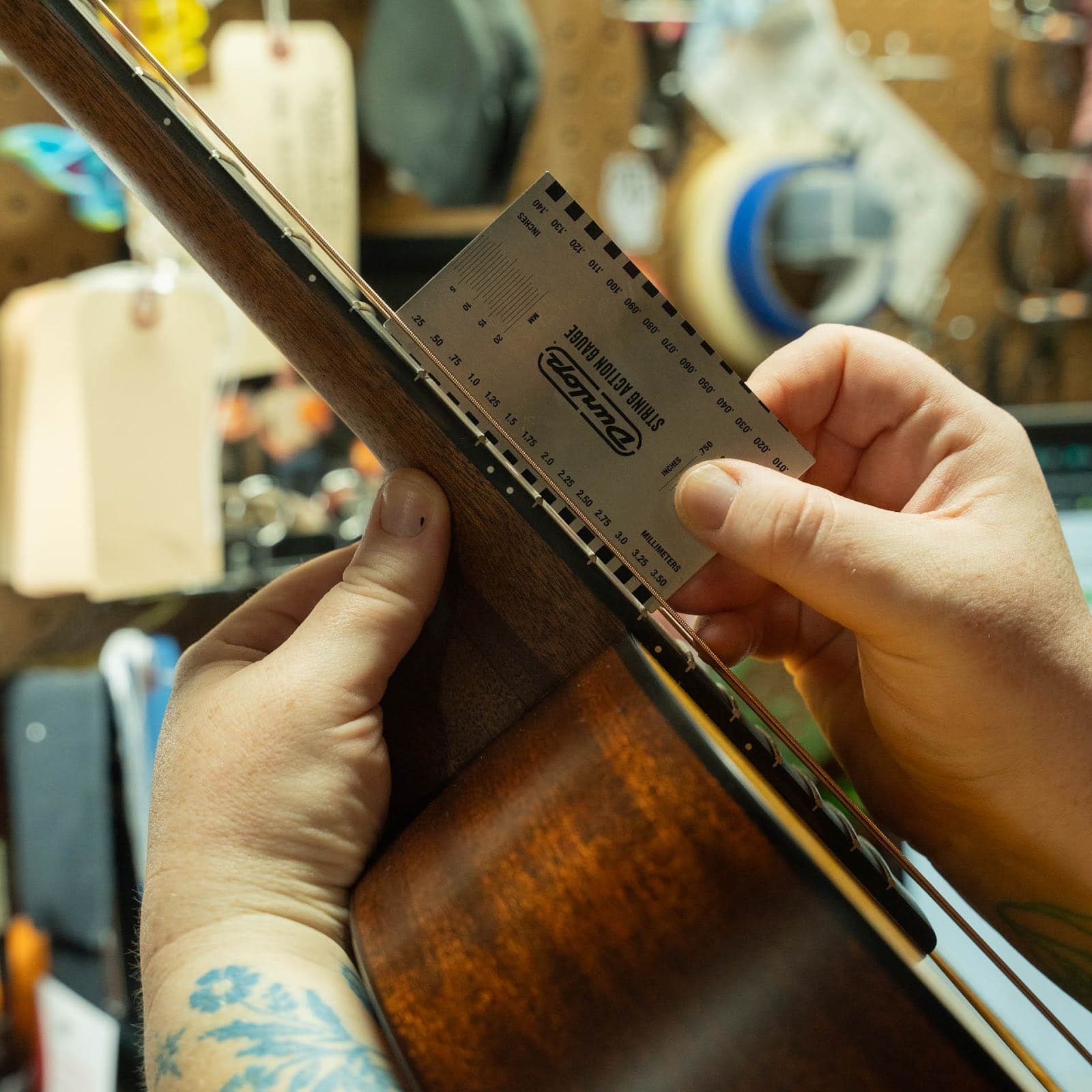
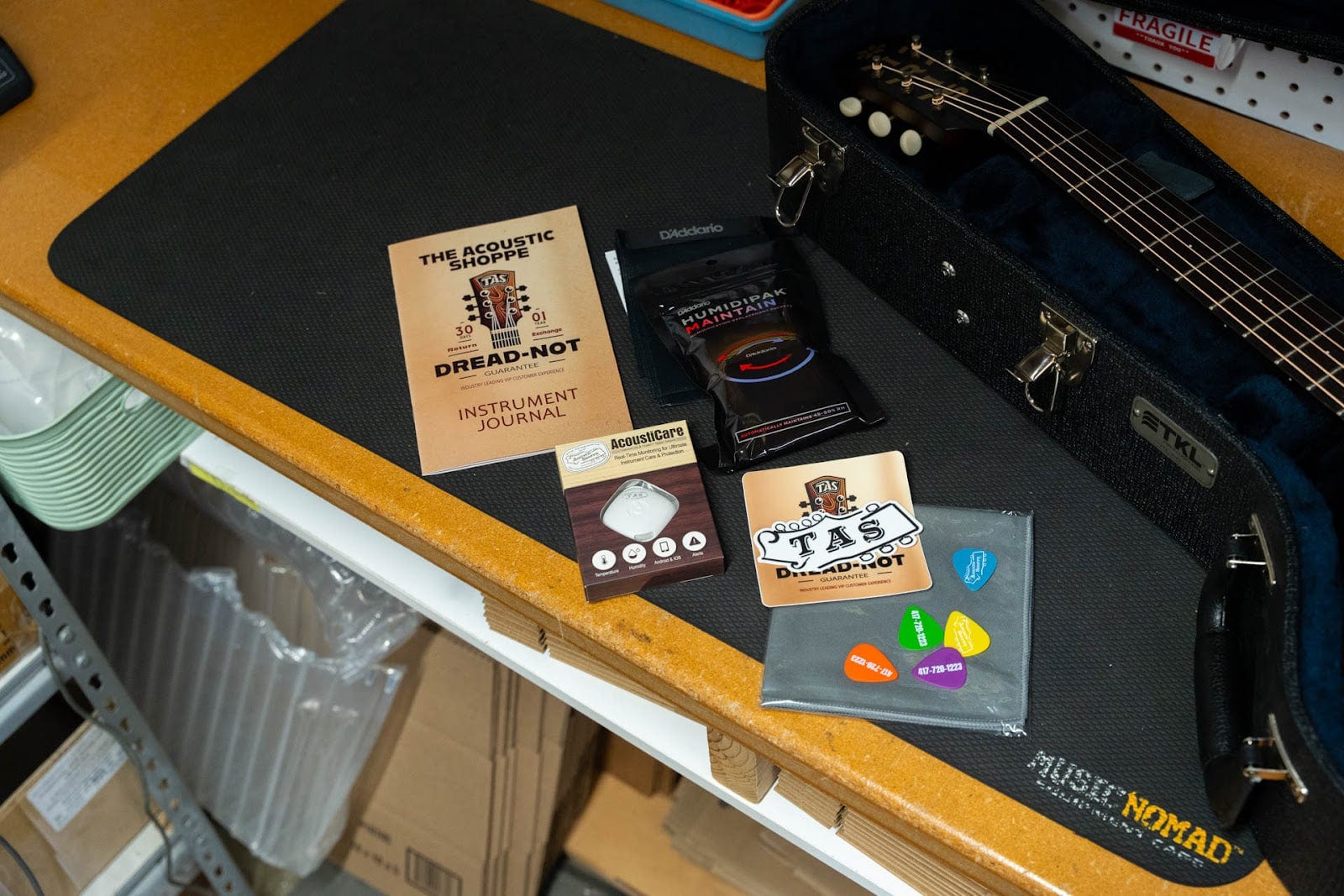
Every Boucher guitar we sell is over $1,000, so each one is covered by the Dread-Not Guarantee: a 1-year trade-in credit of up to 90% (pre-tax, less round-trip shipping) toward another instrument, a 30-day in-home trial, and the humidity kit and case candy in the box. That includes any of the new Boucher guitars we order for you.
Related reading
- Boucher at NAMM 2026: new models and events
- Taylor at Fretboard Summit 2026
- The Acoustic Shoppe at Fretboard Summit '24
See every Boucher we have right now in our Boucher collection, or browse every guitar in stock. For any of the new Boucher guitars that aren't listed, talk to us about a custom order, and we'll get yours in line.