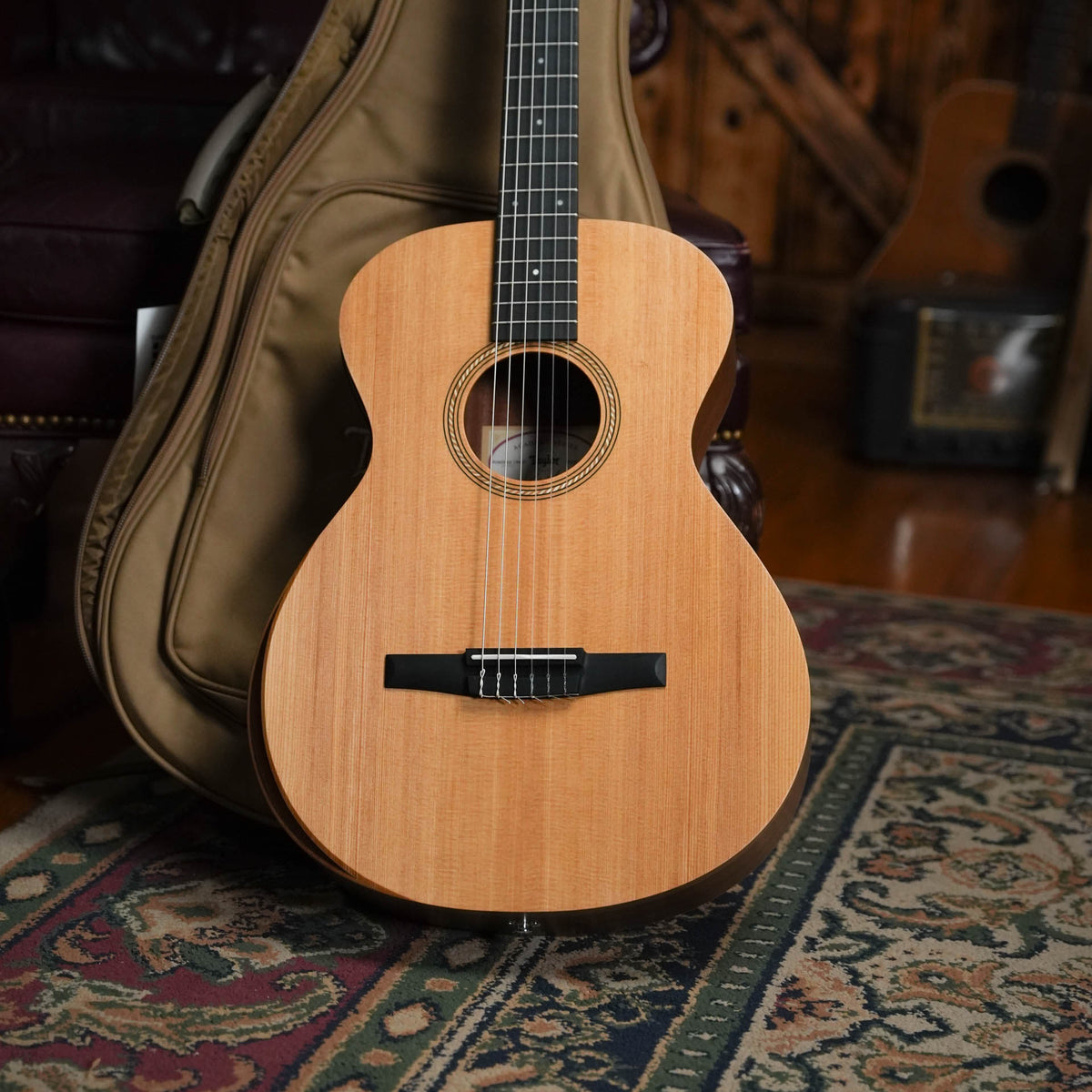
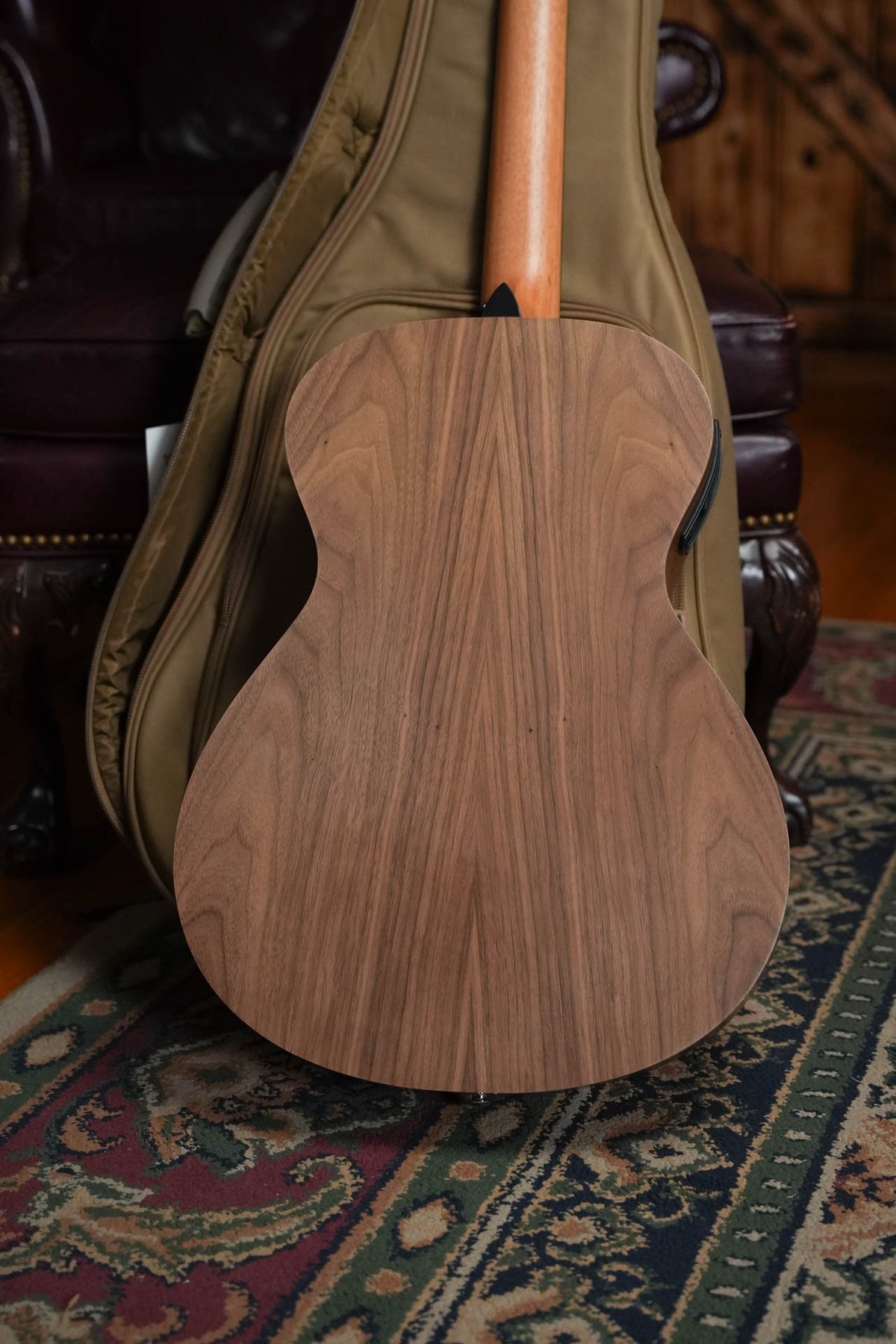
Nylon strings change more than tone. They carry roughly half the tension of a steel-string set, which is why the 12e-N is built on Fan Bracing rather than the X-bracing used on the 10e and 12e, a top voiced for steel-string tension would sound flat and lifeless under nylon's lower pull, and a top voiced for nylon would buckle under steel tension over time. That lower tension is also what makes classical guitar approachable for fingerstyle work in a way steel-string can't quite match: the strings give more under the fingertip, chord shapes take noticeably less left-hand pressure to fret cleanly, and a player working through fingerpicking patterns gets a softer, more forgiving feel while building calluses and technique. The trade-off is projection and attack; nylon produces a mellower, rounder voice with less of the steel string's bright transient snap, which is exactly the tone classical and much fingerstyle repertoire is written to be heard through.
The playing feel changes along with the strings. The 12e-N's nut is noticeably wider than the 12e's, spacing the strings further apart to give the right hand room to pluck individual strings cleanly with fingers rather than a pick, and to give the left hand more room per string when fretting multi-finger classical chord voicings. It also carries fewer frets clear of the body than the steel-string models, since classical repertoire is written and fingered around lower-position chord and scale work far more than the up-the-neck lead lines steel-string players expect access to. Classical-style tuners, generally slotted headstock hardware built for nylon string tension and stretch, replace the sealed steel-string tuners on the 10e and 12e. None of this is a knock against the instrument's versatility, it's Taylor building an actual classical guitar to classical-guitar conventions instead of just restringing a steel-string body and calling it done.
Compared with its steel-string sibling, the Academy 12e, the 12e-N shares only the Grand Concert body shape and the $799 price. Everything else, bracing, nut width, fret count, tuner style, and the entire playing technique the guitar is built around, is different. A player trying to decide between the two isn't picking a tone preference the way choosing between the Academy 10e and 12e is; they're deciding whether they want to learn steel-string technique or classical technique, since the two instruments are fingered, fretted, and picked in genuinely different ways despite the shared body shape and price tag.
A player switching over from steel-string guitar should plan on a real adjustment period rather than expecting the 12e-N to play like a nylon-strung version of their current instrument. Right-hand position sits differently against the wider string spacing, chord fingerings that felt automatic on a steel-string neck need to be relearned across the extra room between strings, and classical technique generally favors a seated position with the guitar resting on the leg rather than a strap-supported standing posture. None of that makes the instrument harder to enjoy, it just means the 12e-N rewards approaching it as a new instrument to learn rather than a drop-in replacement for a steel-string guitar already in the case.
Every Academy 12e-N that leaves The Acoustic Shoppe completes our full 23-point professional inspection before it ships, the same scrutiny we run on every Taylor regardless of price point or string type. This page is the standing model reference for the Academy 12e-N; individual serialized units redirect back here once sold. For the rest of the series, see the Taylor Academy collection, alongside the steel-string Academy 10e and Academy 12e. For the complete Taylor lineup we carry, visit our Taylor Guitars collection.
The Acoustic Shoppe is an Authorized Taylor Premier Dealer and Gold Label Advantage Dealer. Every instrument ships after a full 23-point professional inspection by our in-house repair tech. As a twelve-time consecutive NAMM Top 100 Dealer, we handle warranty concerns directly on your behalf.