
Table of Contents
- What a guitar pick changes in your sound
- Guitar pick thickness: thin, medium or heavy
- Materials: why a $35 pick sounds different from a $5 pack
- Shape and bevel: the parts nobody talks about
- The guitar picks we would start with, by budget
- Picks for mandolin, banjo and other instruments
- A pick only helps if the guitar is right
- Who should buy which guitar pick
You just spent real money on an acoustic, and the thing touching the strings every time you play cost about thirty cents. Most players never think about it. They grab whatever guitar pick is in the cup by the register, and then they wonder why the guitar sounds thin and clicky at home when it sounded big in the store. The pick is the first piece of your tone, and changing it is the cheapest upgrade you will ever make.
We say it at the counter all the time: the pick is your EQ. Thickness, material, shape and the edge all change what comes out of the top. Here is how each one works, what we stock at every price, and how to pick a guitar pick without buying fifty of them first.
What a guitar pick changes in your sound
A pick does three jobs. It sets how hard the string gets pushed, how cleanly it lets go, and how much of your hand's energy reaches the top. A floppy pick bends before the string moves much, so you hear more of the attack and less of the body. A stiff pick moves the string farther, so the guitar wakes up and the low end gets louder. The edge decides whether the note releases clean or catches with a click.
That is why the same dreadnought can sound like two different guitars in two different hands. Before you blame the strings or the guitar, try a different guitar pick for a week.
Guitar pick thickness: thin, medium or heavy
Thickness is the first choice and the one that matters most. Pick makers print it in millimeters, and the numbers group into three working ranges.
| Range | Thickness (mm) | What it does | Who it suits |
|---|---|---|---|
| Thin | Under 0.6 | Flexes on the string, bright and light, easy to strum | Players who strum chords softly |
| Medium | 0.6 to 0.9 | Some flex, more volume, handles strumming and single notes | Most beginners and campfire players |
| Heavy | 1.0 to 1.5 | No flex, full volume, strong low end and clean single notes | Flatpickers, bluegrass and lead players |
Our advice for a new player is a medium. It forgives a loose grip while you learn to strum, and it still gives you enough control to start on single-note runs. Once you play melody or bluegrass rhythm, move to a heavy guitar pick around 1.2 mm to 1.4 mm. Most of the flatpickers we know never go back.
Materials: why a $35 pick sounds different from a $5 pack
Material changes the stiffness, the grip and how long the edge stays smooth. Here is how the guitar picks on our wall break down.
- Nylon and Duralin. These are cheap, light and consistent. The D'Addario Duralin 10-pack is $4.99, which makes it a fine way to find your thickness before you spend more.
- Grip-textured plastics. The Dunlop Primetone line comes in smooth and grip versions, and the grip suits players whose pick spins in a sweaty hand. A three-pack runs $9.99 to $12.99.
- Casein. Casein is made from a milk protein, so it feels and sounds close to old tortoiseshell. The D'Addario Casein Chris Thile Signature is $26.99, and mandolin players love it as much as guitar players do.
- Engineering plastics. Token and ToneSlabs cut their picks from aerospace-grade materials like Torlon and PEEK. These are the stiffest and loudest picks we carry, and in our experience one lasts for years.
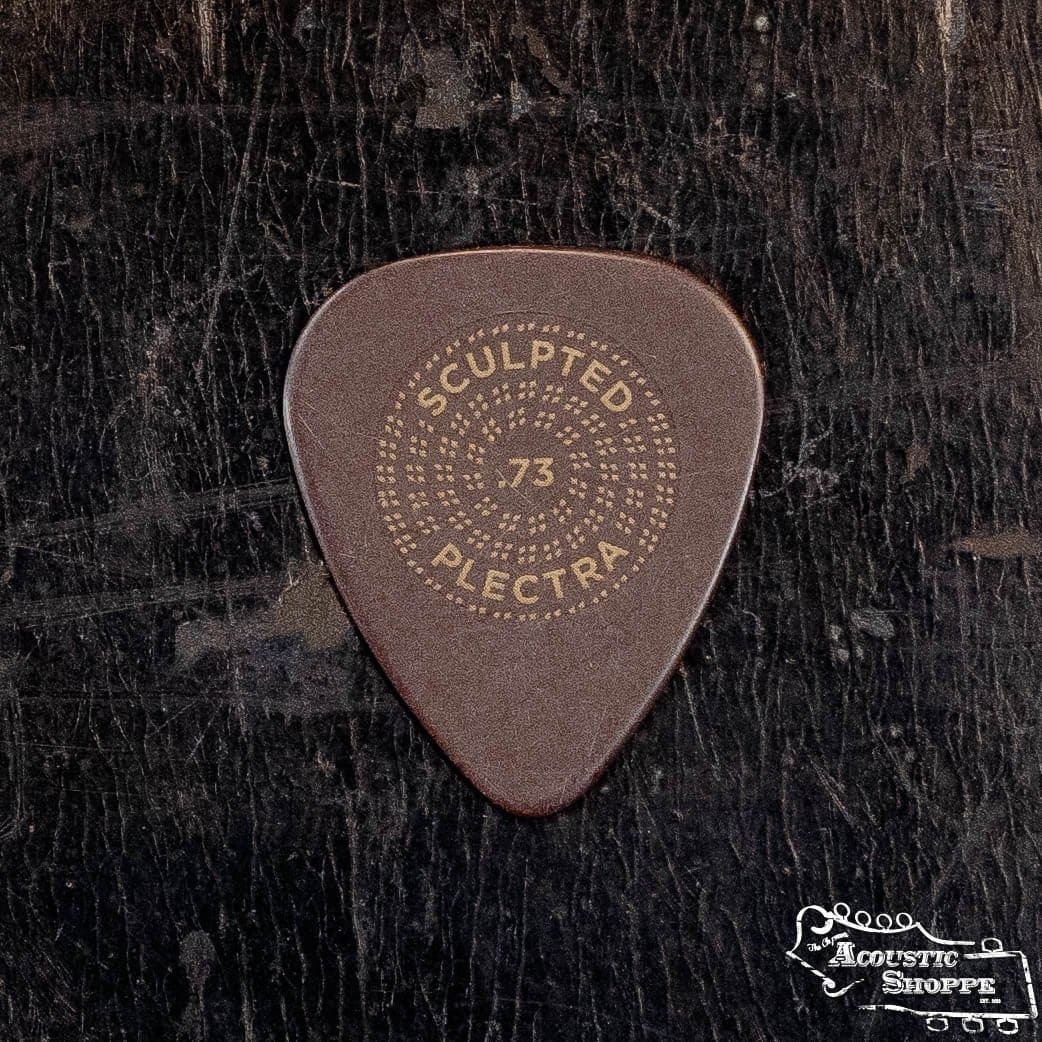
Is a premium guitar pick worth it? A cheap pick wears a burr into its edge within a few weeks, and that rough edge snags the string, adds a click and dulls the note. A premium pick stays smooth for hundreds of hours, so one pick can outlast a stack of string sets. When you play a $3,000 guitar, a $35 pick is the least expensive way to hear all of it. You can browse every option on our flatpicks page.
Shape and bevel: the parts nobody talks about
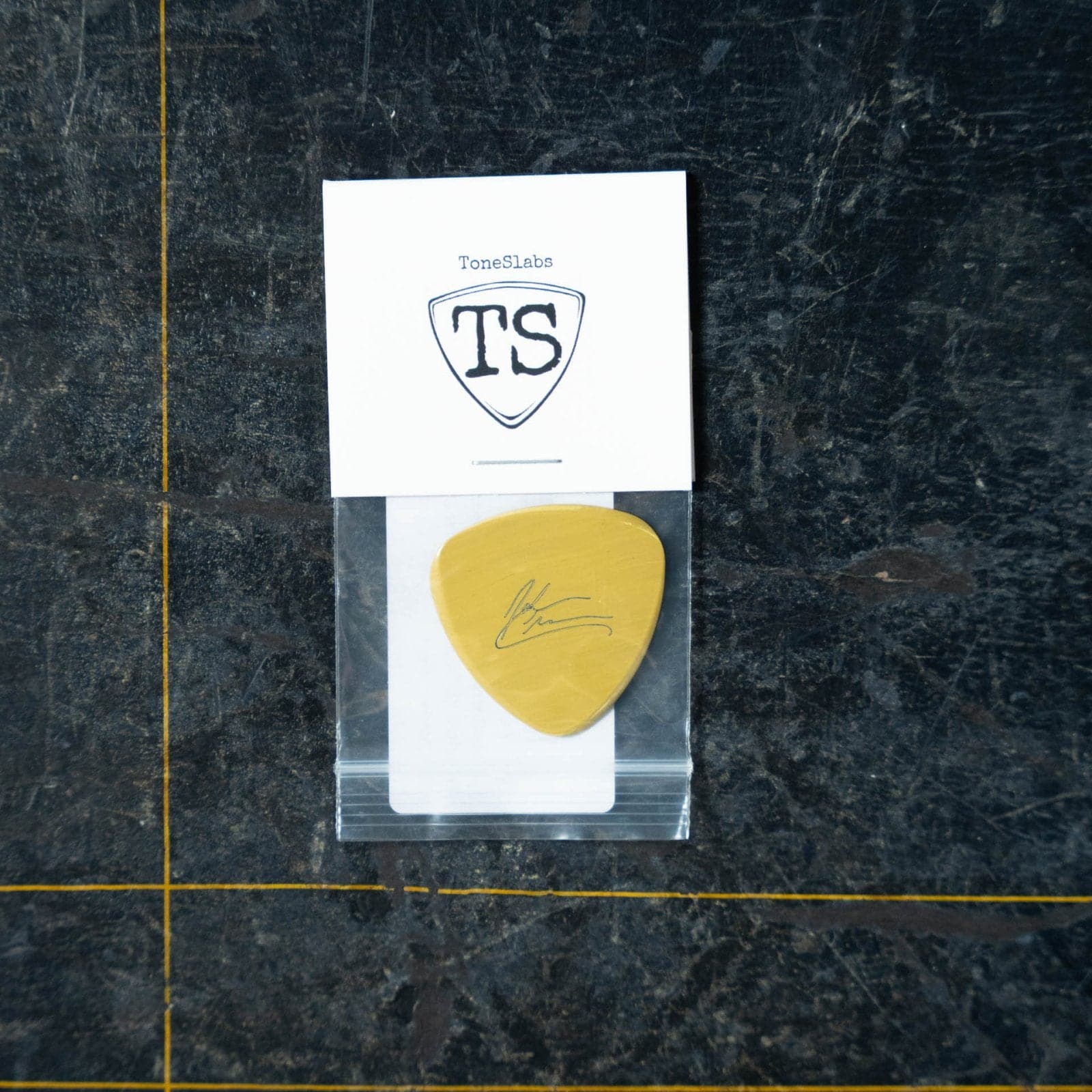
Shape decides how the pick sits in your fingers and how many usable corners you get. The standard teardrop is what most people picture. A large triangle gives you three identical playing corners, so it lasts three times as long, and many bluegrass players like the bigger surface to hold onto. A small triangle feels close to a standard pick with more mass. Rounded corners give a warmer, smoother attack, which is why so many mandolin players choose them.
The bevel is the angled edge where the pick meets the string. A good bevel lets the string slide off cleanly so it never catches. That is where the click and chirp come from on a cheap guitar pick, and it is the main reason players hear such a big change when they move to a hand-finished or machined pick.
The guitar picks we would start with, by budget
These are the picks we stock in depth today, ranked from the cheapest way to experiment to the pick we would put in a serious flatpicker's case.
- D'Addario Duralin 10-pack, $4.99. You get ten picks for the price of a coffee, so you can try a gauge without worrying about losing one.
- D'Addario DuraGrip 10-pack, $5.99. This is the same idea with a textured grip for players who drop picks.
- Dunlop Primetone 511 standard, $9.99 to $12.99. It is a smooth teardrop, and it is the best value step up we sell.
- Dunlop Primetone 512 triangle with grip, $12.99. It puts the Primetone edge on a triangle shape with three corners to wear.
- D'Addario Casein Chris Thile Signature, $26.99. It sounds warm and smooth and feels close to tortoiseshell.
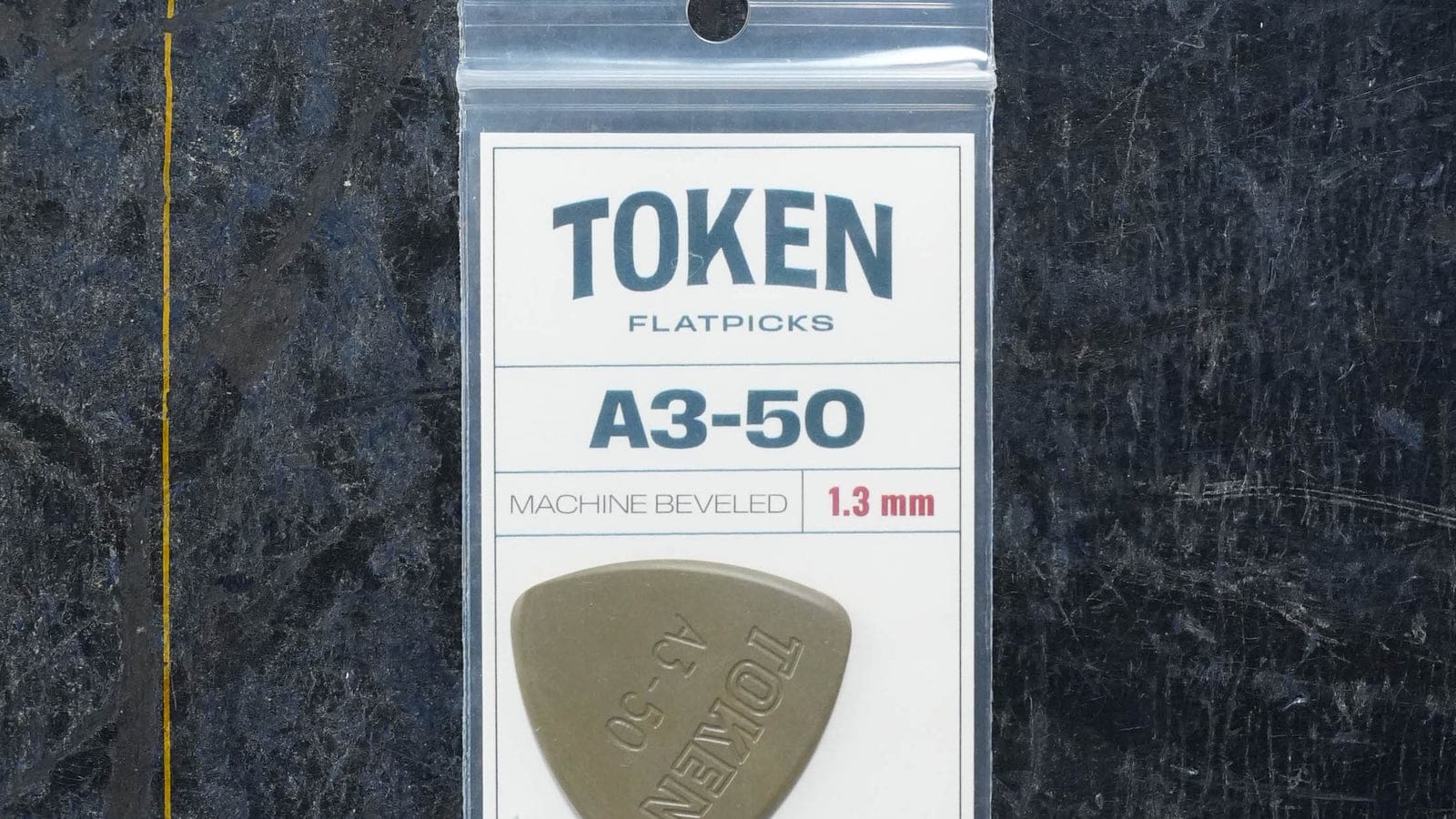
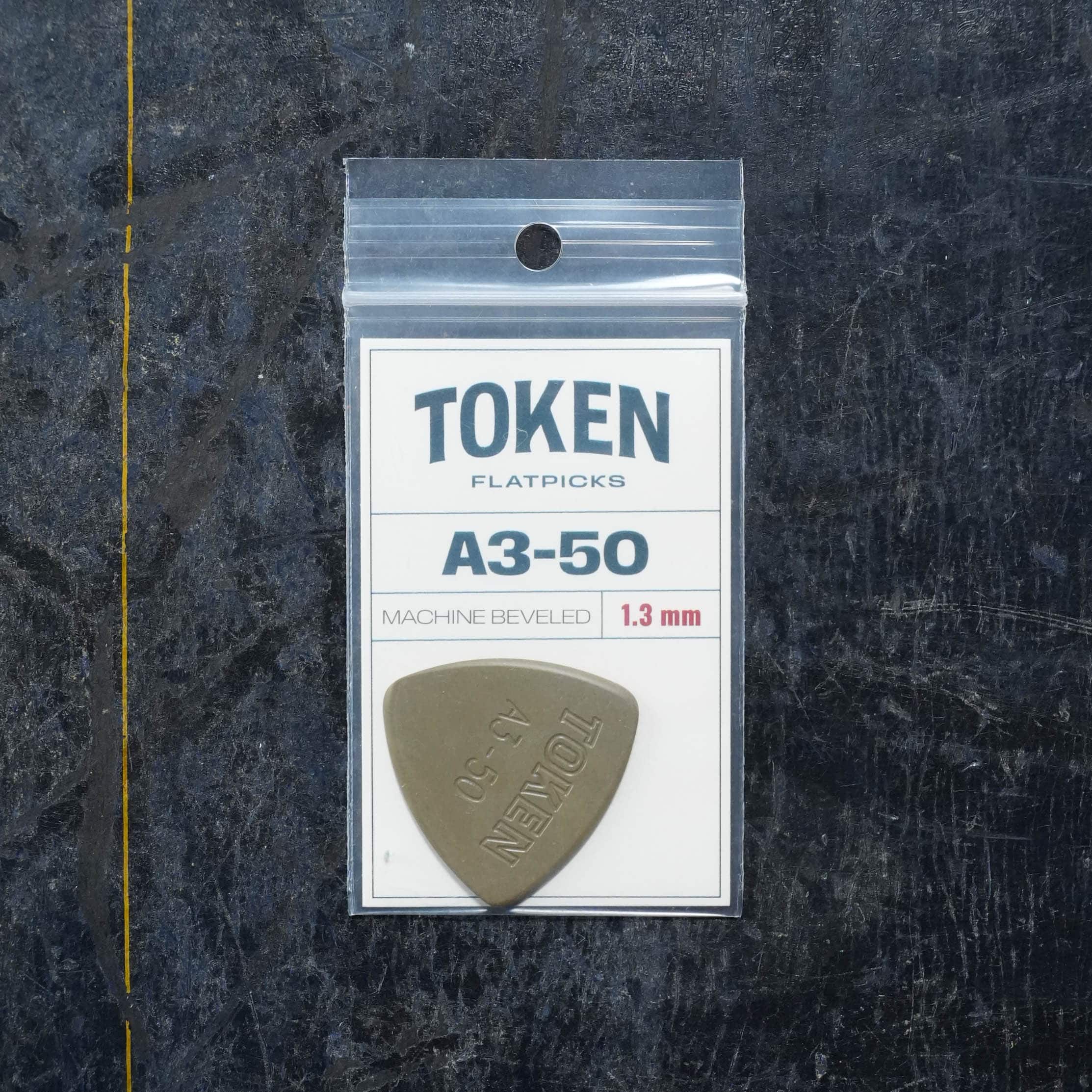
- Token A3-50 Green large triangle, $35. This one is machined Torlon at 1.27 mm, stiff and loud, and the bevel is cut the same way on every pick.
- ToneSlabs John Chapman Signature XL Tri, $35. This is the shape John plays, in 1.2 mm Torlon with three rounded corners.
If you have never spent more than a dollar on a pick, buy the Primetone and one of the $35 picks in the same thickness. Play them back to back on the same song, and you will know in a minute whether the upgrade is worth it for your hands.
Picks for mandolin, banjo and other instruments
Mandolin players usually want a thicker pick with rounded corners, because it handles tremolo smoothly and still gives the chop a clean bark. We keep a separate selection of mandolin picks for that reason, and the Casein Chris Thile model crosses over well. If you play mandolin and guitar, a 1.3 mm or 1.4 mm rounded triangle covers both. Banjo players live in a different world of thumb picks and finger picks, and you will find those in our banjo finger and thumb picks.
A pick only helps if the guitar is right
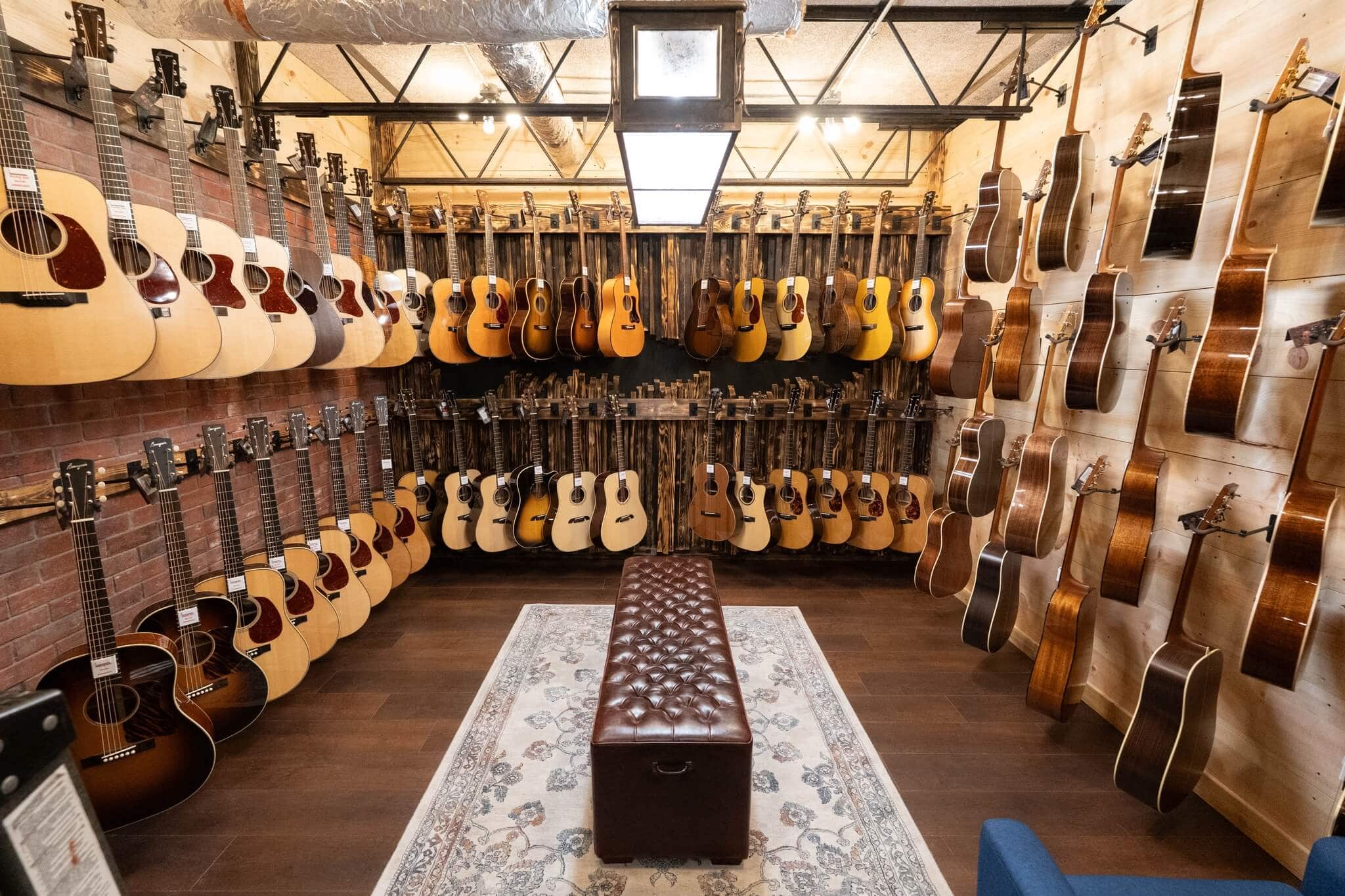
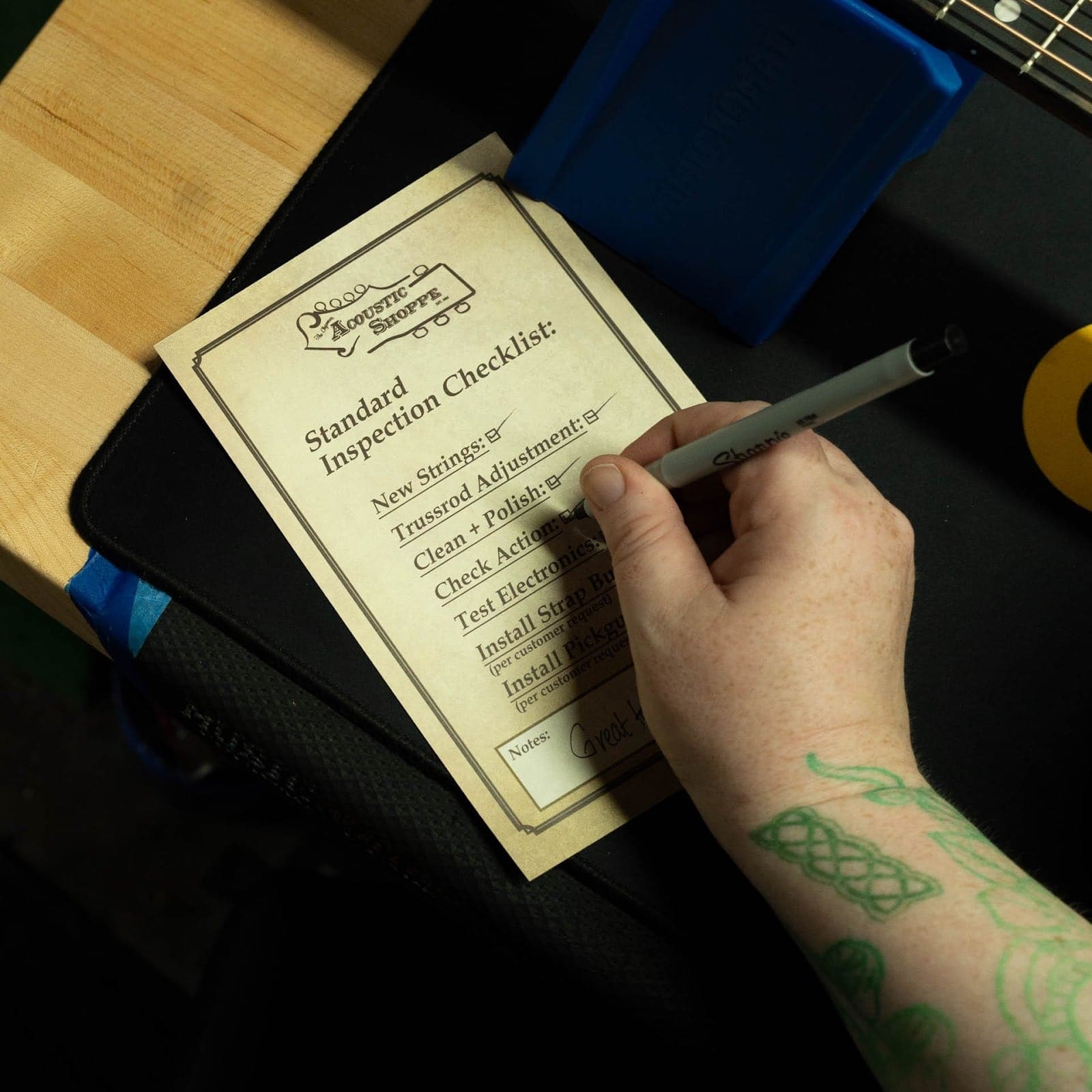
A new pick cannot fix high action or buzzing frets. Every instrument we ship goes through our 23-Point Professional Inspection on the bench before it leaves Springfield, so the guitar plays the way it should the day it arrives. Then the pick and the acoustic guitar strings are the two cheapest ways to shape the sound from there.
Who should buy which guitar pick
- New players: start with a medium nylon or Duralin pack, learn to strum first, and do not spend much on picks you will lose.
- Strummers and songwriters: try a medium to heavy Primetone, which gives you a cleaner edge and more volume without losing the strum.
- Flatpickers and bluegrass players: choose a 1.2 mm to 1.4 mm triangle in Torlon, PEEK or Casein, because this is where a premium guitar pick earns its price.
- Players chasing more volume from a small guitar: go heavier before you go shopping for a bigger body.
When you are ready to try a few, start with our full wall of guitar picks and add a guitar capo or a guitar strap while you are there. If the guitar itself is next on your list, you can shop acoustic guitars from every builder we carry, or look through the rest of our guitar accessories. Questions about which pick fits your playing? Call us, and we will tell you what we use.