
The usual advice on a first instrument is to spend as little as you can until you know you'll stick with it. For a beginner mandolin, we think that advice is backwards. A cheap guitar can still play fine, but a cheap mandolin usually fights you from the first chord, and the player who quits in month two almost always blames themselves instead of the instrument. So this guide is built around a floor, the price below which we'd tell a friend not to go, and what each step above it actually buys you.
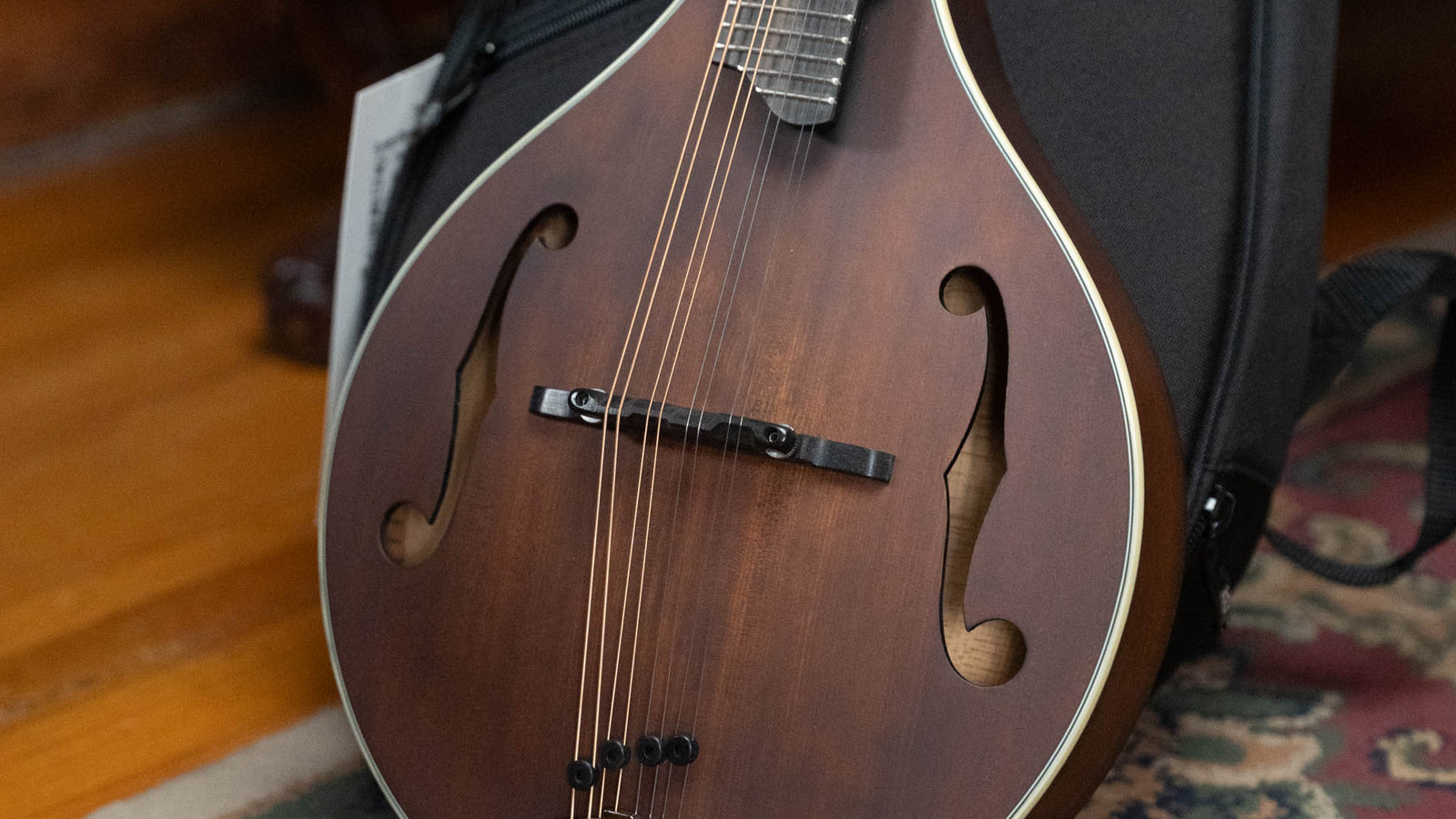
Here's the short answer. Our beginner mandolin threshold is the Eastman MD305 at $729: a hand-carved, hand-voiced A-style, and the starter that made Jeremy, a mandolin teacher, fall for Eastman mandolins. If the budget is tighter, the $449 Eastman PCH-M104 is the one mandolin below that line we stock, a flat-back with a solid spruce top. If you know you want the scroll, the $1,099 MD315 is the F-style version of the same build.
Why a cheap beginner mandolin makes learning harder
A mandolin carries a lot of string tension for its size. The strings are lighter than guitar strings, but there are eight of them on a short scale, so every chord asks more of a new player's fingertips. Put that tension on an instrument with the strings sitting high off the fretboard and you have a mandolin that hurts to play and still doesn't ring.
"You can find guitars in an inexpensive range that are very good players. It is hard to find an inexpensive mandolin that is a good player."
Most of the trouble comes from how cheap mandolins get built. The arched top and back are either pressed from laminate in a mold, which leaves them too rigid to make much tone, or carved from solid wood left extra thick so the top won't sink under the strings. Nobody voices those tops, so they play it safe. Then the bridge often isn't fitted to the arch of the top, so it rocks and doesn't pass the string's energy into the wood. Fitting a bridge properly takes about an hour of shaving and checking at the bench, which is exactly the hour a bargain mandolin skips.
We had a student bring in a cheap mandolin and ask us to make it play like an Eastman. By the time we'd cut a new bridge and worked through the rest, the setup would have cost more than the difference between that mandolin and an MD305, and it still wouldn't have played as well. That's where our floor comes from. Jeremy put it plainly: it's "our threshold of don't start below this, because you'll regret it."
What to look for in any beginner mandolin
- A solid top, ideally carved and voiced. A pressed laminate top stays stiff and quiet, and the top is where a mandolin makes its sound.
- An adjustable truss rod. Necks move with the seasons, and without one there's no way to get the action back where it belongs.
- A bridge fitted to the top, with the whole foot touching and no gaps.
- A bone nut and a cast tailpiece. Stamped tailpieces have prongs that can break and covers that can rattle against the strings.
- Low action, checked before it ships. Low, even action matters more on a beginner mandolin than on anything else you'll buy.
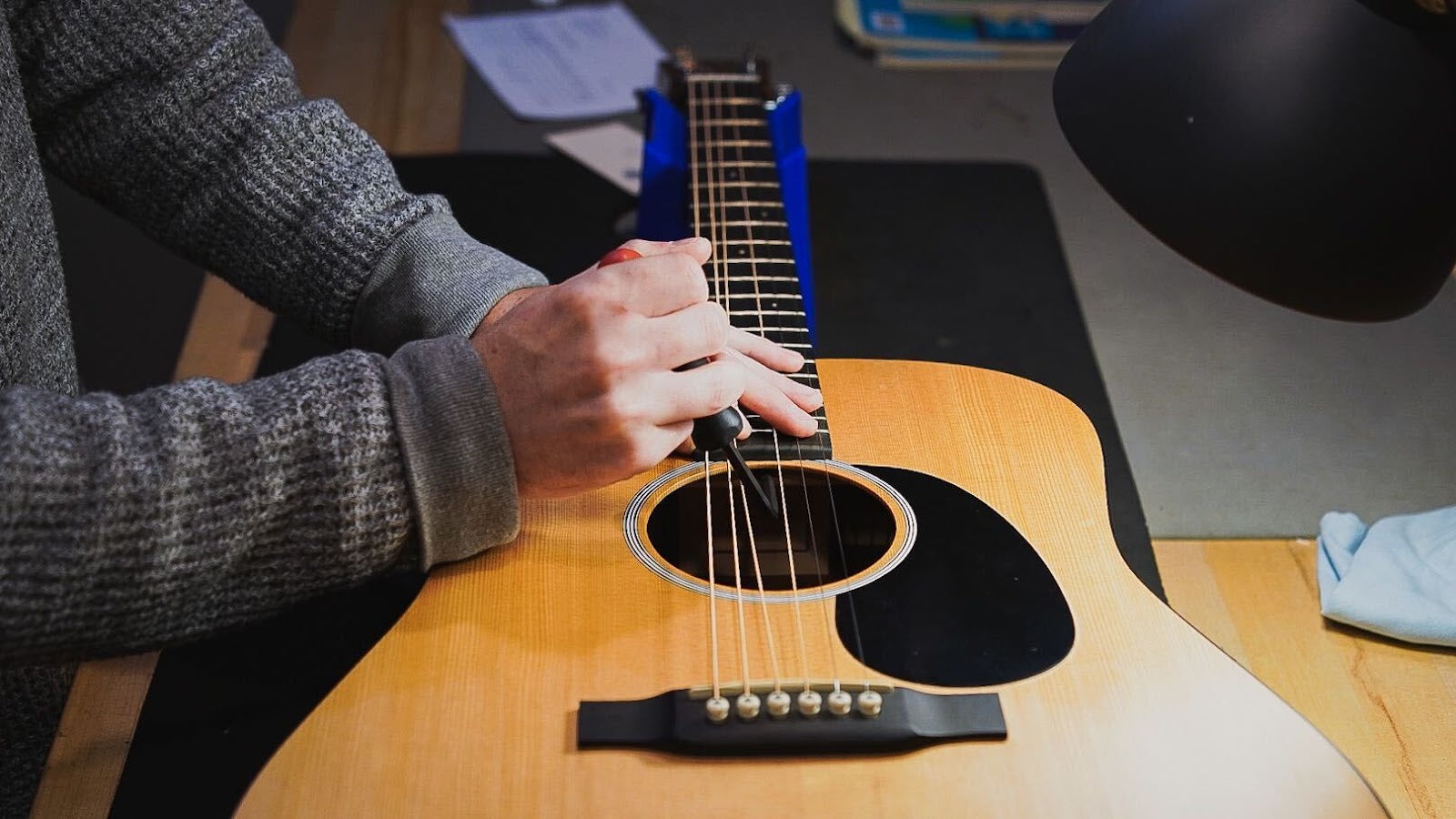
Every mandolin we sell goes through our 23-Point Professional Inspection before it leaves, so the action and intonation are checked by a tech, not left the way they came out of the box.
What a beginner mandolin costs, step by step
Prices are from our site today and every model below is in stock. The video at the end of the MD305 section is a few years old, so trust the table for prices.
| Model | Price | Body | Top | Back and sides |
|---|---|---|---|---|
| Eastman PCH-M104 | $449 | A-style, oval hole | Solid spruce | Laminated mahogany |
| Eastman MD305 | $729 | A-style, f-holes, hand carved | Solid spruce, hand voiced | Solid maple, hand carved |
| Eastman MD305L (left-handed) | $739 | A-style, f-holes, hand carved | Solid spruce, hand voiced | Solid maple, hand carved |
| Eastman MD315 | $1,099 | F-style, f-holes, hand carved | Solid spruce, hand carved | Solid maple, hand carved |
$449: the Eastman PCH-M104
The Eastman PCH-M104 is the only mandolin we stock below the MD305, and it clears the first bar on the checklist: a solid spruce top. It's a flat-back A-style with an oval soundhole and laminated mahogany back and sides, so the top does the work while the laminate keeps the price down. It still has the parts that matter for a new player, including an ebony fingerboard with a 12-inch radius, an adjustable truss rod, a cast tailpiece and a padded gig bag, in natural or goldburst.
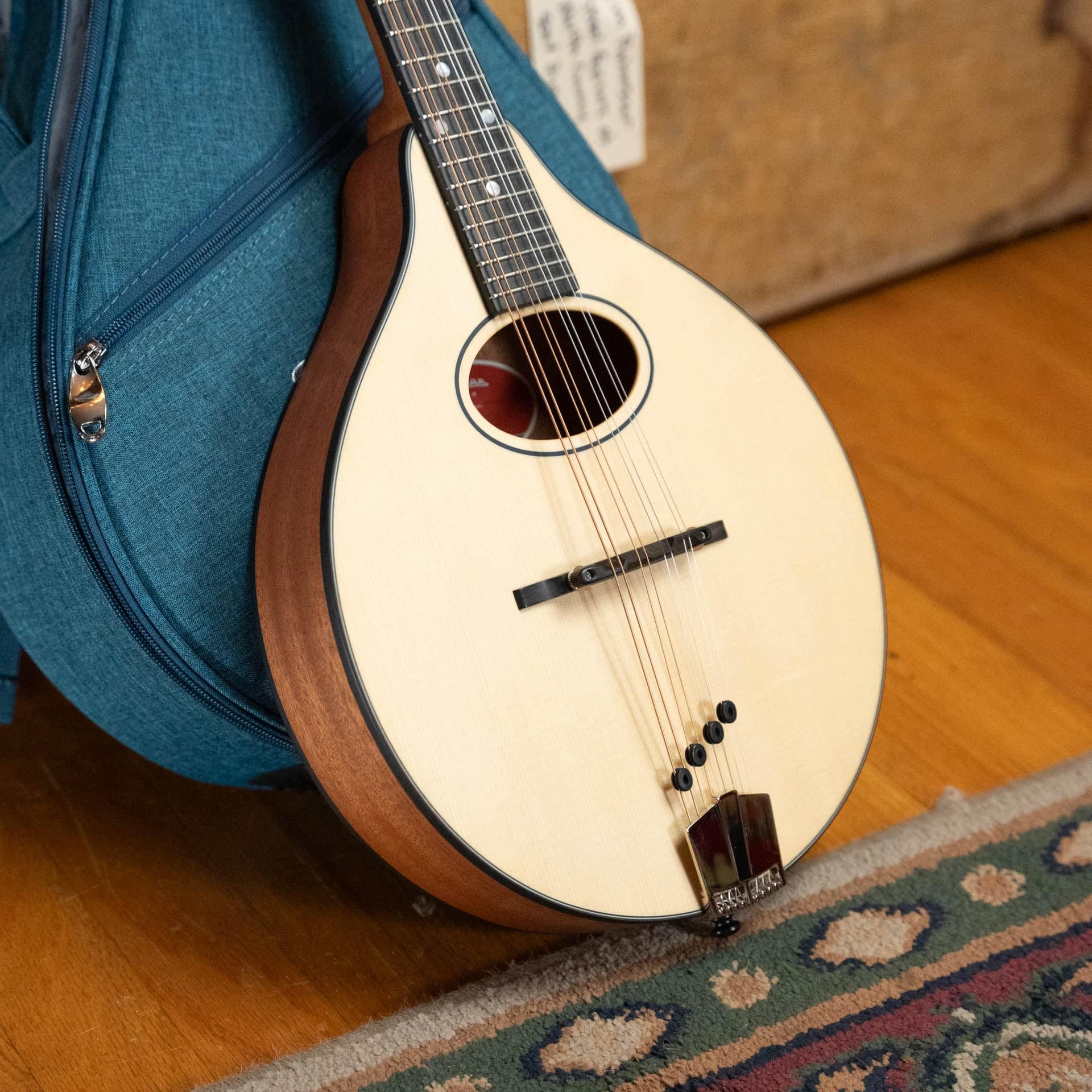
The catch is the build. It isn't carved or voiced like the MD305, and it isn't the f-hole mandolin most people picture when they think of bluegrass chop. If bluegrass is the goal, save for the next step. We compare the two head to head in our PCH M104 vs MD305 guide.
$729: the Eastman MD305, the beginner mandolin we'd start on
The MD305 is where our floor sits, and it's the mandolin Jeremy went looking for when he was teaching.
"As a mandolin instructor, I had struggled for a while to get a good starter mandolin for my students, and one that wasn't going to hold them back."
It's a plain instrument on purpose. Eastman spent the money on the carving and left off the flash: a satin finish, binding on the top only, and economy tuners. The top and back are hand carved, and every top is hand voiced, so each one is braced and graduated to the wood it was cut from. A cast tailpiece, a bone nut, a bridge fitted to the top and an adjustable truss rod cover the rest of the checklist. Jeremy liked it enough to buy one for himself.
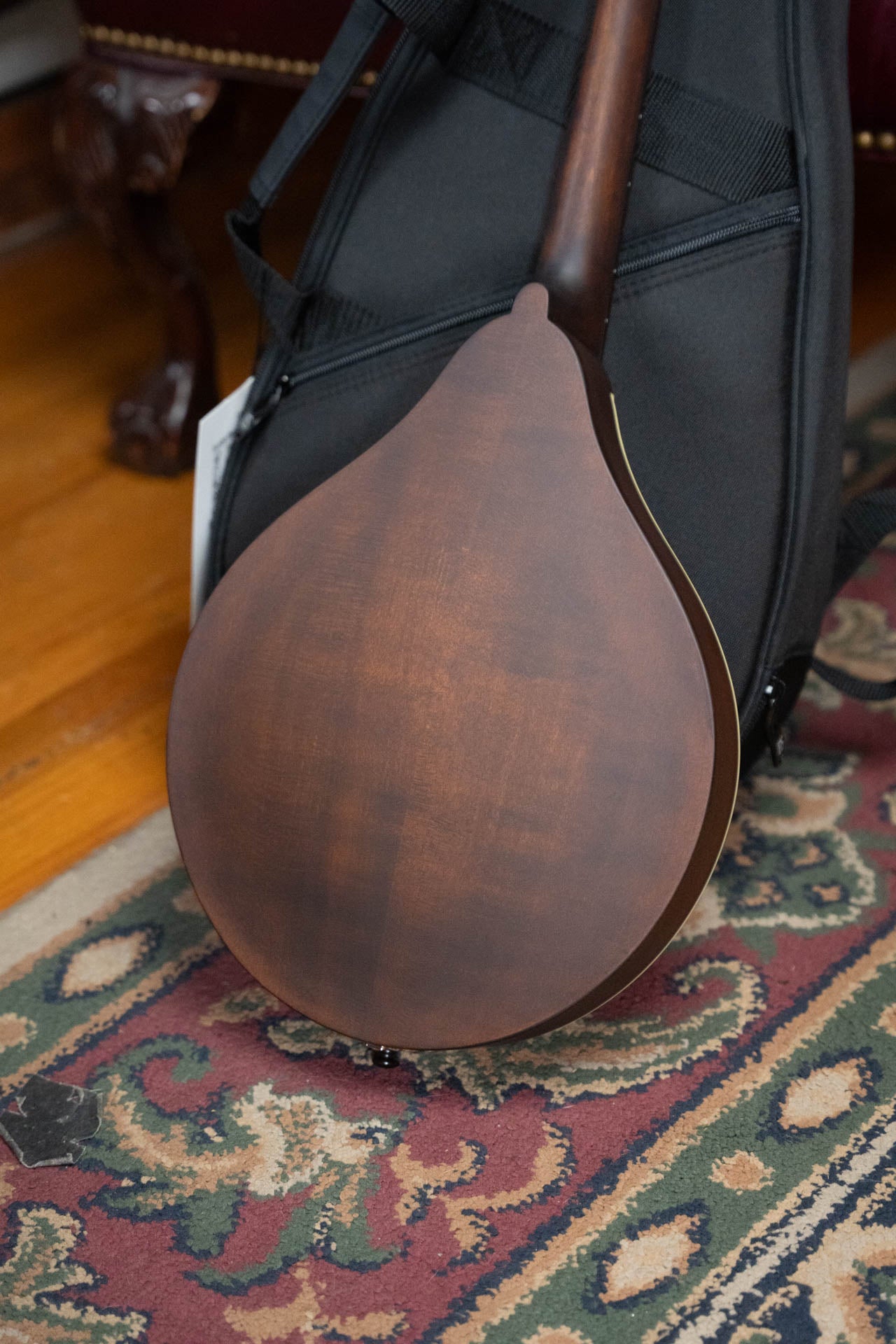
Two details make it easier to learn on. The fretboard has a radius, a slight curve that fits the way your hand wraps the neck, and the frets are larger than traditional mandolin frets. When we played it blind against a Kentucky KM-150 at the same price, John found the MD305 "fairly dramatically easier to play," and we both heard more definition in its notes, the kind of top end that cuts through when you're playing with other people. The full shootout is in our MD305 vs KM-150 comparison. Left-handed players can get the same mandolin as the MD305L for $739.
Jump to: the MD305 rundown at 3:56 · why cheap mandolins cost more to fix at 12:30 · the verdict at 16:08.
$1,099: the Eastman MD315, if you want the F-style
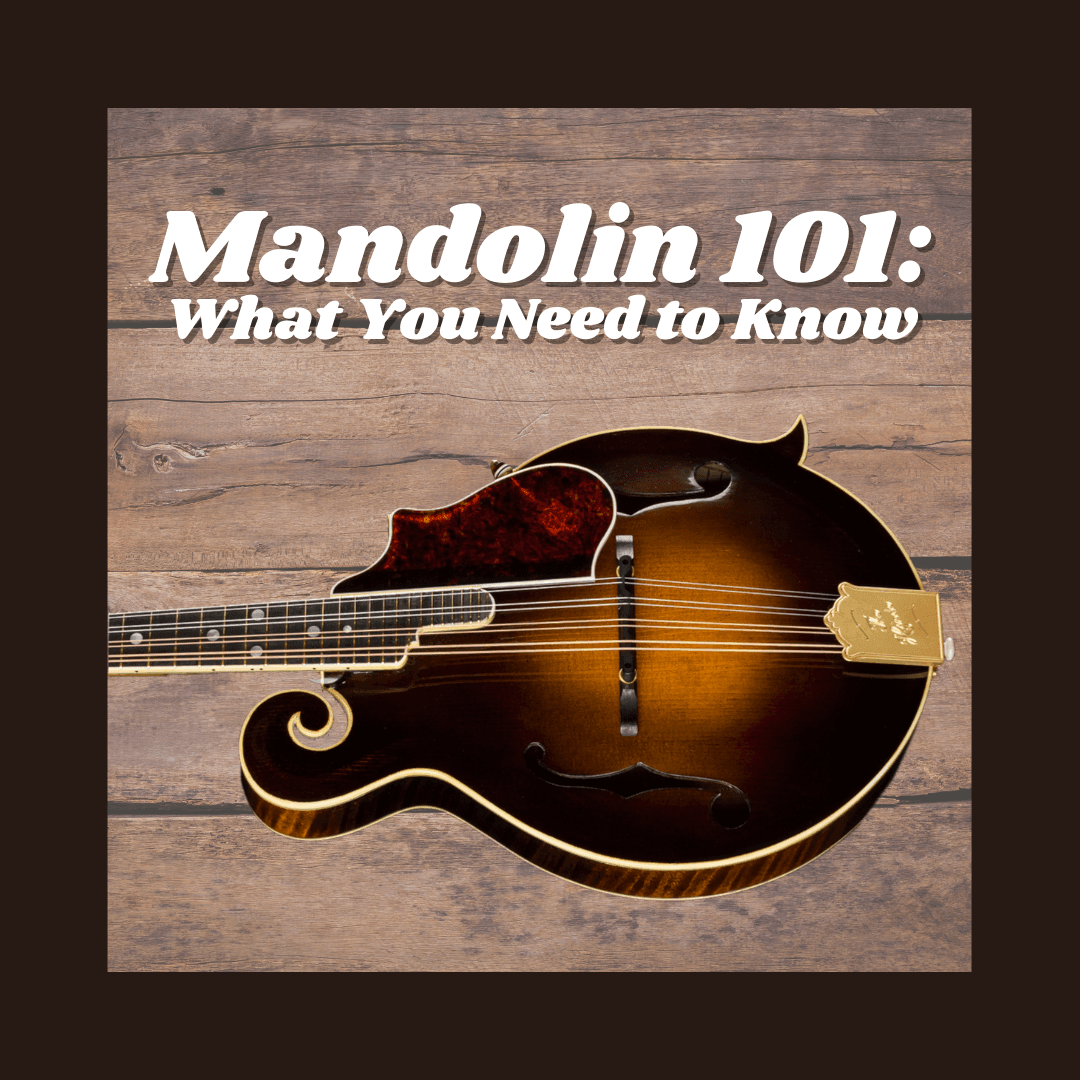
Bill Monroe played an F-style, and that's a big part of why bluegrass players want the scroll and points. The body inside is nearly the same as an A-style, but the carving takes far more labor, which is why the F costs more at every level. The Eastman MD315 is the MD305's build in an F-style body: hand-carved solid spruce and solid maple, an ebony fingerboard and the same cast tailpiece. Browse the units we have in on our MD315 page.
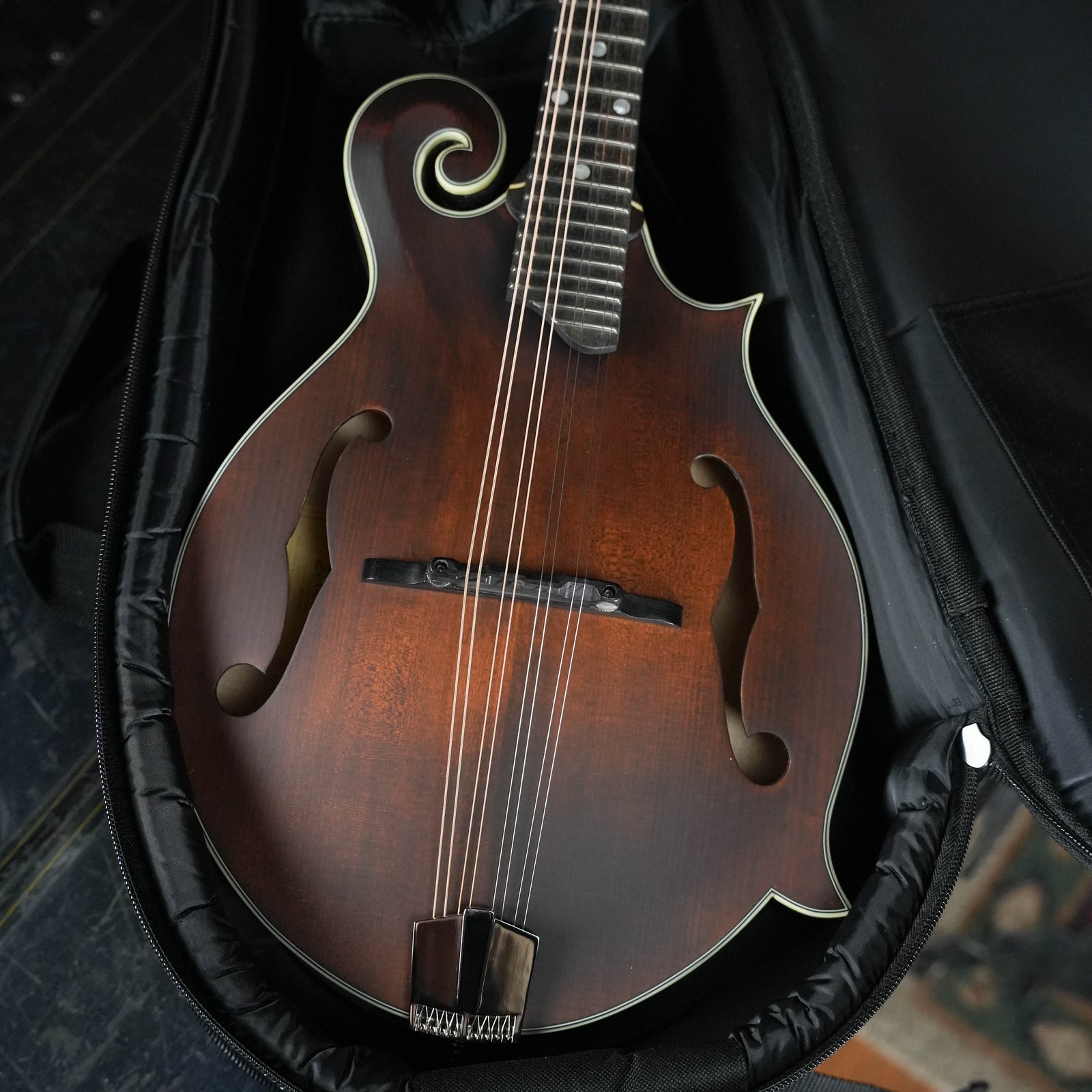
Is the F worth $370 more for a first mandolin? When we played A-style and F-style pairs blind from three brands, the A-styles tended to sound a little more bottom heavy and rounded, and the F-styles had more bite and a tighter low end, but a well-built A-style can outplay plenty of F-styles. Jeremy grew up thinking he had to play an F, until he took an A-style on the road. The F's extra point does keep the mandolin from sliding off your leg when you practice sitting down. Our rule for a beginner mandolin is the one from our A-style vs F-style comparison: at the same money, take the better-built A-style over a lesser F-style every time. Buy the MD315 because you want the F and the budget is there, not because you think a beginner needs one.
At $1,099 the MD315 is covered by the Dread-Not Guarantee: a full year to trade it in for up to 90% of the pre-tax purchase price in credit, less round-trip shipping, plus a 30-day in-home trial. If you fall hard for the instrument and want to move up, the first mandolin isn't money lost.
Where we'd stop, and what can wait
- Set the floor first. A carved solid top and a fitted bridge are the two things you can't add later for less than they cost up front.
- Pick the body for the music. If bluegrass is in the picture, go carved with f-holes.
- Choose an A-style unless the F is the dream. The money goes further in build quality.
- Let the looks break the tie. If a mandolin makes you want to pull it out of the case, that's worth a lot, so we'd never talk anyone out of a finish they love between two good builds.
What can wait: a hardshell case (the gig bag is fine at home), fancy binding and gloss finishes, and pickups. None of them help you learn your first chop chord. Once you have the mandolin, start with how to tune it and the six chord shapes we'd learn first.
The honest catch with any beginner mandolin under $1,100
Every model on this list is an Eastman, and that's partly because Eastman is what we have in stock at these prices today, and partly because we're the #1 Eastman dealer worldwide. Other brands at this level can be good. The Kentucky KM-150 we tested has a well-done gloss sunburst, a bound fretboard and a dark, deep, old-time tone that some players will prefer. But its bridge has a heavy foot that we think costs it tone, and its fretboard is flat with smaller frets, so it's harder to play for a new player.
The MD305 has trade-offs too. The satin finish and plain binding look modest next to a glossy sunburst, and the economy tuners work fine but won't impress anyone. Those are the corners Eastman cut so the money could go into the carving, and on a beginner mandolin that's the right place for it to go.
Related reading
- Eastman mandolin models compared, MD300 through MD800
- The mandolin instrument guide: the family, A vs F and your first mandolin
Which beginner mandolin should you buy?
If you're starting from zero and bluegrass is anywhere in the picture, buy the MD305. It's the beginner mandolin we'd hand our own students, and it's good enough to carry you through your first three or four years of playing. If the budget stops at $450, the PCH-M104 gets you a solid top and our inspection without the carving. If the F-style is what gets you practicing, the MD315 is the same build with the scroll. See everything in stock in our A-style and F-style collections, or browse every mandolin we carry.