

Table of Contents
The Eastman E15 vs E25 question comes down to one choice: mahogany or rosewood. Both are new for 2026 in Eastman's Antique Varnish Series, both wear a proper sunburst, and since the NAMM announcement we've fielded more questions about these two than about any other guitar Eastman showed this year. John has owned an Eastman slope shoulder since one of the first ones built, so we put both on camera and asked him what's really going on.
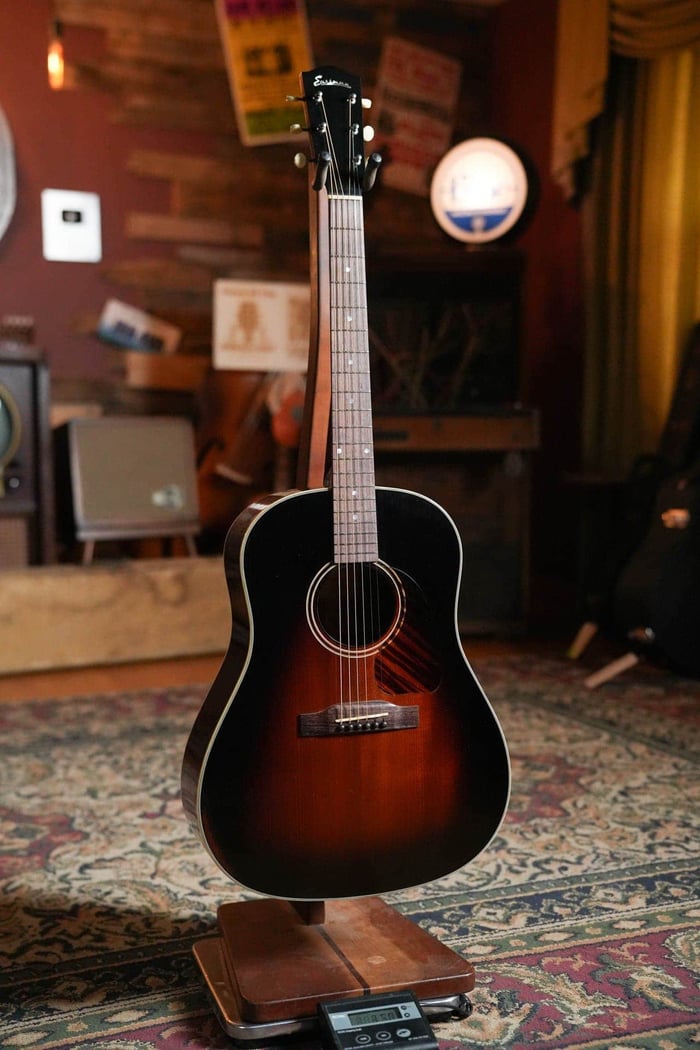
What's new in Eastman's Antique Varnish slope shoulders?
Eastman got its start as a violin shop, and varnish is its specialty. The Antique Varnish guitars have always sounded more vintage than most new guitars (our review of the walnut E22SS/V-SB covers an earlier one). John puts it this way:
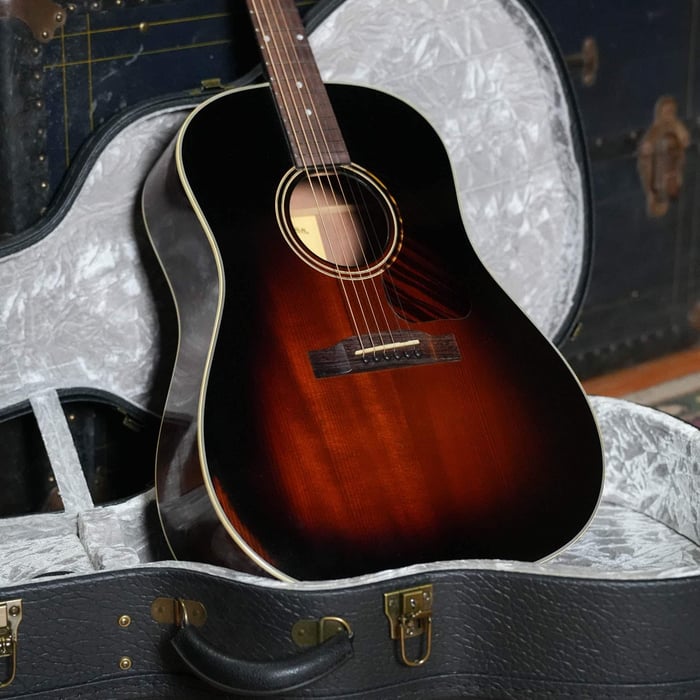
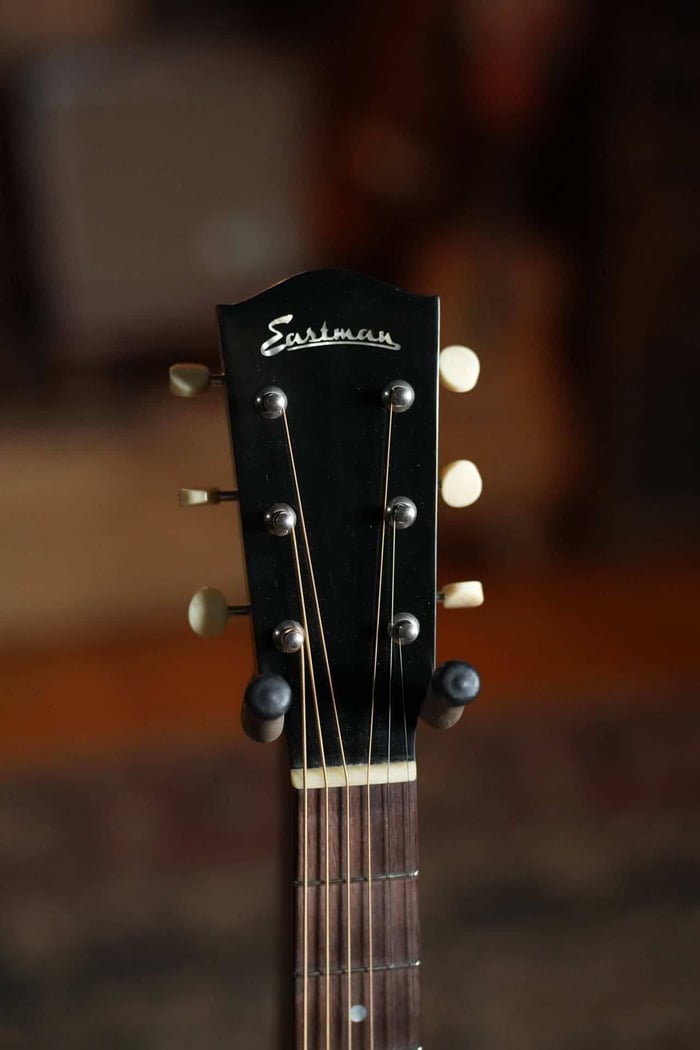
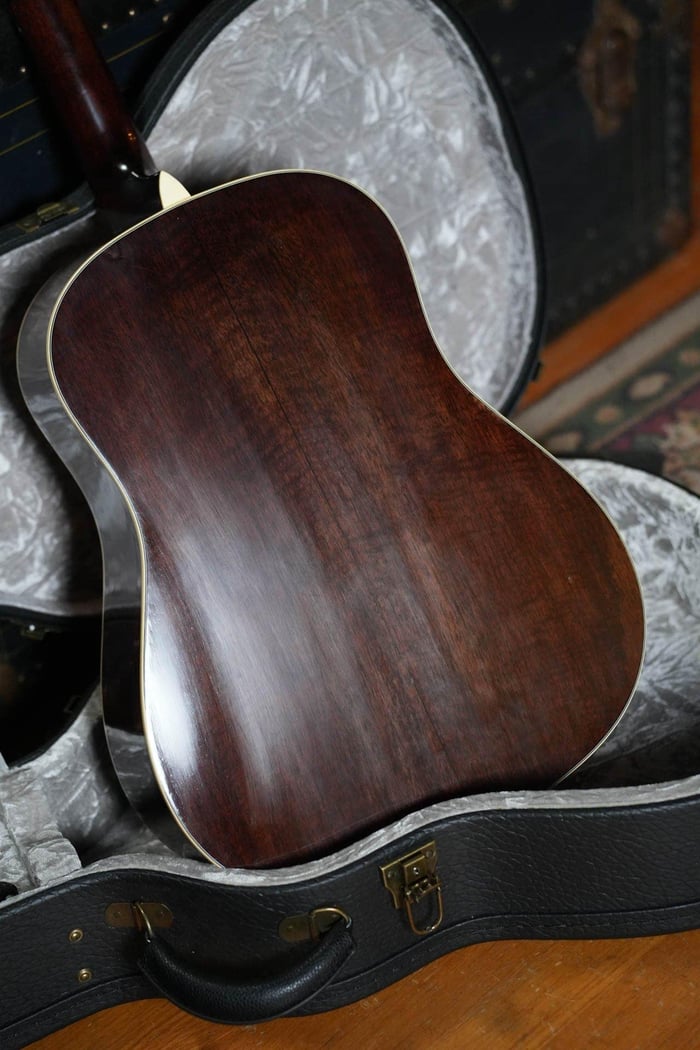
"They have a character. They have a warmth. They have a thickness to them. And especially for Gibson enthusiasts, that's a tone that's hard to get unless you buy a vintage Gibson guitar." — John ChapmanThe complaint was never the sound. It was the color. Eastman carried the bursts it used on violins and cellos over to its guitars, and to anyone raised on Gibson sunbursts they didn't look right. For 2026, Eastman fixed that. The E15 and E25 get a real Antique Sunburst varnish, and the E15 adds a J-45-style pickguard and cream tuner buttons. Now the guitar looks like the tone it already had.
Here's what the two share:
- Solid thermo-cured Adirondack spruce top. Heat-treated to act like aged wood, so the top feels broken in and has headroom when you dig in.
- Antique Sunburst varnish finish. Thinner and more resonant than a heavy poly finish. It also needs more care, which we'll get to.
- Slope shoulder body. The round-shouldered dreadnought shape behind the J-45 and Southern Jumbo sound: a thumpy low end with the attack softened just a little.
- Mahogany neck, rosewood fingerboard and bridge, bone nut, vintage-style tuners, and a case.
Jump to: the spec breakdown (1:45), who these are for (5:38), John's X factor (7:13), the drawbacks (9:26).
Eastman E15 vs E25: what's actually different?
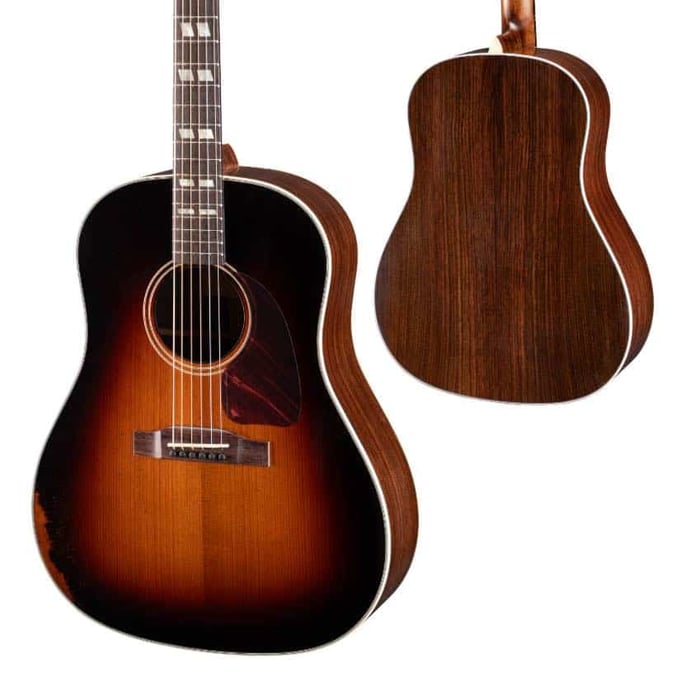
The E15 is Eastman's take on a classic J-45. The E25 moves to rosewood and borrows the Southern Jumbo's inlays. Here's how they line up, with specs from our listings:
| Eastman E15SS/V-SB | Eastman E25SS/V-SB | |
|---|---|---|
| Back and sides | Solid mahogany | Solid Indian rosewood |
| Fingerboard inlays | Pearl dots | Split parallelograms |
| Nut width | 1.72" | 1.75" |
| Scale | 24.75" short scale | Short scale |
| Vintage reference | Gibson J-45 | Southern Jumbo look, rosewood body |
| Price | $1,849 | $2,159 |
John calls the E25 "a mixed package," and he means it as a compliment. When he thinks of a rosewood slope shoulder from Gibson, he thinks of the Advanced Jumbo, which is a long-scale guitar. The E25 takes a different route: rosewood back and sides, the Southern Jumbo's parallelogram inlays, and a short scale with a wider 1.75" nut. It has a little of both worlds, and he still loves it.
How do the E15 and E25 sound?
Start with the E15, because it's the one Gibson people will line up for. You get the J-45 punch, the fullness of mahogany, and the thumpy overtones that make a slope shoulder the singer-songwriter's guitar. It's dry and focused, it records well, and it stays out of the vocal's way. John's own E10SS is exactly that kind of guitar for him. "It's not my bluegrass guitar," he says. It's his strumming, singalong, songwriter guitar, and it always will be.
The E25 trades some of that focus for a richer, bigger voice. Rosewood adds depth and sustain, so it's more than a J-45 in a different finish. For John, this is what makes the new look matter:
"You see it across a room. Now you get to hear what you see across the room." — John ChapmanEastman used to build an E20SS, and John loved it, but it had its own inlays and never looked the part. Bringing rosewood back into the lineup with the right look is why the E25 is on his personal want list.
What's the catch with a varnish finish?
We'd rather tell you now than have you find out after the guitar shows up. The varnish is what makes these sound the way they do, and it's also where the trade-offs are.
Varnish needs more care
Mandolin and fiddle players already know this: varnish is more delicate than a modern poly finish. If you want a guitar you never have to think about, keep that in mind.
"Varnish in general just takes a lot longer to cure. Years, really, to fully cure." — John ChapmanA soft, still-curing finish can pick up marks from the case. In hot weather, the lining fibers can stick to the varnish and pull at it when the guitar comes out. Good humidity control and a little attention go a long way. Our humidifiers and care products cover the basics.
Availability is tight
That same curing issue is why Eastman stops shipping varnish guitars through the hottest months. When we filmed this, Eastman had told us the two in the video were the only ones we'd see until the summer shipping pause ended, and that more would arrive closer to October. For John, this is the biggest drawback of the series. He also says it doesn't disqualify these guitars, and Eastman is working on better ways to get them delivered.
What John would have built
John's one wish, as a self-described guitar nerd: take the E25 further. He'd have made it a true long-scale, Advanced Jumbo-style rosewood slope shoulder, so it was more than another color option for the E10SS. "Eastman, if you're hearing me," he says, "build me something closer to the Advanced Jumbo." It's a wish for the next guitar, not a knock on this one.
Which one should you buy?
These are for the player who wants as much of a 1940s J-45 as possible without paying for, or finding, a real one. John's view is that nothing else on the market at this price has this look and this sound, and that it's more than a copy: Eastman refined these into its own guitars. If that's you, the Eastman E15 vs E25 decision comes down to three questions:
- What do you play? Strumming, songwriting and recording: the E15. You want a bigger, richer voice for fingerpicking or solo playing: the E25.
- How big are your hands? The E25's 1.75" nut gives fingerstyle players more room between strings. The E15's 1.72" nut feels closer to a vintage Gibson neck.
- Can you wait, and will you look after varnish? If yes to both, either guitar will reward you. If not, look at a modern-finish guitar in our full Eastman lineup instead.
Want the slope shoulder sound for less? John points to the Eastman E1SS. It's all solid wood, has plenty of that slope shoulder magic, and costs much less. Slope shoulders sit with our dreadnought guitars. And if nothing will do but the original, we keep Gibson guitars in stock to compare.
Where to get an Eastman E15 or E25
Whichever side of the Eastman E15 vs E25 question you land on, both models are listed with our Eastman guitars, and a preorder holds your place in line as the next varnish shipment comes in. We're the #1 Worldwide Dealer for Eastman Guitars & Mandolins, so when varnish guitars ship, we see a lot of them.
Every guitar goes through our 23-Point Professional Inspection before it ships, so it arrives ready to play.
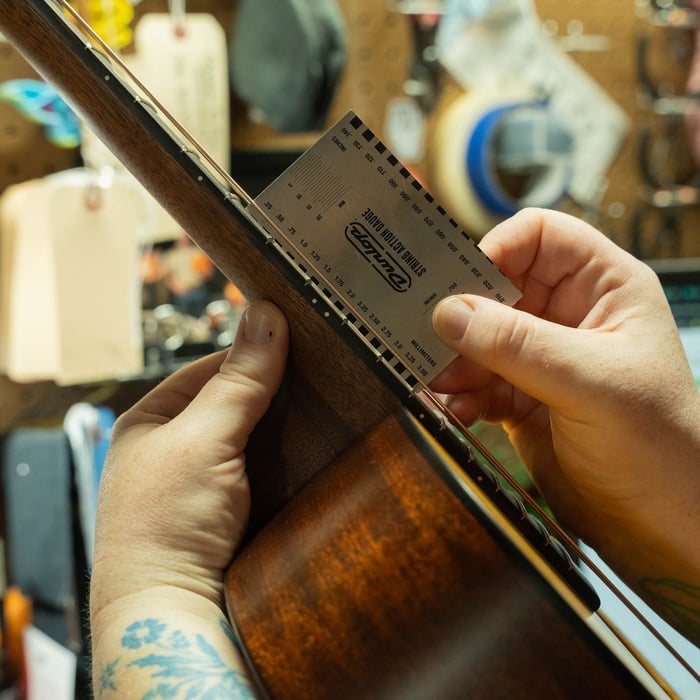
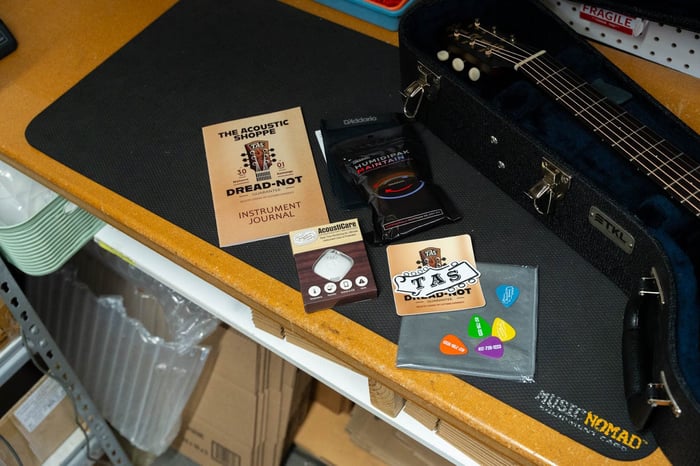
Both of these are covered by the Dread-Not Guarantee: a 30-day in-home trial, plus a full year to trade it back toward your next instrument at 90% credit (pre-tax, less round-trip shipping) if your taste changes. Each one also arrives with our humidity kit, which matters more than usual on a varnish finish.
48-month financing through Synchrony is available too. Still deciding? Browse every guitar in stock, or reach out and we'll tell you which one John would take home.