
If you play mostly alone, at home or on a small stage, you've probably wished for a second guitarist who knows every song and never shows up late. You can get close with a looper pedal, a reverb pedal, a cable and a small amp, but that's a lot of gear to carry for a coffee shop set or a quiet night of writing. The Yamaha TAG3 C puts the looper, reverb, delay and chorus inside a solid Sitka and mahogany dreadnought, and the effects come out of the guitar's own body with nothing plugged in.
The question every player asks is whether all that technology costs you the guitar. So we handed the Yamaha TAG3 C to our sales team, let each of them play it as long as they wanted, and asked what they'd change. Several of them want one. The short answer: turn everything off and it's still a good mahogany dreadnought, and turn everything on and it becomes the best practice tool most of us have played.
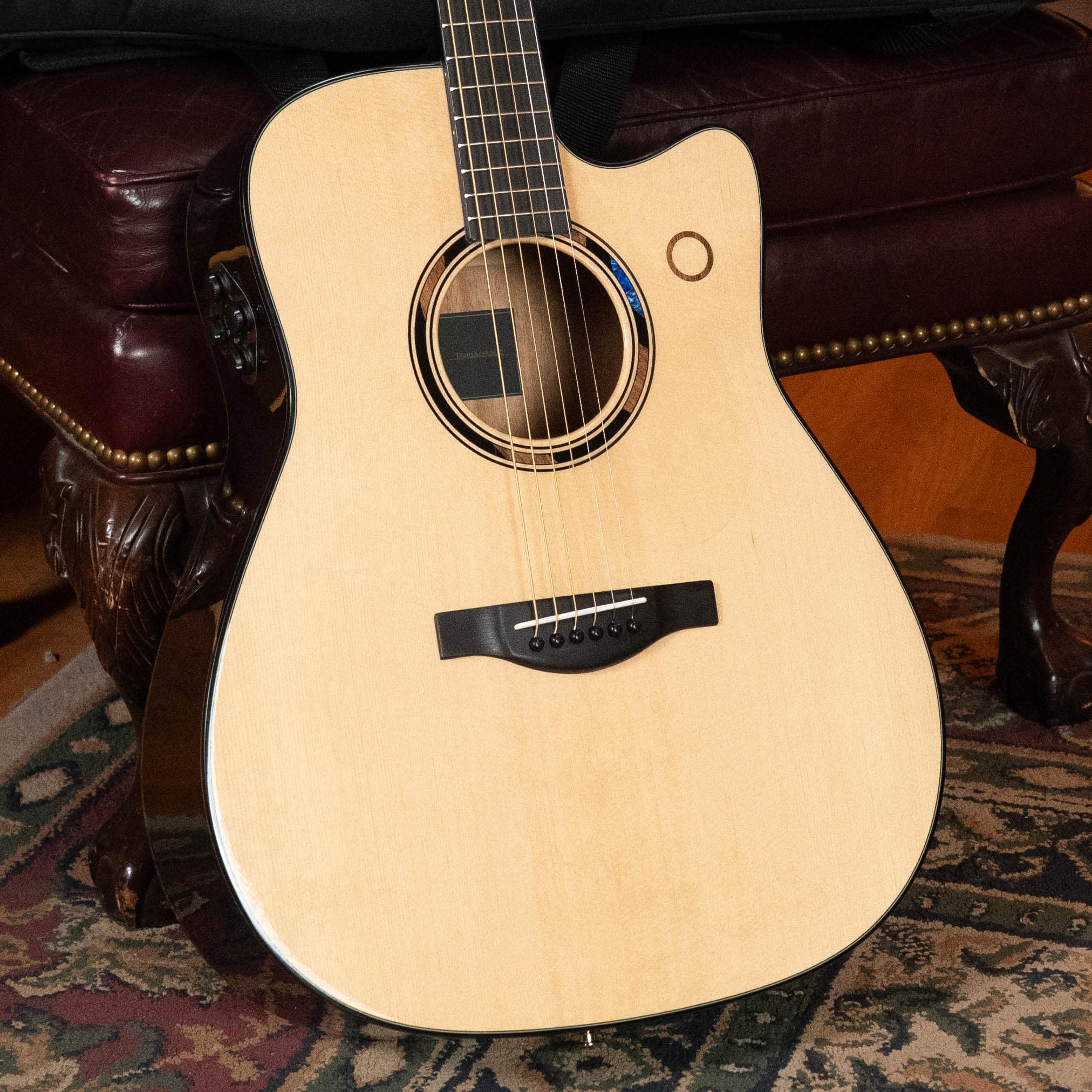
What the Yamaha TAG3 C actually does
TransAcoustic is Yamaha's name for a system that lets the guitar itself produce reverb, chorus and delay, so you hear the effect in the room with no amp, no pedals and no cable. Plug it in and it works as an acoustic-electric too. The TAG3 C adds a looper you control with a tap sensor on the body, Bluetooth audio so you can play along with a track from your phone, and a lithium-ion battery that charges through a magnetic connector.
The controls are a few buttons on the side of the body, and that layout matters more than any feature list. The looper takes a little learning, but it's simple: you can figure out how to make a loop within the first three or four minutes of sitting down with it, and the effects work together without any menus to dig through.
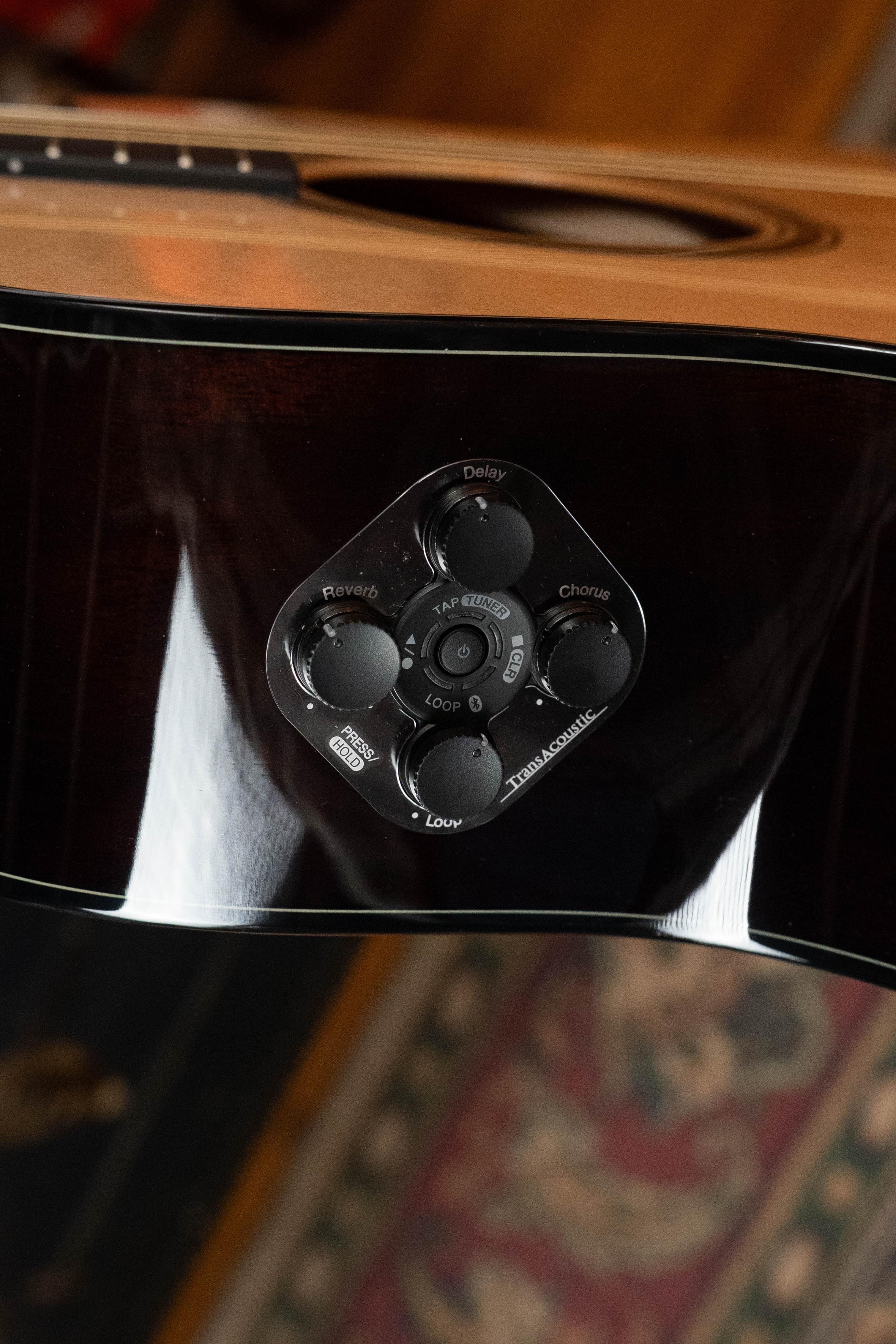
Jump to: how it sounds unplugged and plugged in (5:53) · what we'd change (9:03) · the looper as a practice tool (12:58) · who it's for (14:38).
How it sounds with everything off
This is the part that sold us. With the effects off, the Yamaha TAG3 C sounds like a good mahogany dreadnought, and that matters because a guitar like this has to earn its place on the nights you don't want any of the tricks. It has the balanced Yamaha voice you hear across their acoustic line, a little scooped in the mids, which makes it a strong rhythm guitar that won't fight a singer for space.
The Sitka spruce top is a big part of why the mahogany works here. Spruce brings out more midrange than an all-mahogany build would and keeps the top end from getting sharp, so strummed chords stay full instead of brittle. One of our team put it simply:
"If you turn everything off, it still sounds like a good mahogany guitar."
Turn the reverb and delay on and the guitar gets more fun to sit with, and every setting we tried stayed clean and clear, the way a good standard pickup sounds. One of us thought it leans a little more modern than a traditional Yamaha dreadnought, which fits a guitar built around effects and loops.
How it plays
Yamaha didn't stop at the electronics. The setup on the guitar we played was low and easy, and it looks like Yamaha paired that low action with a slightly heavier string gauge, which gives back some of the volume a low setup can cost you. The neck is an even C, on the slimmer side of modern, with no hot spots anywhere up the fretboard. If you've played our Yamaha FG9, the neck will feel familiar, and one of our team called the TAG3 C "a boutique level feeling guitar" to play.
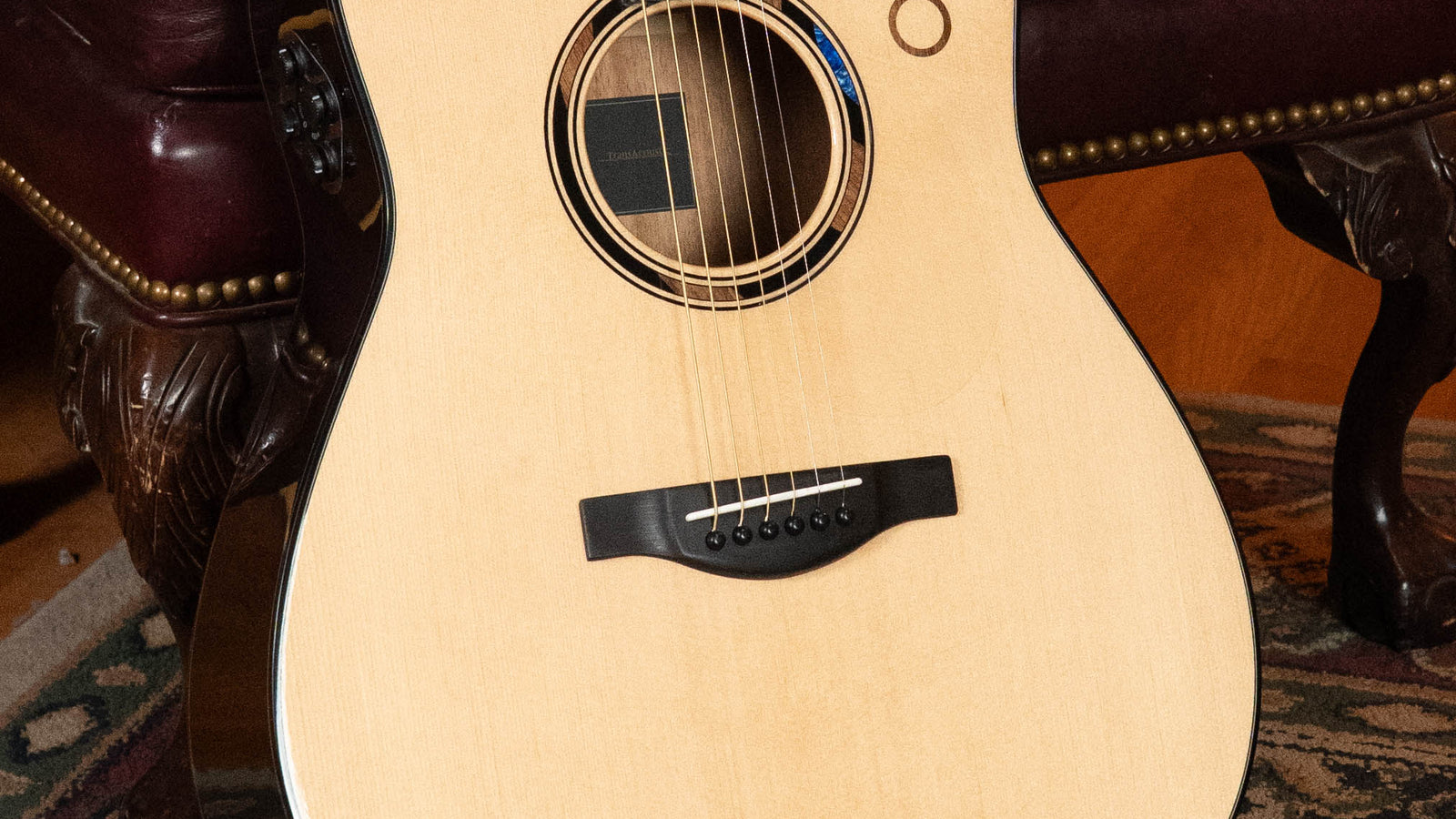
Everything is put together extremely well, which is what we expect from Yamaha, and the appointments are classy rather than flashy: open-gear tuners in champagne gold, an ebony fretboard and bridge, black binding, and a rosette more than one of us singled out. That last point says a lot about how Yamaha approached it. The guitar under the electronics is a solid platform any player would enjoy, not a shell built to hold a circuit board.
Yamaha TAG3 C specs
| Spec | Yamaha TAG3 C |
|---|---|
| Body | Dreadnought with cutaway |
| Top | Solid Sitka spruce |
| Back and sides | Solid mahogany |
| Fretboard and bridge | Ebony, 15 3/4" radius |
| Scale length | 25 9/16" |
| Electronics | TransAcoustic reverb, chorus and delay, tap looper, Bluetooth audio |
| Power | Lithium-ion battery, magnetic charging |
| Finishes and price | Natural (NT) or Sandburst (SDB), $1,899.99 each |
The looper is the reason to buy it
A lot of us learned to solo by pulling up a backing track on YouTube and playing over it. With the Yamaha TAG3 C you build your own backing track, in your key and at your tempo, and play over it right away. That's why we keep calling it a creator's tool. You can sit at home for hours writing parts, layering a melody over a rhythm, and trying new ideas.
The loop also tells on you, in a good way. When something you just played comes straight back at you, you hear immediately whether it was good or bad, and one of our team found it was teaching him which mistakes he makes most often. That kind of instant feedback is hard to get any other way when you practice alone.
There's one adjustment to make. The tap has to land right on the downbeat as you come into the next pass of the loop, so you'll notice your picking hand creeping from the edge of the soundhole toward the tap spot as the loop comes around. It takes a little practice, and after that it's second nature.
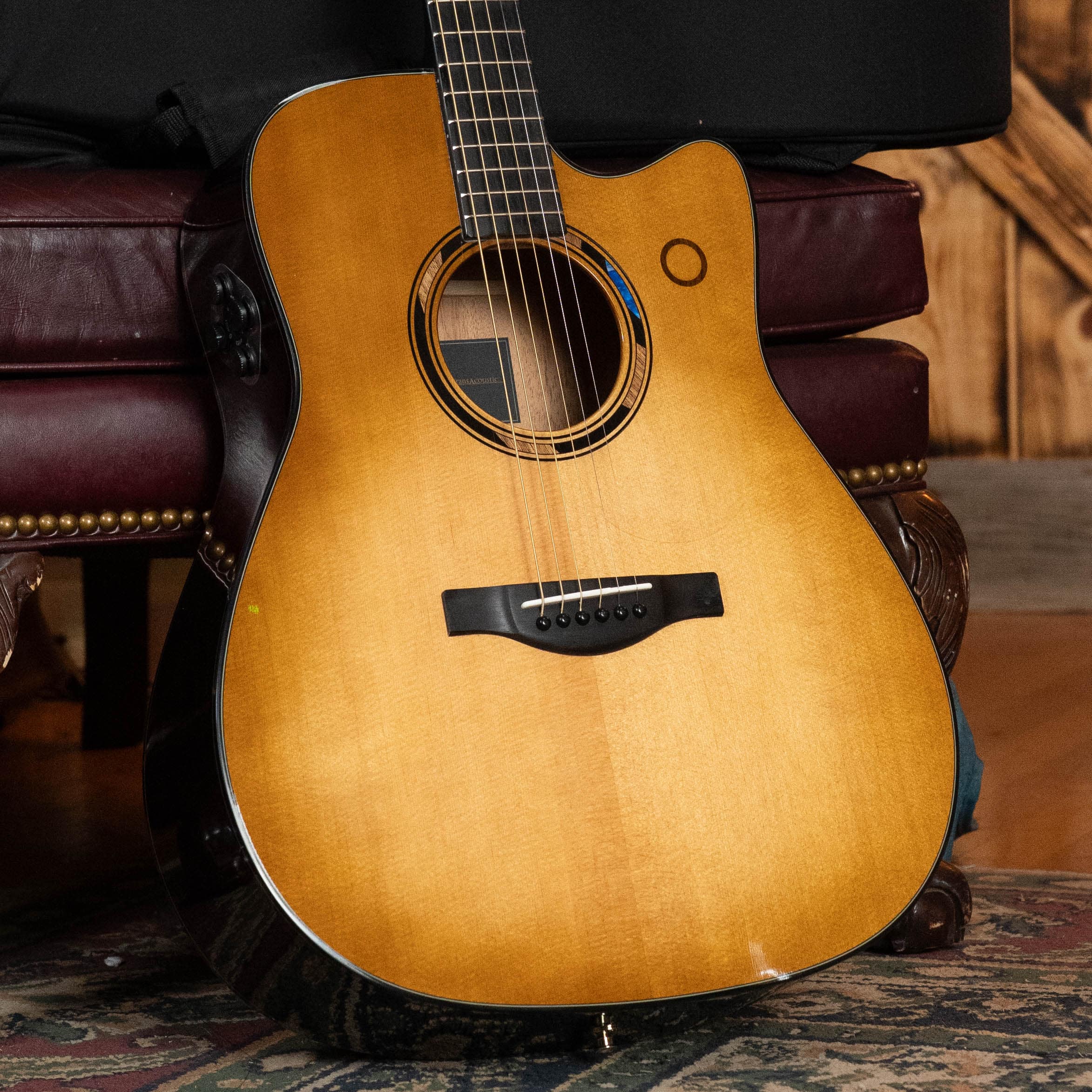
What we'd change
Nobody on our team found a deal-breaker, but these are the honest complaints:
- The cutaway. One of our team is "more of a traditional dreadnought-shaped kind of guy" and would rather have the full shoulder, though he says it wouldn't stop him from buying one. Another likes the cutaway for reaching up the neck on solo parts.
- The weight. It feels a little hefty, which makes sense with a battery and the TransAcoustic hardware inside. If he could change one thing, he'd make it a hair lighter.
- The clear pickguard. One of us would leave it off and let the top show, scratches and all. It's a minor thing next to how good the rosette looks.
Who the Yamaha TAG3 C is for
This guitar fits more players than most acoustic-electrics we sell, and our team came up with a long list:
- The player who practices alone. Building a backing track and playing over it is the best use of the guitar, and it's where most of us would spend our time.
- The solo performer. A one-person act at a hotel lobby or a coffee shop can loop a rhythm part and play lead over it without a pedalboard.
- The front-person in a band. In a church group, a bar band or a wedding band, it's a strong plugged-in rhythm guitar, and the effects let you cover a lead part when you need one.
- A newer player. It's comfortable enough for someone buying a first acoustic of their own, and the effects are easy to navigate. For a younger player, the delays, choruses and loops can keep them playing for hours.
If you want the same idea in a smaller body, Yamaha introduced the TAS3C concert model at NAMM 2026 (our Yamaha NAMM 2026 recap covers the launch), and we have the TAS3C-NT #0095 in stock at the same price. If you'd rather have a plug-in-only guitar with a great pickup and no onboard effects, read about the Atmosfeel pickup in the FG9, or browse every acoustic-electric guitar we stock.
Buying a Yamaha TAG3 C from us
The Yamaha TAG3 C is $1,899.99 in either finish. We have the natural TAG3C-NT #0558 and the Sandburst TAG3C-SDB #0426 in stock, along with a few more serial numbers in both colors, and every one of them gets our 23-Point Professional Inspection before it ships.
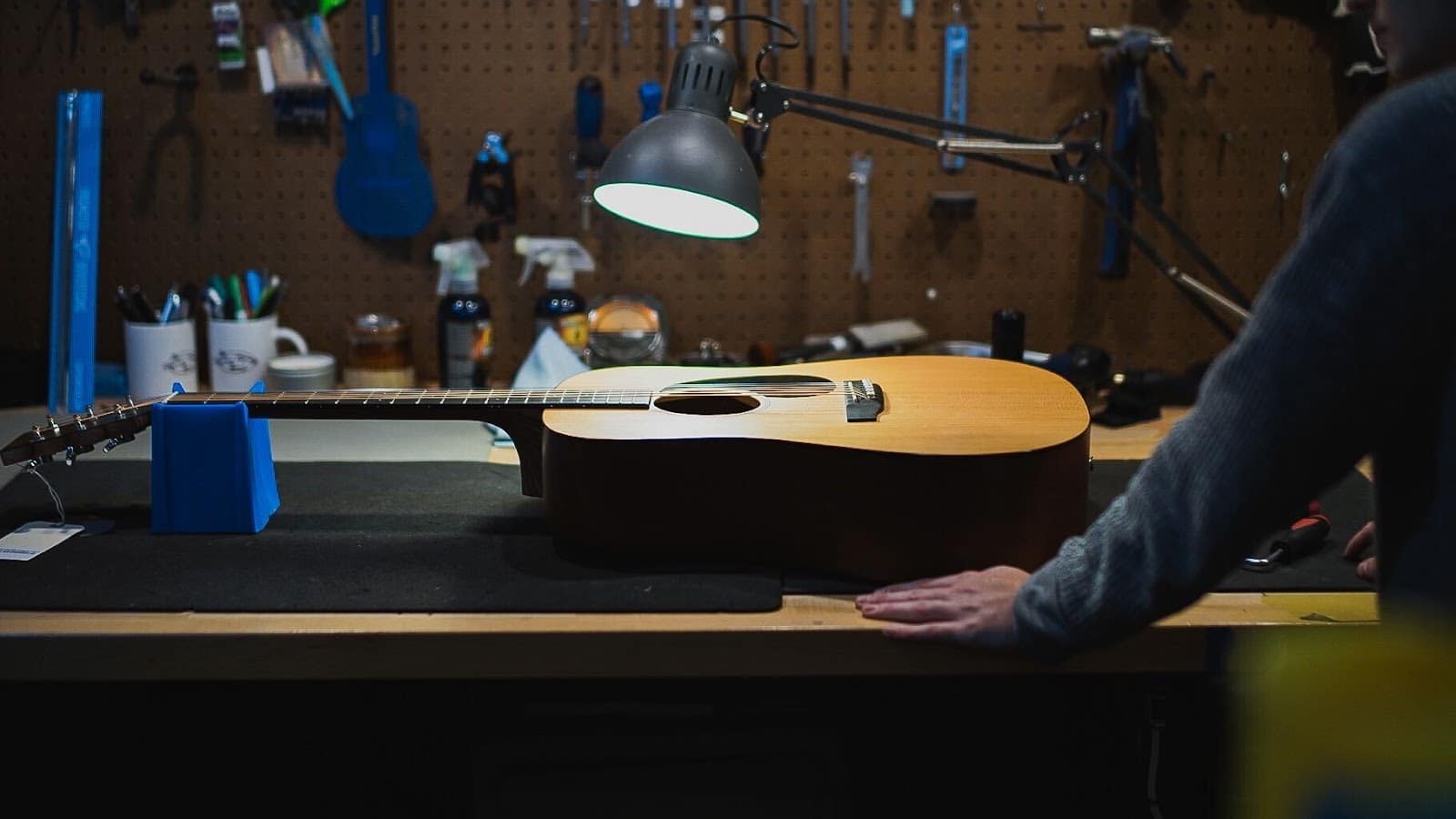
Because it's over $1,000, the TAG3 C also comes with our Dread-Not Guarantee: a full year to trade it in for up to 90% of the pre-tax purchase price in credit, less round-trip shipping, plus a 30-day in-home trial. If the looper turns out not to be how you play, you're covered.

We first played the TAG3 C before it was released, when Yamaha showed it to us privately at the Fretboard Summit. If you want to see that first look, here it is:
Related reading
- Yamaha LL16 review: how it plays and where it falls short
- Yamaha prototype guitars at Fretboard Summit 2026
If you write songs, practice alone or play solo gigs, the Yamaha TAG3 C is the acoustic we'd point you to first, and it's still a good dreadnought on the nights you leave the effects off. If you want a traditional dreadnought with no cutaway and nothing inside, it isn't your guitar, and our full range of acoustic guitars has plenty that are. Browse every Yamaha guitar in stock, or call the shop and we'll tell you how the ones on our wall sound today.