
Table of Contents
- Why Yamaha brings prototype guitars to Fretboard Summit
- An FS9 in flame maple: loud for a small body
- The fingerstyle prototype has the best small fix of the show
- The Ghost FG: Madagascar rosewood on FG9 bones
- Hokkaido spruce: old piano wood in an FG9
- The in-stock Yamahas these prototypes start from
- The catch with Yamaha prototype guitars
- Who should look at Yamaha right now
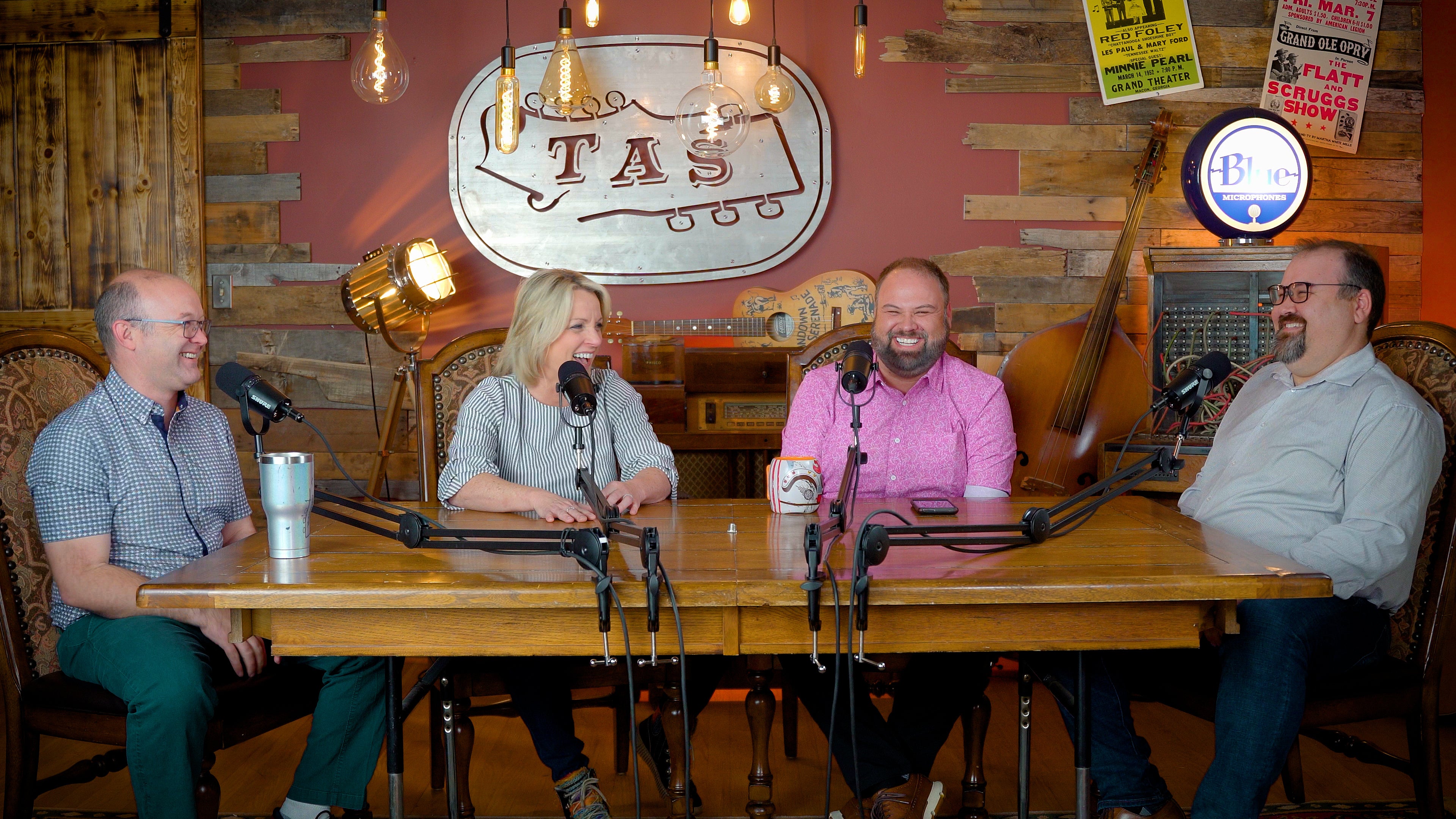
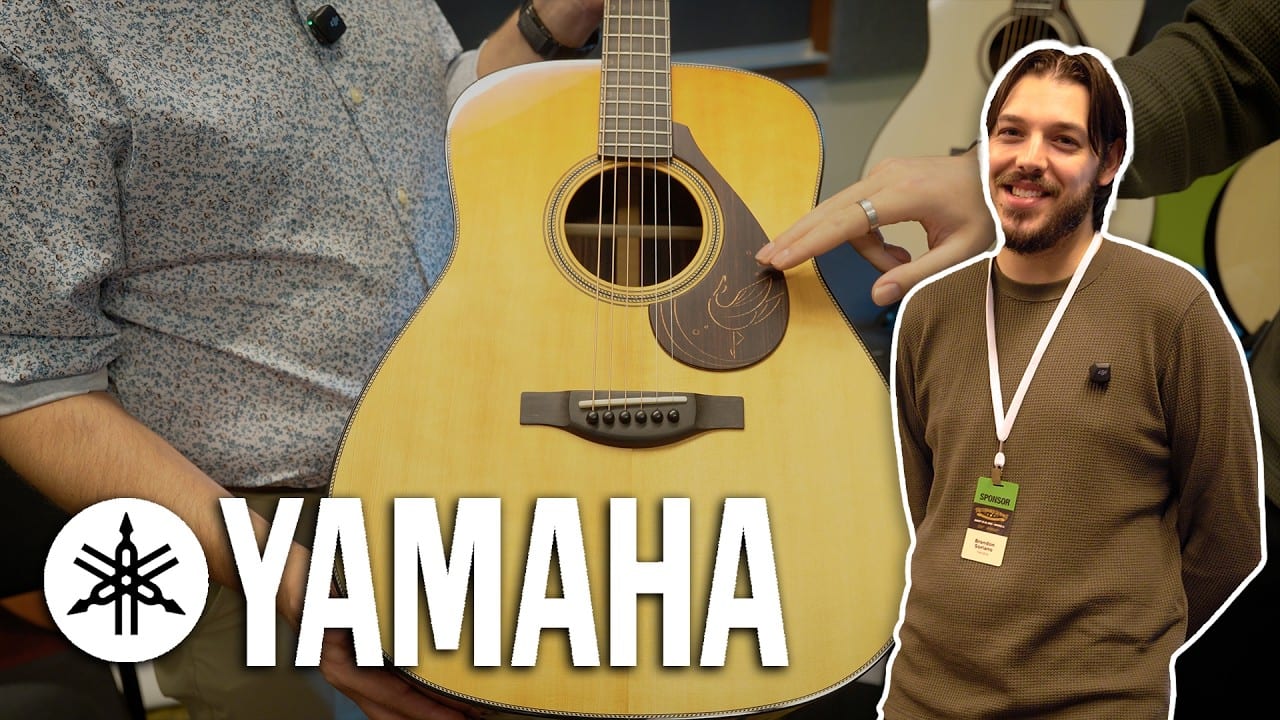
Yamaha prototype guitars filled most of Yamaha's room at Fretboard Summit 2026. Brandon from Yamaha walked us through four builds that aren't in any catalog: a flame maple FS9, a fingerstyle guitar with a European spruce top and an arm bevel, a white-burst "Ghost FG" in Madagascar rosewood, and an FG9-style dreadnought topped with Hokkaido spruce that once sat in Yamaha's piano soundboard stock. None of them are for sale. All of them tell you where Yamaha's high-end acoustics are heading.
Yamaha's room moved this year to a quieter space with taller ceilings (the plan for next year, as a joke, is guitars hanging from it and picks on fishing rods). The prototypes come from Andrew, who builds Yamaha's acoustic prototypes in Los Angeles. Alongside the Yamaha prototype guitars, the one production model in the room was the TAS3C, which we already stock.
Why Yamaha brings prototype guitars to Fretboard Summit
Brandon put it plainly: a show full of builders is where Yamaha tests ideas on the people most likely to have an opinion about them. The team in Los Angeles sends guitars back and forth with Japan, and the feedback from a room like this, and from the comments under our video, helps decide which of these Yamaha prototype guitars ever reach the full market.
"Why would we build a new model if we weren't fixing something?" (Brandon, Yamaha)
That line explains the small stuff in this tour. A magnetic truss rod cover is a fix for a screwdriver you never have. A comfort bevel is a fix for a sore forearm. If you've played the FG9, you already know the base these ideas start from. Our ten things to know about the Yamaha FG9 covers that guitar.
Jump to: the flame maple FS9 at 1:26 · the fingerstyle prototype at 3:31 · the Ghost FG at 9:14 · Hokkaido spruce at 11:28.
Here are the four Yamaha prototype guitars, in the order Brandon showed them:
- An FS9 with flame maple back and sides and an Adirondack top
- A modern fingerstyle guitar: European spruce over Indian rosewood, with an arm bevel
- The "Ghost FG": FG9 construction, transparent white burst, Madagascar rosewood
- An FG9-style dreadnought with a Hokkaido spruce top and Indian rosewood
An FS9 in flame maple: loud for a small body
The FS9 is the concert-size partner to the FG9, and it normally comes in mahogany or Indian rosewood. This one keeps every FS9 spec and swaps the back and sides for flame maple, under an Adirondack top. Andrew added a firestripe guard and red-tinted inlays where the production guitars use a darker, warmer color.
"It's loud. It's very strong sounding, I would say, for a small body guitar." (Brandon, Yamaha)
Brandon credits the transient response of maple, and in a small body he calls that a cool thing to have. Andrew also built a version last year with green inlays and a green route on the side. He still has it, and our host and Brandon have both called dibs. Shared custody came up.
The fingerstyle prototype has the best small fix of the show
Of the Yamaha prototype guitars in the room, this one was built for the modern fingerstyle player: chord-melody arrangements, light picking, a little percussion on the top. Yamaha went with a softer European spruce top, Indian rosewood back and sides, and a flatter, almost D-shaped neck profile on a multi-piece neck. There's a comfort bevel where your strumming arm crosses the lower bout, built with oversized curving, carving and veneers. A pattern of overlapping circles runs from the 12th fret through the rosette, a kimono reference that Brandon tied to Yamaha's Japanese heritage.
Then there's the magnetic truss rod cover. Our host wanted it on every Yamaha, and on his own FG9.
The guitar is all acoustic for now. Brandon said Yamaha is still working out what a pickup for a guitar like this would look like and how it would differ from the FG9's. Our take after playing it: it's sold as a fingerstyle guitar, but it handles modern strumming well too. It isn't a traditional powerhouse. It sits in the hybrid space, on the sensitive side of the FG9, which you'd hammer with a flatpick.
"I think it's time for people to start really recognizing the details." (our host)
That was the point we kept coming back to. Yamaha buyers talk about value first. Look at how the laminated neck builds into the heel on this guitar and waits until the last moment to become the standard heel shape. That's a builder's detail, and it's easy to miss.
The Ghost FG: Madagascar rosewood on FG9 bones
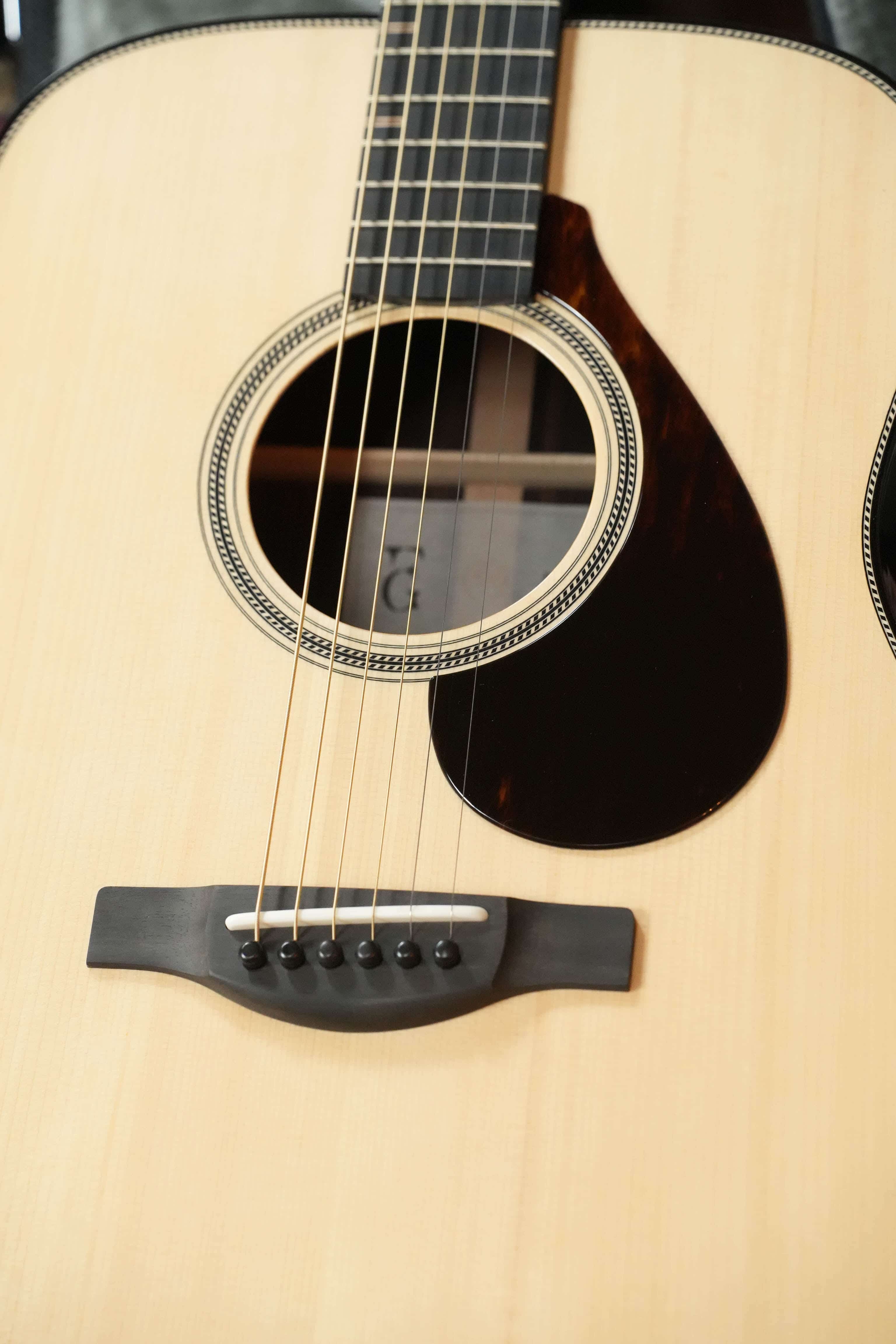
Two of the four Yamaha prototype guitars keep the FG9's construction (bolt-on neck, bracing pattern, tapered top) and change only woods and looks. The first is the Ghost FG. Its transparent white burst looks white from some angles and natural from others, with a soft burst at the edges. The details:
- Madagascar rosewood back and sides (the swirls give it away)
- Adirondack spruce top
- Bound pickguard, plus fingerboard binding that replaces the slotted kumiki wood of the production FG9
- Red side dots
- Japanese rope binding around the back and down the center seam
Brandon called it the FG9 "a little elevated." Our host said he'd have Andrew build him one.
Hokkaido spruce: old piano wood in an FG9
The last prototype has the best story. Hokkaido is Japan's northernmost region, with long, hard winters. Yamaha found a stockpile of old Hokkaido spruce in its wood library that had been set aside for piano soundboards, and Andrew used it to top an FG9-style dreadnought with Indian rosewood back and sides. Brandon called the finish a honey fade, a subtle orange-to-natural tint. The wooden pickguard carries a crane, a bird native to Hokkaido, done in wood and gold foil, and the truss rod cover matches.
Our host had talked it over with Andrew the day before, and he hears it between Sitka and Adirondack: some of the Adirondack punch and transient response, with a warmth that pulls it back. The low end is tight and bold, and it doesn't sound like the FG9's low end. Brandon had landed in the same place:
"It kind of has the air and the sheen of Sitka with the bloom of Adirondack." (Brandon, Yamaha)
The darker color near the bottom of the top is mostly the wood itself. Hokkaido spruce comes in darker than Sitka or Adirondack, and the honey fade starts higher up.
The in-stock Yamahas these prototypes start from
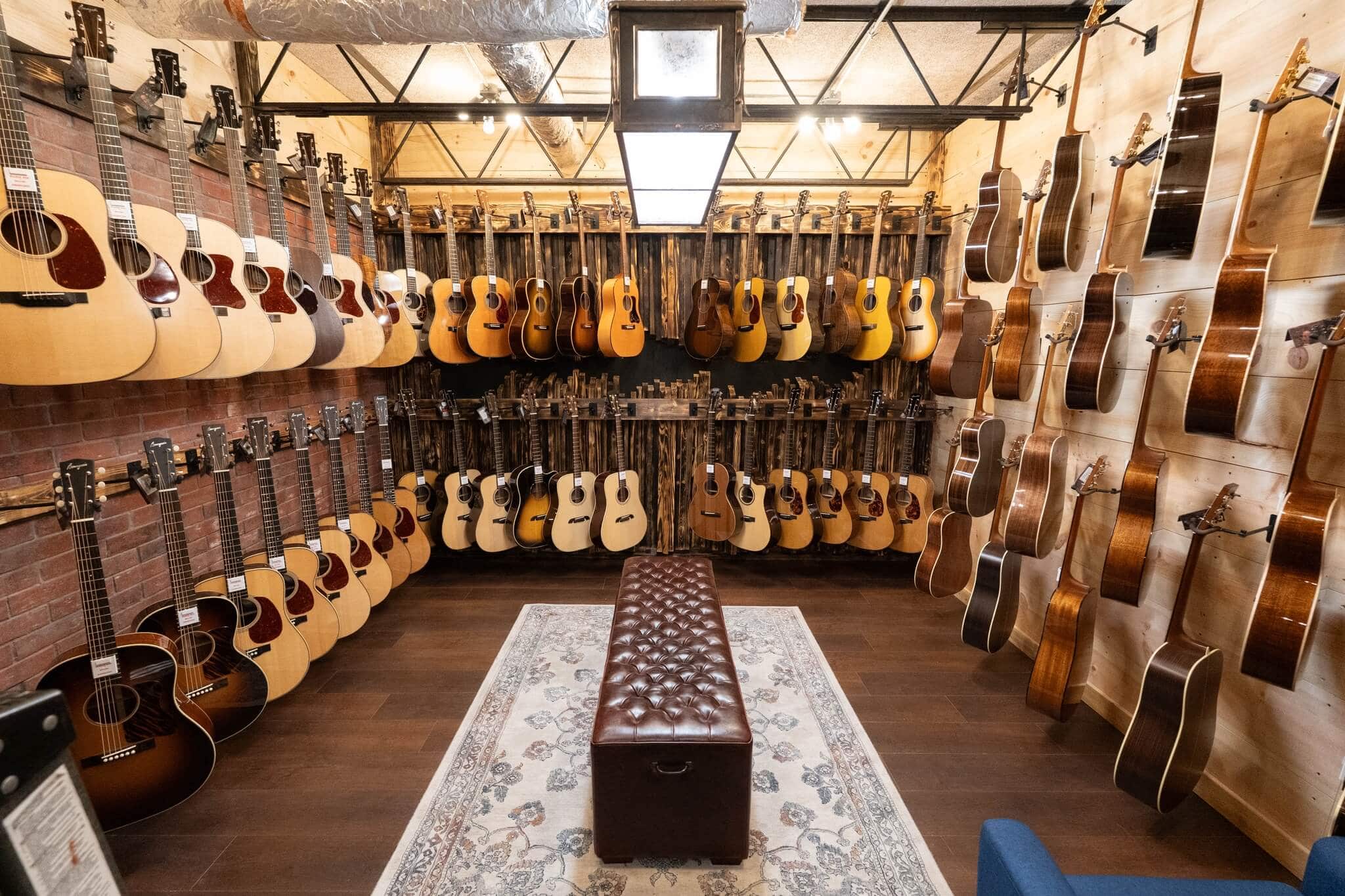
You can't buy one of the Yamaha prototype guitars, but you can buy the guitars they're built on. These are on our floor now, with specs from our listings:
| Model | Body | Top / back and sides | Price |
|---|---|---|---|
| FG9 M #112A | Dreadnought | Adirondack / African mahogany | $4,099.00 |
| FG9 R NT #126A | Dreadnought | Adirondack / Indian rosewood | $4,199.99 |
| TAS3C-NT #0095 | Concert, cutaway | Sitka / mahogany, TransAcoustic | $1,899.99 |
| TAG3C-SDB #0426 | Dreadnought, cutaway | Sitka / mahogany, TransAcoustic | $1,899.99 |
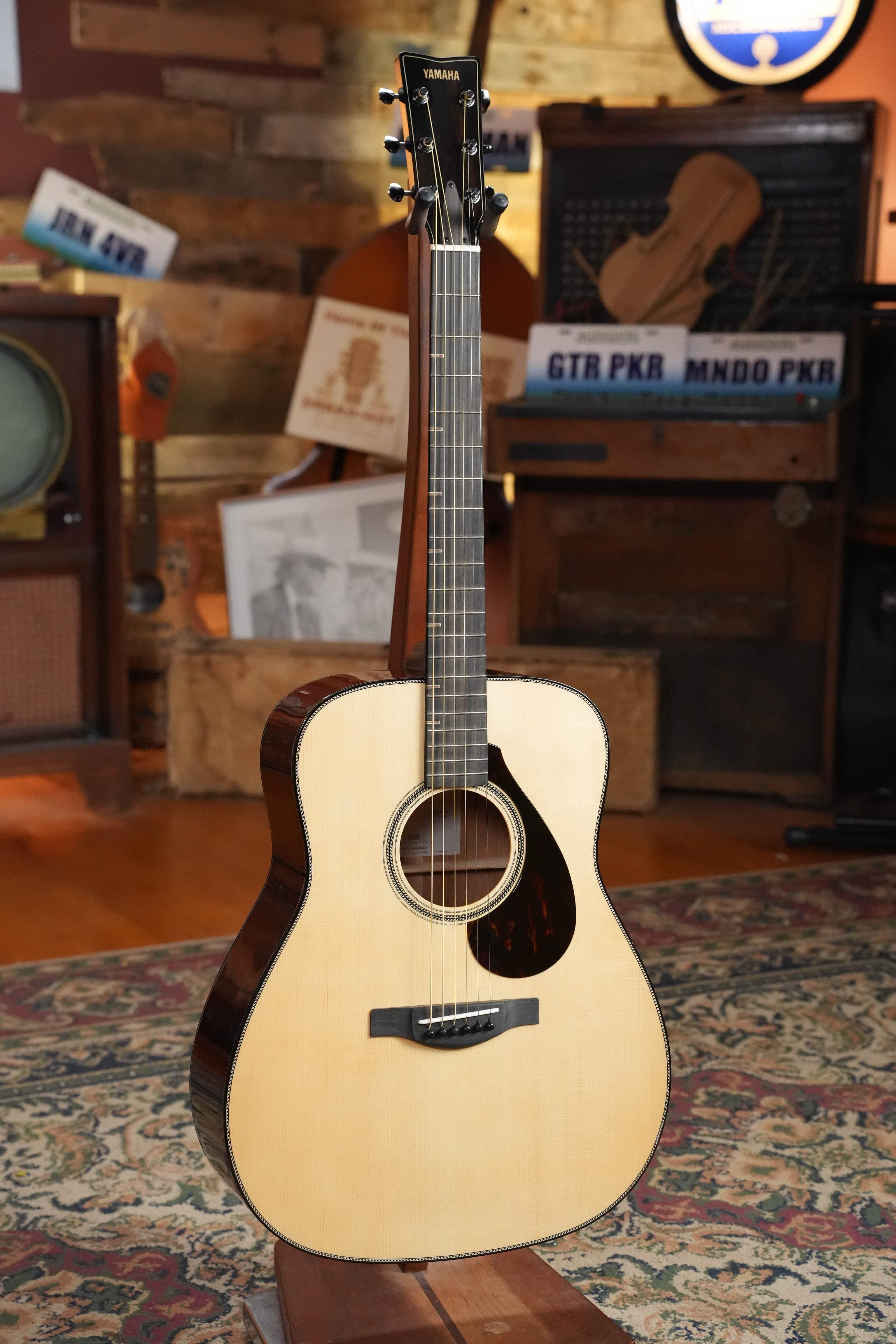
Both FG9s have a 25-9/16" scale and a 1-3/4" nut. The mahogany FG9 M is the direct, punchy one. The rosewood FG9 R NT has the deeper low end, and it's the closest thing in stock to the Ghost FG and the Hokkaido build. The Atmosfeel pickup system is covered in our look at the FG9's Atmosfeel pickup.
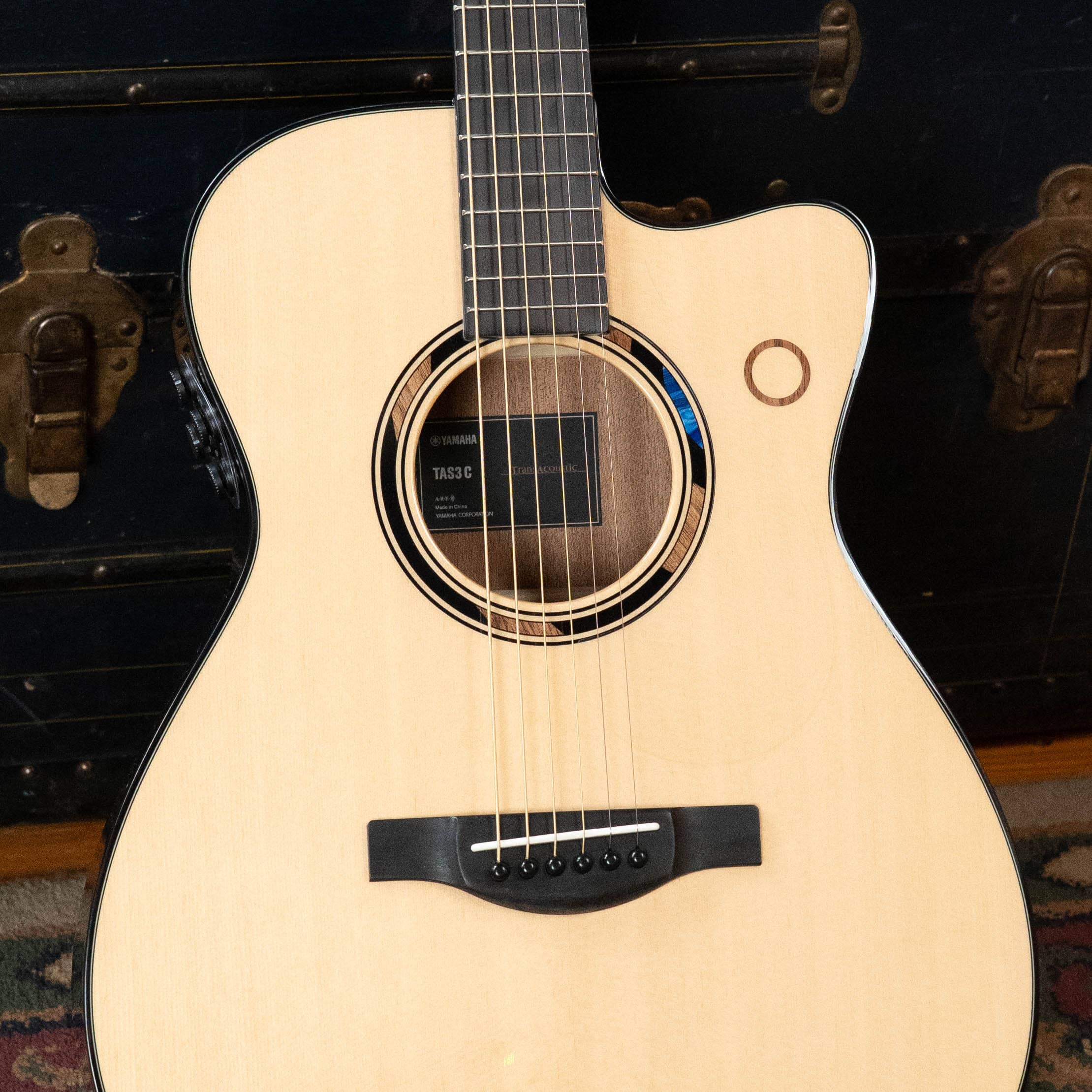
The TAS3C was the one production model in the room. It's the concert-body partner to the TAG3C, with built-in actuators that make reverb, chorus and delay come out of the guitar itself, plus a looper and Bluetooth playback. We covered the dreadnought version in our TAG3 C TransAcoustic review, and the TAS3C's launch in our Yamaha NAMM 2026 roundup. The 2026 releases we have in stock are in the Yamaha NAMM 2026 collection.
The catch with Yamaha prototype guitars
The obvious one: you can't order any of these. Brandon was clear that they're experiments, and Yamaha is gauging feedback before anything goes to production. The fingerstyle guitar doesn't have a pickup yet. The Hokkaido spruce came from a stockpile Yamaha described as rare, so even if that guitar goes into production, don't expect a big run. If one of these Yamaha prototype guitars is the one you'd buy, say so in the comments under the video, because Brandon asked for exactly that. Or tell us which one and we'll pass it along.
Our host's closing point is the one to take away. Yamaha keeps bringing high-end work to these shows, and the FG9 opened the door for Japanese design details to show up on its acoustics in a light, subtle way. These Yamaha prototype guitars push that further.
Related reading
- Taylor at Fretboard Summit 2026: a Brazilian rosewood 917 and the Ben Harper 512e SE
- Martin at Fretboard Summit 2026: custom shop builds and the wood buyer's numbers
- The Acoustic Shoppe at Fretboard Summit '24
Who should look at Yamaha right now
If the Hokkaido build or the Ghost FG is what caught your ear, the FG9 R NT is the place to start: same construction, Adirondack over rosewood, and it's here. If you play dreadnought rhythm and want punch more than bloom, take the FG9 M. If you want effects without a pedalboard, the TAS3C is the concert-size answer. Browse every model in our Yamaha guitar collection, or browse every guitar in stock.
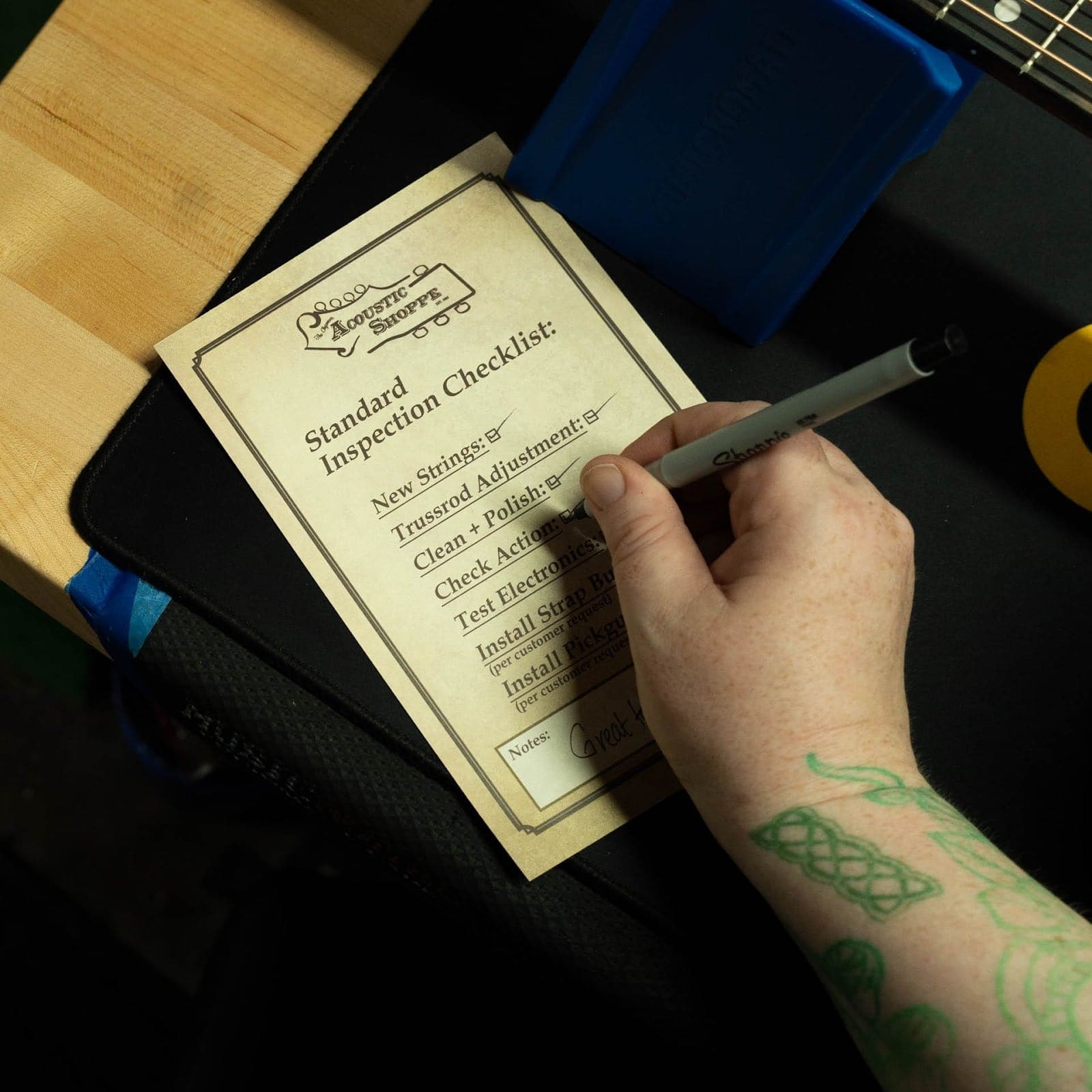
Every guitar we sell gets our 23-Point Professional Inspection before it ships. Guitars $1,000 and up, both FG9s and the TAS3C included, are covered by the Dread-Not Guarantee: a 1-year 90% trade-in credit (pre-tax, less round-trip shipping), a 30-day in-home trial, and the case-candy humidity kit in the box.