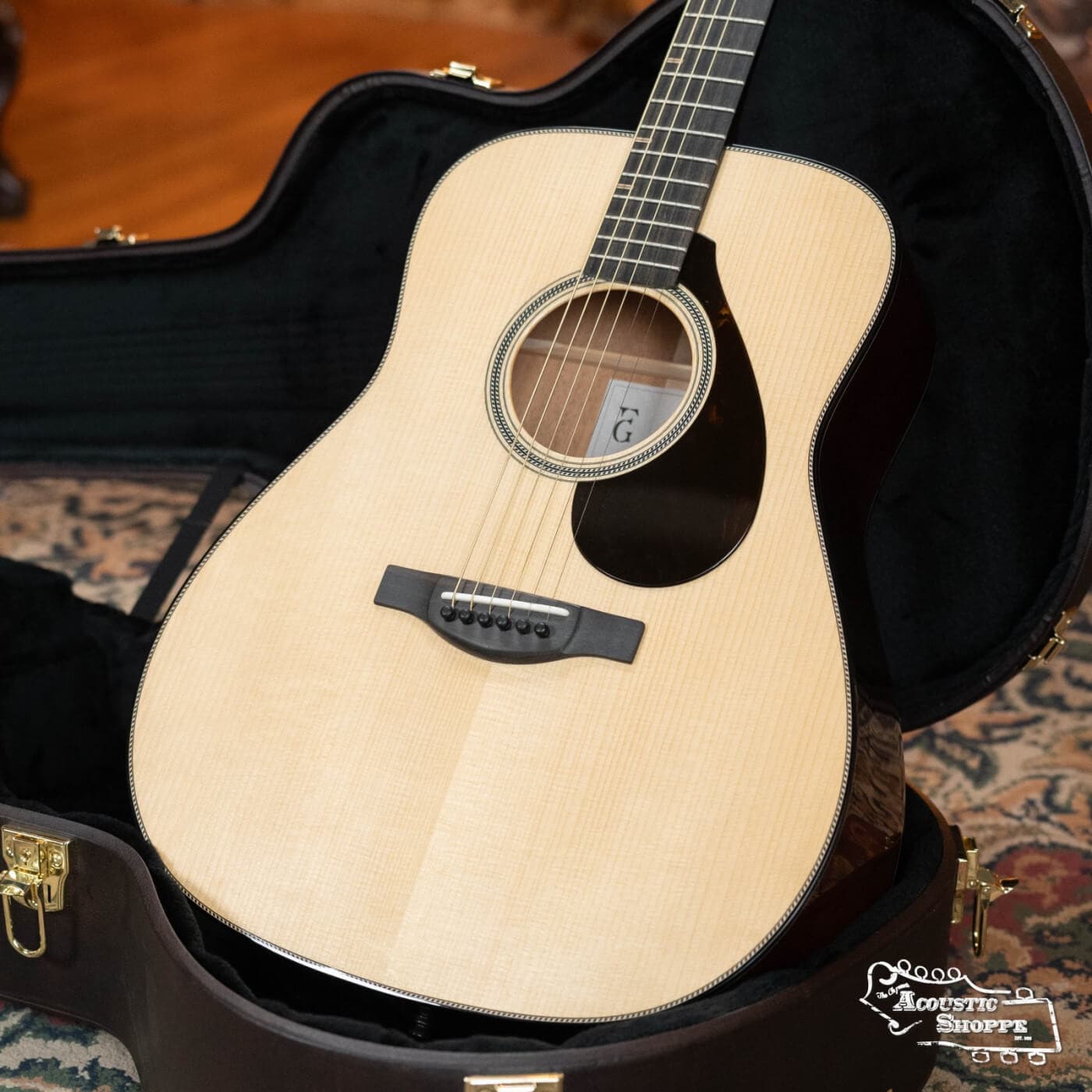

Spend any time shopping for a solid-wood acoustic around $1,000 and you'll run into the Yamaha LL16. It's the guitar people kept asking us about when we first became a Yamaha dealer, and it shows up in every forum thread about all-solid guitars that don't cost Martin money. On paper it's hard to beat: solid Engelmann spruce, solid rosewood, ebony, and a pickup that's already installed. What the spec sheet can't tell you is whether it sounds as good as it looks on paper.
So we played the rosewood LL16 and the mahogany LL16M side by side, scored them, and argued about the details. The Yamaha LL16 sounded bigger than we expected for the money, and it also has a few build choices one of us couldn't let go of. Below is how it played, where it falls short, and what we'd point you to instead.
Yamaha LL16 review: the short answer
The Yamaha LL16 is a big, balanced, heavy-on-the-low-end jumbo with one of the best factory setups we've seen. We both gave it 4.5 stars for tone and 4.5 for value. The knocks are cosmetic and finish details around the neck and headstock, and that's where our scores split. If you're coming from a Recording King or Blue Ridge, it's a clear step up in tone, playability and consistency.
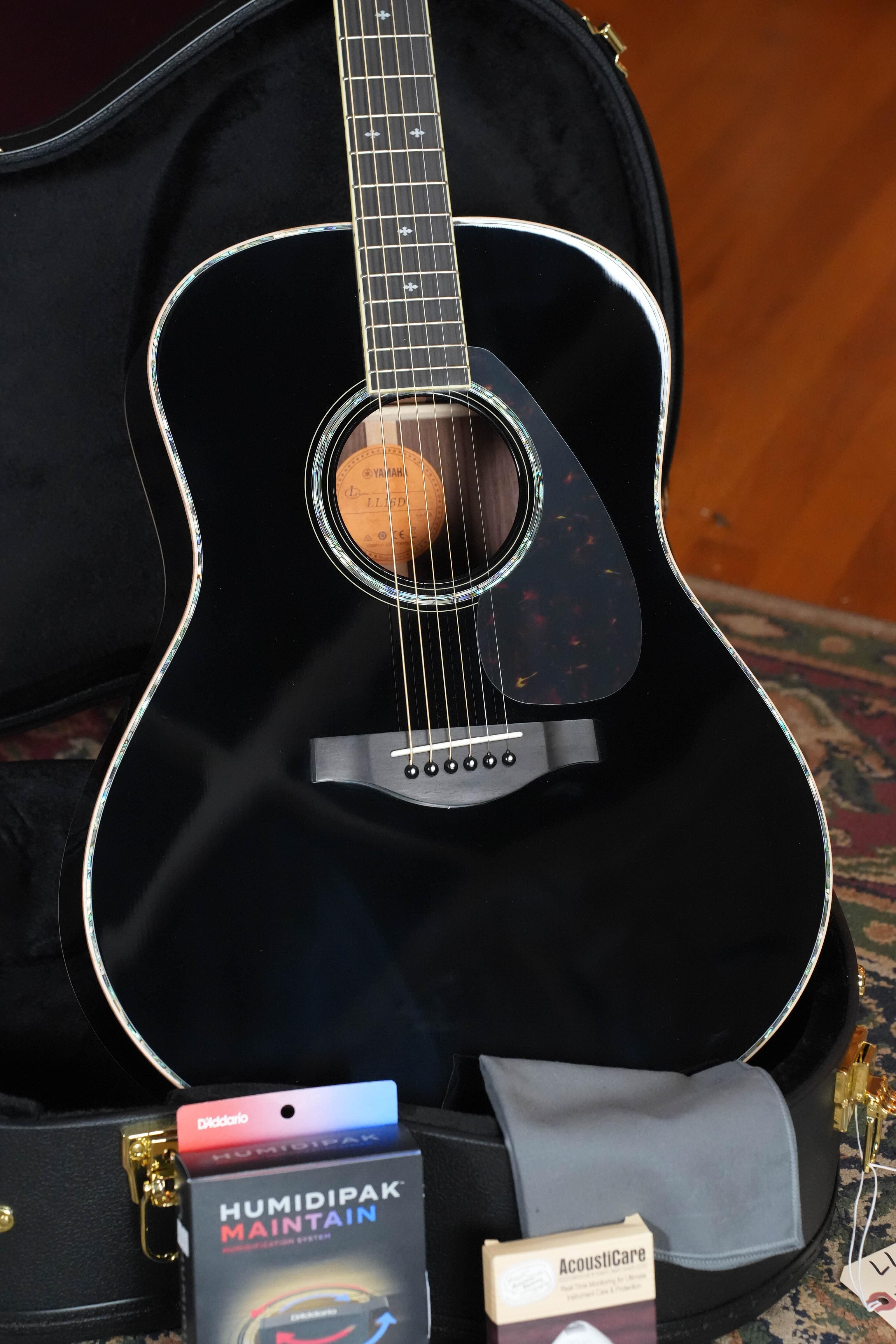
What the LL16 is: specs that matter
Every LL16 is all solid wood. The top is solid Engelmann spruce treated with Yamaha's A.R.E. process, the back and sides are solid rosewood (or solid mahogany on the LL16M), and the fingerboard and bridge are ebony. Here's what each spec does for you:
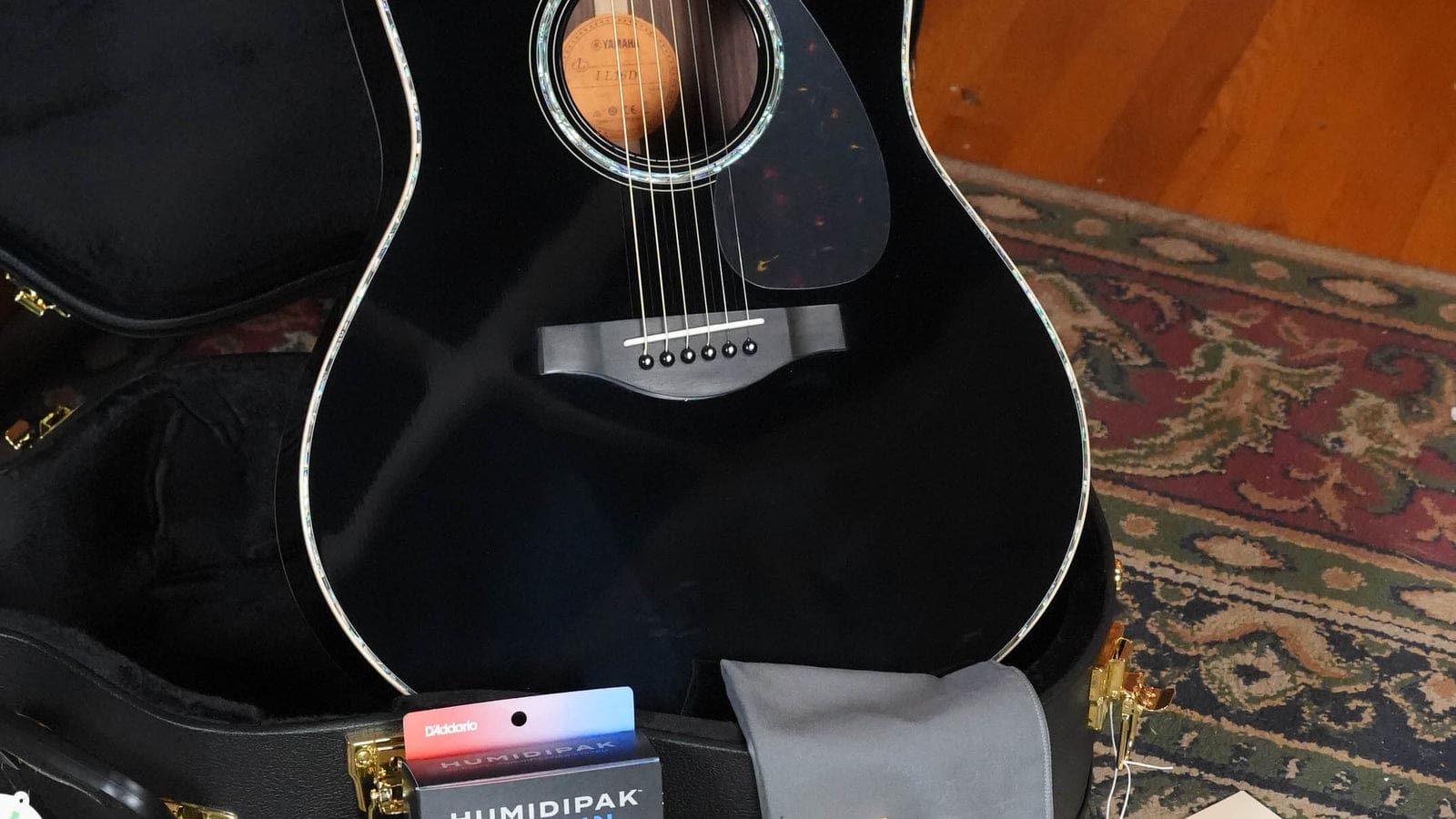
- Original Jumbo body. It has a bigger lower bout and a slightly smaller upper bout than Yamaha's dreadnought, and that shape is part of why the guitar sounds so big. It won't fit a standard dreadnought case, which we found out by trying, so keep the hard gig bag it ships in. That bag has an exoskeleton inside and is more substantial than a typical gig bag.
- Five-piece mahogany and rosewood neck. The rosewood strips are there for stability, and they look good from the back.
- 1-3/4" nut, 25-9/16" scale. The nut gives your fretting hand room for fingerstyle and open chords, and the scale is a touch longer than the usual 25-1/2". We could feel the extra length in hand before we read the spec. Yamaha calls the neck profile "high comfort traditional," and we'd agree with that.
- Non-scalloped bracing. We expected that to hold the top back. It doesn't, and we'll get to that below.
- Passive SRT pickup. It's an under-saddle system with a separate piezo element for each string, built in-house by Yamaha. It needs no batteries, and Yamaha designed it so it doesn't change how the guitar sounds unplugged.
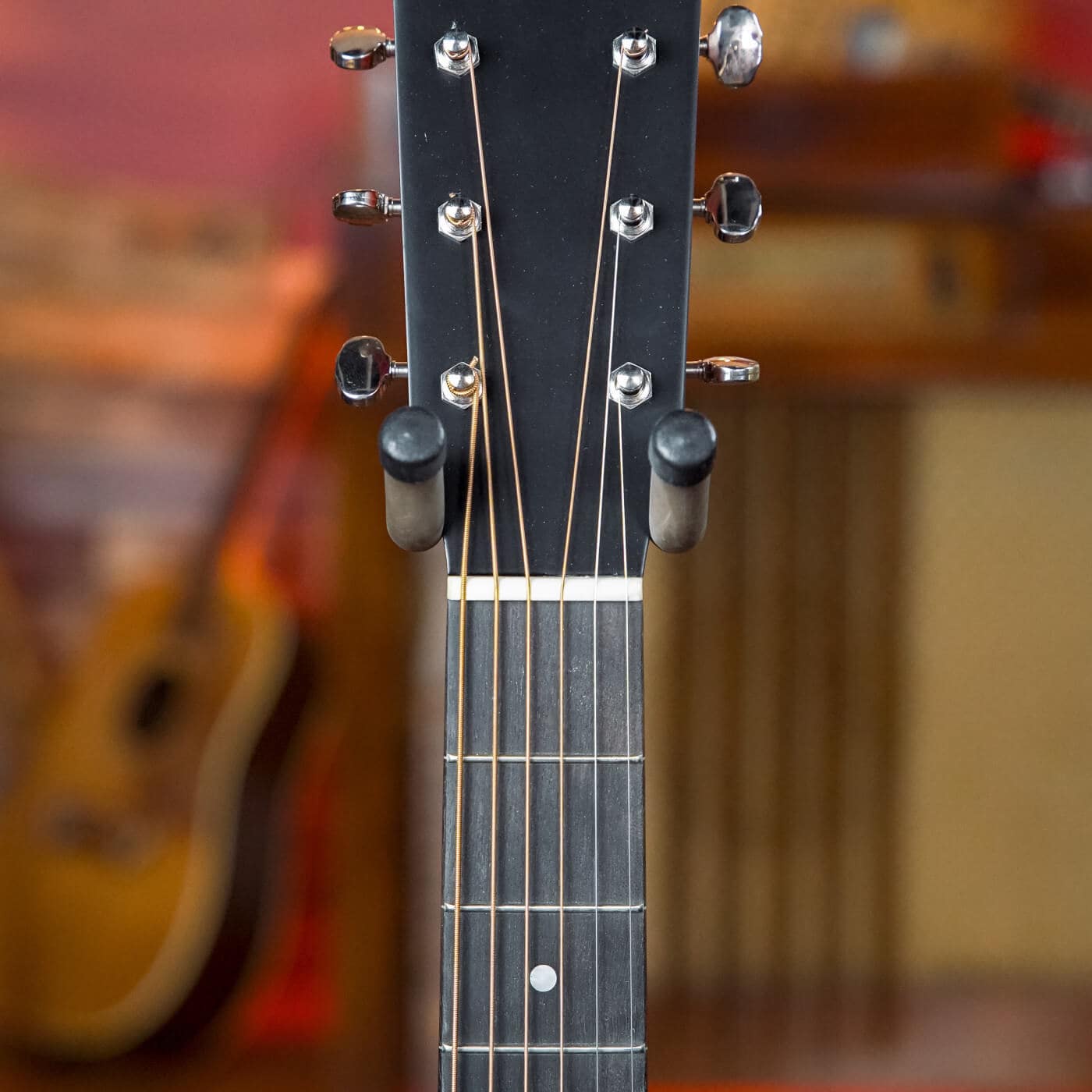
- Gloss body, matte neck, sealed gold tuners. More players are asking for a matte neck these days, and the LL16 has one.
Jump to: the specs at 1:34, what A.R.E. is at 4:22, our ratings at 7:34, how it compares to Recording King and Blue Ridge at 15:26, and the tone sample at 18:05.
What A.R.E. does to the top
A.R.E. stands for Acoustic Resonance Enhancement. It's Yamaha's own way of aging a top: controlled temperature, humidity and air pressure push the wood toward the condition of a guitar that's been played for years. That's the same idea as torrefaction or thermo-curing, but Yamaha says it runs lower temperatures and adds more humidity and pressure. You won't see the dark, toasted color of a thermo-cured top on an LL16, because the top stays light. What you get is a guitar that already sounds opened up, which you don't usually get at this price.
How the Yamaha LL16 sounds and plays
Tone is where this guitar stands out. The rosewood LL16 is a big-sounding guitar with a lot of volume and pressure behind every note, and we were surprised to get that from a non-scalloped top. It sits heavy on the low end, and both of us heard more punch and volume than we expected in this price range. The mahogany LL16M sounds great too, but we picked the rosewood for its size of sound and its low end.
"This guitar has been a surprise. It is a big, balanced [guitar], and I think part of that is that different body size too."
Setup is the other big win. These ship with light strings and they're very easy to play. We put mediums on the pair because one of us digs in hard, and they still played well.
"I think this is probably one of the best factory setups I've seen yet."
That's a five-star setup score from the harder player, and 4.5 from the other, who likes a little more room in the action. Either way, every guitar we sell also gets our 23-Point Professional Inspection before it ships, so you're not gambling on the factory.
Our Yamaha LL16 scores, and where we split
| Category | Our two scores (stars) | Why |
|---|---|---|
| Tone | 4.5 / 4.5 | Big, balanced, lots of punch and volume for the money |
| Setup and playability | 5 / 4.5 | Low, easy action out of the box |
| Build quality | 3.75 / 4.5 | Tight neck joint and clean bracing vs. visible scarf joints and a quick headstock binding job |
| Looks | 4 / 3.5 | Good from the front; the mixed binding and heavy neck finish cost it |
| Value | 4.5 / 4.5 | A heavy contender anywhere from $600 to $1,000 when we scored it |
The honest drawbacks
We didn't agree on build quality, and the reason is worth knowing before you buy. One of us found the guitar tight and well made for the money: clean binding, a slightly beveled bridge, a neat neck joint and good bracing for a non-scalloped design. The other kept coming back to three details that Yamaha could have done better:
- The headstock binding runs down into the first fret, and the two angles just intersect there instead of being beveled off. It looks like a shortcut.
- The scarf joints in the five-piece neck are visible, and the rosewood stripes stop right at them. They don't affect the sound, but at this price we see better hidden joints on Eastman guitars.
- The neck finish is heavy. It's built up around the heel where the neck meets the body. That can crack if the neck moves, and it makes a future neck reset harder to do cleanly.
The binding mismatch bothers us on looks too. The body has maple binding, the neck and headstock have plastic, and they don't match in color or material, so the guitar doesn't quite tie together. None of this changes how an LL16 sounds, but if you notice that kind of thing on your own guitar, look closely before you buy.
Yamaha LL16 vs Recording King, Blue Ridge and Eastman
The buyer we see looking at an LL16 has usually been shopping Recording King and Blue Ridge. In build style they're close: the heavy finish into the neck joint and some of the cosmetic shortcuts look familiar. Where the Yamaha LL16 pulls ahead is sound, playability and consistency. Our problem with those other brands has always been the spread from one guitar to the next.
"Some of them will be monster guitars. ... And then the next one I play is just like, what happened?"
Every Yamaha we've played has been consistent, and Yamaha works at it, measuring guitars so each batch falls in the same tonal range. Eastman is still the bar at this price for fit and finish, and the LL16 doesn't match it there, but on tone and playability it belongs in the same conversation.
What to buy today while the LL16 is sold out
We don't have an LL16 on the wall right now. Our current list price is $949.99 for the mahogany LL16M and $1,249.99 for the rosewood LL16. Ask us about ordering one. (We scored it at $899.99 in 2024, so prices have moved.) These are the closest guitars we have in stock today:
| Guitar | Top / back and sides | Price | Why look at it |
|---|---|---|---|
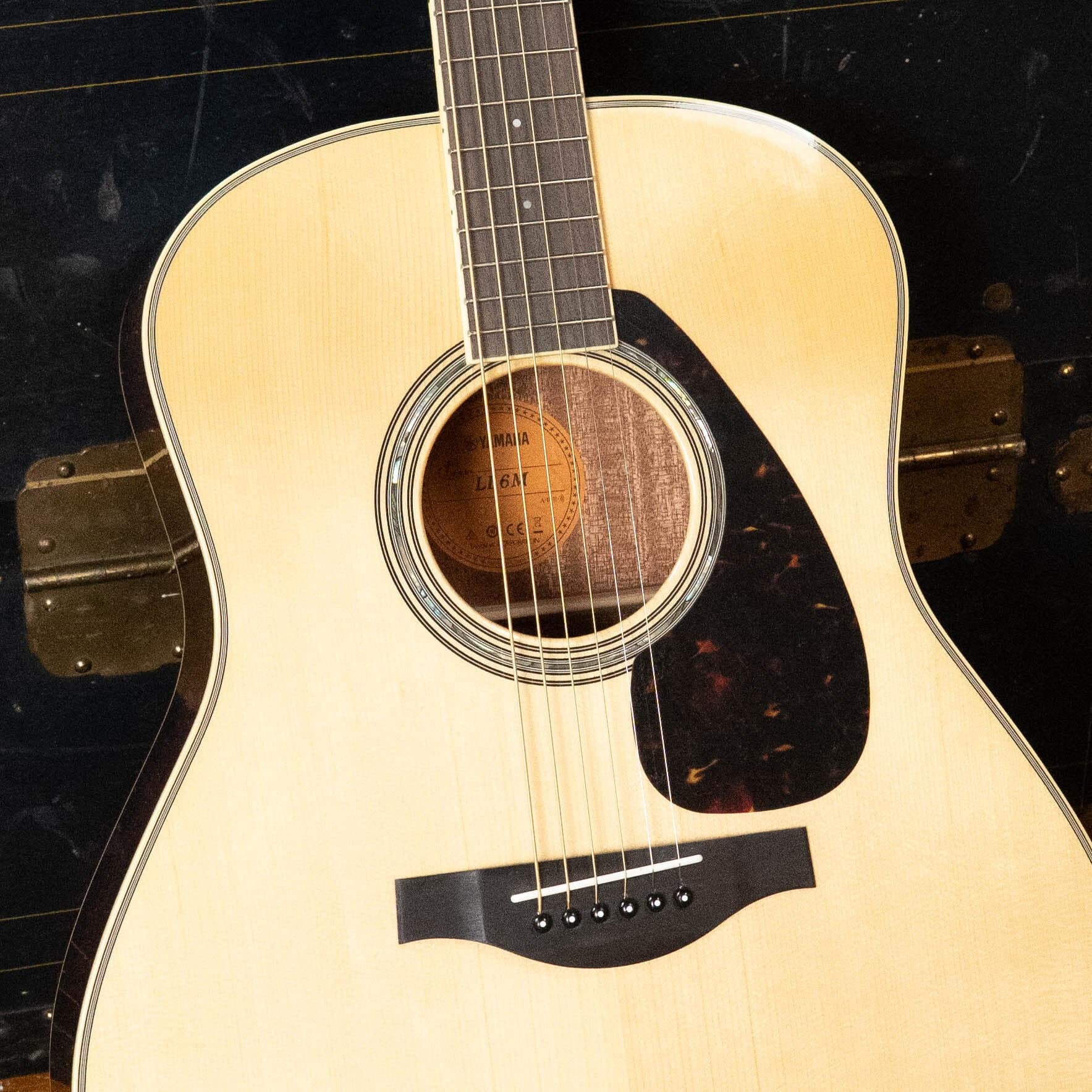
| Yamaha LL6M #0581 | Solid A.R.E. Engelmann / layered mahogany | $619.99 | Same jumbo body and SRT pickup for less money |
| Eastman AC222CE-DLX-GB #6967 | Solid Sitka / solid ovangkol | $979 | The Eastman fit and finish we measured the LL16 against, all solid, in a cutaway grand auditorium body |
| Yamaha LL26R #088A | Solid A.R.E. Engelmann / solid rosewood | $3,299.99 | The made-in-Japan step up in the same body |
The LL6M is the closest thing to an LL16 for less money, but its back and sides are layered, so read our solid vs laminate comparison before you decide that matters to you. The AC222CE-DLX-GB has a 25.4" scale, a cutaway and a Fishman Presys VT, so it's a smaller-bodied guitar with a slightly shorter scale than the LL16, and it costs a little less. If you want rosewood and mahogany dreadnoughts in the same money, our best mahogany dreadnoughts under $1,600 guide covers them.
Who the Yamaha LL16 is for
The Yamaha LL16 is for the intermediate player who's ready for a guitar that's close to professional level and wants all-solid woods without the big-name price. It fits folk and country players best, because that's where you've seen Yamahas for decades, and it fits anyone whose dad or mom had a Yamaha and wants that sound back. Bluegrass flatpickers have usually looked elsewhere, though Yamaha's new FG9 series may change that.
If fit and finish matter as much to you as tone, play an Eastman at the same price before you decide. And if you want the LL16's sound with Japanese-made detail, the LL26R is the step up.
Related reading
Where to find a Yamaha LL16
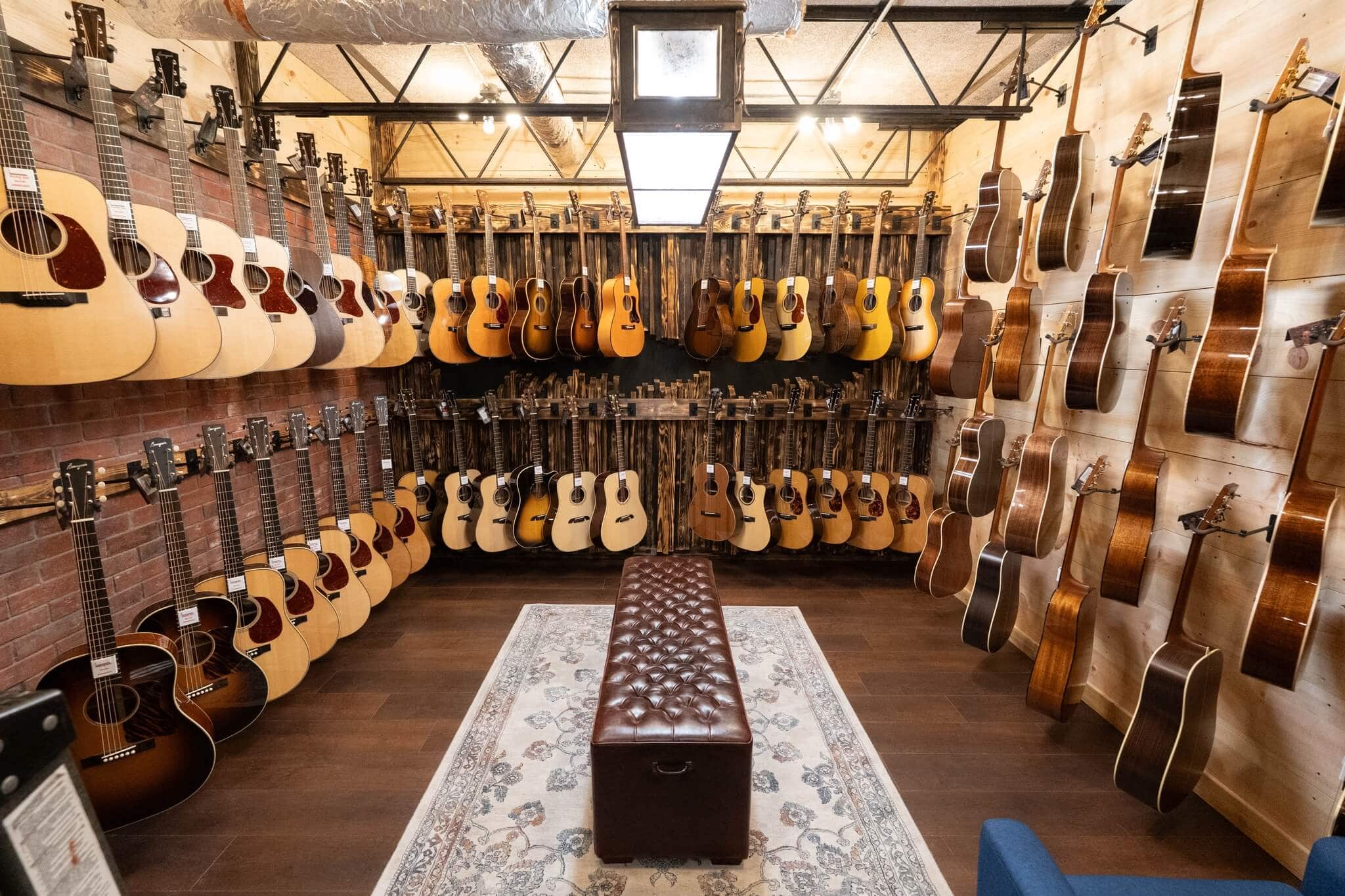
Browse everything we have from Yamaha, or the full wall of acoustic guitars if you're still deciding on a brand. A rosewood Yamaha LL16 at $1,249.99 is covered by our Dread-Not Guarantee: a 30-day in-home trial, then a full year to trade it in for up to 90% of the pre-tax purchase price in credit, less round-trip shipping. Financing is available too. Call or message us and we'll tell you when the next LL16 comes in.