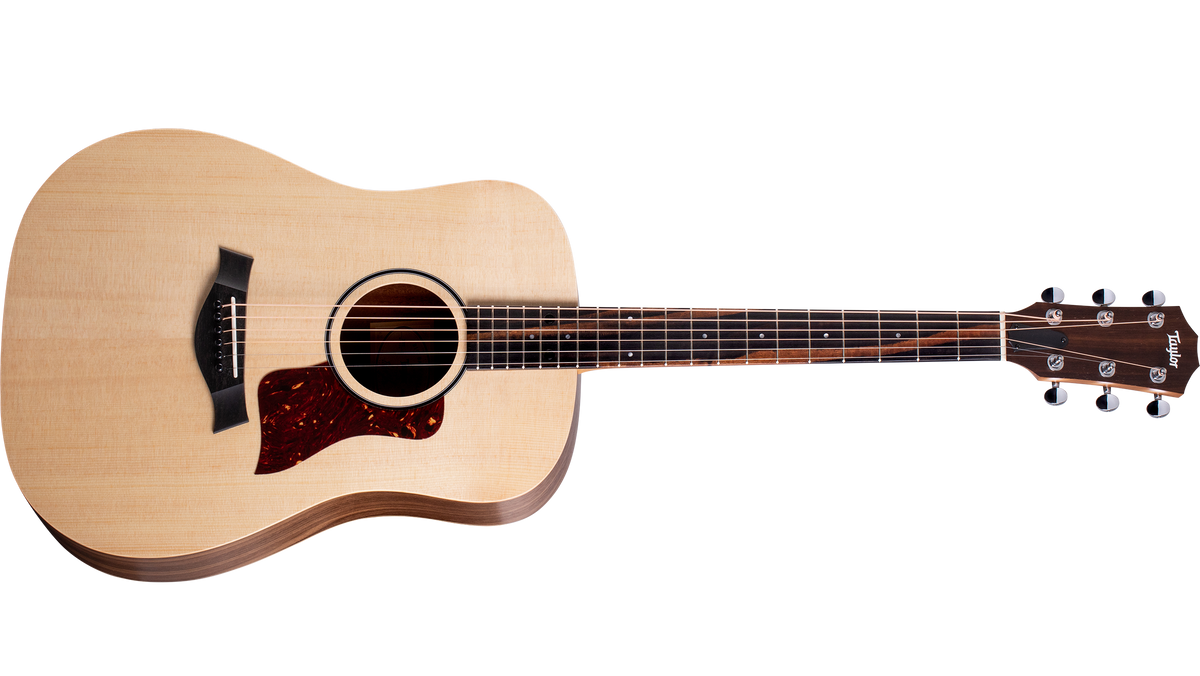
Taylor BBT (Big Baby Taylor) — Baby Taylor Series

Baby Taylor

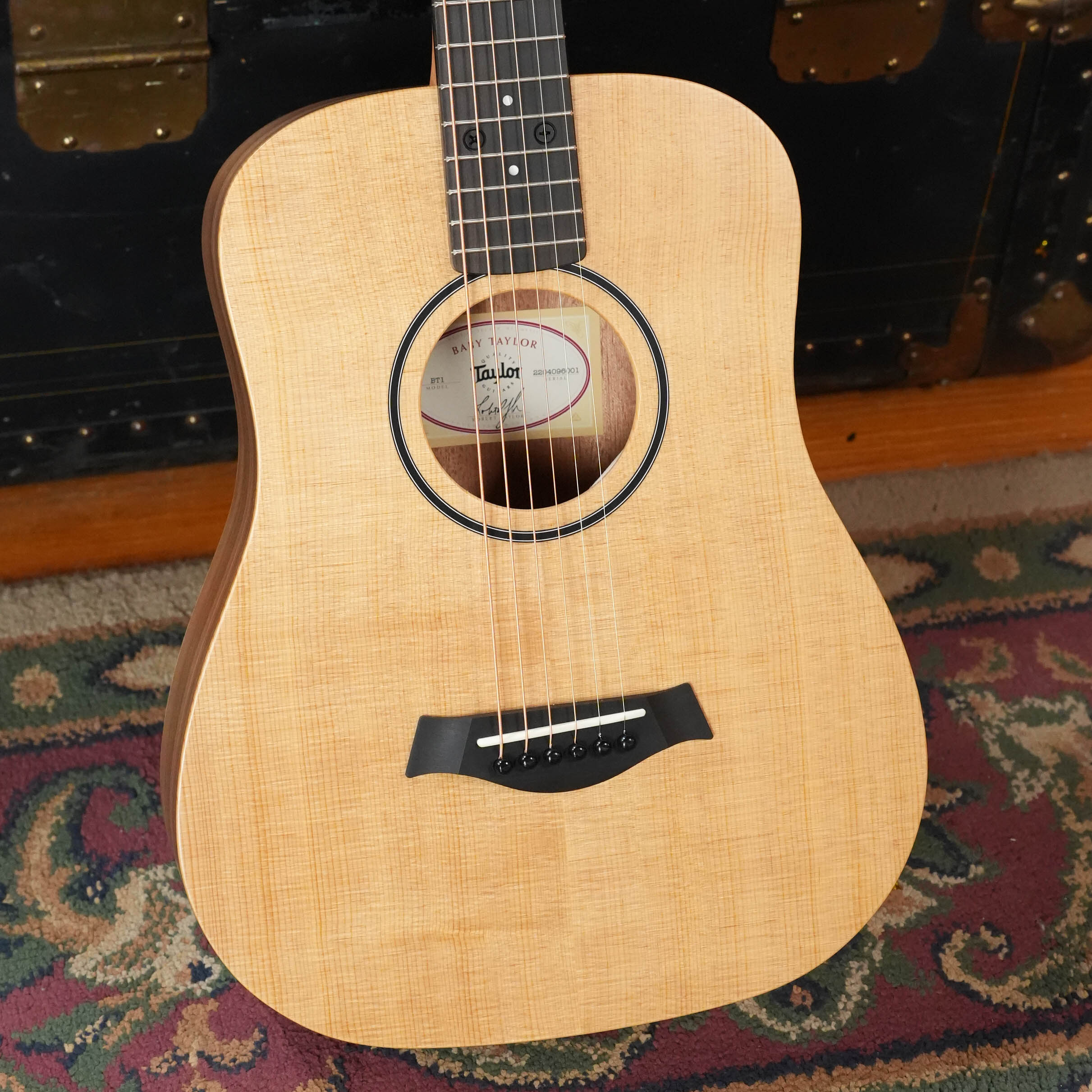
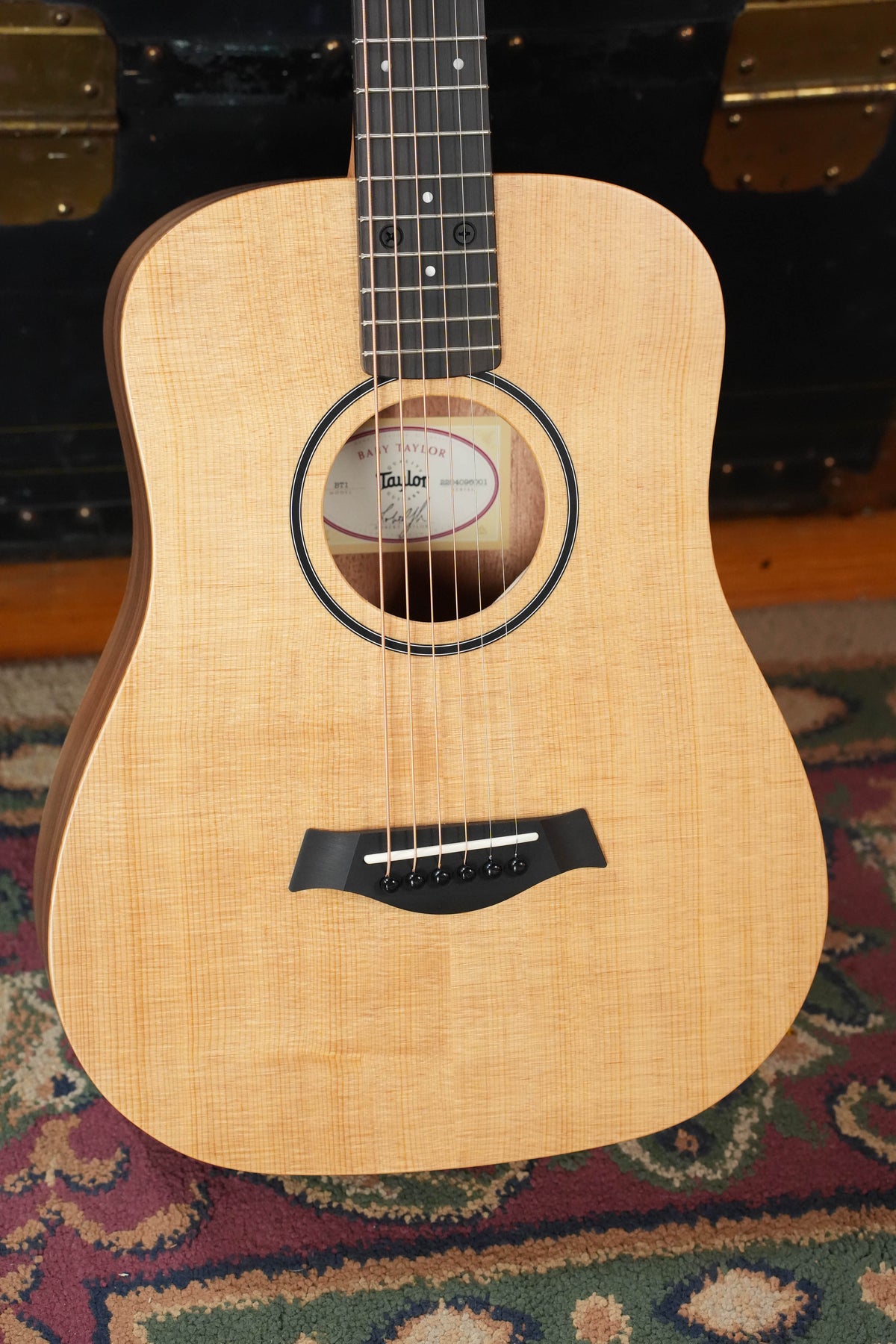
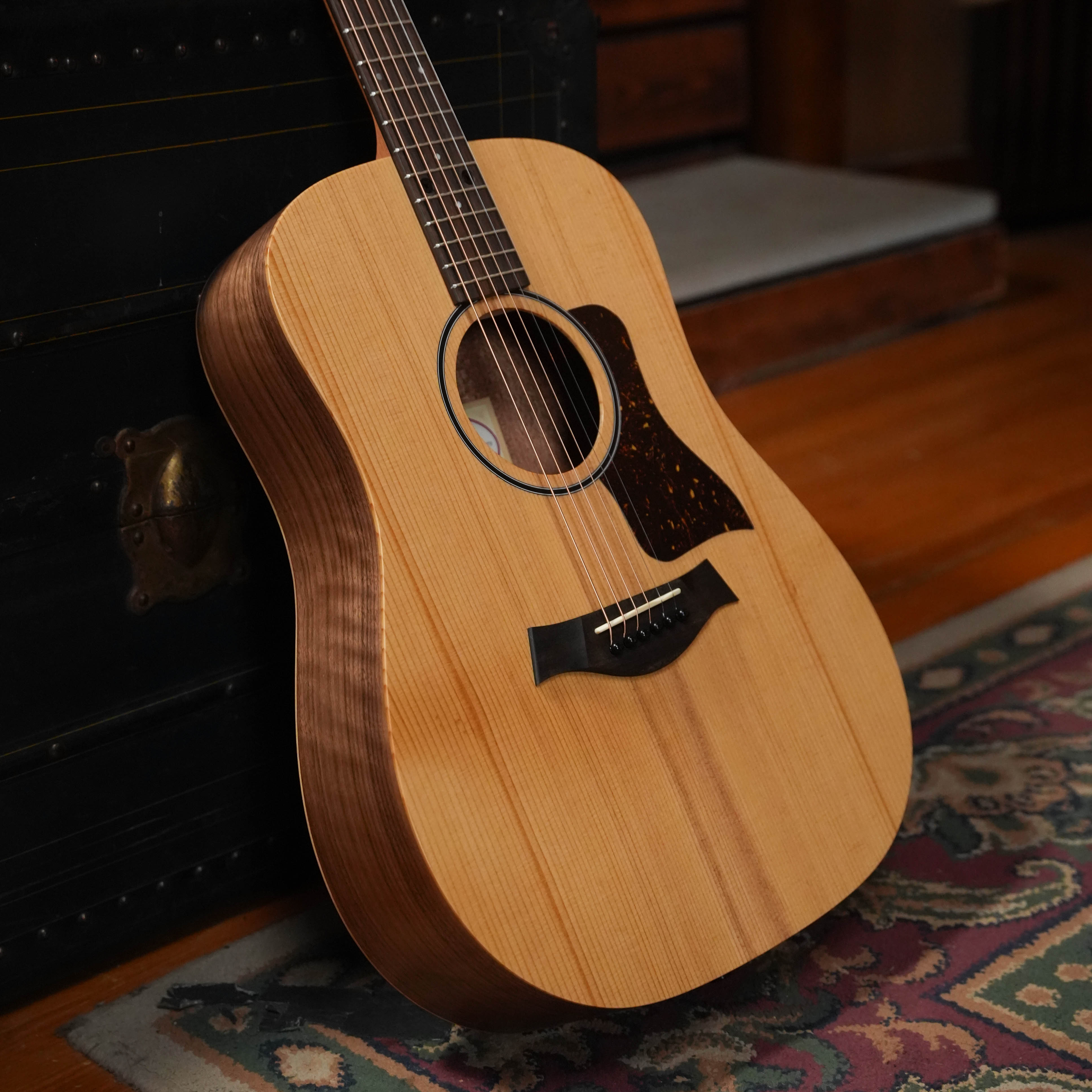
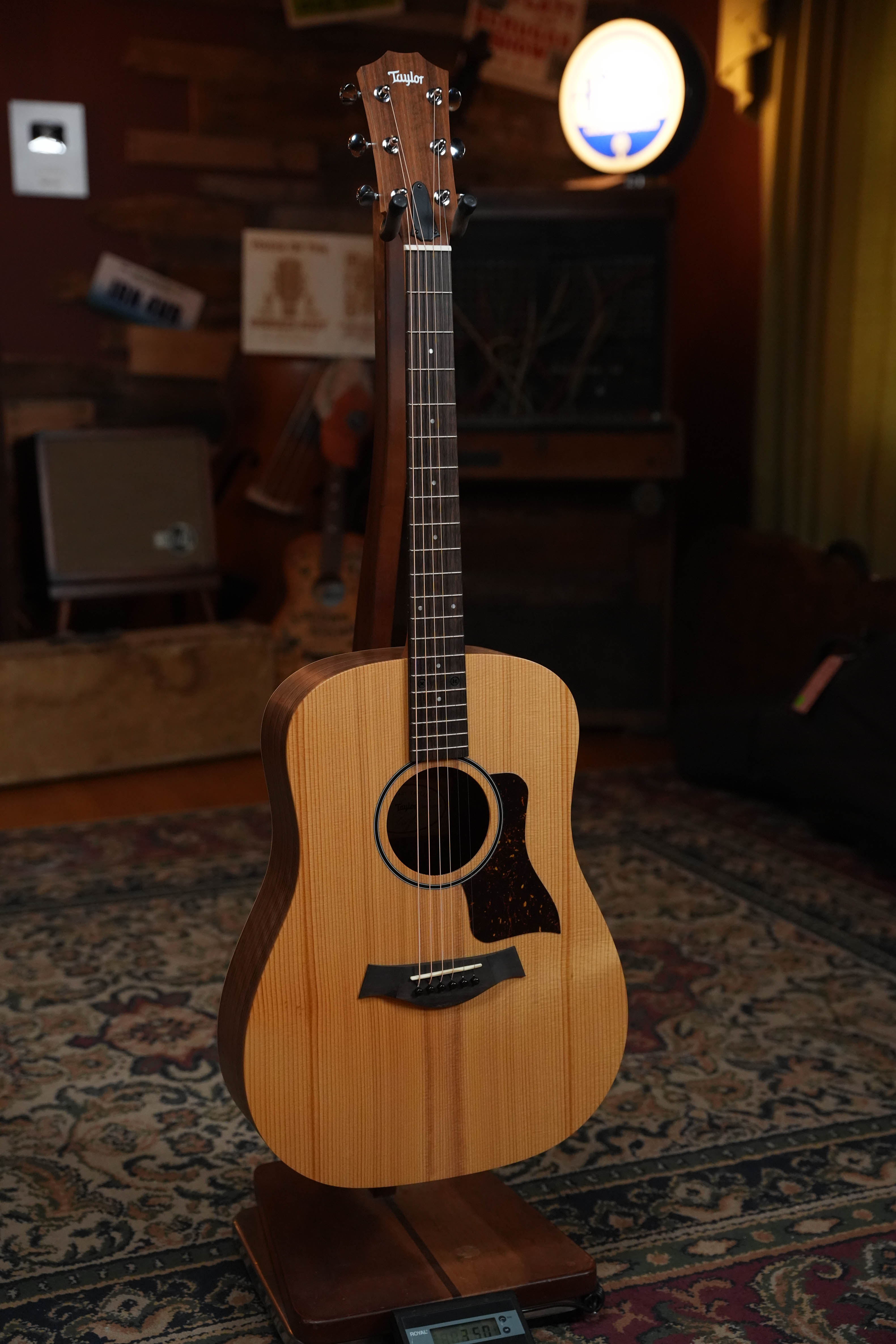
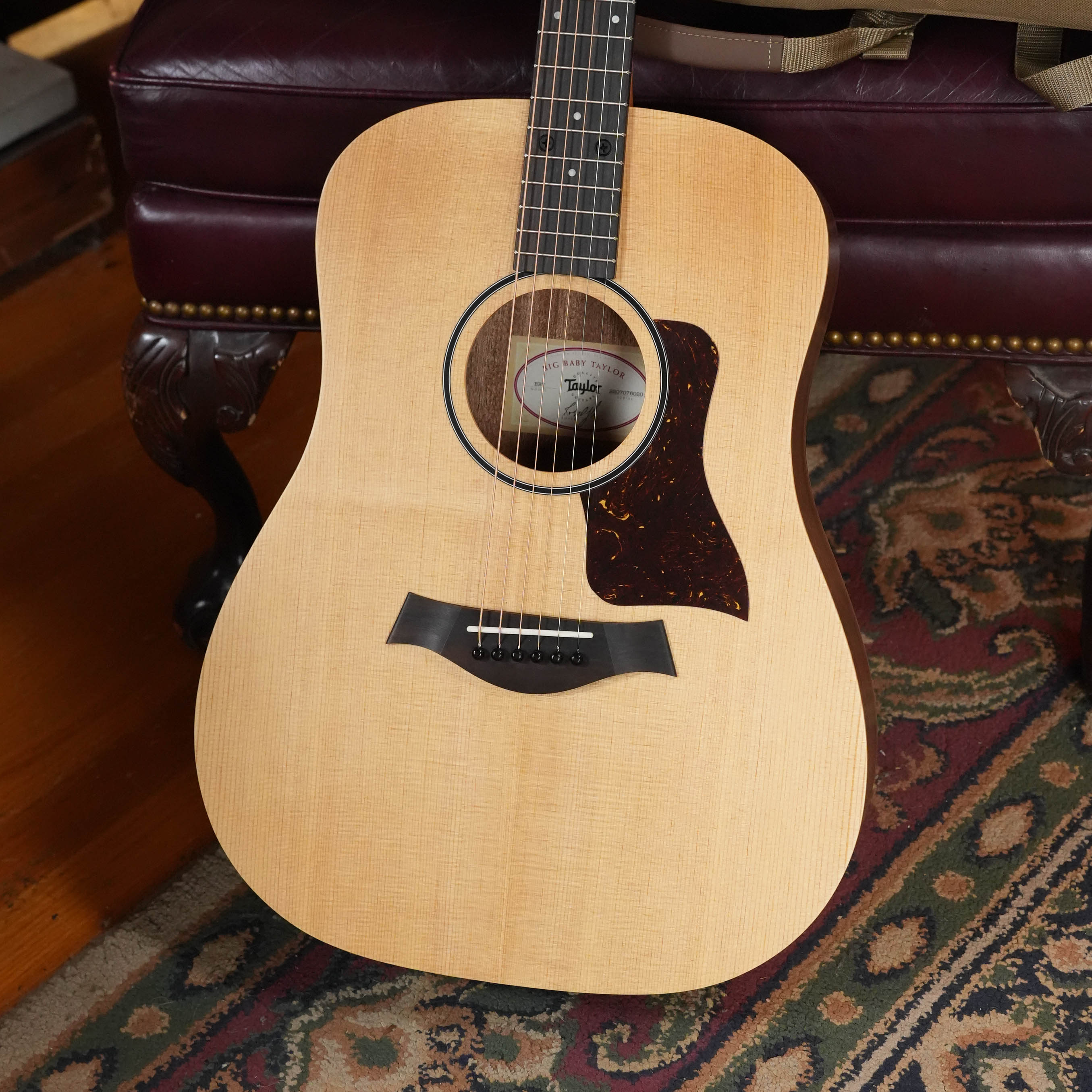
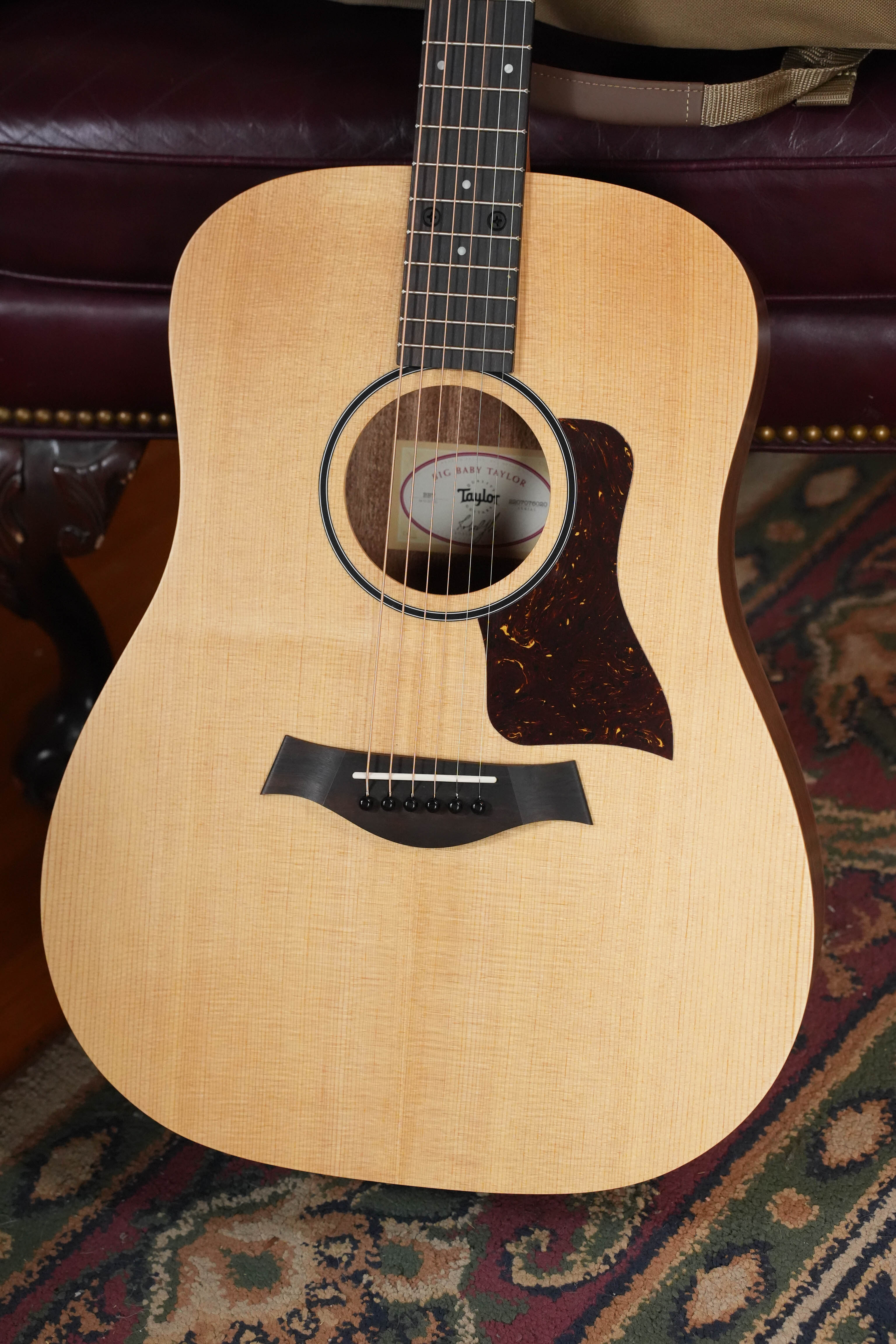
Taylor's Baby Taylor line predates the GS Mini by more than a decade — introduced in 1996 as the original compact travel guitar in the catalog, not a scaled-down GS Mini alternative. Two models carry that idea forward today: the Big Baby Taylor (BBT) and the Baby Taylor (BT1), both built around a solid Sitka spruce top over layered walnut back and sides, both X-braced rather than V-Class, and both shipping with no onboard electronics.

The BBT keeps Taylor's full 25-1/2" scale length inside a Big Baby body — a slightly narrower, shallower dreadnought silhouette — so the fretting hand feels like a full-size Taylor even though the body doesn't. The BT1 goes further: a 3/4-size Baby body paired with a 22-3/4" scale, the shortest scale length anywhere in Taylor's current lineup, built for a smaller player's hands or a gig bag that actually fits under an airline seat.

Neither one is meant to replace a full-size dreadnought on a stage — the smaller bodies trade low-end volume and projection for portability, and that's a genuine tradeoff worth knowing before you buy, not a footnote. What they're built for is a first guitar, a travel backup, or a couch instrument that doesn't demand the same case space or care as the guitar staying home. At $499 (BBT) and $449 (BT1), they're also the most accessible entry point into the Taylor catalog.

0

This collection is empty

Continue shopping

Both instruments in Taylor's Baby Taylor line start from the same build: a solid Sitka spruce top over layered walnut back and sides, X-braced rather than the V-Class bracing found across the rest of Taylor's catalog, and no onboard electronics on either model. That shared foundation means the split between the Big Baby Taylor (BBT) and the Baby Taylor (BT1) comes down to two variables — scale length and body size — not tonewood or bracing philosophy, which makes the choice between them mostly a question of who's playing it and where it's going.

The BBT keeps Taylor's standard 25-1/2 inch scale length, the same string length found on a full-size dreadnought, set inside a Big Baby body that's narrower through the waist and slightly shallower than a full dreadnought shape. That combination matters for anyone stepping down in size without wanting to relearn fret spacing: a player's fretting hand lands in all the same places it would on a full-size Taylor, so the transition between a BBT and a full-size instrument (or back) doesn't require retraining muscle memory the way a genuinely short-scale instrument does. The tradeoff is body volume — the smaller Big Baby body moves less air than a full dreadnought, so low-end output and overall projection sit noticeably below what a full-size instrument delivers, particularly unplugged in a room with other instruments.

The BT1 goes a full step further. Its Baby body is a true 3/4-size shape, and its 22-3/4 inch scale is the shortest scale length in Taylor's entire current catalog — shorter than the GS Mini, shorter than any Academy model. That makes it a genuinely different instrument to hold and fret than the BBT, not just a smaller-bodied version of the same guitar: the shorter scale compresses fret spacing enough that it suits a smaller player's hand — a child, a first-time adult player with a smaller frame, or anyone prioritizing the smallest possible footprint for travel over scale-length continuity with a full-size guitar.

Neither model is built to replace a full-size dreadnought on a gig, and that's worth saying plainly rather than glossing over — the smaller bodies on both instruments trade low-end weight and stage volume for portability, and neither ships with electronics to plug in even if the gig called for it. What they're genuinely good at is exactly what Taylor built them for: a durable first guitar, a travel companion that survives a gig bag in an overhead bin, or a backup that lives by the couch instead of in a case.

Every Baby Taylor that ships from The Acoustic Shoppe completes the same 23-point professional inspection every instrument in the shop goes through before it leaves, regardless of price point. Browse the full Taylor Guitars collection, or go straight to the Big Baby Taylor (BBT) or the Baby Taylor (BT1) model page for current stock.

The Acoustic Shoppe is an Authorized Taylor Premier Dealer and Gold Label Advantage Dealer.
Frequently Asked Questions

What's the difference between the BBT and the BT1?
Same tonewoods and construction — a solid Sitka spruce top over layered walnut back and sides, X-braced, no onboard electronics — on both. The difference is scale length and body size: the BBT uses Taylor's full 25-1/2" scale in a Big Baby body, keeping the same fret spacing as a full-size dreadnought. The BT1 uses a shorter 22-3/4" scale, the shortest in Taylor's catalog, in a 3/4-size Baby body built for smaller hands and maximum portability.
Are these travel guitars, or a real first guitar?
Both. Taylor built the Baby Taylor line in 1996, before travel guitars were their own category, specifically to be durable enough for the road and simple enough for a first-time player. Solid Sitka spruce tops, rather than laminate, on both models mean the tone actually improves with play, unlike most guitars at this price point.
Do the BBT or BT1 have onboard electronics?
No — neither model ships with a pickup or preamp. If you need to plug in for a gig or a recording session, look further up Taylor's catalog to the GS Mini-e or the 100/200 Series, both of which carry Taylor's electronics.
How does the Baby Taylor line compare to the GS Mini?
The Baby Taylor line came first — it's been in Taylor's catalog since 1996, well over a decade before the GS Mini launched. Both are compact, travel-friendly instruments, but the GS Mini uses a larger body and different bracing aimed at fuller unplugged tone in a mid-size travel shape, while the BBT and BT1 stay smaller and simpler, with no electronics and a lower price point on both models.