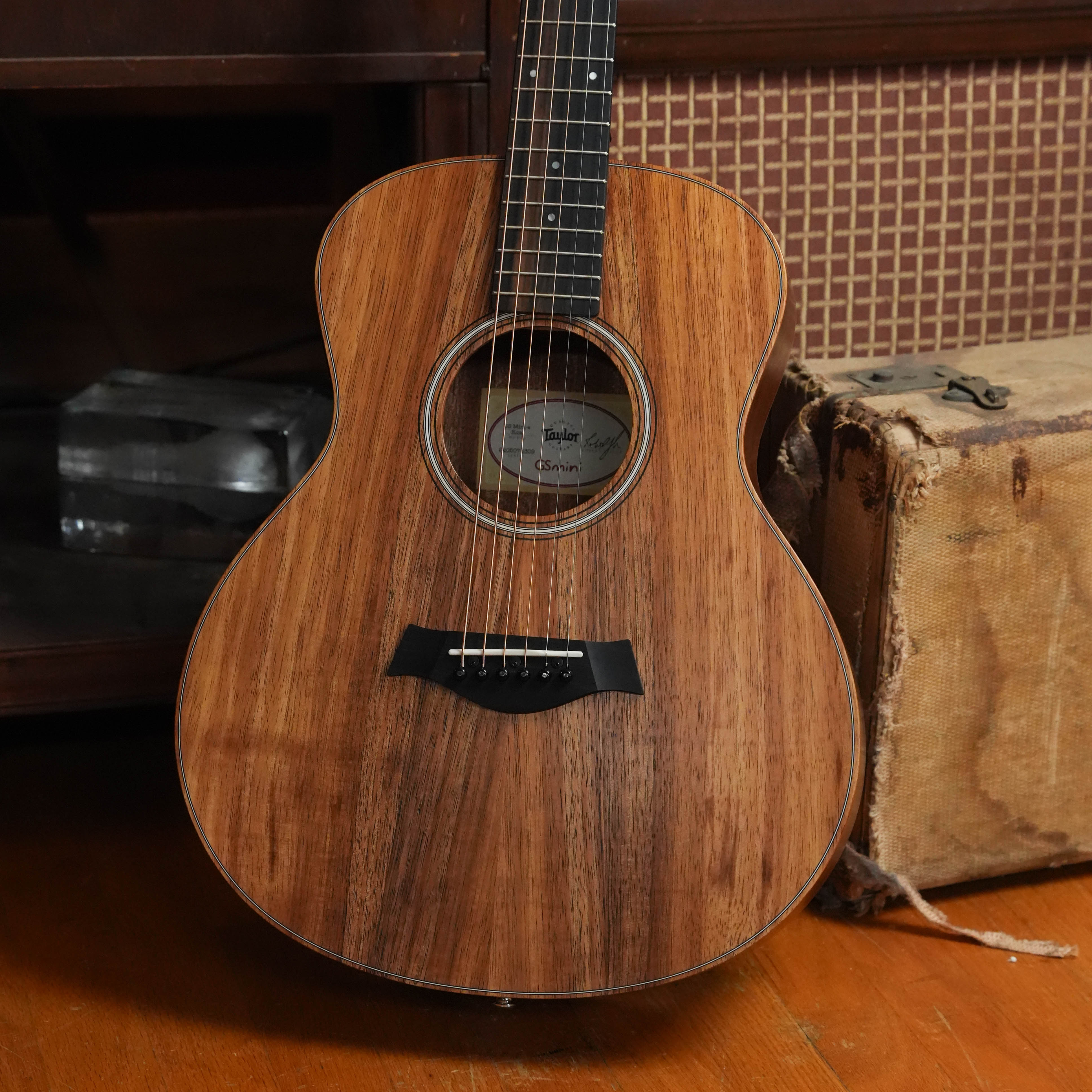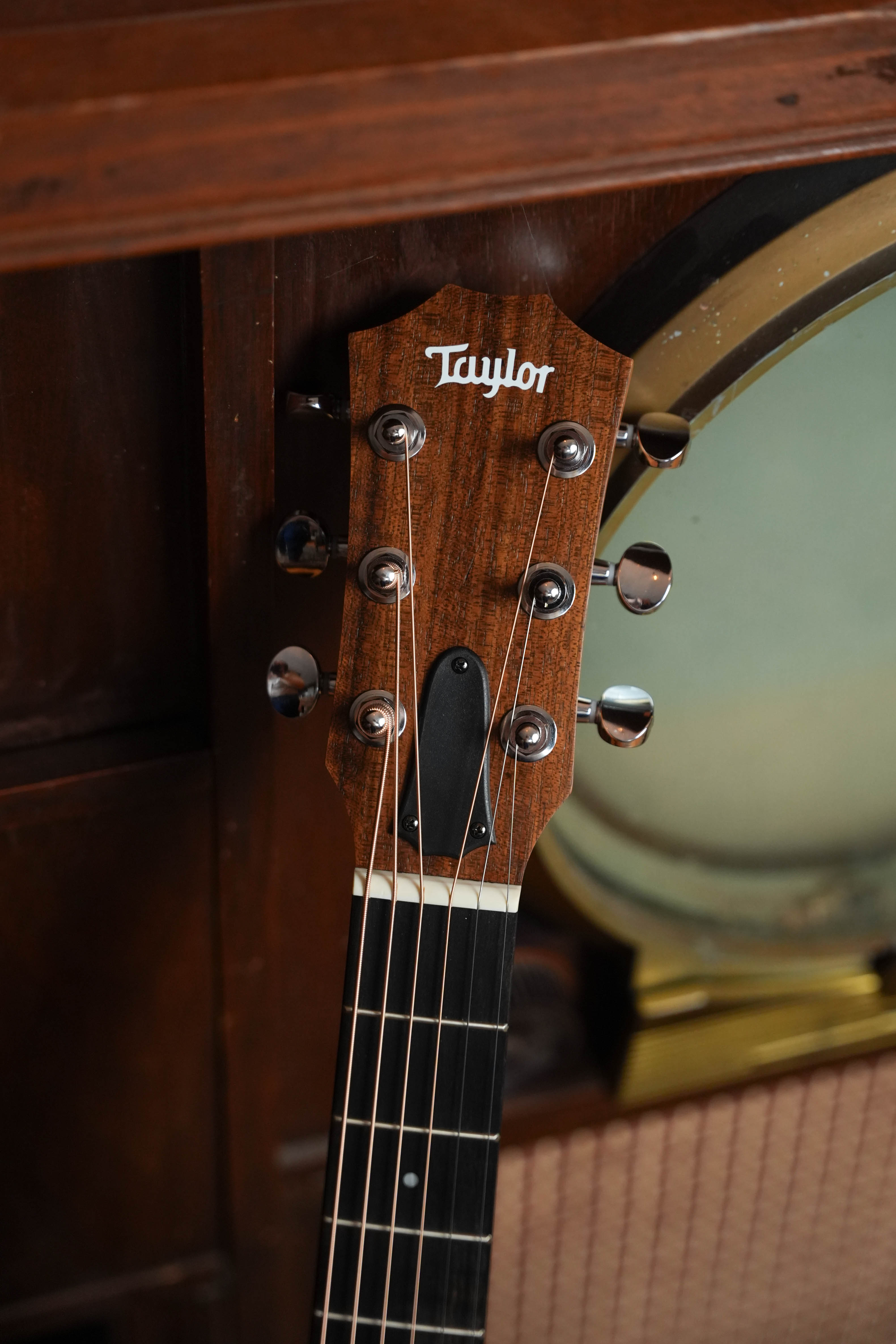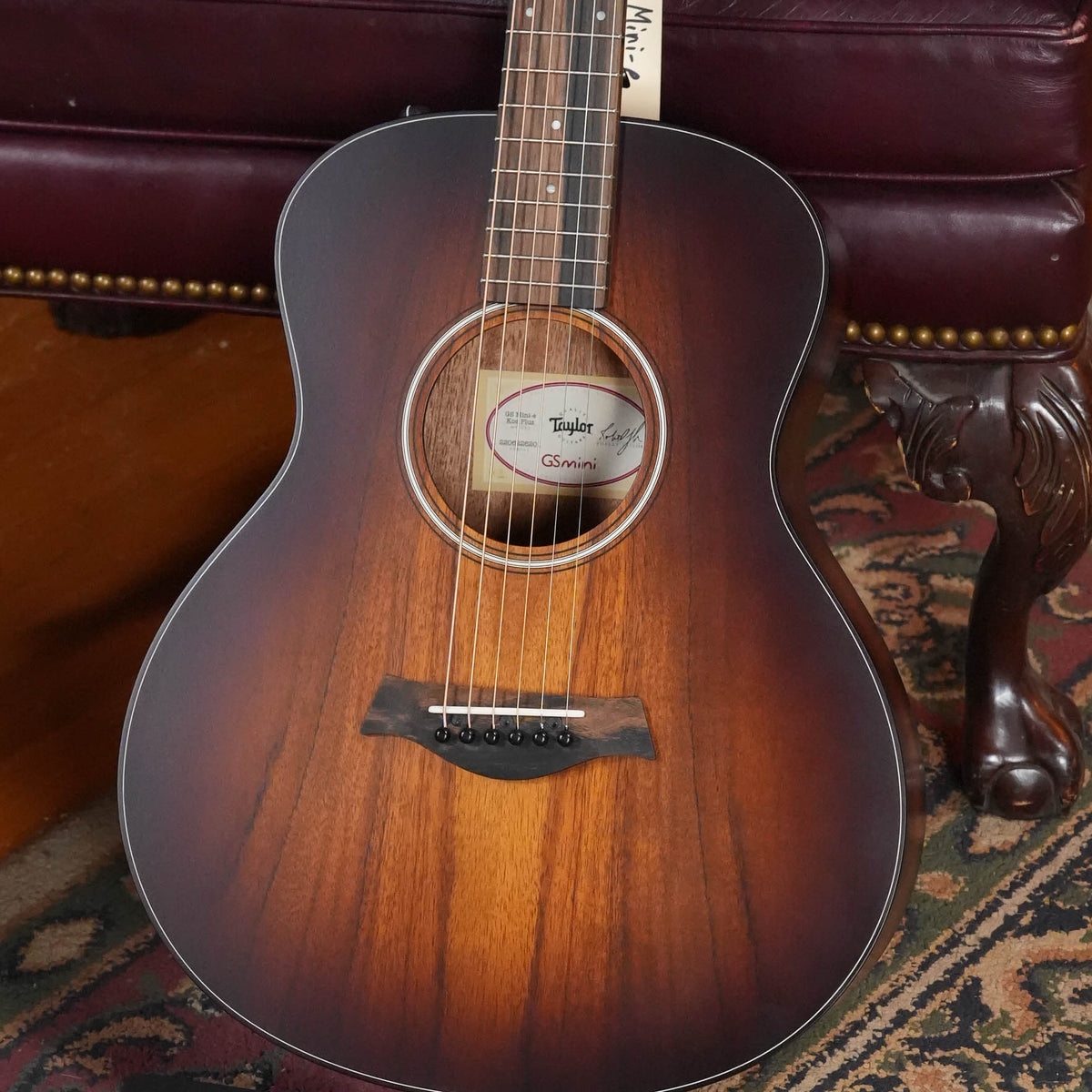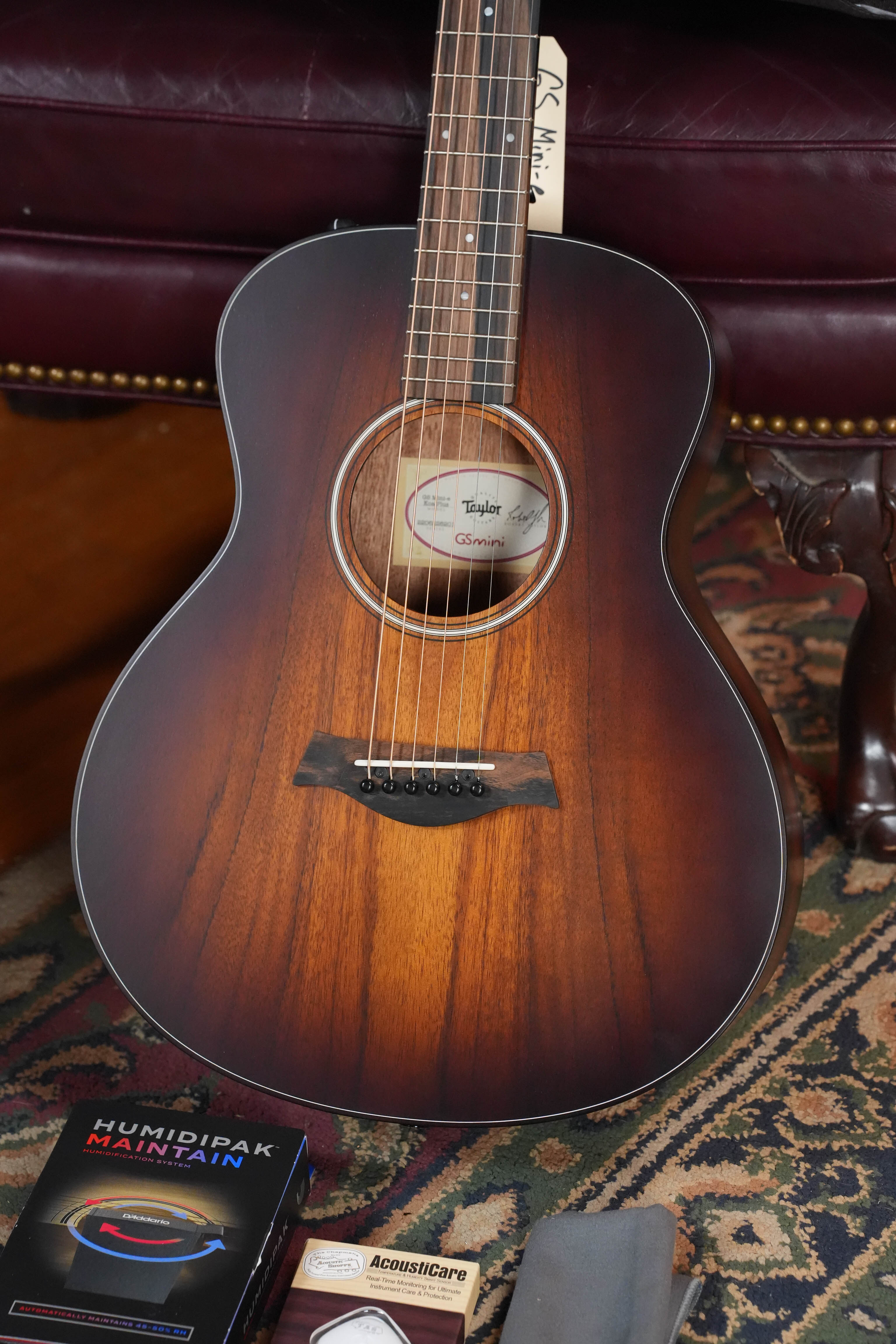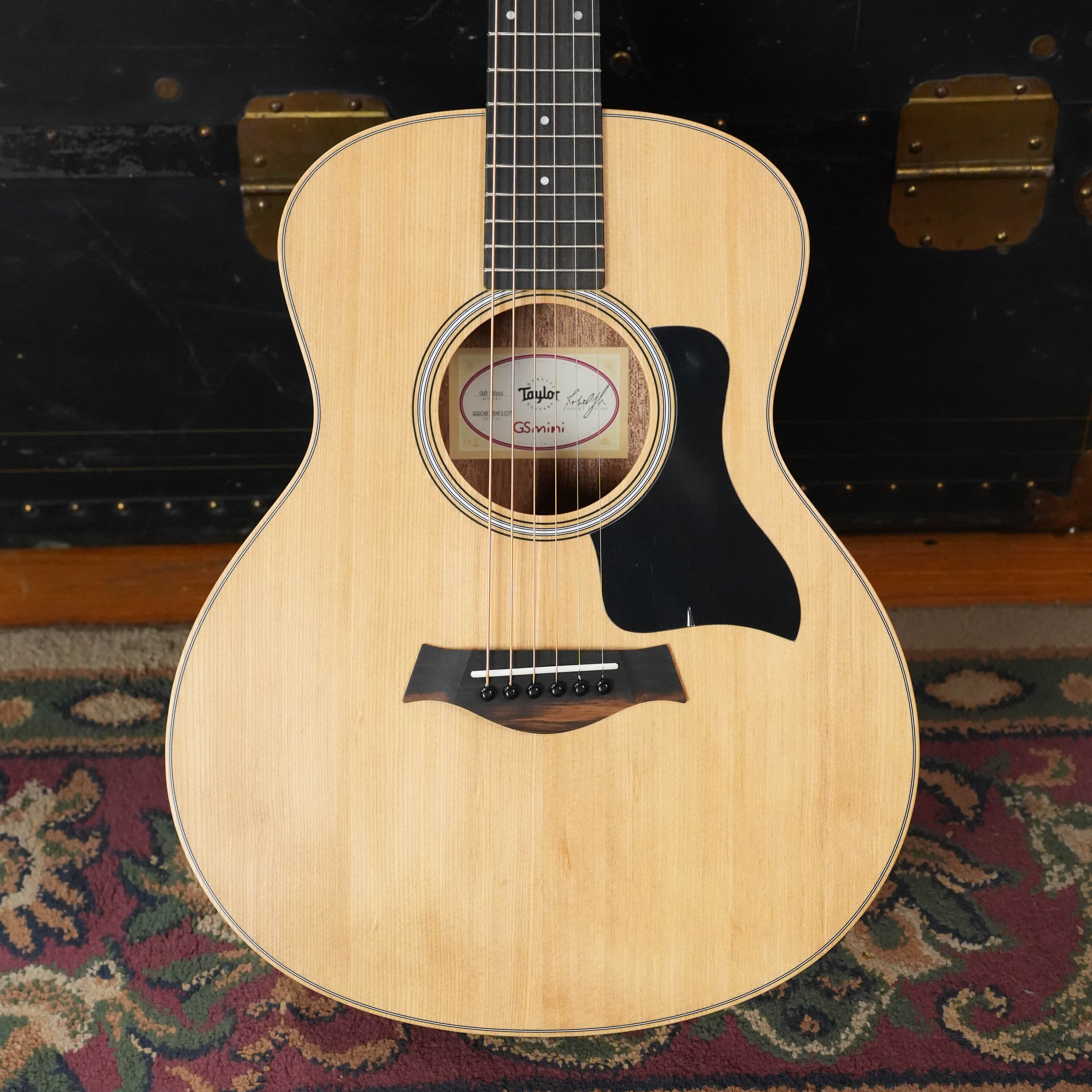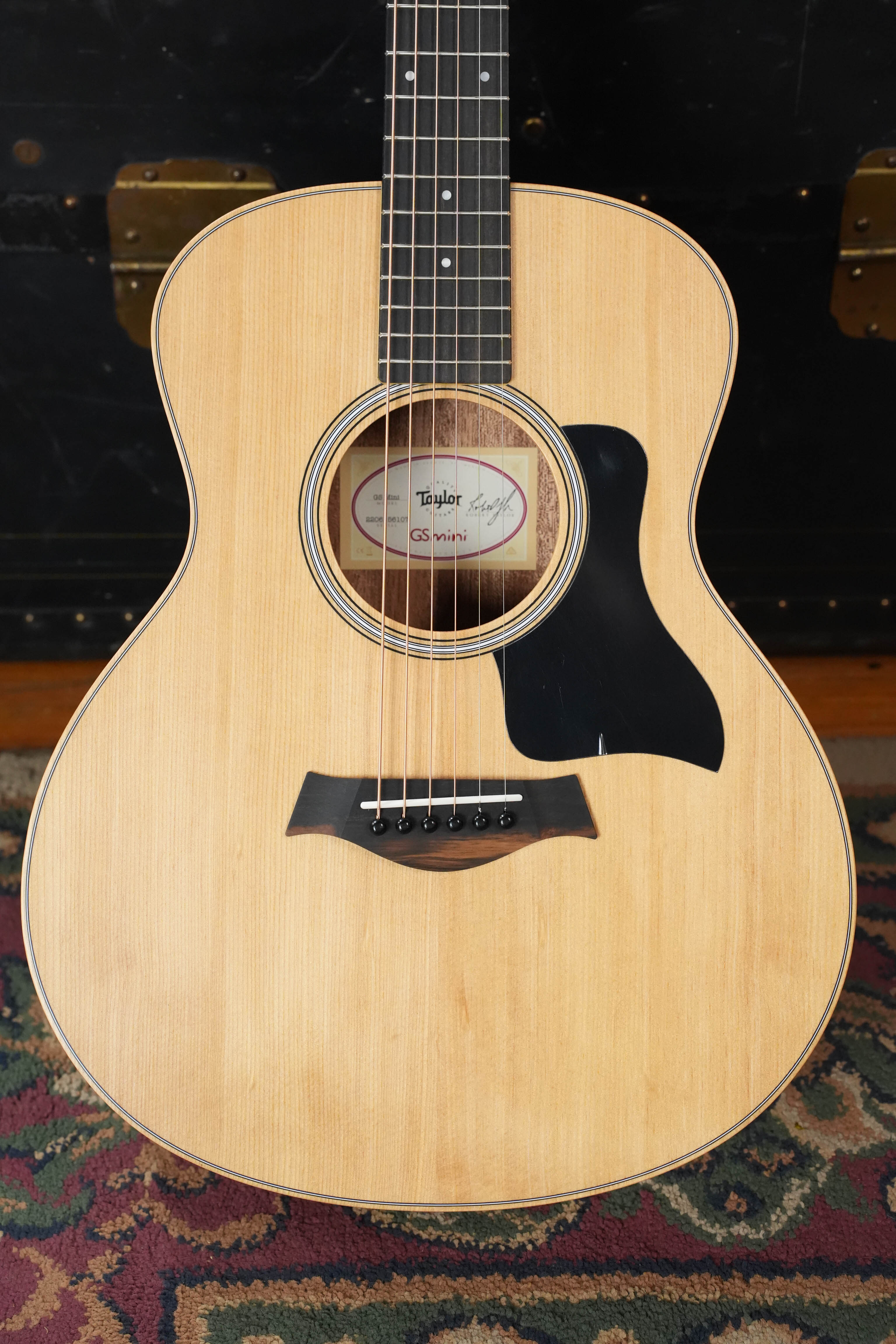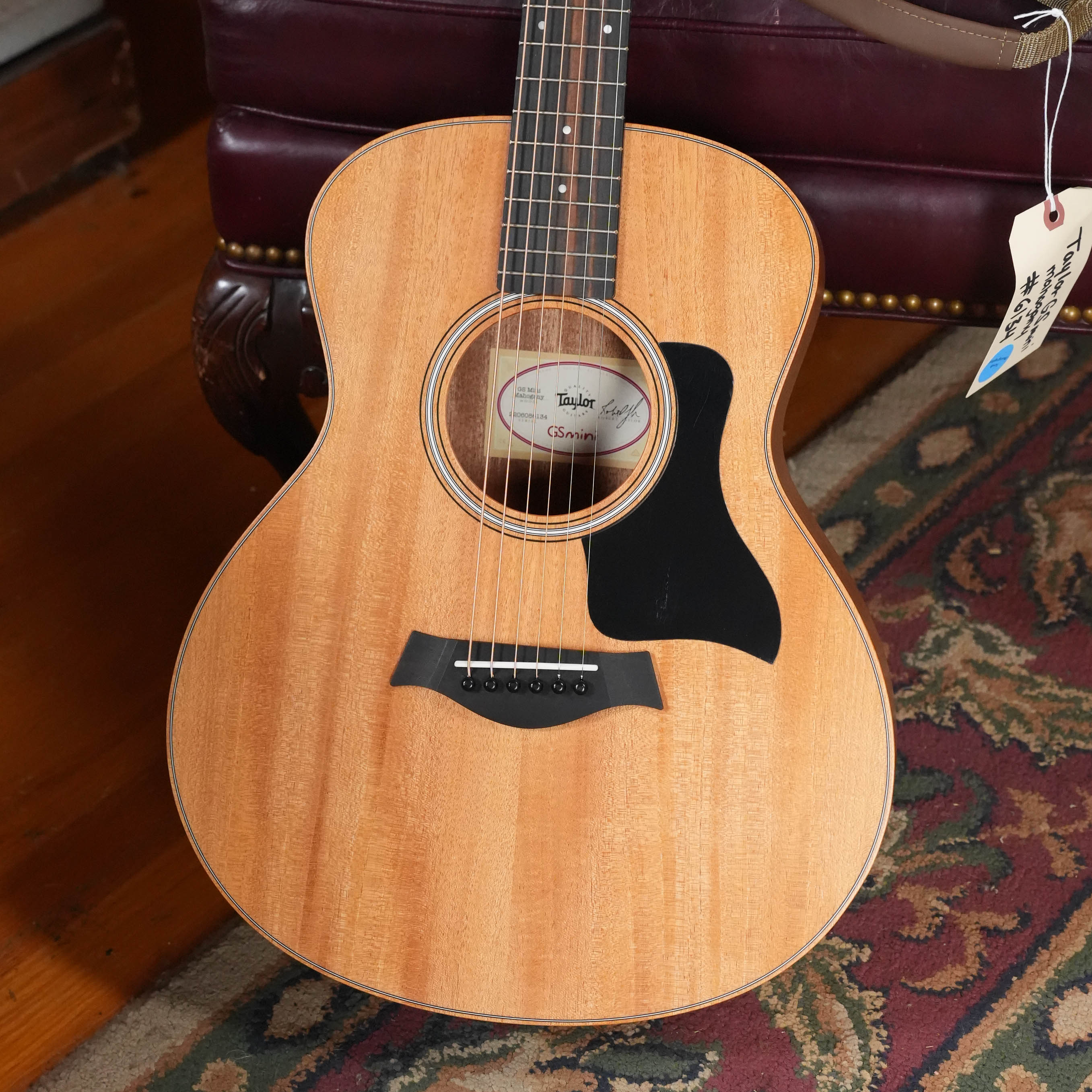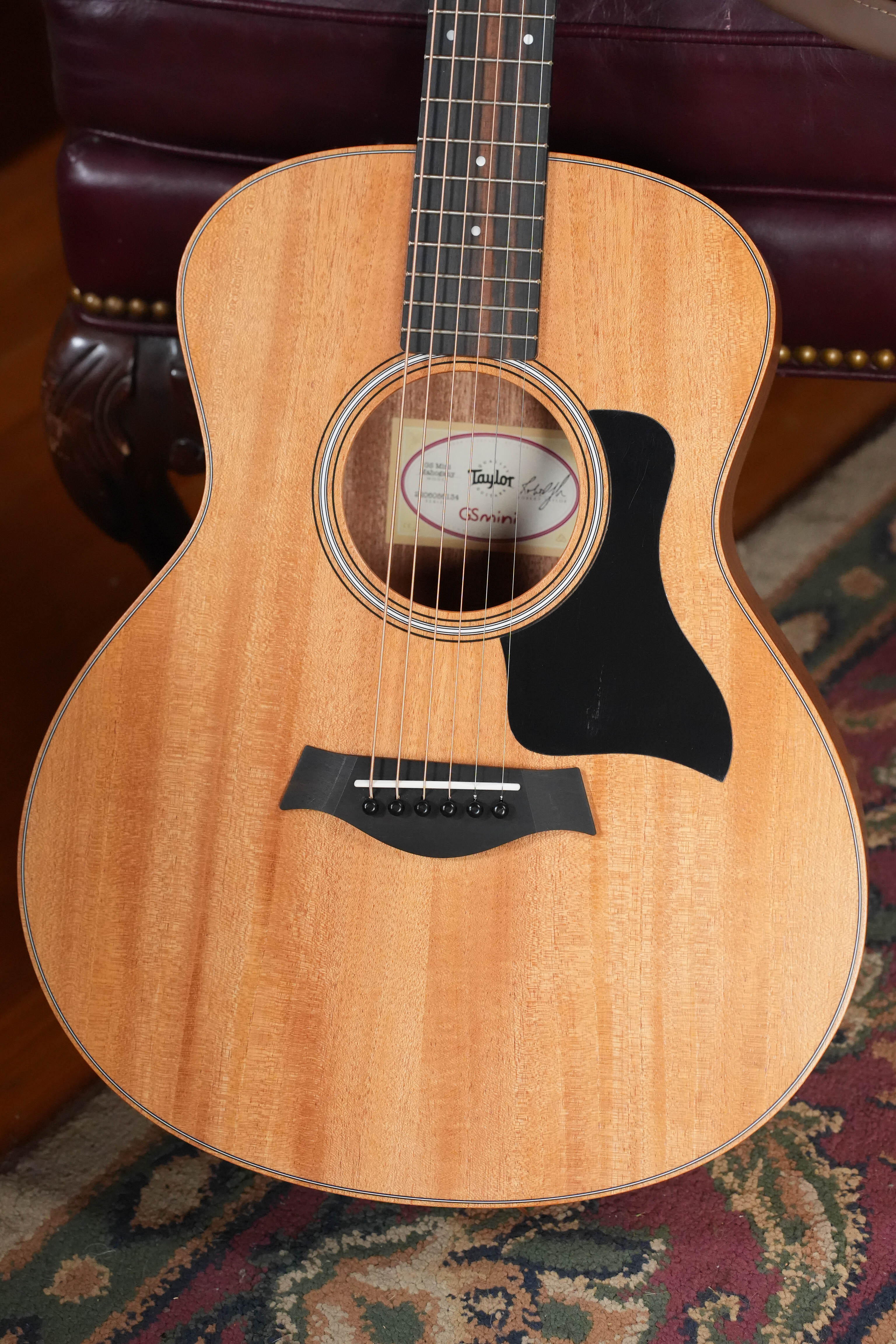

Taylor GS Mini-e Koa Plus — GS Mini Series

Taylor GS Mini

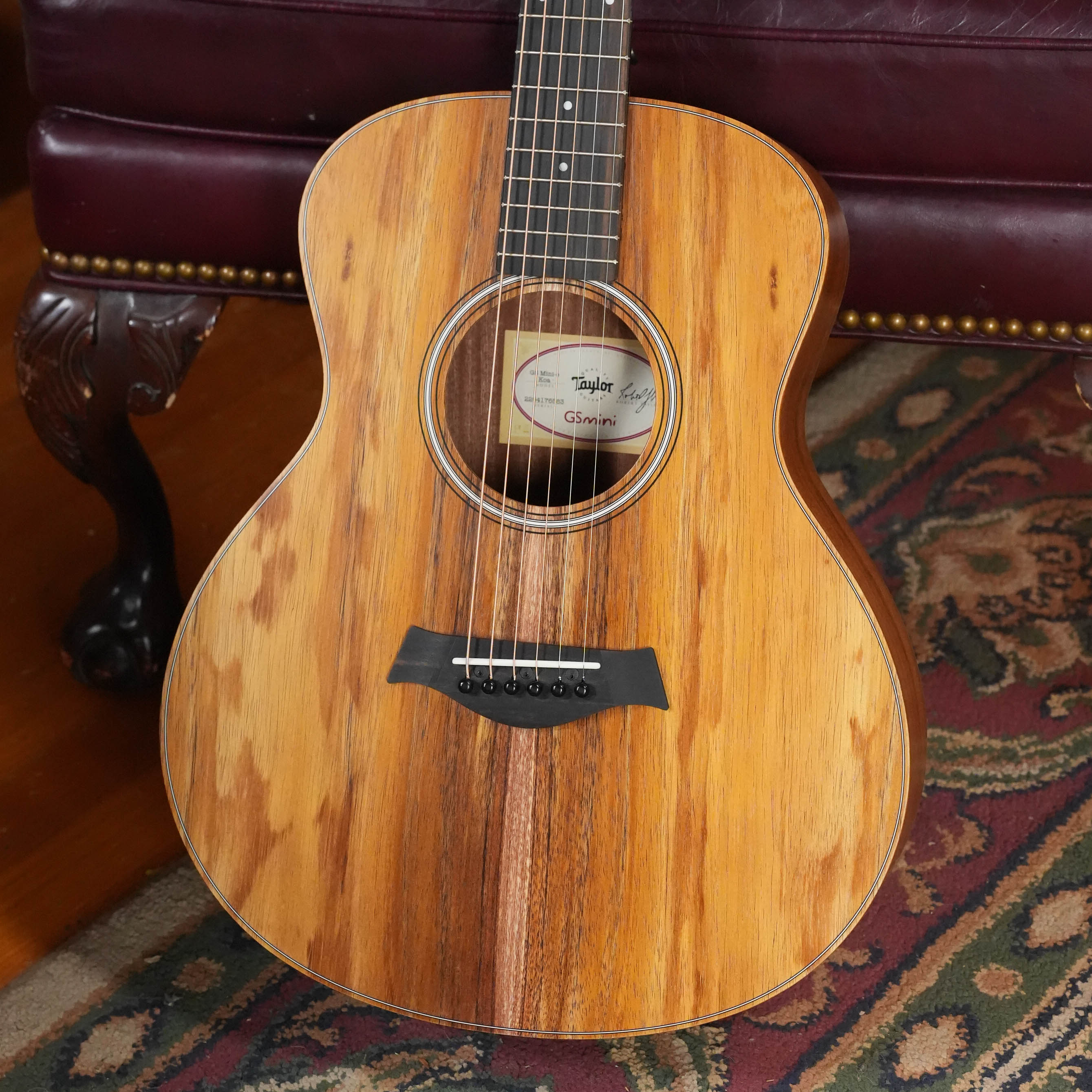
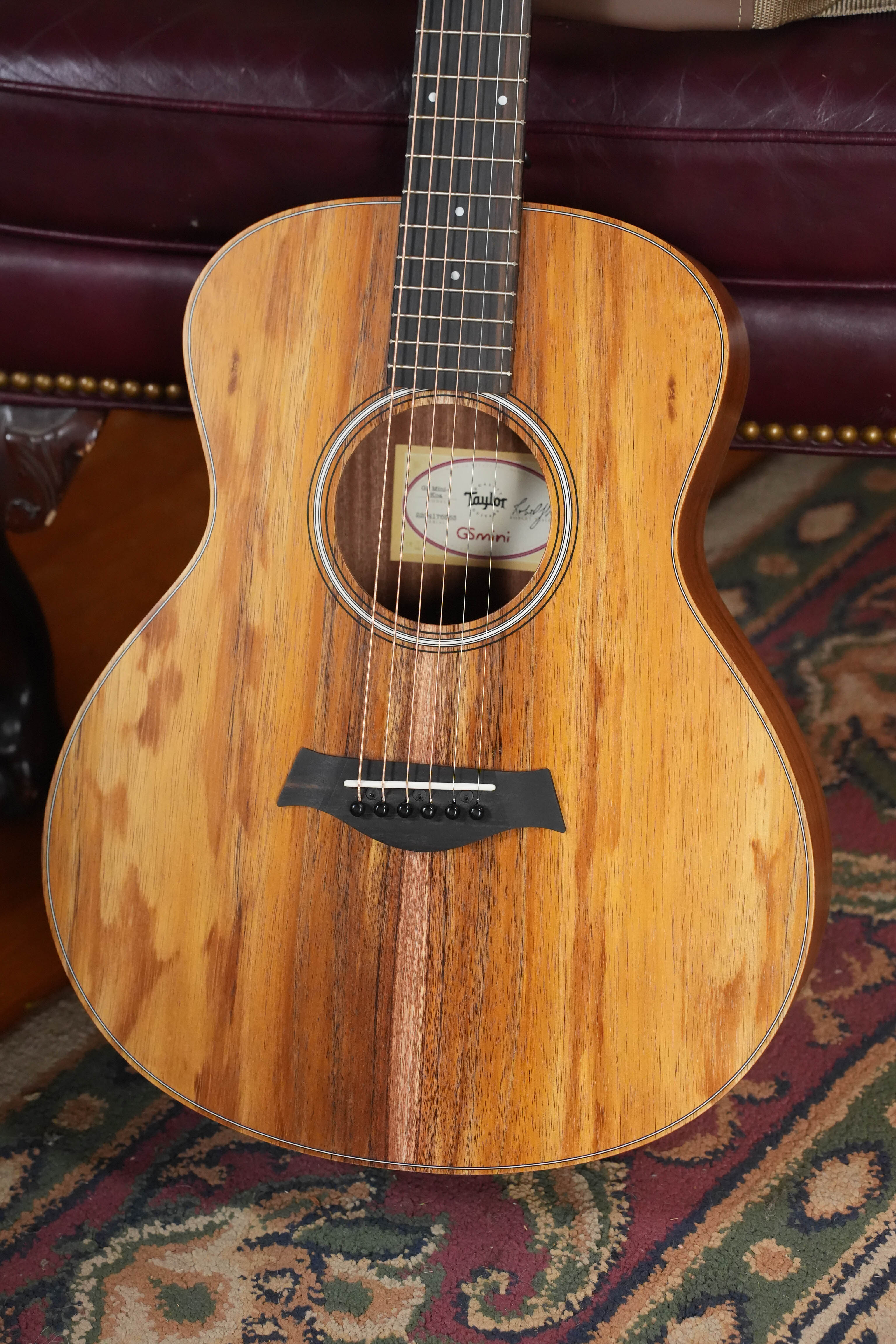
The GS Mini scales Taylor's Grand Symphony body down by roughly three-quarters and shortens the scale length to 23-1/2 inches from Taylor's standard 25-1/2 — a genuinely smaller instrument built to a genuinely smaller spec, not a full-size dreadnought wearing a "travel guitar" label. Taylor kept its scalloped X-Bracing under that smaller top rather than shrinking V-Class down to fit, and the result has become one of the best-selling travel-body guitars in the category: full enough to sound like a real instrument, small enough to actually take somewhere.

Four models span the line from $499 to $1,199, and the difference between them comes down to tonewood and electronics rather than body size — every GS Mini shares the same compact frame. The GS Mini Mahogany ($599) pairs a solid mahogany top with sapele back and sides for a woodier, more compressed voice. The GS Mini Sapele ($499) swaps in a spruce top for a brighter, more balanced all-rounder and sits as the entry point into the line. The GS Mini-e Koa ($999) moves to an all-koa body with ES-B electronics built in, and the GS Mini-e Koa Plus ($1,199) tops the line with upgraded Expression System 2 electronics, a Shaded Edgeburst finish, and a Grey AeroCase for the road.

Worth saying plainly: a GS Mini is a travel, practice, or backup instrument first. It isn't a substitute for a full-size dreadnought or Grand Auditorium on a gig where you need full low-end output and stage projection — that's a different guitar for a different job. What every one of these four builds does deliver is genuine Taylor build quality and playability at a scale that fits in an overhead bin.

0

This collection is empty

Continue shopping

What ties all four GS Mini models together is the body, not the tonewood. Every GS Mini scales Taylor's Grand Symphony shape down to roughly three-quarters size and shortens the scale length to 23-1/2 inches, a genuine dimensional change rather than a cosmetic one, so the guitar sits differently in your lap, fits under an airline seat, and asks less of a smaller player's hand span on the fretboard. Taylor kept its scalloped X-Bracing under that smaller top instead of adapting V-Class down to fit, which is part of why the GS Mini reads as its own instrument rather than a shrunken version of a full-size Taylor. That combination has made it one of the best-selling travel-body guitars on the market, and it shows up in a few recurring roles: a genuinely portable travel guitar for a working musician who doesn't want to check a full-size case, a backup instrument that lives in the truck or the greenroom, a first "real" guitar for a student or smaller-handed player who finds a dreadnought physically awkward, and a gift instrument for someone who wants an actual Taylor rather than a beginner-brand guitar.

Tonewood is where the four models actually diverge. The GS Mini Mahogany runs a solid mahogany top over sapele back and sides, and mahogany's tighter overtone structure produces a more compressed, woody midrange with a quicker note decay — a voice that tends to favor fingerstyle playing and quieter, more intimate settings. The GS Mini Sapele pairs a spruce top with sapele back and sides instead, and spruce's wider dynamic range gives it more headroom and a brighter, more balanced voice that responds well to a harder strum, which is part of why it sits as the entry point into the line. Both koa models move to an all-koa build for top, back, and sides. Koa starts out compressed and midrange-forward, closer in character to mahogany than to spruce, but it's known for opening up and growing warmer with age and play time in a way the laminate tonewoods on the other two models don't — a guitar that sounds noticeably different at year five than it did new.

Price and coverage split the line in half for a real reason, not an arbitrary one. The GS Mini Mahogany at $599 and the GS Mini Sapele at $499 both sit under the $1,000 threshold where TAS extends its full Dread-Not Guarantee, so those two ship with our 23-point professional inspection but not the trade-in and trial coverage reserved for higher-value instruments. The GS Mini-e Koa at $999 and the GS Mini-e Koa Plus at $1,199 both cross that line — not coincidentally, they're also the two models built with onboard electronics, so the added cost buys both a more premium tonewood and pickup system, and the coverage that comes with crossing into four-figure territory the moment you add real gig-readiness to a travel body.

Browse the full Taylor Guitars collection for the rest of the lineup, or go straight to a specific GS Mini model: the GS Mini Mahogany, the GS Mini Sapele, the GS Mini-e Koa, or the GS Mini-e Koa Plus.

The Acoustic Shoppe is an Authorized Taylor Premier Dealer and Gold Label Advantage Dealer. Every instrument ships after a full 23-point professional inspection by our in-house repair tech. As a nine-time consecutive NAMM Top 100 Dealer, we handle warranty concerns directly on your behalf.

Frequently Asked Questions

Is a GS Mini a good primary guitar, or is it really just for travel?
Honestly, it depends on the job. A GS Mini is built to be genuinely portable — a three-quarter-scale body and a 23-1/2-inch scale length that fits in an overhead bin and asks less of a smaller player's hand span — and that same compact size means it won't push the low-end volume and projection of a full-size dreadnought or Grand Auditorium on a real gig. As a first guitar, a student instrument, a travel companion, or a backup that lives in the truck, it's a genuine Taylor in every other respect. As the only guitar a gigging player owns, most players eventually want a full-size instrument alongside it.
What's the actual difference between the four GS Mini models?
Tonewood and electronics, not body size — every GS Mini shares the same compact frame. The GS Mini Mahogany ($599) and GS Mini Sapele ($499) are both non-electric, differing in top wood: mahogany for a woodier, more compressed voice, spruce for a brighter, more balanced one. The GS Mini-e Koa ($999) and GS Mini-e Koa Plus ($1,199) both move to an all-koa body and add onboard electronics, with the Koa Plus stepping up to Expression System 2, a Shaded Edgeburst finish, and a Grey AeroCase.
Does the GS Mini sound like a full-size Taylor?
It sounds like a genuine Taylor scaled down, which is a different thing from a full-size guitar with the volume turned down. The scalloped X-Bracing and body construction are real Taylor engineering, not a budget shortcut, so the tone is legitimate and articulate for its size. What it can't do is match the low-end air and stage projection of a full-size dreadnought or Grand Auditorium — that's a function of body volume, not build quality, and no travel-body guitar gets around it.
Should I get the GS Mini Mahogany or the GS Mini Sapele?
Start with how you play. The Sapele's spruce top gives it more headroom and a brighter response to a harder strum, which is why it's positioned as the entry point into the line. The Mahogany's solid mahogany top trades some of that headroom for a more compressed, woody midrange that tends to suit fingerstyle playing and quieter settings. Neither is a strict upgrade over the other — they're voiced for different playing styles at a $100 difference.
Do the electric GS Mini models need to be plugged in to sound good?
No. The GS Mini-e Koa and GS Mini-e Koa Plus are full acoustic instruments first, with electronics added for when you do need to plug in — a coffeehouse set, a small stage, a home recording setup. Unplugged, they sound like what they are: an all-koa GS Mini, with the same compressed, midrange-forward voice that opens up over time as the koa ages.