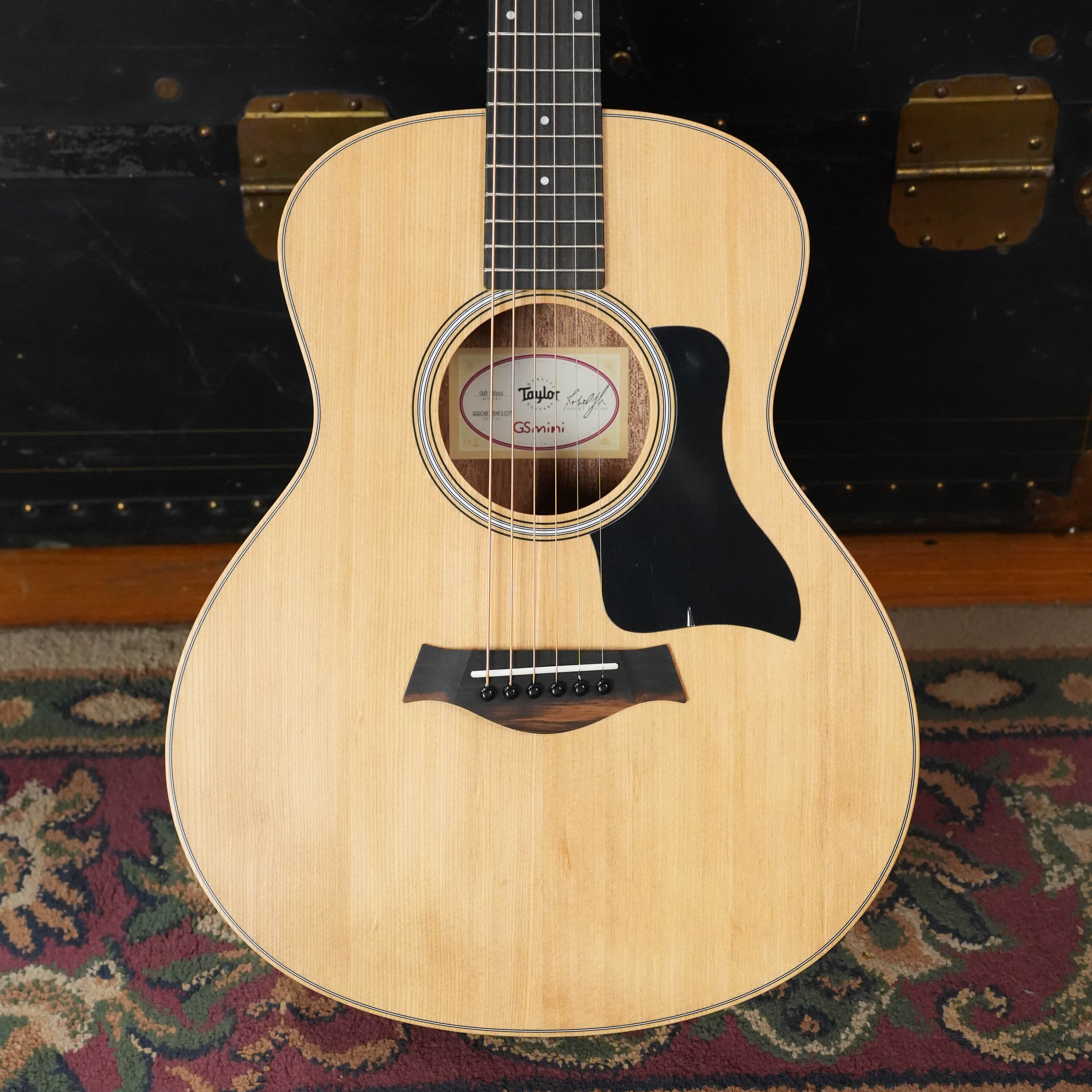
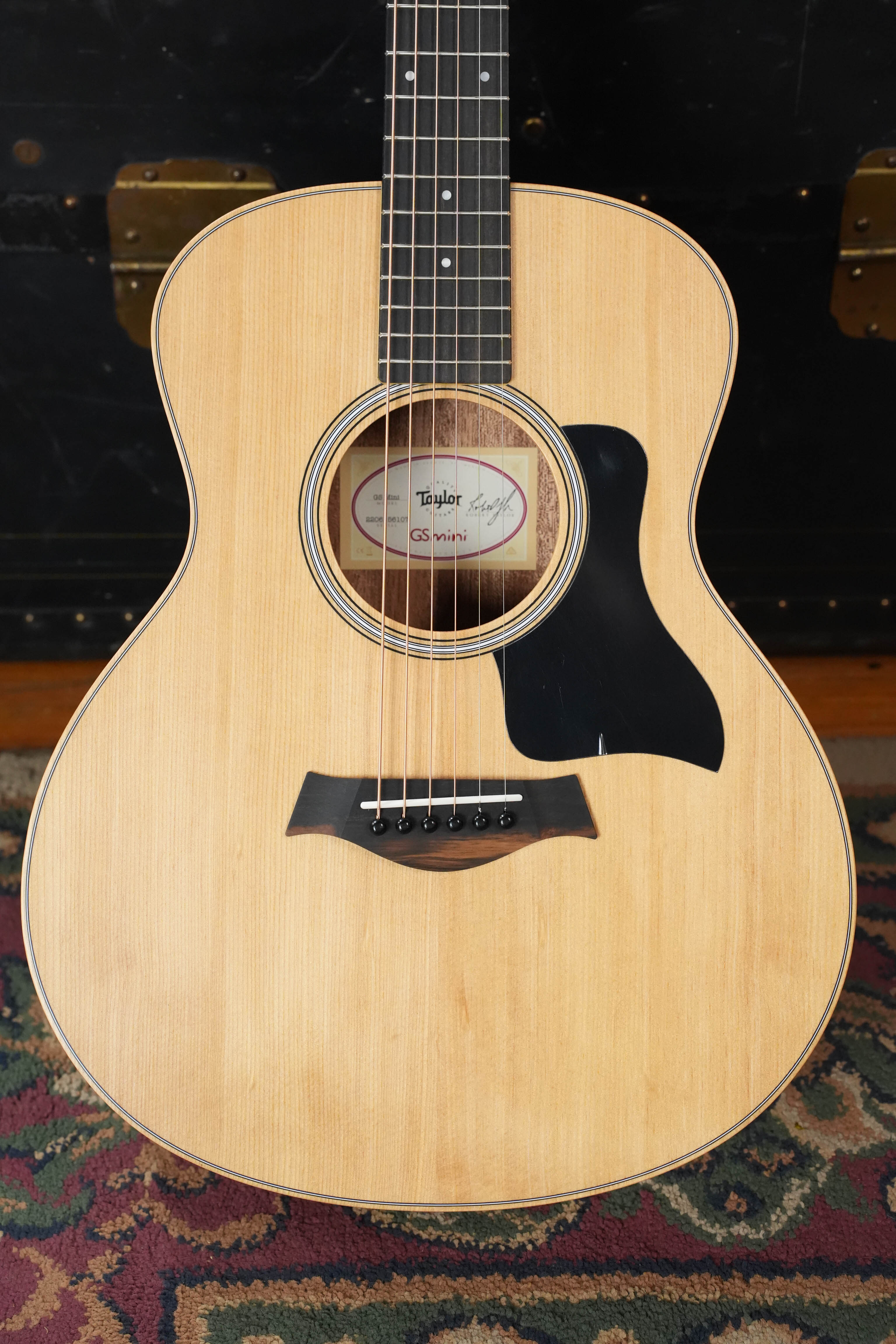
Spruce's wider dynamic range is the reason the GS Mini Sapele reads as the line's all-rounder. Where mahogany's denser structure compresses and damps a note quickly, spruce keeps ringing longer under more force, so the top has somewhere to put the extra energy when you strum hard instead of flattening out. That gives the Sapele more available headroom and a brighter, more balanced voice across the neck — not as immediately woody or forward in the midrange as the mahogany-topped model next to it, but more forgiving of a full-band strumming attack and a wider range of playing styles in a single guitar. It's a big part of why this build, historically the original GS Mini voicing, has carried the line's best-seller reputation.
Set next to the GS Mini Mahogany, the choice comes down to how you actually play rather than which one costs less. The Sapele's brighter, higher-headroom voice suits strummed rhythm parts, campfire playing, and anyone who wants one guitar that does a bit of everything reasonably well. The Mahogany trades that headroom for a more compressed, intimate midrange better suited to fingerstyle and quieter rooms. At $499 against the Mahogany's $599, the Sapele is also the more affordable entry point into the line, though the $100 gap reflects tonewood choice more than any real difference in build quality.
Everything else about the two guitars matches. Both share the GS Mini's three-quarter-scale Grand Symphony body and 23-1/2-inch scale length, both run Taylor's scalloped X-Bracing instead of a shrunk-down V-Class pattern, and neither carries onboard electronics — these are acoustic-only builds meant for practice, travel, and everyday playing rather than stage amplification. That shared construction is also why both sit in the same sub-$999 price bracket, well below the electronics-equipped koa models further up the GS Mini line.
That shared body is also what makes the Sapele such a common recommendation as a first "real" guitar or a gift instrument. The shorter 23-1/2-inch scale length and smaller overall footprint mean less of a stretch across the fretboard and a lighter guitar to actually hold, which tends to matter more for a younger or smaller-framed player than most beginner-guitar marketing lets on. Because it's a genuine Taylor rather than a step-down beginner brand, it isn't something a player needs to trade away from as they improve — they may eventually add a full-size body for the extra volume, but the build quality underneath doesn't hold them back in the meantime. The same portability makes it a natural second guitar for an experienced player who already owns a full-size instrument and wants something smaller for the road.
At $499, the GS Mini Sapele sits below the $1,000 threshold where TAS extends the full Dread-Not Guarantee, and we would rather say that plainly and directly than bury it in fine print somewhere on the page. Every GS Mini Sapele still ships with TAS's full 23-Point Professional Inspection — a real pre-sale quality check, not a routine setup, performed by our in-house certified tech before the guitar leaves the shop, the same inspection standard applied to every instrument we sell at any price point across the entire store.
For a side-by-side with the mahogany-topped version of this same body, see the GS Mini Mahogany. For the full picture across all four models in the line, browse the Taylor GS Mini collection, or see the complete Taylor catalog in our Taylor Guitars collection.
The Acoustic Shoppe is an Authorized Taylor Premier Dealer and Gold Label Advantage Dealer. Every instrument ships after a full 23-point professional inspection by our in-house repair tech. As an eleven-time consecutive NAMM Top 100 Dealer, we handle warranty concerns directly on your behalf.