
Table of Contents
- What mandolin does Rhonda Vincent play?
- Why a Lloyd Loar F-5 still shapes the mandolin you'll buy
- "Let the instrument do the work"
- Rhonda Vincent on setup: a mandolin that isn't set up is a disservice
- Rhonda Vincent's Sartory bows, and what fiddlers can take from them
- Dry air split her fiddle on stage
- The F-style mandolins we'd point you to
- Who should take Rhonda Vincent's advice
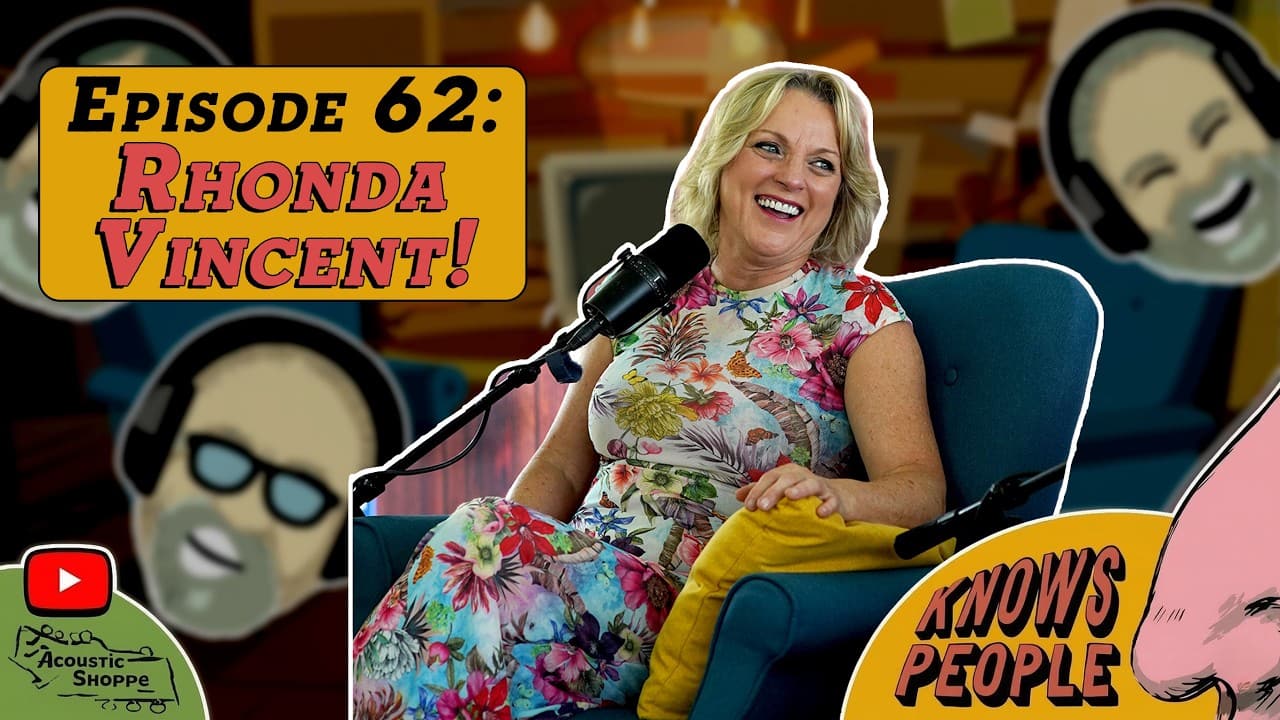
Every mandolin player hits the same question somewhere between the first instrument and the next one: does a better mandolin actually make you play better, or would a great picker sound great on anything? Rhonda Vincent has played the Grand Ole Opry hundreds of times, opened a show at Carnegie Hall alone in a spotlight, and spent a lifetime on a bus going from festival to festival, so when the talk backstage at the 2026 Starvy Creek Bluegrass Festival in Conway, Missouri turned to her instruments, we listened.
Her answer is that the instrument matters a lot more than most people want to admit, and so does the way it's set up, whether it's a hundred-year-old Gibson or a kid's first mandolin at a jam. Here's what Rhonda Vincent plays, what she's learned from it, and what we'd take from it if you're shopping right now.
What mandolin does Rhonda Vincent play?
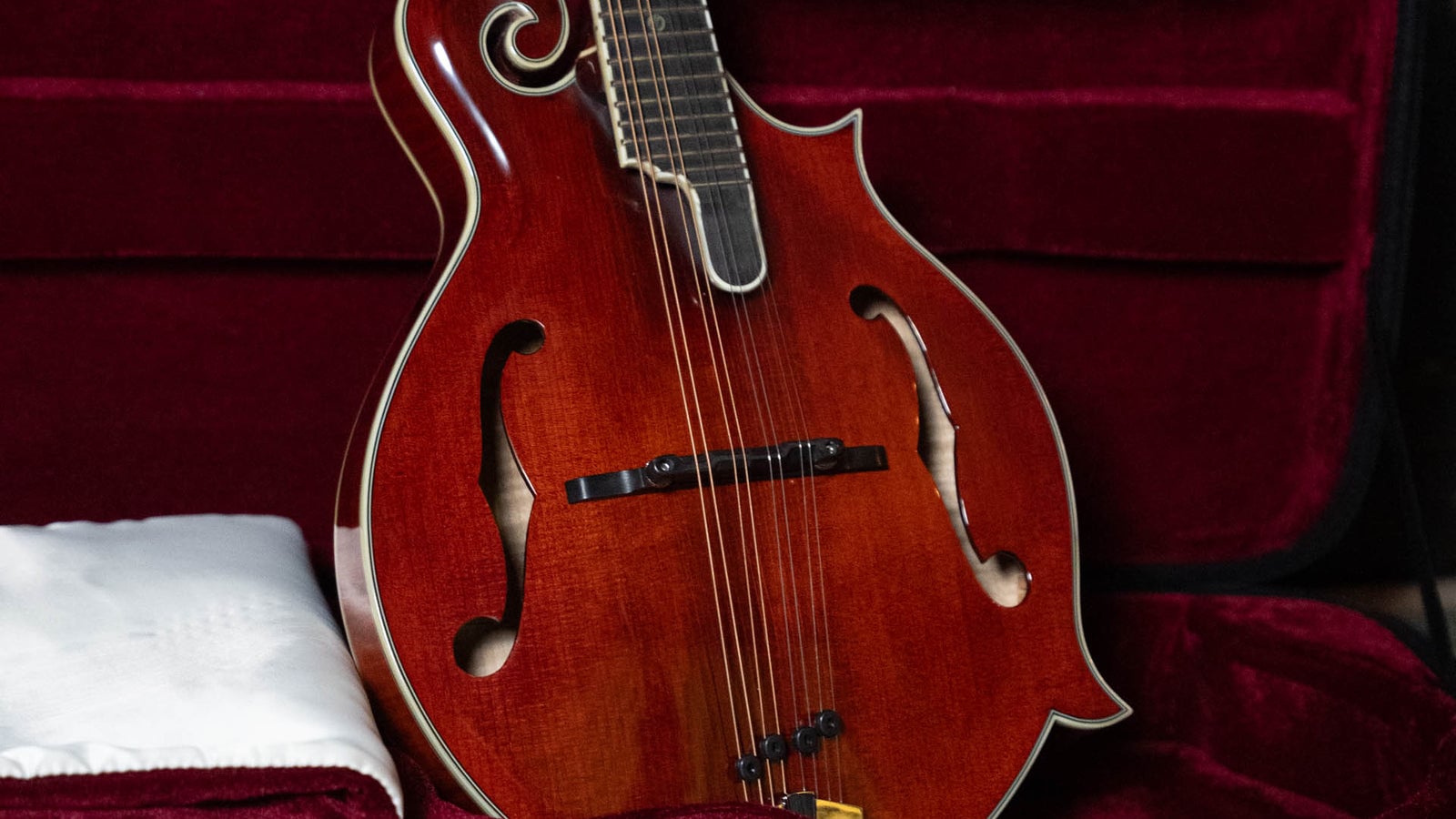
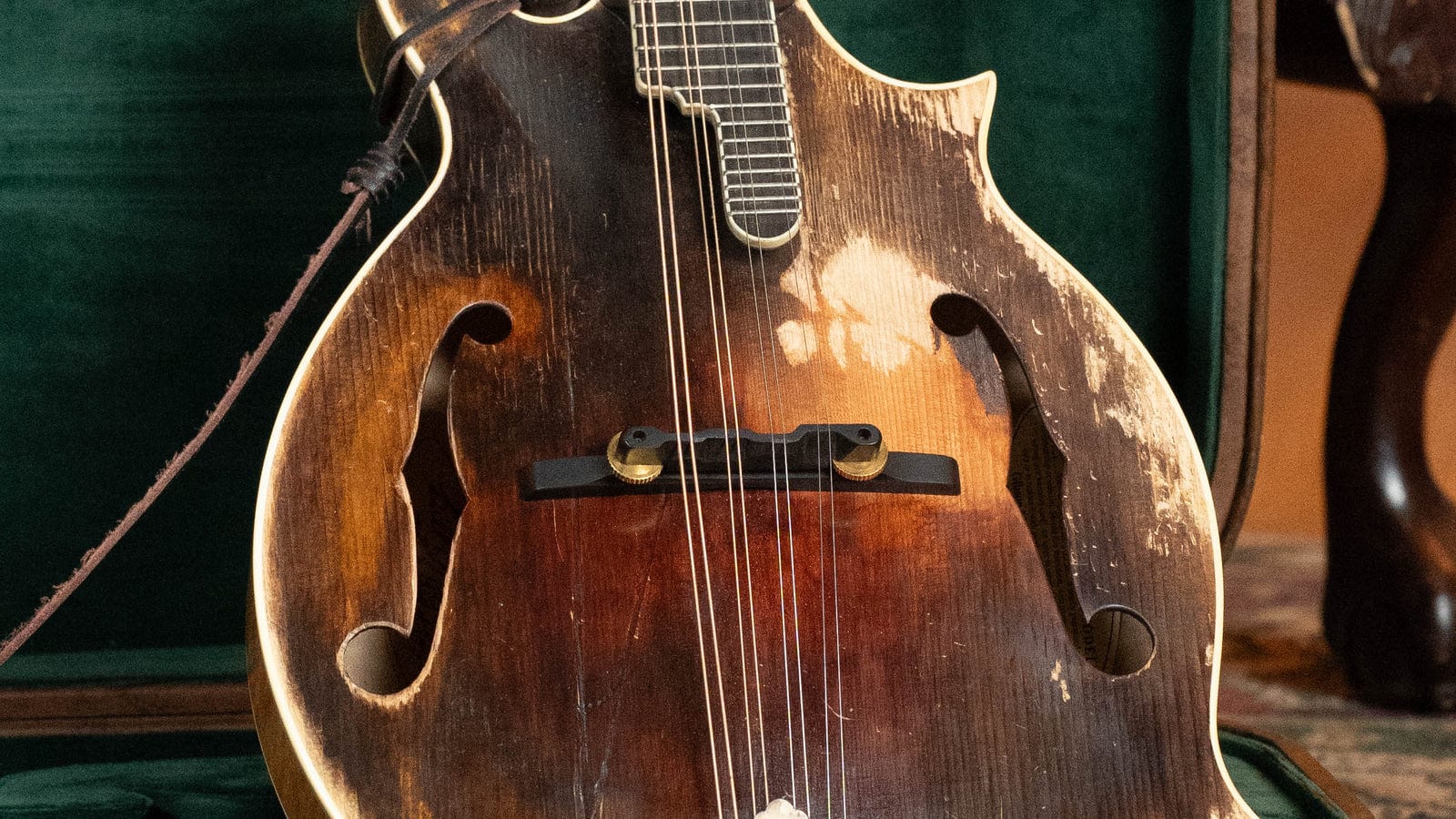
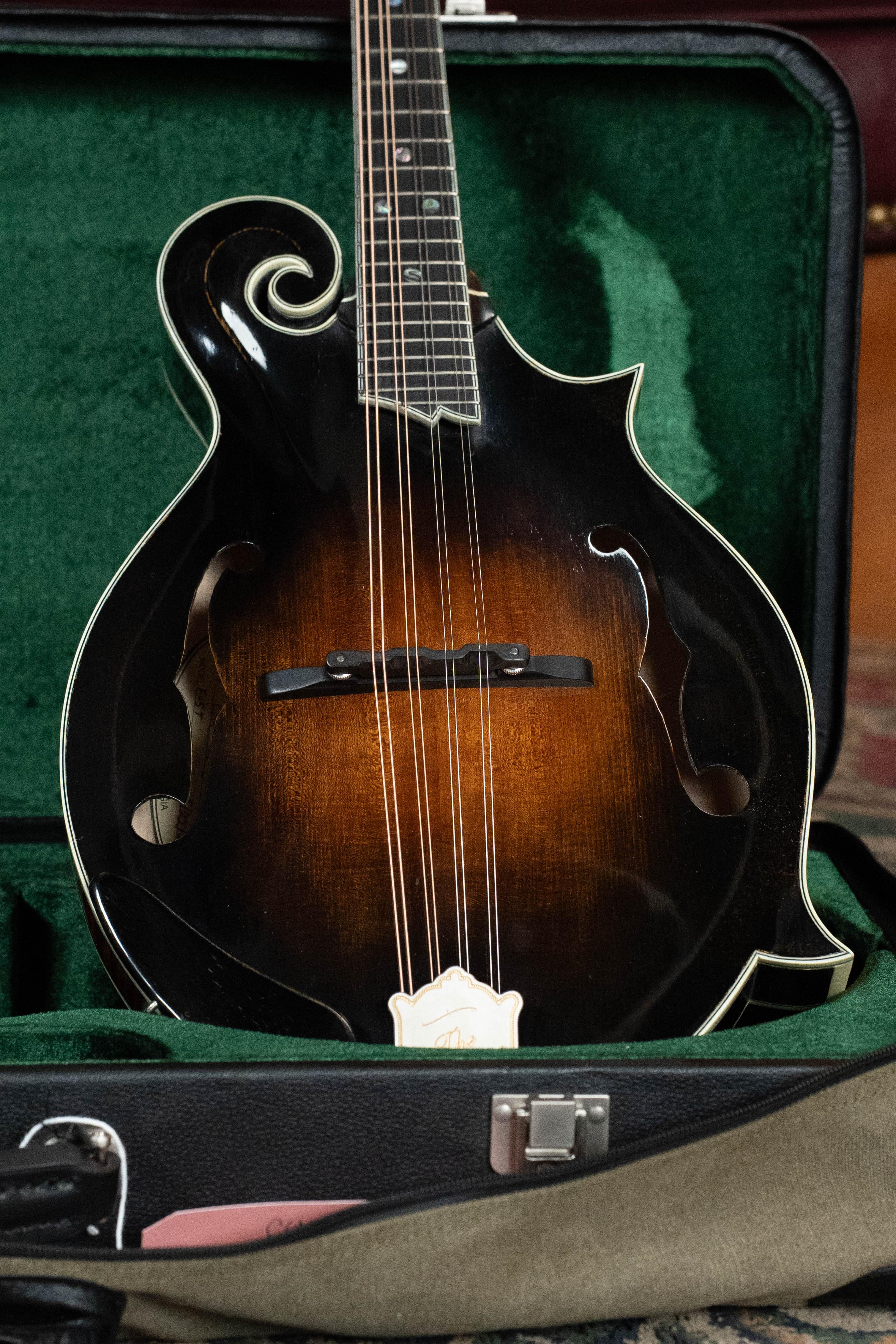
Two, mostly. For about twenty years her main mandolin has been a Smith Creek. About two and a half years ago she added a Lloyd Loar–signed Gibson F-5 that's now 102 years old, and she doesn't keep it on a wall. When the Opry took its 100th-anniversary celebration to Carnegie Hall, Rhonda opened her set on a dark stage under a single spotlight, playing "Blue Moon of Kentucky" solo on that Loar.
She never set out to buy one. Her bandmate Zach knew the family of the man who'd owned it, the mandolin came onto the bus, and she played it before the show. Rhonda plays hard, and she says most Loars she'd tried gave up when she chopped them. This one didn't.
"This one was different when I chopped it. I played it and I'm like, this thing rings like a bell."
Rhonda VincentShe tossed out a low offer without expecting anything, and the family accepted it. Since then the Loar has its own case, with vintage pink crushed velvet inside and more than 30 hours of hand-tooled leather on the outside, and it goes to the Opry with her.
Jump to: the Loar story at 25:21 · Sartory bows at 29:24 · why setup matters at 32:18 · the fiddle that split in Las Vegas at 37:23.
Why a Lloyd Loar F-5 still shapes the mandolin you'll buy
Lloyd Loar was the engineer at Gibson in the early 1920s who revoiced the mandolin into the F-5, and the mandolins he signed come from a short window of just a few years. That's why players call them the Stradivarius of mandolins. It's also why almost every F-style on our wall, from an Eastman to a hand-carved boutique build, still traces back to the F-5 he voiced. Bill Monroe's own F-5 was signed on July 9, 1923, which is the mandolin behind our post on Bill Monroe's 1923 Gibson F-5.
Rhonda has her own Monroe connection. On July 9, 2023, exactly 100 years after Monroe's mandolin was signed, we picked up a Gibson Hall of Fame Monroe replica in Nashville. We called Rhonda, who was playing the Opry, and that mandolin got its first performance on the Opry stage in her hands. If you want the full story on that instrument, read our Hall of Fame Monroe review.
Here's how Rhonda's instruments line up, and what each one says to a buyer:
| Rhonda Vincent's instrument | What it is | What it tells a buyer |
|---|---|---|
| Lloyd Loar–signed Gibson F-5 | A 102-year-old F-style she plays on stage | A great mandolin answers a hard chop instead of giving up |
| Smith Creek mandolin | Her main mandolin for about 20 years | The instrument that fits you becomes part of how you play |
| Gibson Florentine (red) | Her first mandolin, later traded away; the band found her a matching one | Your first instrument stays with you, so buy one that's set up right |
| Sartory violin bows | She owns five; her first is now valued at about $50,000 | For a fiddler, the bow can matter as much as the fiddle |
"Let the instrument do the work"
The most useful thing Rhonda said for a working player came from the difference between her two mandolins. She's an aggressive player, and the Loar taught her to back off and let the mandolin carry the note. She compares it to golf, where you let the club do the work instead of hitting the ball as hard as you can.
"Listen, you don't have to beat this instrument up. It will do the work."
Rhonda VincentWe see the same thing at the shop. Every one of our own instruments has its own personality, and even two guitars of the same shape, tuned the same way with the same strings, will make you play a little differently. That's Rhonda's point about the Loar: a better mandolin gives you the tone without the fight, and that's a big part of what you're paying for when you move up. Our post on what makes a great mandolin gets into the build details behind that.
Rhonda Vincent on setup: a mandolin that isn't set up is a disservice
Not long before Starvy Creek, Rhonda was at a jam in Vermont next to a little girl whose mandolin was out of tune and wasn't set up. Rhonda's reaction was that there was no way that girl could play it properly, and that an instrument like that is going to discourage a new player before she ever gets going. That's true at any price, and it's the reason every instrument we sell gets our 23-Point Professional Inspection before it ships.
When people ask Rhonda Vincent where to get a mandolin, she sends them our way, and her advice for shopping is simple enough to follow anywhere:
- Call the shop and tell them what you're looking for.
- Tell them your budget.
- Seek out the best mandolin you can afford, set up properly, and know what the gold standard is so you have something to work toward.
Rhonda Vincent's Sartory bows, and what fiddlers can take from them
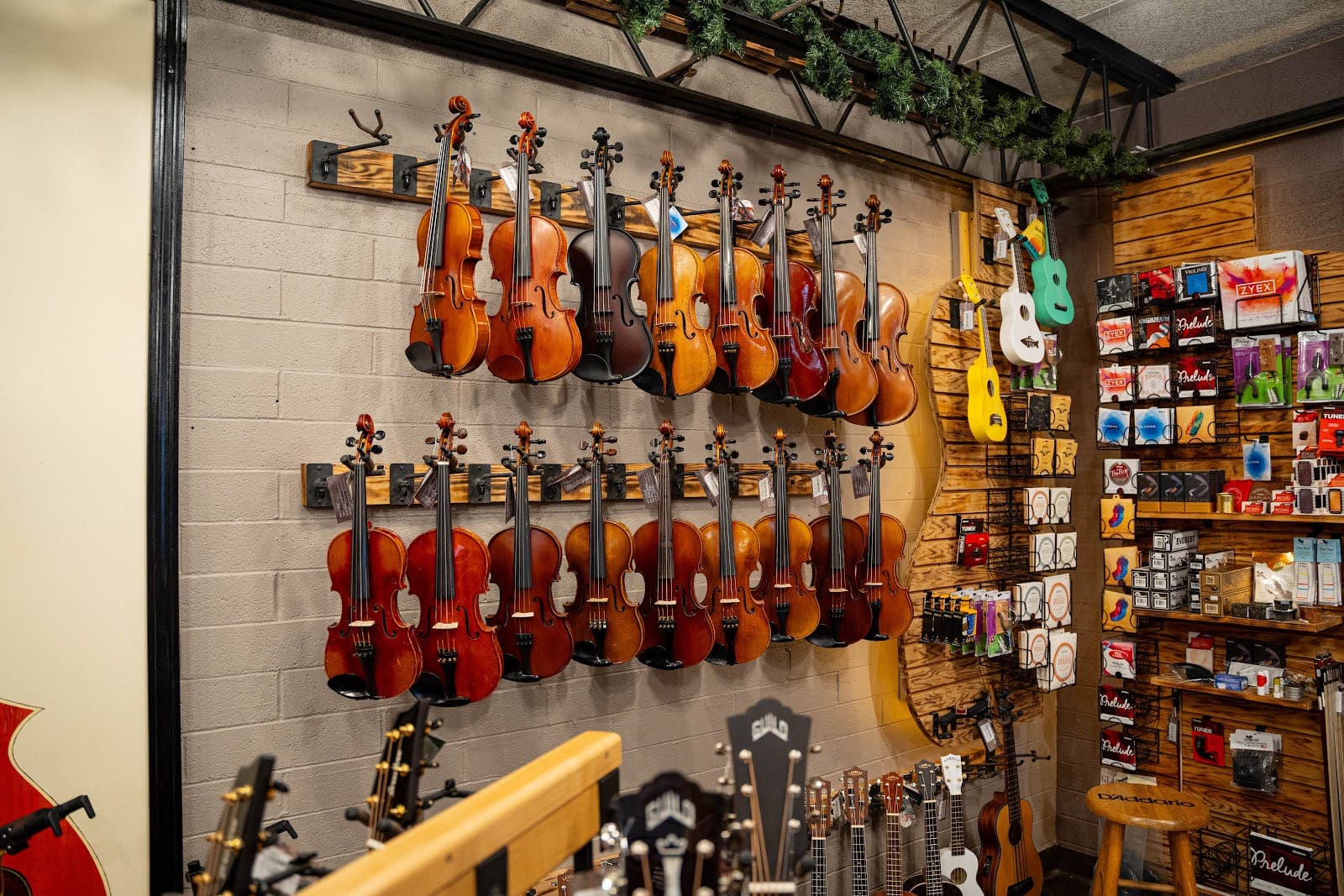
Rhonda plays fiddle too, and her real collecting habit is violin bows made by Sartory. The first time she played one, it felt like it played itself. It was $30,000, marked down to $15,000 for a broken tip, and she passed. She couldn't stop thinking about it for years, and she says a bow like that will ruin your life, in a way. She now owns five, and her first one is valued at about $50,000.
A lot of fiddlers play a bow worth more than the fiddle, and Rhonda says hers usually is. What surprised us is that a great bow isn't only something the player feels. People listening can hear it too. Rhonda takes her wooden bows on the road, while plenty of symphony players she knows travel with carbon fiber bows and leave the wood at home. If you're not ready for a Sartory, a carbon bow like the Howard Core Carbon 400 is the kind of bow those players carry on the road, and our violin and fiddle bows are all in one place.
Dry air split her fiddle on stage
The road teaches you about weather the hard way. In the middle of a fiddle solo in Las Vegas, Rhonda heard a pop and assumed someone broke a string. After the show they found the air had been so dry that the seam gave way and the back of her fiddle separated. Her lesson: think about the elements where you are, because a dry room, a hot stage or a storm can all hurt an instrument.
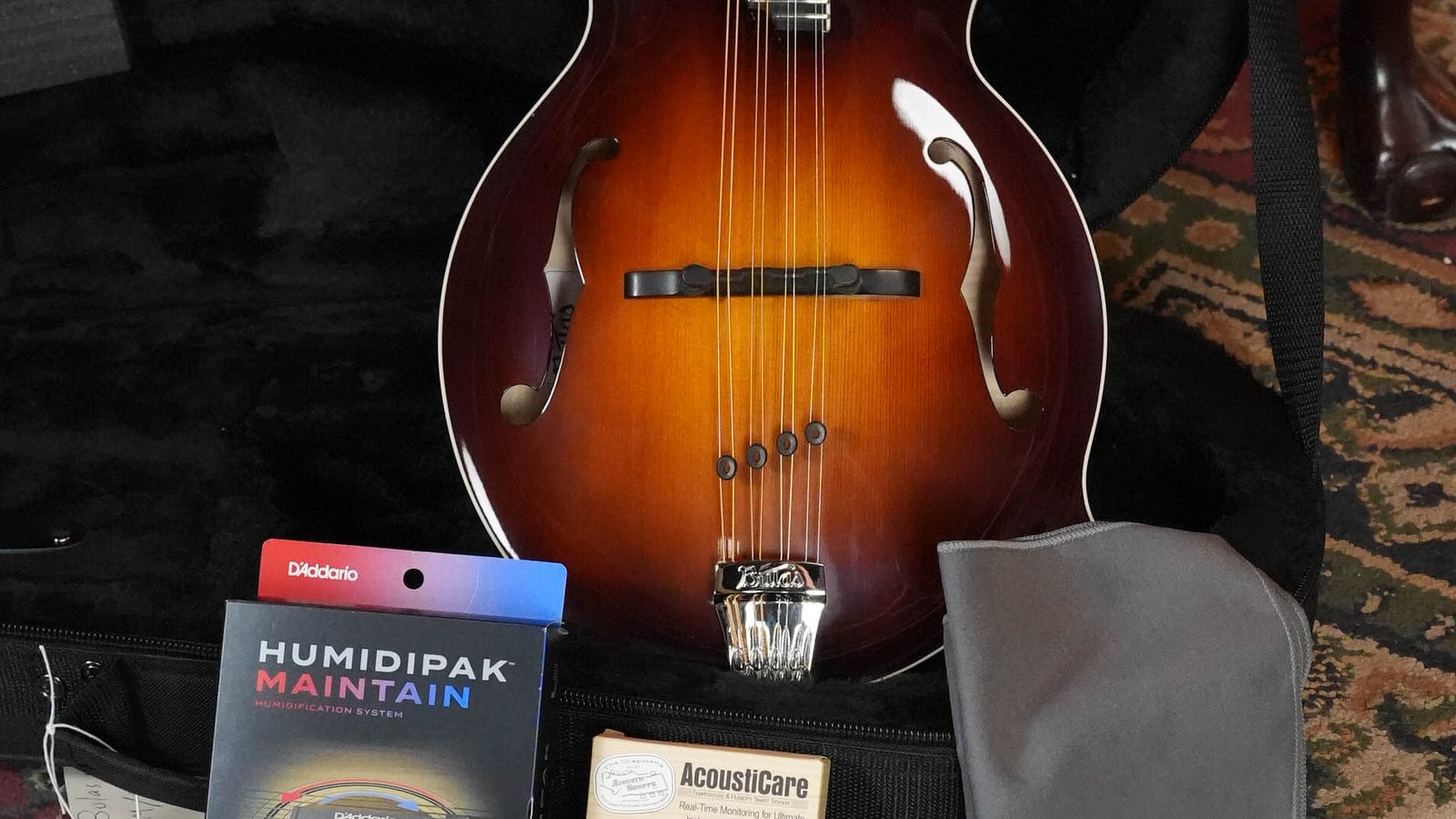
We learned a version of that ourselves when a late-day sun at an outdoor show got hot enough to soften the glue under a guitar bridge. If you travel with a good instrument, keep it humidified and out of the heat. Our Humidity 101 guide covers the basics, and our humidifiers and care products are all on one page.

The F-style mandolins we'd point you to
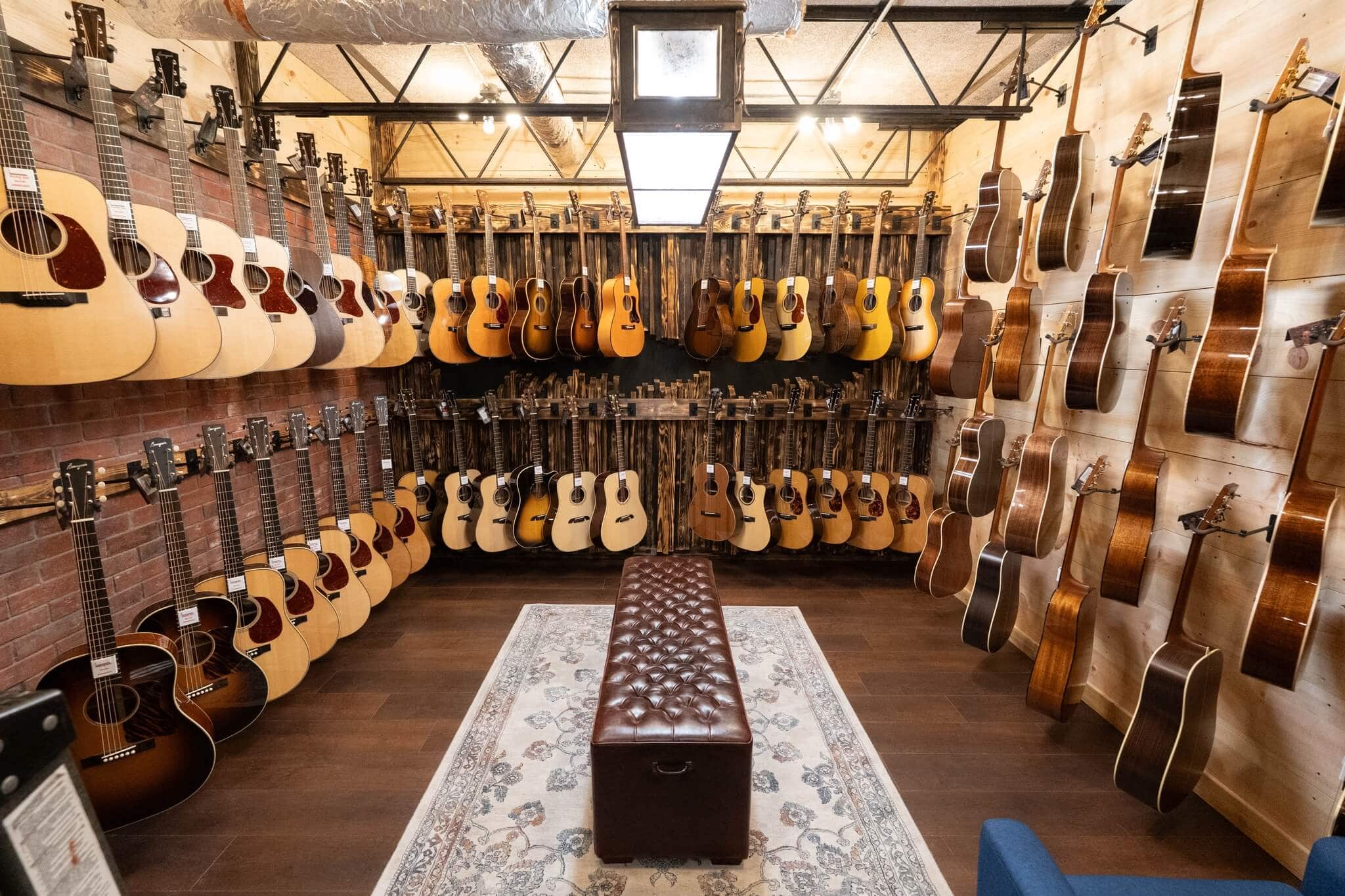
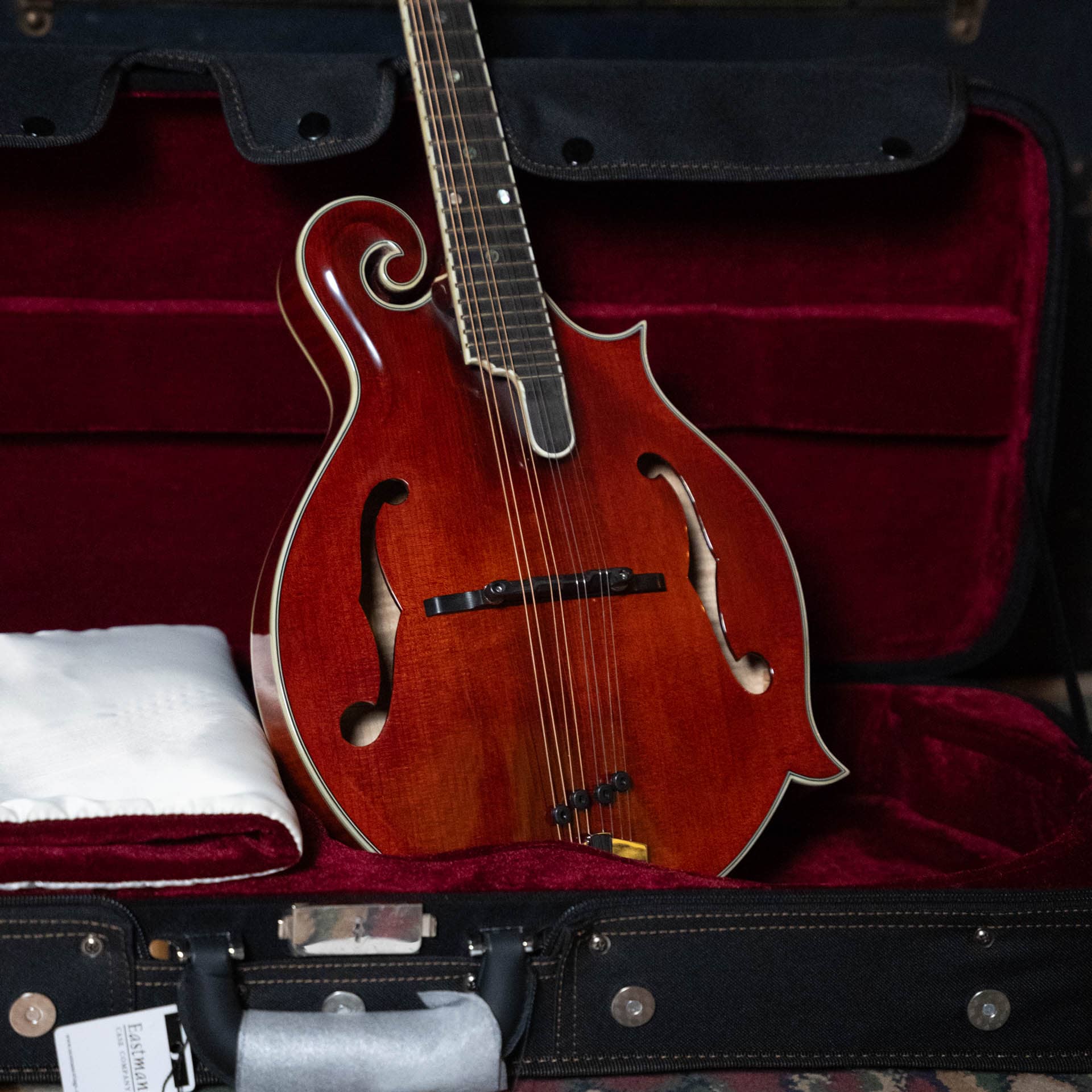
You don't need a Loar to hear what Rhonda Vincent is talking about. What she heard in hers was a mandolin that holds up when you chop hard, and in our stock that usually means an Adirondack spruce top, which gives a mandolin more headroom when you dig in:
- Eastman MD815 #2393 ($2,419): a solid Adirondack spruce top with solid flamed maple back and sides, and the bark a bluegrass jam asks for.
- Bourgeois M5-F-SB #7118 ($2,939): an Aged Tone Adirondack top, so a new mandolin responds more like an older one, plus a Loar-style rectangular case.
- Buford F-5T #011 ($9,500): fully hand carved, with a torrefied Adirondack top and a hand-rubbed spirit varnish, in new condition with light player wear, for the player who wants a builder's F-5.
Every one of these is covered by the Dread-Not Guarantee: a full year to trade it in for up to 90% of the pre-tax purchase price in credit, less round-trip shipping, plus a 30-day in-home trial. Browse every F-style mandolin in stock, our Gibson mandolins, or the full mandolin collection.
Related reading
- Eastman MD815 vs Bourgeois M5F vs Gold Tone Grandmaster: F-style tone test
- Gibson F9 vs Eastman MD815: is a Gibson mandolin worth it?
- Carbon fiber mandolin for touring
Who should take Rhonda Vincent's advice
If you're buying a first mandolin, or buying one for a kid, the setup lesson matters more than the brand: get one that plays in tune and was looked over by someone who knows mandolins. If you've been playing a few years and you're fighting your instrument for volume, that's the sign to move up to a carved Adirondack top and let it do the work. And if you play fiddle, don't overlook the bow, because Rhonda's usually costs more than the fiddle it's played on. Tell us what you play and what you've got to spend, the same way Rhonda Vincent would, and we'll help you find the one.