
Table of Contents
- Why the F-5 came too early
- What changed from the F-4 to the F-5
- Why bluegrass needed the F-5
- Why the July 9, 1923 Loars matter
- Three Monroe mandolins: how Gibson built the Hall of Fame Monroe
- Our Hall of Fame Monroe, number 8
- Who the Hall of Fame Monroe is for, and who should look elsewhere
- Buying a Hall of Fame Monroe or any F-5 from us
- Acoustic Shoppe FAQ
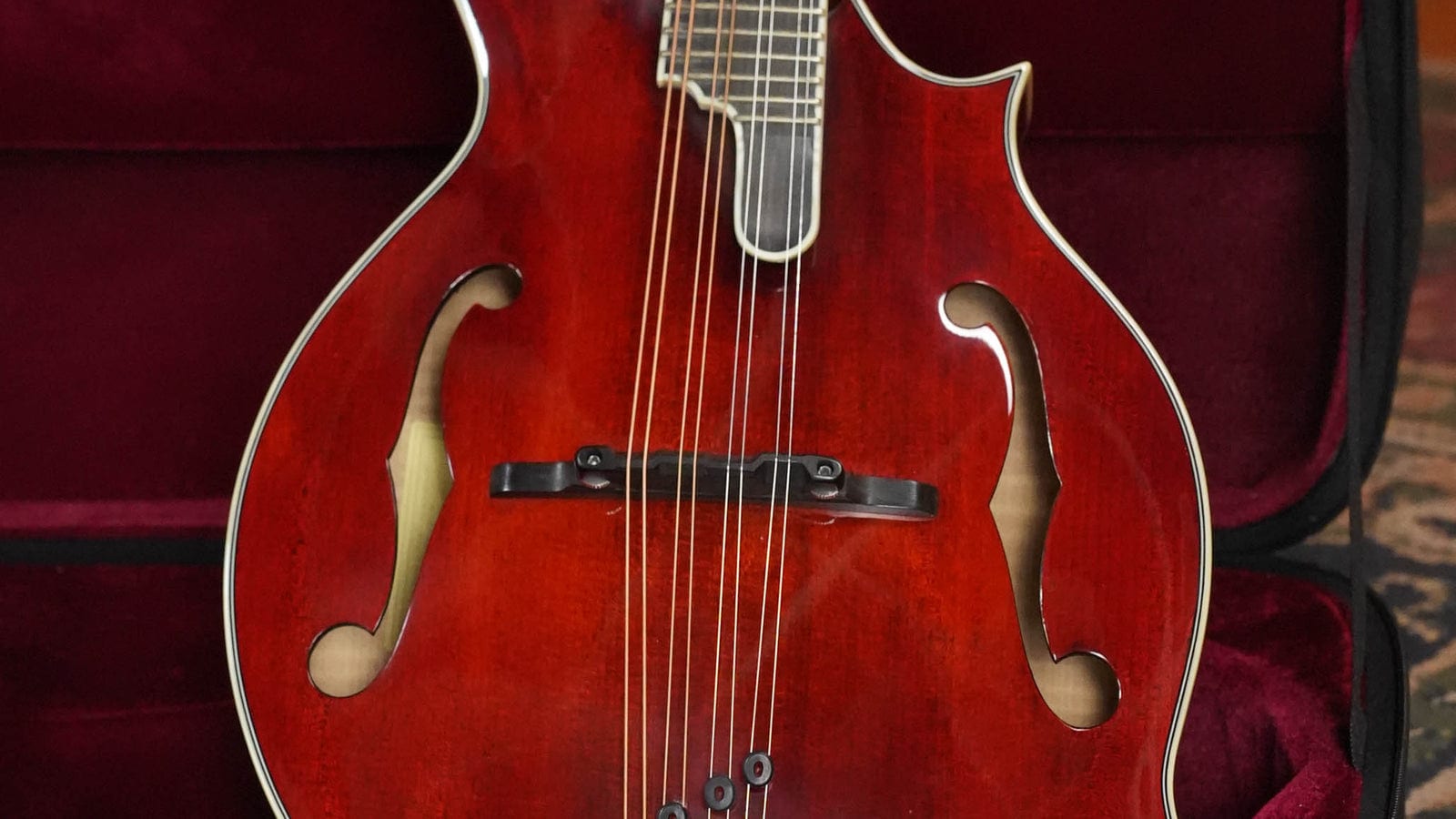
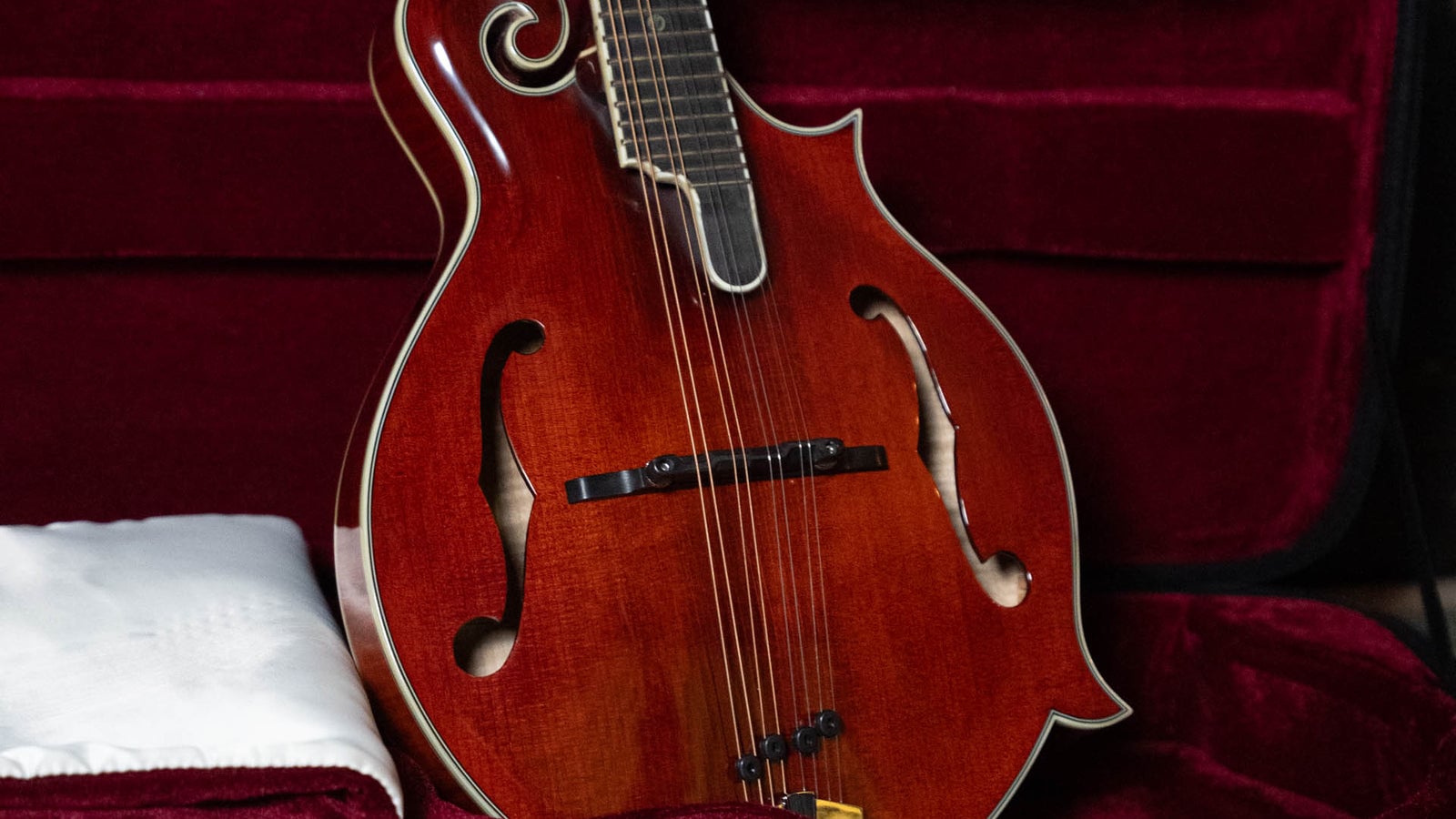
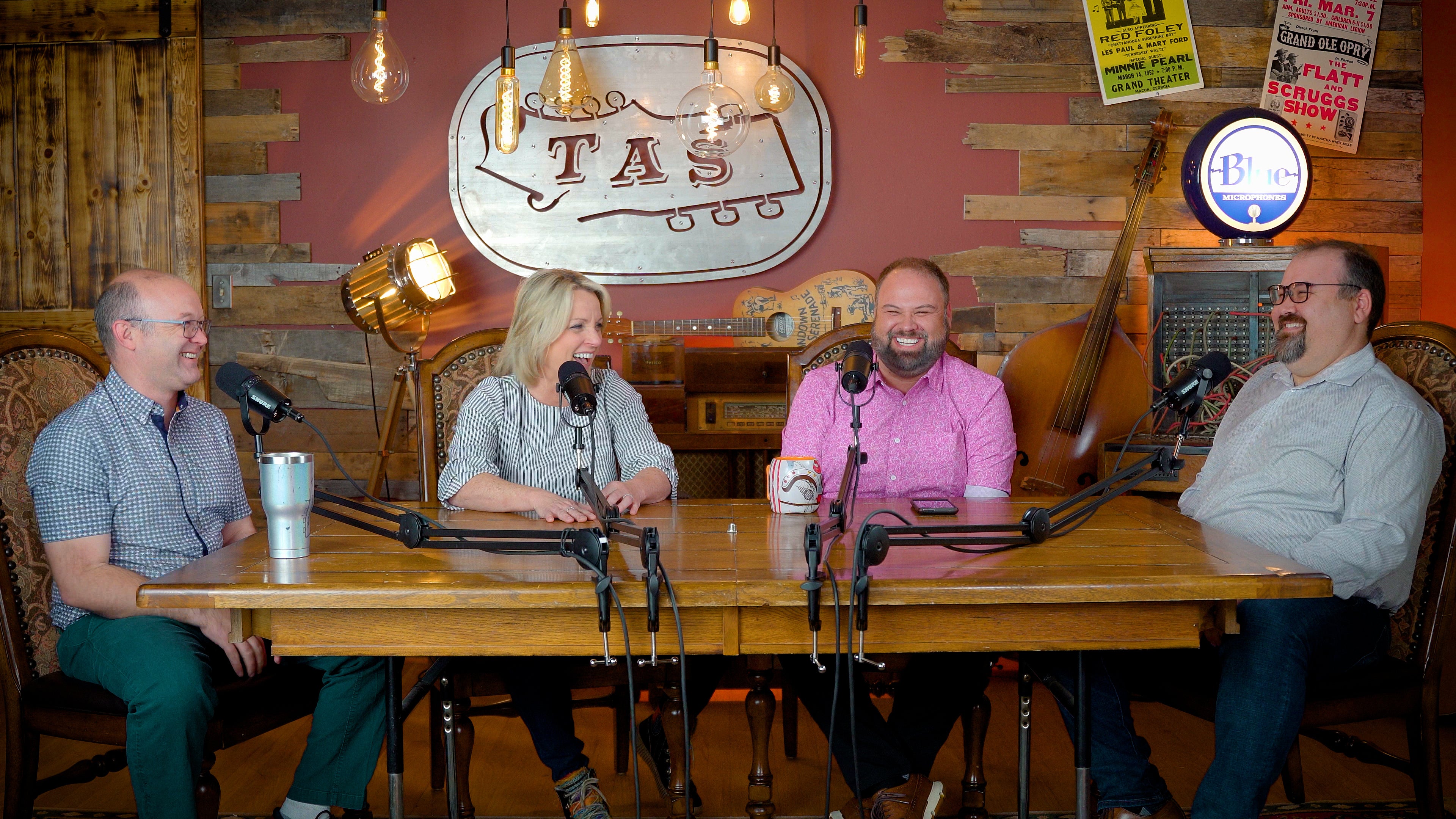
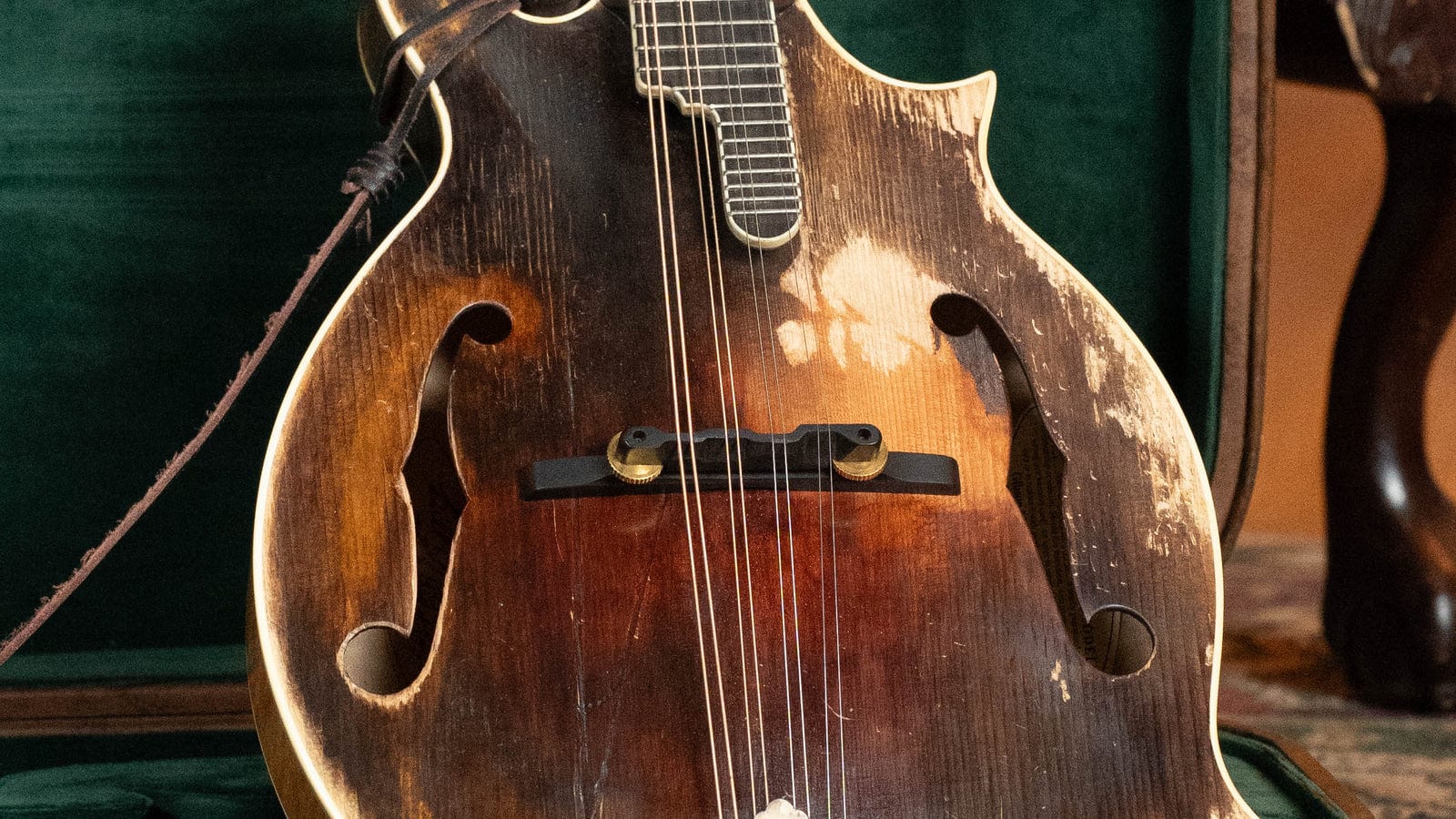
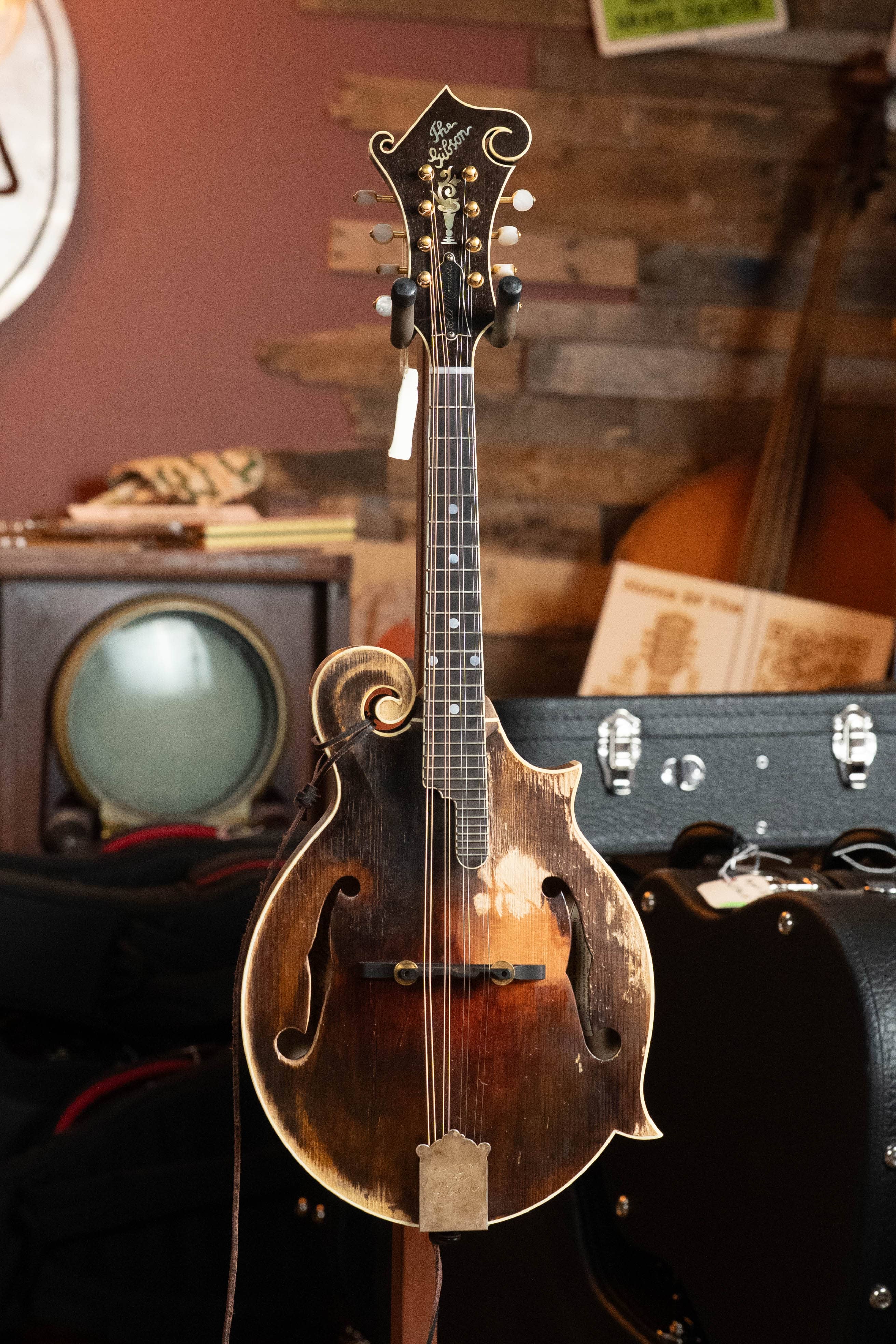
The Gibson Hall of Fame Monroe is a new F-5 built to look the way Bill Monroe's 1923 Lloyd Loar mandolin looks today, with the worn top, the scraped finish and the scars left in. We had ours, number 8, signed and dated July 9, 2023, one hundred years to the day after the date on Monroe's original label. Our documentary The Most Famous Mandolin In The World tells how it got here, with Gibson master luthier David Harvey, vintage dealer George Gruhn, mandolinist CJ Lewandowski, and Rhonda Vincent, who played our tribute at the Grand Ole Opry on the anniversary.
We already covered the barber-shop purchase, the fire-poker damage and the restoration in our 2023 centennial piece on Bill Monroe's mandolin. Here's the rest of the story: why the F-5 arrived at the wrong time, why collectors chase the July 9, 1923 Loars, and how Harvey built a Hall of Fame Monroe from photographs of a mandolin he couldn't take out of its case.
Why the F-5 came too early
The F-5 showed up in 1922, right as the mandolin market fell apart. The mandolin boom "basically died abruptly at about 1922, which just coincides with the introduction of the F5." Our read: the F-5 was likely already in its design phase before Gibson realized the market wasn't coming back.
"The F5 was too late for the classical mandolin boom and much too early for bluegrass."
By the standards of its day the F-5 was a flop. Lloyd Loar, a degreed acoustic engineer, stayed at Gibson about three years and moved on. His goal was lining up the audible and inaudible tones to make a better-sounding instrument, using the violin construction Orville Gibson had started.
Nobody cared about the label for decades. Players who asked Monroe in the 1960s what he played were told "just a Gibson." Once people looked through the f-holes and saw Loar's signature, the craze started. One story has a man at Bean Blossom in 1971 offering Monroe $10,000 in cash for his.
Jump to: why bluegrass needed the F-5 (6:15) · Rhonda Vincent at the Opry (11:44) · the F-4 next to the F-5 (20:18) · David Harvey on the Hall of Fame Monroe (22:16).
What changed from the F-4 to the F-5
The 1914 Gibson F-4 was the top of Gibson's mandolin line before Loar's work took over. Put one next to an F-5 and you can see the differences from across the room.
| Feature | 1914 Gibson F-4 | Gibson F-5 (1922 on) |
|---|---|---|
| Sound hole | Oval hole | Two f-holes, violin style |
| Neck length | Short neck, joins the body at the 12th fret | Longer neck |
| Neck wood | Mahogany | Maple |
| Design lead | Orville Gibson's violin-style construction | Lloyd Loar, an acoustic engineer |
The longer neck puts more frets clear of the body, so a player can reach up the fingerboard without fighting the body joint. Almost every new mandolin built in the last 50 to 100 years has tried to copy the F-5. Our A-style vs F-style comparison covers how that body shape still splits the market today.
Why bluegrass needed the F-5
Monroe's playing changed once he got the F-5, and no other mandolin of the day would have let it change. Before the F-5 he played a short-neck F-7 with his brother Charlie. According to a friend of one of our guests, Monroe called that one "a good little singing mandolin." George Gruhn didn't believe bluegrass could have happened on it, and the F-5 is what let Monroe play chop chords that drove a five-piece band, with the mandolin setting the rhythm.
The guitar and banjo were a different story. Earl Scruggs played Gibsons because he didn't know anything about Vega, Bacon or Epiphone banjos. Gibsons were what he'd heard.
"The guitar didn't have to be a D-28 to play bluegrass, but to play mandolin in bluegrass, it had to be an F5."
Then came the band, "that perfect storm":
- Lester Flatt on guitar, with a thumb-and-finger-pick rhythm
- Earl Scruggs on banjo, playing a three-finger roll nobody had heard
- Chubby Wise on fiddle
- Cedric Rainwater on bass
With Lester's rhythm and Earl's roll in the band, Monroe moved the mandolin to a backbeat, "like a snare drum," and let the banjo and fiddle take most of the fills. The mandolin was still very present. For what we listen for in a mandolin today, read what makes a great mandolin.
Why the July 9, 1923 Loars matter
Monroe's mandolin carries a July 9, 1923 date, and Loar-signed F-5s from that date carry a premium. People who have handled them give two reasons. Part of it is provenance: "Everybody wants to be like Bill," one guest said, and the value of the July 9s is "a little elevated because of the Monroe provenance." Part of it is the instruments themselves. One guest who has played several called the July 9s the culmination, the point where the earlier mandolins "finding their way" all came together. Gibson advertised the F-5 as the Stradivarius of the mandolin in 1922, and it became that because of bluegrass, not classical music.
None of our guests claims the July 9 batch is the best. "Everybody's got different ears," one guest said, and he pointed to differences as small as a bigger neck on one mandolin and rift-cut wood on the back of another. Bobby Osborne put it plainest, in a line one of our guests repeated:
"It don't matter what them labels say, it don't matter what's up on the peghead. It matters what comes out of these here holes."
Monroe's own mandolin also got more playing time than any other. Del, one of the people Monroe traveled with, remembered that Monroe wouldn't case it in the station wagon. It rode behind the seat, and Monroe would say, "Del, grab me that mandolin."
Three Monroe mandolins: how Gibson built the Hall of Fame Monroe
David Harvey's project started years ago with a request from a film company making a Bill Monroe biopic. They wanted Monroe's mandolin in three stages:
- The barber shop mandolin. The way it looked when Monroe found it in a barber shop window in Miami, Florida, around 1945 or 1946: a twenty-some-year-old mandolin in very good plus condition.
- The "Mad Mon." The angry era, after Monroe scratched the Gibson name off the peghead. Harvey helped Ricky Skaggs turn one of his prototype Skaggs models into the first Mad Mon.
- The Hall of Fame Monroe. The mandolin as it looks now.
Harvey's version of the scratch story goes like this. Monroe broke the peghead scroll and sent the mandolin back to Gibson. Monroe got it back after a long wait, with the scroll still unfixed and a mismatched set of tuners, reverse on one side and non-reverse on the other, and it still wouldn't stay in tune. Gibson had also "freshened up" the finish with a coat of lacquer. It came back "a little more shiny than Bill liked, but not as open." Monroe took his pocketknife to the finish, and after a while he moved up to the peghead and scratched out "Gibson," leaving "The." There's another version, told by Sonny Osborne on TV, that Monroe did it so people would quit asking to play his mandolin. Gibson mended fences in the 1970s: a Kalamazoo worker restored the scroll, got it to stay in tune, and Gibson went back on the peghead.
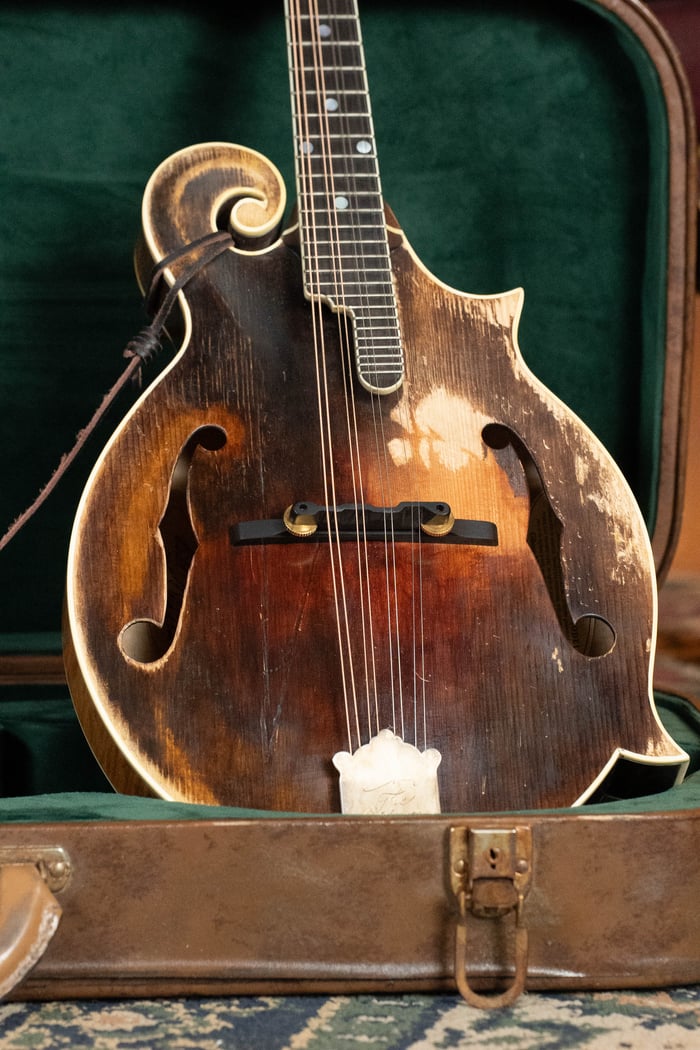
Building the Hall of Fame Monroe meant copying that wear without the mandolin in hand. Harvey worked from photographs, close-ups of the wear patterns on the top and back. "I can't get the mandolin out of the Hall of Fame, unfortunately," he said, and the lighting was the hard part, because the same wear reads differently in every photo. He's clear about what he made:
"It's a tribute. It's not an exact replica, but it is a tribute."
If you want a faithful new F-5 rather than a worn one, Gibson's Custom Shop also built a 1923 F-5 Master Model Reissue for the centennial; our post on that release has the details.
Our Hall of Fame Monroe, number 8
We ordered a Hall of Fame Monroe a couple of years before the centennial, right when we became a Gibson dealer. Mandolins were backordered, and Covid stretched the wait. When 2023 came around and ours still wasn't finished, we asked Gibson whether they could hold its completion until July 9. Harvey's team did, and the label reads Hall of Fame Monroe, number 8, 100th anniversary, dated July 9, 2023.
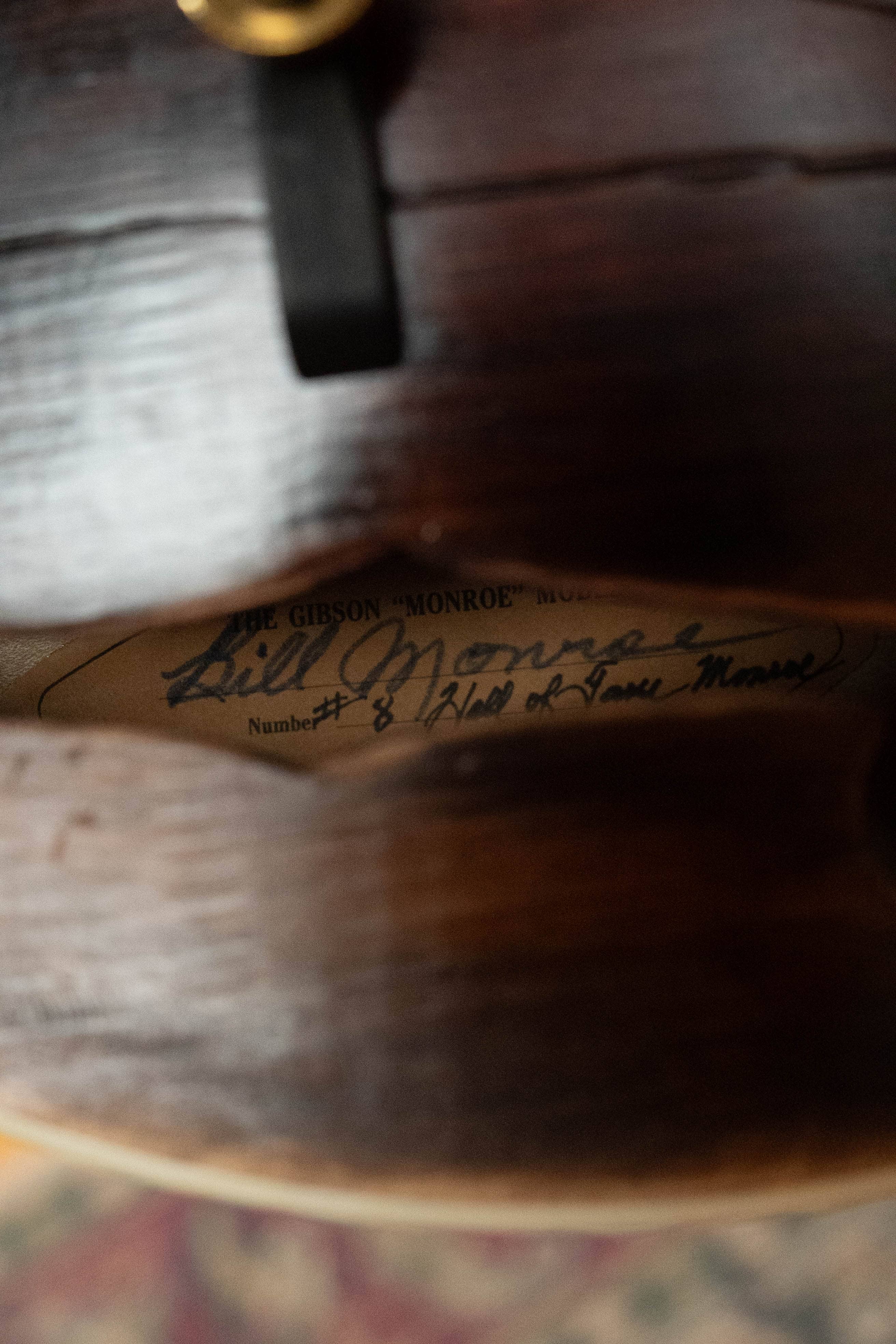
That same day we loaned it to Rhonda Vincent, who played a Bill Monroe song on it at the Opry. She first met Monroe at 11 or 12 years old in Knob Noster, Missouri, where he stood backstage holding that very mandolin while her father took their picture.
We might never sell number 8. Its listing shows $29,999.99 with no stock available online, so check the Hall of Fame Monroe listing and ask us about it. As Harvey puts it, "these instruments are meant to be played and shared and appreciated."
Who the Hall of Fame Monroe is for, and who should look elsewhere
The Hall of Fame Monroe is for the Monroe player or collector who wants the mandolin as it looks today, worn finish included. The honest drawback is the one Harvey named himself: he worked from photographs, and he calls it a tribute, not an exact replica.
If you want a mandolin with Monroe's own hands on it, we have a pre-owned October 1993 Gibson Bill Monroe F-5 that Monroe owned, at $14,499.99. It has a signed label reading "The Gibson 'Monroe' Model," a 14" scale, a 1-1/8" pearl nut on a V-shaped neck, and an appraisal from Gruhn Guitars. The narrow nut and V neck are vintage-feeling dimensions, so try it before you assume it fits your hand.
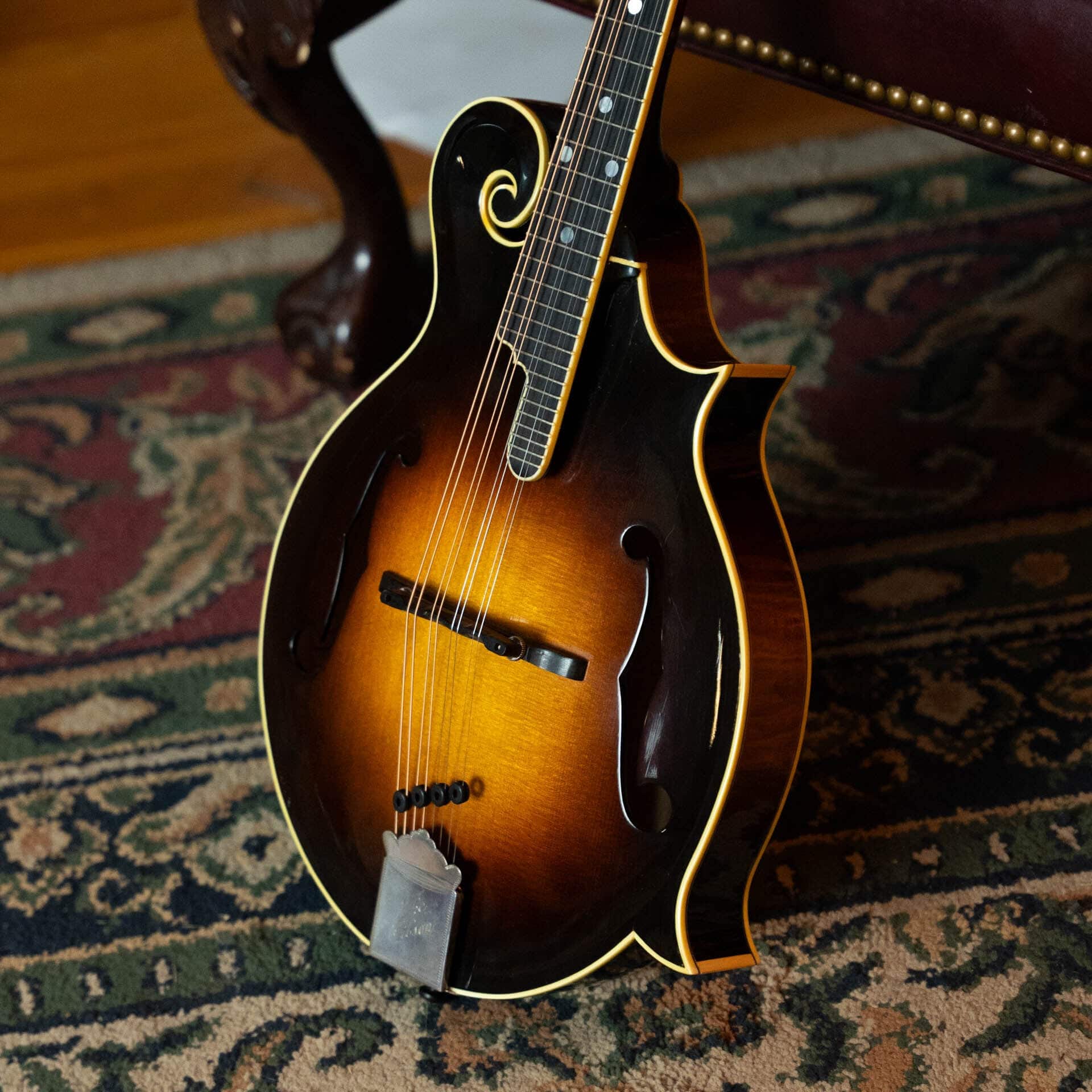
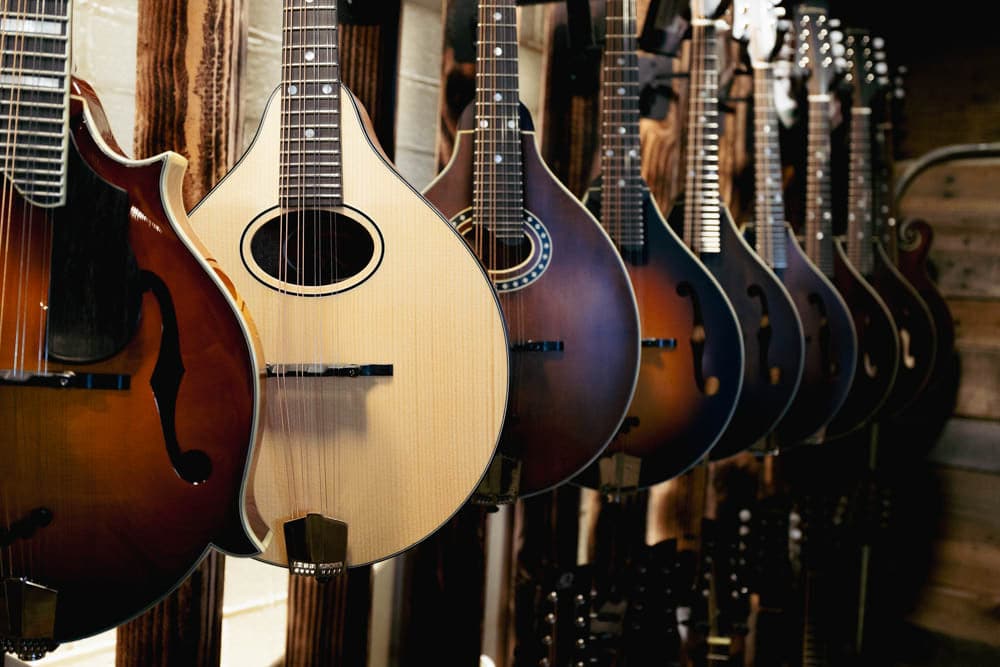
If you want an F-5 to play every night rather than a collector's piece, browse our F-style mandolins, the Gibson mandolins we have now, or every mandolin in stock. For a varnish F-style at a fraction of the price, read our Gold Tone Super Cremona review.
Related reading
- F-Style Mandolin: Loar LM-700 vs Eastman MD315
- Eastman MD815 vs Bourgeois M5F vs Gold Tone Grandmaster tone test
- A complete guide to mandolins and the mandolin family
Buying a Hall of Fame Monroe or any F-5 from us
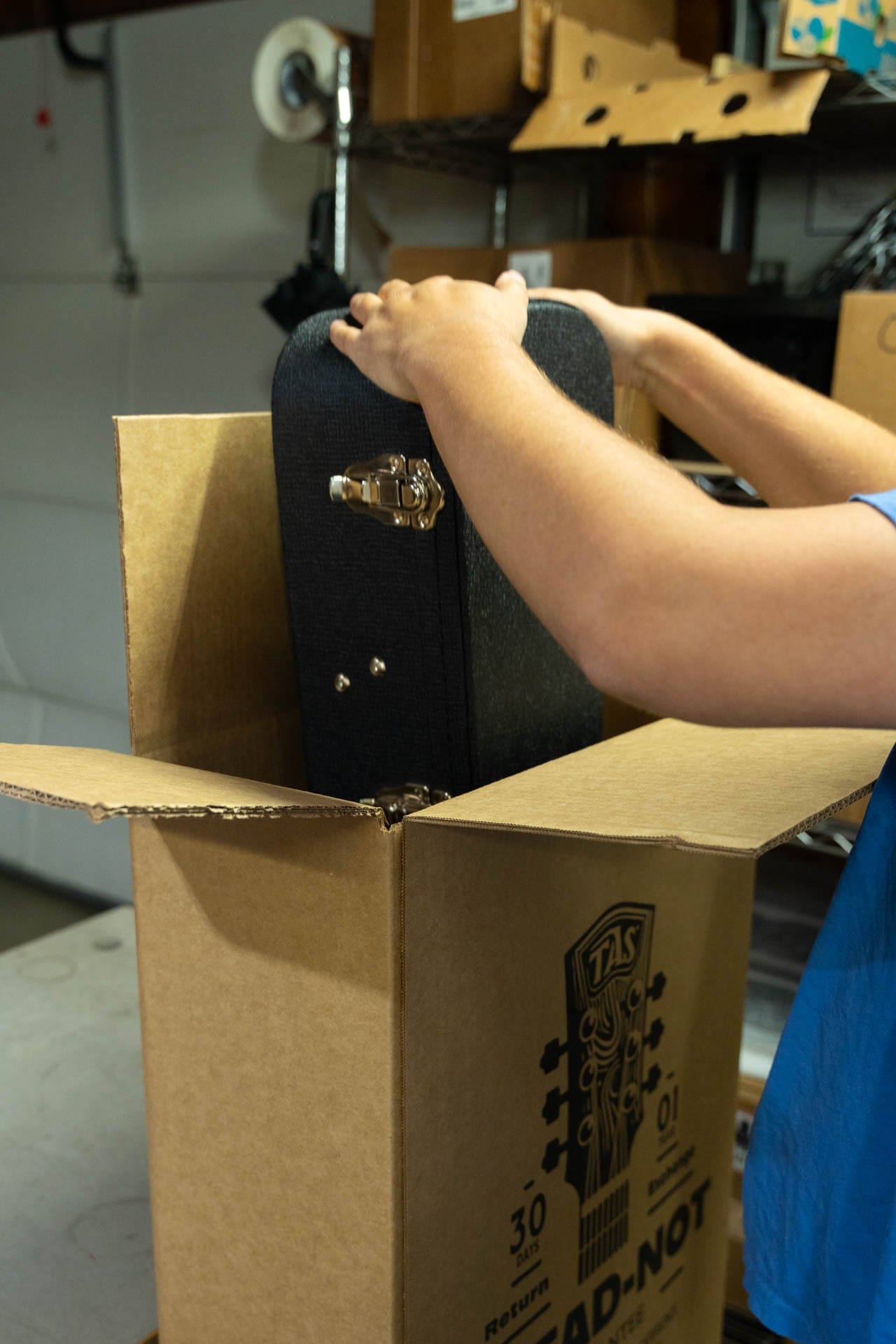
Every mandolin we sell goes through our 23-Point Professional Inspection before it ships. The Dread-Not Guarantee covers instruments $1,000 and up: a trade-in credit of up to 90% for one year (pre-tax, less round-trip shipping), plus a 30-day in-home trial.
Want to see number 8, or talk through a July 9-style F-5 for your own playing? Get in touch and we'll tell you what we have on the wall.