
Table of Contents
- Why buy a carbon fiber mandolin for touring?
- What carbon fiber changes, spec by spec
- How the KLOS F-style sounds next to a wood mandolin
- The X factor: an F5 homage built from a mold
- Which KLOS F-style fits your road setup
- The honest drawbacks
- Who should take a carbon fiber mandolin on tour
- Buying a KLOS F-style from The Acoustic Shoppe
- Acoustic Shoppe FAQ
When Adam Steffey called us and asked about the new KLOS F-style because he wanted to take one out on the road, we knew this mandolin had a real job. A carbon fiber mandolin for touring solves the problem every working picker knows: the instrument has to sound right in Colorado on Friday and in a Florida swamp on Saturday. You give up a little tone, you get back an instrument that plays the same from one climate to the next, and one of the KLOS F-style configurations will fit the way you travel.
Why buy a carbon fiber mandolin for touring?
Start with the honest question we asked on camera. Are you buying carbon fiber for the tone, or are you terrified to take your $5,000 spruce-top mandolin into the wild? For most players looking at a KLOS, it's the second one, and that's a good reason.
Jeremy compared it to Tim Stafford touring with a carbon fiber guitar. The guitar doesn't have every tonal property people are used to hearing out of wood. The payoff is that he can fly with it, play Arizona at 115 degrees with zero humidity, and be in Florida the next night without the instrument moving on him. A wood mandolin can survive that schedule. A carbon mandolin doesn't care about it.
That's the case for carbon fiber on the road. Steffey asking about one told us professional players want something they can trust out there, and that it isn't a gimmick.
Jump to the parts of the video that matter most:
- 1:08, who this mandolin is actually for
- 2:57, how the carbon tone compares to a wood mandolin
- 4:31, the X factor: KLOS's homage to the F5
- 6:36, Jeremy's honest critique
What carbon fiber changes, spec by spec
The specs below come from our KLOS F-style listings. Each one matters more on a tour than it does in a living room.
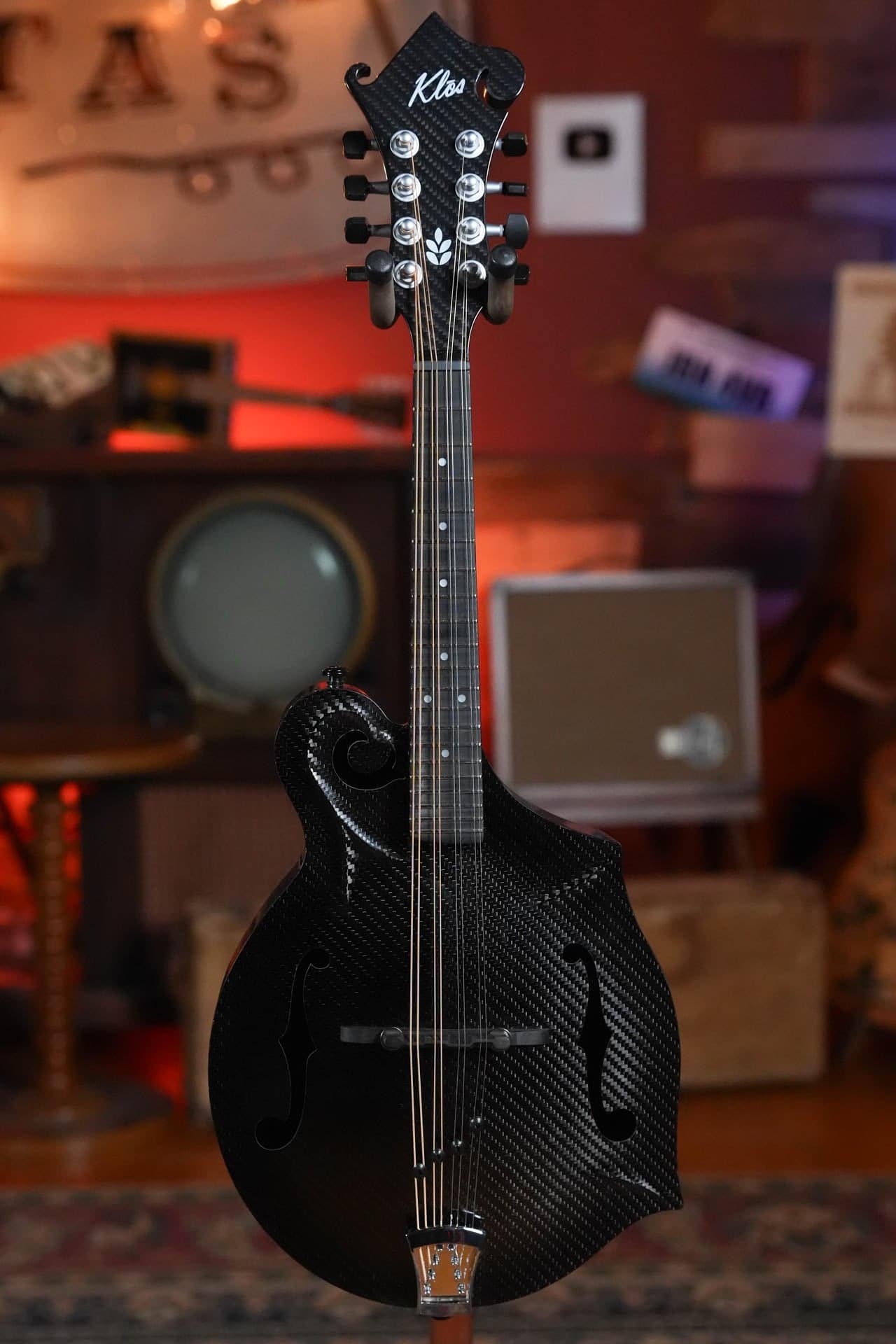
- One-piece carbon fiber body and neck. There's no glued neck joint to shift. Humidity swings, hot stage lights and cold cargo holds don't move the geometry, so the action you set in Nashville is the action you have in Denver.
- No truss rod. The carbon neck is its own reinforcement. You never need to pull out a wrench at a festival because the relief changed overnight.
- Stainless steel frets on a 12-inch radius composite ebony fingerboard. KLOS rates them for decades of playing, which matters on a mandolin that gets played every night instead of every weekend.
- 13.87-inch scale and a 1 1/8-inch nut. These are traditional mandolin numbers, so your hands don't have to relearn anything coming off a wood F-style.
- GraphTech NuBone nut and an adjustable ebony bridge. The bridge still adjusts like a traditional mandolin's, so a tech can dial in string height the normal way.
How the KLOS F-style sounds next to a wood mandolin
We won't claim a carbon fiber mandolin has the full range of a hand-carved, hand-voiced boutique instrument. Jeremy didn't claim that either. What surprised him was how close it came. Here's how Jeremy put it:
"It's a compromise. You're compromising some of the tone. But this is really close, and it actually surprised me how close it came tonally."He got specific about the sound, too. The KLOS F-style has a really deep, woody tone, with that F-style woodiness you want. It sits a little heavier in the midrange and can sound a little woofy. The notes pop out when you play it, and the bluegrass chop is present and pretty darn big. John tried it and said even he could almost get a good chop out of it.
Jeremy also expects an adjustment period. Carbon fiber can't be hand-voiced piece by piece the way a spruce top can, so KLOS mandolins come out more uniform across the line. Some of the tonal properties are ones a lot of wood mandolins don't have. Part of why players hesitate may simply be that it isn't the sound they grew up with. If you want the wood side of that argument, our post on what makes a great mandolin covers what carving and voicing do to a top.
The X factor: an F5 homage built from a mold
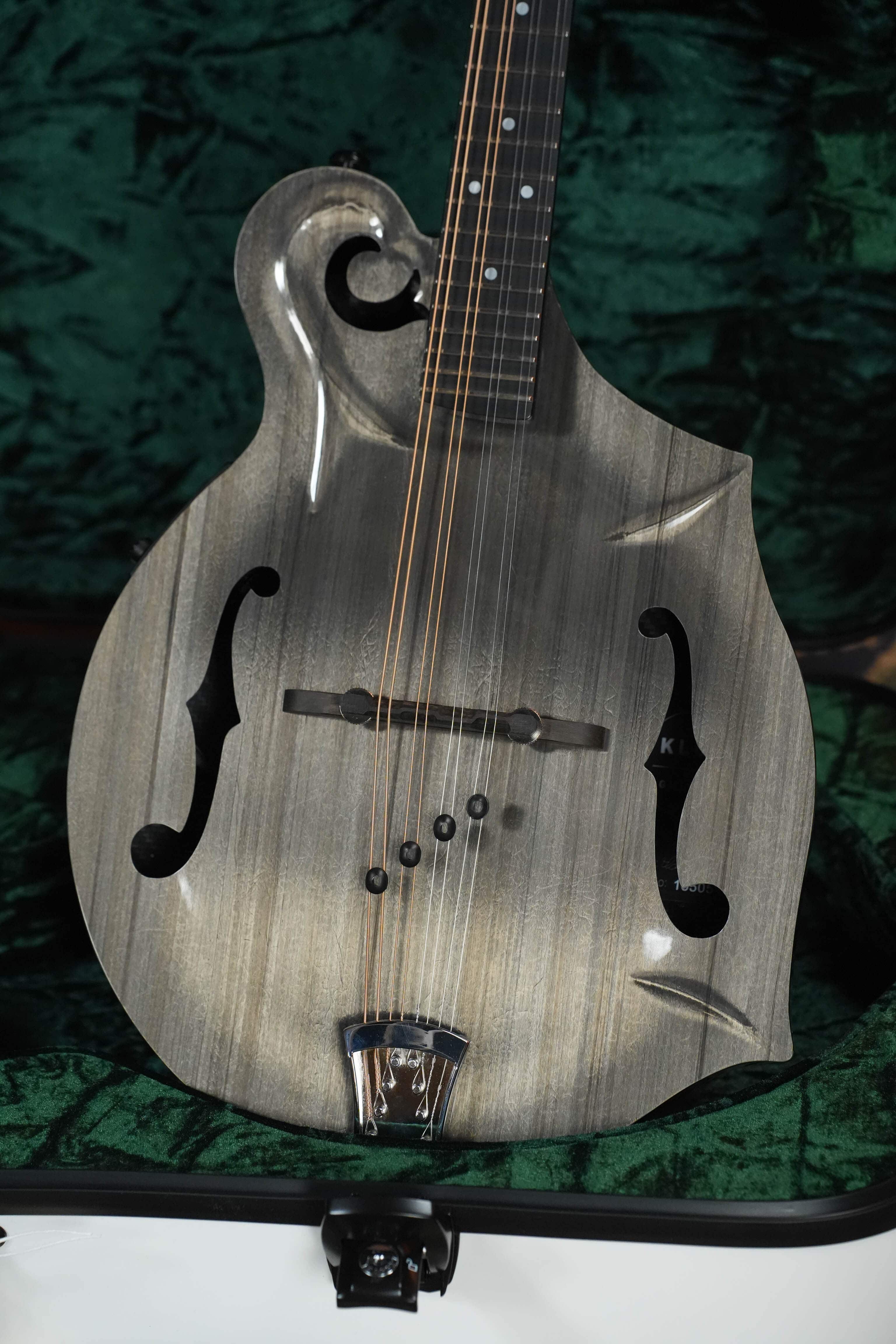
Carbon fiber used to mean settling for an A-style body. For a long time people tried to build an F-style carbon mandolin and gave up. KLOS spent the money on new molds and got it done, and Jeremy thinks that investment is the X factor.
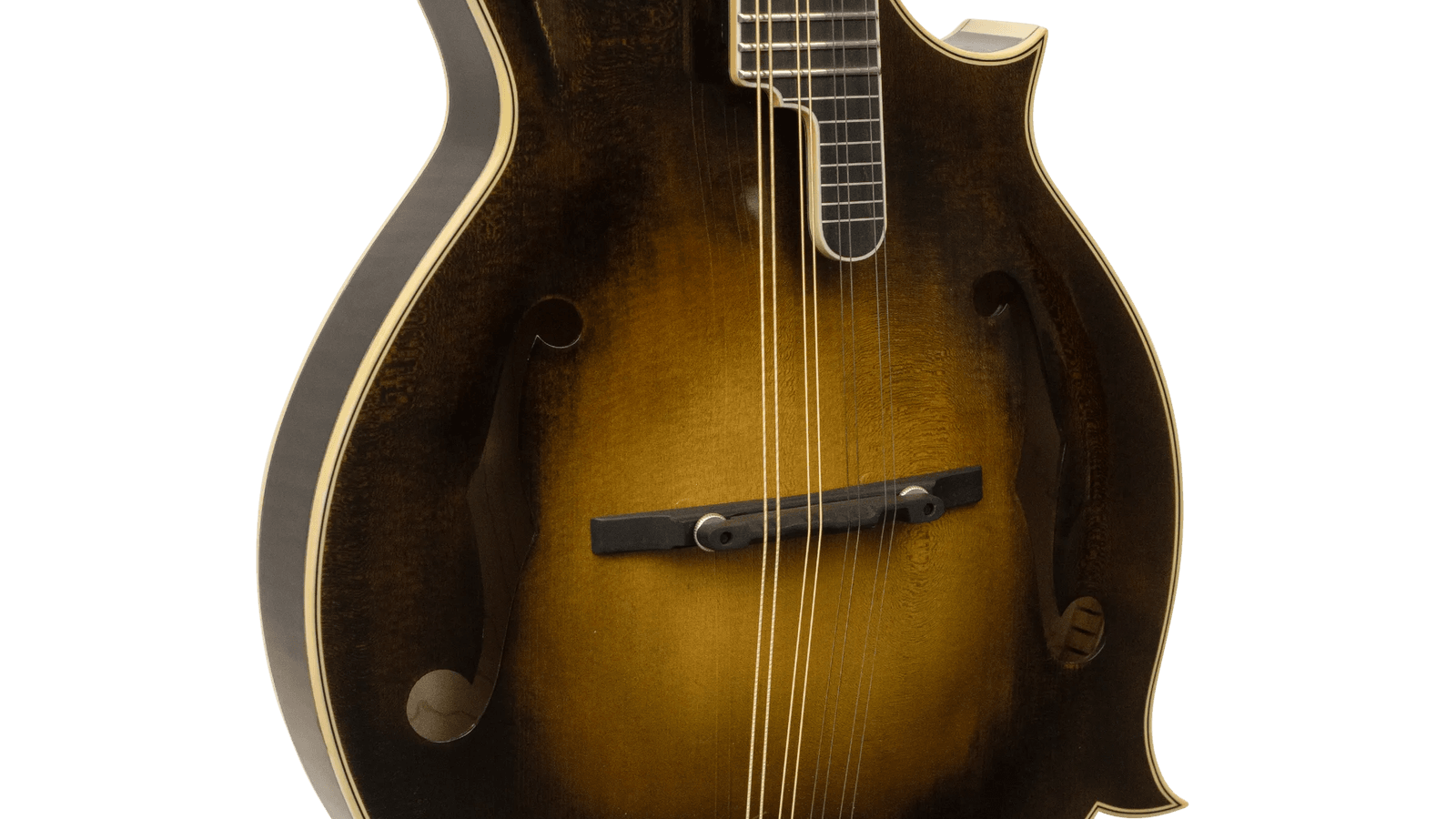
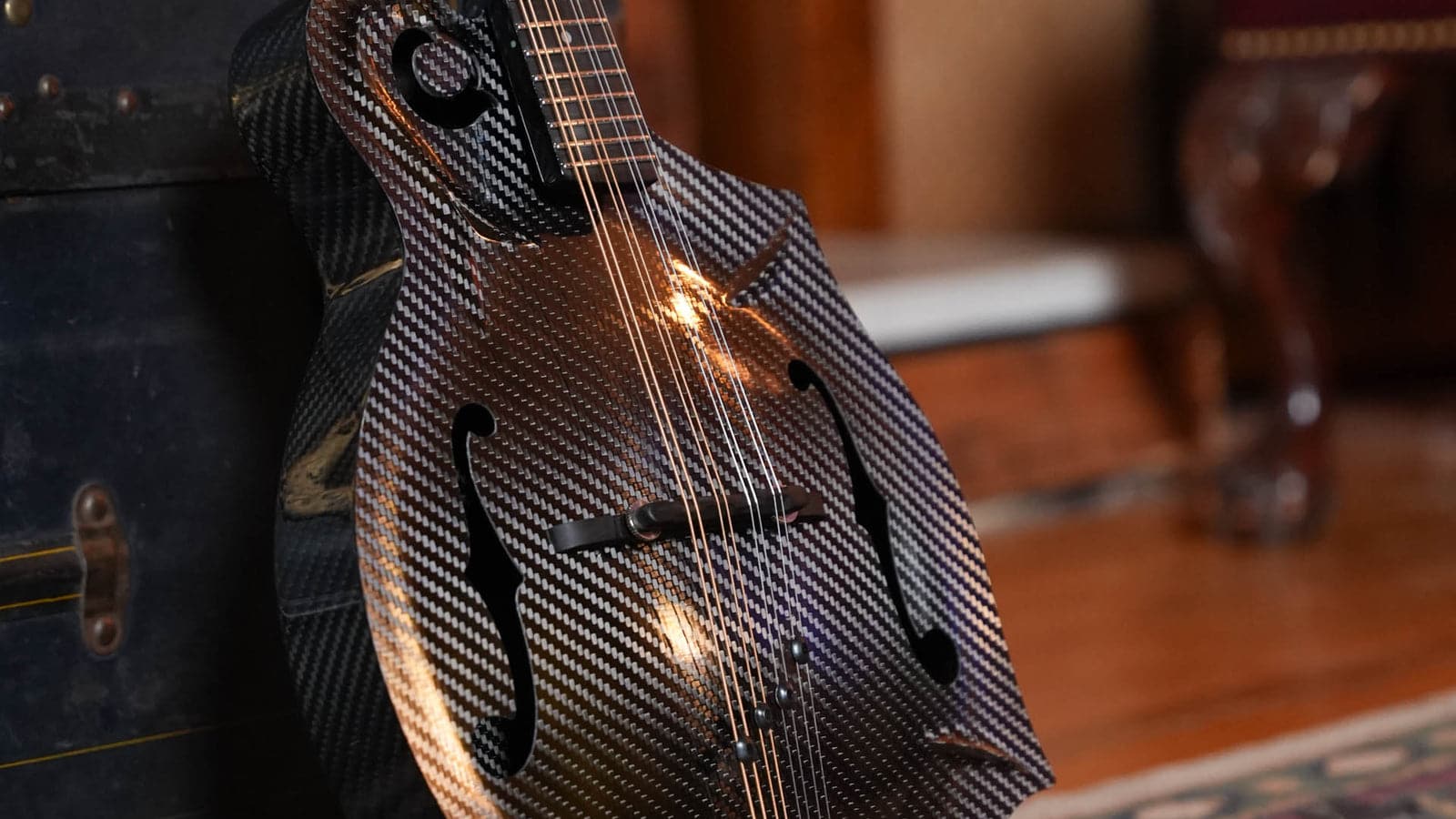
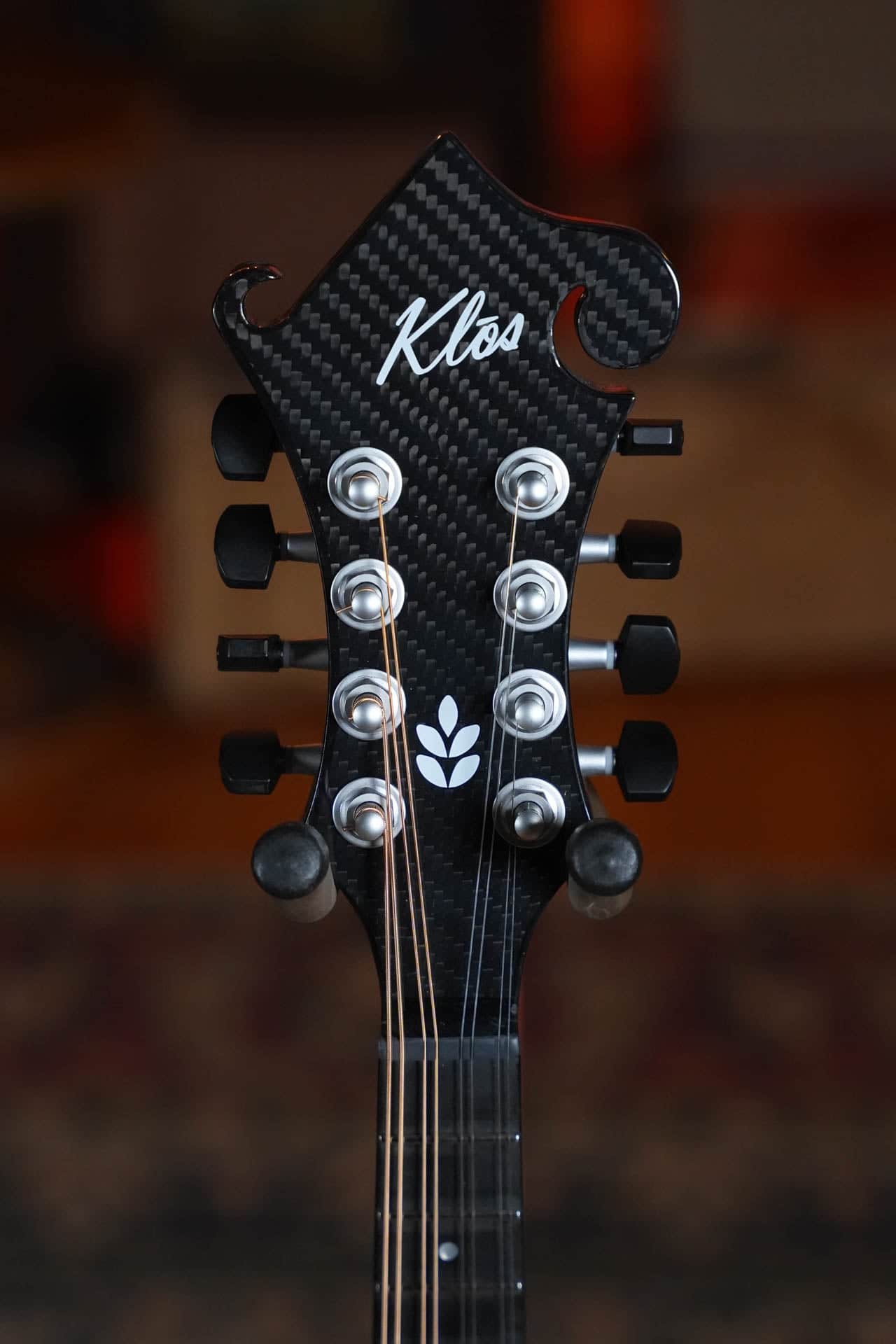
The scroll has the raised area you'd find on a hand-carved one, with relief around it. A small tone port stands in for the pass-through of a carved F-style scroll. The points aren't as sharp as carved wood can be, but KLOS added relief on the front and back to honor the shape. Behind the nut sits a traditional F5 headstock.
The shape changes the sound too. When we played the F-style back to back with the KLOS A-style, the F gave us more of that deep F-style tone the A didn't quite deliver. If you want the full A versus F story, our earlier post on the KLOS F-style versus the A-style covers how the two bodies differ.
Which KLOS F-style fits your road setup
KLOS builds the F-style in two looks, Black Twill full carbon and Carbon Timber, and each comes acoustic or with a pickup. These are the prices on our current listings.
| Configuration | Electronics | Price (USD) |
|---|---|---|
| Black Twill full carbon (X_MF_DA) | None, acoustic | $3,799 |
| Black Twill full carbon (X_MF_DAE) | KLOS transducer | $3,999 |
| Black Twill full carbon | KLOS EQ | $4,129 |
| Carbon Timber (CT_MF_DA) | None, acoustic | $4,299 |
| Carbon Timber | KLOS EQ | $4,629 |
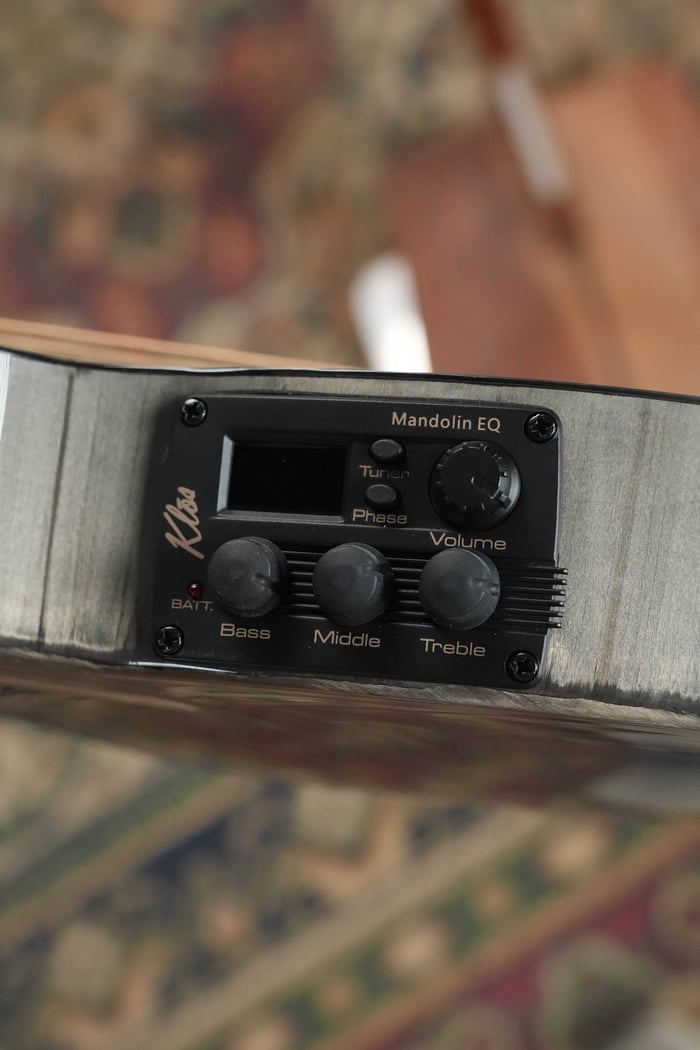
If you're buying a carbon fiber mandolin to tour with, we'd look hard at a pickup model. Jeremy made the point on camera that once you plug in and dial the pickup in, you get a lot of the same tonal qualities you'd want from any instrument, in an instrument you don't have to fret and worry about. If you play plugged in most nights, the pickup narrows the tone gap the most.
The honest drawbacks
Jeremy called his critique more of a compromise than a flaw, but it's real. A carbon fiber mandolin has a different tone than you're used to, and it doesn't reach the top-level tone of a boutique hand-voiced mandolin. In Jeremy's words:
"If you're buying one of those premium $8,000 to $18,000 boutique hand-voiced mandolins, that's going to be your studio instrument."So we wouldn't sell a KLOS as the only mandolin for a player who records a lot and wants every overtone of a carved top. Traditional F-style players may also notice the softer points and the molded scroll. KLOS got close to the F5 look, and it still reads as carbon.
| Question | KLOS carbon F-style | Spruce-top wood F-style |
|---|---|---|
| Humidity and temperature swings | Unaffected | Needs humidity care on the road |
| Truss rod adjustments | None needed | Seasonal adjustments |
| Tone | Deep, woody, midrange-heavy | Full wood-grain voice, varies piece to piece |
| Best room | Stage, festival, travel | Studio and home |
Who should take a carbon fiber mandolin on tour
Jeremy said it plainly: it's made for a compromise. The player who buys a KLOS F-style has already decided that road reliability matters more than the last bit of carved-wood tone. That describes a lot of people:
- Touring and gigging pickers who fly, drive long hauls or play outdoor festivals in any weather
- Players who own a high-end spruce-top mandolin and want it to stay home
- Anyone who plays plugged in most nights and wants a pickup and preamp installed from the factory
If you want a purely wood tone and all that wood grain, you're probably going to stick with a spruce-top mandolin, and we'd point you to our F-style mandolins instead. If you're still deciding on body shape, read our A-style vs F-style mandolin comparison first.
Related reading
Buying a KLOS F-style from The Acoustic Shoppe
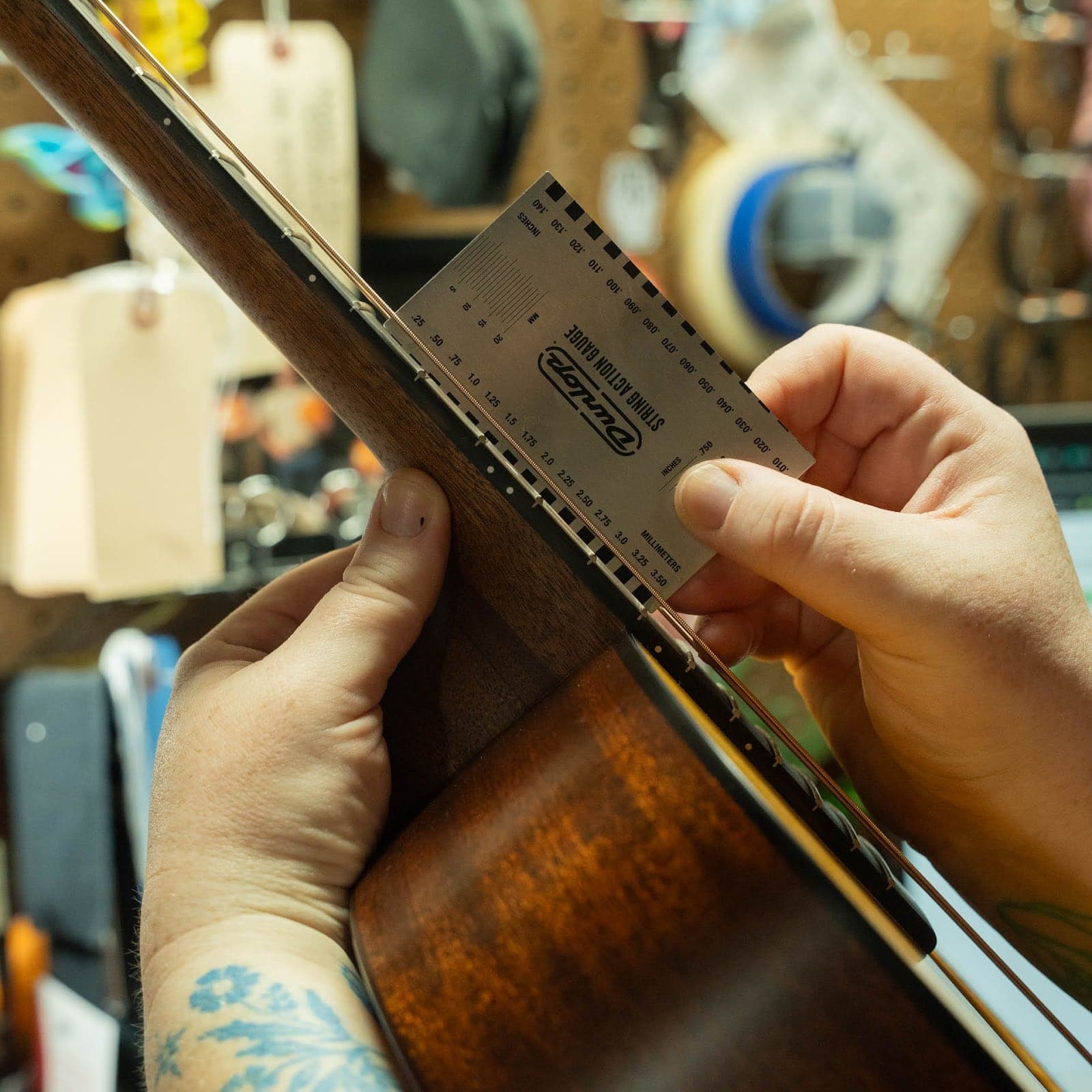
Every mandolin we ship goes through our 23-Point Professional Inspection before it leaves the building. A carbon fiber mandolin still gets the full bench time: the bridge still gets set and the string height still gets measured.
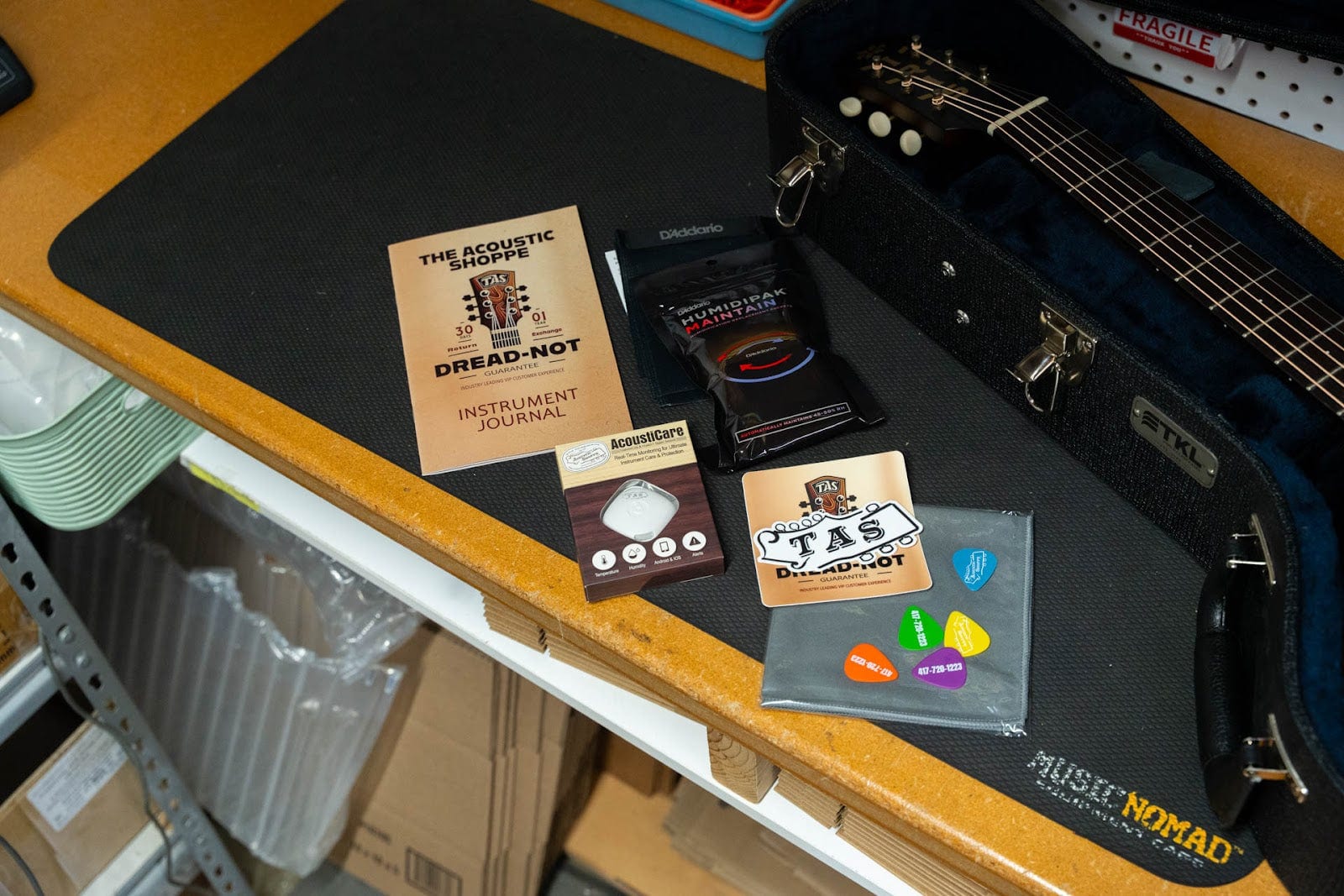
Every KLOS F-style is over $1,000, so it's covered by our Dread-Not Guarantee. That starts with a one-year 90% trade-in credit toward your next instrument (pre-tax, less round-trip shipping), and it adds a 30-day in-home trial. Take it to your gigs for a month. If it isn't the one, send it back.
Shop every KLOS mandolin we have in stock, or browse the full carbon fiber mandolin collection to compare the A-styles too. If you're not sure a carbon fiber mandolin for touring is right for you, call us and tell us where you play. We'll tell you what we'd take.