
Table of Contents
No Tony Rice guitar on the market sounds like the one Tony played. That 1935 Martin D-28, serial number 58957, went from a pawn shop to Clarence White's hands to Tony's, picking up an enlarged soundhole and a lot of wear along the way. What a good Tony Rice guitar can give you is the feel of that instrument and the urge to pick up a flatpick and play like him.
So which one should you buy? Martin, Santa Cruz, Collings, Atkin, Bourgeois and Huss & Dalton have all built their own version, and we once had six of them in the shop at the same time. We went through every one side by side, and the differences come down to a handful of details you can check for yourself.
What makes a Tony Rice guitar a Tony Rice guitar
The story starts with Clarence White, who found an old D-28 in a pawn shop with his brother, reworked it and played it hard. At some point the soundhole was cut out to the first ring of the rosette, which is the modification every Tony Rice-style guitar copies today. Tony Rice owned it after Clarence, and he called it "the Antique." Two of the greatest guitar players of all time played the same guitar, which is why builders still chase it.
That enlarged soundhole is the one feature every Tony Rice guitar shares. It changes the look of the top completely, and on John's Santa Cruz it's the reason the bound fingerboard is extended over the larger opening. Beyond that, each builder made its own calls about woods, the saddle, the pickguard and the logo, and those calls are where the real choices are.
This one is personal for John. He started out as a fiddle player and decided to learn guitar after hearing Tony's Cold on the Shoulder album. The first guitar his dad ever bought him was a Santa Cruz Tony Rice model, and it's the guitar he played on almost every album until he bought his pre-war 18.
Jump to: the story of 58957 at 1:02, John's Santa Cruz at 5:01, the Martin Clarence White at 8:58, and the six played back to back at the end.
Five things to check before you buy a Tony Rice guitar
Every Tony Rice guitar gets the big picture right: a rosewood dreadnought with a big soundhole. The details are where they split, and these are the ones we'd look at first.
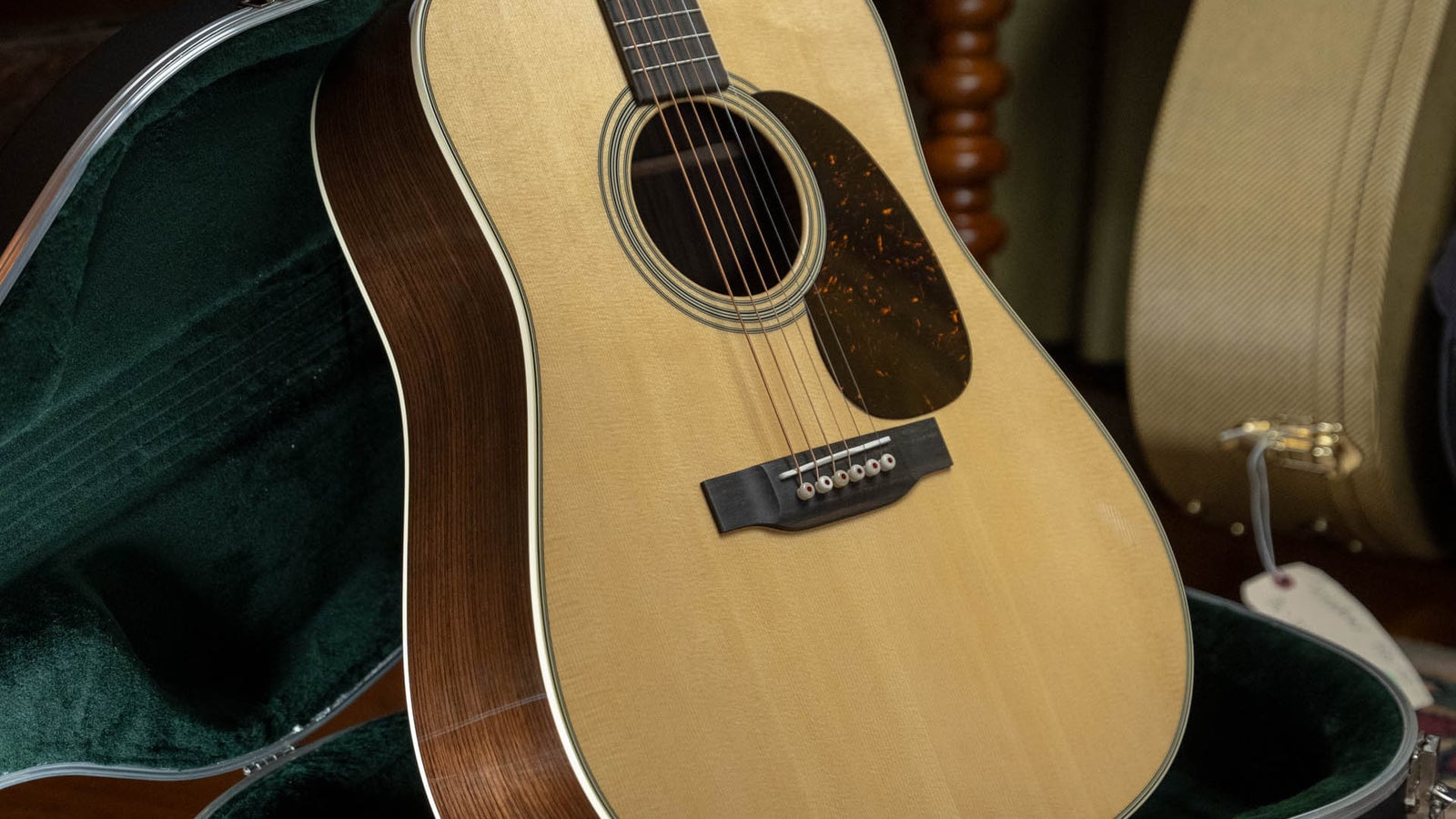
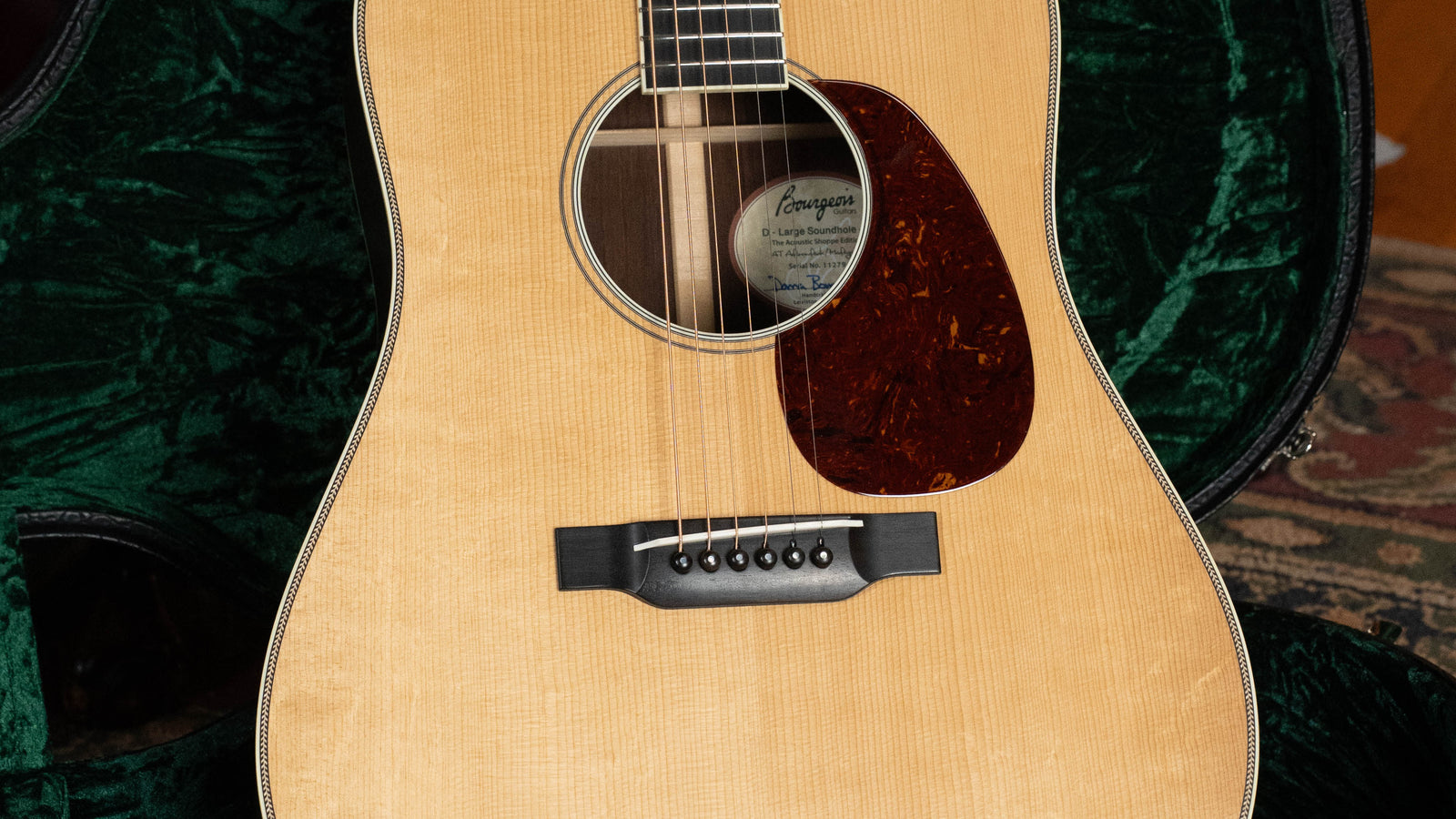
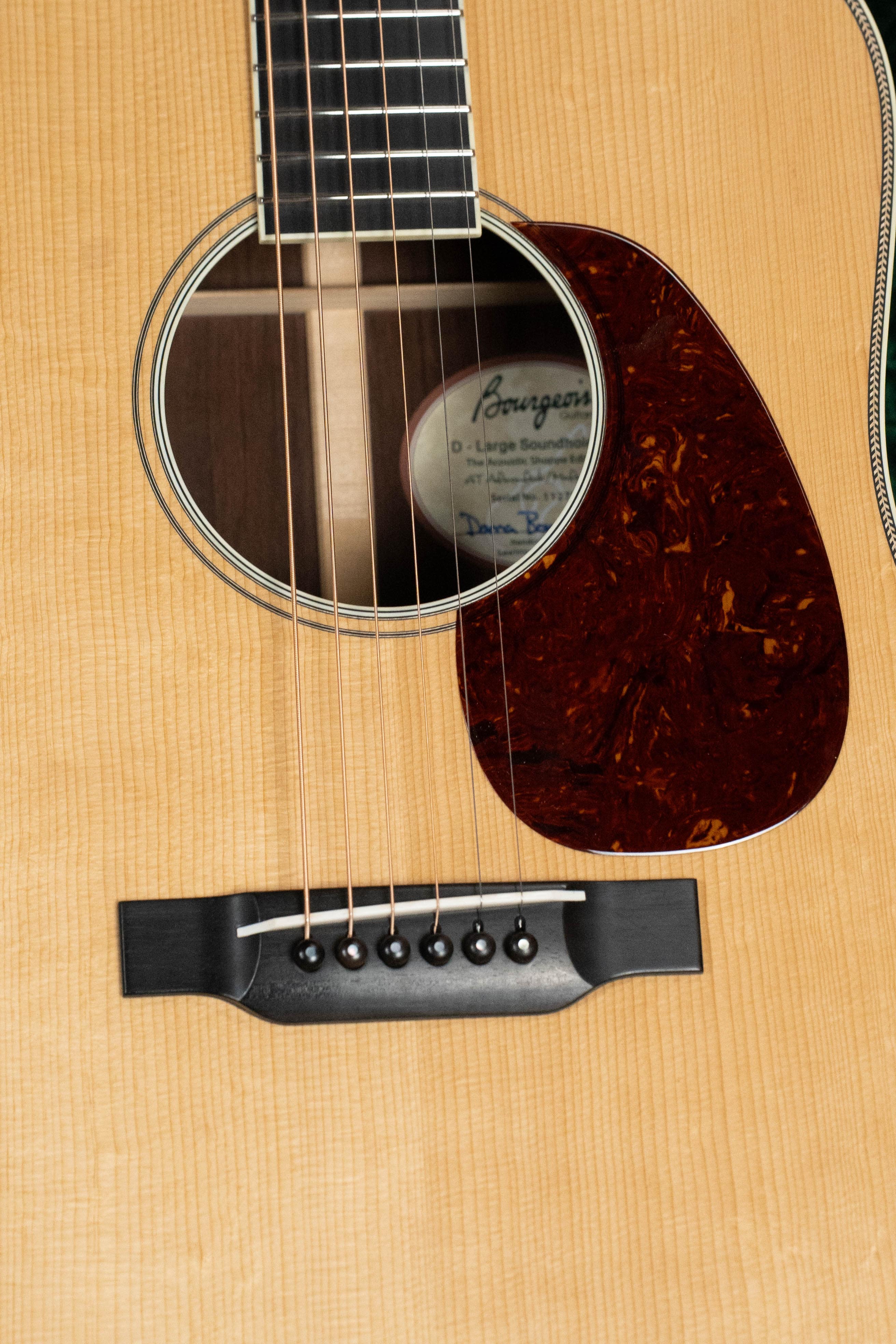
- How the soundhole is cut. Clarence cut the wood away right up to the original rosette. The Atkin and the Bourgeois copy that most closely, with the opening running all the way to the ring. Other builders widen the hole and then put a standard-looking rosette around it, which hides the cut.
- Slot-through or drop-in saddle. Tony's guitar has a saddle slot cut through the ends of the bridge. The Martin and the Collings follow that, and John's Santa Cruz has a drop-in saddle instead. If you want the closest visual match, look for the slot-through bridge.
- Top and back woods. Every one of these is a rosewood guitar, but which rosewood varies. The six we compared ran from Indian to Brazilian to Honduran rosewood, with Sitka, Adirondack and torrefied tops, and our own Bourgeois build uses Madagascar.
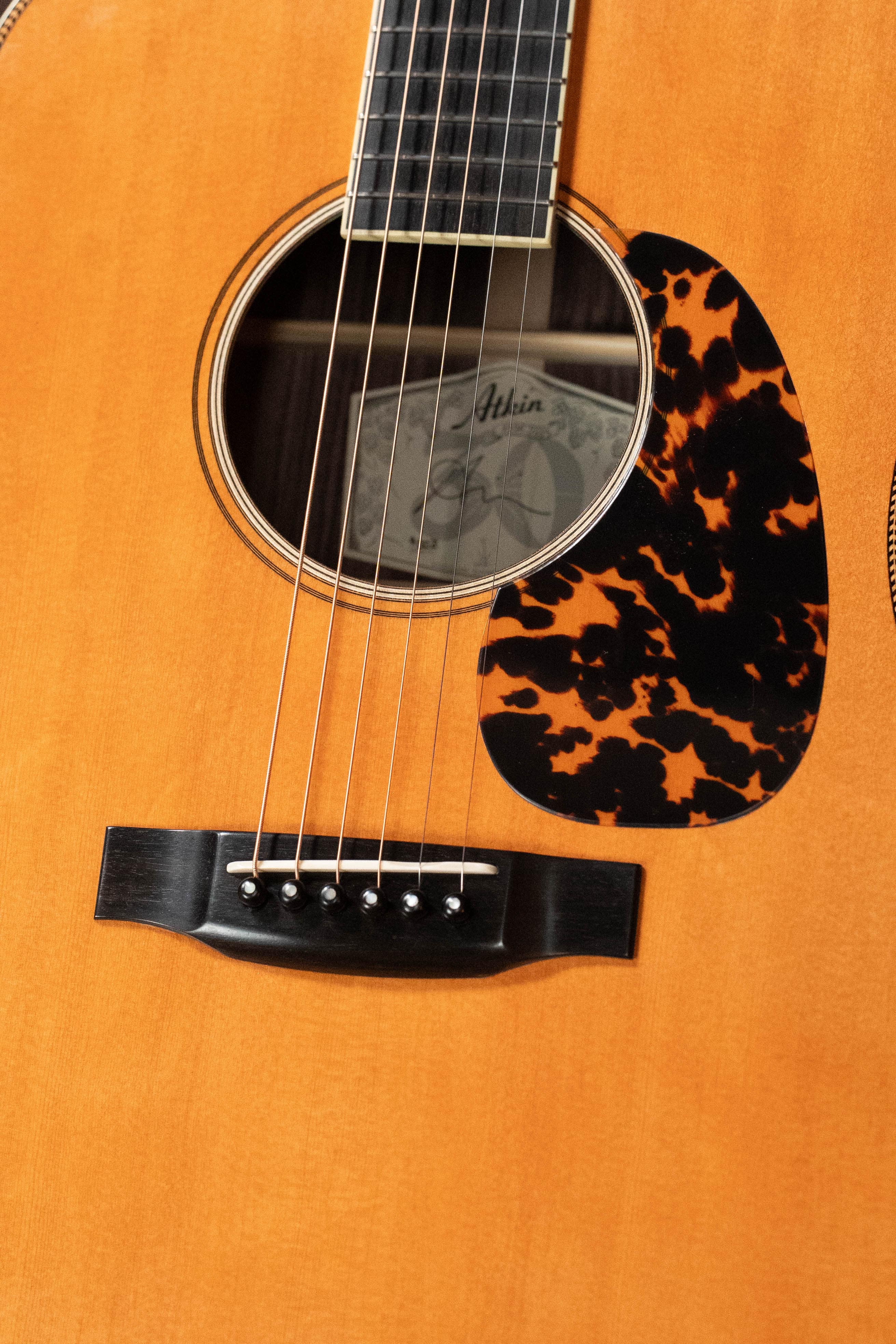
- The pickguard. Tony's guitar has a real tortoiseshell guard. Most copies use a celluloid tortoise pattern, and some look a lot more convincing than others.
- The neck. This is the spec you'll feel every day. John's Santa Cruz has a slight V with a very shallow depth, and he calls it the most comfortable neck he's ever played. Play one before you decide.
The six Tony Rice guitars we compared
| Builder and model | Top / back and sides (as compared) | The detail that sets it apart |
|---|---|---|
| Santa Cruz Tony Rice (1990) | Sitka / Indian rosewood | Signed by Tony inside; beveled bridge and recessed pins |
| Martin Clarence White | Adirondack / Indian rosewood | Slot-through saddle, fine herringbone; Martin's closest to 58957 |
| Collings CW | Adirondack / Brazilian rosewood | Slot-through saddle, palomino-style guard |
| Atkin White Rice | Thermo-cured Sitka / Indian rosewood | Aged finish; the most convincing faux tortoise guard |
| Bourgeois | Torrefied Adirondack / Brazilian rosewood | Soundhole cut to the ring; logo on the back of the headstock |
| Huss & Dalton Pilgrim | Honduran rosewood back and sides | Brand stamped on the center strip; white-black-white binding |
These are the specs of the guitars we had in hand. Most of these builders offer the model in more than one wood set.
Santa Cruz Tony Rice
Richard Hoover's Santa Cruz built the official Tony Rice model, and early ones were signed by Tony on the inside. John's is from January 1990. It brought two changes the original never had: a beveled belly on the bridge that tucks away comfortably under your hand, and bridge pins recessed a little deeper into the bridge. John's has a 1 3/4" nut and a neck he's never felt the equal of.
"It is a slight V-shape with a very, very shallow depth to it. It is probably the most comfortable neck I've ever played."Santa Cruz's own history is a story worth reading too; our post on the Santa Cruz 1934D prototype covers the shop Hoover built.
Martin Clarence White
Once Tony signed with Santa Cruz, Martin answered first with the HD-28 2R, an enlarged-soundhole herringbone dreadnought with two rings around the opening. Later it built a Clarence White model with the White family involved. It's the closest Martin has come to 58957, down to the slot-through saddle and the fine herringbone around the top. If you're weighing Martin's standard rosewood dreads instead, our D-28 vs HD-28 comparison covers what separates them.
Collings CW
Collings called its version the Clarence White model until Martin's deal with the family, then kept the CW name. The one we had featured Brazilian rosewood back and sides, an Adirondack top and a slot-through saddle. John isn't sold on the palomino-style guard, though it does get you the Rice look, and the build quality is what you'd expect from Collings. Our Boucher vs Collings comparison goes deeper on how Collings builds a bluegrass dreadnought.
Atkin White Rice
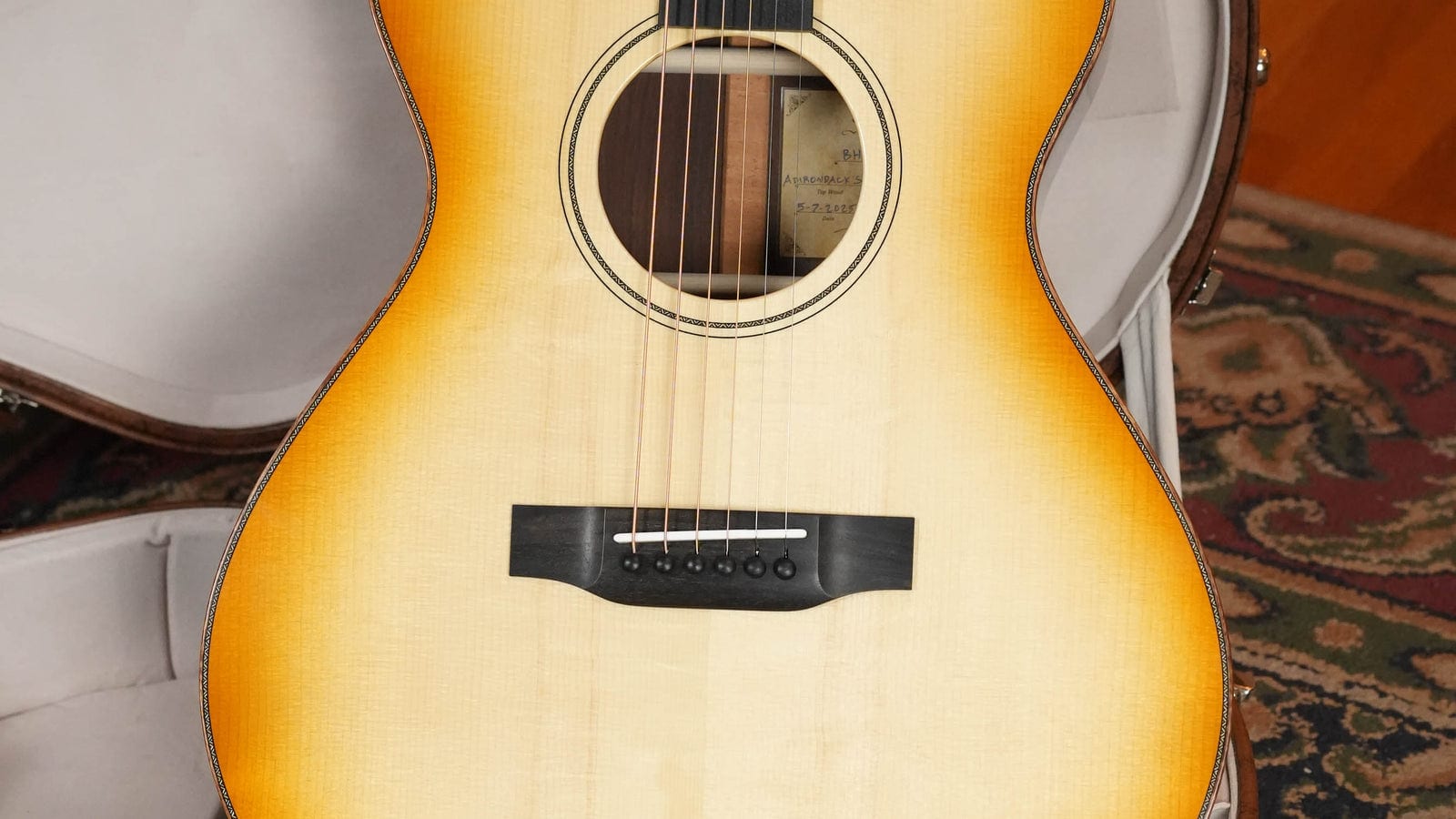
Alistair Atkin's shop in England gets the prize for the best name: White Rice, for Clarence White and Tony Rice. It pairs a thermo-cured Sitka top with Indian rosewood and an aged finish with wear and checking, but leaves the ivoroid binding white instead of yellowing it. Of all the faux tortoise guards, this is the most convincing one, and its soundhole is cut out to the ring like the original. For more on how Atkin approaches a tribute guitar, see our Larry Sparks guitar post.
Bourgeois
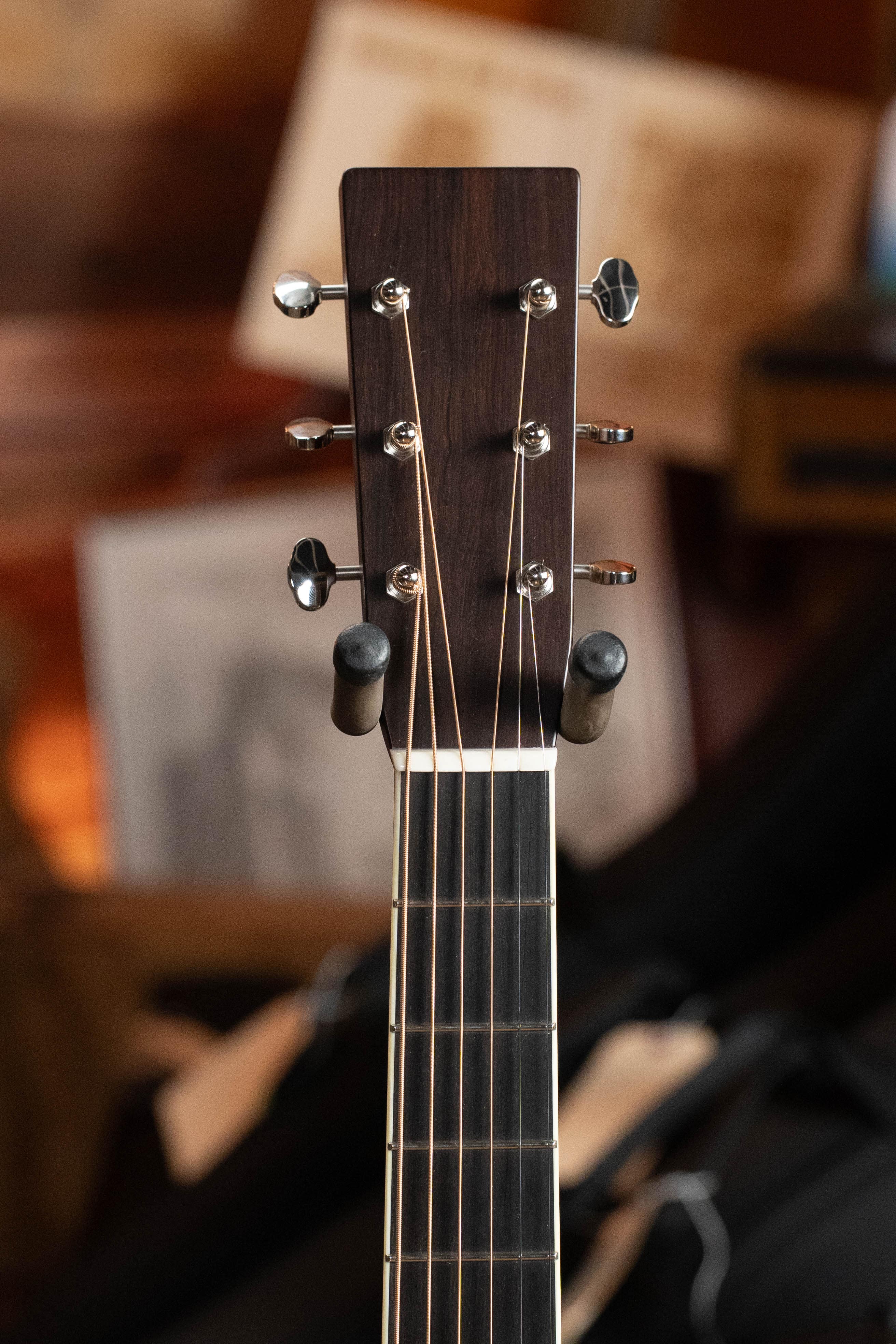
The Bourgeois we compared was Brazilian rosewood with a torrefied Adirondack top, and it shares the most accurate soundhole cut with the Atkin. The Martin logo had worn off Tony's guitar, so most of these builders leave the face of the headstock blank, and Bourgeois moves its logo to the back. Josh Williams plays one built exactly like the one we had, with a different set of Brazilian on the back and sides.
Huss & Dalton Pilgrim
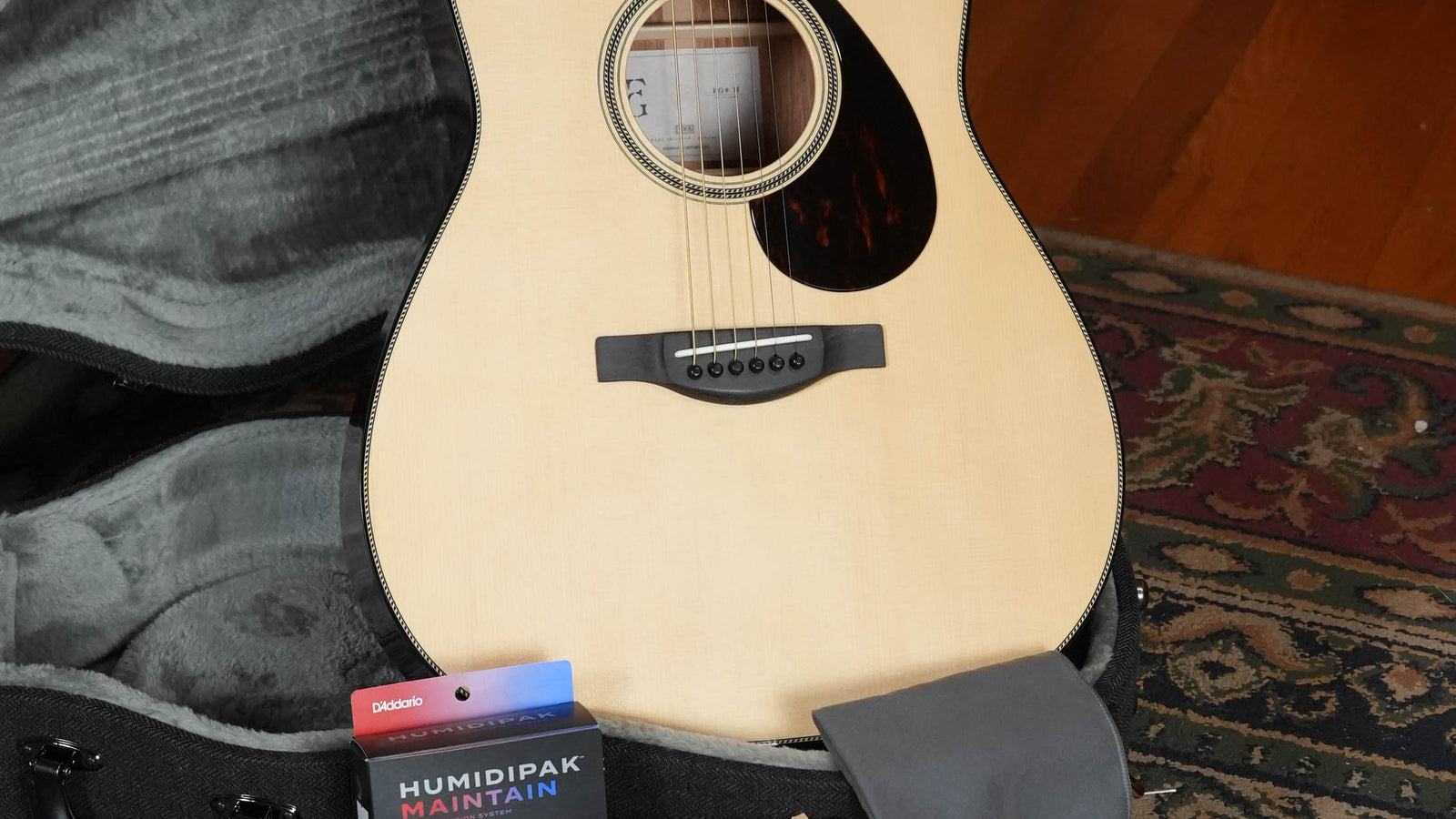
Huss & Dalton calls its version the Pilgrim. The one we had was custom built with a Honduran rosewood set, the Huss & Dalton brand stamped on the center strip, and a white-black-white binding with an extra black stripe the original guitar wouldn't have had.
The honest catch with any Tony Rice guitar
None of these will turn you into Tony Rice, and none of them sounds like 58957.
"None of these are going to sound like the Antique, as Tony called it."You can't recreate Tony's sound, because part of it was Tony playing that particular guitar. What these guitars do give you is the feel and the look. When you pick one up, it makes you want to play like him, and we think that mojo is worth having. Everyone who loves Tony's playing should try one at least once.
The other catch is the life a guitar like this lives. John's Santa Cruz had a neck reset that shortened the scale length, plus a bridge job that still needs fixing, and he'd mostly stopped playing it. Even so: "I forgot how much I love this guitar." It's also the guitar that taught him a care lesson. The nylon strap that holds a case lid open can react with a nitrocellulose finish and leave a mark, and his has a perfect little square on the top. Tuck that strap outside the case before you close the lid.
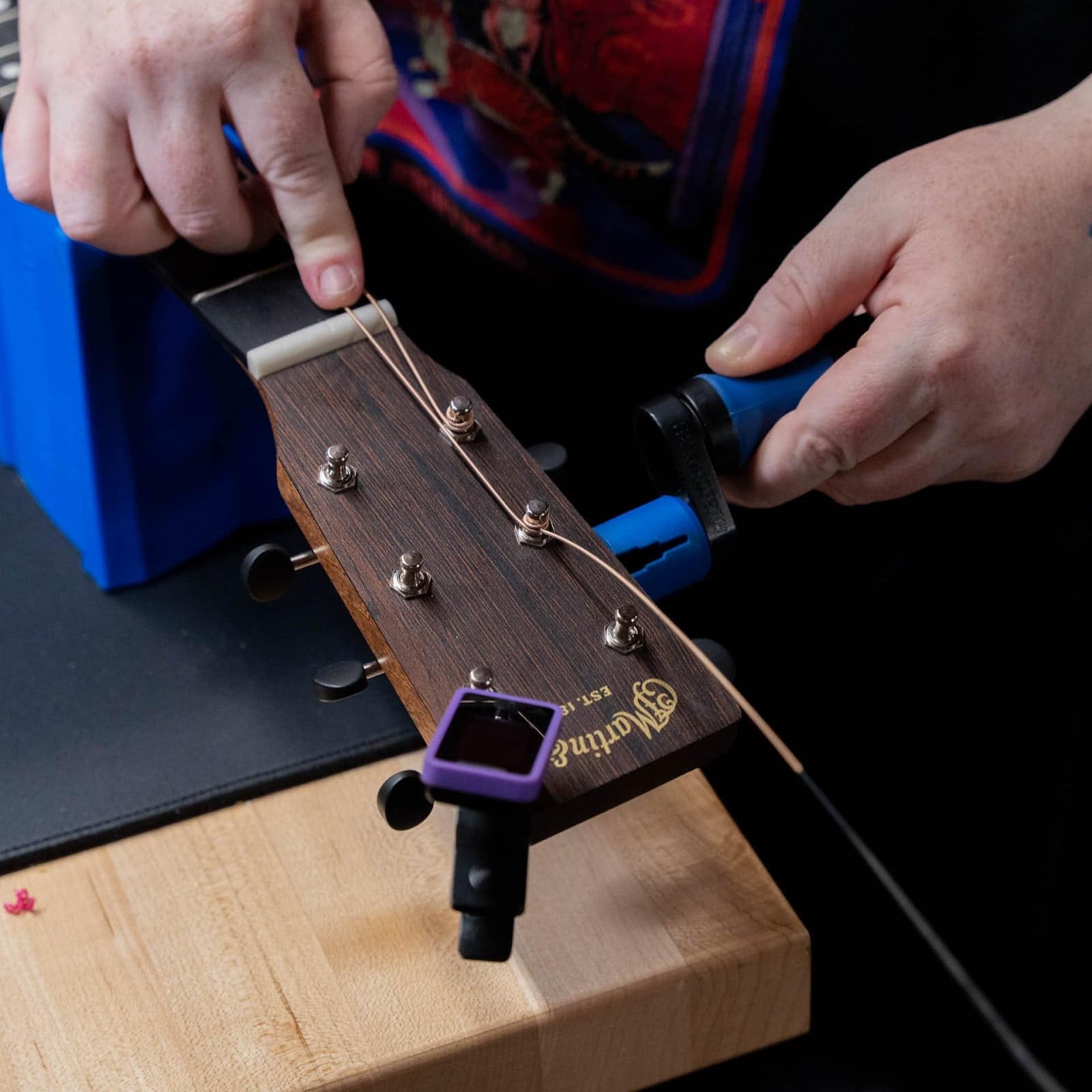
Every guitar we sell goes through our 23-Point Professional Inspection before it ships.
Where to find a Tony Rice guitar today
As of today we don't have a Martin, Santa Cruz, Collings or Huss & Dalton Tony Rice model in stock, and our last Atkin White Rice has sold. Here's where we'd point you:
- Bourgeois TAS LSH: our own large-soundhole build with Bourgeois, with an aged-tone Adirondack top, Madagascar rosewood back and sides, a cut-through saddle, vintage herringbone and no logo on the face of the headstock. It's $4,949 and available to reserve on pre-order. The rest of the line is on our Bourgeois page.
- Atkin White Rice: we carry Atkin and have had several White Rice dreadnoughts through the shop. Browse Atkin guitars, or ask us about ordering one.
- Martin Clarence White and the others: we've sold them used before, so ask if you're looking for one, or browse Martin guitars in the meantime.
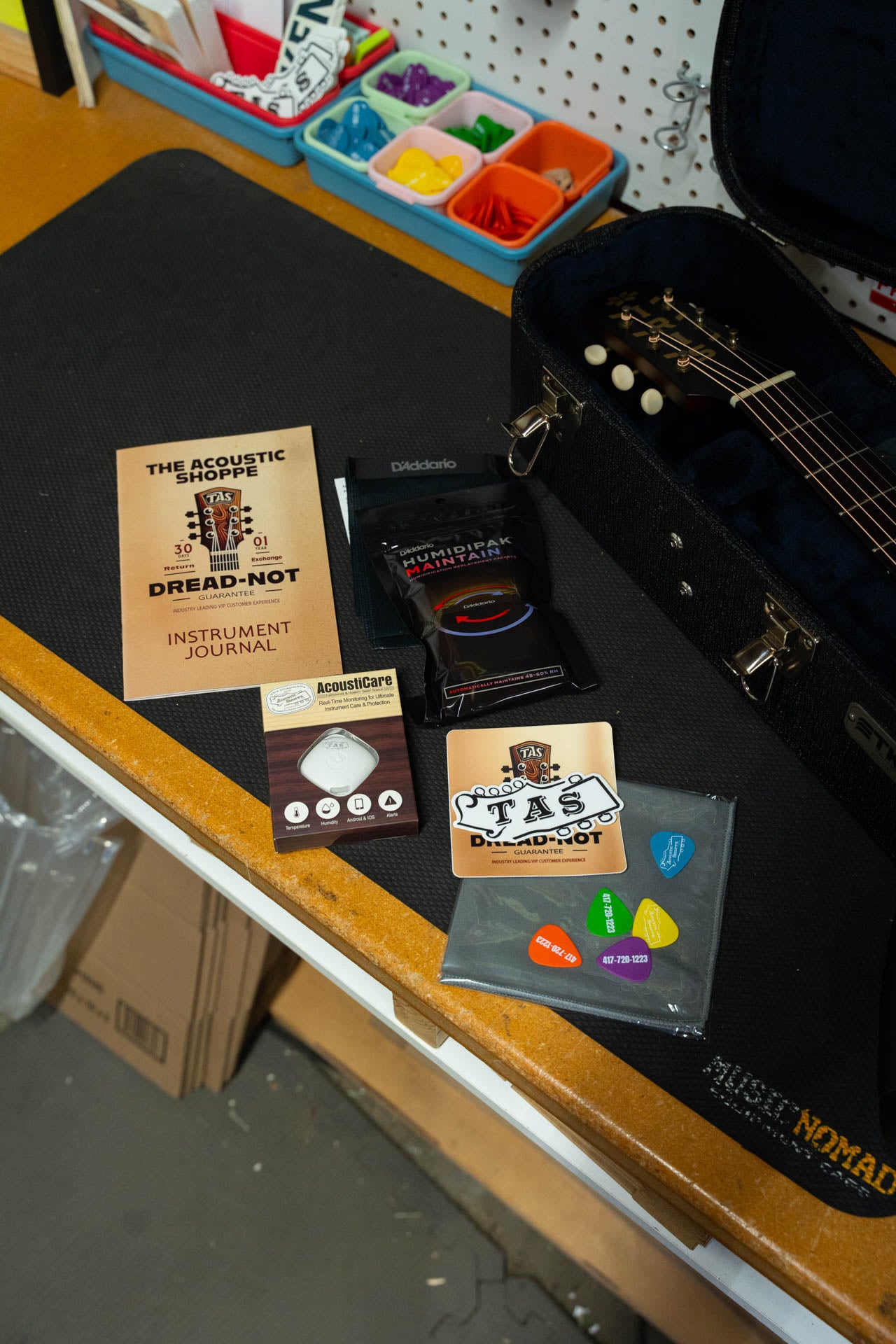
Every Tony Rice guitar we've listed has been well over $1,000, so the Dread-Not Guarantee covers it. That gives you a 30-day in-home trial and a full year to trade it in for up to 90% of the pre-tax purchase price in credit, less round-trip shipping, depending on condition.
Related reading
- Boutique guitar builders: our top 10, from Collings to Preston Thompson
- Bourgeois Professional Series buyer's guide
Who should buy a Tony Rice guitar
Buy one if you're a flatpicker who grew up on Tony's records, wants a rosewood dreadnought with that big soundhole, and cares about the look as much as the sound. If you want the most faithful copy, look for a soundhole cut to the ring and a slot-through saddle. If you just want a great rosewood dreadnought and don't care about the big soundhole, browse our dreadnought guitars or the full acoustic guitar lineup. Either way, we'll tell you what we think of the one you're looking at.