
Table of Contents
- What's the difference between a D-28 and an HD-28?
- Watch the D-28 vs HD-28 comparison
- How the D-28 and the HD-28 got split in two
- How they sound: D-28 vs HD-28 tone
- Our D-28 vs HD-28 scores, category by category
- The D-28 mistake we see at the counter
- Alternatives to the D-28 and HD-28
- D-28 vs HD-28: which one should you buy?
- Buying either one from us
- Acoustic Shoppe FAQ
The D-28 vs HD-28 question comes down to about $200 at today's gloss prices, and when we played the 2024 models side by side, we both leaned HD-28. That isn't the whole story, though. Martin's current spec has closed one of the biggest gaps between them, and that changes how you should shop the pair.
What's the difference between a D-28 and an HD-28?
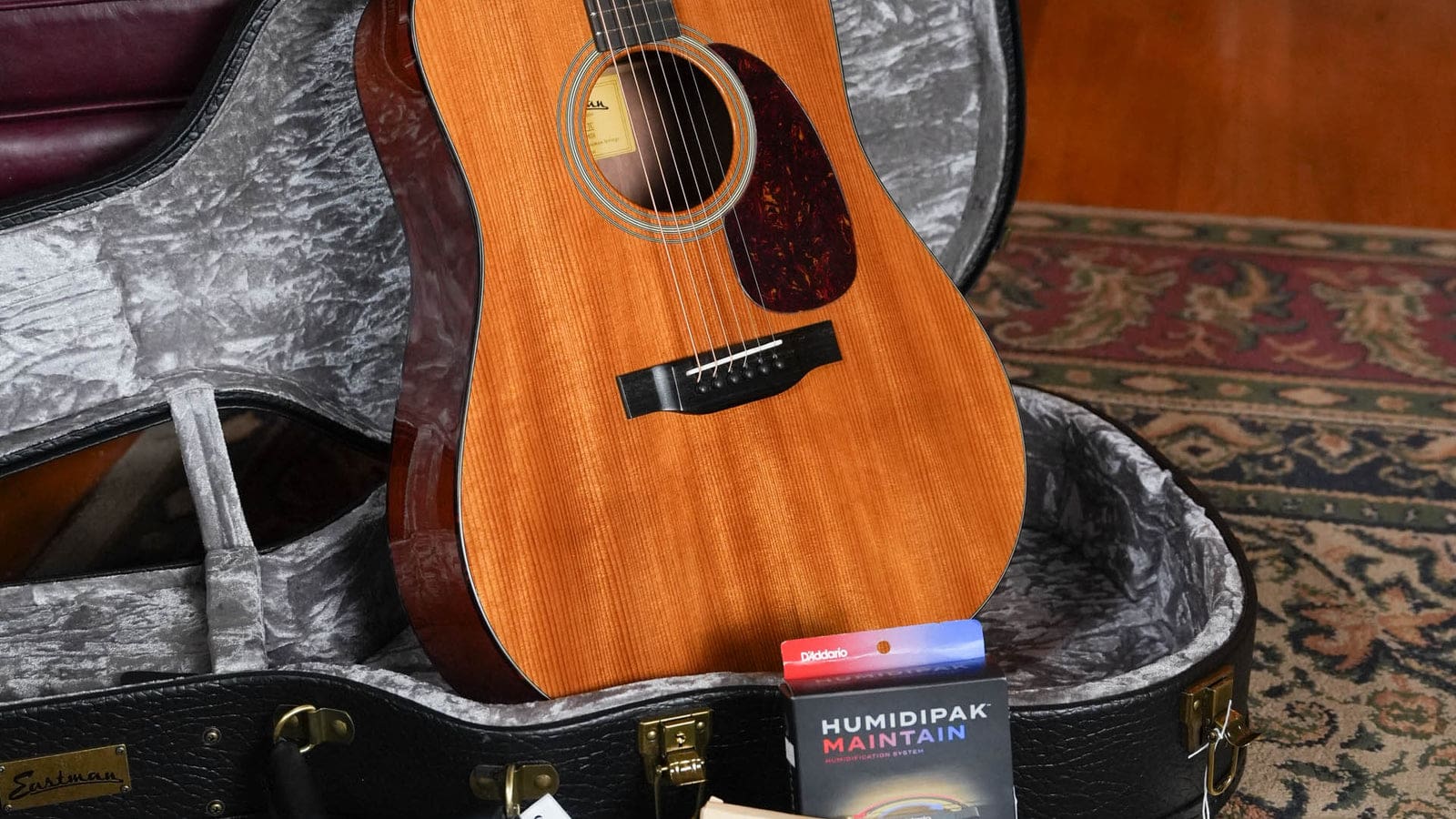
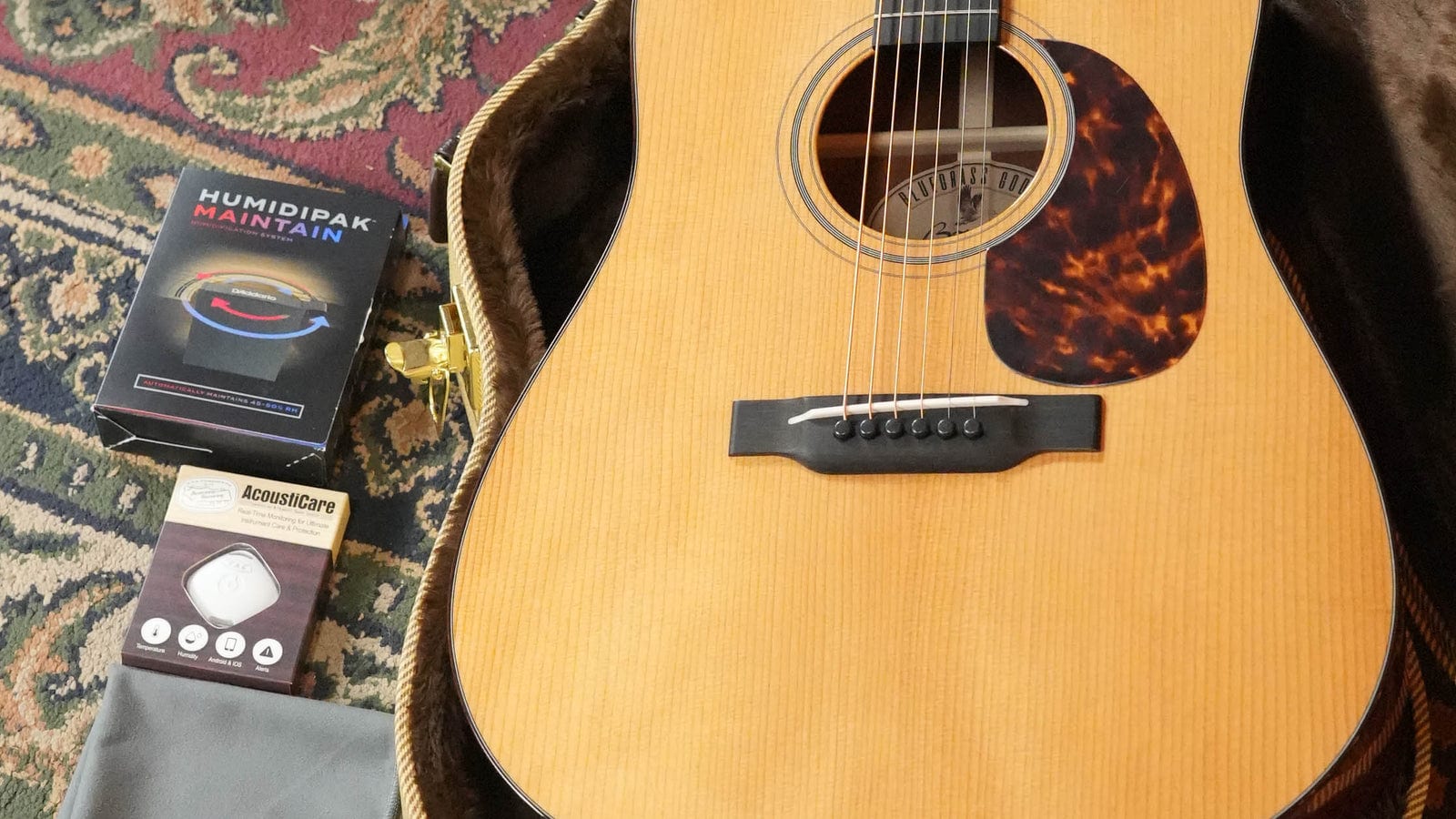
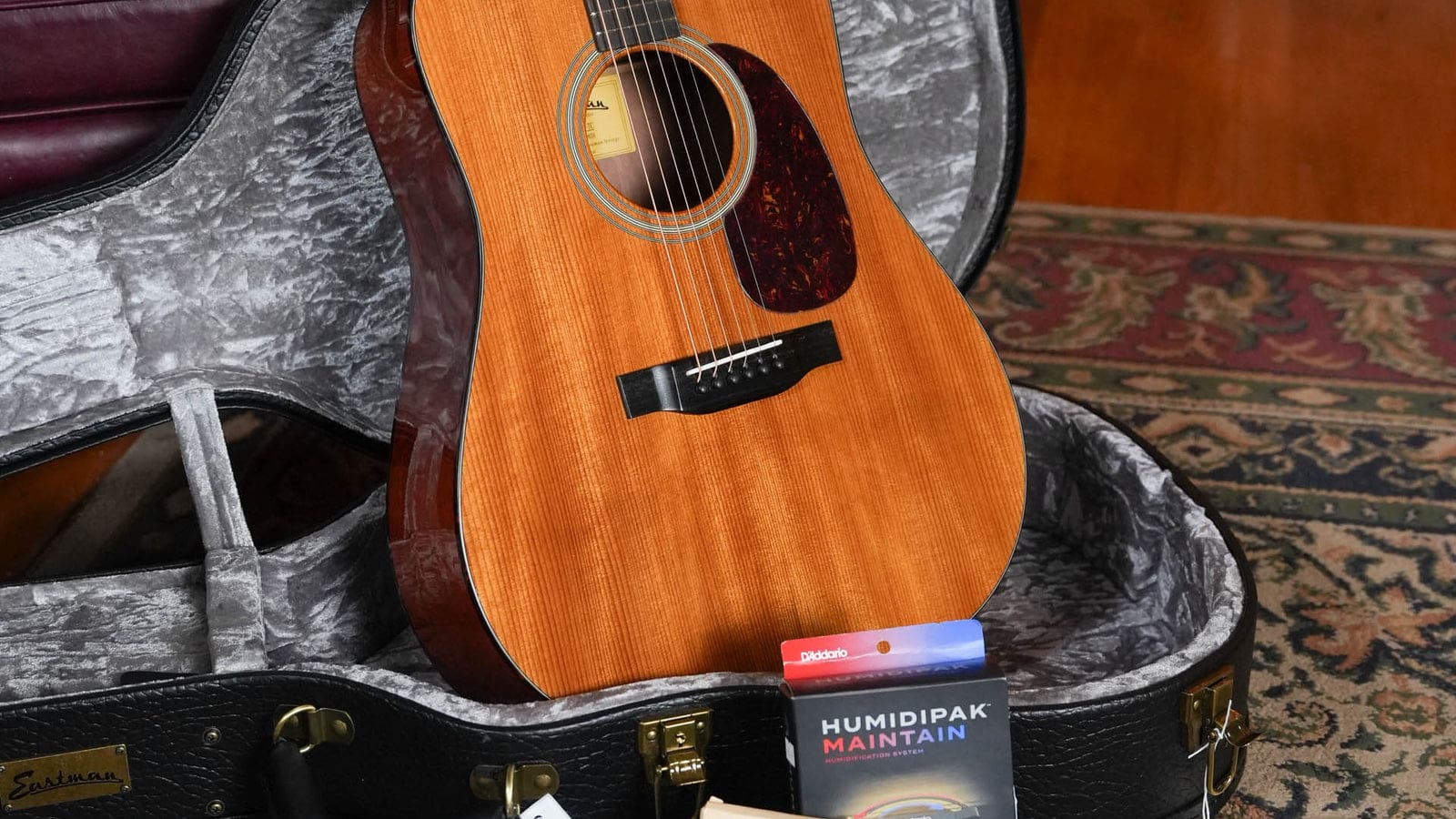
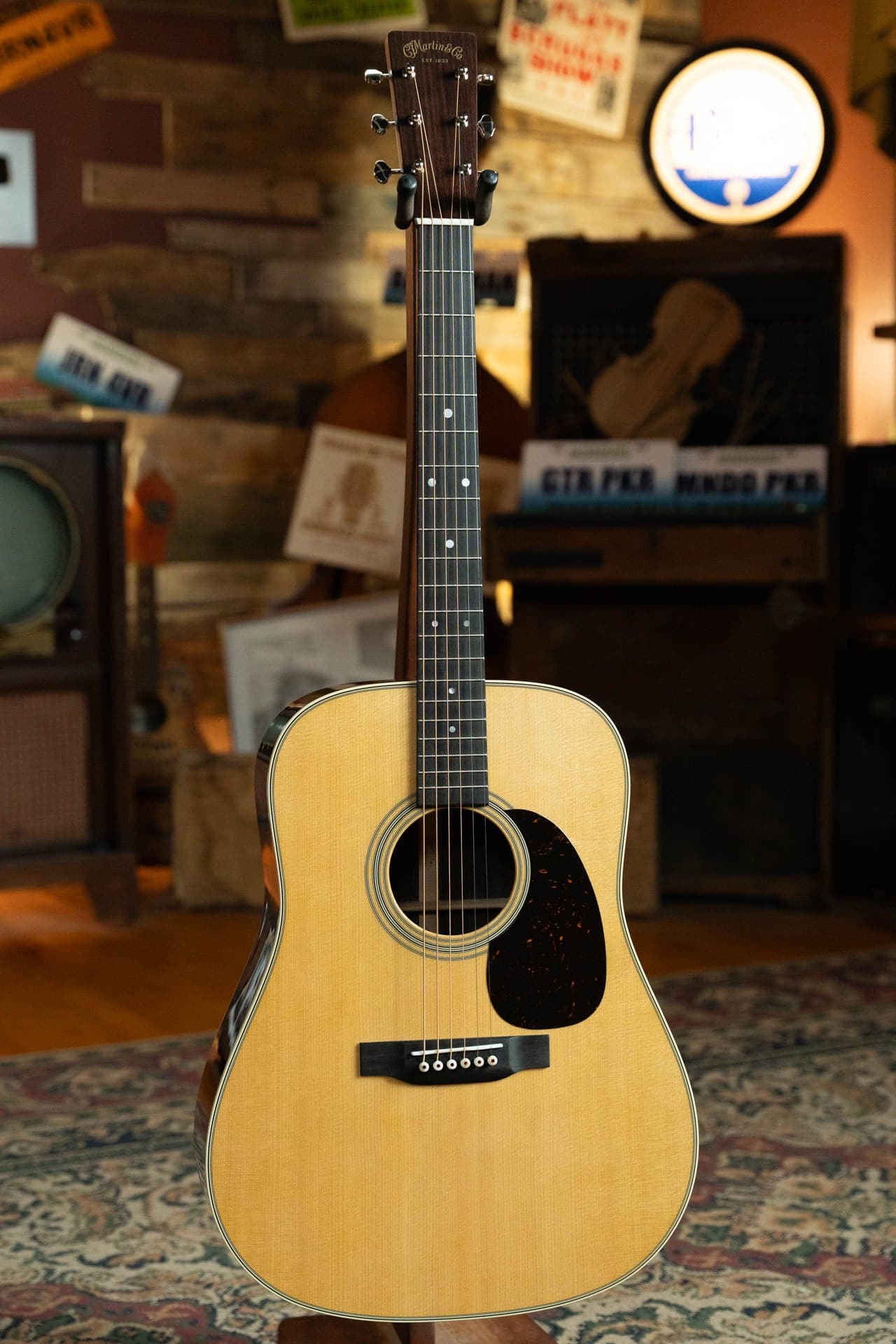
On paper the two guitars share almost everything. Both are 14-fret dreadnoughts with a spruce top over East Indian rosewood back and sides, a 25.4" scale, a 1 3/4" bone nut, an ebony fingerboard and bridge, and nickel open-gear tuners. Both ship in a molded hardshell case. That 1 3/4" nut gives your fretting hand more room between strings on a G run, and it's the width the D-28 had in the 1930s.
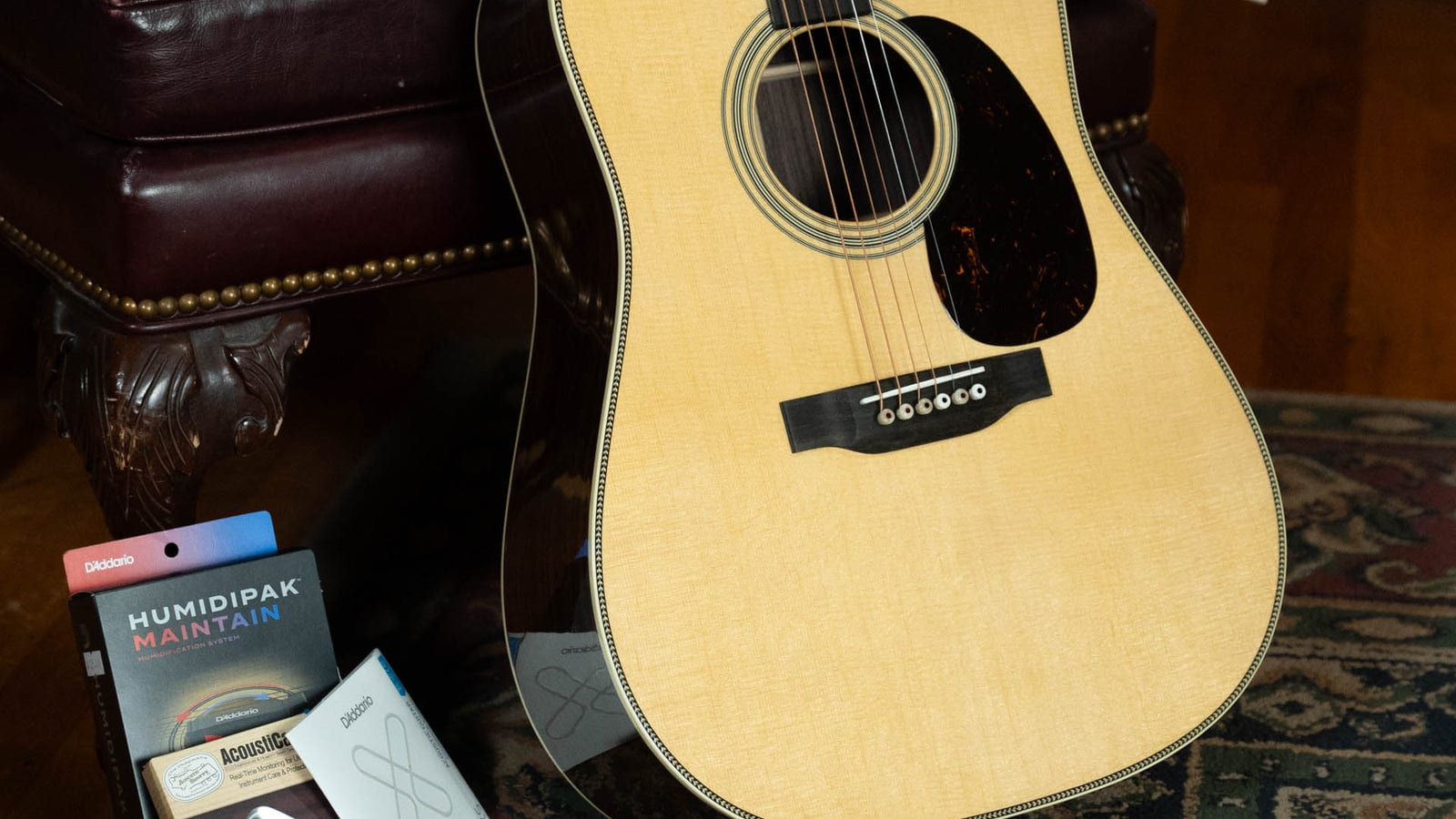
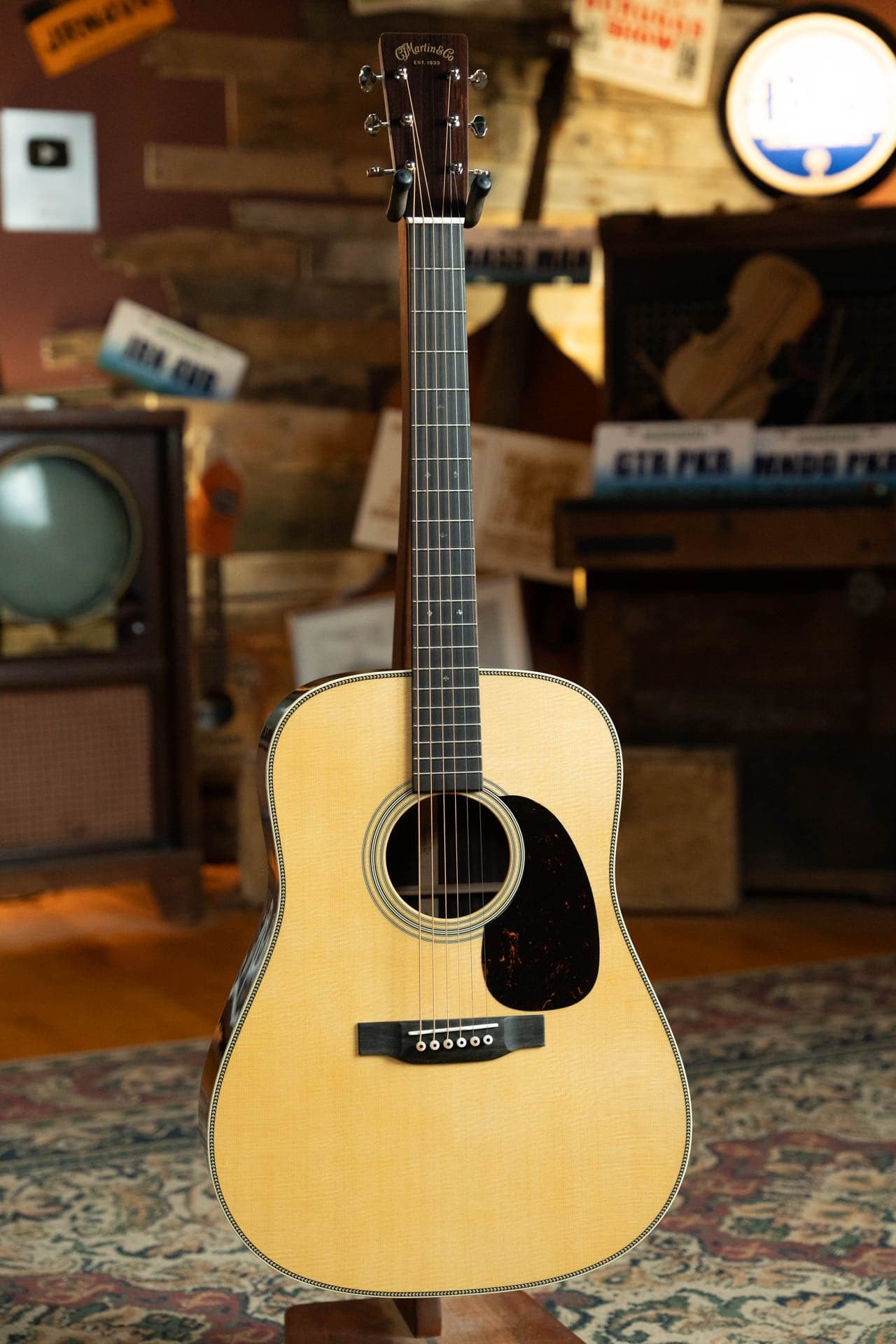
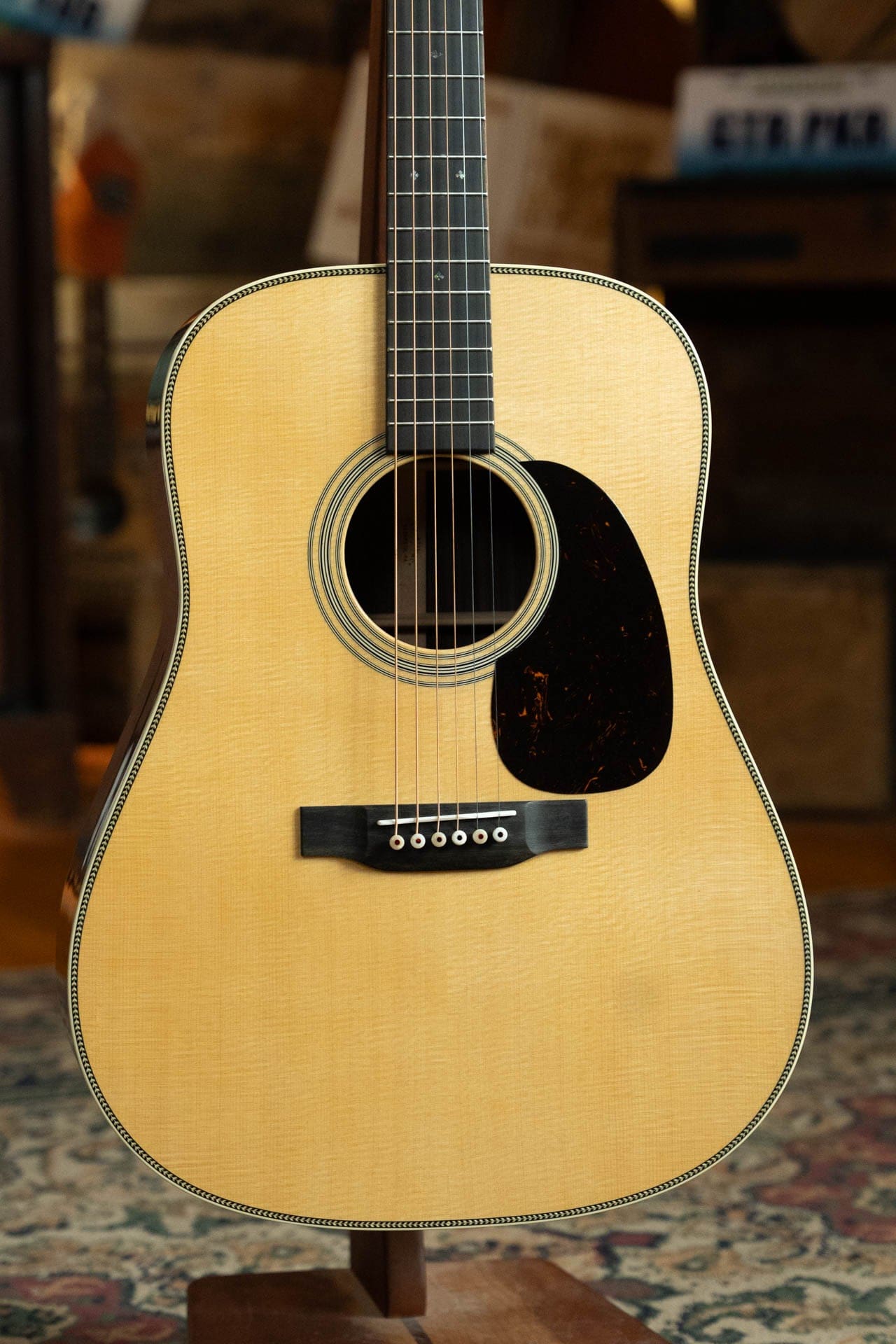
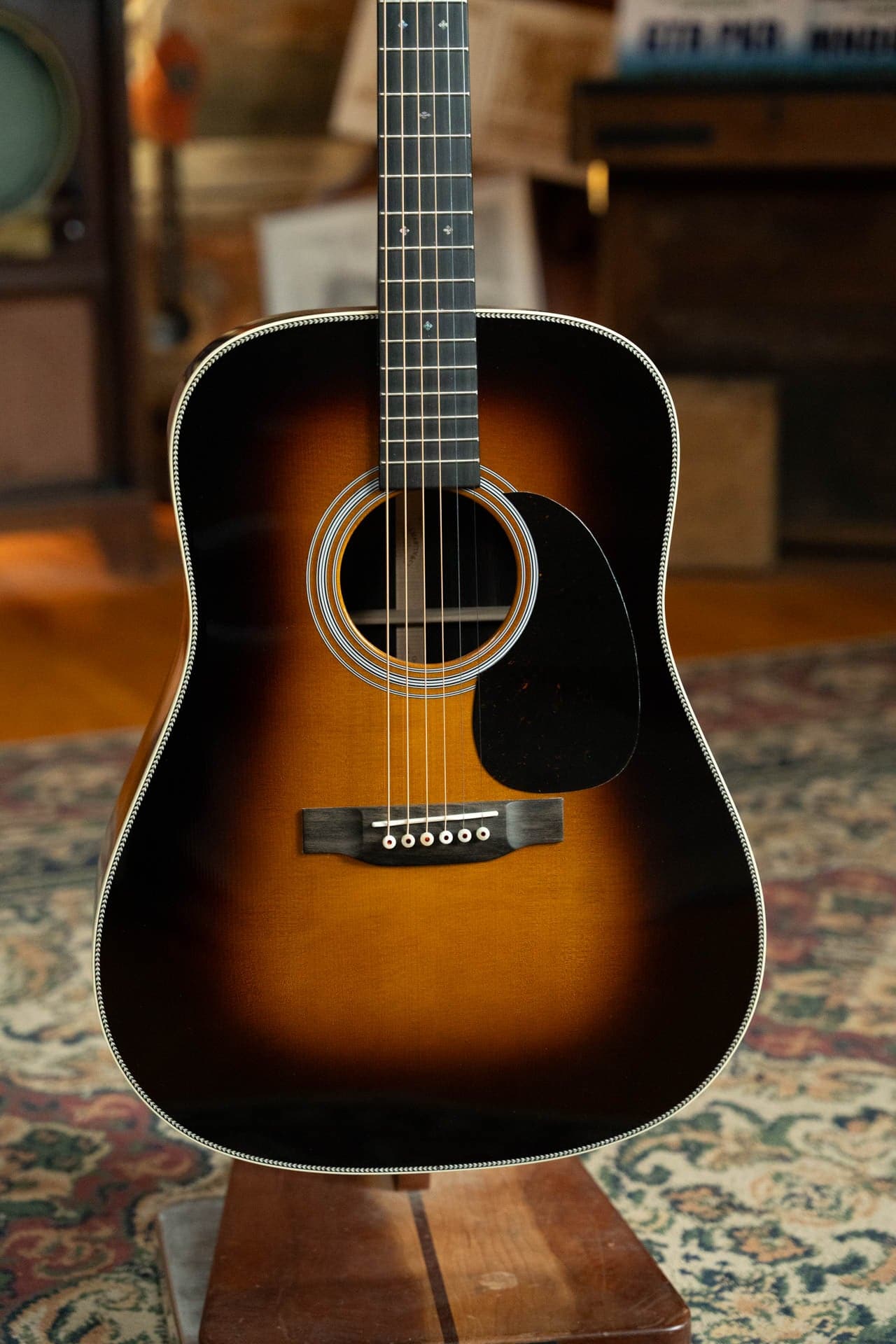
On the 2024 models, the differences were the trim and the bracing. The D-28 had five-ply binding and non-scalloped forward-shifted braces. The HD-28 had herringbone purfling around the top and scalloped forward-shifted braces. You could hear the scalloping.
That has changed. Martin's current D-28 spec, as it appears on our D-28 listings, calls for forward-shifted GE-scalloped X-bracing, the same brace shape and 5/16" brace size listed for the HD-28. The current D-28 also lists antique white binding where the 2024 guitar had five-ply black and white. So on today's spec sheet, the D-28 vs HD-28 split is mostly herringbone purfling, the back strip and the price. If you're shopping the 2026 models, play both before you assume the 2024 tone gap still holds.
| Current spec (Shopify, Oct 2026) | Martin D-28 | Martin HD-28 |
|---|---|---|
| Price | $3,499.99 gloss, $3,099.99 satin | $3,699.99 gloss |
| Top / back and sides | Spruce, aging toner / East Indian rosewood | Spruce, aging toner / East Indian rosewood |
| Bracing | Forward-shifted X, GE-scalloped, 5/16" | Forward-shifted X, GE-scalloped, 5/16" |
| Top trim | Style 28 multi-stripe | Bold herringbone |
| Neck | GE Modified Low Oval, high-performance taper | GE Modified Low Oval, high-performance taper |
| Nut / scale | 1 3/4" bone / 25.4" | 1 3/4" bone / 25.4" |
Watch the D-28 vs HD-28 comparison
Jump to the spec rundown at 0:49, the history at 2:42, our scores at 5:53, the alternatives at 16:01, and the two guitars played back to back at 17:43. The $3,199 and $3,399 prices you'll hear are from late 2024. Use the current prices above.
How the D-28 and the HD-28 got split in two
Most of the confusion in this comparison is history. Put simply:
"The D-28 of today is not necessarily the D-28 of legend that you think it is, and that's not good or bad."Here's the timeline:
- The original 1930s D-28 had herringbone trim, forward-shifted scalloped braces and a 1 3/4" nut.
- From 1940 the nut narrowed to 1 11/16", and it stayed there until the Reimagined series brought 1 3/4" back.
- In 1944 Martin dropped the herringbone for the five-ply binding that became the standard D-28 look.
- In 1976 Martin brought back the herringbone trim and the scalloped bracing as a separate model, the HD-28.
- An adjustable truss rod arrived in the early '80s, and the Reimagined series moved the braces forward again and swapped heavy sealed tuners for lighter open-gear ones.
That's why a pre-war D-28 and a modern D-28 can sound like different guitars. Each decade from the '40s through the '70s had its own changes, and the name stayed the same. If you want more of that story, our piece on the most influential guitars in Martin history covers the bigger picture.
How they sound: D-28 vs HD-28 tone
One of us likes the D-28, but the HD-28 is his sound, and he'll tell you that up front. On the 2024 guitars, the standard D-28 had a tighter low end, less volume and less clarity. The HD-28 had more of that "quintessential" rosewood dreadnought sound. We both hear it, and we put it down to the scalloped bracing:
"It just sounds like an open guitar that's been played a long time."The HD-28 is louder, and its low end moves more freely under a pick. The D-28's bass stays tighter and more contained. That doesn't make the D-28 a weak guitar. It holds its own, and its sound is all over records from the '50s, '60s and '70s. That's the real case for the D-28: if the guitar on the records you love is a post-war D-28, the HD-28 isn't automatically the upgrade.
For a bluegrass flatpicker or a hard strummer, it's simple: the HD-28 "is going to just overpower the standard D-28." Skip to 17:43 to hear them back to back and judge for yourself.
Our D-28 vs HD-28 scores, category by category
We scored both guitars against other guitars in their price range, not against boutique builds. Each cell has both of our scores.
| Category (out of 5) | D-28 | HD-28 |
|---|---|---|
| Tone | 4.25 and 4.6 | 4.75 and 4.8 |
| Setup and playability | 4.9 and 4.9 | 4.9 and 4.9 |
| Build quality | 4.8 and 4.85 | 4.8 and 4.85 |
| Looks | 5 and 4.8 | 5 and 4.9 |
| Value | 4.75 and 4.75 | 4.8 and 4.9 |
Setup got a 4.9 from both of us on both guitars. Martin Pleks every one of these now, and both ship with medium strings, so if you already play mediums on a dreadnought, there's very little we'd change on either guitar out of the box.
On build quality, Martin isn't as clean as some of the boutique builders we carry, but today's Martin is about as clean as a factory guitar gets, and we couldn't find an obvious mistake on either one. Herringbone and scalloped braces don't make a guitar better built, so both got the same number.
"They've had 150 years to practice. I think they ought to be pretty good at it."Looks are where we split. One of us learned on a standard D-28 and gave both guitars a 5. The other prefers the herringbone top and the HD-28's back strip, and gave the D-28 a 4.8 and the HD-28 a 4.9.
On value, Martin used to feel overpriced to both of us, but the price gap between Martin and the import brands has narrowed. You do pay a premium for the name and for an American-made guitar. Think Harley-Davidson, which doesn't apologize for charging more for its motorcycles. The HD-28 won here: "getting the scalloped bracing for only $200 more" made it the better value of the two. On the 2026 spec, with GE-scalloped bracing listed on both, that argument comes down to herringbone and looks, so weigh it accordingly.
The D-28 mistake we see at the counter
The most common mistake in the D-28 vs HD-28 decision is a naming problem. Martin called the original herringbone guitar a D-28, and didn't call it an HD-28 until 1976. So when someone comes in asking for "a D-28," we have to ask which one they mean:
"Which D-28 are you after? Because if you're after that classic pre-war herringbone sound, you're looking for an HD-28."If you buy a standard D-28 expecting that big pre-war sound, you'll be "pretty upset" you didn't buy the HD-28. If the D-28 you're chasing is from the '50s through the '70s, the standard D-28 is the closer match. Our D-18 vs D-28 comparison covers the other fork in the road if you're still deciding between mahogany and rosewood.
Alternatives to the D-28 and HD-28
Outside the D-28 vs HD-28 pair, a handful of guitars are worth a look, some cheaper, some a step up. None of them is a D-28, and some players will like them better:
- The Eastman E20D or E8D has rosewood back and sides with scalloped bracing that isn't truly forward-shifted. The E20D has an Adirondack top. We have an E20D-TC in sunburst (the thermo-cured version) at $2,119, and the rest are on our Eastman guitars page.
- A Bourgeois Touchstone sits in the same price range as these two Martins. See every Bourgeois we have.
- The Boucher BG-52 is our step-up pick. Our 2026 BG-52-B Adirondack/rosewood is $6,069. Our Boucher vs Collings post covers where Boucher sits.
- The Atkin D37 is "a fantastic guitar." Check our Atkin guitars.
- From Alvarez, look at a Yairi dreadnought, or the Laureate guitars for a lower price with some of that D-28 sound. Browse Alvarez Yairi.
The Taylor side of the argument has its own post: Taylor 710e vs HD-28.
D-28 vs HD-28: which one should you buy?
On the 2024 guitars, the HD-28 was the pick for a bluegrass flatpicker or a heavy strummer, and for anyone who hears the pre-war herringbone sound in their head. That's where we both landed. On the 2026 spec, Martin lists the bracing that drove that call on both guitars, so today the HD-28's case is the herringbone look plus whatever difference you hear when you play them side by side.
Buy the D-28 if the records you love feature a '50s, '60s or '70s D-28, if you'd rather have the multi-stripe look, or if the $3,099.99 satin version gets you into a rosewood Martin for $600 less than the HD-28. For the signature route, our Billy Strings D-28 overview covers that model.
Right now we have an HD-28 at $3,699.99, with photos of that exact guitar going up once it clears inspection, and an HD-28 1935 Sunburst at $3,899.99. On the D-28 side, the Martin D-28 page shows every D-28 we have, including the D-28 Modern Deluxe at $4,599.99. If a standard D-28 isn't showing when you look, ask us what's coming in.
Buying either one from us
Every guitar we ship goes through our 23-Point Professional Inspection first, so our own bench checks the factory Plek job before the guitar gets to you.
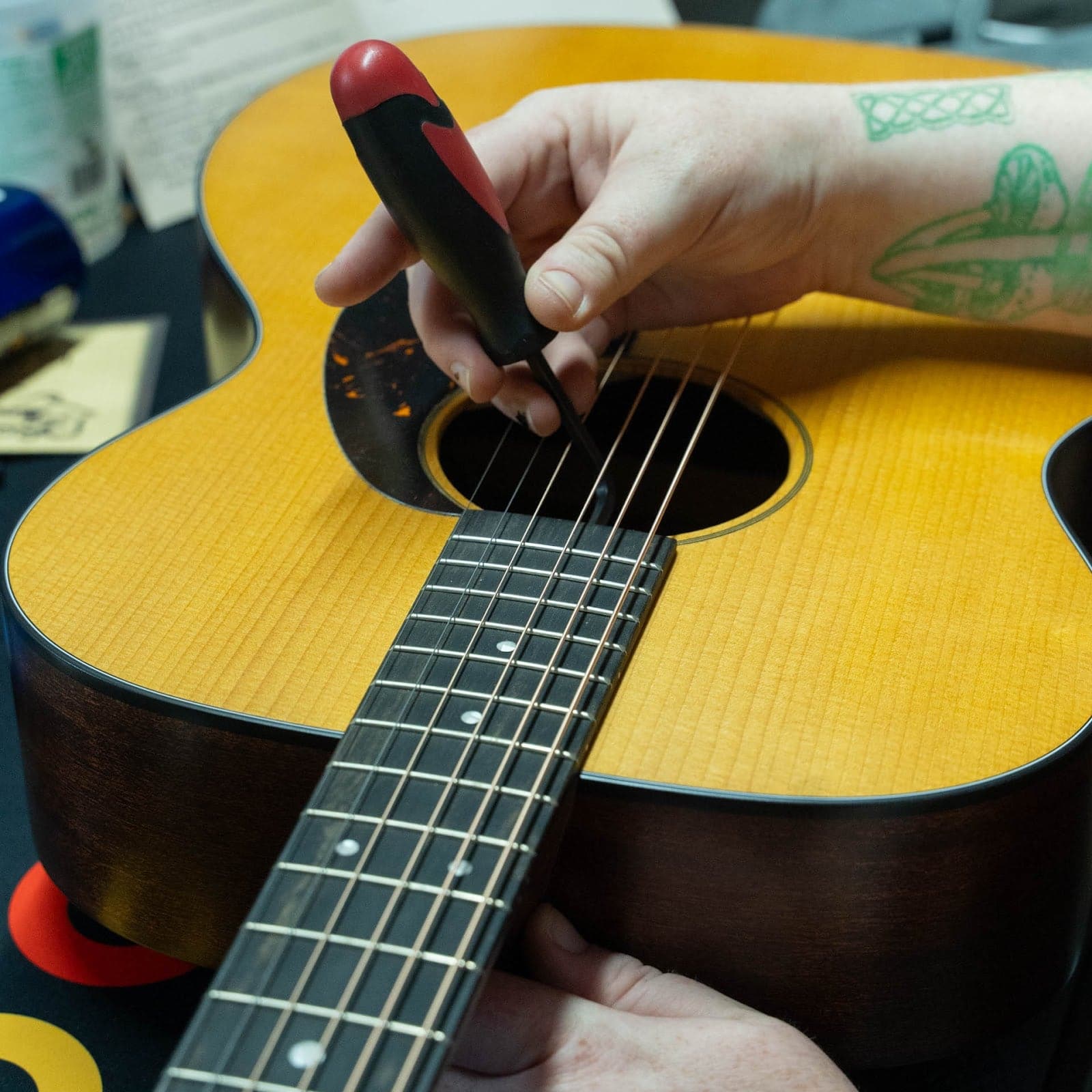
Both guitars are well over $1,000, so both come with the Dread-Not Guarantee: a 1-year trade-in credit of up to 90% (pre-tax, less round-trip shipping), a 30-day in-home trial and our inspection. If you settle the D-28 vs HD-28 question one way and find out a year from now that you wanted the other guitar, that credit is how you get there.
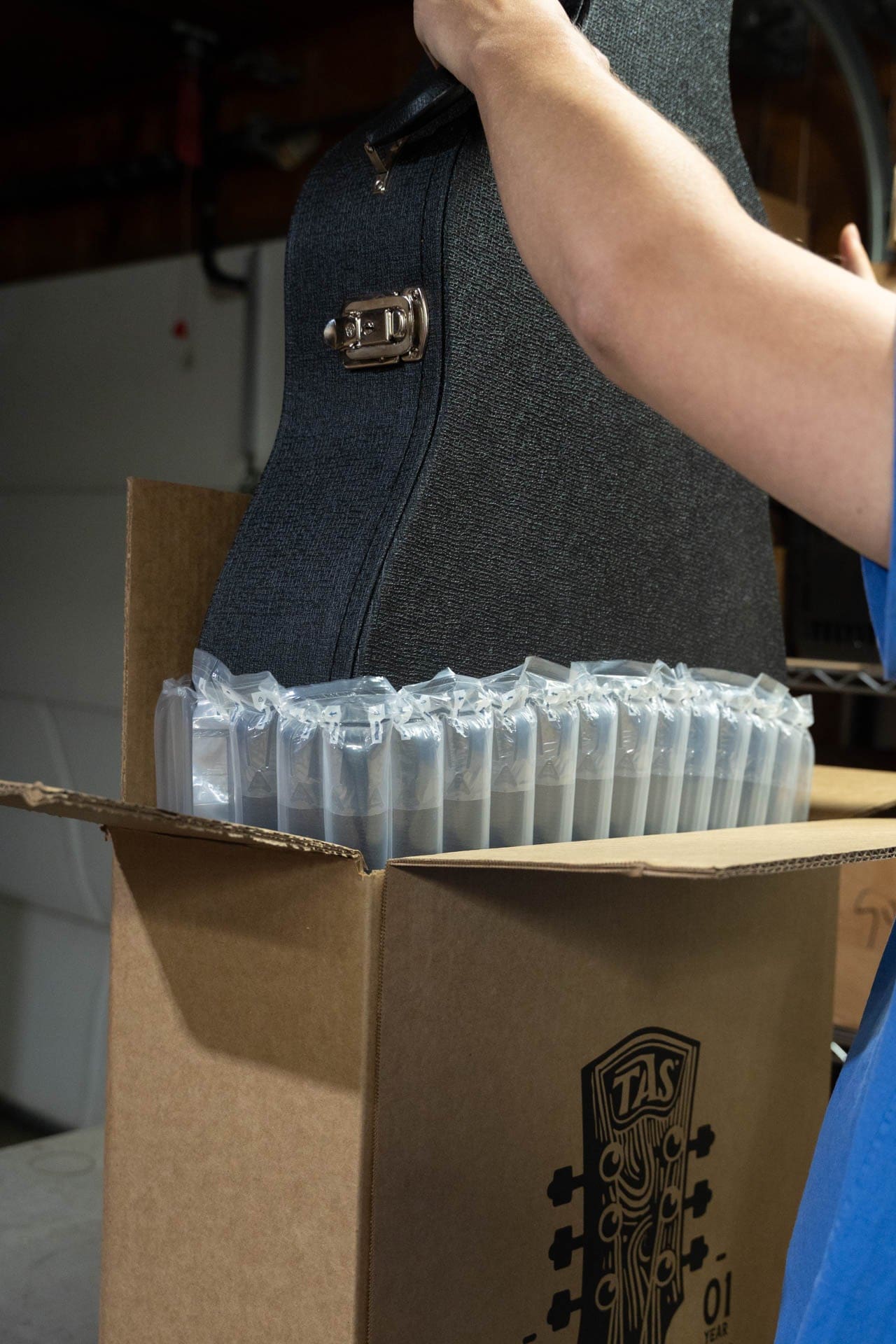
Not set on a Martin? Every dreadnought we stock is on one page, and all of our Martins are on another. You can also browse every guitar in stock.
Related reading
- Inside the Martin guitar factory
- Dreadnought vs OM: choosing a body shape
- Martin at Fretboard Summit 2026
Our 2024 D-28 vs HD-28 verdict went to the HD-28, and it rested on scalloped bracing that today's D-28 spec also lists. Less separates the two on paper now, so play both before you pay $200 more for the herringbone.