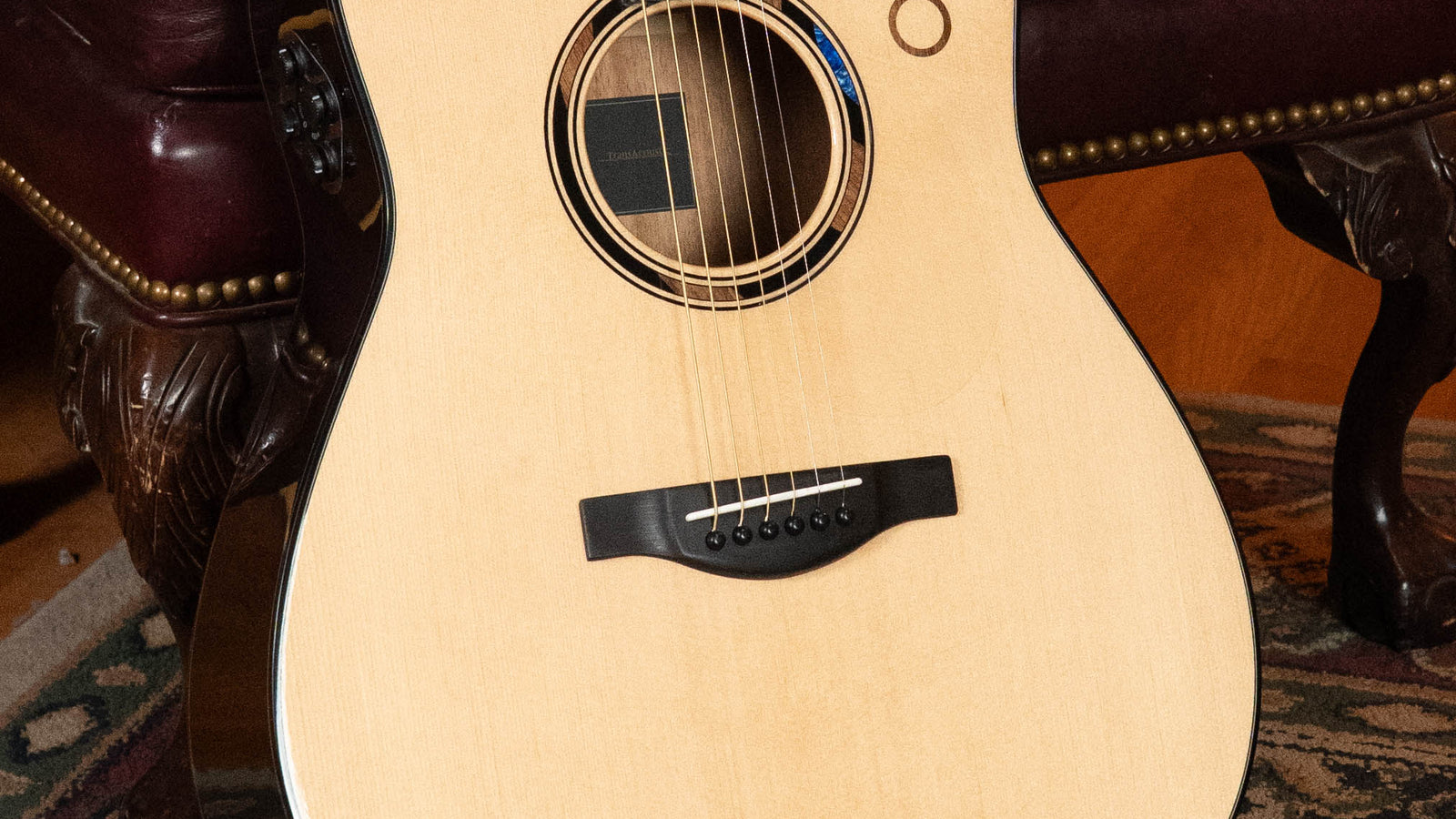

You've narrowed it down to two headstocks. On one side of the wall hangs a Martin dreadnought, the shape behind half the acoustic records you grew up on, and on the other a Taylor Grand Auditorium that plays so easily you almost don't trust it. They cost about the same, both companies build them with real care, and everybody you ask has a strong opinion. That's the Martin vs Taylor question, and it's the one we hear more than any other in our guitar room.
Martin came to our wall first, and Taylor took a lot longer, so once we had the two biggest-selling acoustic guitar companies under one roof we put each brand's signature guitar side by side: a Taylor Builder's Edition 914ce with a sinker redwood top, and a Martin Custom Shop 1937 D-28 Authentic Aged. What we found is that there's no single winner. These two guitars aren't trying to do the same job, and once you know which job you need done, the choice gets a lot easier.
Martin vs Taylor: the short answer
A Taylor is the modern, detailed, comfortable guitar. A Martin is the powerful, warm, traditional one. John put it in recording terms, and it's the best way we've found to explain the Martin vs Taylor difference to someone who's played both and still can't decide. The Taylor acts like a high-end digital tracking rig: balanced and endlessly detailed, so you hear every note in the chord. The D-28 is the vintage analog console.
"It's got power and punch and warmth and depth. All the stuff that you just feel in your chest." John, on the D-28
Neither one is the better guitar in the abstract. The better guitar is the one whose sound you already hear in your head when you play, and the one whose neck your hand stops noticing after an hour.
Jump to: the Taylor 914ce at 3:26 · the Martin D-28 at 4:16 · the X factor of each at 5:35 · our honest critiques at 7:25.
Martin vs Taylor side by side: two guitars you can buy today
The 914ce and the D-28 Authentic sit at the top of each line, so here's the same Martin vs Taylor comparison at a price most players actually shop. Both of these are on our wall right now, and both are rosewood and spruce, which keeps the comparison about the brands instead of the woods.
| Taylor 814ce | Martin D-28 | |
|---|---|---|
| Body | Grand Auditorium, cutaway | Dreadnought |
| Top / back and sides | Solid Sitka spruce / solid Indian rosewood | Solid spruce / East Indian rosewood |
| Bracing | Scalloped V-Class with Relief Rout | Forward-shifted GE scalloped X |
| Neck | Action Control Neck, long-tenon joint, action adjusts through the soundhole | GE Modified Low Oval, High-Performance taper, 1-3/4" nut |
| Electronics | Taylor Claria | None |
| Price today | $3,999 | $3,499.99 |
Every line on that table points the same way. Taylor's V-Class bracing is built for note separation and pitch that holds up the neck, which is why rosewood on an 814ce stays clear instead of washing out in the low end. The cutaway and Claria pickup mean it's ready for a stage the day you get it home. The D-28 puts its effort into the big dreadnought body and the scalloped X-bracing, and you hear it the first time you strum a G chord: deep bass, a strong midrange and chords that feel wide. Prices were checked the day this was written and move with stock.
What a Taylor does best
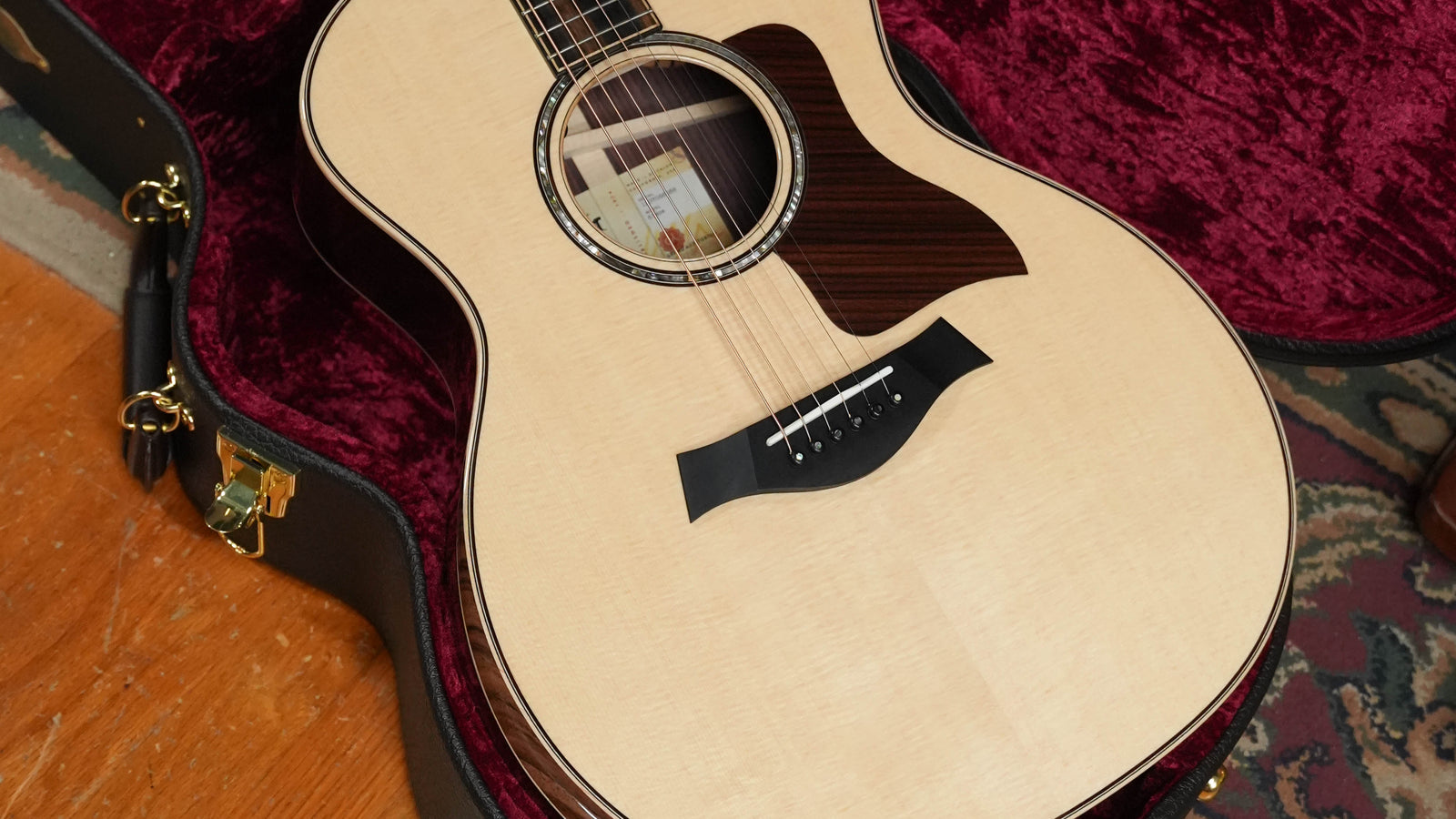
We chose the 914ce Builder's Edition because, in John's words, it brings in everything Taylor wants to put forward and everything Andy Powers has added to the Taylor DNA. It's a Grand Auditorium, the shape Taylor is known for, with the cutaway and pickup built in, and then it adds the rounded body lines, the unusual wood choices, the neck joint and the newer electronics. If you want to know where acoustic guitar design is going, this guitar is a good place to look. Today's Builder's Edition 914ce is $6,999, with a sinker redwood top and Honduran rosewood back and sides.
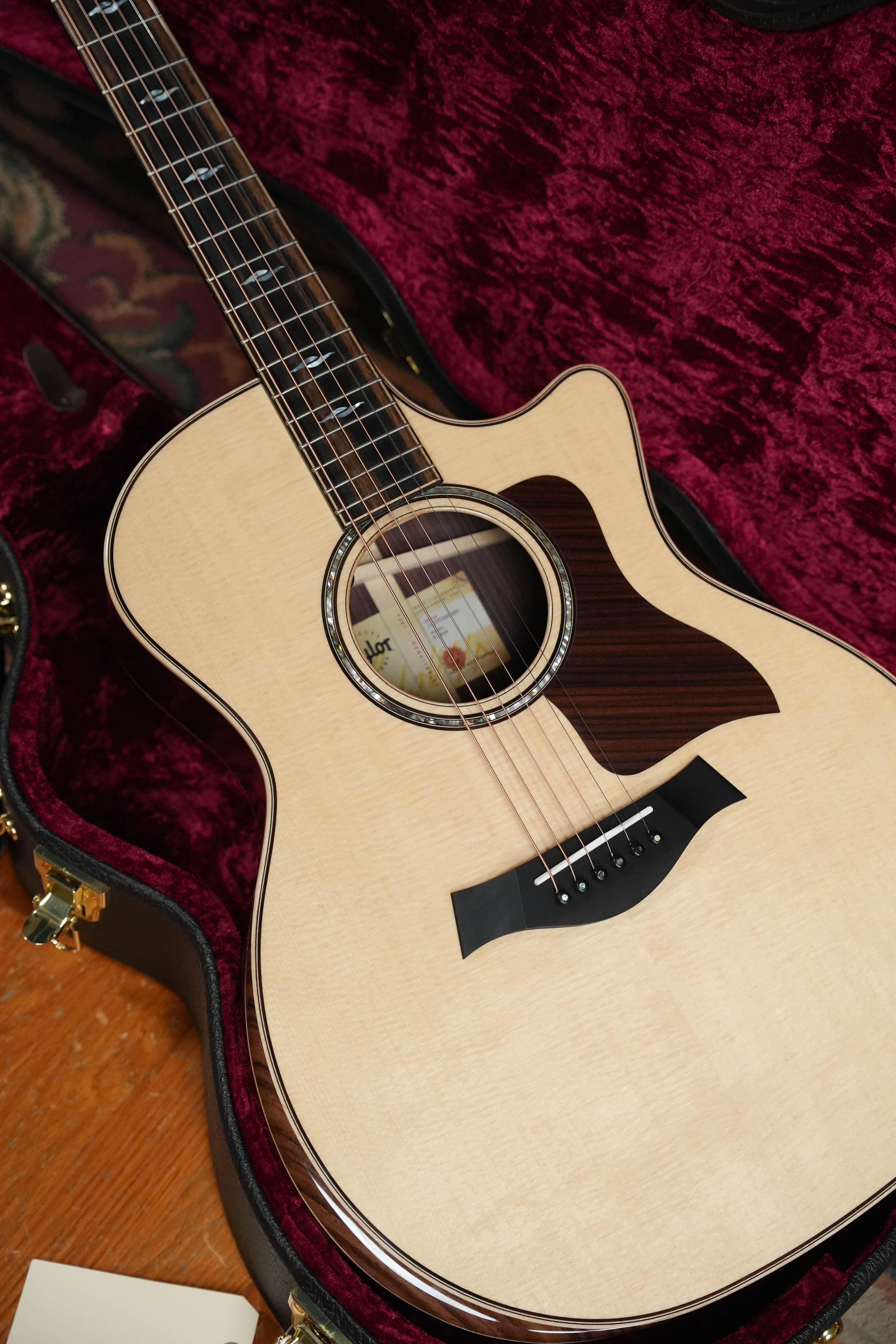
The sound is balanced and detailed, with high trebles and crisp tones. Jeremy calls a Taylor like this "a modern luxury thing": Taylor took the sound Martin was known for, refined it, and made something new.
The catch is the flip side of that balance. John finds a Taylor polite, sometimes drawn back in places, without the power of a Martin, and his first answer was that it wouldn't be the guitar he'd reach for most of the time. By the end of the day he'd changed his mind:
"This made me play differently today than I've played in the past. I find that I will find more spaces for some of these sounding guitars, and that's a good thing." John, on the 914ce
That's the honest Taylor pitch. It may not replace your dreadnought, but it will pull different songs out of you. If you want to go deeper on Taylor's top line, our Builder's Edition 914ce review covers that guitar on its own, and our Taylor Gold Label series guide covers the line Taylor built to sound more traditional.
What a Martin does best
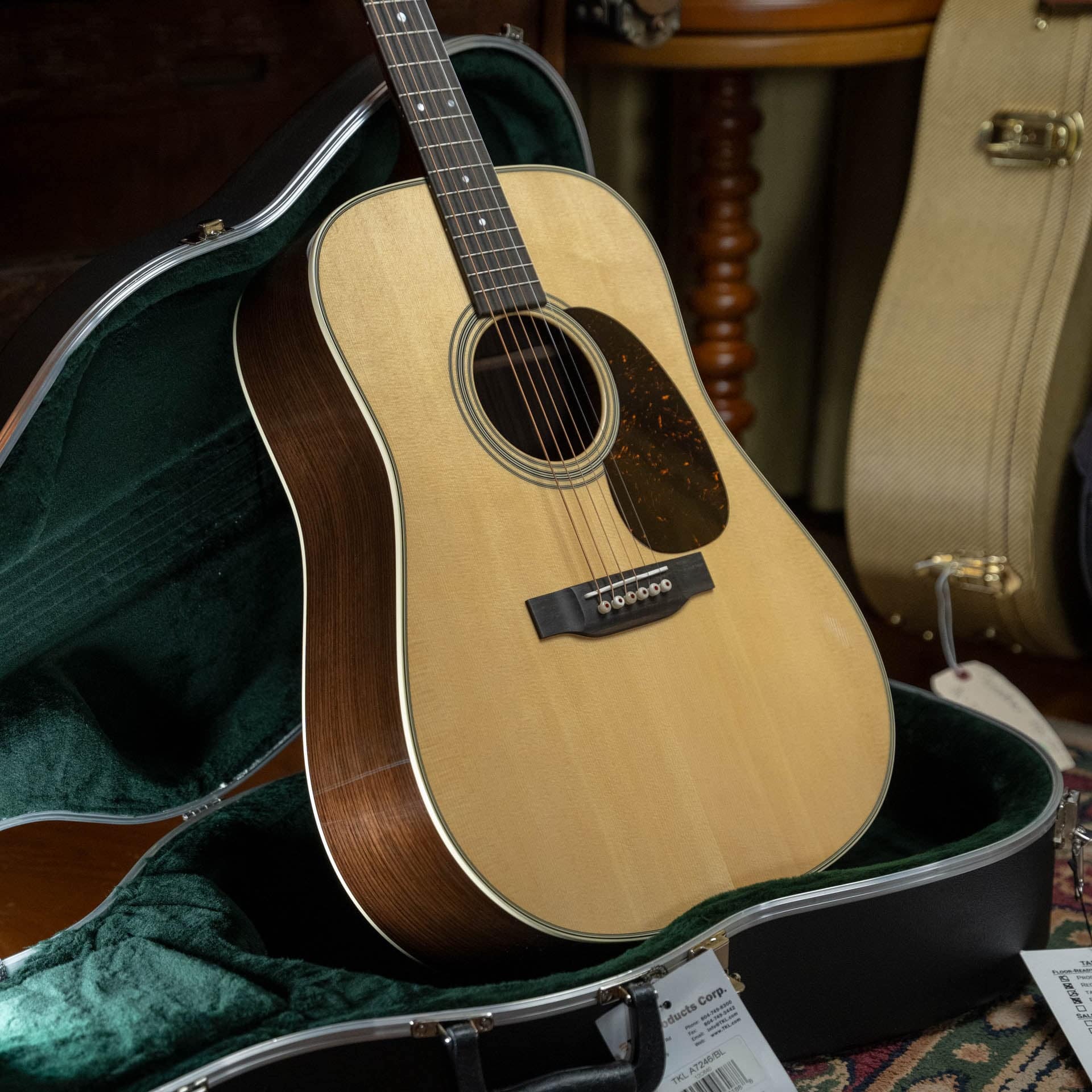
We chose the D-28 Authentic for the same reason in reverse: it's exactly what Martin is. The D-28 is the original sound of the steel-string dreadnought, and the Authentic carries every traditional detail John wants from Martin, including the Adirondack spruce top, the T-bar neck reinforcement and the dovetail neck joint. It's aged to look like someone has played it for decades, and it's a brand new guitar.
A Martin like this is always aggressive and always powerful, and that power is a big part of why Martin's dreadnought became the standard sound in bluegrass, folk and singer-songwriter music.

Here's the catch, and John doesn't soften it: the Authentic doesn't have Taylor's ergonomics or comfort. It has a big V-shaped neck that only gets bigger toward the body, and for some players that makes it hard to play at all. That's specific to the Authentic's vintage neck, though. The standard D-28 above uses Martin's GE Modified Low Oval neck with a High-Performance taper, so you get the D-28 sound with a neck that feels much closer to modern. If you like the Martin sound and the price of a D-28 makes you pause, the D-18 Satin at $2,599.99 is the mahogany version of the same idea, and our Martin guitar series guide walks through the rest of the line.
Why Martin catches flak when it innovates
This is the part of the Martin vs Taylor debate that still bothers us. Taylor built its name on changing things, so its customers expect it. V-Class bracing and the Action Control Neck were welcomed because new ideas are what Taylor is for. Martin built its name on a blueprint from the 1930s, so when Martin changes something, a lot of players decide it isn't a real Martin.
The SC-13E is the clearest example. Its Sure Align neck system removes the traditional heel and opens up the whole fretboard, and its Low Profile Velocity neck feels familiar to anyone coming over from electric. It still uses a solid spruce top with Martin's Tone Tension X bracing, so it plays and responds like a Martin. We'd judge a new Martin the way we judge a new Taylor, by how it plays and sounds, and not by how far it strays from 1937.
We've seen both companies from the inside, too. Our tour of the Martin and Taylor factories covers how each one balances hand work and machines, and it does more to explain the two personalities than any spec sheet.
Martin or Taylor: who should buy which
Here's how the Martin vs Taylor choice breaks down by player. Buy the Taylor if:
- You play plugged in most of the time and want the pickup and cutaway built in.
- You want every note of a chord to stay clear, for fingerstyle, recording or sitting with a vocal.
- You've come over from electric guitar and want a neck and body that feel easy from day one.
Buy the Martin if:
- You play bluegrass, folk or old-time, where the dreadnought's power and low end are the sound people expect.
- The sound in your head is the one from the records: warm, powerful and felt as much as heard.
- You care about the traditional build, and you're happy to choose a neck shape to suit your hand.
If you're still torn, this is how we'd settle it in the shop:
- Decide what the guitar's main job is: stage and recording, or acoustic jams and the front porch.
- Play a Grand Auditorium and a dreadnought back to back, unplugged, and notice which one you keep picking back up.
- Pay attention to the neck after twenty minutes, not two. A big V neck is wonderful or tiring, and you won't know which until then.
- Then compare prices at the same level, because both brands start well under the 914ce and the Authentic. The Taylor 314ce Studio is $1,999 with all-solid woods and V-Class bracing.
Want the Martin vs Taylor matchup in the same shape? Our Taylor 710e vs HD-28 comparison pits Taylor's Gold Label dreadnought against Martin's HD-28.
Related reading
- D-28 vs HD-28: what $200 buys you in Martin's rosewood dreadnoughts
- Taylor acoustic guitars are now at The Acoustic Shoppe
Settle Martin vs Taylor with both guitars in your hands
The best way to settle Martin vs Taylor is with both guitars in your hands, and you don't have to be in Springfield to do it. Every guitar we sell gets our 23-Point Professional Inspection before it ships, so it arrives playing the way it should.
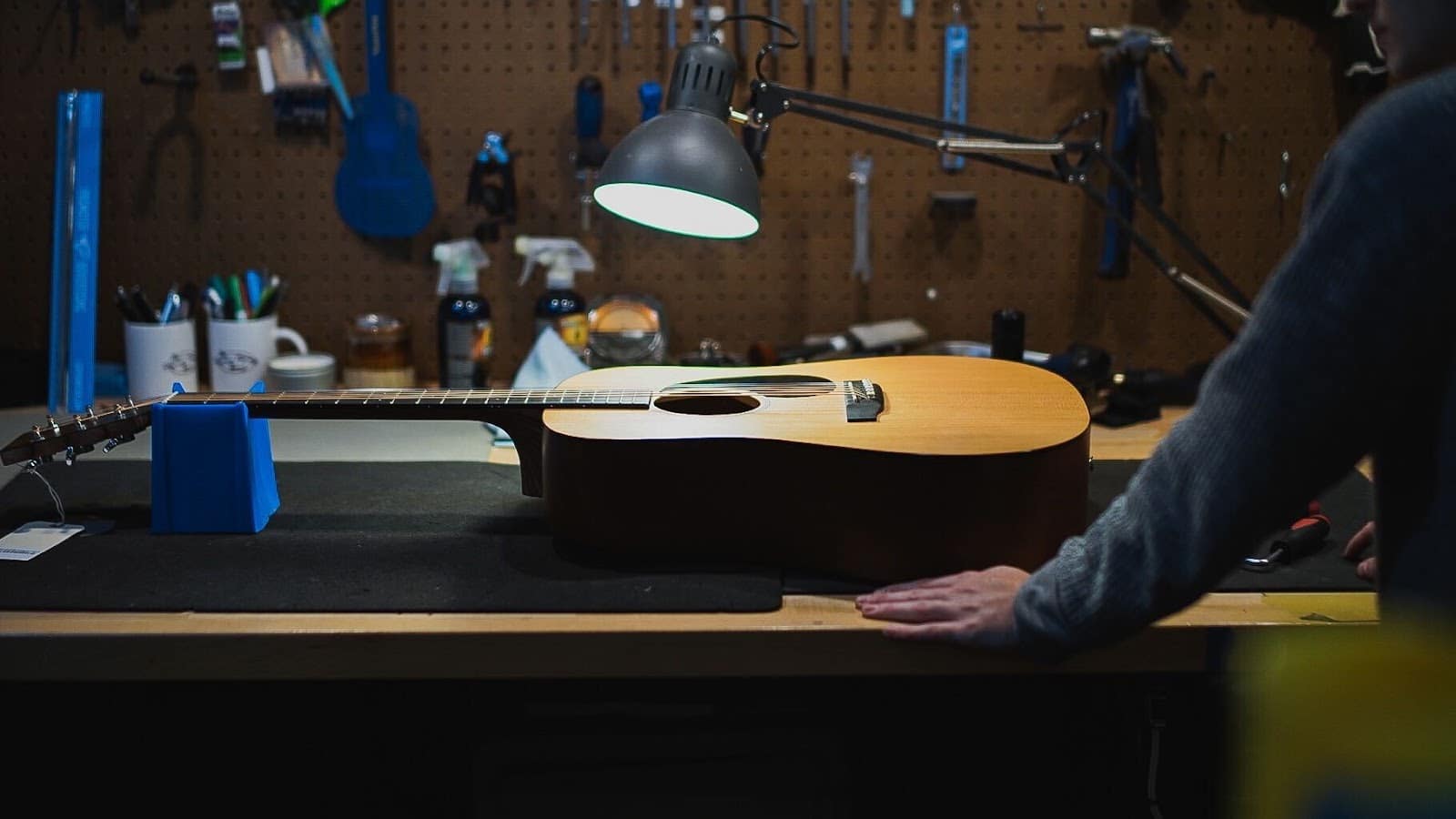
Every guitar in this post is over $1,000, so each one is covered by the Dread-Not Guarantee: a full year to trade it in for up to 90% of the pre-tax purchase price in credit, less round-trip shipping, plus a 30-day in-home trial. If you bring home a Taylor and find out you're a Martin player after all, you have a way to change your mind.
Browse every Martin in stock, every Taylor in stock, or our full wall of acoustic guitars. If a guitar is a stretch right now, financing through Synchrony is available on qualifying instruments.
The Acoustic Shoppe is an Authorized Taylor Premier Dealer and Gold Label Advantage Dealer.