
Table of Contents
- Whose guitar is this? Tony's own Santa Cruz Tony Rice from 1993
- How Richard Hoover picked the wood for Tony's sound
- What's on the Santa Cruz Tony Rice build sheet
- Most of the changes were for Tony's hands, not his tone
- Could anyone hear the difference? Tony's own answer
- The catch: you can't buy this guitar
- What we have from Santa Cruz right now
- Who should go after a Santa Cruz Tony Rice sound
- Acoustic Shoppe FAQ
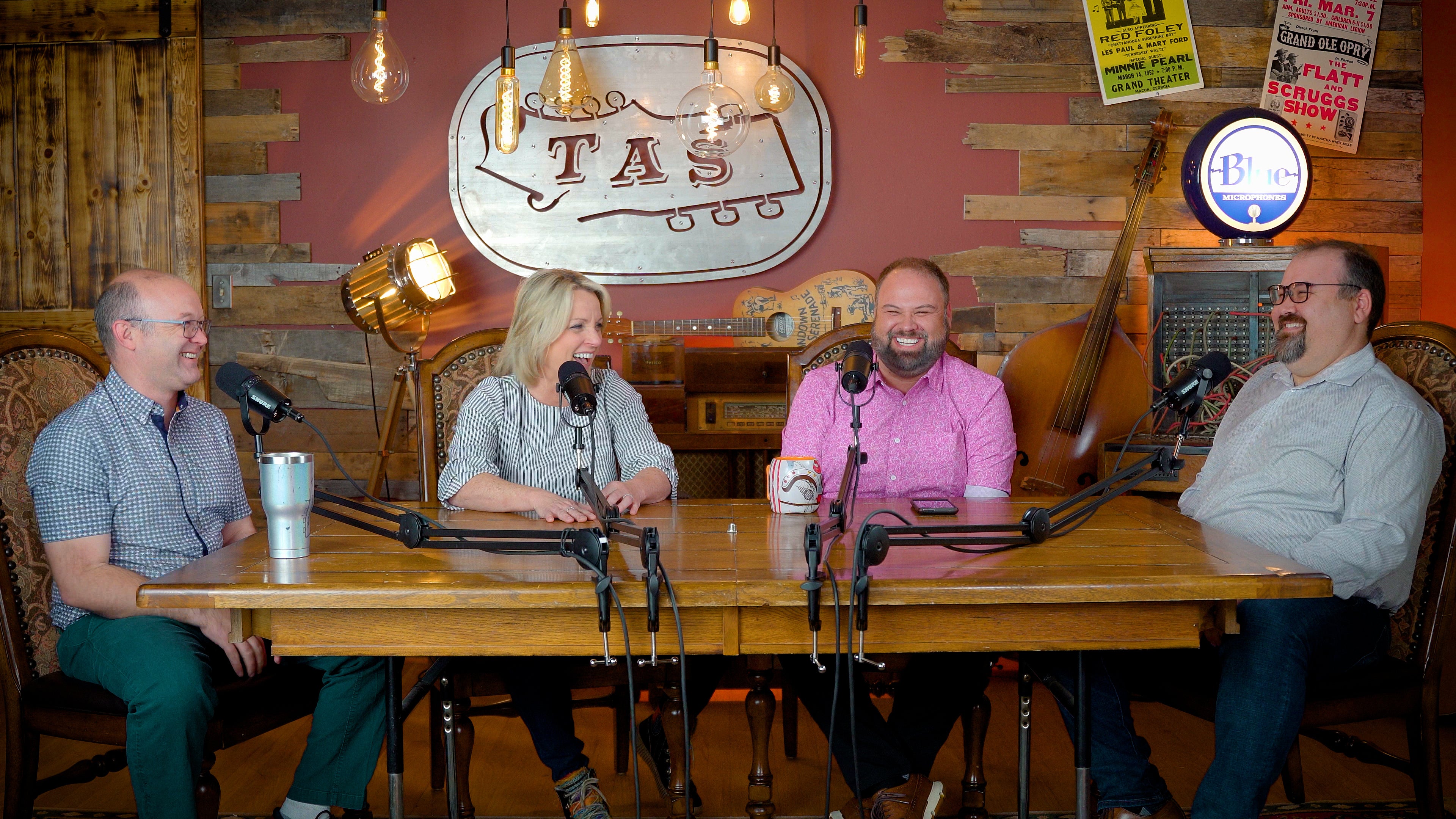
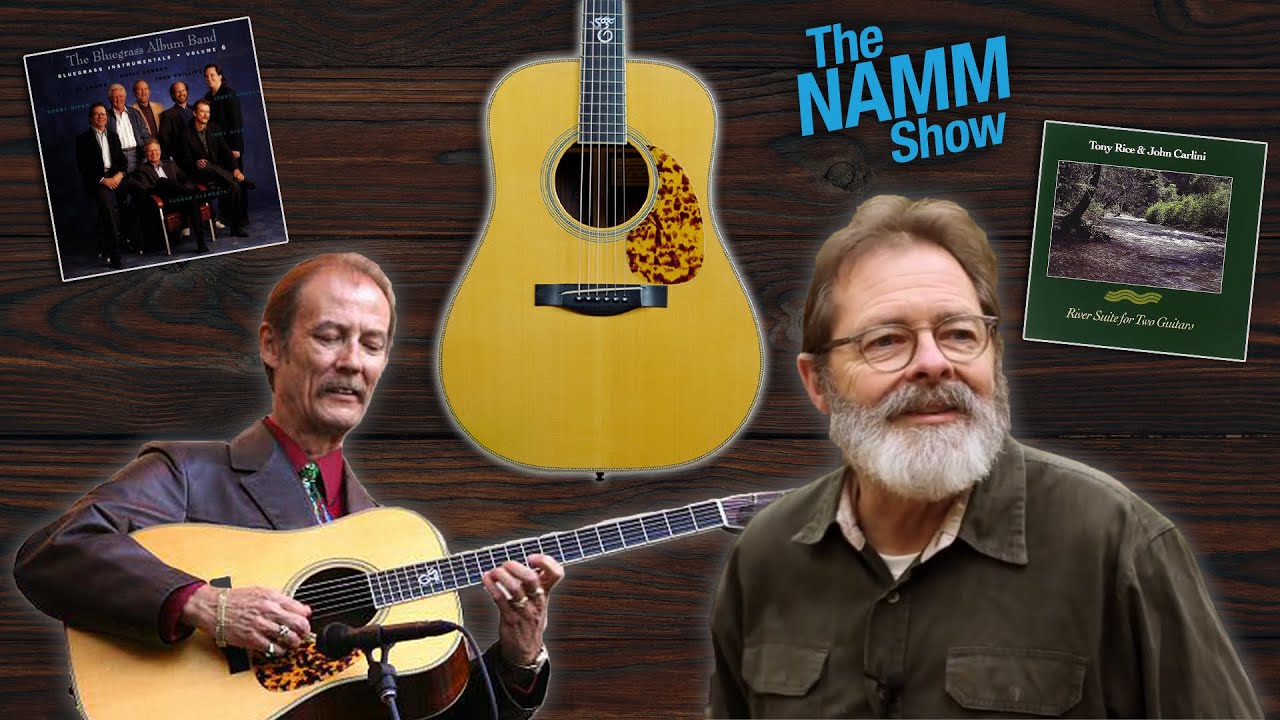
Ask a room full of flatpickers where Tony Rice's sound lived and most of them will point to one guitar, his old herringbone, and some will argue to the death that he never recorded with anything else. Tony's own letter says otherwise. A customer brought Tony's own Santa Cruz Tony Rice guitar into our shop, built for him in 1993 and used by him for years, with a copy of the original build sheet and a letter in Tony's hand. So we carried it into the Santa Cruz booth at NAMM 2024 and handed it to Richard Hoover, the man who built it.
Tony Rice's first album is the reason one of us plays guitar at all, so this wasn't a normal trade-show stop. It turned into the best explanation we've heard of how a Santa Cruz Tony Rice guitar gets made: how Richard picked the wood for Tony's style, why most of the changes over the years were for Tony's hands, and the line in Tony's letter that settles the herringbone argument.
Whose guitar is this? Tony's own Santa Cruz Tony Rice from 1993
Richard knew it before he looked inside. He recognized the woods and the headstock overlay, then checked the serial number and said that's what he thought. Santa Cruz built maybe eight or nine guitars for Tony over almost 30 years, so it's not hard for him to place one. The nickname we were told for this one is "Brownie," for the wood Tony picked out.
It's not a guitar that sat in a closet. It's the guitar in most of the advertising for his string packages, it's on the Homespun video, and John Carlini played it on most of the album he recorded with Tony. Tony's letter lists other records he made with it, and from that list it looks like the Santa Cruz he recorded with more than any other.
The build sheet dates it to 1993, which lands right at the start of the Pro name. Richard says Santa Cruz had been making this guitar for years but didn't call it the Pro until around then. John even owns a Tony Rice model from January 1990, and the necks are nearly identical. Until this guitar came into the shop, he had never played another one that felt like his.
Jump to the parts that matter most:
- 1:21: Richard sees Tony's guitar for the first time in years.
- 3:20: the full conversation, build sheet in hand.
- 15:49: tone samples, so you can hear it for yourself.
How Richard Hoover picked the wood for Tony's sound
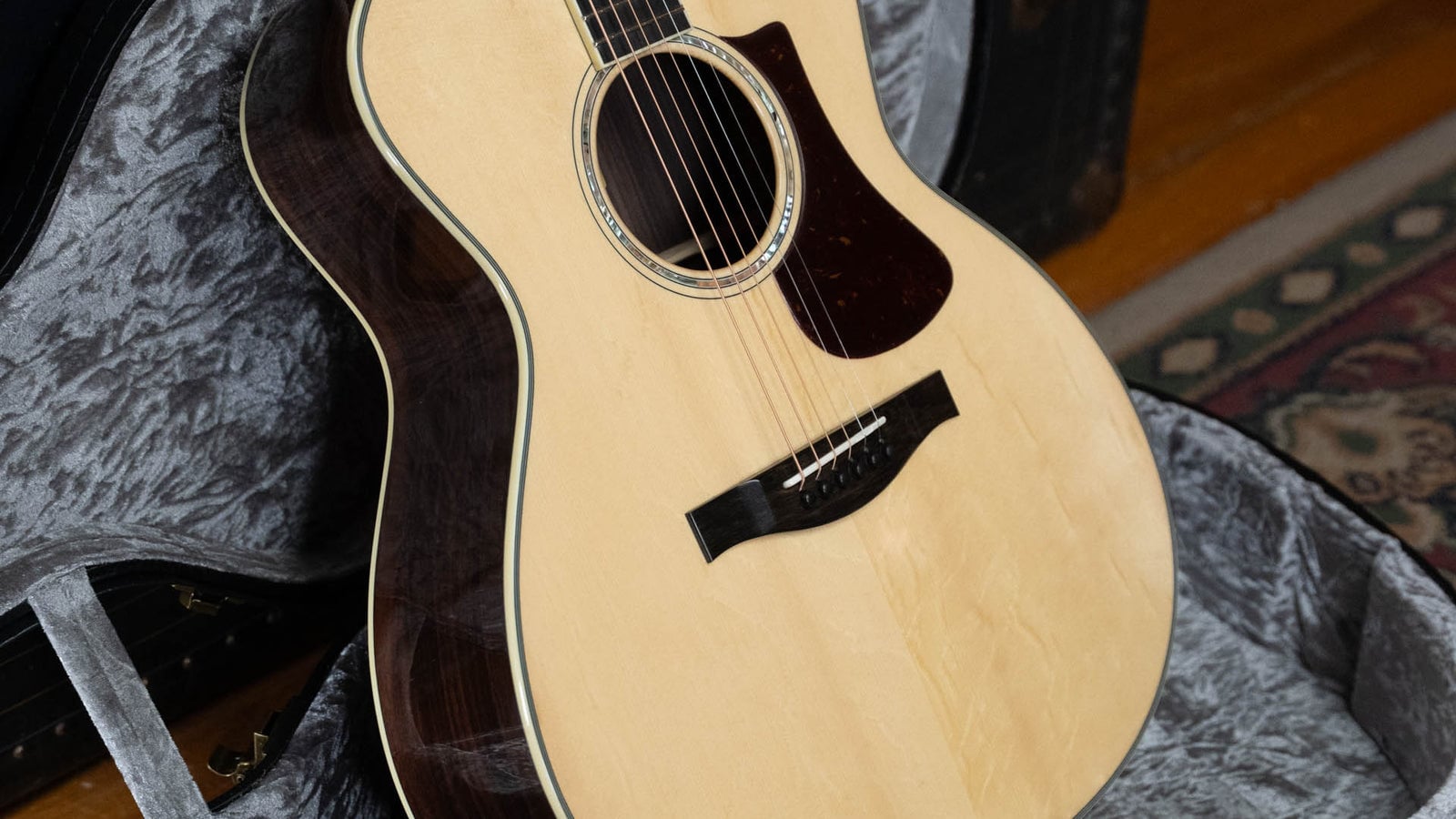
The order of operations is simple. Richard picked the wood tonally first, for the way Tony played, and then Tony approved it from a photo. The Brazilian rosewood on this one looks like the picture you'd find if you opened a dictionary to "Brazilian rosewood." Richard says it came from a tree that was probably 450 years old, cut about a hundred years ago with a two-man saw, and the German spruce top came from a family supplier in Germany that Santa Cruz is now buying from in its second generation.
The part every player should hear is why he chose that top. Richard talks about a guitar's voice the way you'd talk about the knobs and sliders on a sound system: the EQ, the clarity, the presence, whether it focuses and projects or opens up and gets airy. His job was to pick the piece of wood that set those knobs for one player.
"Not the best wood for all guitars, but the best wood for that guitar." (Richard Hoover)
For Tony, that meant fixing a problem. Richard says Tony's cherished old herringbone was pretty tubby, and Tony had to pick back close to the bridge to get any clarity out of it. The goal for this guitar was a more even EQ without that extra effort: a powerful bass with more substance behind it, and the treble to match. He chose this German spruce top for its stiffness across and along the grain, its weight and its tap.
Back then that was all hands and ears. Since then, Santa Cruz has built ways to measure those properties, so instead of "do you feel this, do you hear this," they can dial a top in. Richard says they could even measure a guitar like Tony's and repeat it, which is the closest thing to a recipe for the Santa Cruz Tony Rice sound.
What's on the Santa Cruz Tony Rice build sheet
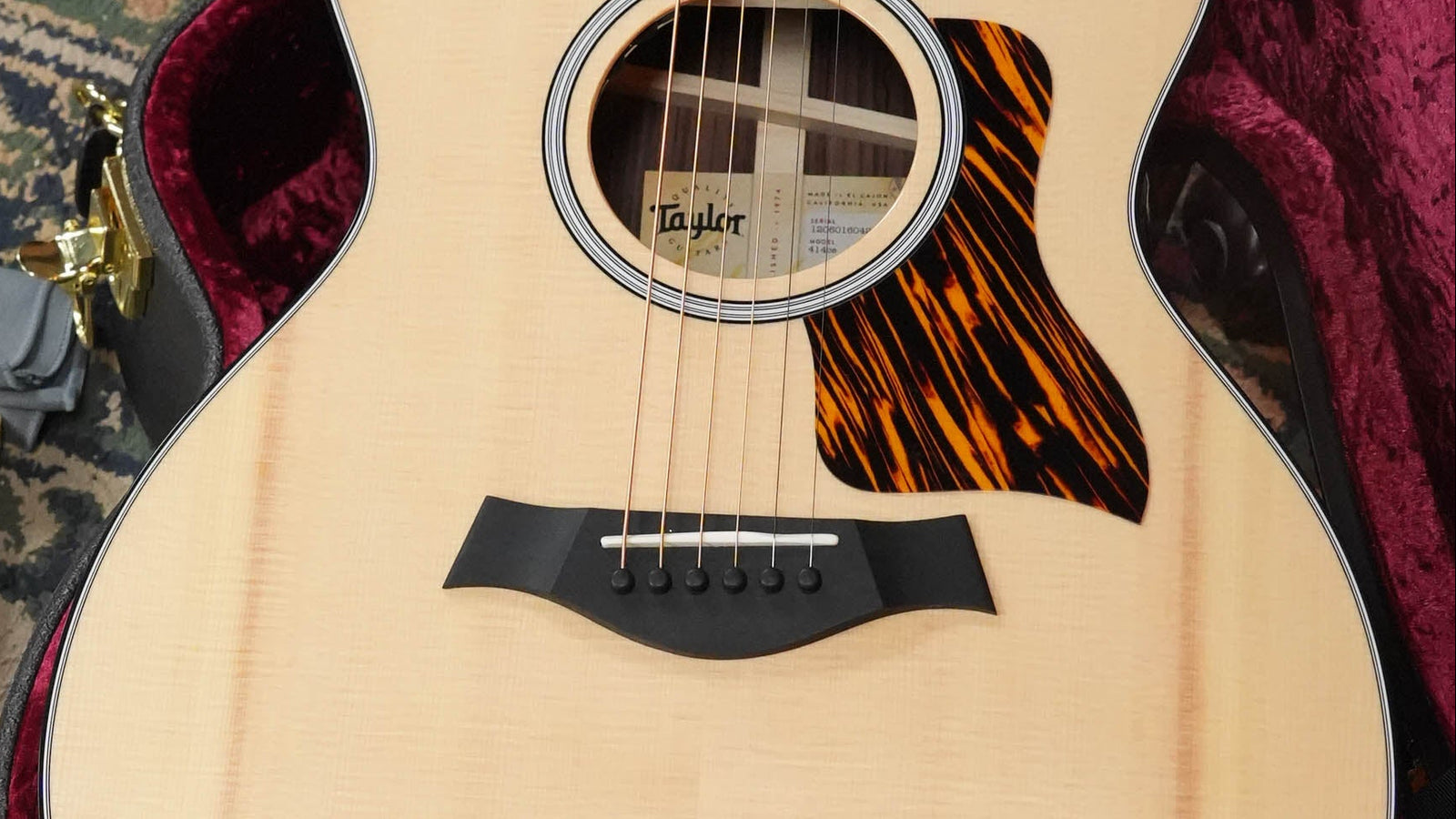
Here's what this Santa Cruz Tony Rice and its 1993 build sheet show, and why each choice mattered to Tony. This is one private guitar, so treat it as history, not a spec sheet for a model you can order.
| Detail | On Tony's guitar | Why it mattered |
|---|---|---|
| Top | German spruce, picked by Richard | A more even EQ than the tubby herringbone |
| Back and sides | Brazilian rosewood, Tony approved the photo | Chosen for tone first, looks second |
| Neck | Exact thickness Tony asked for, V with a pronounced ridge, no finish | Richard calls bare wood "the violin idea": faster under the hand |
| Saddle | Originally compensated, kicked back at the B string (since replaced) | Better intonation on the B |
| Bridge pins | Recessed, then recessed even further for Tony | He rested his picking hand there |
| Pickguard and tuners | Palomino pickguard, hand-engraved gold Waverlys | The look of an old guitar |
On the unfinished neck, Richard is blunt: "It's actually faster than a slick neck, which is sticky." On the pickguard, Santa Cruz calls the pattern Dalmatian; the build sheet says Palomino, and Richard likes that name better. They've tried other tortoise patterns, real tortoise shell included, and he says the real thing "looks way more fake."
Most of the changes were for Tony's hands, not his tone
Across eight or nine Santa Cruz Tony Rice guitars in almost 30 years, you'd expect a player like Tony to keep chasing a different sound. Richard says that's not what happened. Most of the changes were ergonomic, including going down to a 25.25" scale on later guitars, because a shorter string needs less tension to reach pitch, and Tony was working to preserve his hands.
- The bridge pins. Santa Cruz already recessed them, but a repair receipt that came with the guitar shows Tony had them sunk even further, so they sat flush under the hand he rested there. The E string is practically touching it.
- The strap button. It sits in a spot you won't see on anyone else's guitar. Richard calls it illogical and says that's simply what Tony liked; it may go back to his old herringbone.
- The look. Tony wanted a new, custom sound, but he didn't want to look down and see a different guitar, so the binding and the proportions stay close to the old one.
If you're chasing this sound yourself, that's the lesson of the Santa Cruz Tony Rice: a custom voice inside a familiar shape, with the neck and bridge built around how his hands worked.
Could anyone hear the difference? Tony's own answer
The letter Tony wrote when he sold the guitar is where the herringbone argument ends. He says he won't tell which cuts on the Bluegrass Album were played on this guitar and which on the herringbone, and then he goes further: he defies anybody to tell him which one is which.
"That's a testimonial, isn't it?" (Richard Hoover)
The last sentence of the letter explains why he let it go. Tony writes that he and Richard (he calls him "Dick" Hoover) had been in pursuit of the most perfect dreadnought guitar. This one had achieved a lot, but there was a next step coming, and he moved to it. By our reading of the letter, they worked through four or five versions together. To us that's the real Santa Cruz Tony Rice story: a player and a builder working toward one guitar over decades, and a letter daring anyone to tell it from the herringbone.
The catch: you can't buy this guitar
We'll be straight about it. Tony's guitar belongs to a customer, it isn't for sale, and we don't have a Santa Cruz Tony Rice model in stock today. The 2008 prototype we wrote up in our Santa Cruz 1934D prototype story has sold too. If you want the Tony Rice shape and voice from a range of builders at different prices, our Tony Rice guitar guide compares six Clarence White-style dreadnoughts side by side.
What we have from Santa Cruz right now
What you can buy is the same shop, Adirondack spruce bracing under hot hide glue on the custom guitars below, and the same idea Richard described: wood chosen for one guitar. These are in stock in Springfield as of this writing:
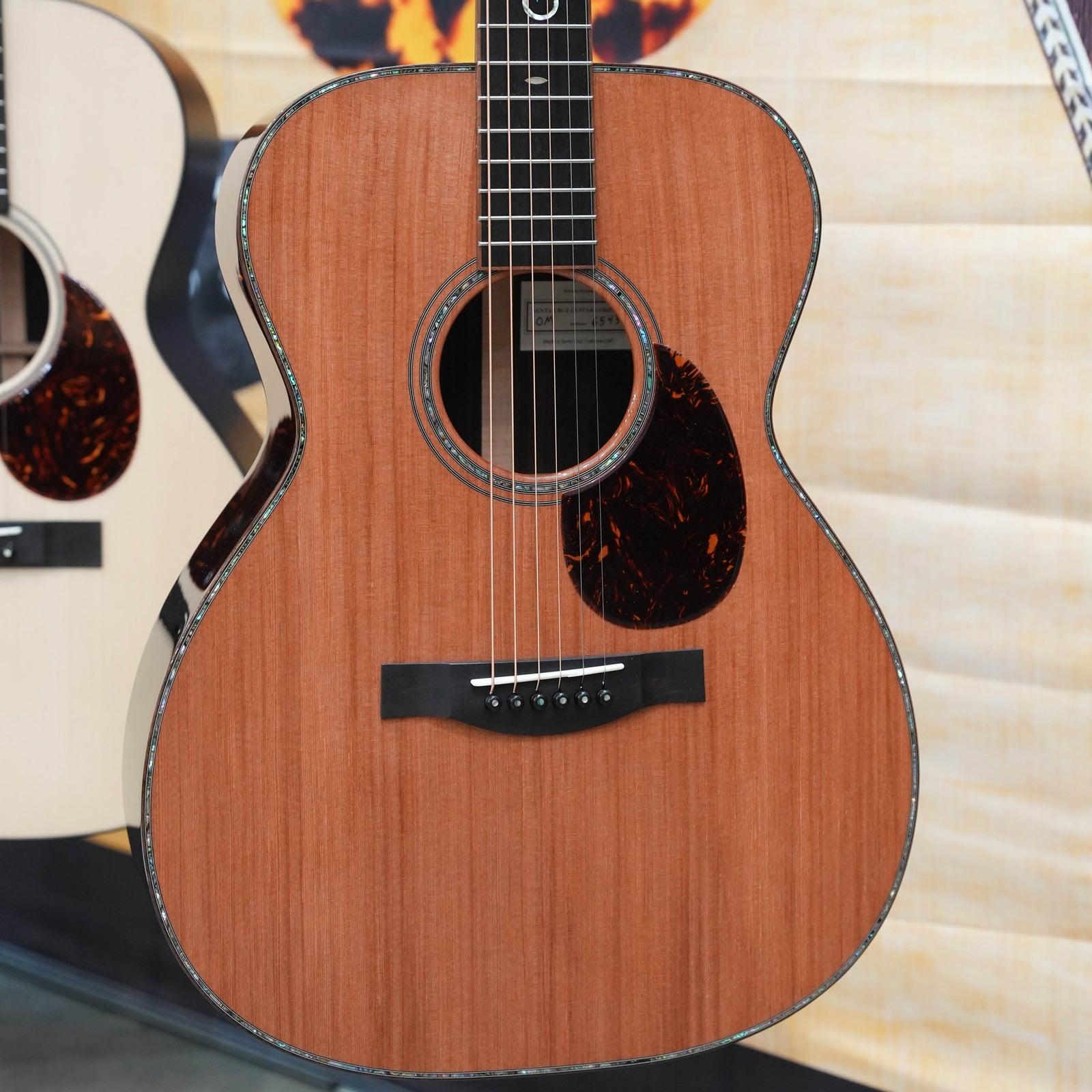
- Santa Cruz OM Custom #6543, $12,662: redwood top, Macassar ebony back and sides, V neck with a volute, 1-3/4" nut.
- Santa Cruz RS Custom #8060, $10,380: Adirondack top in a teardrop sunburst over Macassar ebony, round neck, 1-13/16" nut.
- Santa Cruz OO Custom #1395, $8,755: all mahogany with a herringbone top border and a V neck.
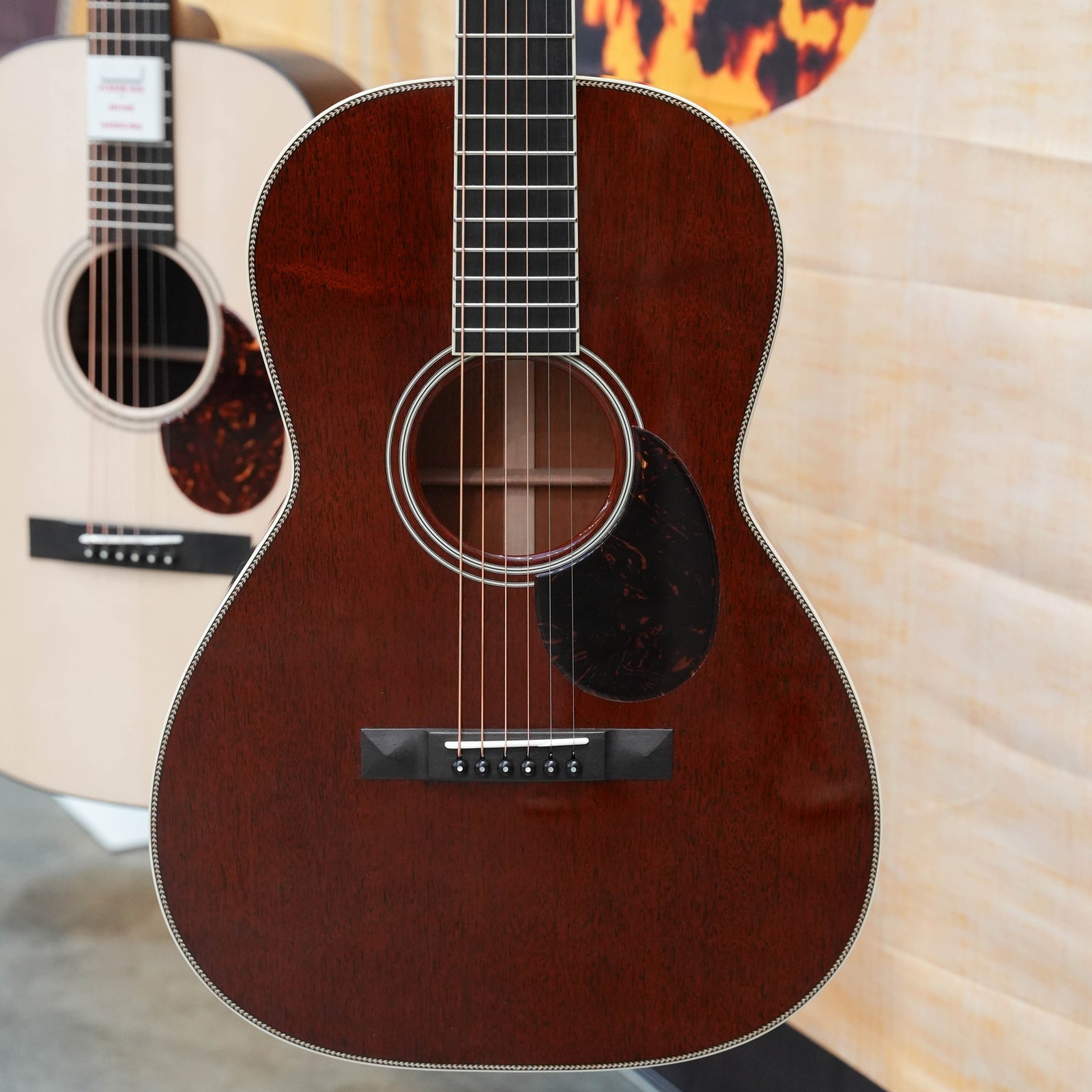
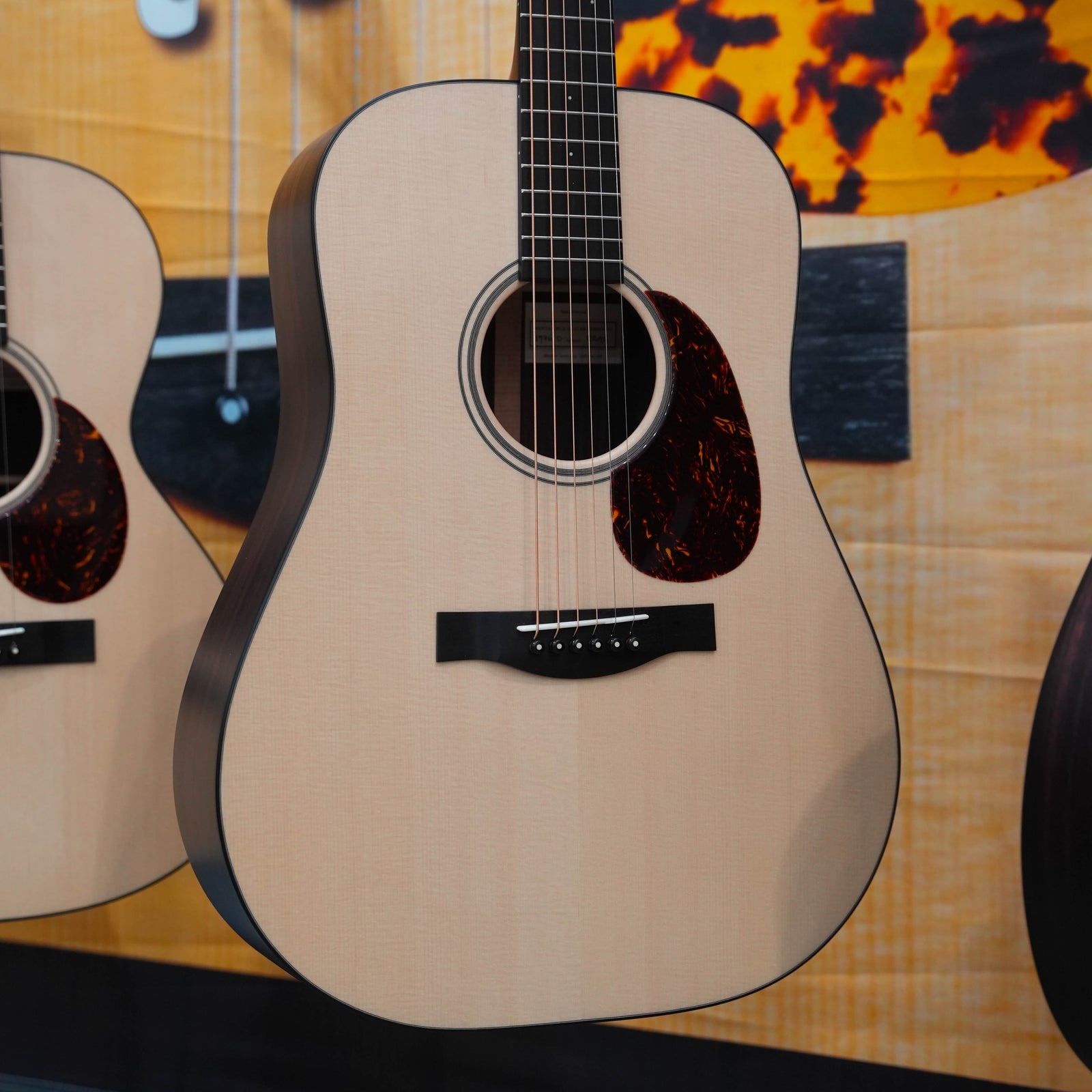
For a dreadnought closest to Tony's recipe, German spruce over rosewood, we're taking deposits on the Santa Cruz 1976 Series D, which pairs a German spruce top with Indian rosewood, a round neck and a 1-11/16" nut. It isn't a Tony Rice model, and it doesn't claim to be, but it's the closest path we have to that pairing of woods from the shop that built his.
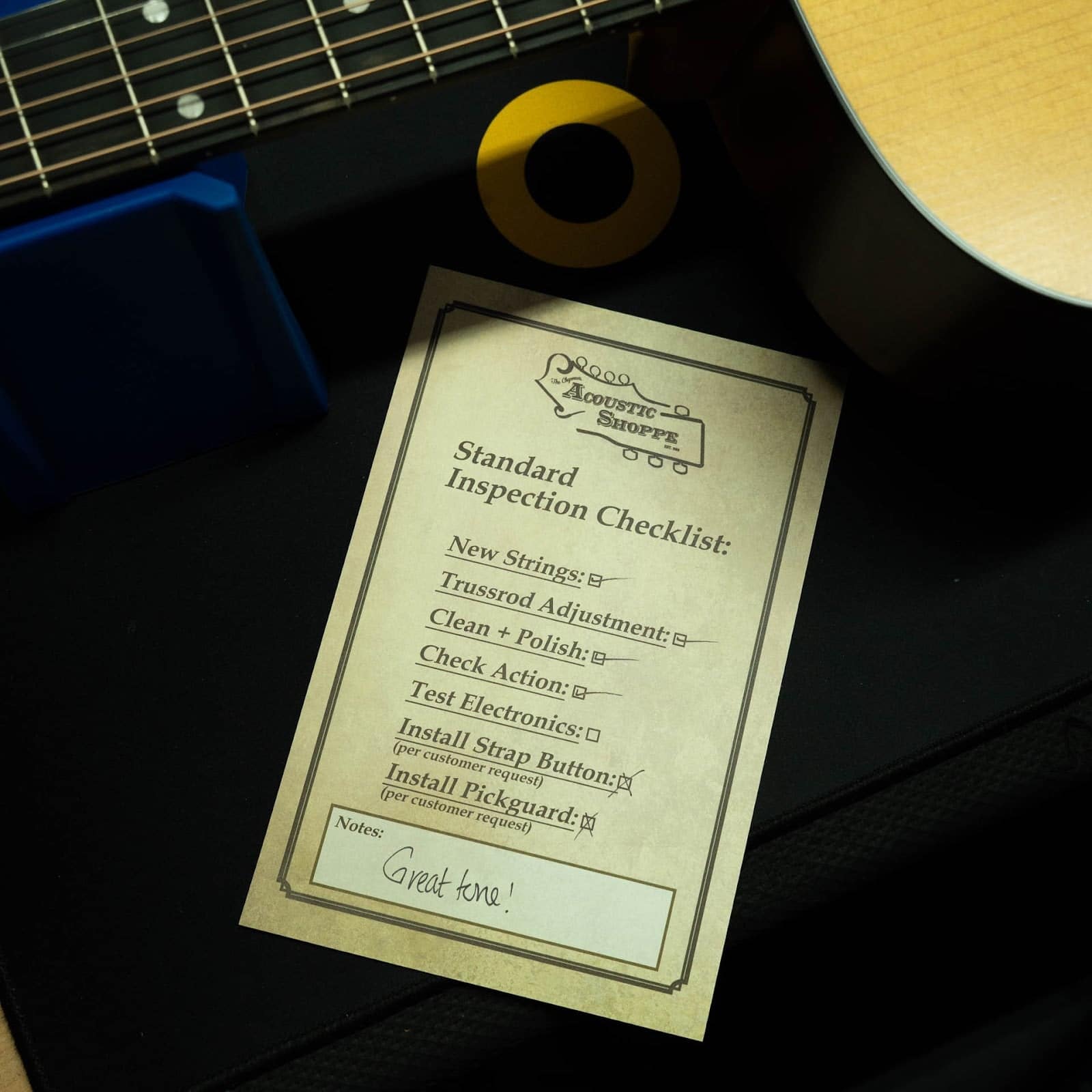
Every Santa Cruz we sell goes through our 23-Point Professional Inspection before it ships, and it's covered by the Dread-Not Guarantee: a full year to trade it in for up to 90% of the pre-tax purchase price in credit, less round-trip shipping, plus a 30-day in-home trial.
Related reading
- Brazilian rosewood vs Indian rosewood: can you hear it blind?
- Boutique guitar builders: our top 10
- Handmade guitar or machine-built?
Who should go after a Santa Cruz Tony Rice sound
If you flatpick and want a dreadnought that gives you clarity without digging in at the bridge, that's the problem Richard set out to solve for Tony, and it's still the reason to look at Santa Cruz. If what you love is the tubby old herringbone itself, know that the Tony Rice recipe was built to move away from it. And if the budget is the question, start with the clone guide above and come back to Santa Cruz when you're ready for wood picked for one guitar.
Browse every Santa Cruz guitar we have, or compare them against the rest of our acoustic guitars.