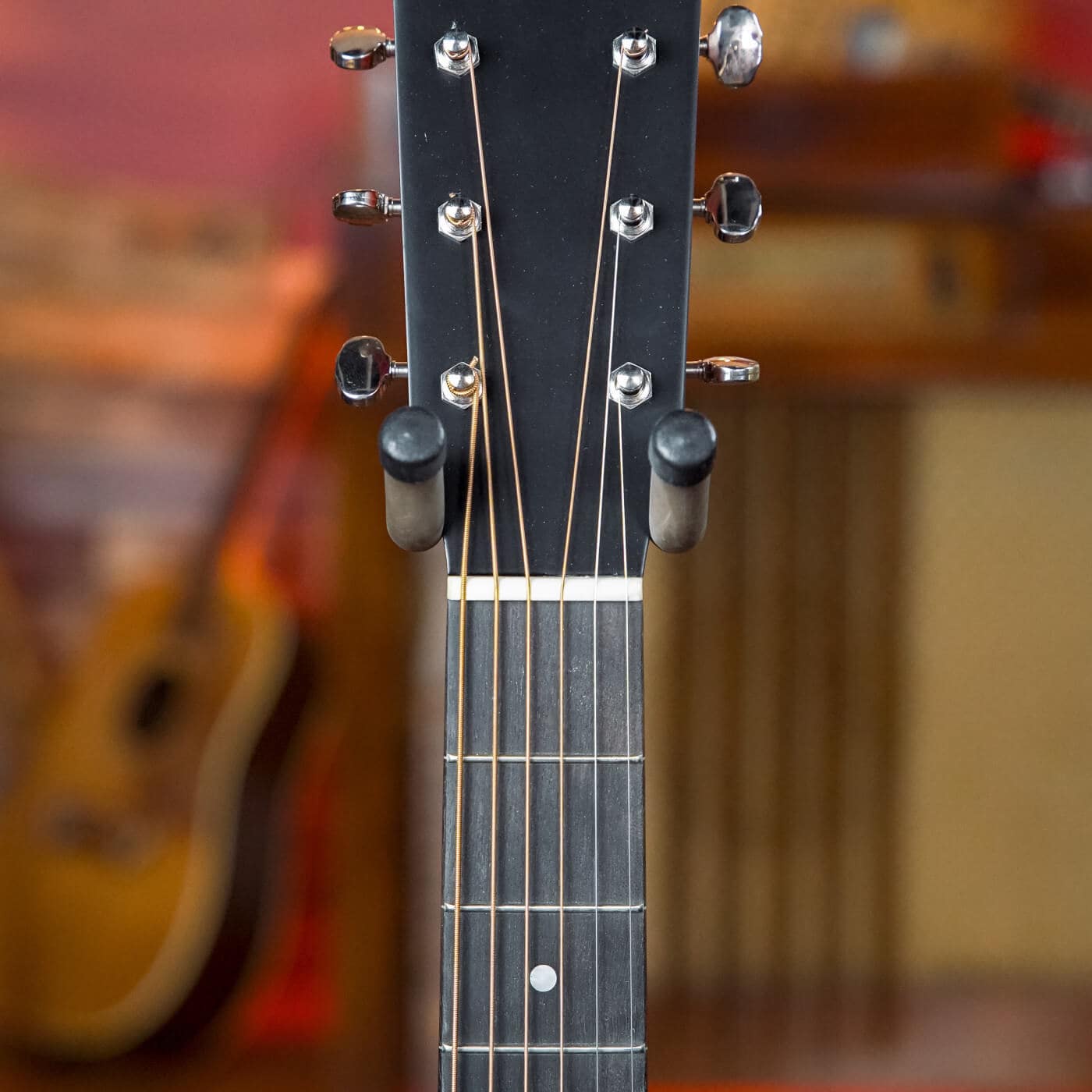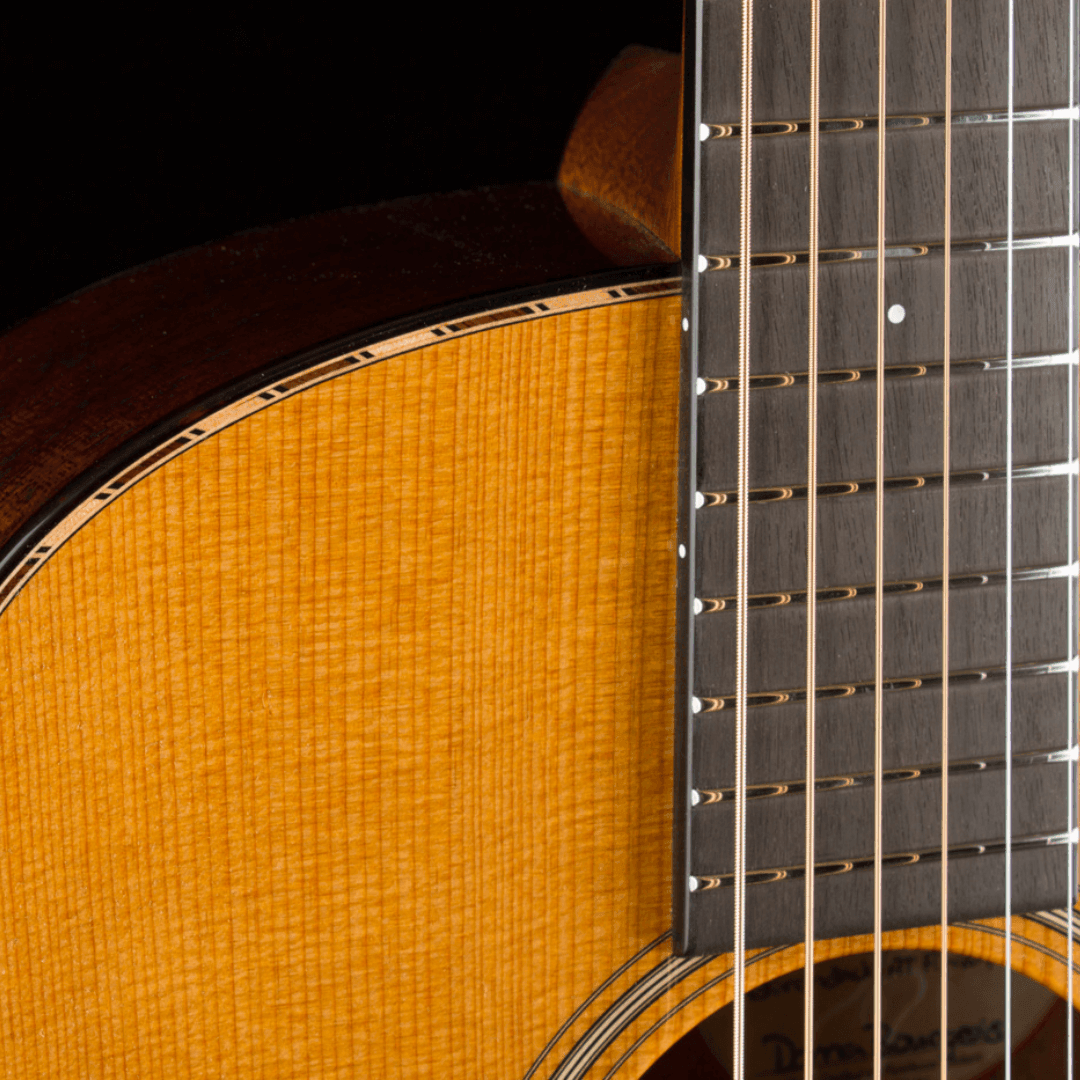

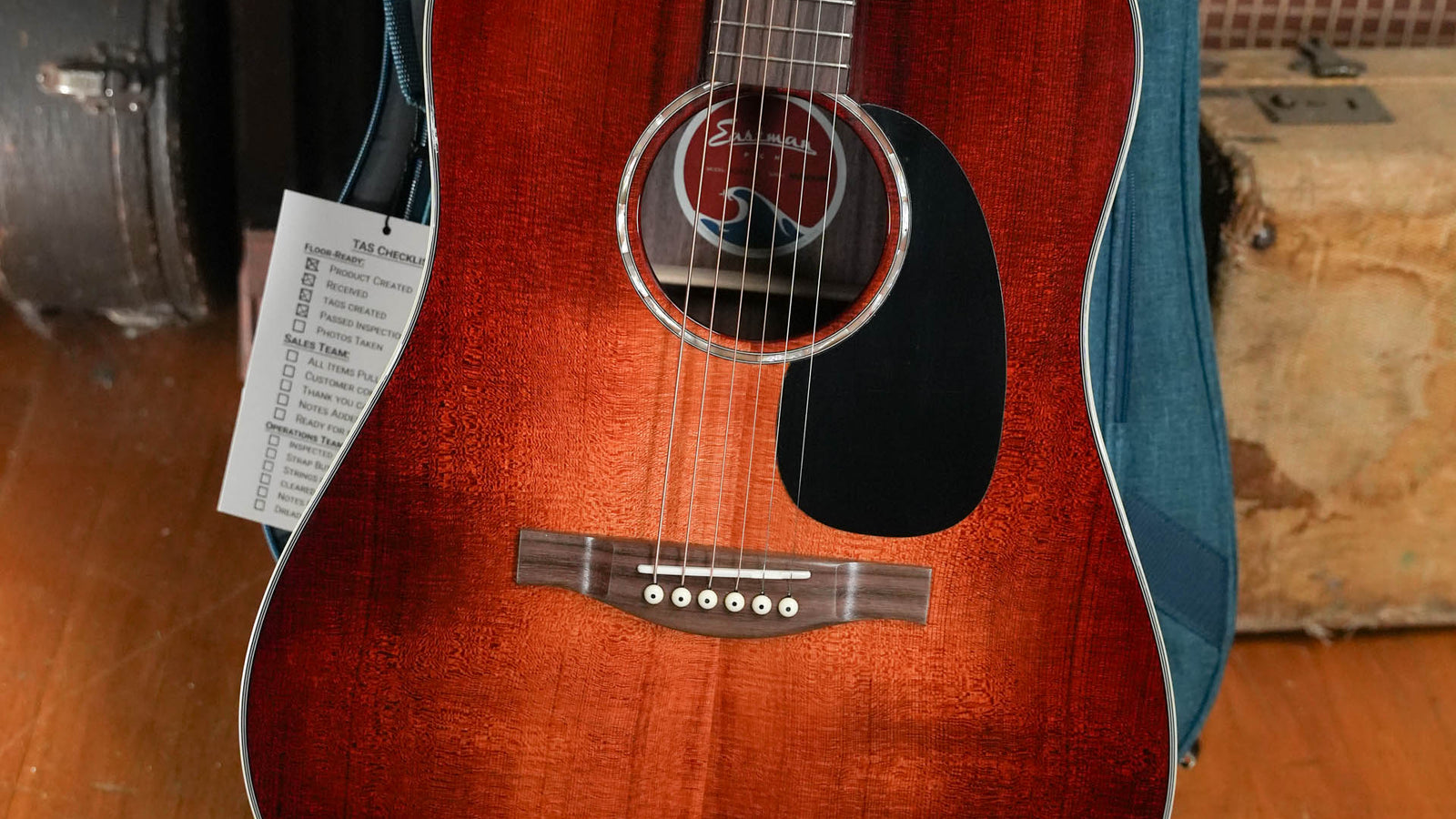
Five hundred dollars is a real number for a first guitar. It's enough to buy something good, it's not so much that a wrong pick ruins your year, and every guitar wall in the country is full of instruments at that price that look about the same. The Eastman PCH2 sells for $499 here today, and on paper it reads like a spec sheet from a guitar that costs twice as much: a solid thermo-cured Sitka spruce top, rosewood back and sides, a bone nut and saddle, and a padded gig bag in the box.
The catch is one word, and it's the word people ask us about: laminated. The rosewood on a PCH2 is layered, not solid. So is it a real guitar or a nice-looking compromise? We've carried Eastman's PCH line since the first ones showed up, and we keep sending beginners home with it, so here's what we've found, including where it comes up short.
The short answer: the Eastman PCH2 is the best-built guitar we know of at its price. It has the best out-of-the-box setup we've seen on an inexpensive guitar, the solid top does the heavy lifting on tone, and the layered rosewood gives it a thicker low end than its mahogany sibling. It isn't a pro-level guitar, and it doesn't pretend to be.
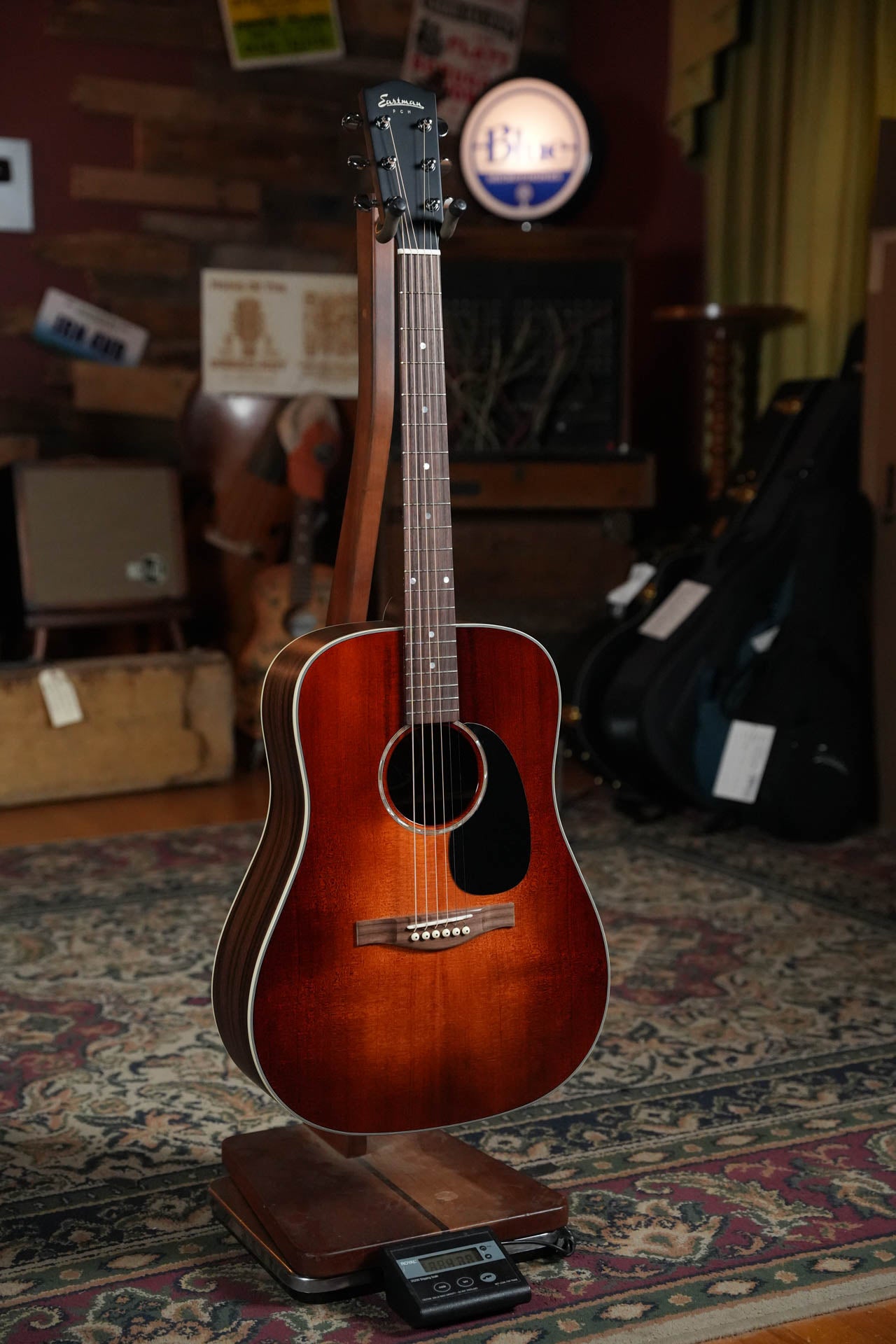
What is the Eastman PCH2?
PCH stands for Pacific Coast Highway, and it's Eastman's most affordable way into a guitar with their name on the headstock. We talked with Eastman while they were developing the line, and our worry back then was simple: Eastman had built its reputation on all-solid guitars, and we didn't want a budget series to tarnish it. The first PCH guitars that came in settled that. They were well built, they sounded good, and they had the best setup we'd seen on an inexpensive guitar.
The line works as a ladder, and the Eastman PCH2 sits in the middle of it:
- PCH1: a solid spruce top with laminated mahogany (or sapele) back and sides. The entry point.
- PCH2: the same idea with laminated rosewood back and sides, for a darker, thicker voice.
- PCH3: the dressed-up version, with a full gloss finish and fancier laminates such as maple, plus small limited runs in koa and cocobolo over the years.
The PCH2 also has a history. Eastman dropped it for a while when tariffs and the paperwork around rosewood made it too expensive to ship at this price. When things loosened up, they brought it back with two upgrades: a gloss top, and a solid top that's now thermo-cured across the whole PCH line. That second change matters more than it sounds. A thermo-cured top is heat-treated to take on some of the dried-out, broken-in character of an older piece of spruce, and in a guitar this price it's the single biggest reason the PCH2 sounds as punchy as it does.
Jump to: the specs at 4:37 · who it's for at 7:15 · our scores at 11:06 · tone samples of the dreadnought, OM and cutaway at 15:15.
What do you get for the money?
Here's what the three Eastman PCH2 models in stock today have in common, and why each part earns its place:
- A solid thermo-cured Sitka spruce top. The top is where most of an acoustic's sound comes from, because the strings drive it through the bridge. A solid top can flex and move; a laminate top is built not to.
- A bone nut and saddle. Most guitars in this range ship with plastic. Bone carries the string's energy into the top better, and it's an upgrade people pay a shop to do later.
- An abalone rosette and white binding on top and back. Real abalone, not a printed sticker, which is what you'll find on a lot of guitars at this money.
- A padded Eastman gig bag with D'Addario XS coated strings. The bag is good enough that you won't need to buy a better one right away, and our hard case vs gig bag guide covers when that changes.
| Model | Body | Scale | Nut | Price today |
|---|---|---|---|---|
| PCH2-D-CLA #9396 | Dreadnought, 16" | 25.4" | 1 3/4" | $499 |
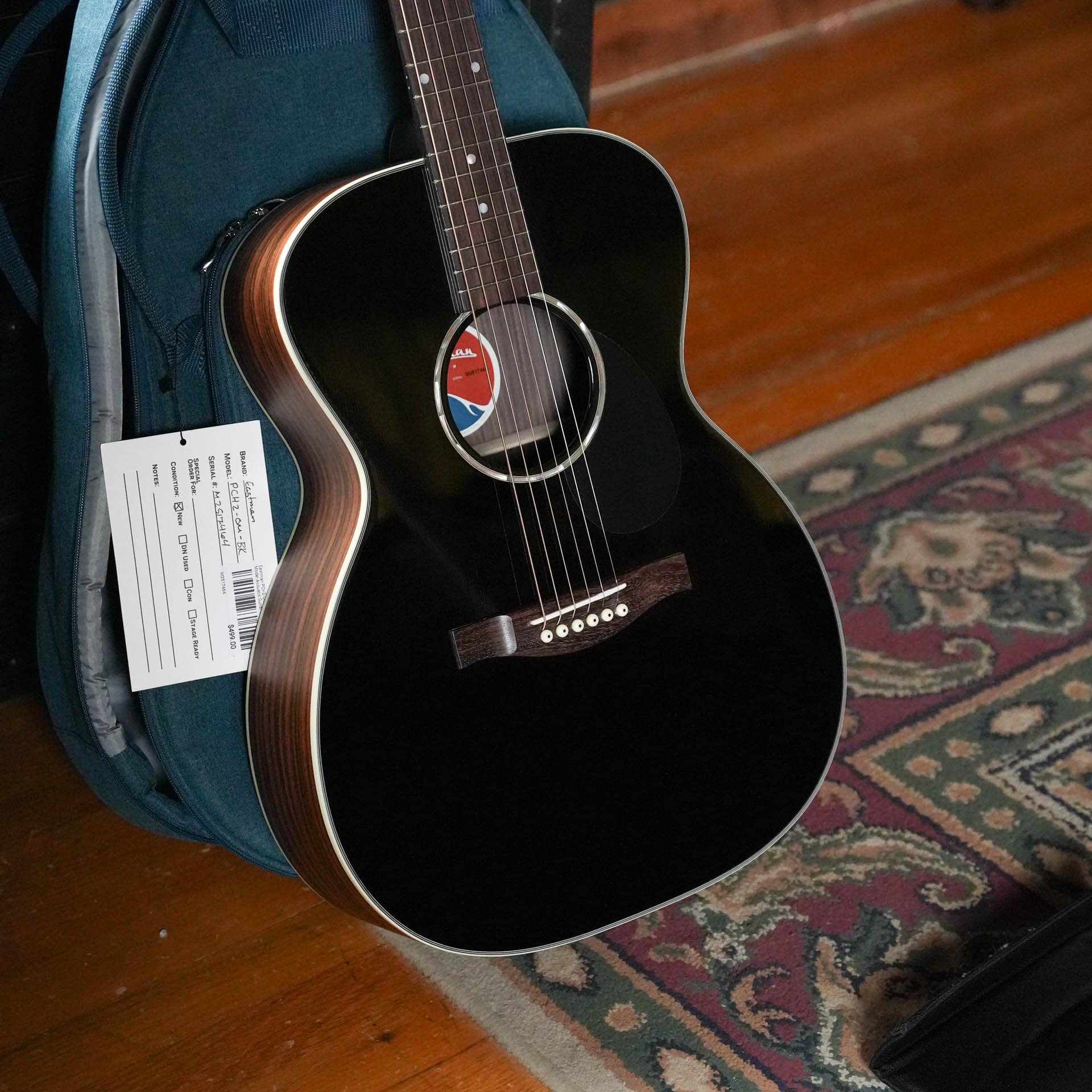
| PCH2-OM-BK #7464 | Orchestra model, 15" | 24.9" | 1 3/4" | $499 |
| PCH2-TG-BK #9087 | Travel, 15" | 23.5" | 1.68" | $459 |
All three have an okoume neck with an even C profile, a 12" radius rosewood fingerboard, a gloss top and a satin neck. Prices and stock are from our listings on the day we wrote this; the video is older, and the prices quoted in it have moved.
Does laminated rosewood really sound like rosewood?
Yes, more than people expect, and the reason is in how Eastman builds the layers. Some makers sandwich a cheap core wood between two thin faces of the good stuff. The layered rosewood on a PCH2 is rosewood all the way through, the same way the PCH1 is mahogany all the way through. So the Eastman PCH2 has the rosewood character you're paying for: bigger, thicker lows and a more scooped midrange than the mahogany PCH1.
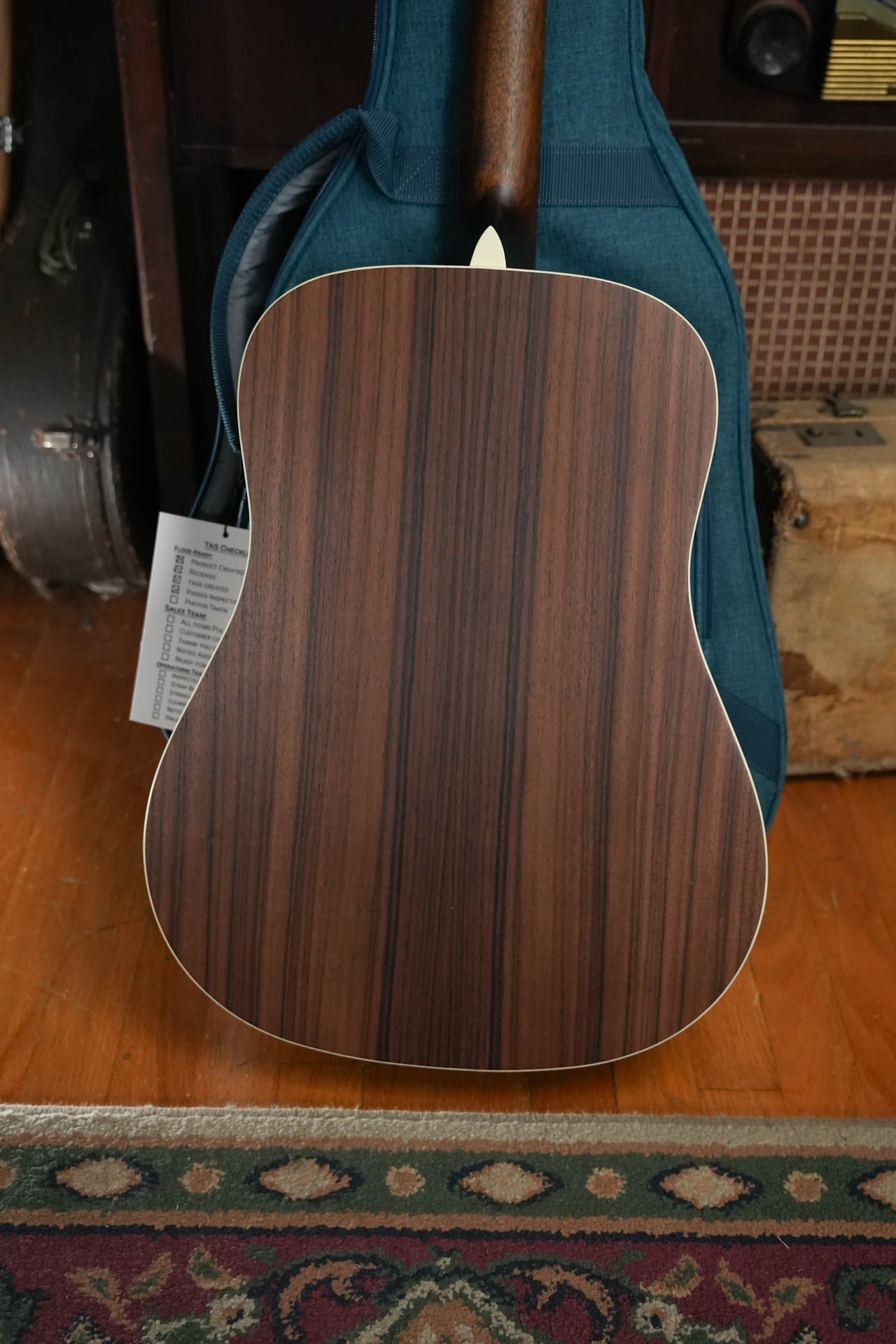
Where we stop short is the solid top. That's the line we've held since we opened the shop:
I don't recommend ever getting a fully laminated guitar. I think you should at least get a solid top.
The Eastman PCH2 clears that bar. What it can't do is sound like an all-solid guitar. An Eastman E1 is all solid wood, and it has more presence and more room to grow as it gets played in. The PCH2 will open up some, but it has a limit, and we'd rather tell you that than pretend otherwise:
75% of this body is plywood. It's not going to do as much.
If you want to dig into that trade-off, our solid vs laminate guide has the blind test, and the Eastman E1SS review shows what the all-solid step up gets you.
How does the Eastman PCH2 play out of the box?
This is where the PCH2 wins people over. Eastman sets these up low, lower than we'd normally expect on a guitar at this price, and they come in consistent from one guitar to the next. We both gave setup and playability 4.5 out of 5, and that's in a category where most budget guitars lose us. When we first got the PCH line in, it was the best setup we'd seen on an inexpensive guitar, and that hasn't changed.
That matters most for a beginner. On a guitar with high action you have to push so hard to get a clean note that your fingers quit before you do, and low, buzz-free action lets you press down a little and hear the note ring before you've built calluses.
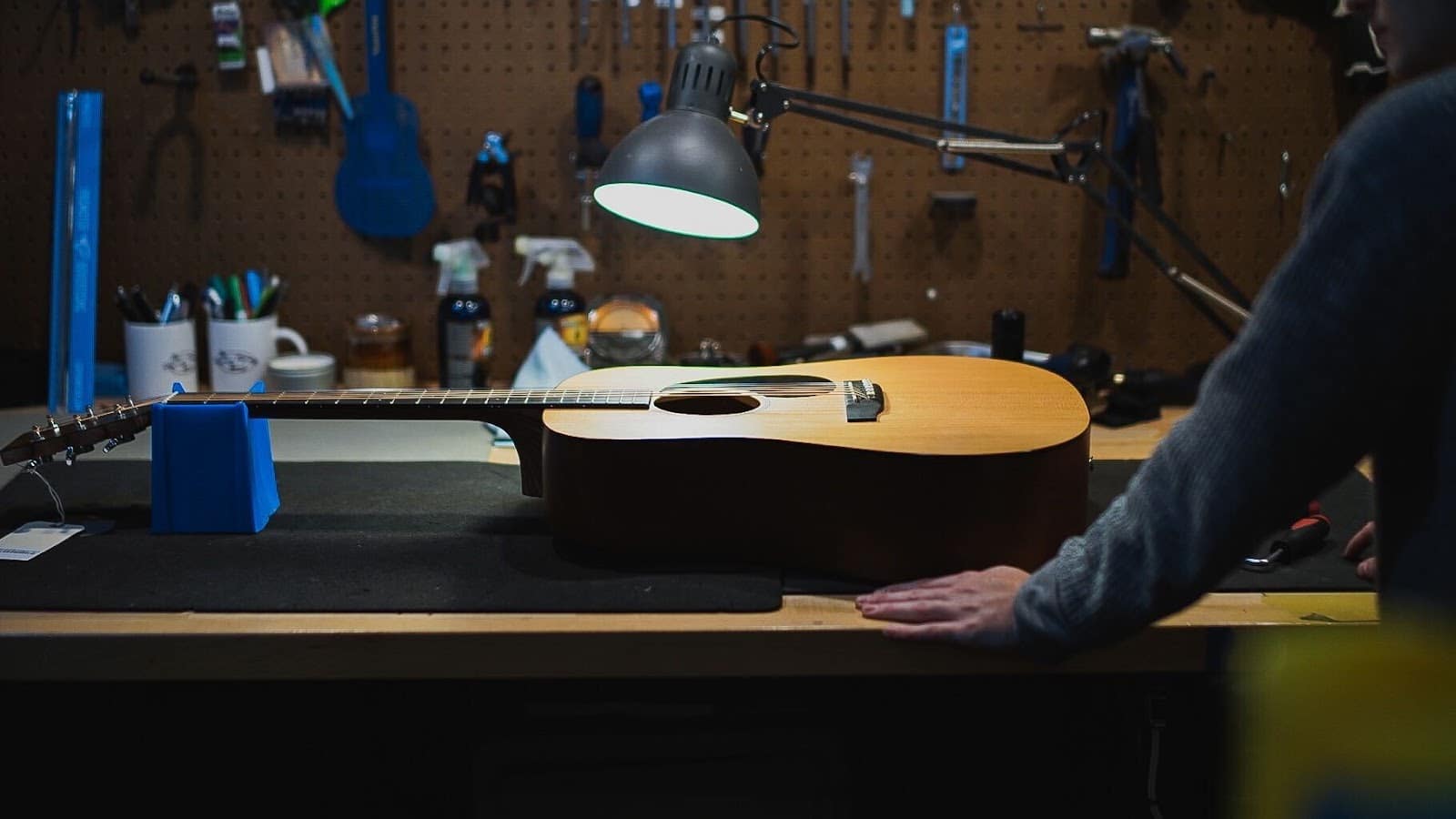
Every Eastman PCH2 we sell also gets our 23-Point Professional Inspection before it leaves the building, so it arrives playing the way it did on our floor.
Which PCH2 should you buy: dreadnought, OM or travel?
Same woods, same build, different bodies, and the body is the real decision:
- The dreadnought is the biggest and loudest of the three, with the full 25.4" scale. It's the one for strumming and singing, and the one that makes the most of that rosewood low end. Browse more dreadnought guitars if you want to compare.
- The OM has a smaller 15" body and a 24.9" scale, so the strings sit at a little less tension and the guitar tucks in closer. It suits fingerstyle and couch playing, and Jeremy, a smaller-body player himself, leans toward the smaller guitars in the line. See our OM and 000 guitars.
- The travel guitar shortens the scale to 23.5" for a shorter reach between frets, and it's the easiest one to throw in the car. Our travel guitars collection has the rest.
There's also a grand auditorium cutaway with a pickup, the PCH2-GACE, with a preamp that has volume, tone and a phase switch. We can see that one on a church stage, leaned against an amp where it might get knocked over, still sounding good through the PA. We don't have one in stock as we write this, so ask us about ordering one.
How we scored it
We score every guitar in its own price range, on a 1 to 5 scale. Here's how the Eastman PCH2 came out, with both of our scores:
| Category | Our scores (of 5) | Why |
|---|---|---|
| Tone | 4 and 4 | A punchy sound for a laminated back and sides; the thermo-cured top helps |
| Setup and playability | 4.5 and 4.5 | Set up low and close to perfect for who it's built for |
| Build quality | 4.5 and 5 | Clean open-pore finish, real abalone, no flaws we could find at this price |
| Looks | 4 and 5 | Good wood and five-ply binding; one of us wanted full gloss |
| Value | 5 and 5 | Bone nut and saddle, gig bag and a lifetime warranty at this price |
What's the catch?
The Eastman PCH2 has a few, and they're worth knowing before you buy:
- It isn't a pro-level guitar. It's not as good as Eastman's top series, and it was never meant to be. The tone is good for the money, not great for any money.
- It won't grow like a solid-wood guitar. The laminated back and sides keep it from opening up the way an all-solid guitar does over the years.
- The gloss stops at the top. One of us wishes it were gloss all the way around. The other points out how many people actually prefer a subdued satin look, so this one's personal.
- The next real step costs a lot more. Spending a little more won't get you a noticeably better guitar. You'll have to get up to about $800 to $1,000, where all-solid guitars start, to hear a big difference.
Who is the Eastman PCH2 for?
We see two buyers for the Eastman PCH2, and we've sold plenty to both.
The first is the serious beginner on a beginner's budget: someone who has decided to learn, has set aside a few hundred dollars, and wants a guitar that won't be the thing holding them back. We started out as a lesson studio, so this is personal for us. The last thing we want is to sell a student a guitar and tell them six weeks later that it's time to upgrade. The way we put it is golf clubs. Buy the cheapest set and the game is so frustrating you quit, but a decent set tells you whether you actually like golf:
It's not the clubs that are holding you back. Same thing with an instrument like this.
The second buyer already owns a nice guitar and wants one they don't have to worry about: a camping guitar, a road-trip guitar, the one that lives out of its case in the living room. Layered wood is less touchy about weather and humidity than solid wood, and its cross-grain layers make a crack much less likely after a bump from a kid, a dog or a trailer ride. We've sold PCH guitars to players who own three- and four-thousand-dollar instruments for exactly that reason. And the students who start on a PCH and later upgrade almost never trade it in. It becomes their hangout guitar.
If the Eastman PCH2 still isn't quite the fit, our best acoustic guitar under $500 guide scores the other guitars we'd consider at this price.
Related reading
- Laminate guitar red flags: how to tell if a guitar is really solid wood
- Mahogany vs rosewood: which guitar wood is better?
- Acoustic guitar for beginners: we tested Google's top 10 under $600
Find your PCH2
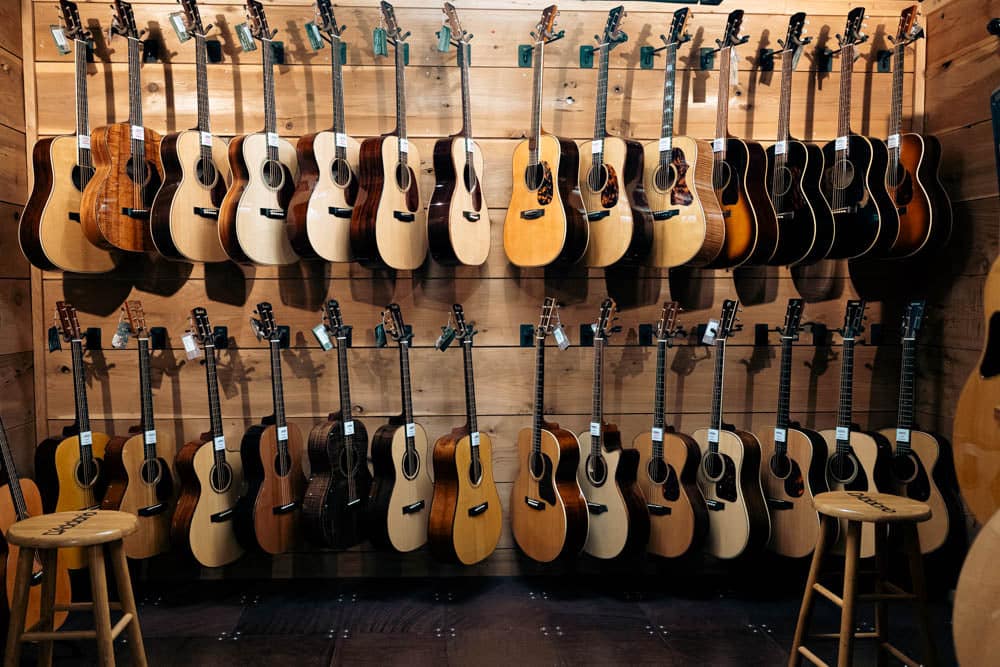
Every Eastman PCH2 we have is in our Eastman guitars collection, next to the all-solid models it competes with. Pick the Classic dreadnought if you strum and sing, the black OM if you fingerpick or want a smaller body, or the travel guitar if it's going in the car. You can also browse every acoustic guitar we have in stock. We're proud to be the #1 worldwide dealer for Eastman, and if you're torn between models, call or stop in and we'll tell you which one we'd take home.