
Table of Contents
- Why This Tonewood Debate Matters
- What Rosewood Guitars Tend to Sound Like
- What Mahogany Guitars Tend to Sound Like
- Quick Tone Snapshot
- How They Behave in Different Playing Contexts
- How Visual Identification Helps
- Price Reality: Rosewood Often Costs More
- Why the Top Wood Still Matters Most
- Choosing for Your Style
- A Personalized Listening Test Approach
- Final Thoughts: What Matters Most
- Acoustic Shoppe FAQ
Mahogany vs Rosewood: Which Guitar Wood Is Better?
When guitar players ask about mahogany vs rosewood, they’re usually trying to solve a real problem: “Which one will feel right for my playing style and sound best for my music?” It’s one of the most common tonewood debates in the acoustic world, and for good reason. These two woods dominate the market, shape entire model lines, and define some of the most iconic guitar sounds ever recorded.
But the real answer isn’t about which wood is objectively better — it’s about which one fits your personal sound goals and the musical context you play in.
Why This Tonewood Debate Matters
The mahogany vs rosewood discussion keeps coming up because these two woods have become benchmarks for guitar tone. When players describe other woods — like maple or koa — they often compare them back to mahogany and rosewood.
They represent two very different tonal philosophies:
One emphasizes clarity, punch, and focused midrange.
The other emphasizes depth, harmonic richness, and a fuller low end.
Understanding those tendencies makes gear shopping easier and more rewarding.
What Rosewood Guitars Tend to Sound Like
Rosewood guitars are commonly described as having:
Deep, powerful bass response
Rich overtone complexity
Sparkling high frequencies
A slightly scooped midrange that makes chords feel expansive
That overtone richness gives rosewood its “lush” reputation. When you strum open chords, the sound can feel wide and immersive — almost like it wraps around the listener.
Players who gravitate toward this style often enjoy rich harmonic content and room-filling acoustic presence.
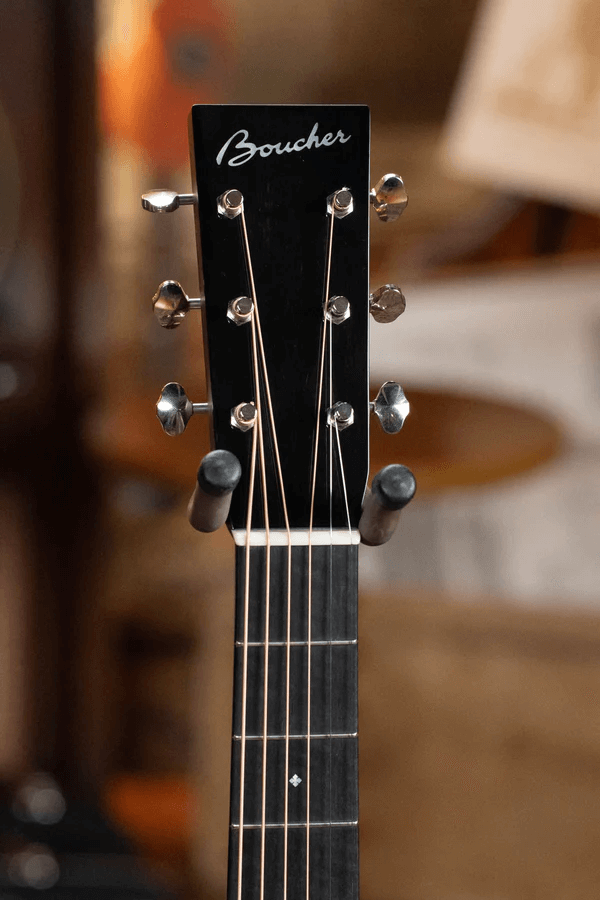
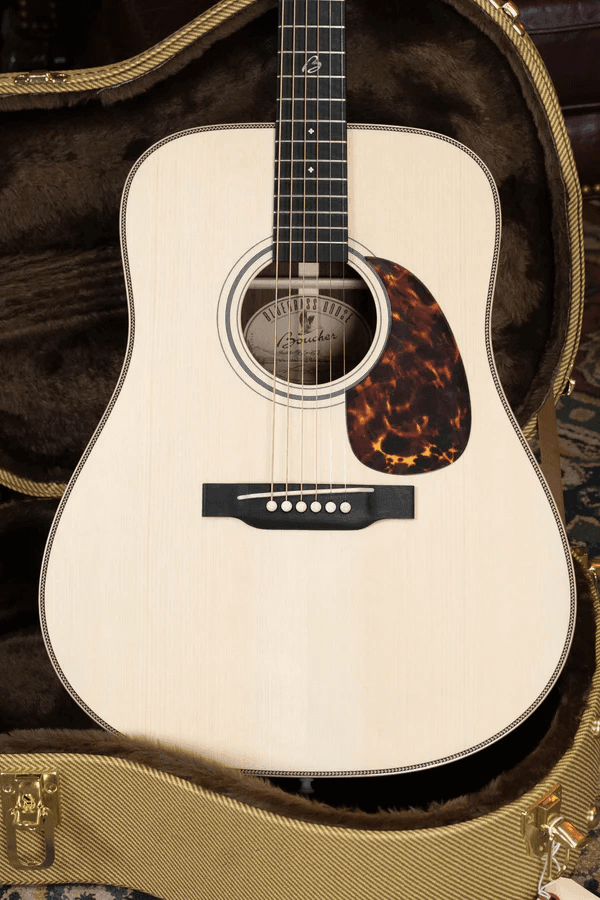
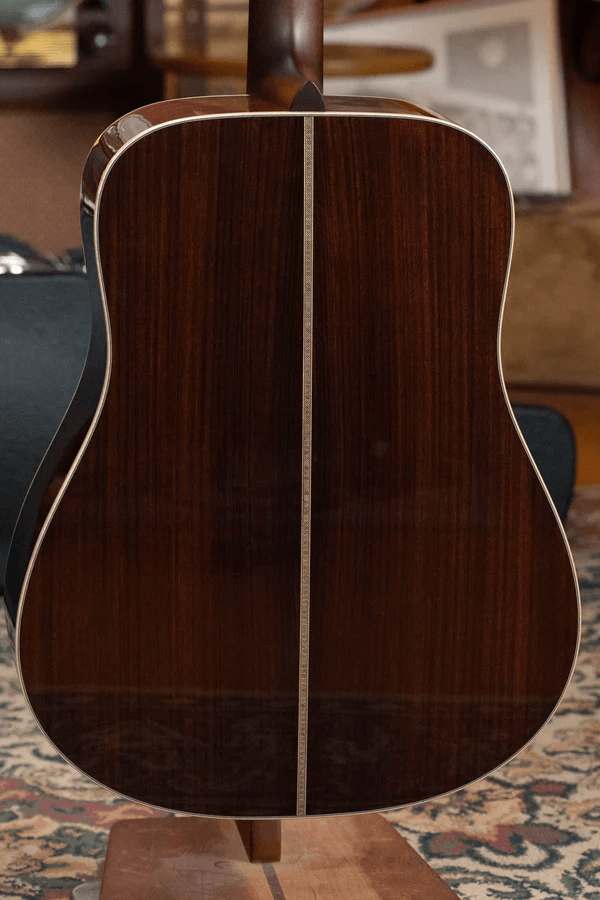
A great example of a rosewood-back guitar that showcases this depth is the Boucher BG-52 Adirondack Rosewood “Bluegrass Goose” — a dreadnought with deep, resonant lows paired with a powerful Adirondack spruce top that gives it both balance and character.
What Mahogany Guitars Tend to Sound Like
Mahogany, on the other hand, often brings a different personality to acoustic tone:
Strong fundamental focus
Pronounced midrange presence
Clear note separation
Quick response and articulation
Instead of producing layers of overtones, mahogany tends to emphasize the core of each note. That’s why players who do a lot of flatpicking, faster runs, or rhythm patterns often find a mahogany guitar cuts through more clearly. In a band mix, that extra midrange can help the guitar sit forward rather than disappearing beneath bass and drums.
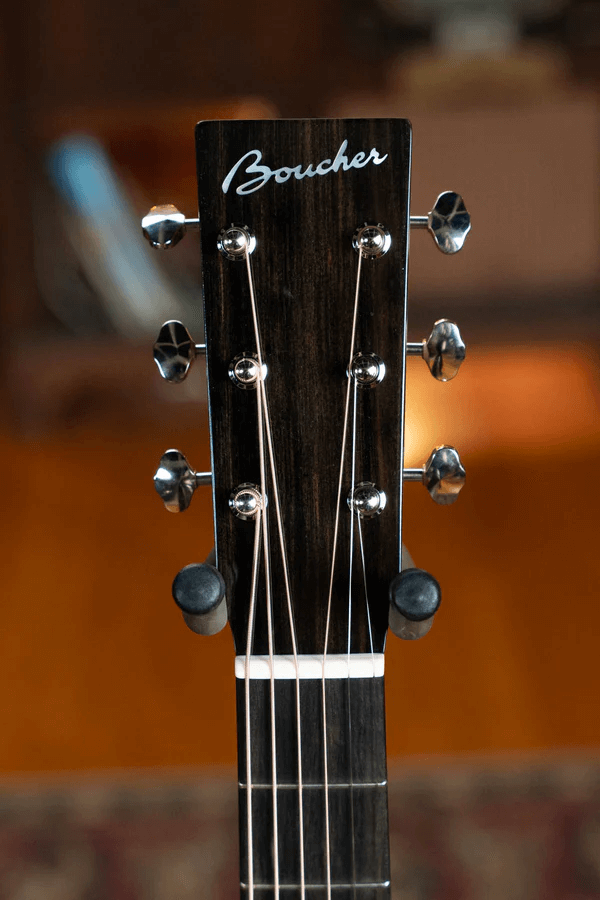
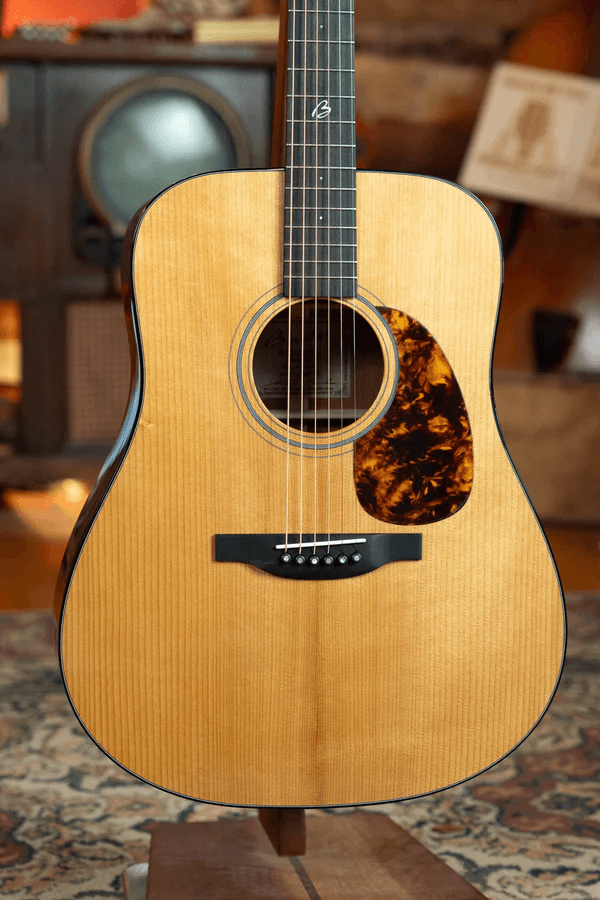
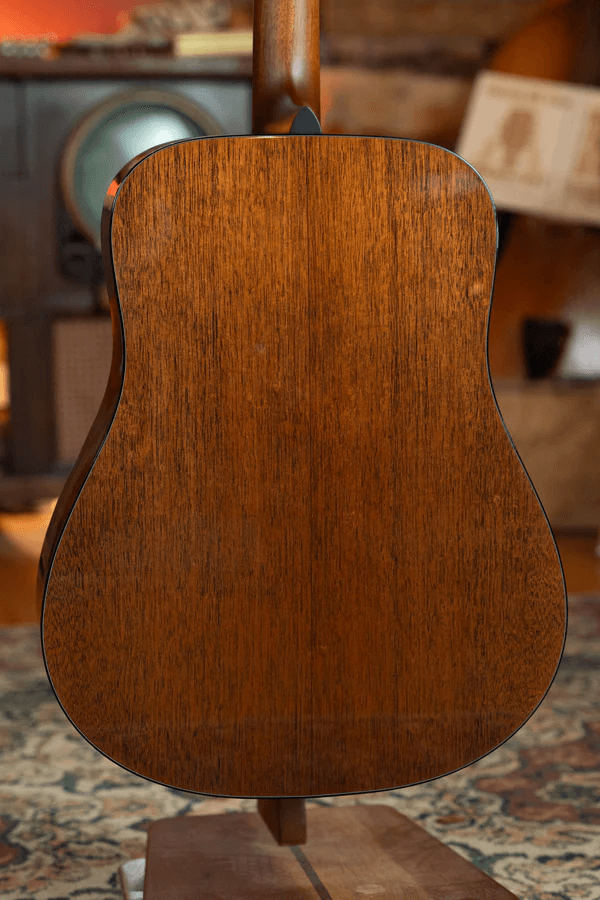
Another compelling illustration of mahogany’s tonal character is the Boucher BG-42T-G Torrefied Adirondack / Torrefied Mahogany “Gold Pack”. This guitar combines a torrefied spruce top with mahogany back and sides, offering a dynamic and responsive feel with punchy mid-range definition.
Quick Tone Snapshot
At a glance, here’s how these woods differ tonally:
| Feature | Mahogany | Rosewood |
|---|---|---|
| Low-End Presence | Tighter, more controlled | Fuller and deeper low end |
| Overtone Content | Leaner, less overtone complexity | Rich with complex harmonic layering |
| Midrange Presence | Strong and forward | Slight mid scoop |
| Ideal For | Flatpicking, lead lines, band mix clarity | Strumming, solo performance, room-filling |
This quick snapshot is not a rulebook — it’s a listening guide to help you focus your ears.
How They Behave in Different Playing Contexts
Solo Acoustic Playing
Rosewood’s wide frequency response and lush overtones make it feel like an acoustic “amplifier” in its own right. That’s nice when you’re playing by yourself or accompanying vocals because the guitar can feel bigger without distortion.
Band Mix or Recording
Mahogany’s focused fundamental and midrange projection often translates more easily into a mix where bass and other instruments are present. Engineers sometimes find it easier to record and EQ because it responds predictably.
Neither wood is “wrong” — they’re just different tools in your tonal toolbox.
How Visual Identification Helps
Visual cues can help you recognize woods before you even play the guitar:
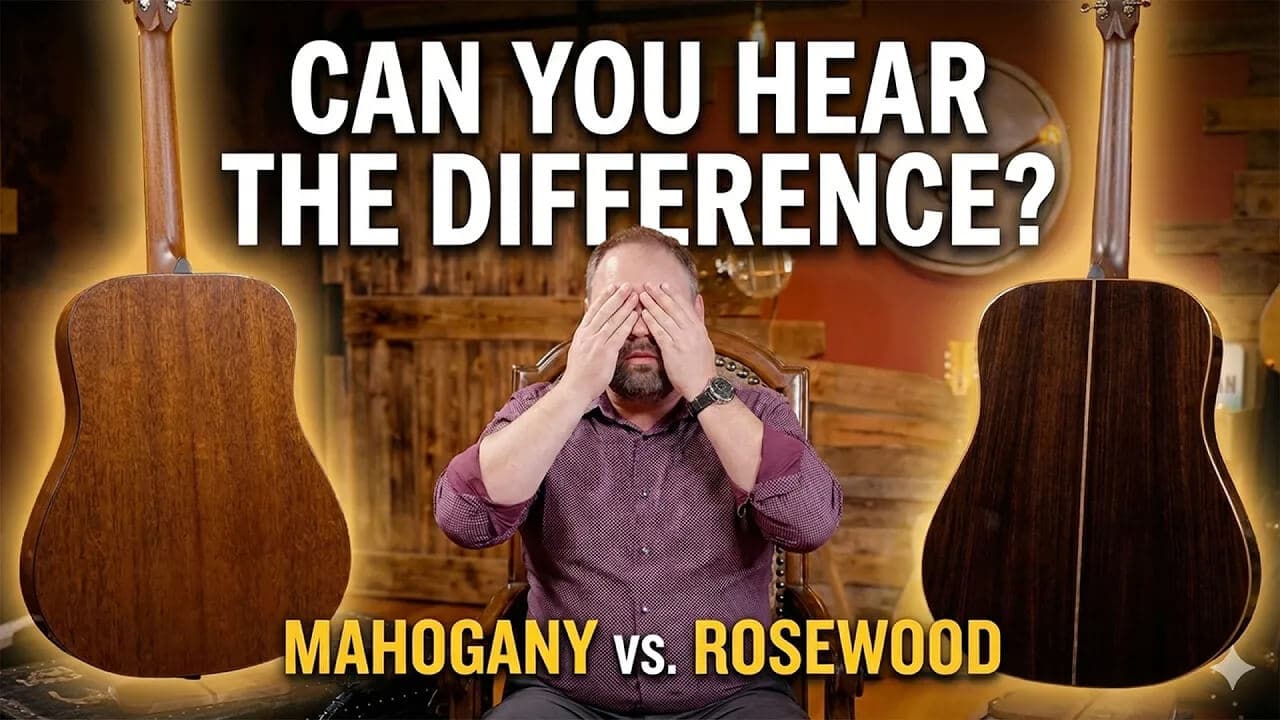
Rosewood usually displays striking, dark, linear grain patterns with contrast.
Mahogany often has a more uniform grain and warmer, sometimes reddish tones.
These aren’t hard rules — stains and finishes can alter appearance — but they’re helpful starting points.
Price Reality: Rosewood Often Costs More
In many production lines, guitars with rosewood back and sides carry a higher price tag than mahogany models. This is partly due to market demand, supply limitations (especially with certain rosewood species), and historical prestige.
Price isn’t a direct indicator of quality or tone preference, but it often influences player expectations and decisions.
Why the Top Wood Still Matters Most
It’s important to remember that the top wood — the soundboard — has the biggest influence on overall tone. Both mahogany and rosewood back and sides shape the sound, but the top wood drives vibration and projection.
This is why tonewood guides consistently emphasize starting with top wood, then considering back and sides.
Choosing for Your Style
Here’s a practical rule of thumb when you thinking about mahogany vs rosewood:
If you play lead lines or flatpicking, lean toward mahogany for note clarity and midrange bloom.
If you enjoy big strums or solo arrangements, rosewood’s breadth and overtone complexity will feel rewarding.
Many players own one of each for flexibility — rhythm/solo sessions on rosewood, and band or recording scenarios on mahogany.
A Personalized Listening Test Approach
A simple way to audition these woods side-by-side is:
Play the same chord progression on each wood type.
Pick a simple lead pattern up the neck.
Listen for note decay, overtone richness, and how the guitar fills space.
Notice how the instrument behaves when you switch pick attack intensity.
This listening method often reveals more than theory alone.
Final Thoughts: What Matters Most
The mahogany vs rosewood conversation isn’t about right or wrong — it’s about context: the mix you play in, the feel you enjoy, and the way your ear responds.
A rosewood guitar may feel like a shimmering, supportive companion in solo playing. A mahogany guitar may feel like a precise, articulate partner when you’re locking into a band groove.
And the beautiful part is — there is no wrong choice. What matters most is the one that makes you want to play more.
Acoustic Shoppe FAQ
Is mahogany or rosewood better?
Neither is better overall. Mahogany is known for clarity and strong midrange focus, while rosewood offers deeper bass and richer overtones. The better choice depends on your playing style.
Which is better for strumming?
Rosewood is often preferred for big, full strumming because of its strong low end and harmonic depth. Mahogany can work well in a band mix where midrange clarity helps cut through.
Which is better for lead playing?
Mahogany is commonly favored for flatpicking and lead lines because of its note separation and quick response.
Does rosewood have more bass?
Yes. Rosewood typically produces a fuller, deeper low-end response compared to the tighter, more controlled bass of mahogany.
Is mahogany cheaper than rosewood?
In many models, yes. Rosewood often costs more due to availability and demand.
Which is better for recording?
Mahogany can be easier to record because of its focused tone. Rosewood sounds bigger but may require more low-end control in a mix.