
Table of Contents
- What a laminate guitar is made of
- Words on a spec sheet that mean laminate
- Watch the laminate guitar blind test
- Why the top matters more than the back
- What the laminate guitar lost in our blind test
- When a laminate guitar is the right call
- Eastman laminate vs all-solid, at today's prices
- Who should buy which
- Shop solid-top and all-solid Eastman guitars
- Acoustic Shoppe FAQ
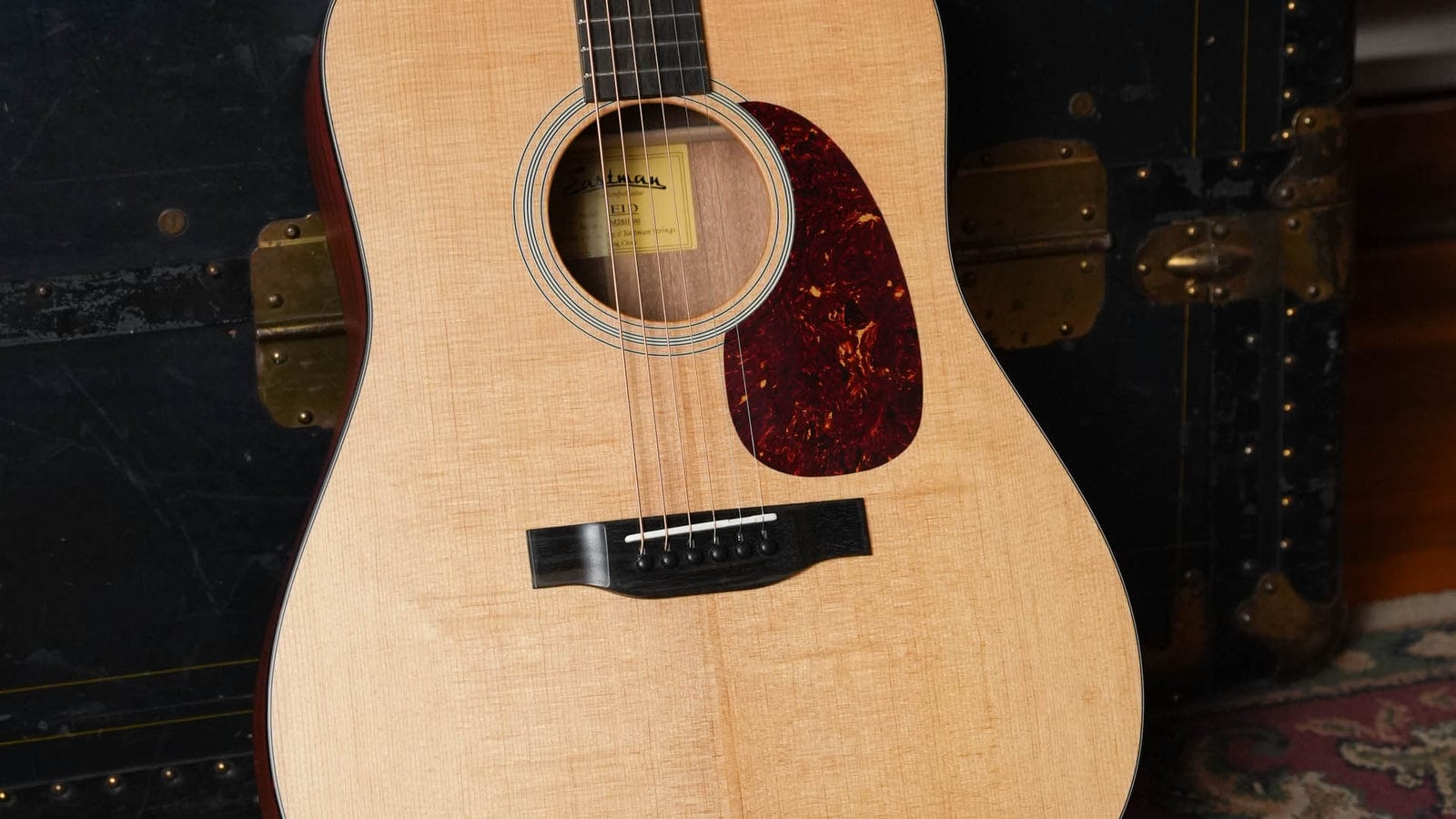
If a spec sheet doesn't say "solid," the wood probably isn't solid. That's the first rule we give anyone shopping for a laminate guitar or trying to avoid one. To test it, we played two Eastman dreadnoughts blind. They're close in shape, build and feel, and the back and sides are the only real difference. The all-solid one won on tone more clearly than in any blind test we've done.
This post is about the part before the listening: how to read a listing, which words hide plywood, and when a laminate guitar is the smart buy anyway. If you want the full head-to-head, our solid vs laminate comparison of the Eastman E1D and PCH covers it.
What a laminate guitar is made of
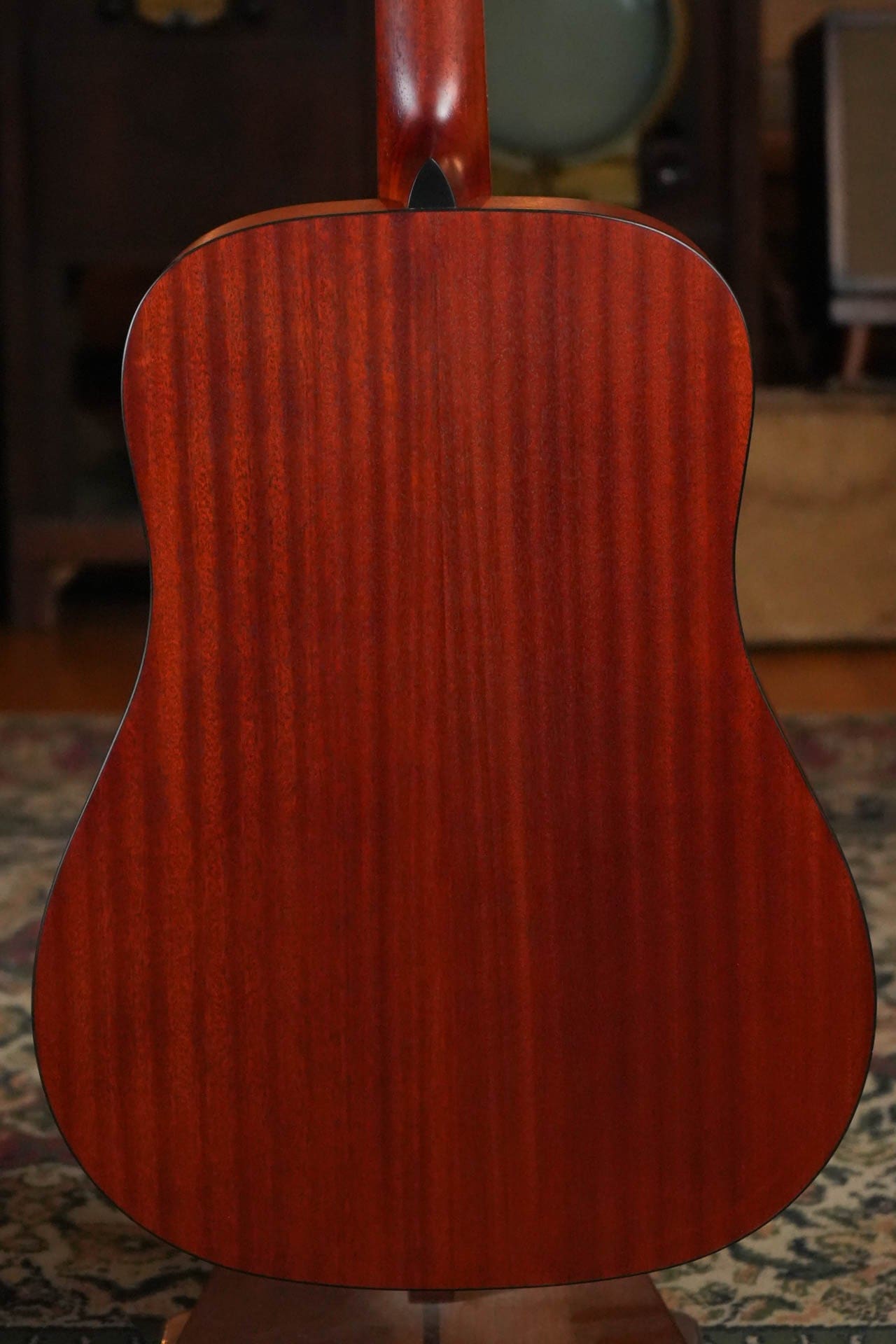
A laminate guitar uses plywood where a solid guitar uses one piece of wood. The outside layer is a veneer, and we mean thin, close to paper thin. Under it sits a slightly thicker core layer, then another veneer on the inside.
Builders don't all fill that sandwich the same way. Some use the same wood for all three layers, so a laminated mahogany back is mahogany through and through. On the cheapest guitars the core is whatever inexpensive wood the factory can get, which they call "white wood," with a mahogany face glued on both sides.
The layers run cross-grain, each one turned against the one before it, and that makes laminate very strong. We use a stair analogy with customers all the time:
"If you were building stairs, plywood is a wonderful thing to have, because there's three layers of wood that are resisting against each other."
The same cross-grain build changes how a crack behaves. If a laminated back dries out and splits, the crack can follow the grain of the outer veneer, but the layer underneath runs the other way and isn't connected to it, so the crack doesn't go through.
Words on a spec sheet that mean laminate
Manufacturers rarely put "laminate" in big letters. A listing will just say "mahogany" or "sapele" and let you assume. Here are the words we watch for:
- "Plywood" is the honest word, plies of wood, and almost nobody prints it.
- "Laminated" is the common term, and it means the same thing.
- "Layered" once meant every layer was the same species. We've seen manufacturers stretch it since, so treat it as laminate until a spec says otherwise.
- "Manufactured hardwood" is, in our words, a way of not telling the customer it's plywood.
- A wood name with no "solid" in front of it, on a guitar under about $1,000, is usually a laminate.
That last one has a caveat. On a $4,000 or $5,000 guitar, a spec that just says "mahogany" almost always means solid mahogany. The "if it doesn't say solid" rule is for the sub-$1,000 shelf, and most of all for guitars around $500 and under.
"If it doesn't say solid, then it probably isn't solid. It's going to be a laminate."
Here's a quick way to check any listing, ours included:
- Read the top, back and sides as three separate lines. A guitar can be solid on one part and laminate on the others.
- Look for "solid" in front of each wood name. If it's missing on the back and sides, assume laminate.
- Translate the soft words: layered, laminated and manufactured hardwood all mean laminate.
- Check the price against the claim. An "all-solid" guitar far below the E1D's $699 deserves a second look.
Every guitar we list carries its top and back-and-sides material in the spec table, so you can do this on our site without guessing. Open the specs on a PCH listing like the PCH1-D-CLA and you'll see "Laminated Sapele" spelled out.
Watch the laminate guitar blind test
Jump to the spec-sheet talk at 1:57, the back-to-back tone samples at 9:10, and our verdict at 10:39. We filmed this in 2022. Prices and stock below are today's.
Why the top matters more than the back
An acoustic guitar works like a speaker cone. The wood has to flex and move to push sound waves at your ear, and one solid piece of wood moves more than three glued layers pulling against each other. Most of that movement happens in the top. The back and sides "do not move near as much as that top does," but they still change the sound.
That's why the most common budget build is a solid spruce top over laminate back and sides. The manufacturer keeps the cost down and spends the money where most of the tone comes from. We're fine with that build. A laminate top is where we draw the line:
"If you get a laminate top, they just do not want to flex. You're losing a lot of tone. They sound pretty dead."
Our advice for a first guitar is a solid top, at minimum. Buy a cheaper guitar with a laminate top and you'll probably regret it.
What the laminate guitar lost in our blind test
We picked two guitars from one builder so the woods were the only variable. Eastman builds an inexpensive all-solid dreadnought, the E1D, and a laminate guitar with a solid top in its PCH series. One caveat: our PCH had a thermo-cured top, which some PCH guitars got at the time because of a wood shortage. We'd call that roughly a $400 upgrade, and it gave the laminate guitar a small head start. (Our guide to thermo-cured instruments explains what the heat treatment does.)
The two came out close on volume and sustain. The difference was in the tone. The all-solid E1D had a lot more roundness and fullness. Picture a spectrum analyzer: the laminate guitar had everything bunched in the middle, and the solid guitar had a broader, more even range from bottom to top. The gap showed up most on single-note lines.
Of all our blind tests, this was the easiest one to hear. We've compared Tony Rice-style Large Town Hall guitars, neck joints, and sinker mahogany against regular mahogany, and those differences were subtle. The difference between laminate and all-solid wasn't.
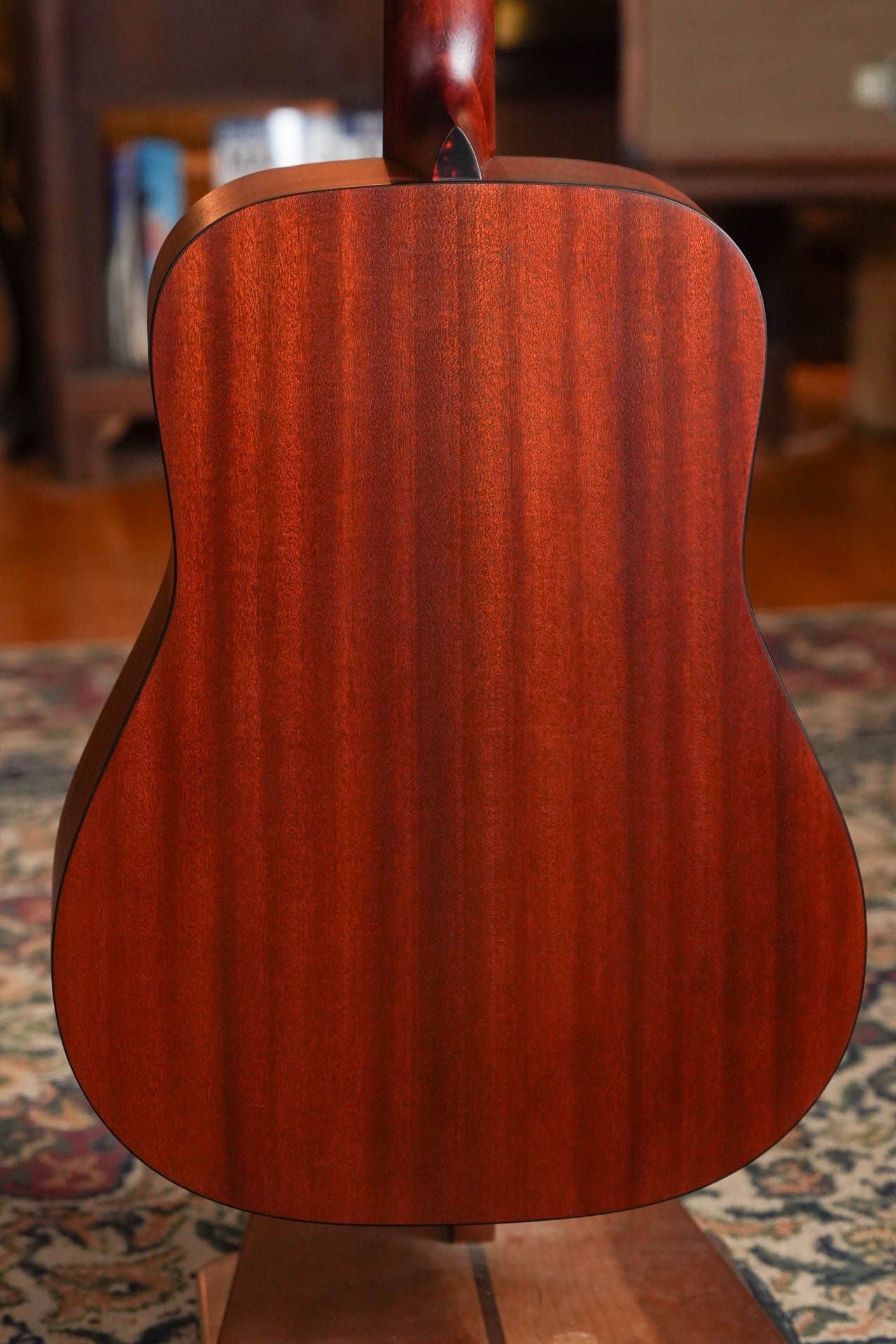
Playability was a near tie. The necks felt a little different, but both guitars played extremely similar, and at the start that matters more than tone. A first guitar needs its action set well enough that it isn't a fight to play.
When a laminate guitar is the right call
We don't tell everyone to skip laminate. A solid top over laminate back and sides makes sense in a few cases:
- For a kid's first guitar, laminate back and sides take more abuse than solid wood, especially when nobody is keeping up with the humidifier.
- On a tight budget, a good-quality, easy-playing laminate guitar is a great option when you don't know yet how far you'll take it.
- Gluing a thin veneer costs the builder less than a solid piece of mahogany or rosewood, and the savings show up on the tag.
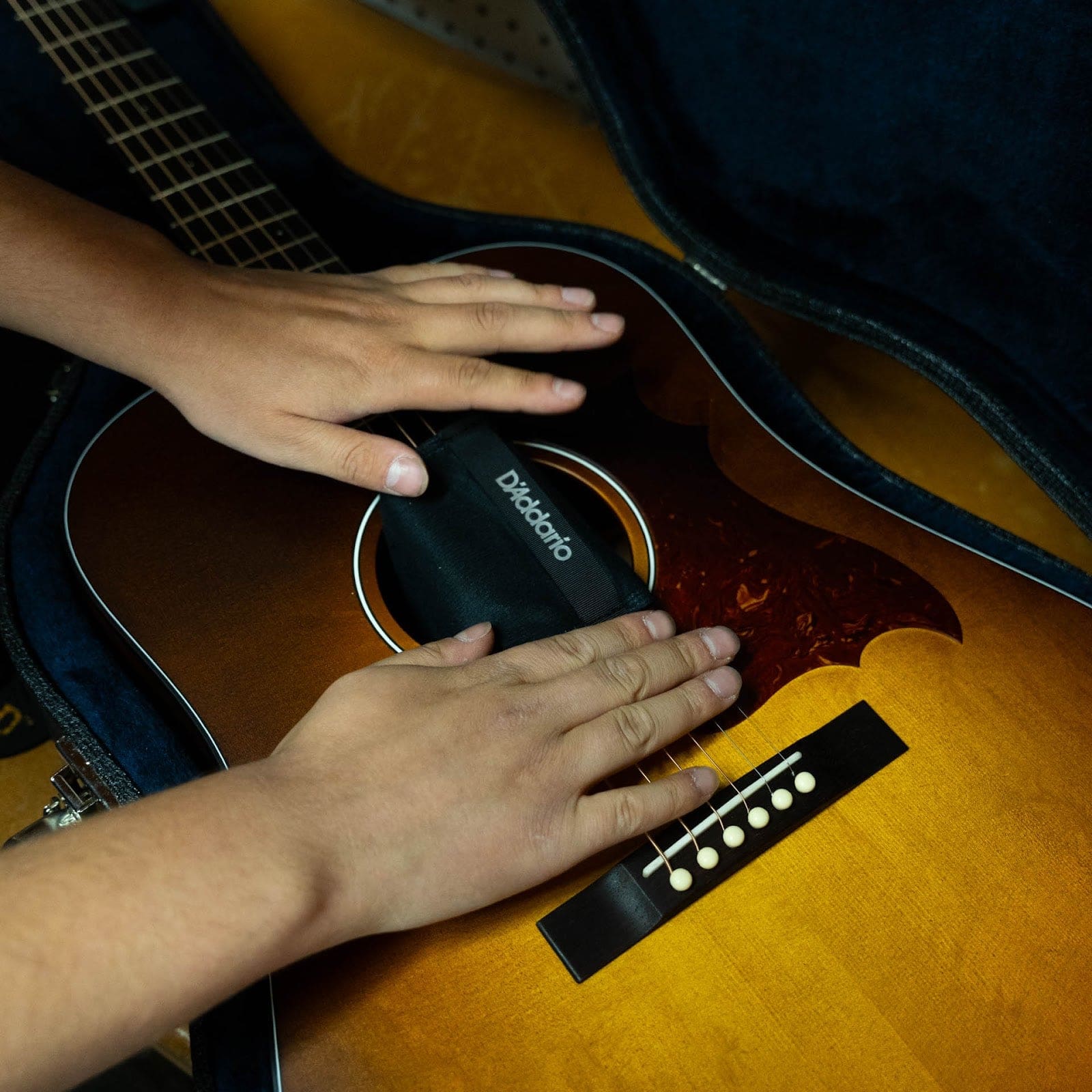
If you go all-solid, plan on humidity care from day one. Our all-solid guitar care guide covers it, and we stock humidifiers and care products for exactly that.
Eastman laminate vs all-solid, at today's prices
Here's how the same idea looks in Eastman's lineup on our floor right now. Prices are from our store as of October 2026.
| Model | Top | Back and sides | Price |
|---|---|---|---|
| PCH1-D | Solid Sitka spruce | Laminated sapele | $399 |
| PCH1-D-CLA | Solid Sitka spruce, thermo-cured | Laminated sapele | $399 |
| PCH3-GACE-TBK | Solid spruce | Laminated maple | $659 |
| E1D | Solid Sitka spruce | Solid sapele | $699 |
The PCH1-D and the E1D are the closest pair. Both are sapele dreadnoughts with a solid Sitka top and a 1-3/4" bone nut, and $300 separates the laminate guitar from the all-solid one. The PCH1-D-CLA's thermo-cured top makes it the closest match to the PCH we played blind.
Mandolins follow the same rule. Our PCH M104 vs Eastman MD305 comparison puts the PCH M104, a solid spruce top over laminated mahogany, up against Eastman's MD305. For guitars under $500, see our best acoustic guitar under $500 picks.
Who should buy which
If you're buying a first guitar and aren't sure it'll stick, a solid-top laminate guitar like the PCH1-D is a good place to start. Make sure the action is set well, because playability matters more than tone at that stage. If the playing sticks, an all-solid guitar is the reward for all that practice, and you'll hear what it does better than you would have on day one.
If you already play, or can wait a few months and save $300, buy the all-solid E1D. Figure out your budget and push it as far as you can, because a guitar that sounds better keeps you playing. Skip any guitar with a laminate top.
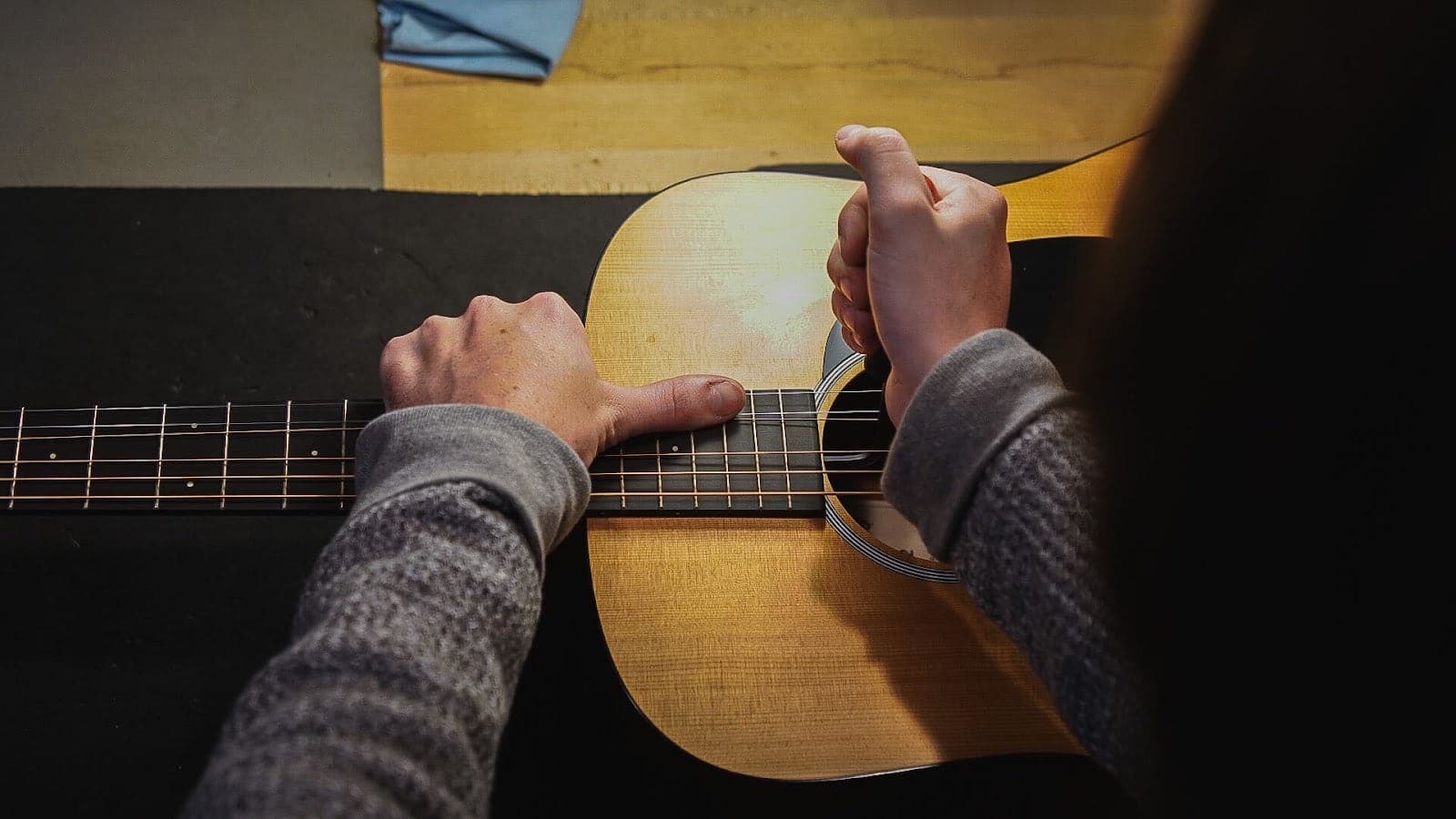
Either way, every guitar we ship goes through our 23-Point Professional Inspection first, so the action is right out of the box. As the #1 Worldwide Dealer for Eastman Guitars & Mandolins, we keep both PCH and all-solid models in stock.
Related reading
Shop solid-top and all-solid Eastman guitars
Start with the Eastman guitars collection, or go straight to the Eastman E1D or the PCH1-D. To compare other builders, look through our dreadnought guitars or browse every guitar in stock. Not sure whether a laminate guitar or an all-solid one fits your budget? Call or stop by the shop in Springfield and play both.