


Solid vs Laminate Acoustic Guitars: The Debate That Won’t Go Away
The conversation around solid vs laminate acoustic guitars has been happening for decades, and it’s not going away anytime soon. If you’ve ever shopped for an acoustic instrument, you’ve likely seen phrases like “all solid wood,” “laminated back and sides,” or even “layered construction.” But what do those terms actually mean? And more importantly — does it actually matter when you’re playing?
To answer that question, we put two guitars head-to-head from the same manufacturer: the Eastman E1D, an all-solid wood dreadnought, and the Eastman PCH2-TG, a laminate back-and-sides model with a solid top. You can watch the full comparison here:
Both guitars are built by Eastman. Both share similar shapes. Both have solid tops. But only one is all solid wood throughout.
So what really changes?
What “Laminate” Actually Means
In the world of acoustic guitars, laminate (sometimes called layered) means multiple thin sheets of wood are pressed together with glue. Often, the outer layer is the tonewood you see — like mahogany or rosewood — while inner layers may use less expensive wood.
According to industry guides like Andertons and Acoustic Centre, laminate construction uses cross-graining for strength. That means the wood grains run in opposite directions between layers, making the material extremely durable and resistant to cracking. It’s similar to plywood used in construction — strong, stable, and cost-effective.
That durability is a major advantage.
However, here’s where the solid vs laminate acoustic guitars debate really begins.
Acoustic guitars produce sound through vibration. The top moves the most, but the back and sides contribute resonance and tonal complexity. Solid wood moves more freely than laminate because it isn’t restricted by glue layers and opposing grain directions. That increased movement generally means richer overtones and greater tonal depth.
The Two Test Subjects: Eastman E1D vs Eastman PCH2-TG
To keep things fair, we compared two guitars from the same brand.
Eastman E1D – All Solid Wood Dreadnought

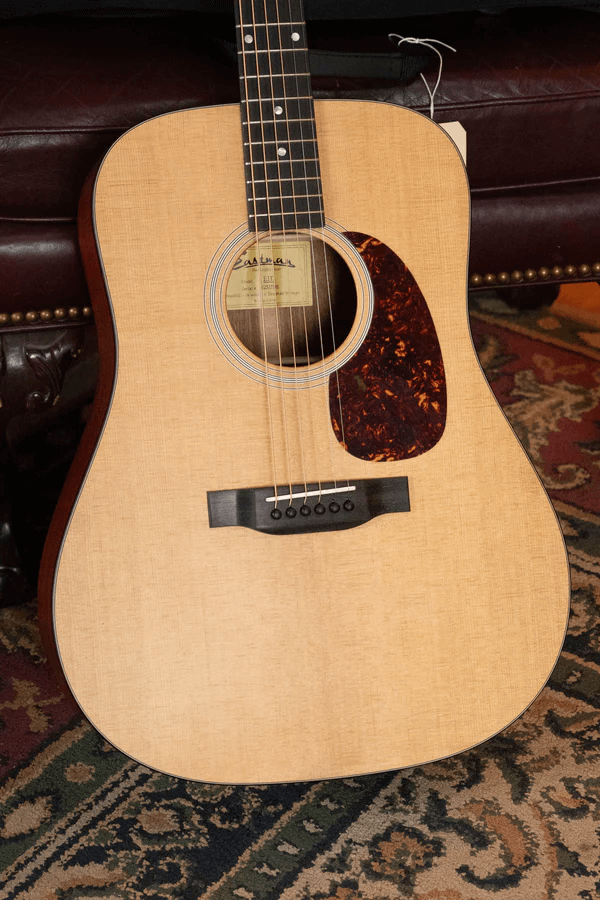
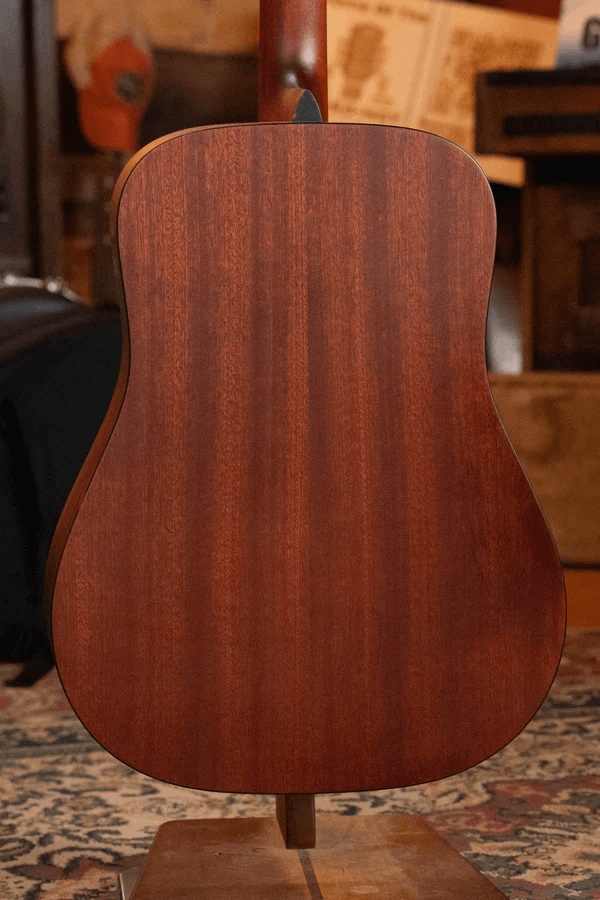
Main Specifications:
Top: Solid Sitka Spruce
Back & Sides: Solid Sapele
Body Style: Dreadnought
Construction: All Solid Wood
Bracing: Hand-carved scalloped X
The E1D represents traditional all-solid construction. Solid spruce on top paired with solid sapele back and sides creates a balanced, full-bodied dreadnought tone with broad frequency response.
Eastman PCH2-TG – Solid Top, Laminated Back & Sides
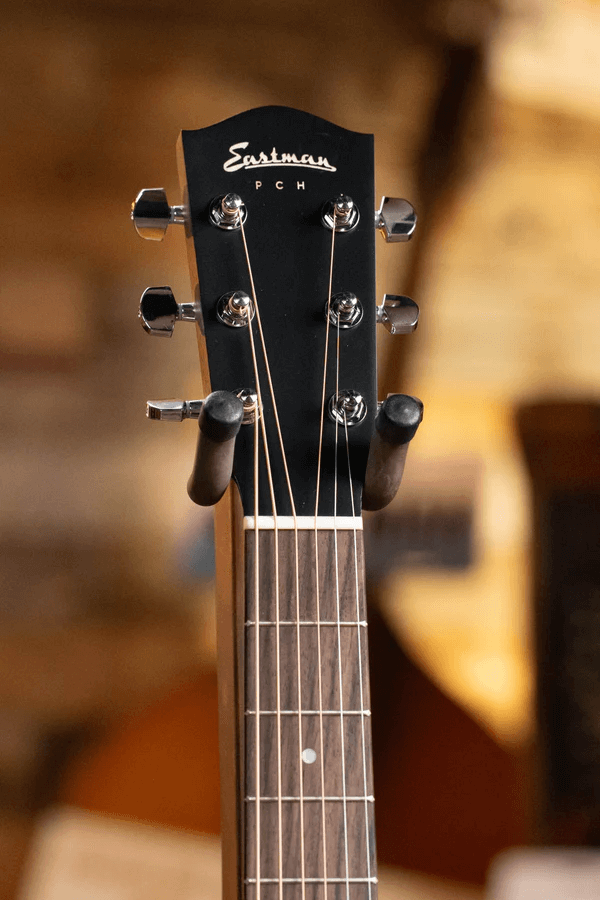
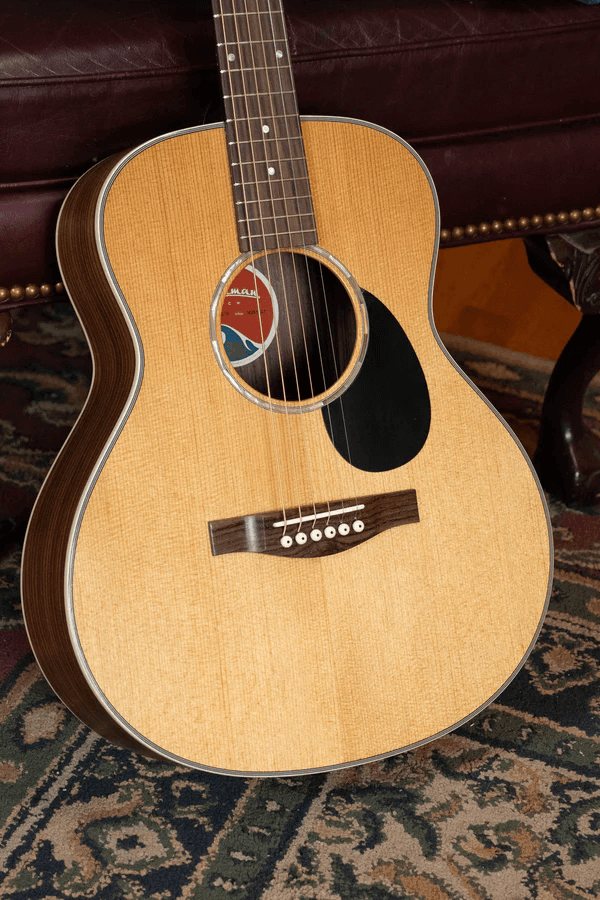
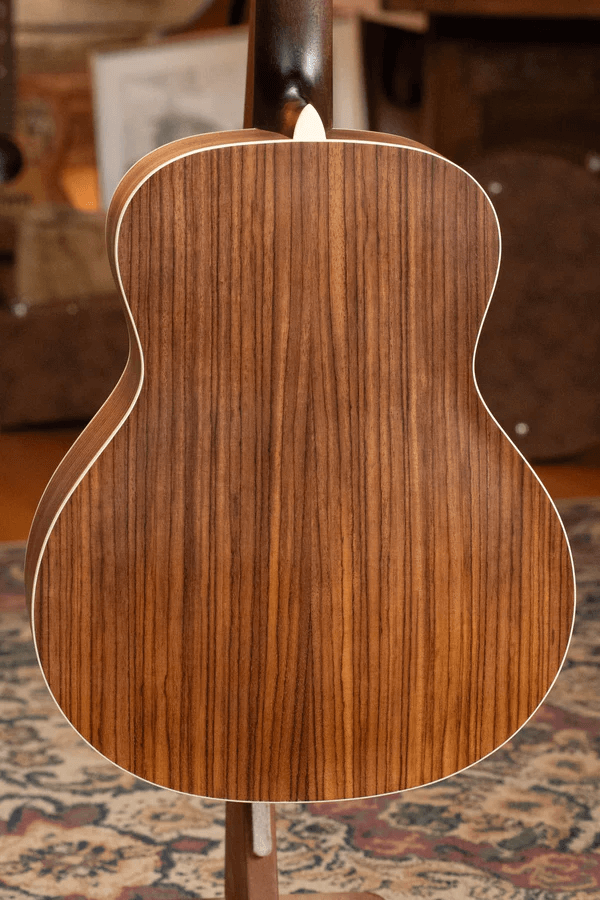
Main Specifications:
Top: Thermo-Cured Solid Sitka Spruce
Back & Sides: Laminated Rosewood
Body Style: Travel / Compact
Construction: Solid Top with Laminate Body
Finish: Thermo-cured top treatment
The PCH2-TG features a thermocured solid spruce top, which mimics aged wood by removing moisture through heat treatment. That gives it a tonal head start compared to traditional laminate guitars.
What We Heard: The Real Difference
When comparing solid vs laminate acoustic guitars, the difference was not subtle.
Volume? Surprisingly similar.
Sustain? Comparable.
Tone depth? Noticeably different.
The all-solid Eastman E1D produced a broader tonal spectrum. If you imagine sound as a graph, the E1D filled more of the frequency range — lows were rounder, mids were more dimensional, highs were clearer without being brittle.
The laminate PCH2-TG sounded focused and centered. It projected well, especially in midrange frequencies, but lacked the harmonic bloom and openness of the all-solid model.
This matches what many builders explain: laminate is structurally strong but doesn’t resonate as freely.
Why Solid Wood Produces More Complexity
The top of an acoustic guitar acts like a speaker cone. It vibrates and pushes air to create sound waves. The back and sides reflect and enhance those waves.
With solid vs laminate acoustic guitars, the solid wood back and sides move more sympathetically with the top. That added movement produces more complex overtones.
Laminate backs and sides, while stable and durable, resist movement slightly because of their layered construction. The glue and cross-graining reduce flex.
According to Guitar Scratch Remover and Acoustic Centre guides, this is why laminate guitars often sound more compressed or mid-focused compared to all-solid instruments.
When Laminate Makes Sense
This is important: laminate is not “bad.”
In fact, laminate guitars offer real benefits:
Advantages of Laminated Construction
Greater resistance to humidity changes
Lower cost
Increased structural durability
Ideal for travel or student instruments
If a player is just beginning, playability matters more than subtle tonal nuance. A well-set-up laminate guitar with a solid top can absolutely inspire someone to start playing.
The Eastman PCH2-TG, especially with its thermo-cured top, offers impressive tone for its category.
When All Solid Is Worth It
If tone is your priority, the solid vs laminate acoustic guitars decision tilts strongly toward solid.
Advantages of All Solid Construction
Greater harmonic complexity
More dynamic responsiveness
Broader tonal range
Improved aging and tonal development over time
Solid wood guitars open up as they age. The cellular structure of solid wood continues to vibrate and adapt over years of playing. Laminate guitars remain relatively consistent over time.
Playability Matters Too
Interestingly, playability between the Eastman E1D and PCH2-TG was extremely similar. Neck comfort, action, and feel were comparable.
That reinforces an important point in the solid vs laminate acoustic guitars discussion: the biggest difference isn’t feel — it’s tonal richness.
Should You Spend the Extra Money?
Budget always matters.
If you can stretch your budget slightly, the tonal upgrade to an all-solid guitar like the Eastman E1D is noticeable and rewarding. If your budget is firm, a laminate back and sides with a solid top — like the Eastman PCH2-TG — remains a smart and reliable choice.
What you want to avoid is laminate tops. That’s where tone drops significantly.
Final Verdict: Does It Actually Matter?
After direct comparison, the answer in the solid vs laminate acoustic guitars debate is clear:
Yes — it matters.
But how much it matters depends on your stage of playing.
Beginner? Solid top is essential.
Intermediate or serious player? All solid is absolutely worth it.
Touring or travel guitar? Laminate has advantages.
Both construction methods have purpose. The key is knowing what you’re listening for.
If you haven’t heard the difference yourself, watch the blind comparison and performance videos linked above. Your ears will tell you more than any spec sheet ever could.
And as always, choose the guitar that inspires you to play more — because motivation is ultimately the most important tonewood of all.