
KR Strings Octolindo Octave Mandolins

4 in stockFrom $2,499Dread-Not Guarantee eligible

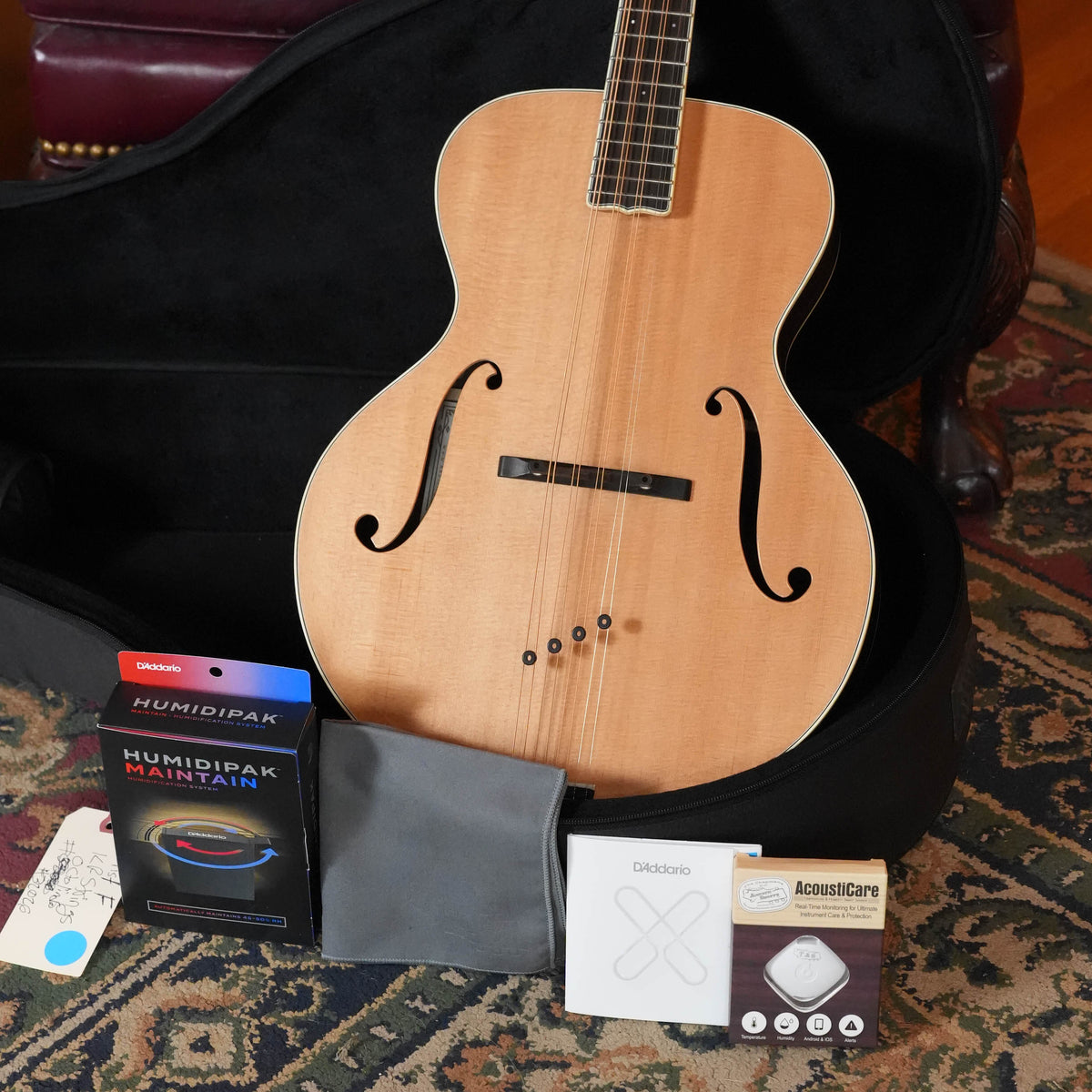
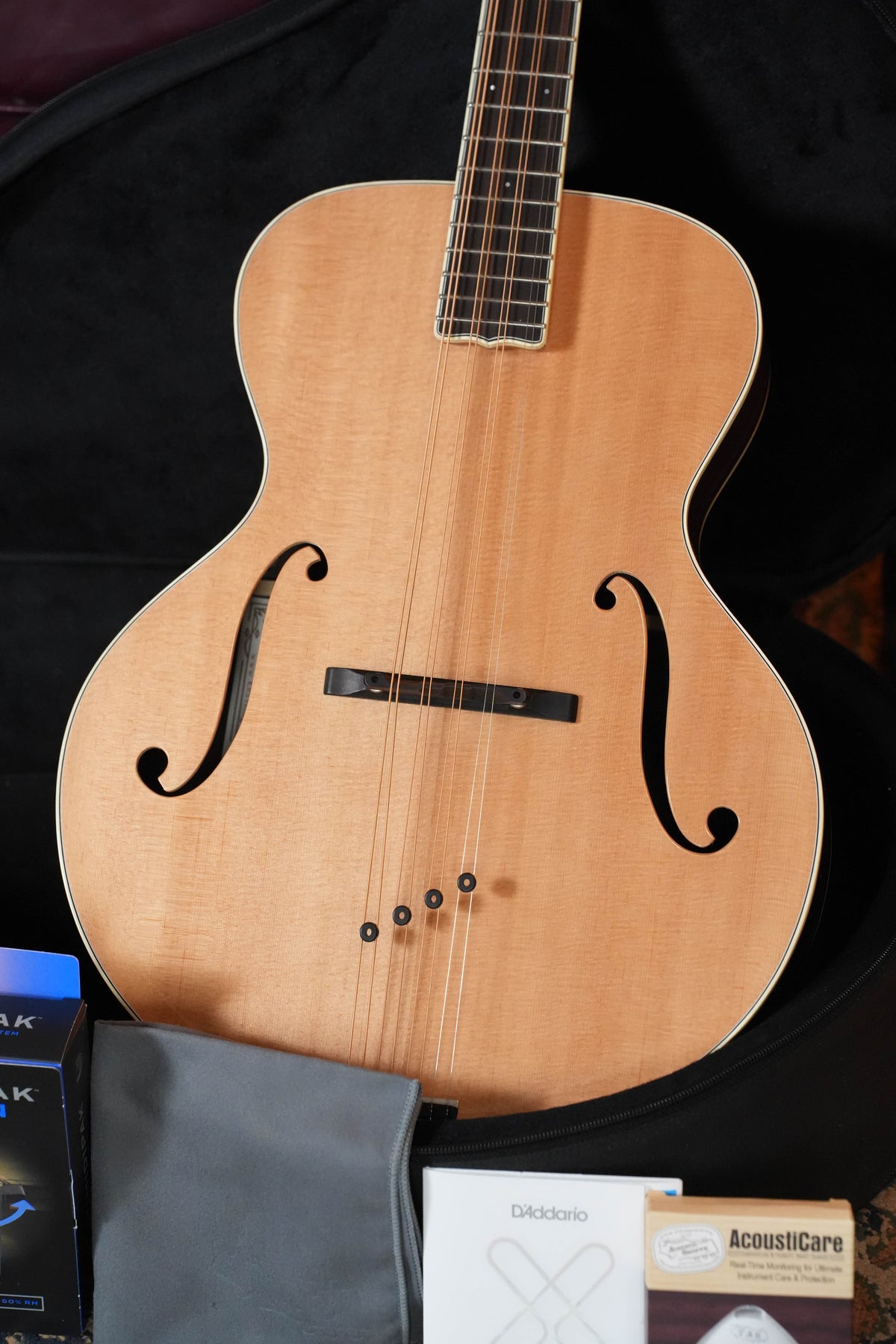
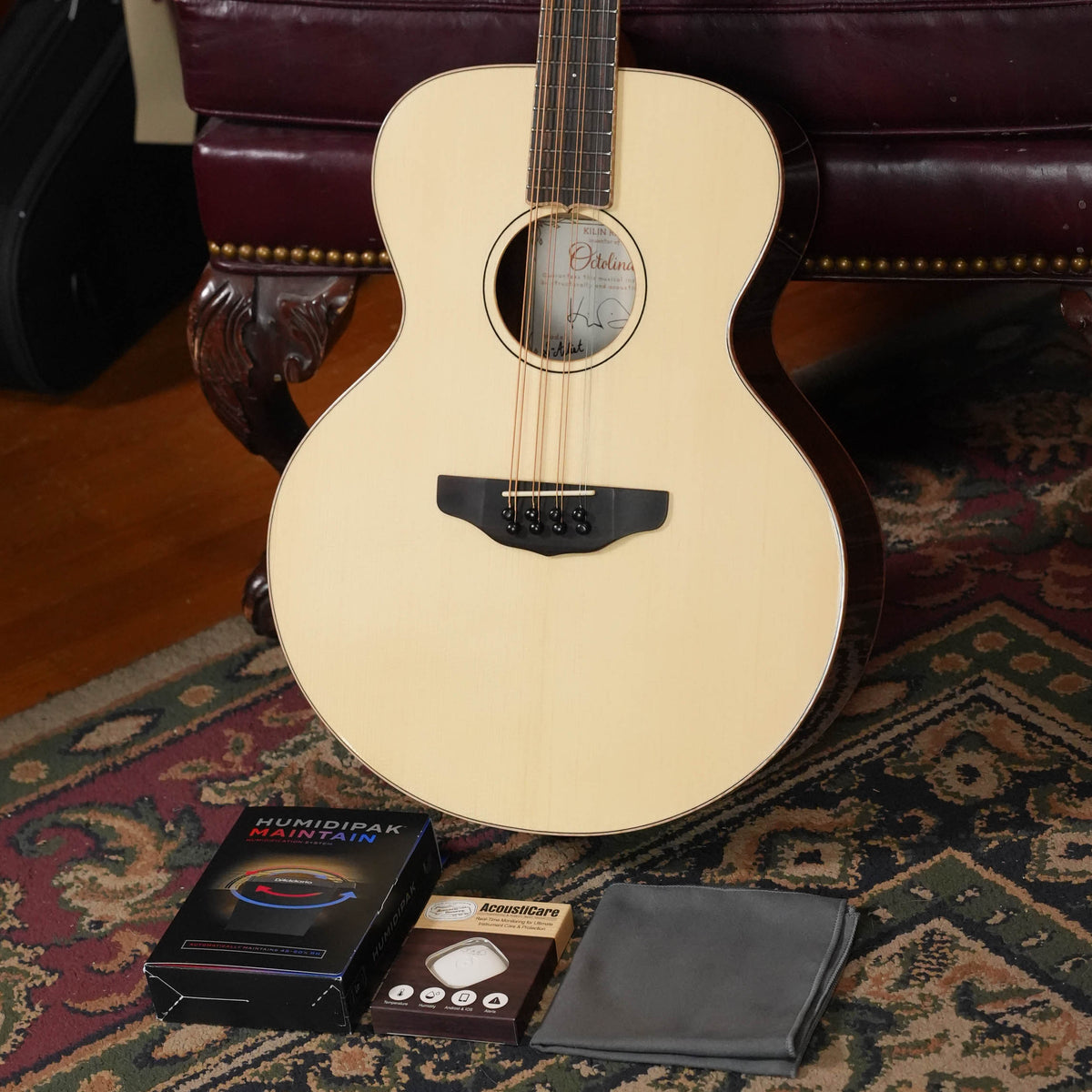
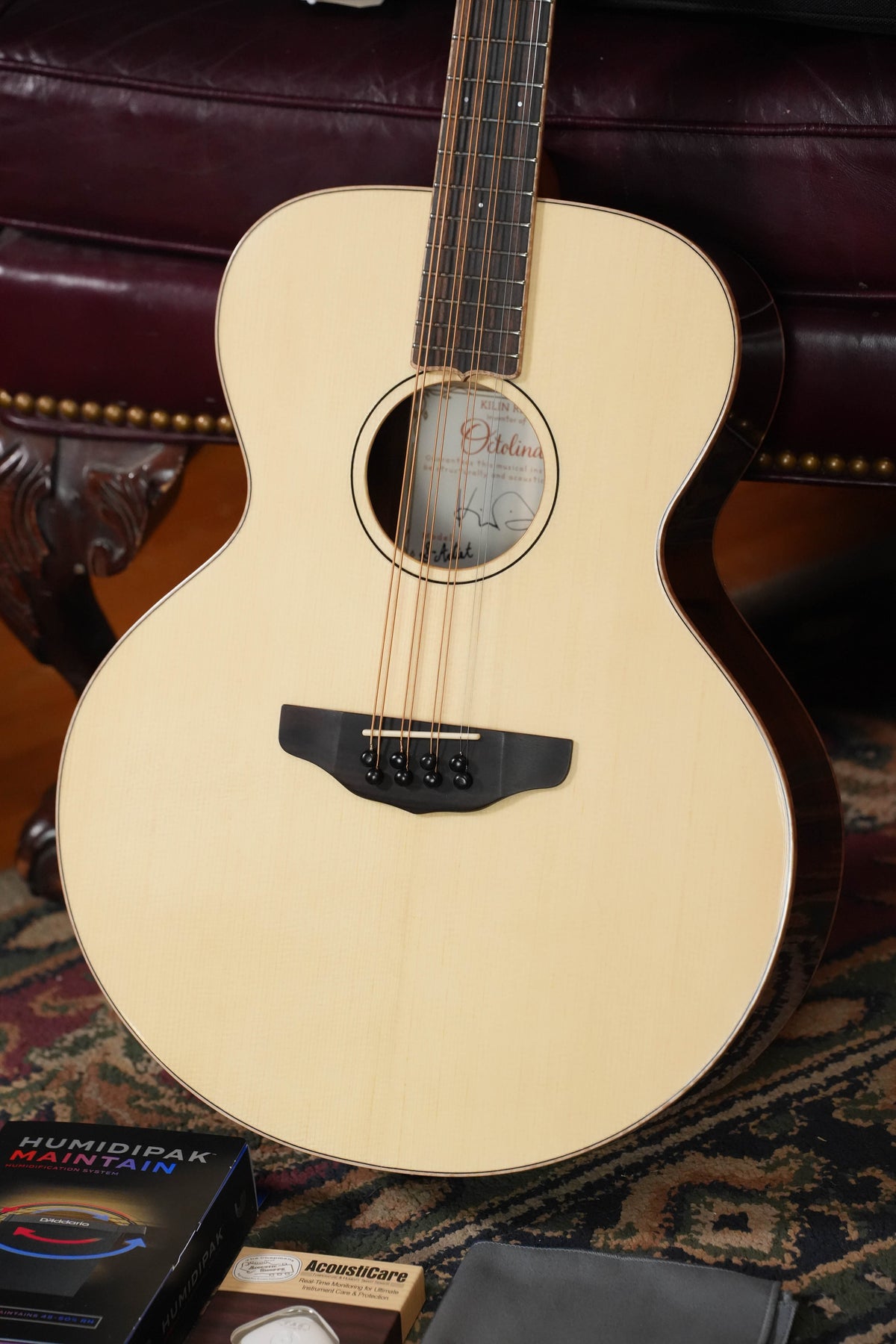
KR Strings builds the Octolindo octave mandolin in two bodies that share a 21.5-inch scale and a 1.38-inch nut. The F Model has a carved Swiss Moon spruce top, F-holes and a Cumberland Acoustics bridge, and the S Model is a flat top with a round soundhole and a pin bridge. Both are tuned GDAE, an octave below a mandolin, in a guitar-shaped body about the size of a parlor guitar, so you get the low register without the bulk of an F-style mandolin blown up to octave size.

In his blind test this month, David Benedict heard the carved-top F Model as the more mandolin-like of the two, clearer and more focused, and the flat top as warmer and closer to a guitar. Both of his reviews are below, along with a guide to the trim levels. Every Octolindo we sell gets our 23-Point Professional Inspection and ships under our Dread-Not Guarantee.

  • Tuned GDAE, an octave below mandolin
  • 21.5" scale, 1.38" nut
  • Carved-top F Model or flat-top S Model
  • Parlor-size guitar-shaped body
  • Hardshell case and gig bag included

Filters

Sort by:

Questions about the KR Strings Octolindo Octave Mandolins?

Every one of us plays. Call, message, or book a virtual demo and we will pull the exact instrument off the wall for you.

David Benedict's Octolindo Reviews

My new favorite octave mandolin

David Benedict plays the KR Strings Octolindo F Model Deluxe, walks through its carved Swiss Moon spruce top, rosewood back and sides and Cumberland Acoustics bridge, then runs a blind comparison against his flat-top S Model Deluxe. 1:05 feel and fit · 3:35 woods and hardware · 4:35 F Model vs. S Model · 6:56 blind comparison

Octolindo S Model Deluxe /// Octave Mandolin Review

David Benedict's full review of the flat-top Octolindo S Model Deluxe: body size, Engelmann spruce and rosewood, scale and nut, sound demos, capo use and GDAD tuning. 1:30 specs · 8:03 sound demo · 10:14 capo · 11:37 alternate tuning · 12:23 overall thoughts

F Model or S Model: how the two Octolindos differ

The two bodies share their outline and measurements: 9 3/4 inches across the upper bout, 13 3/4 inches across the lower bout, 17.5 inches long, with a 21.5-inch scale and a 1.38-inch nut. What changes is the top and the way the strings drive it. The F Model is built like a carved mandolin, with a carved Moon spruce top, F-holes, a Cumberland Acoustics bridge and a nickel-plated brass KR Strings tailpiece. The S Model is built like a small flat-top guitar, with an X-braced Engelmann spruce top, a round soundhole and a pin bridge that takes ball-end strings.

David Benedict has played both, and he compared them blind in October 2026. He heard the F Model as clearer and more focused, with a note that cuts through the way a mandolin does, and the flat top as closer to a guitar. In his 2022 review of the S Model Deluxe he described its tone as mellow and darker, with more sustain from the flat top and soundhole, and he used it for Irish tunes, classical pieces and fingerpicking. If you mostly play melody and want the octave to sound like your mandolin, start with the F Model. If you want a warm, sustaining flat top for Irish tunes and fingerstyle at a lower price, start with the S Model.

The trim levels

KR Strings names each Octolindo by body and trim. Above the Scholar, the F Model comes as the Artist, Deluxe and Maestro, and all three share the carved Moon spruce top and the Cumberland Acoustics bridge. The Artist wears a natural gloss nitrocellulose finish, the Deluxe has come to us in sunburst with either maple or Indian rosewood back and sides, and the Maestro steps up to a carved curly maple back with curly maple sides and neck under a sunburst, the same carved spruce and carved maple pairing as a traditional F-style mandolin. The S Model comes as a Scholar, Artist and Deluxe, and the S Model Artist we stock features an Engelmann spruce top with maple back and sides, while David's S Model Deluxe pairs Engelmann spruce with rosewood in a dark orange sunburst.

Playing an octave with mandolin hands

Many octave mandolins run a 22- to 24-inch scale, and bouzoukis reach 26 inches. The Octolindo's 21.5-inch scale is short enough that David plays his with his usual three-finger mandolin fingerings, though he notes that depends on your hand size. The chord shapes carry straight over because the tuning is the same GDAE, an octave down. If you want a capo, he recommends a five-string banjo capo, since a guitar capo is too wide for the 1.38-inch nut. For more on tuning, scale length and how an octave compares with a mandola, read our Octave Mandolin Guide.

KR Strings also builds the Mandolindo mandolin, and you can see both lines together in our KR Strings Mandolin Family collection, or browse every octave, mandola and mandolin we have in stock in the Mandolin Family collection. Every Octolindo ships under our Dread-Not Guarantee, which gives you a full year to trade it in for up to 90% of the pre-tax purchase price in credit, less round-trip shipping, plus a 30-day in-home trial.

Why buy from The Acoustic Shoppe

  • A twelve-time NAMM Top 100 Dealer (2015–2026)
  • The #1 worldwide Eastman acoustic guitar dealer
  • Every instrument ships after our 23-Point Professional Inspection

Frequently Asked Questions

What is an Octolindo?
The Octolindo is the octave mandolin line from KR Strings, the Hawaiʻi shop of luthier Kilin Reece. It is tuned GDAE, one octave below a mandolin, with a 21.5-inch scale and a 1.38-inch nut in a guitar-shaped body about the size of a parlor guitar. It comes in two bodies, the carved-top F Model and the flat-top S Model.
What is the difference between the Octolindo F Model and S Model?
The F Model has a carved spruce top, F-holes, a Cumberland Acoustics bridge and a tailpiece, and David Benedict describes its sound as clearer, more focused and more like a mandolin. The S Model is a flat top with a round soundhole and a pin bridge, and he describes it as mellower and darker, with more sustain and a sound closer to a guitar. Both bodies share the same scale, nut width and outline.
Can I use my mandolin fingerings on an Octolindo?
For the most part you can, because the tuning is the same GDAE an octave down and every chord shape carries over. The 21.5-inch scale is also shorter than the 22 to 24 inches many octaves use. David Benedict plays his with three fingers the way he would a mandolin, though depending on your hand size you may still want your pinky on the wider stretches.
What capo fits an Octolindo?
A five-string banjo capo is the right width. David Benedict tried a guitar capo on his Octolindo first and found it too wide for the 1.38-inch nut.
Does an Octolindo come with the Dread-Not Guarantee?
It does. Every Octolindo is priced over $1,000, so each one gets our 23-Point Professional Inspection before it ships and comes with our Dread-Not Guarantee: a full year to trade it in for up to 90% of the pre-tax purchase price in credit, less round-trip shipping, plus a 30-day in-home trial.