
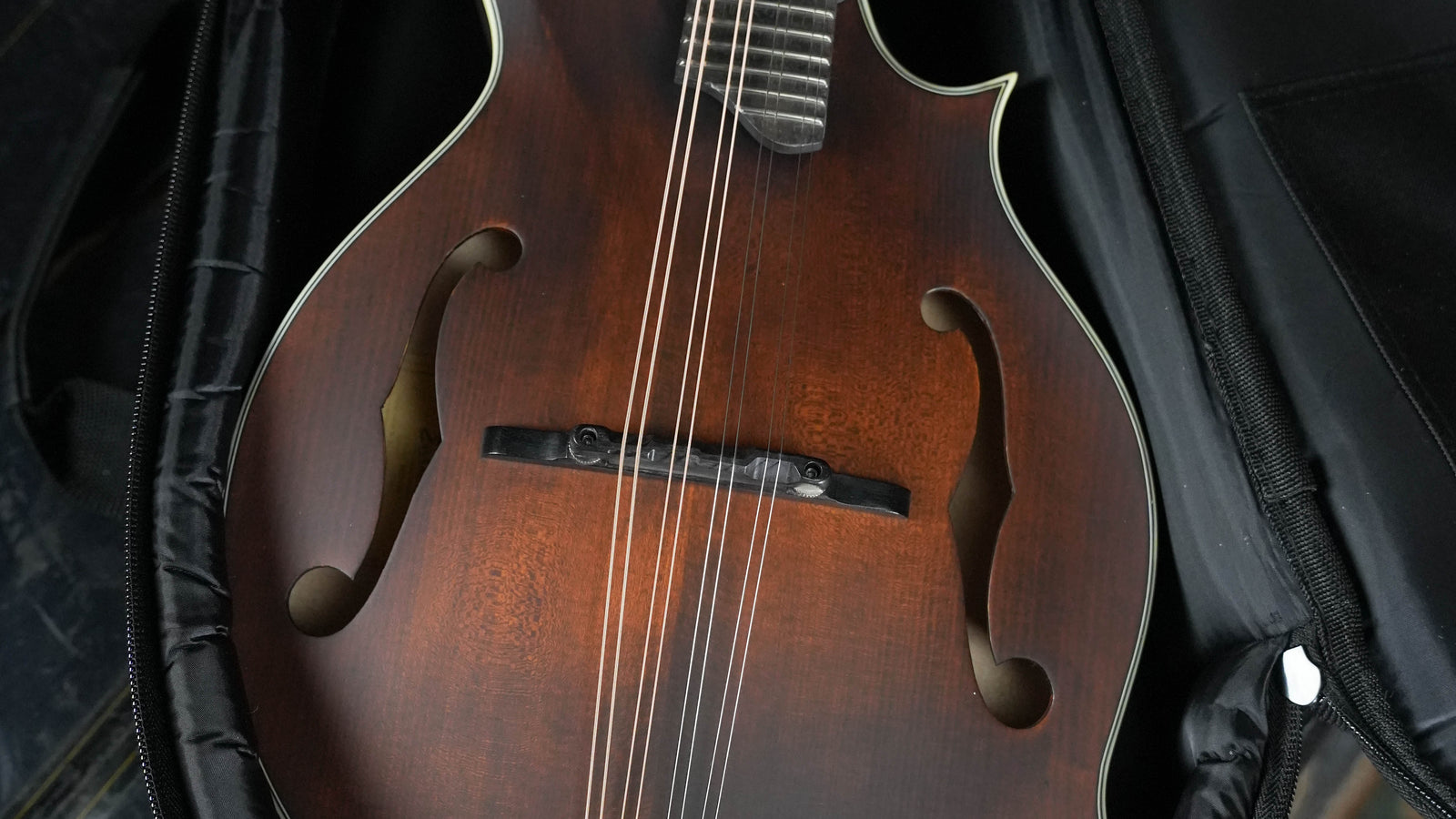
Is an F-style mandolin better, or are you paying for the scroll? It's a fair thing to ask, because the A-style vs F-style choice usually lands right where a budget gets tight. Same sound chamber, same carved top on a good one, and the F can cost a few hundred dollars more in the same series. So we put three pairs from three builders side by side and played them blind, to find out whether anyone could hear which was which.
The short answer: there is a difference, it's smaller than the price gap suggests, and the build of the individual mandolin matters more than its outline. If you're buying your first good mandolin, a better A-style beats a cheaper F-style at the same price, every time.
What actually separates an A-style vs F-style mandolin
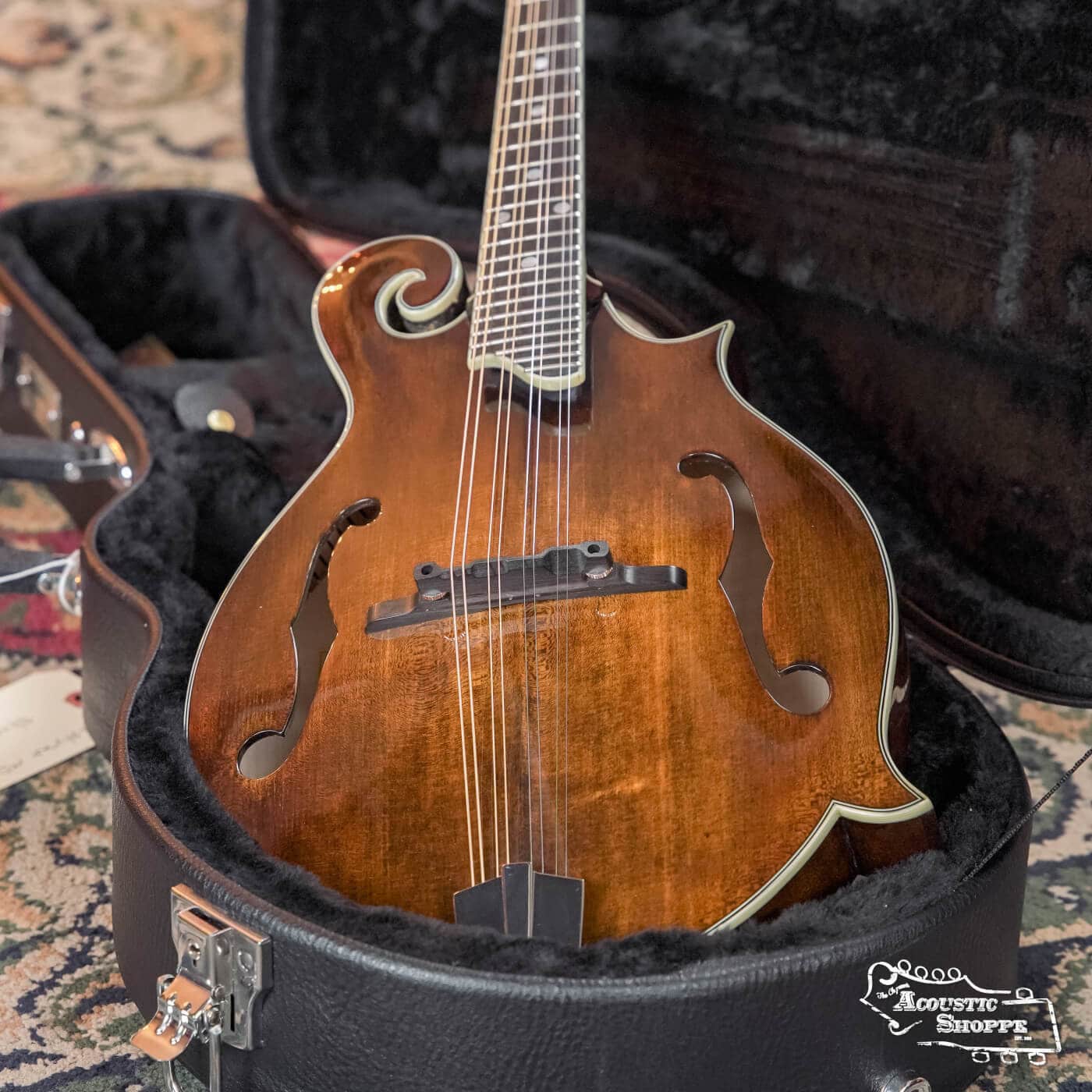
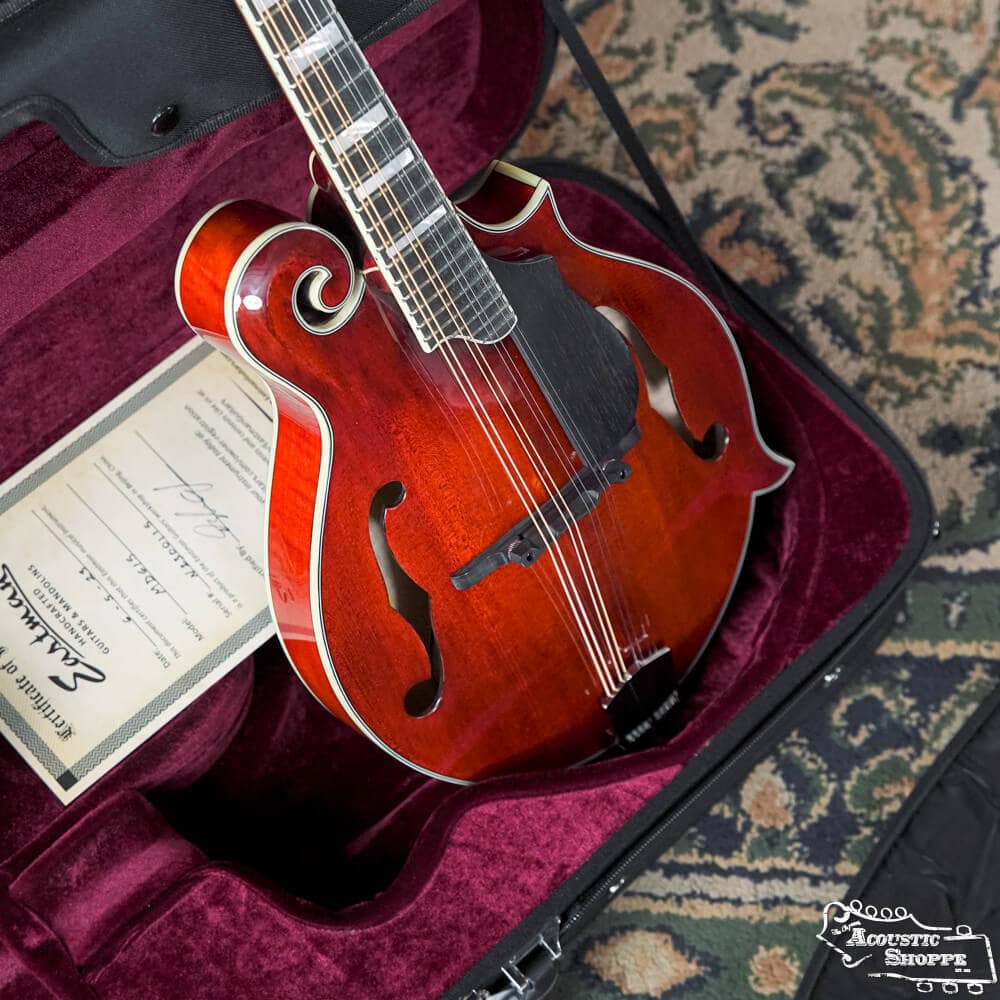
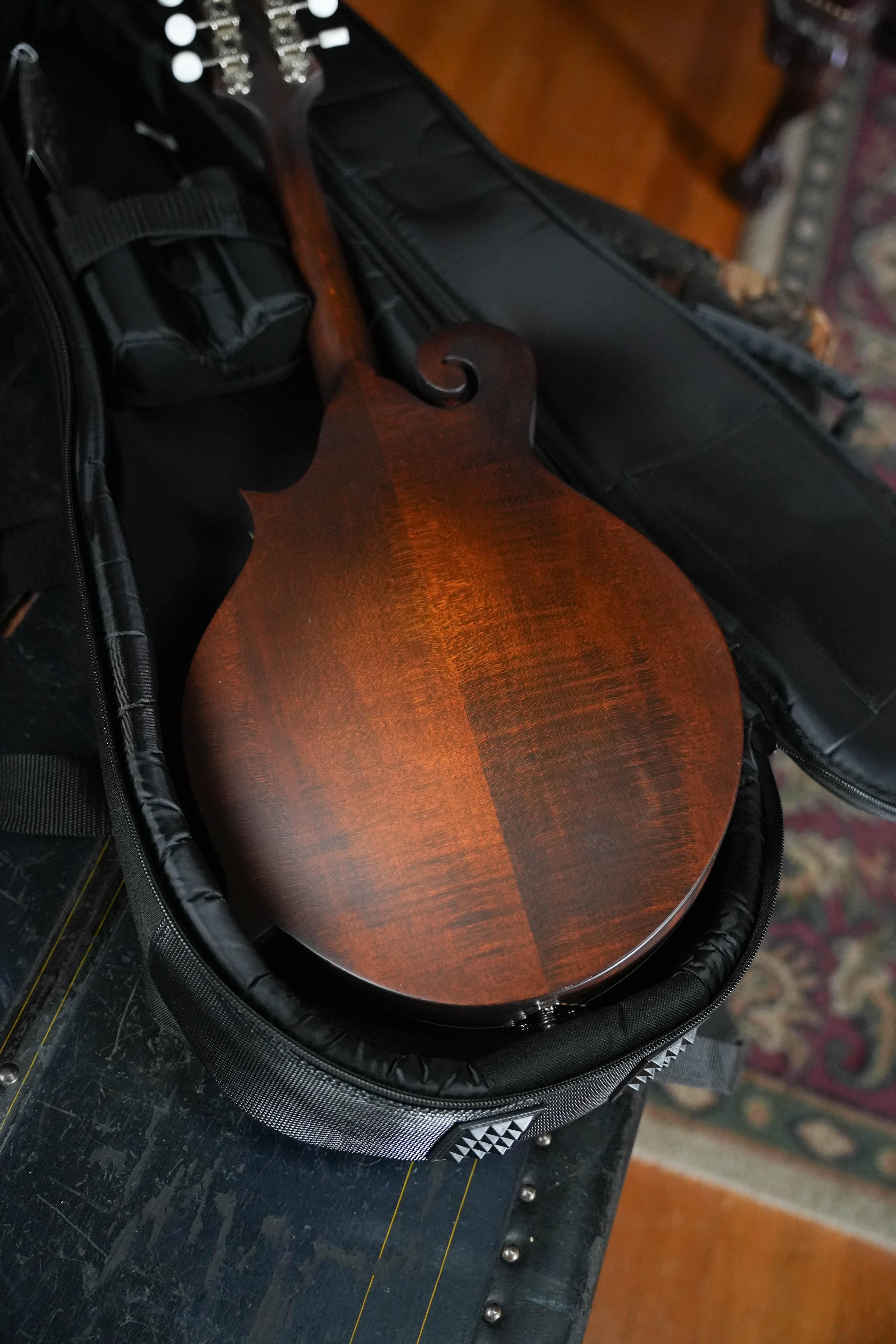
An A-style is the traditional teardrop shape. An F-style adds the scroll on the upper bass side, two extra points on the body, and a scrolled headstock to match. Take the back off both and you'd find the sound chamber is almost identical, which is the whole reason the A-style vs F-style tone question is worth asking at all.
The F-style became the bluegrass look because Bill Monroe played one, first an F-7 and then his famous F-5. If his main mandolin had been an A-style, we think you'd see A-styles in every bluegrass band today. If you want that history, our post on Bill Monroe's 1923 Gibson F-5 tells it.
What the shape changes is the labor. A well-built mandolin of either style has a hand-carved top and back, arched like an archtop guitar, and graduated the way violin makers do it: you start with wood about twice as thick as the finished plate and carve inside and out until some areas are thinner than others. The F-style adds the scroll and points on top of that work, and from what mandolin builders say, it nearly doubles the labor. That labor is most of the price difference. The wood and the sound chamber aren't.
Three A-style vs F-style pairs, played blind
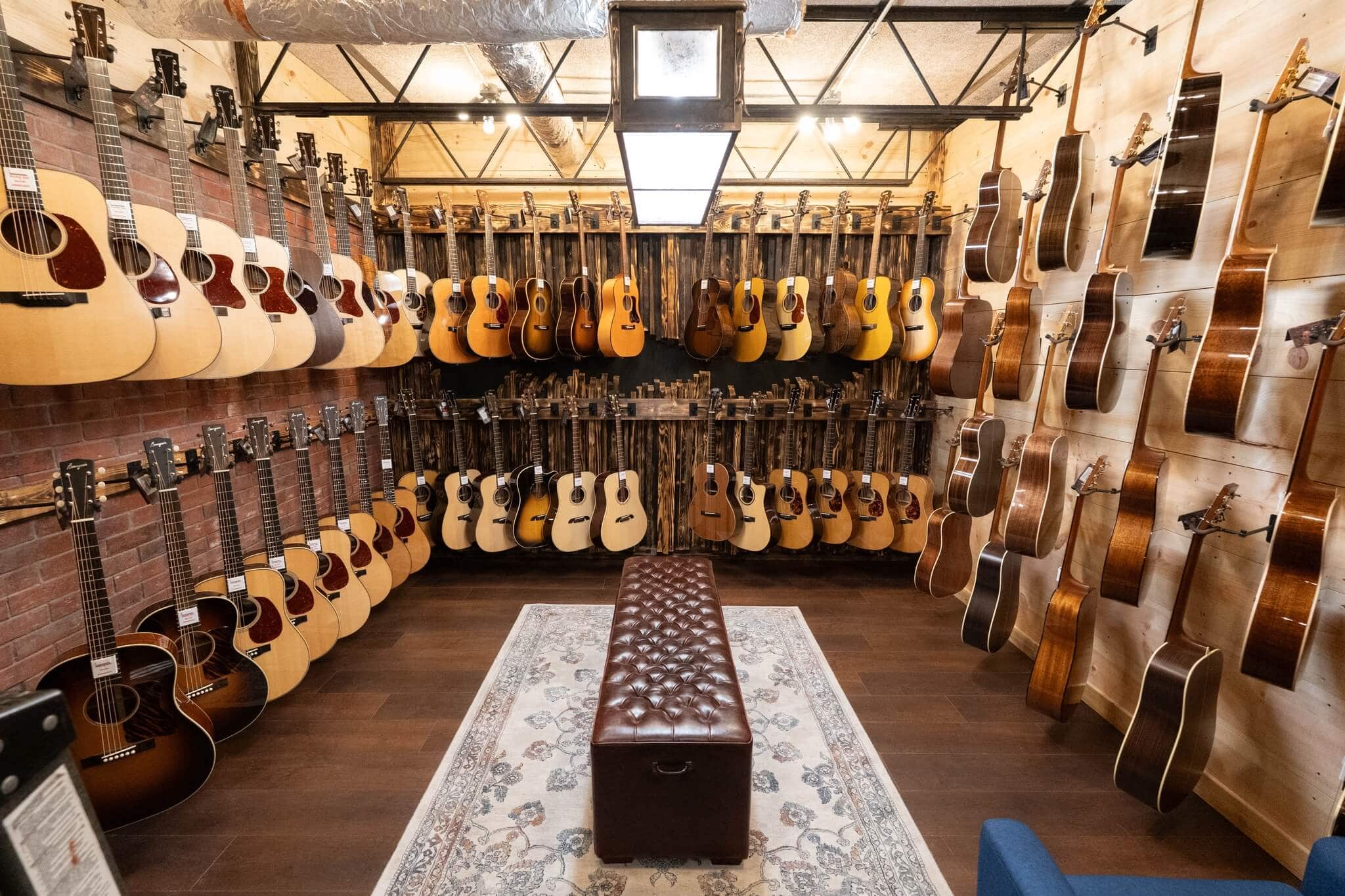
Mandolins vary even within one model, so one pair wouldn't prove much. We used three builders at three price levels, each with an A and an F as close to matched as we had in stock: Eastman's MD305 and MD315 from the same MD300 series, Kentucky's KM-150 against the KM-750 (the closest pairing on the floor, though not the same model level), and two Weber Yellowstones built with the same appointments and wood selection. The Webers were the top of the line we had in both shapes. The rule was simple: if we kept picking the same shape, the shape makes the difference. If our picks were mixed, it comes down to the builder and the individual instrument.
- Jump to 4:16 for the Eastman pair
- Jump to 6:00 for the Kentucky pair
- Jump to 8:35 for the Weber Yellowstones
- Jump to 10:57 for our A-style vs F-style verdicts
A-style vs F-style tone: what we heard
Our picks were mixed. Across the three pairs, here's how they fell:
| Pair | What we picked | Why |
|---|---|---|
| Eastman MD305 (A) vs MD315 (F) | Split | One of us preferred the F. The other found the A played easier and projected a little more |
| Kentucky KM-150 (A) vs KM-750 (F) | One of us: the A-style | Not the same model level, so the comparison is looser |
| Weber Yellowstone A vs F | Almost even | The A sounded like "the one" first. The F had more depth in the low register |
On average, though, there is a pattern. The A-styles tended to be a little more bottom-heavy, rounder in the low mids, and not quite as bright and crisp on top. The F-styles tended to have a bit more bite and a tighter low end. That's the average, and the exceptions are the point: for one of us, the Weber Yellowstone A-style was probably the favorite mandolin of the whole test.
I have played some A-styles that will blow away a lot of F-style mandolins out there.
The case for the F-style
On a stage with a banjo, a loud guitar and a fiddle, the F-style tends to compete better. It cuts, it has that deep, woofy chop, and when you step out for a solo the note separation feels a little more defined. That's why so many bluegrass players reach for one.
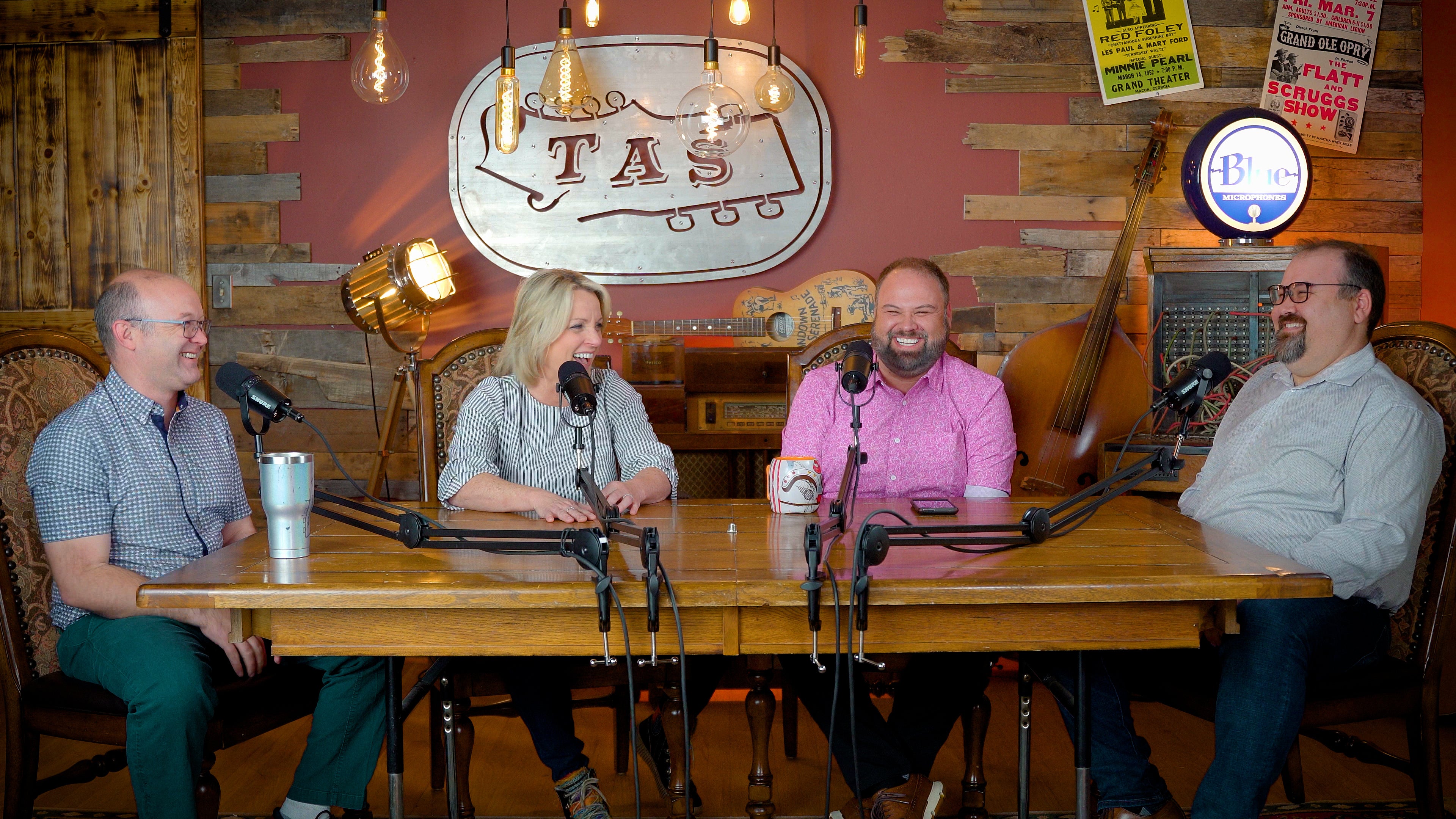
Jeremy grew up on F-styles and admits he was biased against A-styles, mostly because all of his favorite players used F's. Then he watched Adam Steffey go out on the road with an A-style, took one on the road himself, and it was a monster. It changed his mind about what an A-style can do, though he still hears a tonal difference between the two.
There's also a practical point that's easy to overlook. Sitting down, an A-style tends to slide off your leg, so you end up holding it up while you play. The F-style's lower point gives it something to rest on, and that makes a real difference during long practice sessions.
The case for the A-style
We come from a long history of bluegrass, so our ears lean toward the F. But a lot of very good jazz, classical and Celtic mandolinists prefer the A-style almost to a person. If your music isn't built around a chop chord against a banjo, start your search with the A-style.
The bigger reason is price. Because the F-style nearly doubles the carving labor, the same money buys a higher-quality A-style. For a beginner or intermediate player, that's the argument that settles it: put a better A-style next to a lower-quality F-style at the same price, and we'd take the A-style any day. A really good instrument is easier to learn on. Later, if mandolin becomes your thing, you can go find the F-style that fits you, or you may end up buying another A-style.
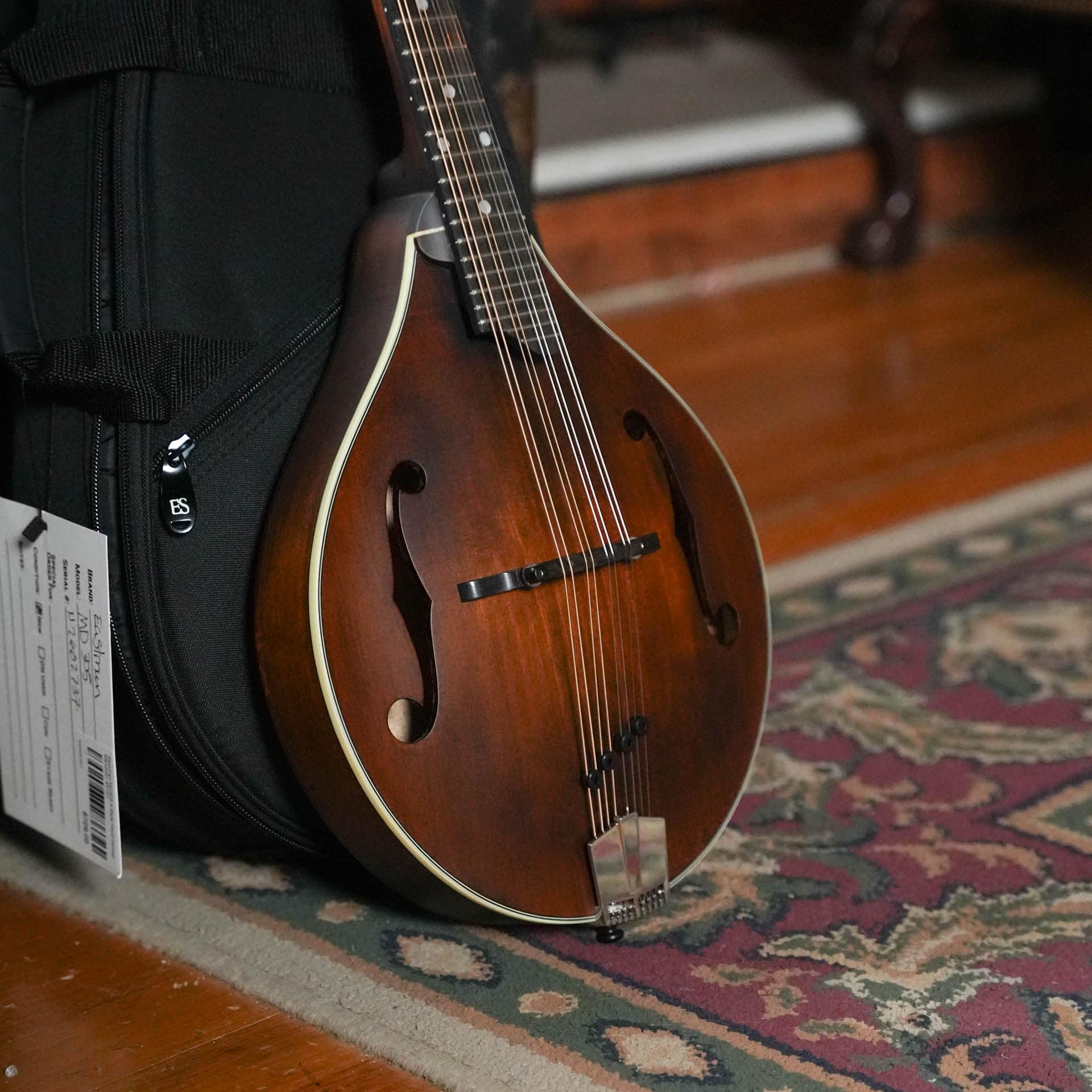
The Eastman pair shows the price gap today. The Eastman MD305 A-style is $729 and the Eastman MD315 F-style is $1,099. Both have a hand-carved solid spruce top, solid maple back and sides, an ebony fingerboard and a gig bag, so the $370 between them is the scroll and points.
Which should you buy?
Here's how we'd decide the A-style vs F-style question for most players:
- Set your budget first. Then look at the best A-style and the best F-style it buys, and compare those two, not two models from different price levels.
- If the A-style is the better-built mandolin at your price, buy it. Don't pay for the scroll on a lesser instrument.
- If you play bluegrass in a loud jam and the F-style is equally well built, take the F. The tighter low end and extra bite earn their keep there.
- Play both if you can. We no longer judge a mandolin by its scrolls. Judge each one by its own character.
Buy the A-style if you're starting out, you play folk, Celtic, jazz or classical, or you want the most mandolin for the money. Buy the F-style if you play bluegrass with a band, you want the look that inspires you to pick it up every day, or you're stepping up after a few years on an A.
For a first carved mandolin, our mandolin under $1,000 comparison puts the MD305 against the PCH M104. If the F-style is where you're headed, the next step up is the Eastman MD815 F-style at $2,419, and our Eastman mandolin models guide walks through every series from the MD300 to the MD800.
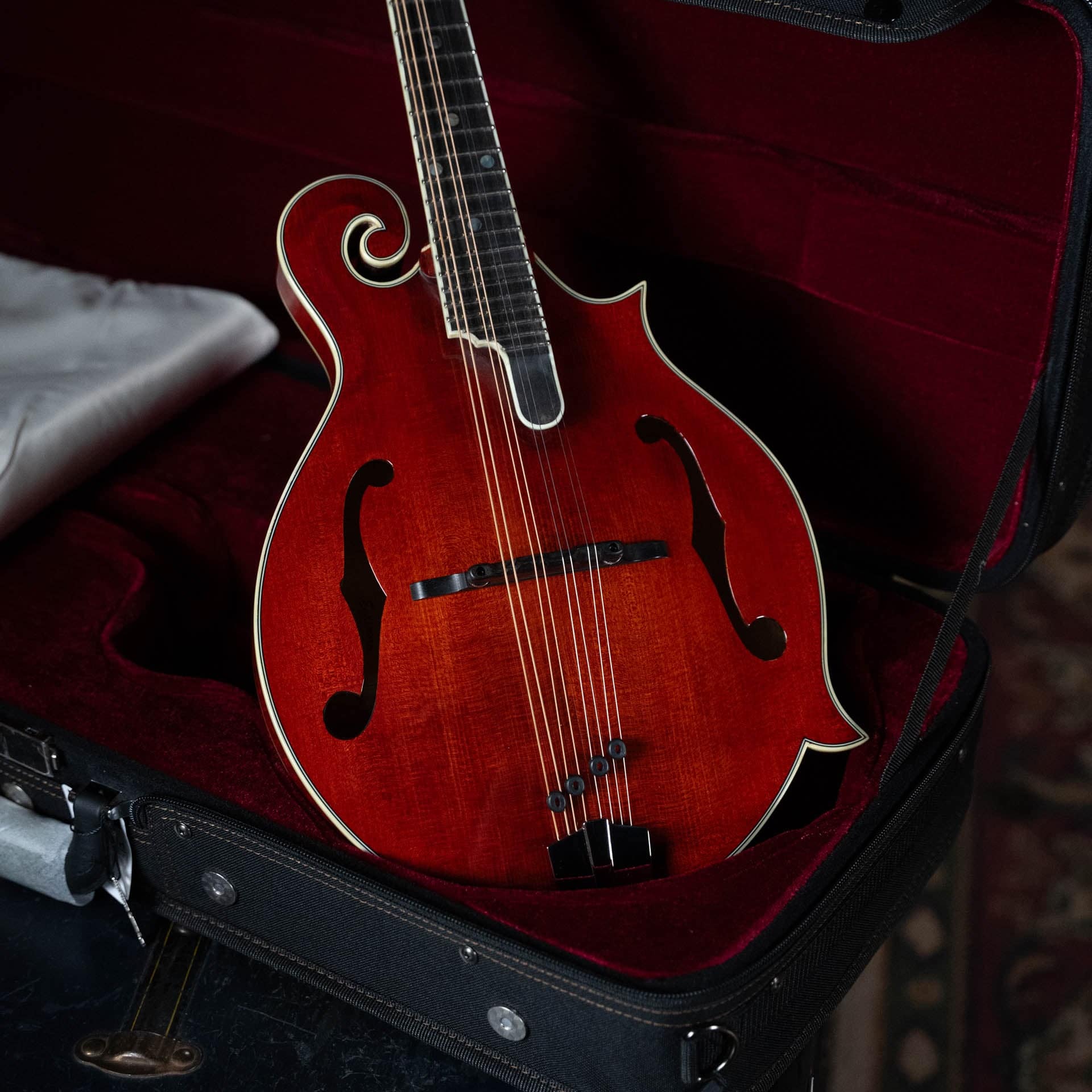
Shopping for an A-style or F-style at The Acoustic Shoppe
We're the #1 worldwide Eastman acoustic guitar dealer, and we carry Eastman mandolins in both shapes. Browse every A-style mandolin and every F-style mandolin in stock, or start with the Eastman mandolins. Kentucky and Weber aren't in stock right now.
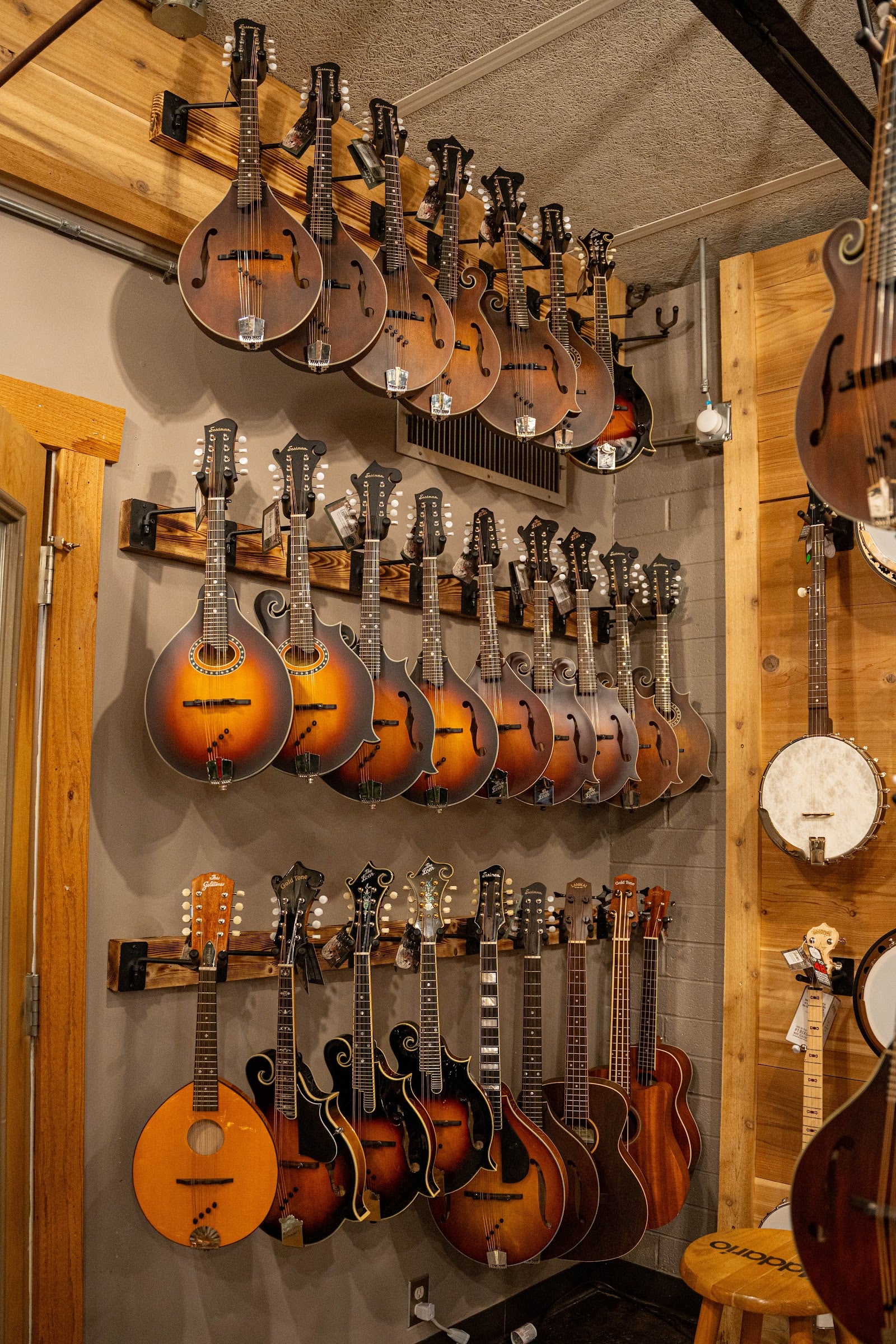
Every mandolin we sell gets our 23-Point Professional Inspection before it ships, so it plays the way it should when the case opens.
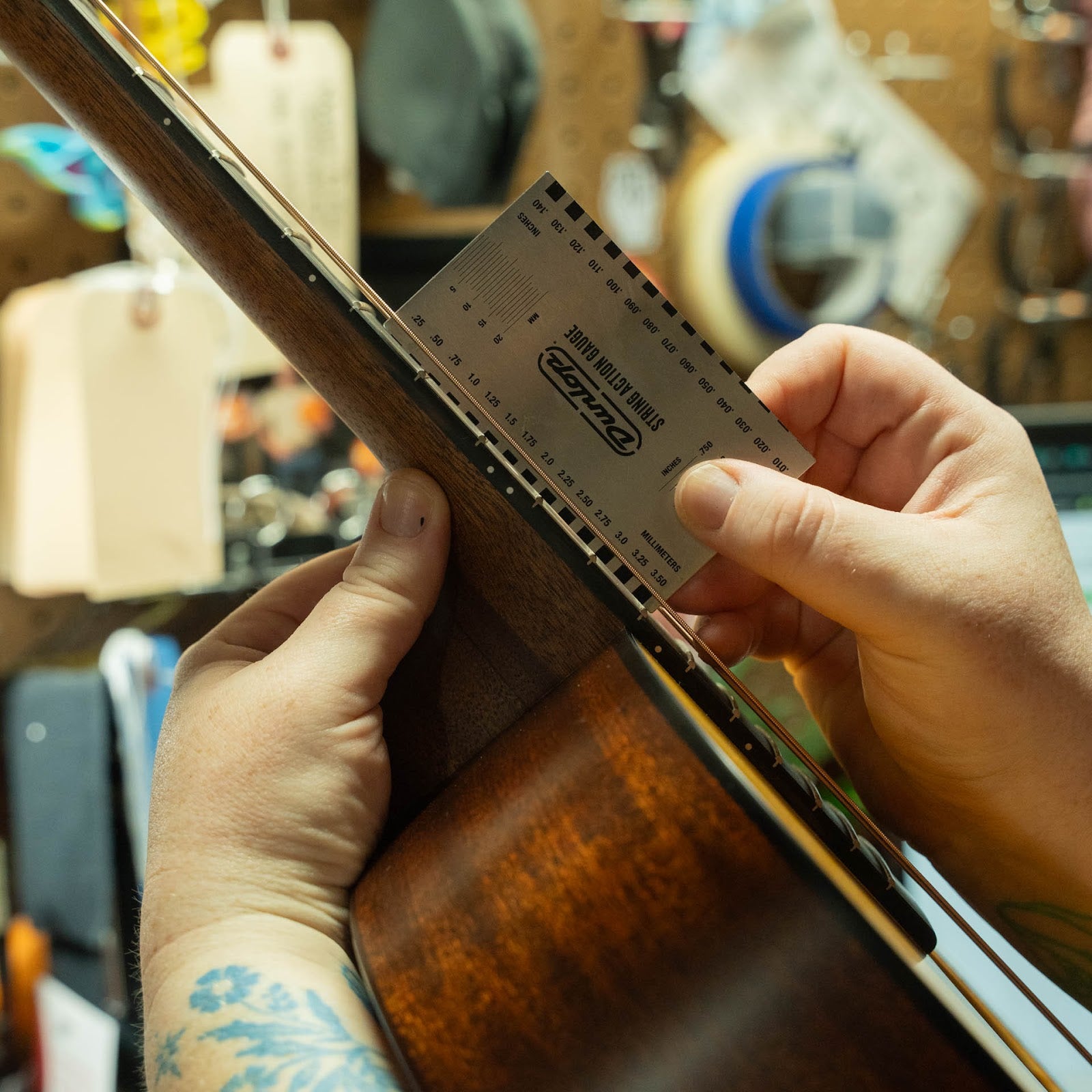
Instruments $1,000 and up, like the MD315 and MD815, are covered by the Dread-Not Guarantee: a full year to trade it in for up to 90% of the pre-tax purchase price in credit, less round-trip shipping, plus a 30-day in-home trial.
Related reading
- Mandolin instrument guide: the mandolin family and your first mandolin
- F-style mandolin: Loar LM-700 vs Eastman MD315
- Eastman MD605: the A-style mandolin for you
If you're still torn on A-style vs F-style, a first-time buyer should take the best-built A-style the budget allows, and a bluegrass player headed for loud jams should save for a well-built F. Either way, play it first if you can.