
Table of Contents
You've played mandolin long enough to know what you want from the next one, and the next step up looks expensive. A hand-carved F-style from a well-known shop can run $8,000 to $15,000. So when a builder you've barely heard of comes in well under that, and you start seeing their mandolins at MerleFest, it's fair to ask whether you're looking at the real thing or a nice-looking shortcut. That's what we wanted this Bulas mandolin review to settle.
So we passed a Bulas F-style and a Bulas A-style around the shop and had everyone who plays mandolin take a turn on both. Nobody came back with a complaint about the tone or the build. The arguments were about which of the two to take home, plus a couple of small things a heavy-handed player should know before buying.
What is a Bulas mandolin?
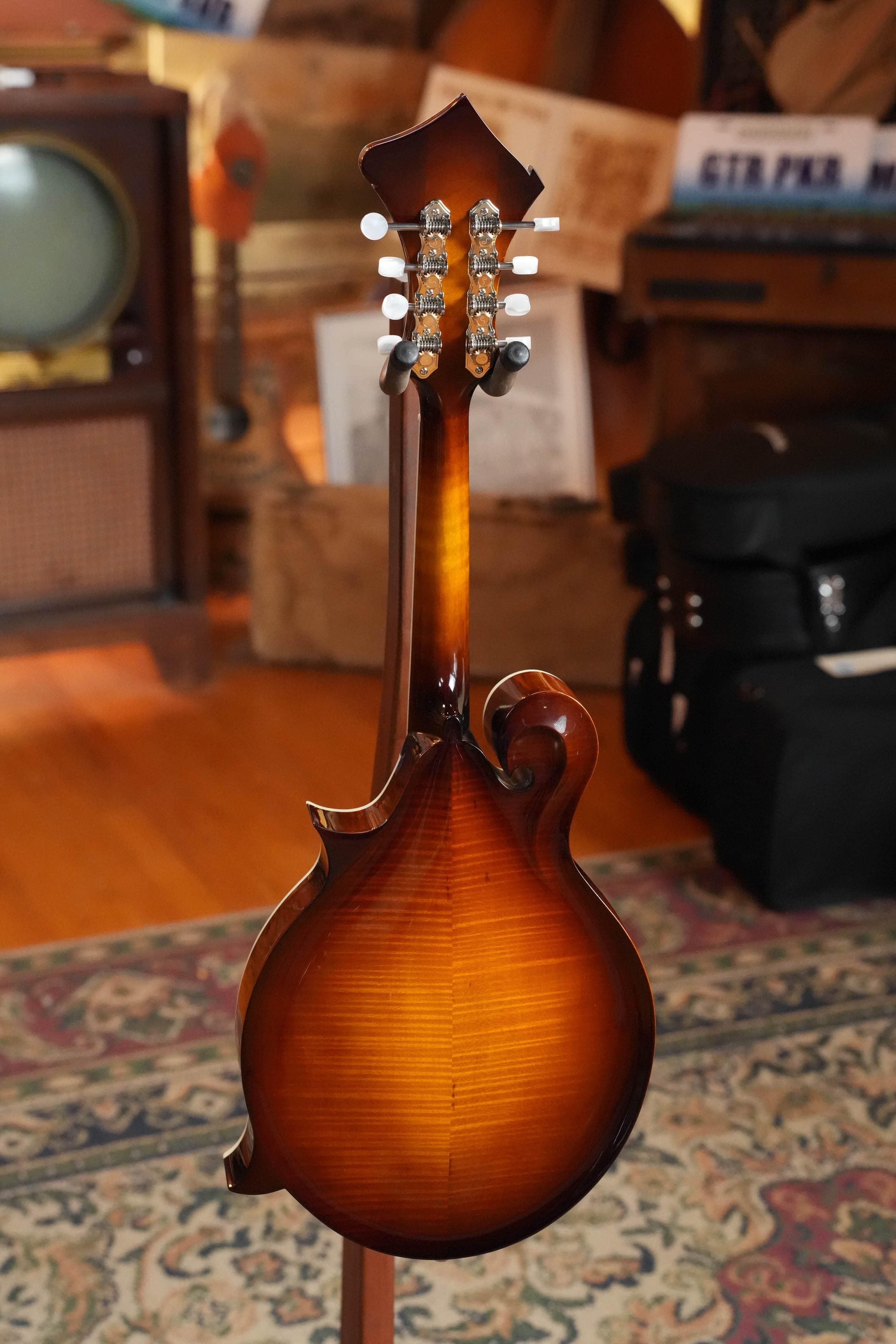
Bulas mandolins are built in Poland by a father and son in their own workshop, and the label inside every one says so. They spend a lot of time getting the tone out of the wood, tapping the tops as they carve them, and they make their own tailpieces and design their own bridges. Every Bulas mandolin we've had in features a Carpathian spruce top with curly maple back and sides.
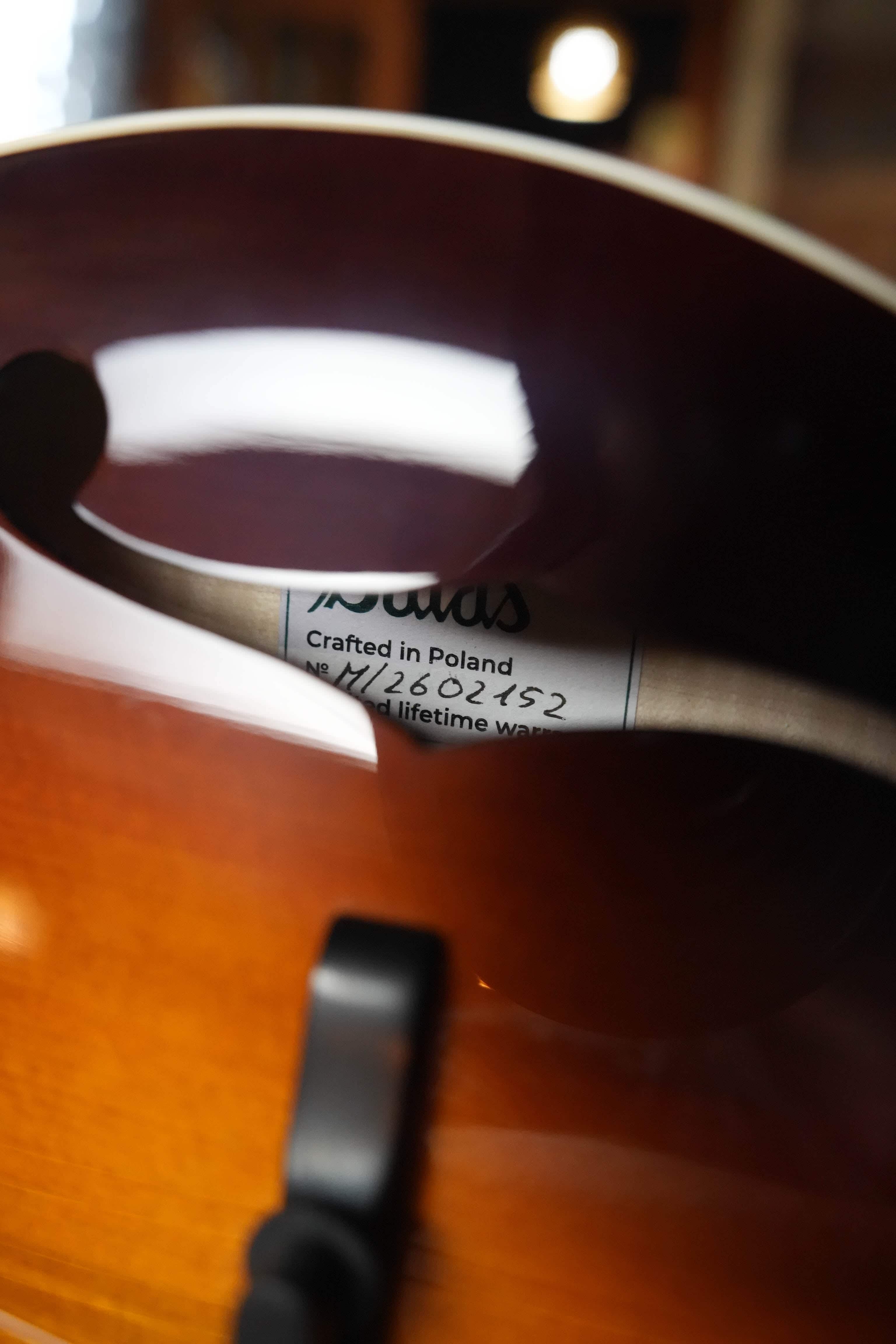
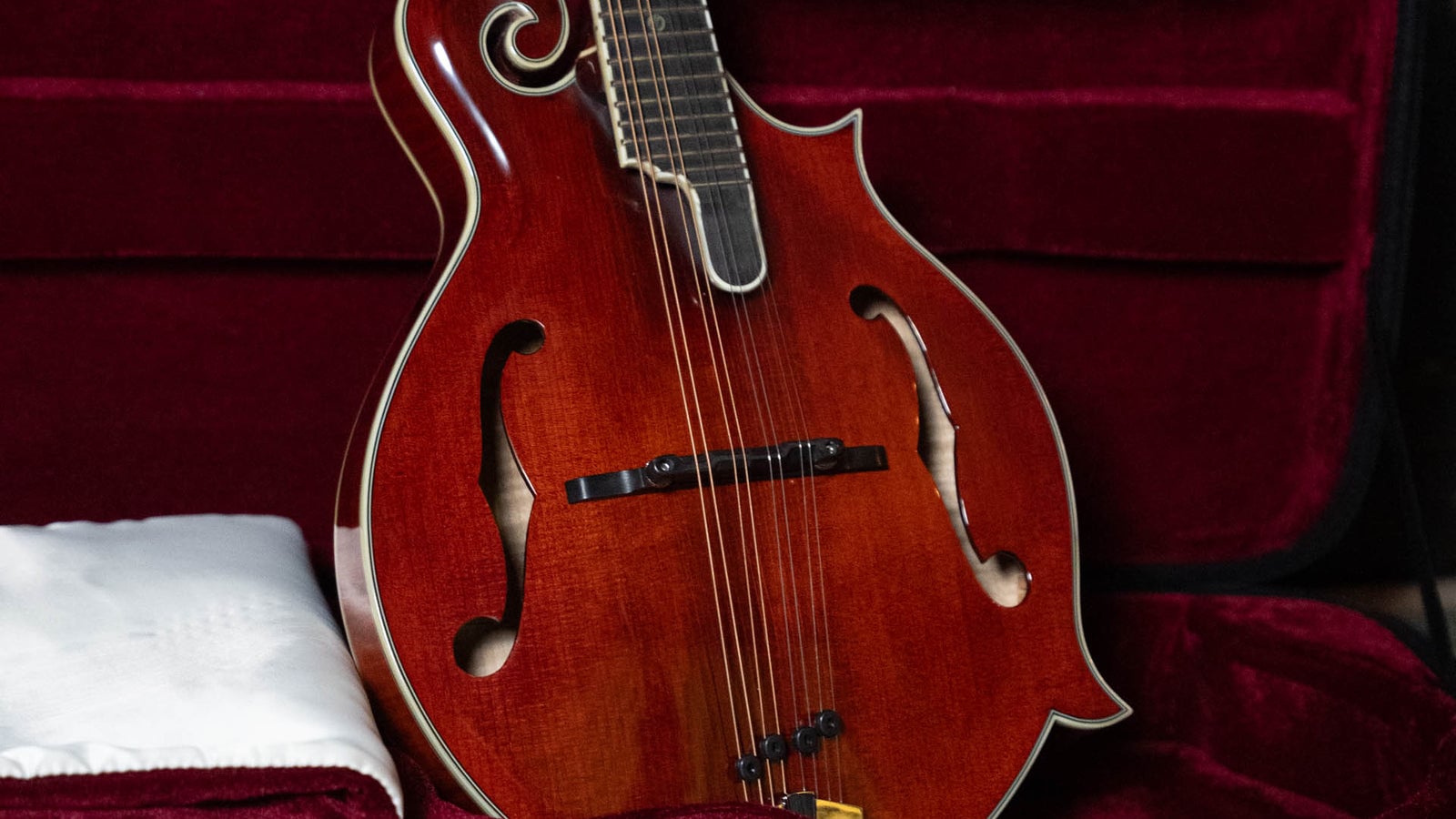
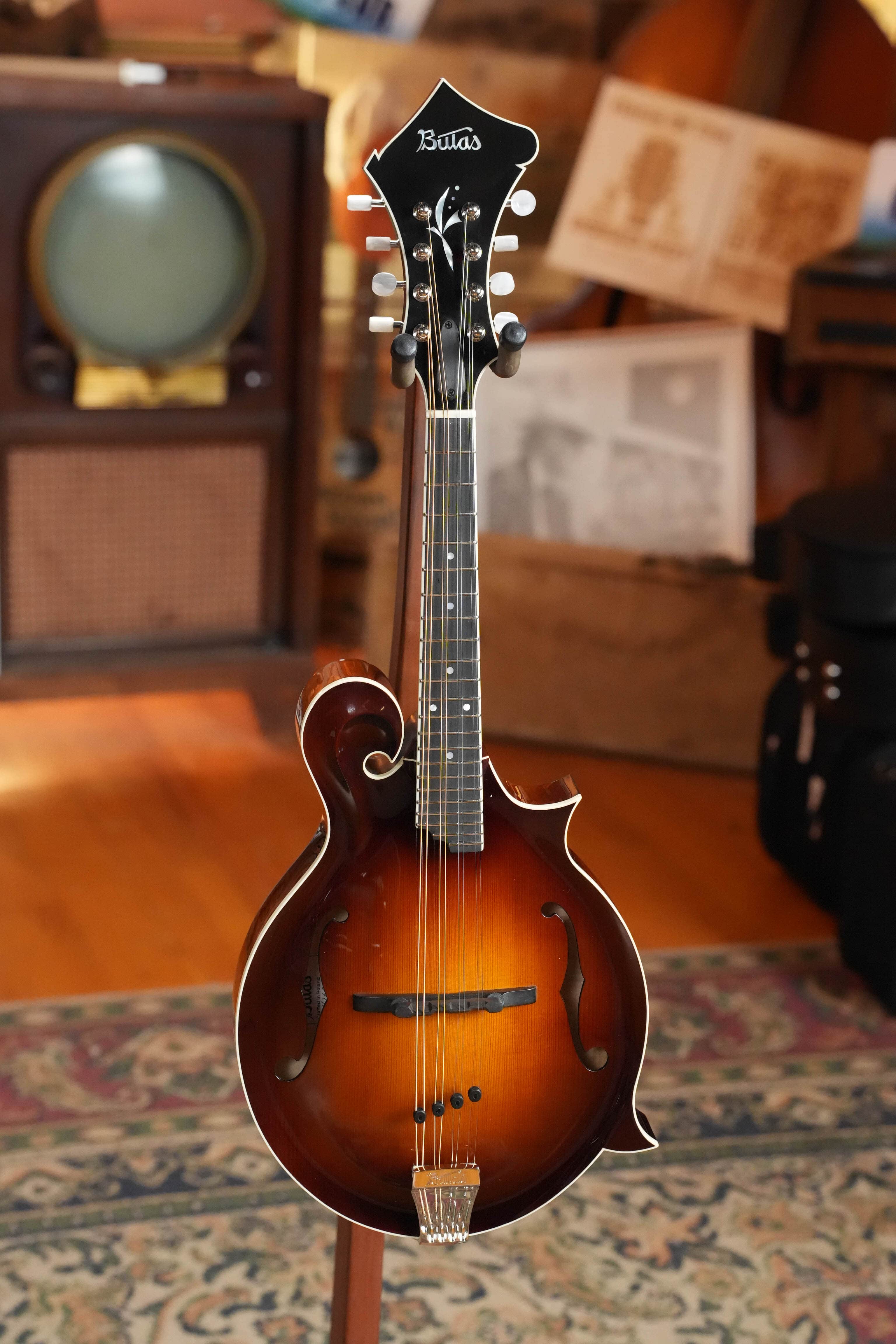
What makes a Bulas stand out on the wall is the design. The scroll is a little exaggerated, closer to a Monteleone than a Gibson, and the side of the body has a recurve that dips down and curves back up. The top has a steeper carve toward the edges, and the headstock takes the scroll shape without cutting out the full scrolls. It still reads as a descendant of the F-5, minus the points that break off when a mandolin tips over, and after so many straight F-5 copies, we liked seeing something different.
How does a Bulas mandolin sound?
Jump to the parts of our Bulas mandolin review you care about:
- First impressions on tone and chop: 1:01
- The design, and who builds them: 6:49
- Setup, neck shape and playability: 10:07
- Who it's for, and whether we'd buy one: 13:44
The word that kept coming up in this Bulas mandolin review was focused. A Bulas has a clean, articulate voice where every note comes out separate and defined, and you hear it most on a fast run, where nothing smears together. One of our players called it a modern approach: a little less of the straight woody chop in the midrange than a traditional F-5 copy, with more clarity and note separation in its place.
That doesn't make them thin. Both mandolins had a deep, full tone, and the chop on the A-style surprised more than one of us with how much wood was in it.
"It's not tinny and piercing. Even those high notes have a roundness to them."The F-style is a little brighter, more percussive and more articulate, with more push behind the chop, which is what you'd expect from the body style. The A-style is the deeper and woodier of the two. Our players split on which one they'd take home, and that tells you the choice comes down to your ear, because neither one is the lesser instrument.
Both were brand new, too. Bulas mandolins are tone bar mandolins, and a new tone bar mandolin tends to sound a little tight until it's been played in. You can hear that in these, and you can also hear where they're headed: the depth is already there, and it should open up a good deal with playing time.
Bulas mandolin review: setup, neck and playability
Small-builder mandolins often come with uneven setups, with one string sitting higher than its neighbor or action that changes across the fretboard. We found nothing like that on either of these. They feel like precision instruments, with a radius fretboard (12 inches on the A-style we have in stock) and a traditional, slightly V-shaped neck most players will settle into right away. Our post on what makes a great mandolin covers why that evenness matters.
"I wouldn't change the setup on either one of these."The action is set low, and that's where we disagreed. One of our players has moved from high action to low for clean, fast notes and couldn't make either Bulas buzz, even playing hard. Another plays with a very heavy right hand and thinks they could get a buzz by digging in. For most players the setup is ready out of the case. If you hit hard, try one at your own attack before you decide.
Bulas mandolin review: F-style or A-style?
If you're still deciding between body styles in general, start with our A-style vs F-style mandolin comparison. Here's how our two compared.
| Bulas F-style | Bulas A-style | |
|---|---|---|
| Tone | Brighter, more articulate and percussive | Deeper and woodier |
| Chop | More push behind it | More wood in it than we expected |
| Look | Exaggerated scroll, recurved sides, scroll-shaped headstock | Fully bound front and back on the one we played |
| Who picked it | Players who like the F-style look and its slight edge in projection | A player with several F-styles who wanted an A-style |
| Prices in our listings (Oct. 2026, USD) | $4,400 to $6,455 | $2,750 to $4,010 |
One of our players already owns a number of F-styles and said the A-style was the one that stood out, because it's the instrument missing from their collection. Another prefers the F-style's look and its small edge in projection, and would happily play either.
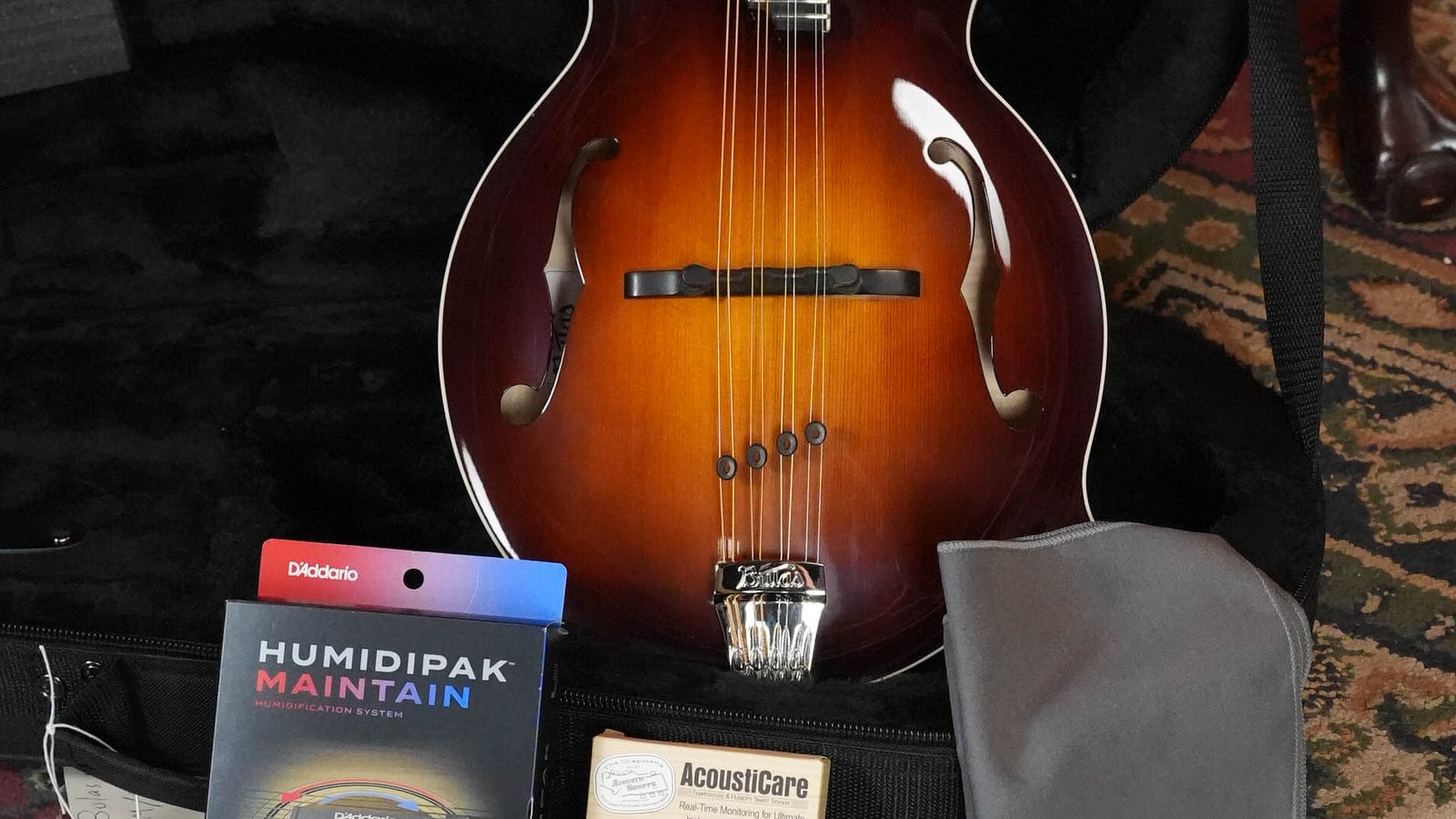
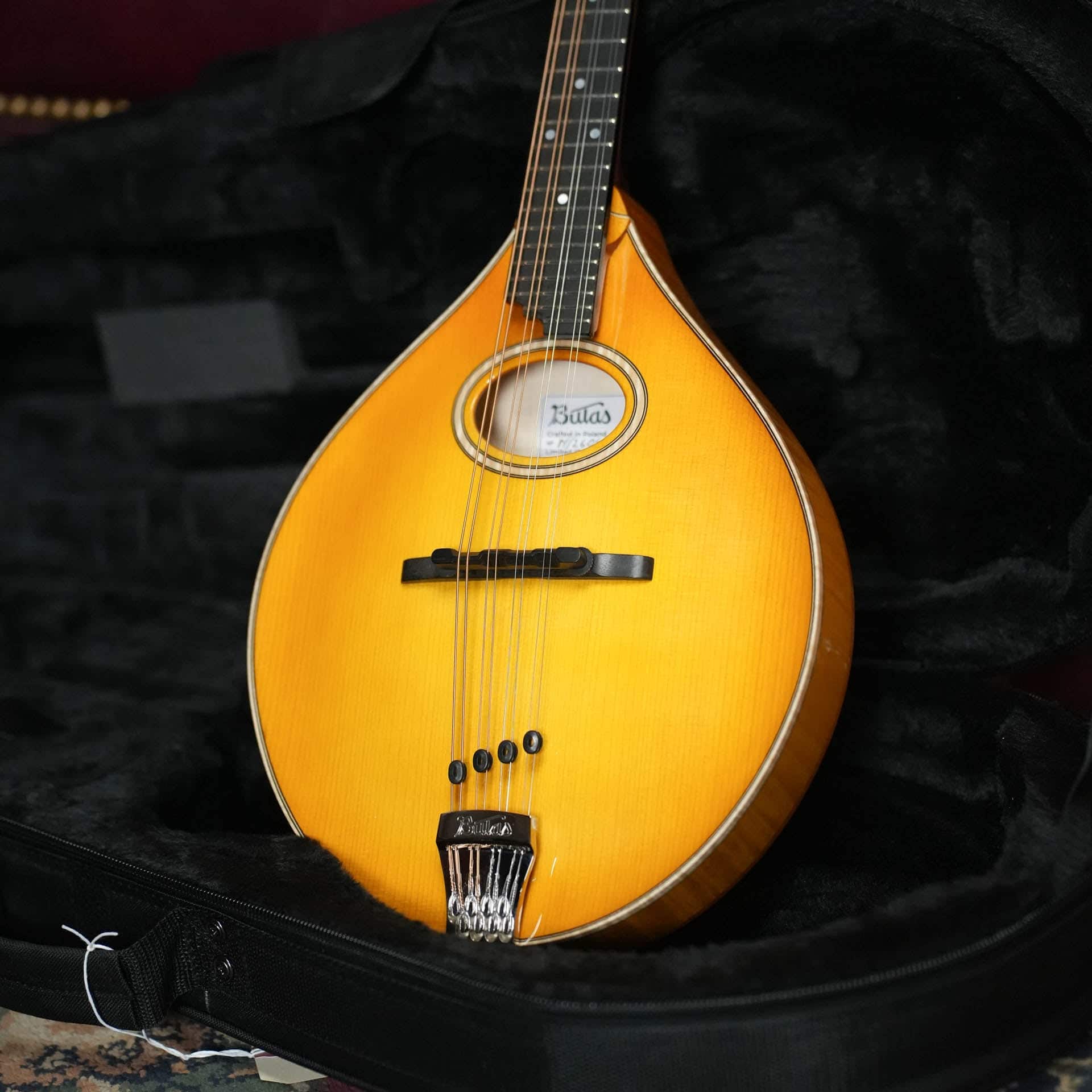
"I would no doubt own one of these if I was playing more."The Bulas in stock right now is a different A-style from the one in this Bulas mandolin review: the Bulas Blonde A-style oval hole mandolin at $3,243.99. It has the same Carpathian spruce and curly maple with simpler trim. An oval hole trades some of an f-hole's chop for warmth and sustain, which suits melody playing, Celtic tunes and songwriting more than bluegrass rhythm.
The drawbacks
- The look isn't for everyone. If you want the classic Gibson F-5 lines, a Bulas won't scratch that itch. It's its own design, and it isn't trying to be a 1923 signed Loar.
- The recurved edge of the side is a little sharp. If you play in short sleeves, plan on a mandolin arm rest.
- The nut width is standard, 1.14 inches on the Blonde. One of our players who mostly plays guitar would like it a touch wider for switching back and forth.
- Stock is thin. Each one is built by hand in a small shop, so they come in small batches, and some arrive already spoken for.
Who should buy a Bulas mandolin?
The short answer from our Bulas mandolin review: it's for the seasoned player looking for an upgrade who wants a professional, hand-built mandolin without spending what a lot of hand-carved F-styles cost. One of our players thinks it's probably the best professional mandolin on the market in its price range.
"For a hand-built instrument at this level, they should easily be going for 8 to 10,000 on the market."They fit bluegrass (we saw plenty of them at MerleFest), we've seen even more of them with folk players, and we think orchestral mandolin players would love the clean, defined voice. If a modern tone and a design of its own appeal to you, a Bulas is worth a serious look. If you want a traditional woody bark and the Gibson look, our Gibson F9 vs Eastman MD815 and F-style mandolin tone test are better places to start, and you can compare every F-style mandolin and A-style mandolin we have.
How a Bulas ships from our shop
Every mandolin we sell goes through our 23-Point Professional Inspection before it leaves, the same bench time a guitar gets.

A Bulas is well over $1,000, so it's covered by the Dread-Not Guarantee: a full year to trade it in for up to 90% of the pre-tax purchase price in credit, less round-trip shipping, plus a 30-day in-home trial. With a builder you may never have seen at a local shop, that means you hear it in your own room before you decide.

Related reading
- Octave mandolin guide: tuning, scale and the models we stock
- Mandolin instrument guide: the mandolin family and your first mandolin
If you've outgrown your first good mandolin and want a hand-built one with its own voice, our Bulas mandolin review comes down to this: put a Bulas on your list. Browse our Bulas mandolins and the rest of our mandolin wall, and if the model and finish you want aren't in stock, ask us about ordering one.