


Table of Contents
"How often should I change my guitar strings?" We hear it at the counter just about every day. If your guitar has started to sound a little flat and lifeless, the strings are the first thing to check. The tricky part is that strings don't fail on a particular day. They fade a little every week, so you get used to the sound, and nothing tells you it's time to change guitar strings until you hear a fresh set and wonder how you put up with the old one.
So here's our answer, the signs that tell you a set is dead, and what makes some strings last a lot longer than others.
How often should you change guitar strings?
We recommend you change guitar strings at least every three months, and sooner if you play every day. That's what we tell every customer, and it lines up with what Jeremy and John have told players for years. Jeremy's rule of thumb is two to three months, and he considers that the most you'd want to go if you play regularly. John's average is tighter, anywhere from four weeks to about two months, because the more you play, the faster a set wears out.
Three months is the outside edge, not a target. Here's how often to change guitar strings for most players:
| How you play | Uncoated strings | Coated strings |
|---|---|---|
| Every day, or you sweat on the strings | Every 4 to 8 weeks | Longer, but check them at 3 months |
| A few times a week | Every 2 to 3 months | Several months; check them at 3 |
| Hardly at all | Still every 3 months | The longest of any set |
That last row surprises people, and we'll get to why in a minute.
Jump to: when to change your strings at 0:15, the tarnish check at 0:48, why you go one string at a time at 1:51, and stretching a new string at 5:57.
Why do guitar strings go dead?
Three things work on a set of strings from the day it goes on. The first is metal fatigue: every time a string is pulled up to pitch and played, the metal tires a little, and old strings lose the tensile strength that keeps them stable. The second is you. Dead skin cells, oils and dirt from your fingers build up on the windings and dull the string's response. The third is the air. Bronze tarnishes and steel corrodes from the moisture around it, whether you play the guitar or not.
"If you're not playing your guitar, that metal still is going to be affected by humidity, stuff in the air, dirt." (John)That's why "I hardly ever play it" doesn't get you out of it. You still need to change guitar strings that have sat on a guitar in the closet for a year, even if they've only been played a dozen times.
How can you tell your strings are dead?
The sound goes first, and it goes so slowly that your ear adjusts to it. Jeremy's point is that you won't notice strings dying, but you'll notice the difference the minute a new set goes on. Until then, listen and look for these signs:
- The tone goes dull. The bright, crisp edge of a new set fades into something dull and muddy.
- Tuning won't hold. Old strings drift and need retuning more often, because the metal has lost its strength.
- They're harder to play. The strings stop feeling smooth under your fingers and the guitar just isn't as easy to play.
- The color changes. Bronze wound strings start bright and yellow, then turn darker and almost gold or brownish as they tarnish. That's the easiest check there is, because you can see it.
- The plain strings look rusty. The unwound high strings turn rusty and dirty looking, and Jeremy calls that one sure-fire way to know it's time.
- They break. A string that's tired from metal fatigue is more likely to snap.
"When you put a fresh set of strings on there, you're going to wonder why you didn't do it sooner." (Jeremy)If two or more of those signs sound familiar, don't wait for the calendar. It's time to change guitar strings.
Do coated strings last longer?
Yes, and by a lot. A coated string has the same core and windings as a standard set, with a thin coating over the top that keeps moisture, dirt and finger oils away from the metal. John's rule of thumb is that coated strings last about twice as long. With the D'Addario XS, he gets four or five times the life out of a set.
"For everyday playing, something I'm not going to have to worry about, I will put these on, not worry about changing them for months on end." (John)The catch is feel and tone. Some players don't like the slick feel of a coated string, and older coated sets sounded dull to John, which is why he held out on them for years. The XS changed his mind because it sounds close to an uncoated set, and it's now what he puts on every guitar he doesn't play regularly. Our blind test of four acoustic string sets covers how they compare in tone and feel.

Even a coated set wears out eventually. When an XS breaks, John's take is that you've been playing it five times as long, so the metal fatigues in the end. Check coated sets at three months, and change guitar strings of any kind when the signs above show up.
What makes strings wear out faster?
How often you need to change guitar strings depends mostly on three things:
- How much you play. A daily player wears a set out far faster than someone who plays on weekends, which is why John's average is closer to a month or two.
- Sweat and skin. Oils and dead skin from your fingers settle into the windings. If your strings turn dark within a few weeks, a coated set is worth a try.
- Where the guitar lives. Humidity and the air around the guitar work on the metal even in the case. Our humidity basics guide covers keeping the case in a safe range.
A quick wipe of the strings with a soft cloth after you play takes the oils off before they settle in. It won't make a set last forever, but it helps. Our acoustic guitar care guide has the rest of the routine.

Can you change guitar strings yourself?
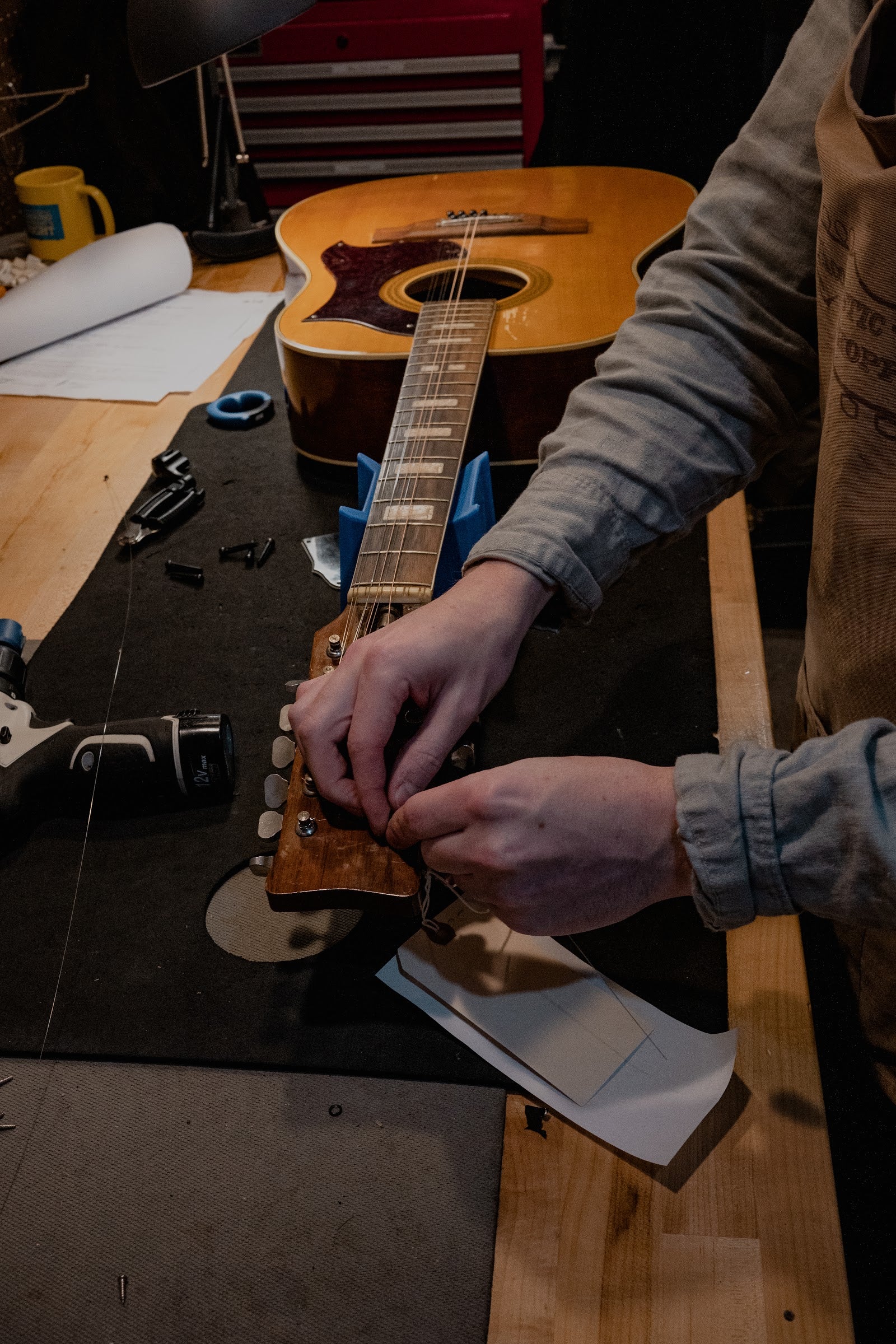
Absolutely, and it gets quick once you've done it a few times. Jeremy's video above walks through four ways to wind a string at the tuning peg, and a few of his tips make the first string change much easier:
- Do one string at a time if you're new to it. It doesn't hurt a guitar to take every string off, but one at a time keeps you from losing track.
- Trace the string to its tuning peg and pluck it as you turn. If the pitch goes up while you're loosening, you're turning the wrong way.
- Seat the ball end against the bridge plate. Push the string in, set the bridge pin on top of it and pull up gently so the plate holds the ball end, not the pin.
- Stretch each new string with your thumb and fingers once it's near pitch, then retune. You'll do a lot less tuning over the next few days.
- Tune each new string to the one beside it at the fifth fret, or the fourth fret when you go from the G string to the B.
A D'Addario Pro-Winder makes it faster to change guitar strings at home, because it winds, clips and pulls bridge pins in one tool. One caution: on a mandolin, a banjo or any archtop with a floating bridge, never take all the strings off at once. String tension is what holds that bridge in place.
When you buy an instrument from us, you start with a fresh set. Every instrument we ship goes through our 23-Point Professional Inspection and then gets new strings, wound with the same method Jeremy demonstrates above, before it's packed.

What about mandolin, banjo and ukulele strings?
The same things kill them: playing, skin oils and the air. We give mandolin, banjo and ukulele players the same three-month check, and the same signs apply. After a mandolin restring, our mandolin tuning guide gets the pairs back in pitch. Remember the floating-bridge rule from above: one string at a time.

Related reading
Where to get your next set
If your strings are dull, drifting out of tune or turning dark, change them now and plan the next change for three months out. If you restring often and want the plain, honest sound of a standard set, the D'Addario EJ16 is the light set Jeremy uses in his string-change videos. If you'd rather change guitar strings less often, the D'Addario XS light is the coated set we'd pick. You'll find every set we carry by instrument:
- Acoustic guitar strings, plus the coated and treated strings that last the longest
- Mandolin strings
- Banjo strings
- Ukulele strings
- Fiddle and violin strings
And if it's the guitar that's ready for an upgrade, not just the strings, every instrument in our acoustic guitars collection ships inspected and freshly strung.
Acoustic Shoppe FAQ
How often should I change my guitar strings?
At least every three months, and sooner if you play every day. Jeremy treats two to three months as the most a regular player should go, and John's average for a busy player is four weeks to about two months. Three months is the outside edge, not a target.
Do guitar strings go bad if you don't play them?
Yes. Humidity, moisture in the air and dirt work on the metal even while the guitar sits in its case, so bronze tarnishes and plain steel strings corrode. A set that's been on a rarely played guitar for a year still needs changing.
How do I know my guitar strings are dead?
The tone turns dull and muddy, the guitar won't stay in tune, the strings feel rougher and are harder to play, and they break more easily. You can also look: bronze wound strings turn darker and brownish instead of bright yellow, and the plain strings start to look rusty.
Are coated strings worth it?
For most players who don't restring often, yes. John's rule of thumb is that coated strings last about twice as long, and he gets four or five times the life from a D'Addario XS set. The catch is the slick feel some players don't like, and some older coated sets sound dull, so the XS is the coated set we'd start with.
Should I take all the strings off at once when I restring?
On a flat-top guitar it doesn't hurt the guitar, but one string at a time is easier if you're new to it. On a mandolin, banjo or archtop with a floating bridge, always change one string at a time, because string tension is what holds the bridge in place.