


Table of Contents
- What is standard mandolin tuning?
- How do you tune a mandolin with a clip-on tuner?
- How do you tune a mandolin by ear?
- Clip-on, strobe, fork or ear: which method should you use?
- Why won't my mandolin stay in tune?
- Accessories that keep a mandolin in tune
- Does a better mandolin hold its tuning?
- Ready to play? Start here.
- Acoustic Shoppe FAQ
A mandolin that is out of tune by a few cents sounds sour in a way a guitar never does, because every note rings on two strings at once. This guide shows you how to tune a mandolin to standard GDAE with a clip-on tuner, with a tuning fork, and by ear, and it covers the habits that keep all four pairs locked together through a whole jam. We tune mandolins every day at our shop in Springfield, and the same few steps work on a first A-style and on a carved F-5.
What is standard mandolin tuning?
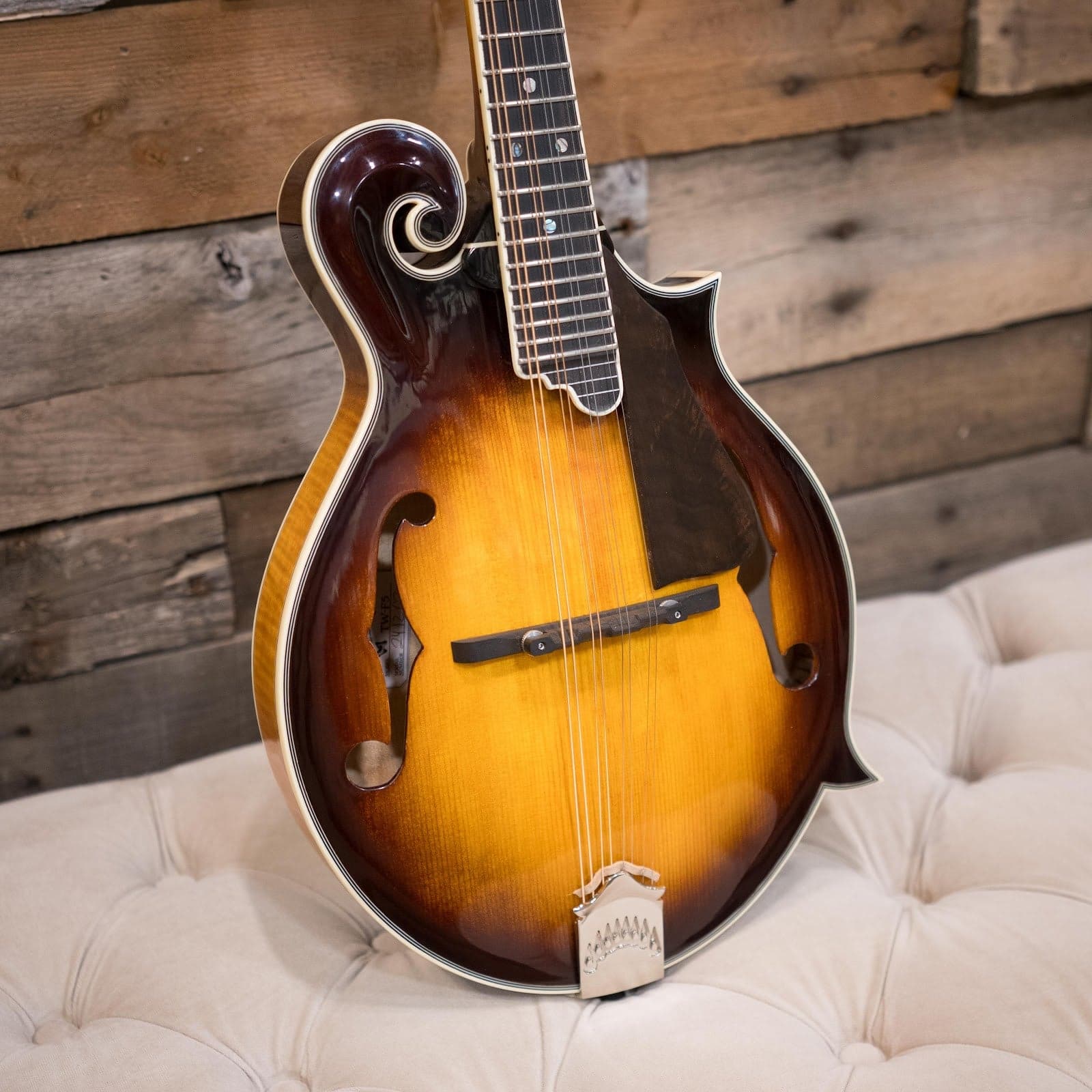
Standard tuning is G, D, A and E from the lowest pair to the highest, the same notes as a violin. The mandolin has eight strings in four pairs called courses, and both strings in a course sit on the same note. Because the strings are tuned in fifths, each course sits seven frets above the one below it, and that pattern is what lets you check your tuning without a tuner at all. If you're brand new to the instrument, our Mandolin 101 guide covers the parts and terms used below.
| Course | Note | Pitch | Frequency | Fret to match the next course |
|---|---|---|---|---|
| 4th (lowest, thickest) | G | G3 | 196.00 Hz | 7th fret gives D |
| 3rd | D | D4 | 293.66 Hz | 7th fret gives A |
| 2nd | A | A4 | 440.00 Hz | 7th fret gives E |
| 1st (highest, thinnest) | E | E5 | 659.26 Hz | none |
The rest of the mandolin family uses the same idea. A mandola is tuned CGDA, a fifth lower, and an octave mandolin is tuned GDAE one octave below the mandolin. If you know how to tune a mandolin, you can tune all three. Our complete guide to the mandolin family goes through each one, and you can explore our mandolin lineup to see every body style we have in stock.
How do you tune a mandolin with a clip-on tuner?
A clip-on tuner is the fastest and most reliable way to learn how to tune a mandolin, and it works in a loud room because it reads vibration through the headstock instead of listening through a microphone. Here is the order to follow.
- Clip the tuner to the headstock with the screen facing you, and set it to chromatic mode at A=440.
- Start with the G course. Pluck one string of the pair and turn its tuning key until the display reads G with the needle centered.
- Pluck the second G string alone and bring it to the same reading. Then play both together and listen. A slow wobble in the sound means they still disagree, so nudge the second string until the wobble stops.
- Move to D, then A, then E, and tune each pair the same way.
- Go back to G and check all four courses a second time. Raising the tension on the high strings pulls the neck and top a little, which drops the low strings slightly.
Always tune up to the note. If a string is sharp, lower it below the pitch and bring it back up. The gear in the tuning machine then holds tension in the direction of the pull, and the string stays put when you start playing hard.
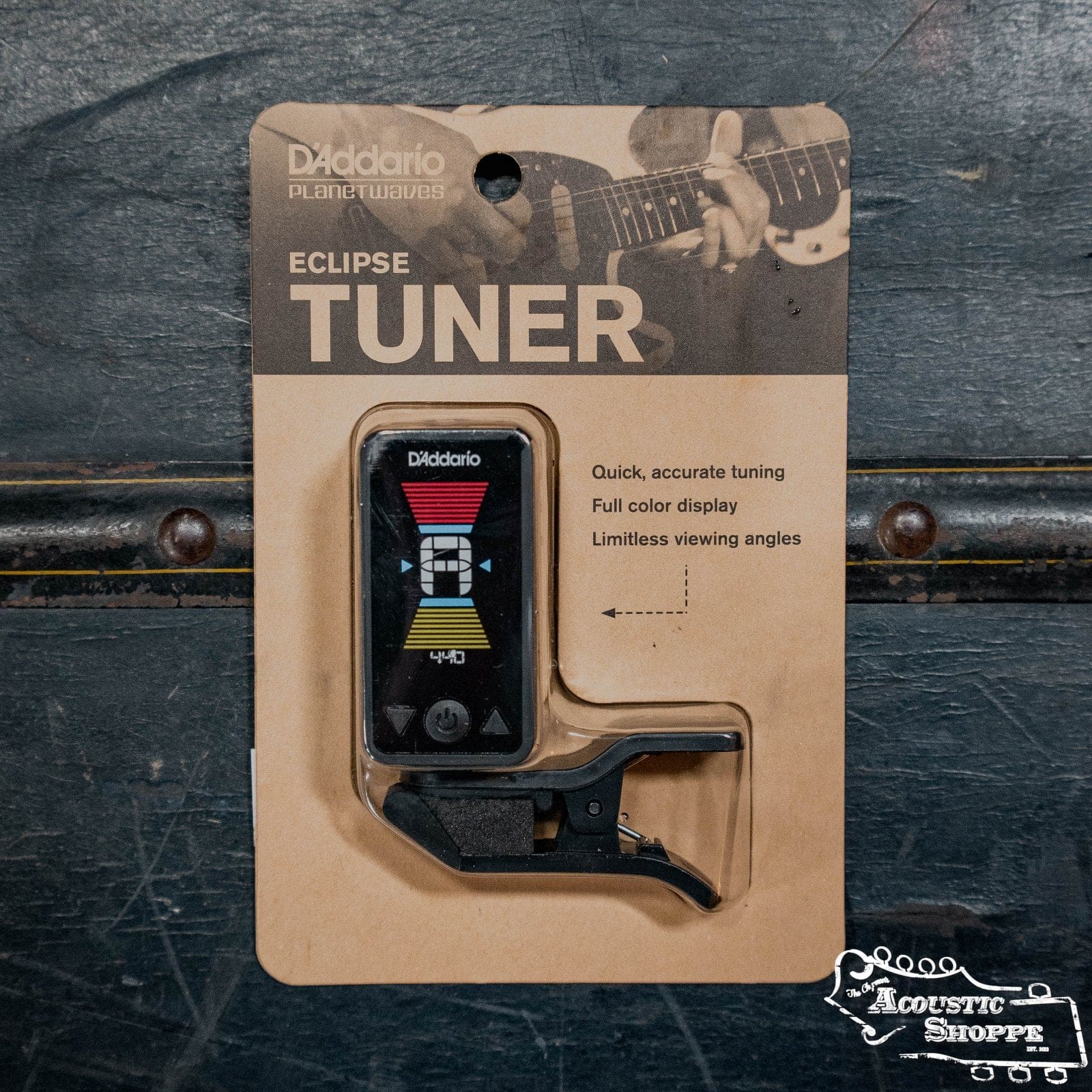
Two of the mandolin tuners we stock show the range. The D'Addario Eclipse is a $17.99 chromatic clip-on that mounts in front of or behind the headstock. The Peterson StroboClip HD is a $59.99 strobe tuner accurate to a tenth of a cent, which matters on a mandolin because a pair that is two cents apart already sounds chorused.
How do you tune a mandolin by ear?
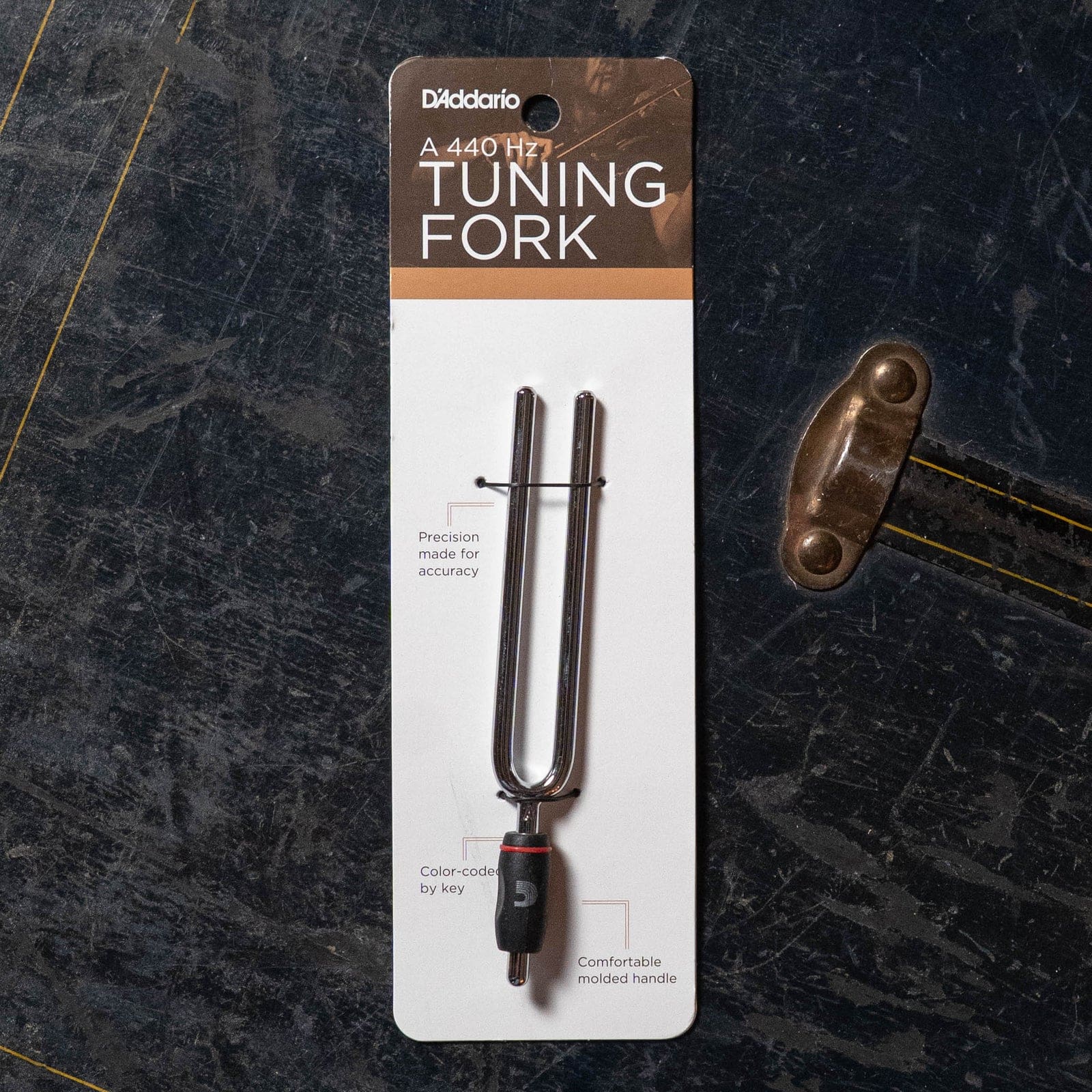
Learning how to tune a mandolin by ear makes you a better player, because it trains you to hear the beats between two strings that a tuner only shows as a needle. You need one reference note, and a tuning fork in A is the traditional choice. Tap it on your knee, rest its base on the mandolin's top, and tune the A course to the note it rings. A fork needs no battery, so you can tune a mandolin with it anywhere.
From that A you can work outward with the seventh-fret pattern:
- Fret the D course at the 7th fret and tune it until it matches the open A.
- Fret the G course at the 7th fret and tune it until it matches the open D.
- Fret the A course at the 7th fret and tune the open E course to match it.
- Play each pair together and listen for the beating to slow down and stop.
The beat speed tells you how far apart two strings are. Fast beating means a big gap, slow beating means you are close, and a clean, still note means the pair is in unison. Once you hear it, you will notice it in every jam you walk into.
Clip-on, strobe, fork or ear: which method should you use?
| Method | Accuracy | Loud room | What it costs | Best for |
|---|---|---|---|---|
| Clip-on chromatic tuner | About 1 cent | Works well | $18 to $30 | Every player, every day |
| Strobe clip-on tuner | 0.1 cent | Works well | $60 to $80 | Matching pairs exactly, stage and studio |
| Tuning fork in A | Exact for one note | Hard | About $15 | Ear training and quiet rooms |
| Relative tuning by ear | Depends on your ear | Hard | Free | A backup when the battery dies |
Our advice is simple. Buy a clip-on tuner first, learn the seventh-fret check anyway, and add a strobe tuner once you start recording or playing out. Whichever tool you pick, you tune a mandolin the same way: one pair at a time, always up to the note. The ear method is what saves you when a pair sounds sour in the middle of a song and there is no time to reach for the tuner.
Why won't my mandolin stay in tune?
Knowing how to tune a mandolin is half the job. Keeping it there is the other half, and most tuning trouble comes from four places, none of them the tuner.
- New strings. Fresh strings stretch for a day or two. Tune, pull each string gently away from the fretboard along its length, and tune again until it holds.
- The floating bridge. A mandolin bridge is held in place only by string pressure, so it can slide during a string change. If your 12th-fret notes are sharp or flat compared with the 12th-fret harmonic, the bridge has moved and the intonation needs to be reset.
- Humidity and temperature. A carved spruce top moves with the weather. A mandolin that leaves a warm house for a cold truck will go flat, and one that dries out in winter can also develop high frets and buzz.
- Worn nut slots. If a string pings as you tune, it is catching in the nut. A little graphite in the slot usually cures it, and a badly cut slot needs a tech.
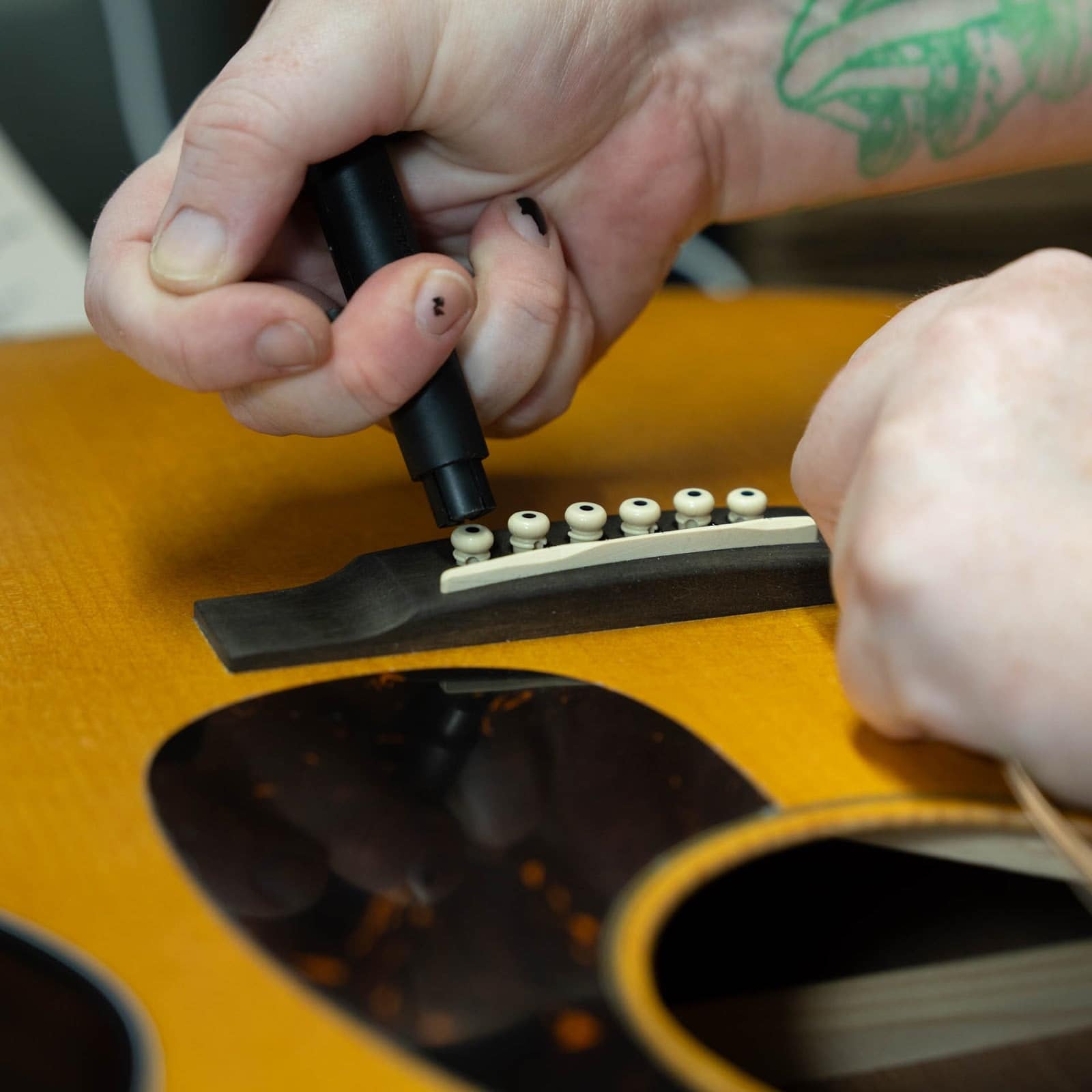
Every instrument we ship passes our 23-Point Professional Inspection, which covers bridge placement, intonation, nut slots and fret level before the mandolin goes in the box. A mandolin with those four things right holds its tuning through a full set.
Accessories that keep a mandolin in tune
Three small purchases make tuning faster and keep your mandolin stable between sessions.
- A clip-on tuner that lives on the headstock. Leave it on during the jam and check between tunes. Our mandolin tuners run from the Eclipse up to strobe models.
- A humidifier for the case. Stable humidity keeps the top and neck steady, and that keeps the strings in tune. Our humidifiers and care products include the D'Addario Humidipak two-way starter kit and replacement packets.
- The right picks. A heavy pick with a rounded edge gives a cleaner, steadier note, and that makes it easier to hear whether a pair is in unison. Try a few from our mandolin picks.

If you play standing up, a strap also helps. A mandolin that hangs at the same angle every night gets tuned under the same tension every night. We carry mandolin straps in leather and cloth, and mandolin arm rests keep your forearm off the top so your arm does not damp the sound while you check a pair.
Does a better mandolin hold its tuning?
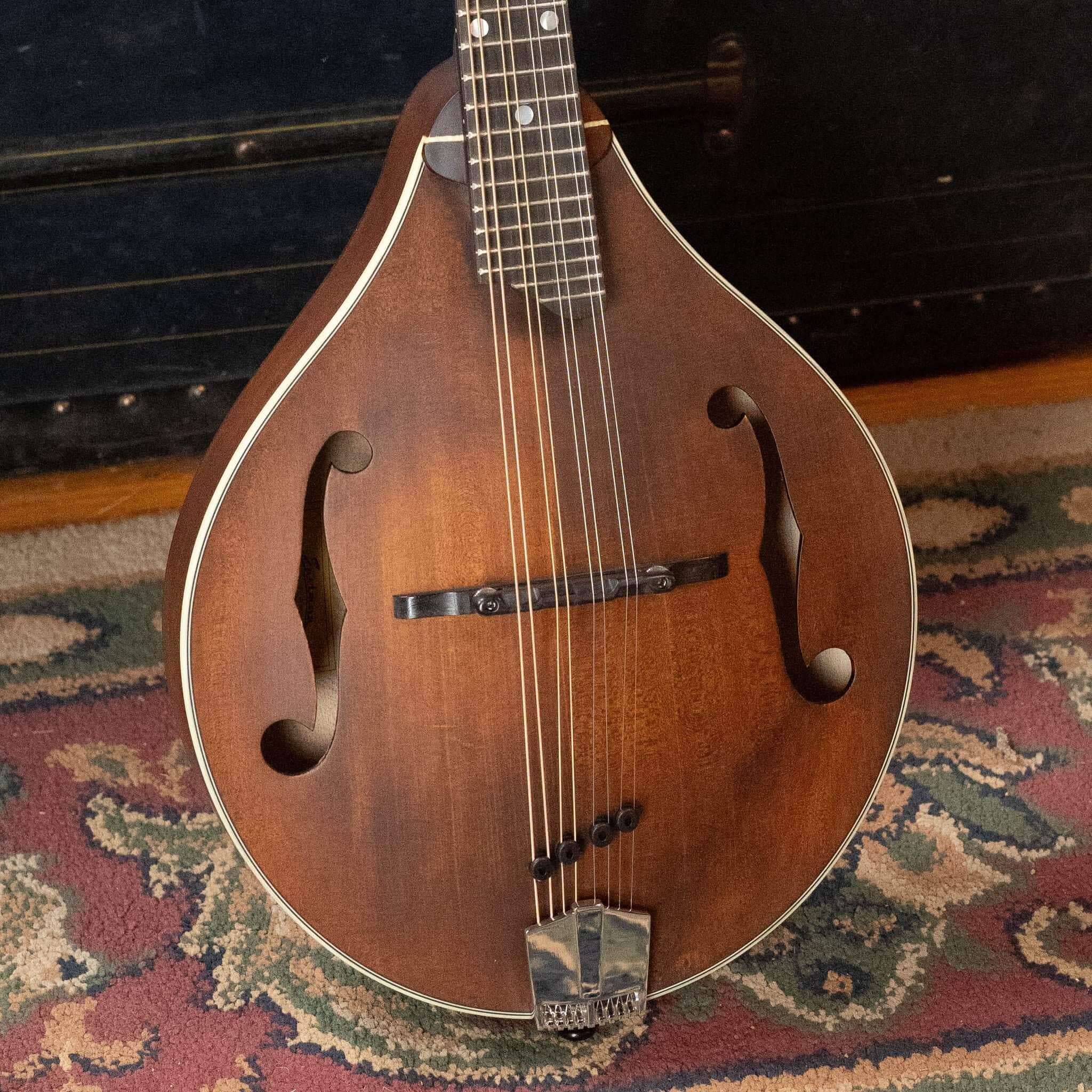
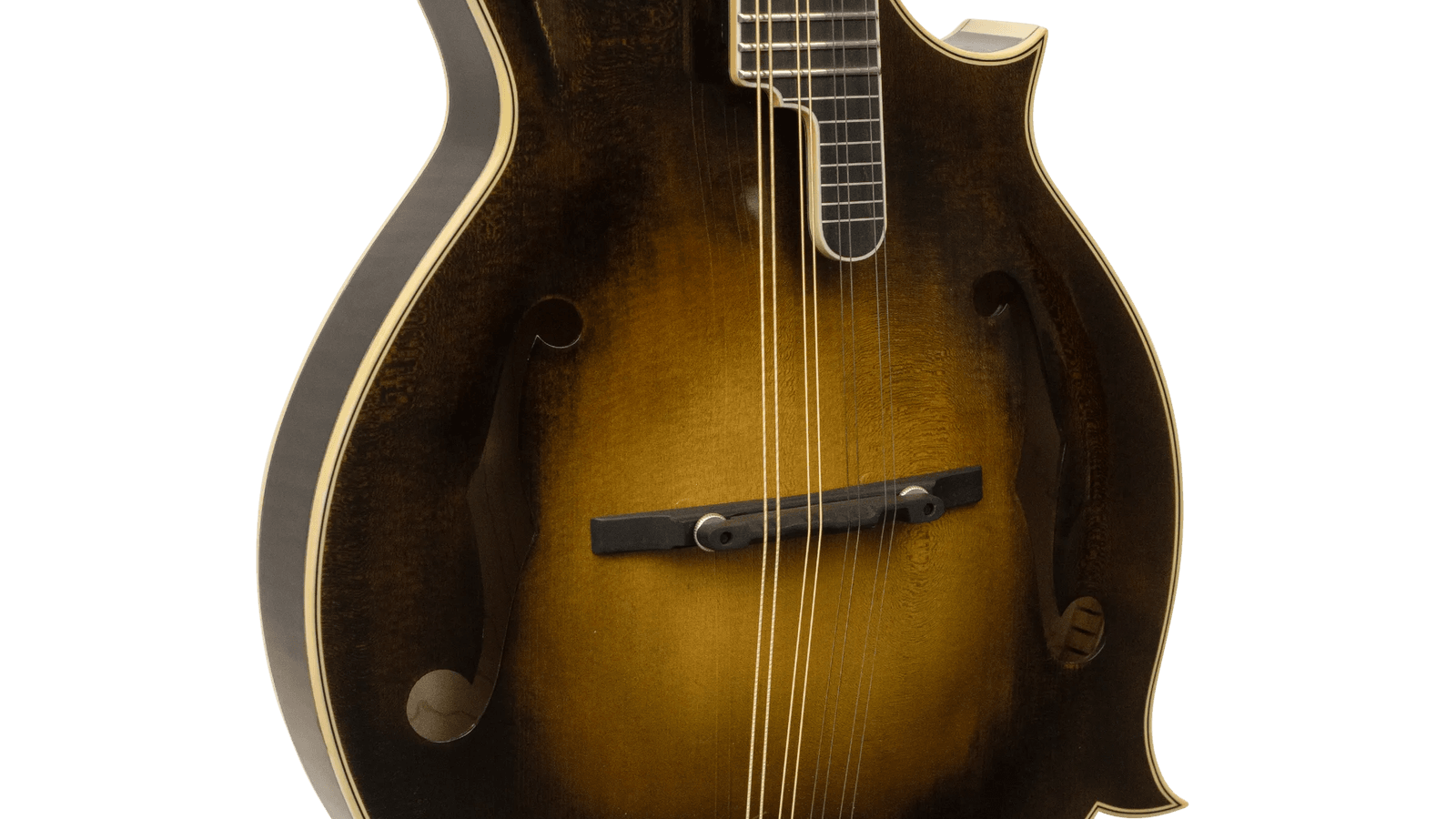
Every mandolin is worth tuning carefully, but a well-built one rewards it more. A carved top with good bracing rings long enough for you to hear the pair settle, and solid tuners and a well-cut nut let it hold pitch through a set. Our piece on what makes a great mandolin covers the build details that make the difference, and our mandolin under $1,000 comparison is a good place to start if you're ready to step up from a first instrument. Our A-style mandolins and F-style mandolins show what's on the wall today.
Related reading
- A-style vs F-style mandolins: an in-depth comparison
- How to play Amazing Grace on mandolin: a free lesson
Ready to play? Start here.

Now that you know how to tune a mandolin, the next step is a mandolin that holds its tuning and sounds right when it does. Start with our full mandolin collection, then add a tuner and a humidifier from our mandolin accessories. Every instrument ships after our 23-point inspection, so it arrives ready to hold its tuning. For more lessons and gear guides, visit the Acoustic Shoppe Blog.