
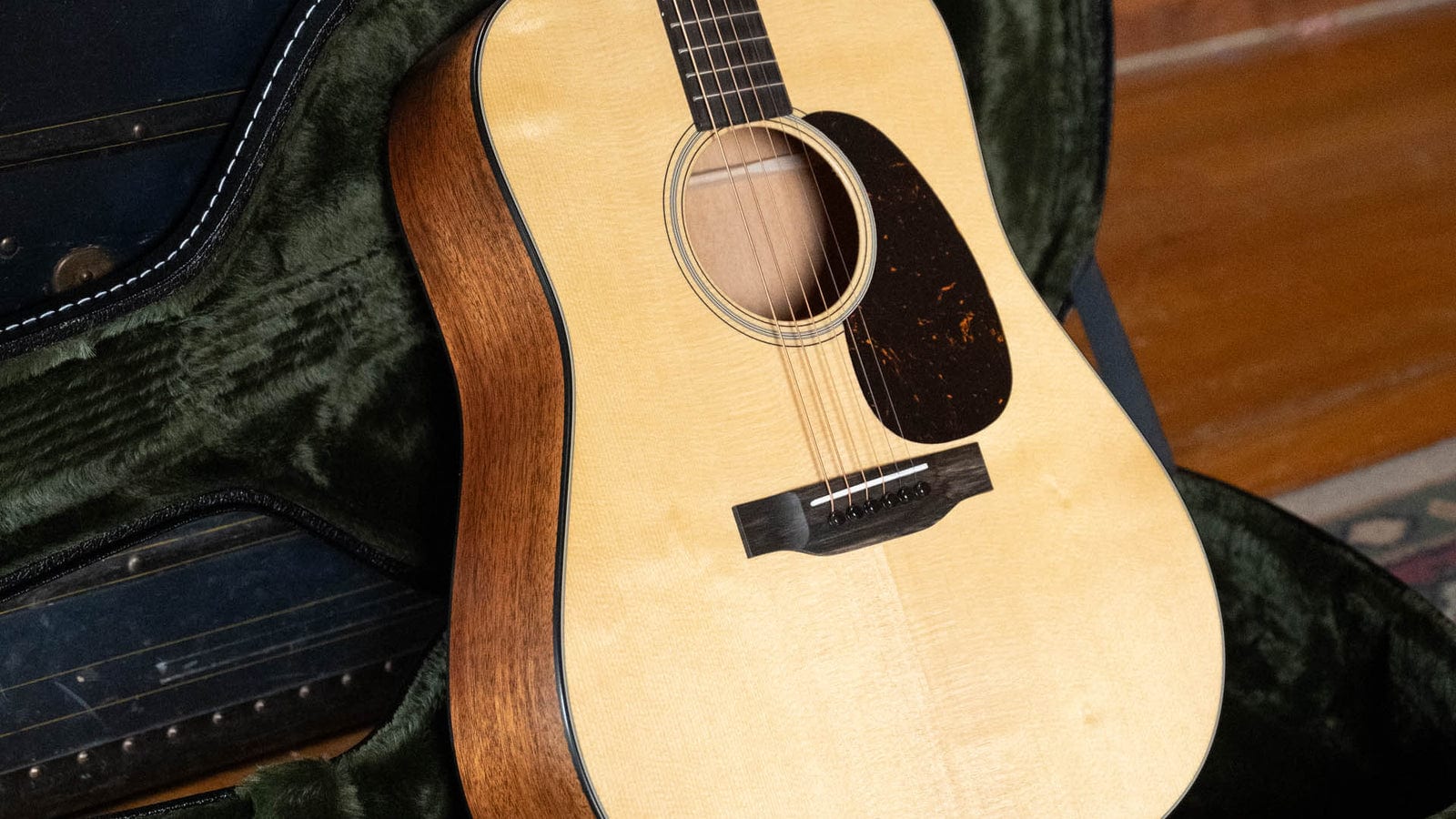
You've settled on a Martin dreadnought, and you've narrowed it to two models Martin has built side by side since the 1930s. The Martin D-18 and the D-28 have the same body, the same neck carve, the same 1 3/4" nut and the same 25.4" scale, and at gloss prices today they sit $500 apart. So the Martin D-18 vs D-28 question really comes down to mahogany or rosewood, and then a second question that catches a lot of players once they start looking at the top of the line: is the aged Authentic 1937 worth another $1,000?
We lined up the Authentic 1937 D-18 and D-28, standard and aged, and played all four back to back. The aged pair won us over on sound, and below we go through the whole family with the guitars we have in stock today.
Martin D-18 vs D-28: what's the same and what isn't
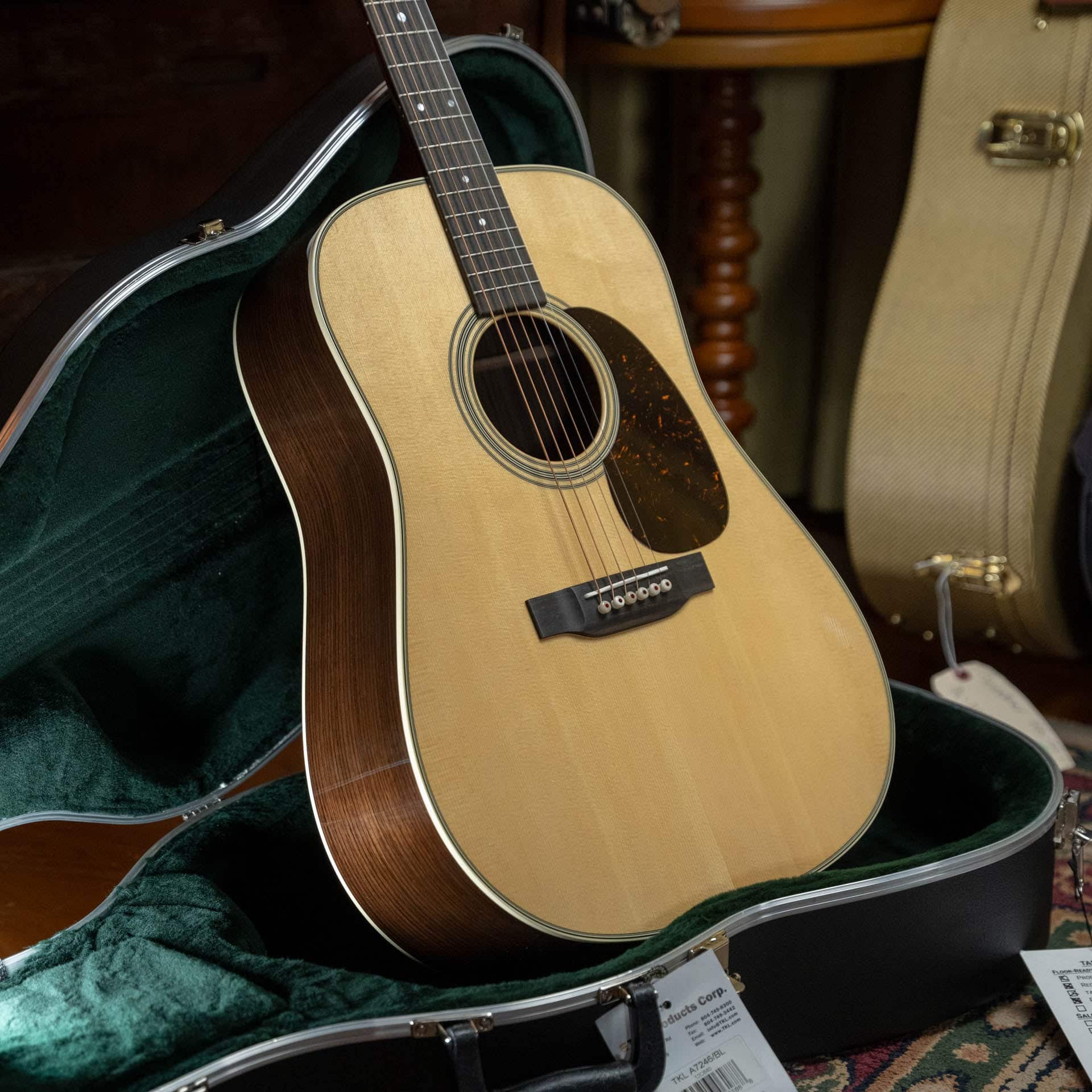
On today's standard models, the two guitars are closer than they've been in years. Both have forward-shifted, Golden Era scalloped X-bracing, Martin's GE Modified Low Oval neck with the high-performance taper, an ebony fingerboard and bridge, and a bone nut. Both are Pleked at the factory, which is why the setup on a new Martin is so consistent from one guitar to the next. That leaves the back and sides, the trim and the price.
| Standard models (Shopify, Oct 2026) | Martin D-18 | Martin D-28 |
|---|---|---|
| Price, satin / gloss | $2,599.99 / $2,999.99 | $3,099.99 / $3,499.99 |
| Back and sides | Mahogany | East Indian rosewood |
| Bracing | Forward-shifted X, GE scalloped | Forward-shifted X, GE scalloped |
| Binding and rosette | Black binding, Old Style 18 rosette | Antique white binding, Style 28 rosette |
| Neck / nut / scale | GE Modified Low Oval / 1 3/4" bone / 25.4" | GE Modified Low Oval / 1 3/4" bone / 25.4" |
The 1 3/4" nut gives your fretting hand more room between strings, which you'll notice on a G run or a crowded chord shape. The satin finish is the cheaper way into either guitar, at $400 less than gloss on both.
How the D-18 and D-28 sound to us
The Martin D-18 is the mahogany dreadnought we compare every rival to. When we played it blind against five of its rivals in our D-18 alternatives shootout, we both liked it a lot, and we both heard the same thing: a big, warm bottom that's a little heavy on the low end and a little short on sparkle up top. That's the Martin sound. Jeremy likes a darker guitar out of the box, so it suits him. John, who has spent years miking guitars live and in the studio, finds that low end can get buried in a jam where lead guitar is already hard to hear.
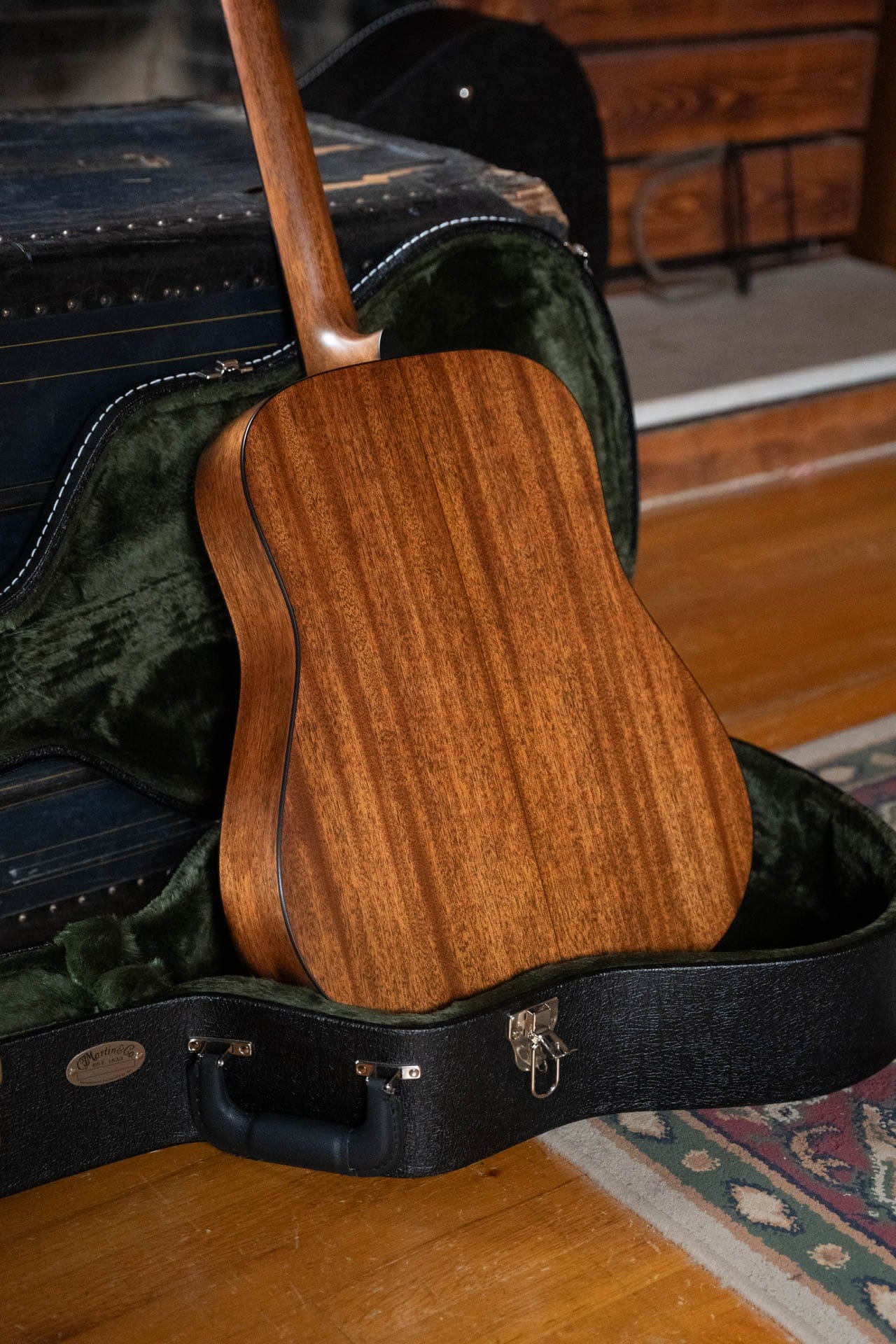
The D-28's rosewood is the sound on a lot of records from the '50s through the '70s, and that's still the best case for it. Next to the herringbone HD-28, the standard D-28's bass stays tighter and more contained, which is a strength if you're after that post-war record sound and a weakness if you came looking for the big pre-war roar. Our D-28 vs HD-28 comparison gets into that history, because "which D-28?" is the question we ask most often at the counter.
Going further: the Authentic 1937 D-18 and D-28
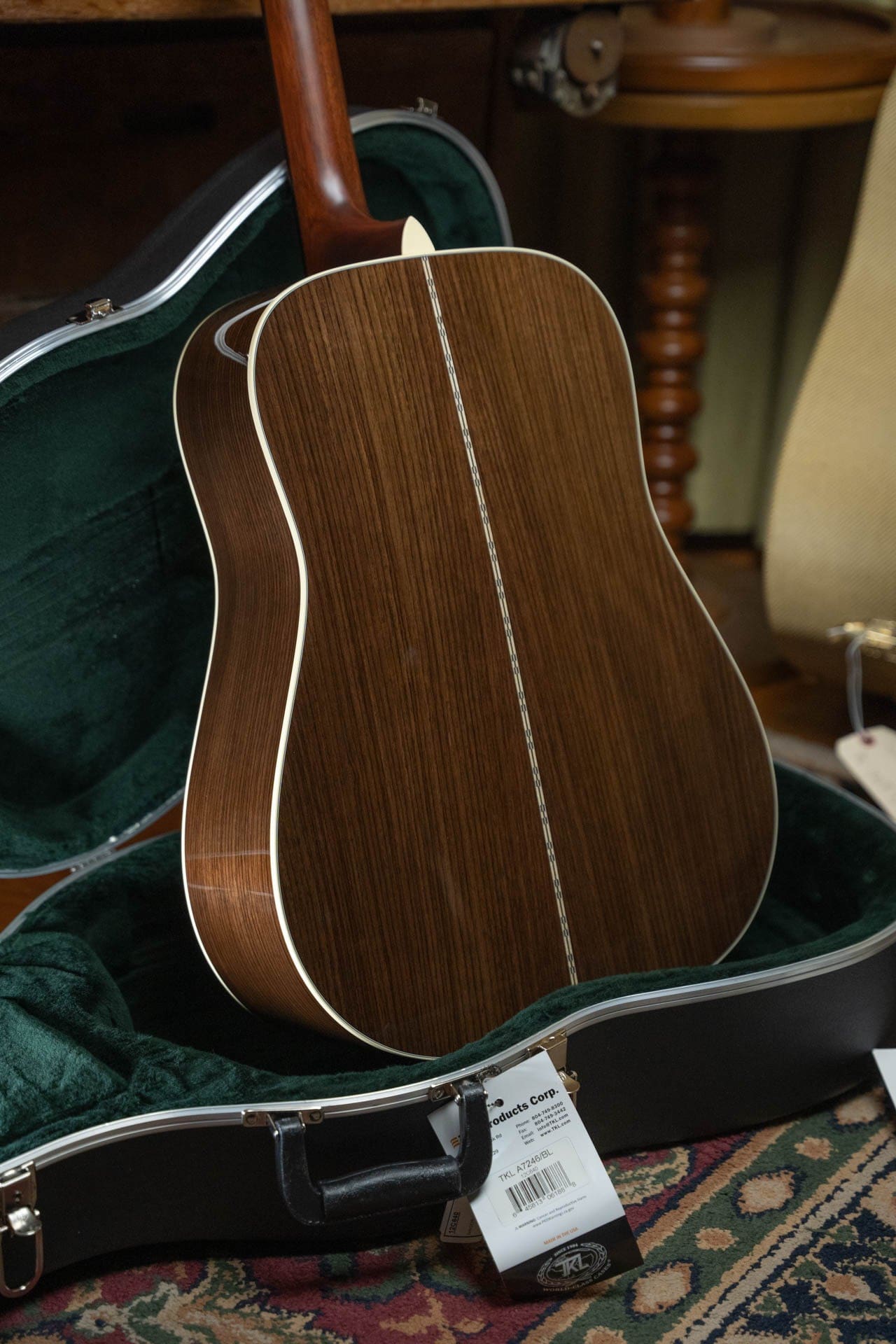
The Authentic 1937 models are where Martin rebuilds the pre-war guitars as closely as it can. Martin took vintage guitars apart and measured everything, then built to those numbers. Both have a VTS Adirondack spruce top, a mahogany neck with a T-bar inside instead of an adjustable truss rod, hide glue construction, a dovetail neck joint, a 1 3/4" bone nut and Waverly nickel open-back tuners. The bracing is the authentic forward-shifted X with the braces tucked under each other and scalloped much heavier than Martin's Golden Era pattern. The D-18 keeps mahogany and the black binding of 1937, and the D-28 gets herringbone trim with Guatemalan rosewood in place of the Brazilian the originals used.
Jump to the specs at 0:58, the aging process at 3:01, "is it worth $1,000?" at 7:12, our scores at 11:06, who it's for at 18:55, and all four guitars played back to back at 22:31.
Is the Martin D-18 Aged Authentic worth $1,000 more?
The aging starts with the finish itself. Martin uses a lacquer closer to the original 1937 formula on the aged guitars, with less plasticizer than the standard Authentic, so it checks and yellows the way the old ones did. Then come the wear marks, softened edges on the fretboard and fret ends, a vintage toner on the top, and aged tuners, nut and saddle. We think the finish change and that checking loosen the guitar up a little.
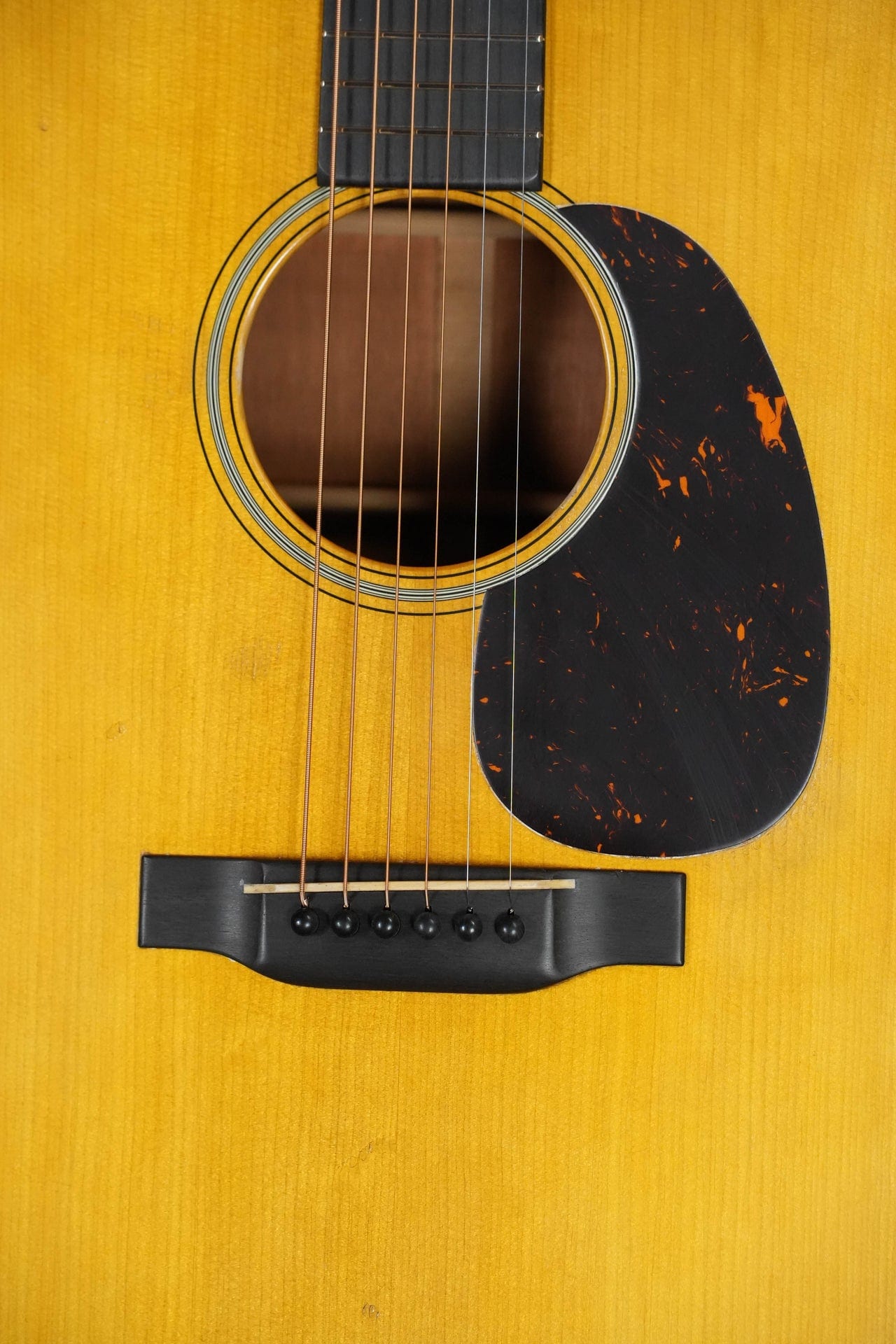
We've had quite a few of these through the shop, and every single time, the aged one was the pick. The standard Authentic is a beautiful guitar, but the aged one feels and sounds older:
"[The standard] feels like the new guitar that sat under the bed and nobody ever played it, versus the guitar that somebody lovingly cared for."
Could you buy the standard Authentic, save the $1,000 and play it in yourself? We'd guess that takes 10 to 15 years, not three or four. Jeremy compares it to buying a car with the extra package: if you're keeping it 10 years, the $1,000 is worth it. On a guitar near $9,000, the extra $1,000 is a small part of the price, and the luthiers we know who age guitars all say convincing wear takes two to four times the work of a clean finish.
Here are our scores for the Authentic 1937 series, out of 5. Where we split, both numbers are shown.
| Category | Standard Authentic | Aged Authentic |
|---|---|---|
| Tone | 4.2 and 4.4 | 4.8 and 4.7–4.8 |
| Setup and playability | 4.2 and 4.2 | 4.2 and 4.2 |
| Build quality | 4.8 and 4.8 | 4.8 and 4.8 |
| Looks | 4.8 and 4.8–4.9 | 4.9 and 4.8–4.9 |
| Value | 5 and 5 | 5 and 5 |
John puts the 37s among the best guitars Martin has ever made:
"These guitars are exactly what I think of when I think of my favorite stuff from Martin."
Value got a 5 from both of us. At around $9,000, the Authentic series is priced against Preston Thompson, Collings and Boucher, not against Martin's standard line, and it's built more like a boutique guitar than a production one.
The catches
- The Authentic neck starts fairly slim and gets thick fast as you move up, and on the 28s the first four frets run even slimmer than on the 18s. If you play up around the 12th fret a lot, or you're used to a slim modern neck, that change in profile is the biggest drawback. Playability got a 4.2 from both of us: good, not great.
- The voice is vintage on purpose. If you want a modern sound with more sustain and a bell-like top end, an Authentic isn't it.
- The Authentics are built lighter than the standard models, and that's part of why they sound the way they do. It also makes them more sensitive to humidity, so keep one humidified.
- A lot of players don't like relicing at all. These are done lightly, more like a played guitar than one beaten with a chain, but the aged look is still a taste call.
Which Martin D-18 or D-28 should you buy?
Jeremy sees the Authentic as the guitar for a player who would love a 1940 D-18 but doesn't have the budget for a real one. If you've got $40,000 to $80,000, he'd tell you to buy the vintage guitar. We once took a D-18 Authentic to a festival where someone had a 1937 D-18, and some of us liked the new one better. For everyone else, here's how we'd work through it:
- Pick the wood. If you love that warm, heavy mahogany bottom end, start with the Martin D-18 (every one we have is on our Martin page). If the records in your head are post-war rosewood dreadnoughts, start with the Martin D-28.
- Pick the finish. Satin saves $400 on either one. Right now we have the D-18 Satin #0620 at $2,599.99, the D-18 1933 Ambertone #0226 at $3,199.99 and the D-28 Gloss #0231 at $3,499.99. The D-28 Satin is sold out at the moment.
- Decide whether you want the pre-war build. If you do, go aged. We have the Martin D-18 Aged Authentic 1937 #7151 at $8,499.99. For a D-28 Authentic or another model from the series, ask us about ordering one.
If you want the Martin D-18 sound for less money, our E10D vs D-18 blind test puts it against an Eastman, and the Billy Strings D-28 is the signature route on the rosewood side.
Buying a D-18 or D-28 from us
Every guitar we ship goes through our 23-Point Professional Inspection first, so our bench checks the factory Plek job before the guitar gets to you.
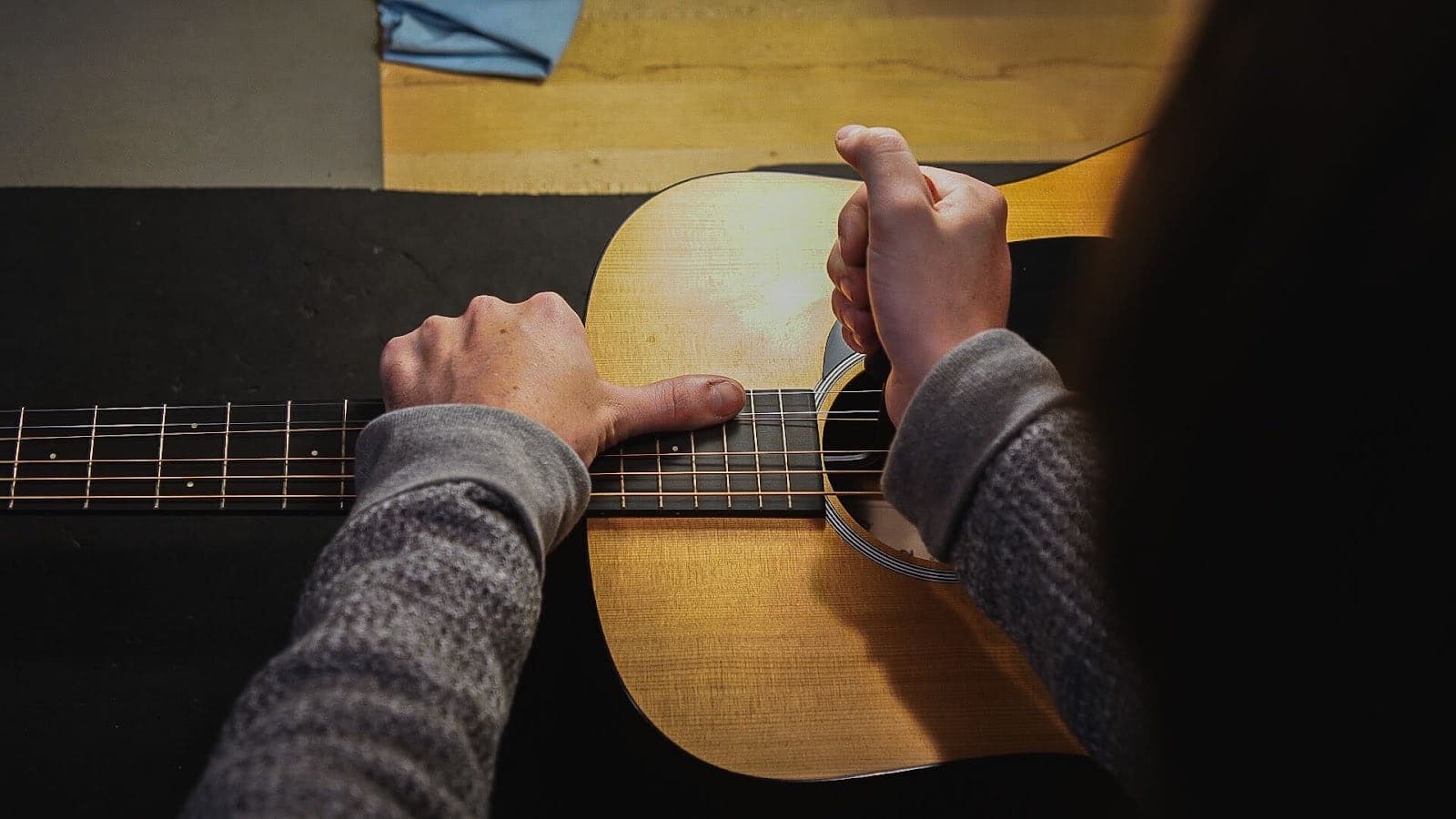
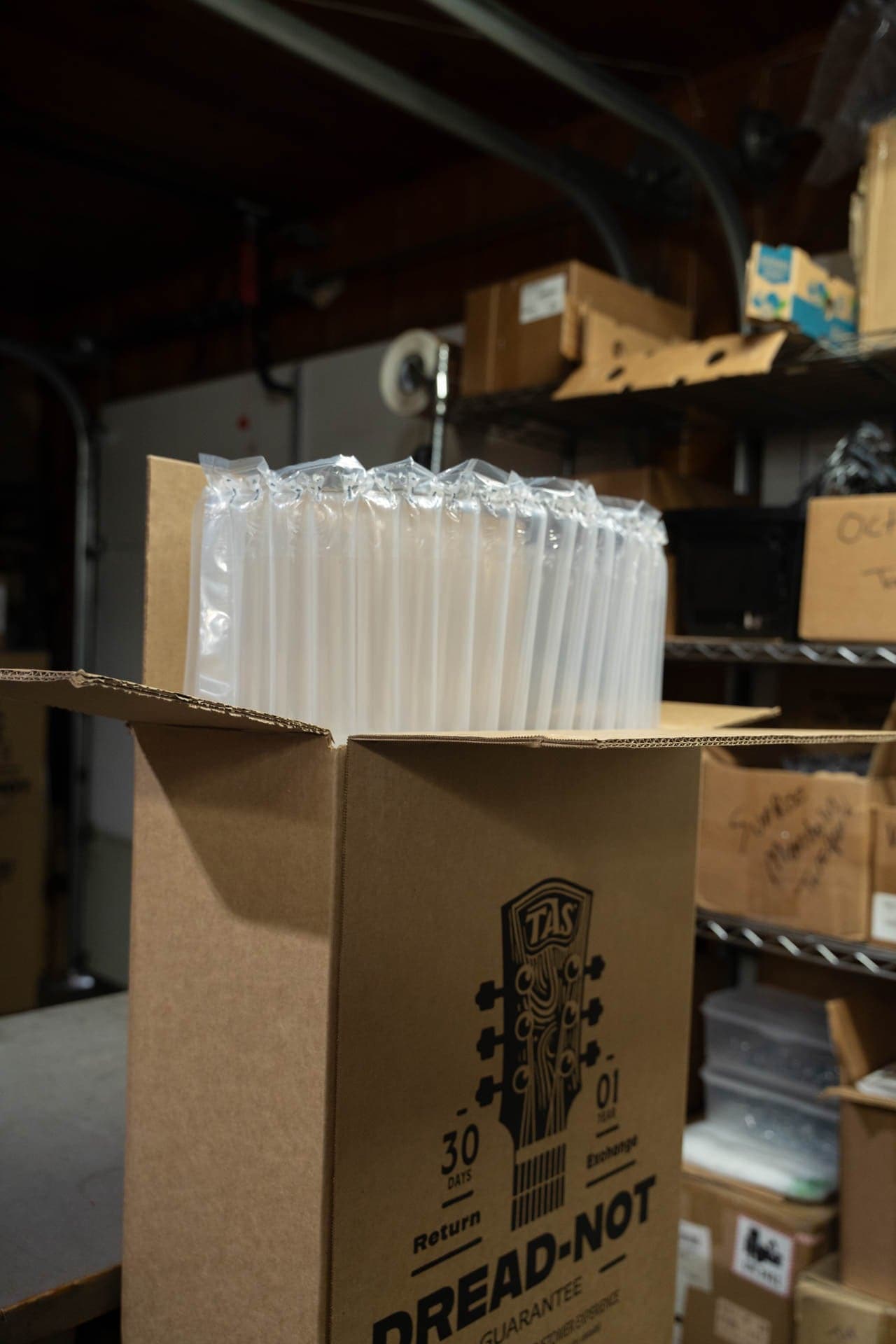
Every guitar in this post is well over $1,000, so each one comes with the Dread-Not Guarantee: a full year to trade it in for up to 90% of the pre-tax purchase price in credit, less round-trip shipping, plus a 30-day in-home trial. Start with a Martin D-18, decide a year from now that you wanted rosewood, and that credit is how you get to the D-28.
Related reading
- The most influential guitars in Martin history
- What we learned touring the Martin and Taylor factories
If you play rhythm by yourself or sing over it and love a warm, heavy bottom end, the Martin D-18 is the one. If you want the rosewood sound off the records, it's the D-28. And if you're shopping the Authentics, buy the aged one. See every dreadnought we stock, or shop acoustic guitars across every brand.