
Table of Contents
- Why we ran an E10D vs D-18 blind test
- The three dreadnoughts in the test
- The modern D-18 is not the D-18 of 20 years ago
- Eastman changed too, and the Bourgeois influence shows
- What we heard in the E10D vs D-18 blind test
- The catch with each guitar
- E10D vs D-18 price today, and what the gap buys
- Who should buy the E10D, the E6D or the D-18
- Play them side by side
- Acoustic Shoppe FAQ
The first guitars we ever sold at The Acoustic Shoppe were Eastmans, and one question has followed us since the doors opened: did Eastman build a better D-18? So we ran an E10D vs D-18 blind test and threw in the Eastman E6D as a third voice. The short version: the two brands sound further apart today than they did ten years ago, and we think that's good news if you're shopping for a mahogany dreadnought.
Why we ran an E10D vs D-18 blind test
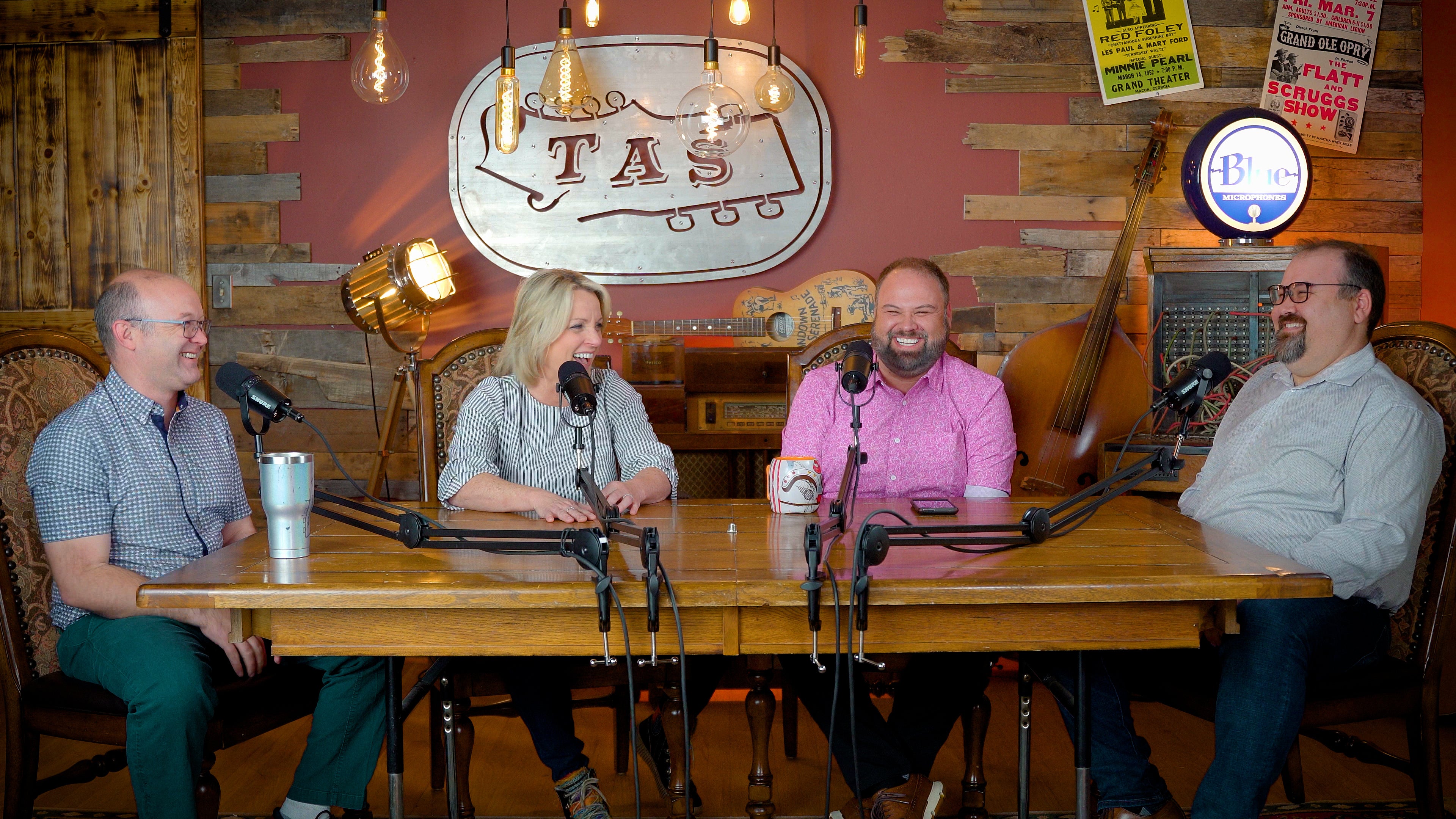
This isn't a new experiment for us. In our second or third year, back when Eastman was still a newer name in the bluegrass world, we held an Eastman event at the store. We hung a curtain, asked people to bring in their favorite guitar (a Martin, a Taylor, whatever they played), and then played it and a comparable Eastman behind the curtain. The room voted on sound alone, without seeing what was on the headstock.
The video below is the same idea for everyone who can't drive to Springfield. John remembers Acoustic Guitar magazine putting the E10D near the top of its list for a while, ahead of the D-18, so the E10D vs D-18 matchup was the obvious one.
Jump to the blind playing at 7:12, the reveal and our verdict at 8:31, and the neck and setup talk at 10:19.
The three dreadnoughts in the test
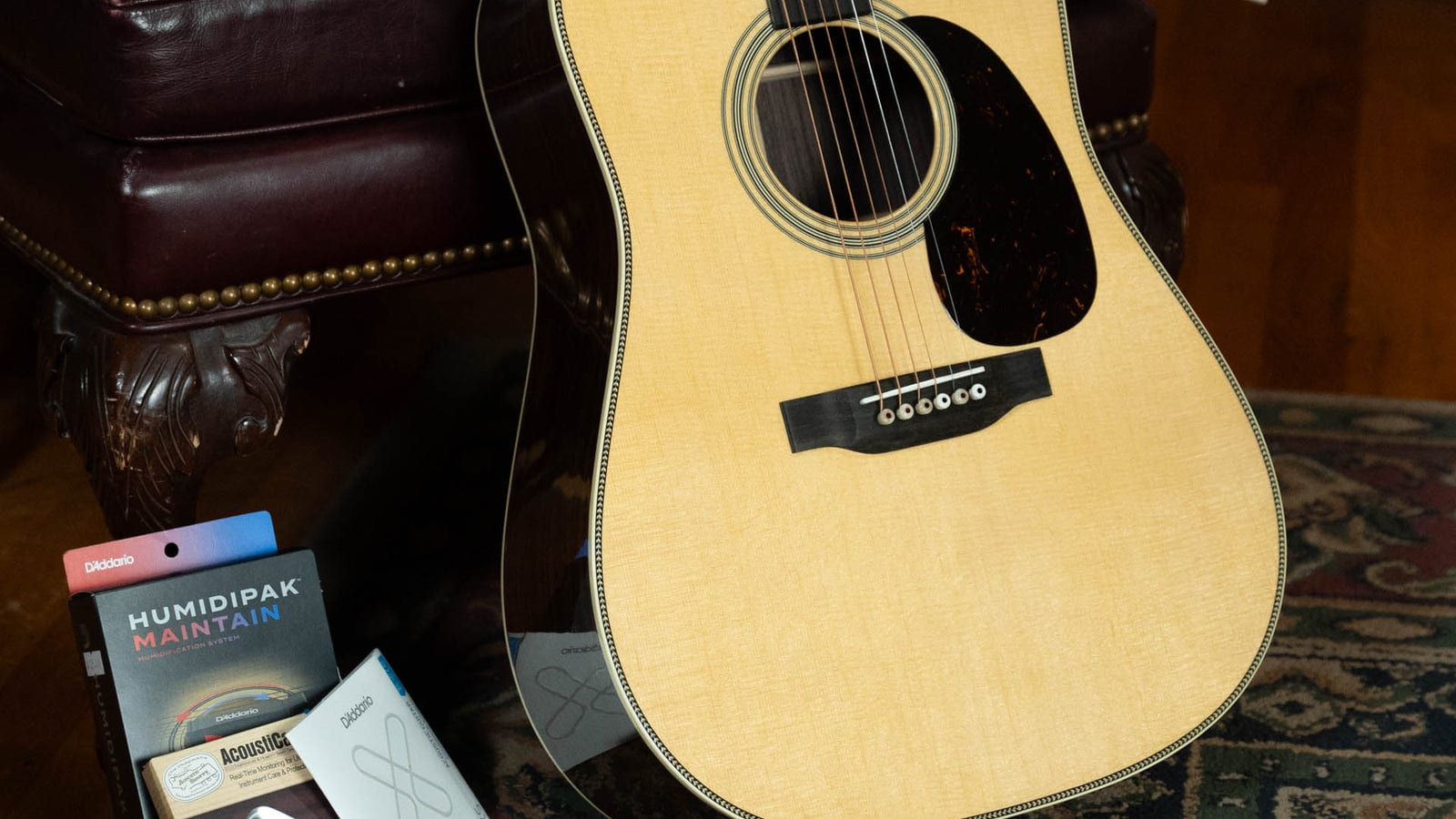
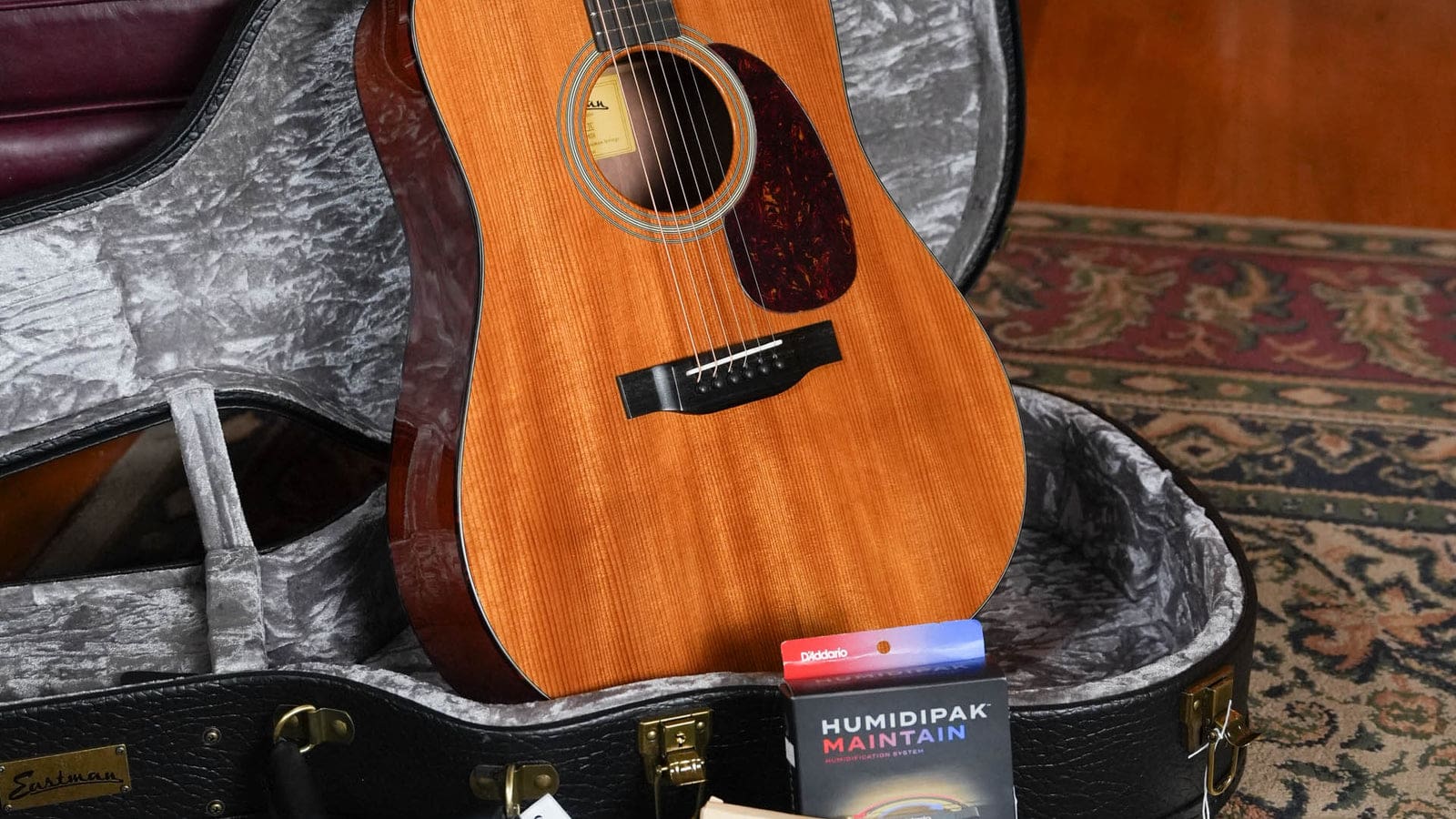
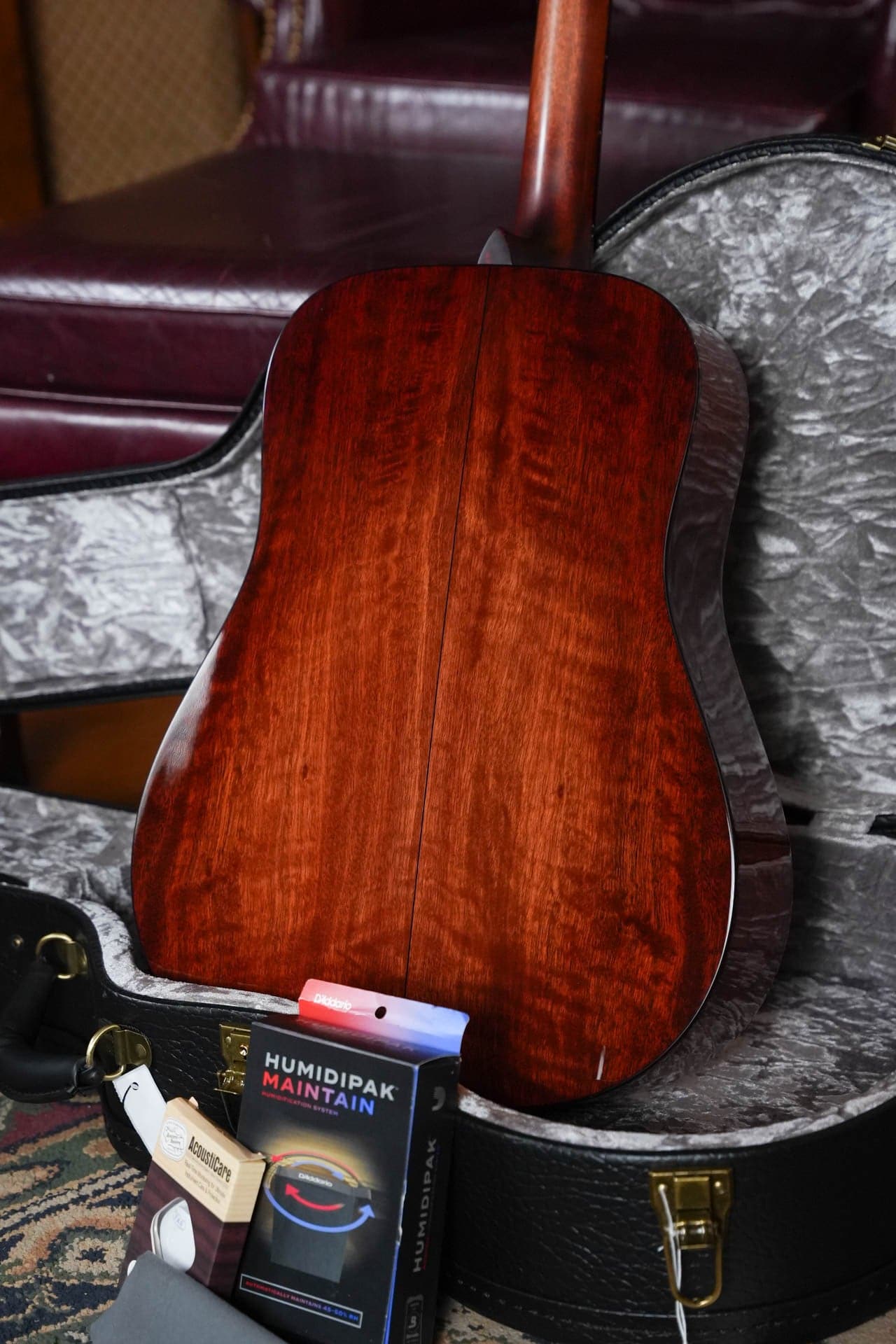
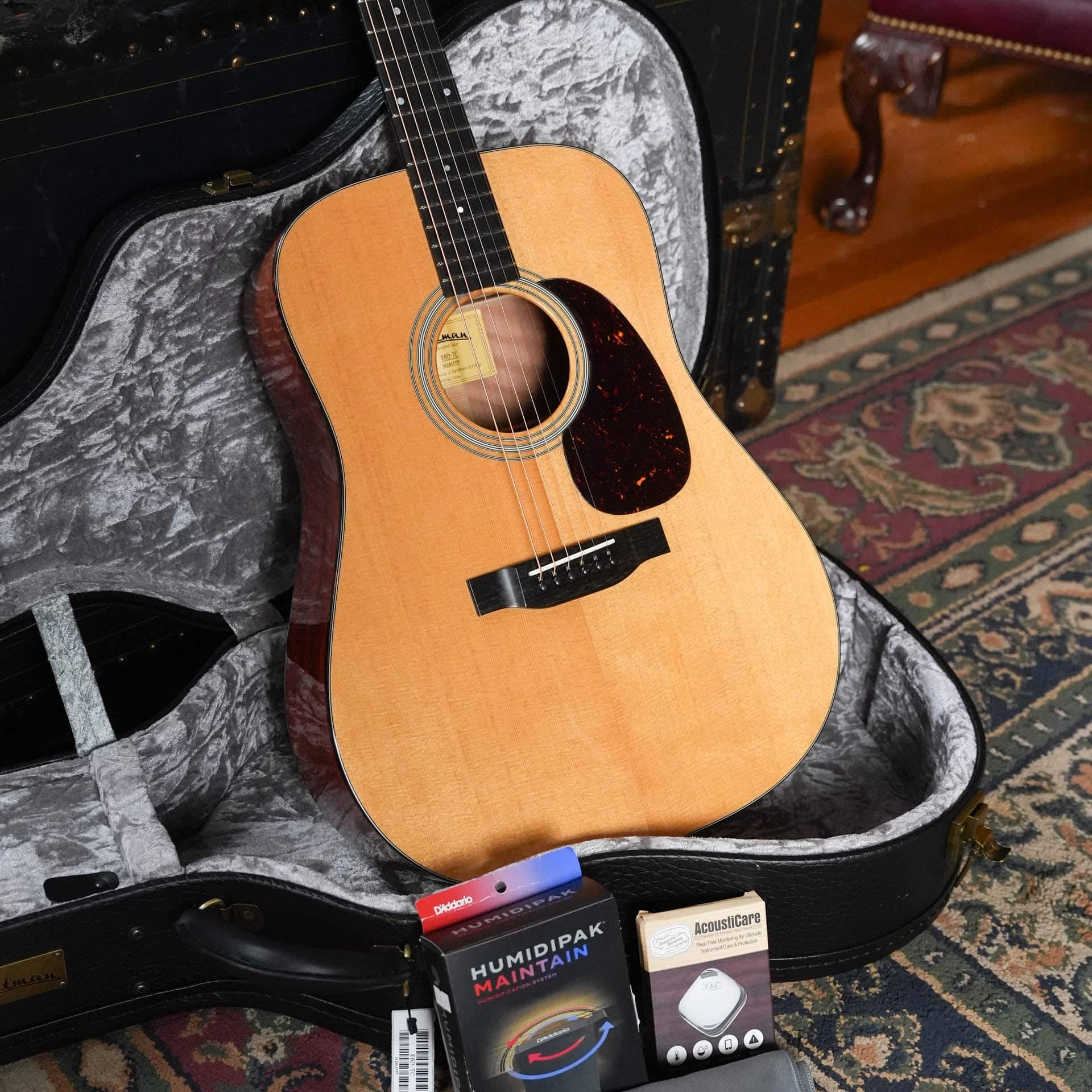
For a long time the E10D was the closest thing on the market to Martin's D-18 Golden Era, which Martin no longer builds. Spec for spec it was a near match: Adirondack spruce top, mahogany back and sides, scalloped bracing, the standard dreadnought body. The E6D is the Sitka spruce version. It's also where John started with Eastman.
"This is the very first guitar I ever bought, way before we opened up a store." (On the E6D) - John ChapmanHere's how the three line up. Specs are from our listings. Prices are today's, and they've changed since we filmed.
| Model | Top | Back and sides | Bracing | Nut width | Price today |
|---|---|---|---|---|---|
| Eastman E10D-TC | Solid thermo-cured Adirondack spruce | Solid mahogany | Hand-scalloped X | 1-3/4" | $1,799 |
| Eastman E6D-TC | Solid thermo-cured Sitka spruce | Solid mahogany | Hand-scalloped X | 1-3/4" | $1,299 |
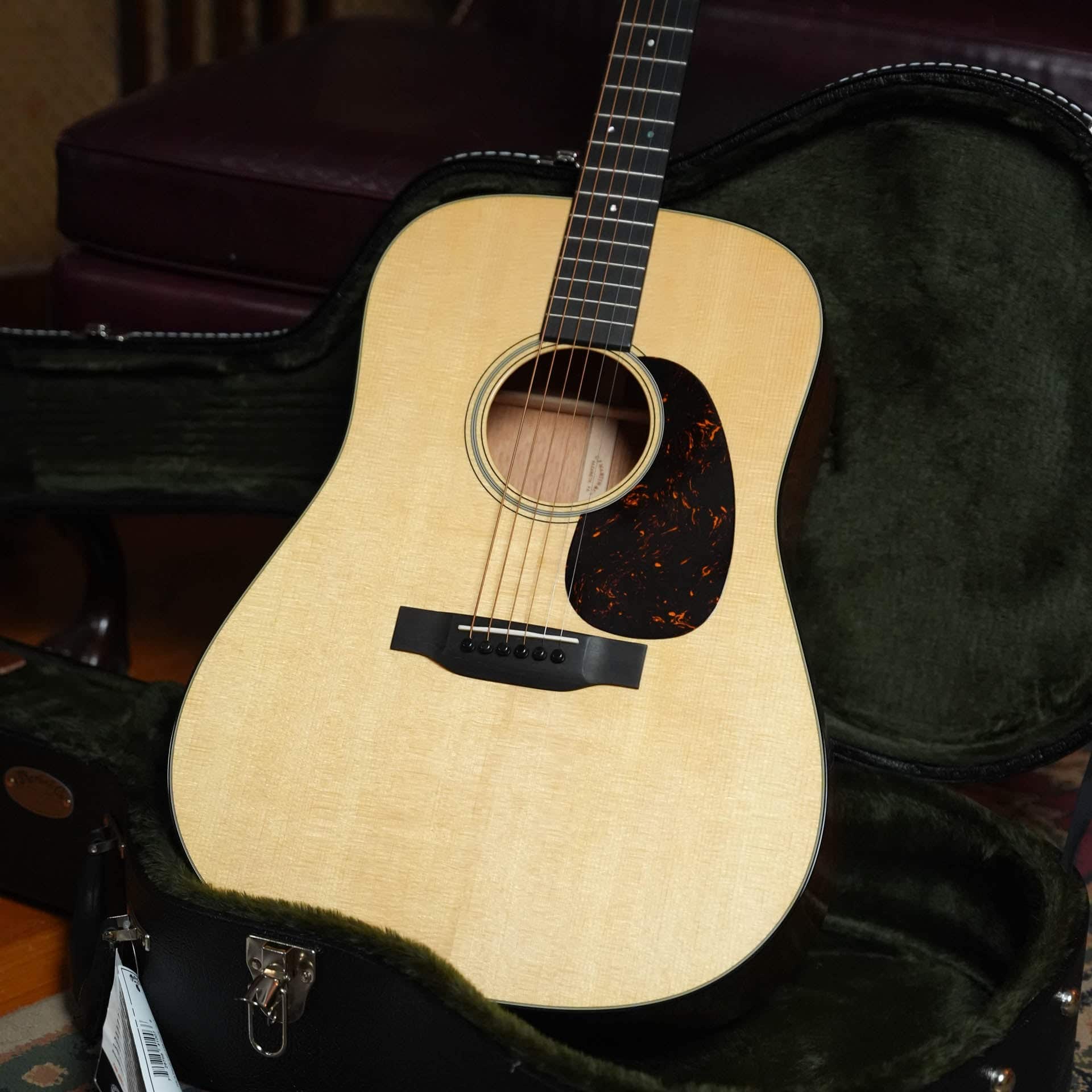
| Martin D-18 | Solid spruce | Mahogany | Forward-shifted X, Golden Era scalloped | 1.75" | $2,599.99 satin, $2,999.99 gloss |
All three run a 25.4" scale, an ebony fingerboard and a bone nut, so a player switching between them won't need to relearn the fretboard. The real differences are the top wood, the thermo-curing on the Eastmans, and the neck carve, which we come back to below.
The modern D-18 is not the D-18 of 20 years ago
Before anyone heads to the comments: we're Martin people. Jeremy owns a D-18 Golden Era, and John has owned a D-18 plus a run of HD-28s and D-28s. We give Martin full credit. Just about every acoustic builder has the Martin dreadnought in their head when they build, the same way mandolin builders chase the Gibson F5. The D-18 and D-28 are the standard everyone is trying to build up to, and the boutique shops take it a step further from there. It's "the OG."
Martin hasn't stood still, either. Twenty years ago the D-18 had no scalloped bracing and wasn't forward-shifted, and it didn't have near the power of today's guitar. The dreadnought came out in the early 1930s, which is a long time for changes to pile up, and not every era was a good one. One of us isn't a huge fan of the 1970s and '80s D-28s and HD-28s; the other has played some great ones and a lot he didn't care for. The current D-18 and HD-28 are back toward the original design. If you're weighing the D-18 against its rosewood sibling, our D-18 vs D-28 comparison covers that side.
Eastman changed too, and the Bourgeois influence shows
The original E6 one of us owns isn't the same guitar as the E6D on our wall now, and his E10 isn't the same as the E10D we played here. Eastman's work with Bourgeois Guitars has changed how they brace and how they voice a top. Dana Bourgeois has been training their staff, and you can hear more of a modern boutique voice coming through. If you want to hear that voicing next to an actual Bourgeois, our E20D vs Bourgeois Touchstone shootout puts them side by side.
"There's more of a difference between the modern Eastman guitar and the modern D-18 now than there was when we started 10 years ago." (At 5:55) - John ChapmanWe also called a change that's since happened: the plain Adirondack tops were going away, and every E10D would be thermo-cured from then on. That's what we stock today: the E10D-TC and E6D-TC. If you're new to heat-treated tops, our guide to thermo-cured instruments explains the process.
What we heard in the E10D vs D-18 blind test
Playing blind takes the bias out, and these three sound clearly different. Here's our take:
- Martin D-18: it sounds like a Martin. It's become more bottom-heavy and thick in the low end, with a rounder top end. It's missing some sparkle, and it doesn't have the definition or the forward-thrusting punch we've heard from boutique guitars lately. What it has is depth, openness and fullness.
- The Eastman we singled out: closer to that boutique sound, with more clarity and punch to the notes and more frontward attack. It has a responsiveness and liveliness the Martin doesn't.
- Eastman E6D-TC: the thermo-cured Sitka top gave it a pretty cool depth and a little more midrange.
In the studio, one of us would mic the Eastman for that frontward attack. But then there's the Martin: "There's just something also about the depth that comes out of this." On some days we'd reach for the D-18. On others we'd want the modern, punchy Adirondack sound. Neither guitar wins on every count.
The catch with each guitar
The Martin's catch is the neck. The modern D-18 carve is a little thin in the profile for what one of us likes. It still has a 1-3/4" nut, "but there's not a whole lot of guts here," so there's less to hold onto. Setups differ too. They're beefier on the Martin and a little less so on most Eastmans.
The Eastmans have their own catch. If a US build and the traditional Martin sound matter to you, no Eastman is going to give you that, however close the specs read. And the E6D-TC is sold out as we write this, so ask us when the next one is due.
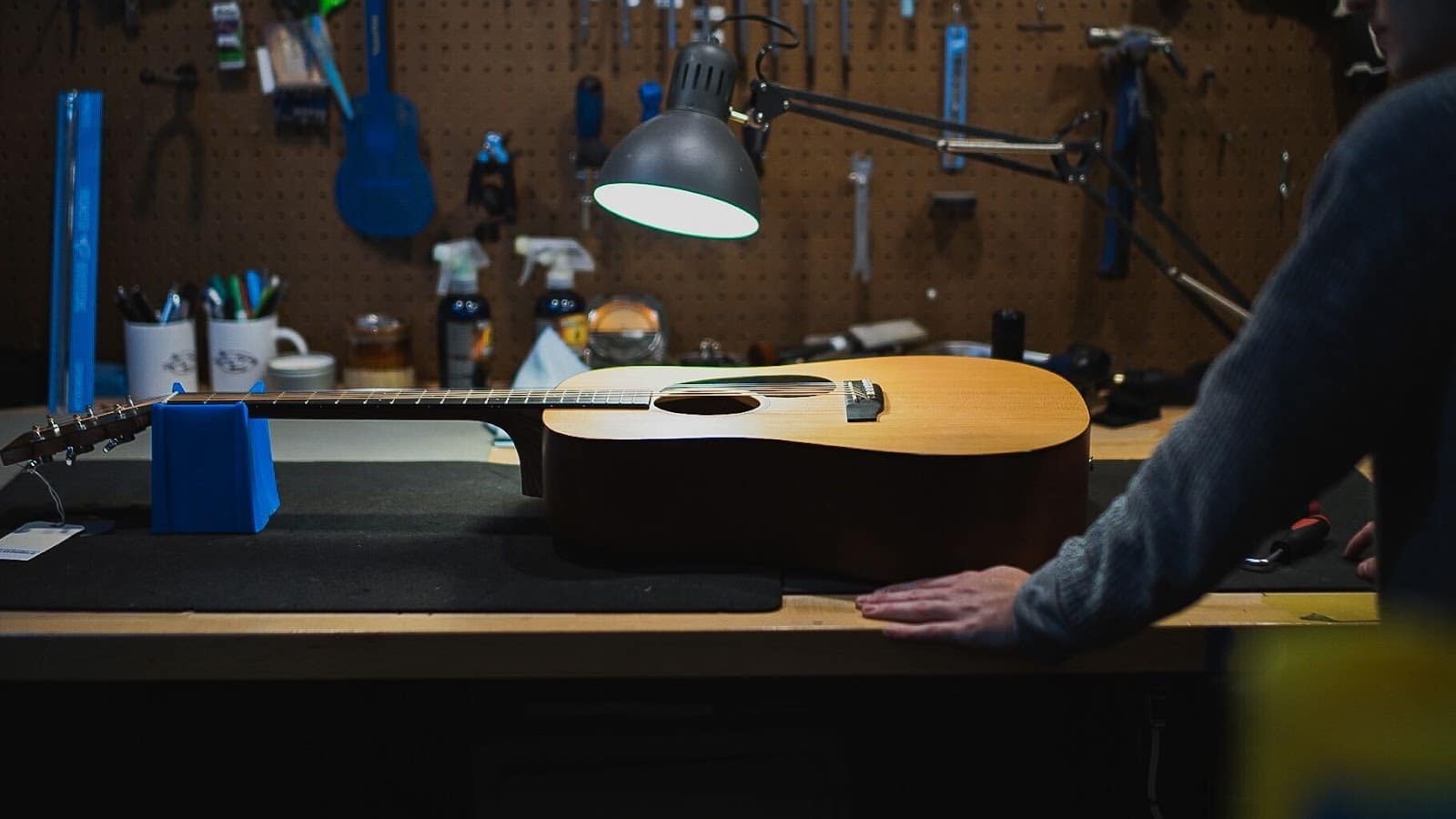
Whichever brand you pick, it goes through our 23-Point Professional Inspection before it ships, so a person at our bench has checked the guitar you get.
E10D vs D-18 price today, and what the gap buys
When we filmed this, the E10D sold for around $1,350, the E6D for $1,099 and the D-18 for $2,799. Prices have moved since. Here are the three, cheapest first, at today's prices:
- Eastman E6D-TC: $1,299 (sold out right now)
- Eastman E10D-TC: $1,799
- Martin D-18: $2,599.99 in satin, $2,999.99 in gloss
That puts the E10D vs D-18 gap at about $800 against the satin Martin and $1,200 against the gloss. Even if you hear the two as equals, that money may decide it. Or you may prefer the boutique-leaning sound for its own sake, or the traditional sound and US build of the Martin. There are good options wherever you are financially and whatever sound you're after. For more choices at the Eastman end of the budget, see our list of the best mahogany dreadnoughts under $1,600. Our Martin D-41 vs Eastman E40D post runs the same brand matchup at the fancy end of the line.
Who should buy the E10D, the E6D or the D-18
Buy the Martin D-18 if you want the sound most players picture when they think of a mahogany dreadnought: thick low end, depth, fullness, and a US-built guitar. Browse every Martin we stock, or go straight to D-18 #5127 in gloss or D-18 #4133 in satin.
Buy the Eastman E10D-TC if you want more clarity and front-end punch, an Adirondack top, and a guitar that records with a little more definition, for less money. E10D-TC #6231 is in stock, and the rest of the line is in our Eastman guitars collection. If the E10D vs D-18 question comes down to budget, the E10D-TC is the $1,799 answer.
Buy the Eastman E6D-TC if you want the depth and extra midrange of a thermo-cured Sitka top at the lowest price of the three. We're the #1 Worldwide Dealer for Eastman Guitars and Mandolins, so ask us about ordering one.
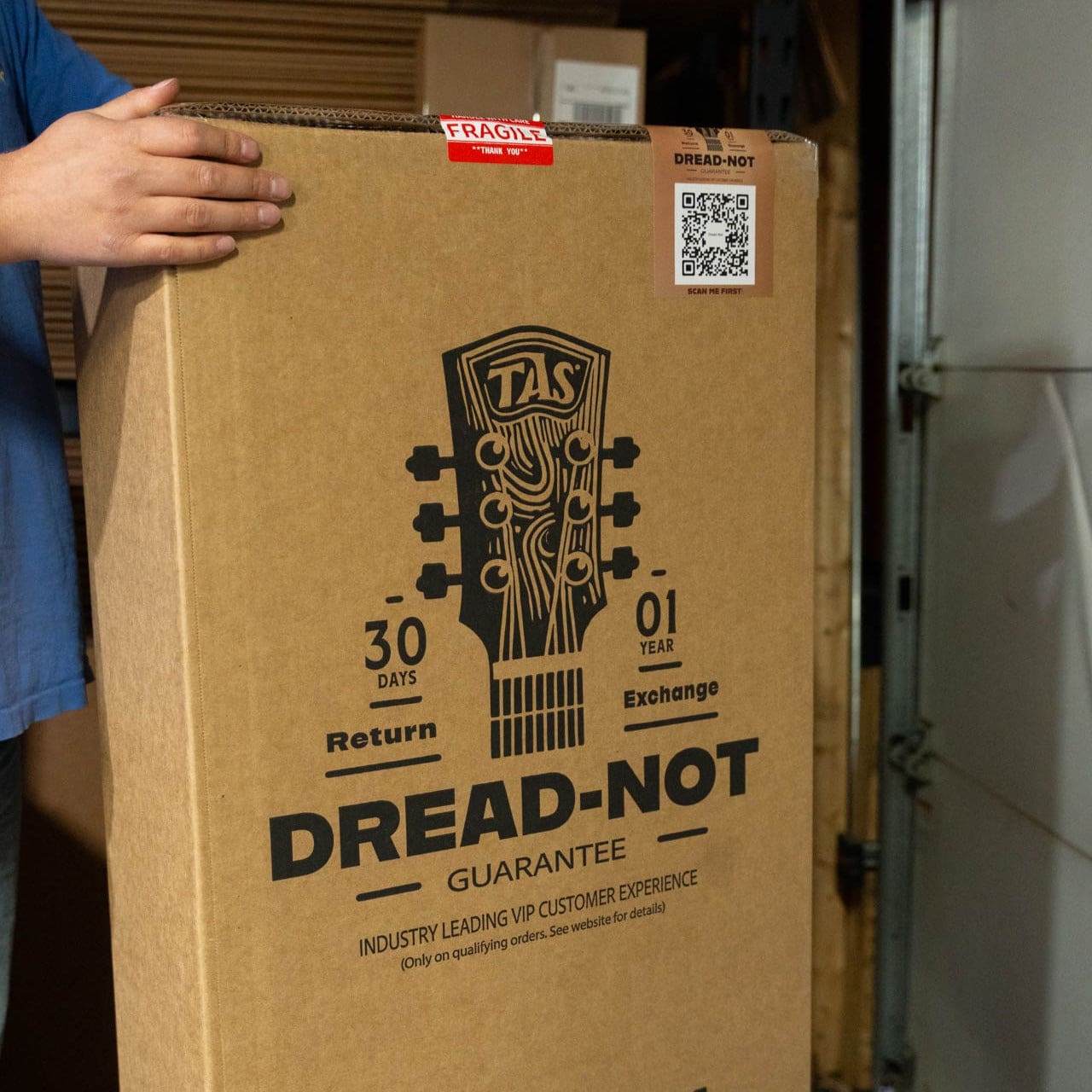
All three cost more than $1,000, so all three come with our Dread-Not Guarantee: a one-year trade-in credit of up to 90% (pre-tax, less round-trip shipping), plus a 30-day in-home trial. If you buy the E10D and later decide you need the Martin, that credit carries up to 90% of what you paid toward it.
Related reading
- Mahogany vs rosewood: which guitar wood is better?
- Eastman guitars: handmade quality from the #1 dealer
- The most influential guitars in Martin guitar history
Play them side by side
We can't tell you which one you'll love. We can tell you both are great guitars, and that it's better for players that Eastman and Martin have stopped walking the same path. Martin is getting back to the fuller tone it was known for, and Eastman is chasing a more modern, boutique voice. Browse every dreadnought guitar we have, see every guitar in stock, or spread the cost with 48-month financing through Synchrony. Then let us know which guitar won your own E10D vs D-18 blind test. Different strokes for different folks.