
Table of Contents
- Is a Taylor really more machine-built than a Martin?
- Where the handmade guitar difference actually lives
- Consistency: why "play it before you buy it" matters less now
- Finish is the part of the build you can hear
- Two cultures, one goal
- Legacy, the 16 Series and Gold Label
- Which guitar should you buy?
- Go see one for yourself
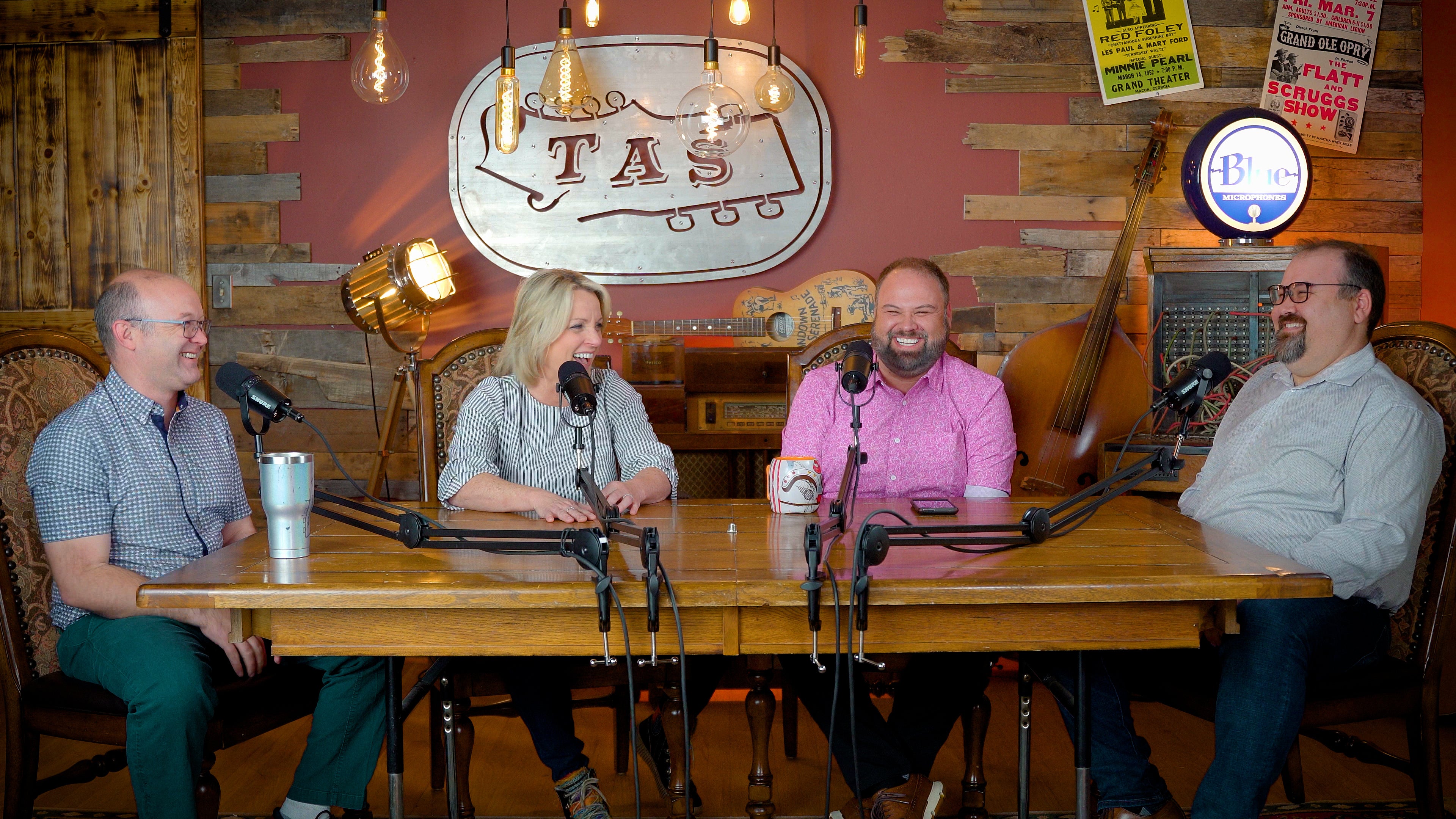
Read the comments under any Taylor video and somebody will say it: Taylors come off an assembly line, Martins are built by hand, and that explains the price and the sound. If you're weighing a D-18 against an 814ce, or wondering whether a handmade guitar from a small shop is worth twice the money, that idea quietly shapes the whole decision. So we went and looked. We visited Martin in Nazareth, Pennsylvania, and two weeks later we were at Taylor in El Cajon, California, and across the border at their factory in Tecate, Mexico.
The two factories turned out far more alike than the internet thinks, neither one builds more of a handmade guitar than the other, and the real difference between a production guitar and a custom shop guitar lives in the last few percent of the build.
Is a Taylor really more machine-built than a Martin?
Not in the way people mean when they call a Martin a handmade guitar. At both factories, CNC machines cut the tops, the bridges, the fretboards and the fret slots on regular production guitars, and the parts come out nearly identical. Both factories still have plenty of people doing hand work after that. Taylor just looks more automated because it got there first and went further: Bob Taylor brought in his first CNC machines in the early 1980s, liked the result, and kept adding more. Martin came to CNC later and more cautiously. For years it used the machines to rough out neck blanks and then insisted that somebody finish and scrape every neck by hand.
That gap has mostly closed, because Martin is now buying machines one after another, including binding routers and a bridge pocketing machine we didn't see anything like at Taylor, and a six-axis machine that carves fine detail into necks is on its way. Taylor's 30-year head start is shrinking, and Martin is closing it on purpose.
Jeremy's line for it is that Bob Taylor is the Henry Ford of guitar making. He means Bob streamlined the process the way a car plant does, without cutting quality: robots handle the heavy, repetitive early work, and the closer a car gets to finished, the more people work on it. His view is that there's no reason to wear out a person's hands on work a machine does just as well, so the people can spend their time on the small details that do need a human eye. Dana Bourgeois makes the same argument about fret work: a person can only fret guitars perfectly for so many years before their hands give out, so why not let a machine do it?
Jump to the parts you want:
- 15:47, how the two factories actually build a guitar
- 42:26, the "last 1%" argument about custom shop guitars
- 54:13, the culture difference between Nazareth and El Cajon
- 1:16:40, what each of us liked best at each factory
Where the handmade guitar difference actually lives
John and Jason don't agree on this one. Jason's position is that you can build two tops exactly the same up to a point, and the guitar that sounds better is the one where somebody spent more time at the end: voicing the top, scalloping the braces, getting the neck right, setting it up. That's the last 1% or 3% of the build, and it's what you're paying for in a custom shop guitar.
"You could take two tops and build them up to a point, exactly the same. But that last 1% that's spent on this one to get it that much further is the difference."John's pushback is that a lot of that time goes in earlier than the end, and that better materials alone don't make a better guitar. Custom shops do get the better graded tops and braces, but plenty of luthiers have proven that great wood can still make an ordinary guitar. Where they both landed: the hand work that matters is in voicing and in how much attention one person gives one top. A handmade guitar isn't better just because a machine never touched it, since every builder we've visited, from Martin down to Gallagher's eight-person crew, uses machines, whether a computer controls them or not.
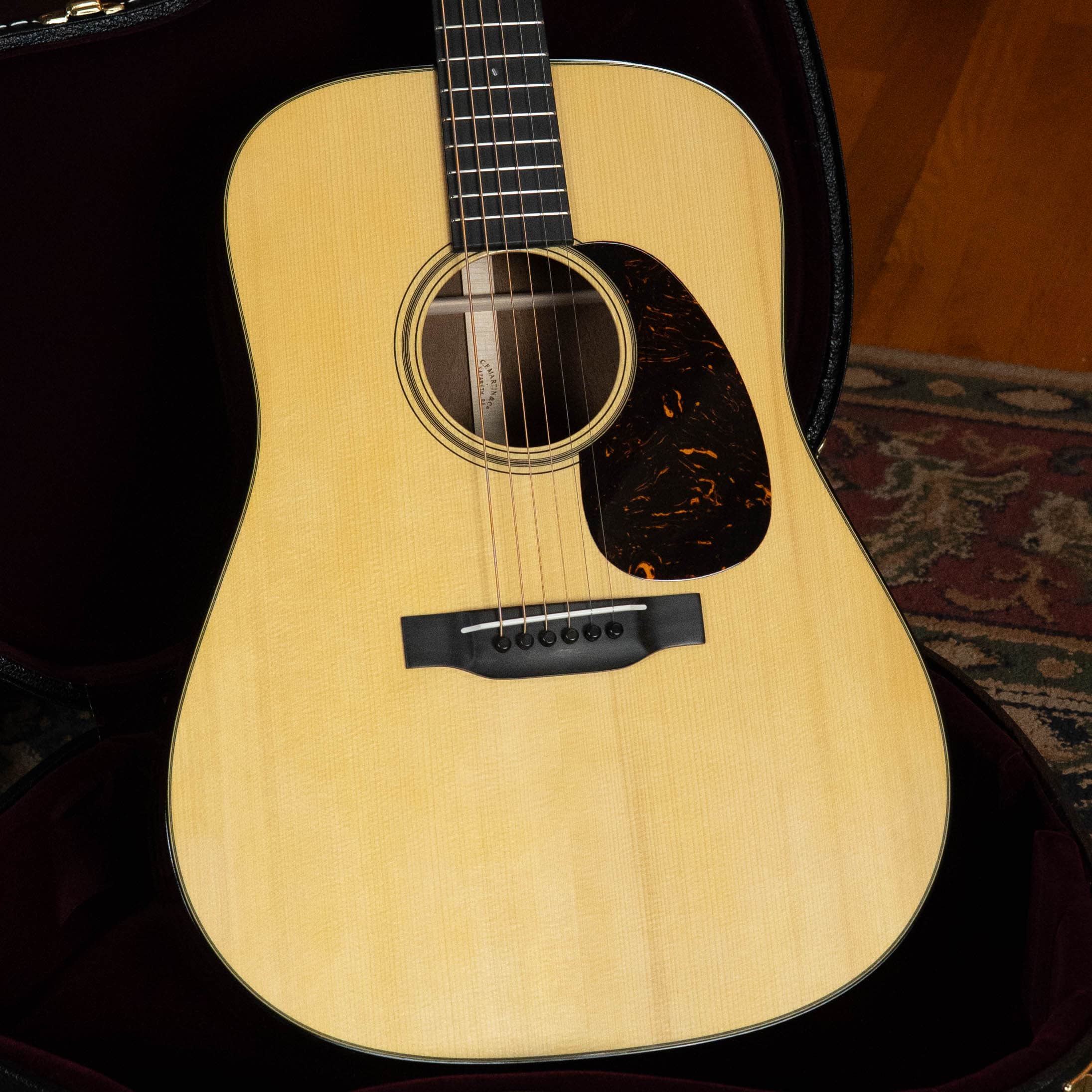
The two companies treat that last step differently. Martin's custom shop is deliberately more hands-on than the rest of the factory; it's part of who Martin is, and you can read more about it in our Martin Custom Shop guitar review. At Taylor, most custom requests run through the regular production line. If something can't be built that way, it goes through human hands, and the price goes up to match.
Consistency: why "play it before you buy it" matters less now
We've ordered close to a hundred D-18s in the last year and a half, and we've played every one of them. There wasn't one we would have turned away for sounding too different from the others. The variations are there, but they're slight, and playability is even steadier.
"If you like a D-28, the next one's pretty much gonna play exactly like it."We'd say the same about a Taylor 810, 614 or 914. Machines that cut every brace and every fret slot the same way took out most of the variance that used to make buying a production guitar a gamble. That's also why the small-shop luthier world grew the way it did: for a stretch of years, production guitars were rough, and a handmade guitar from a small builder was the only sure way to get a good one. Automation closed that gap. Below a certain price, with cheap materials and loose quality control, you can still find a bad guitar. Above it, it's hard to, and you no longer need a handmade guitar just to get a good one.
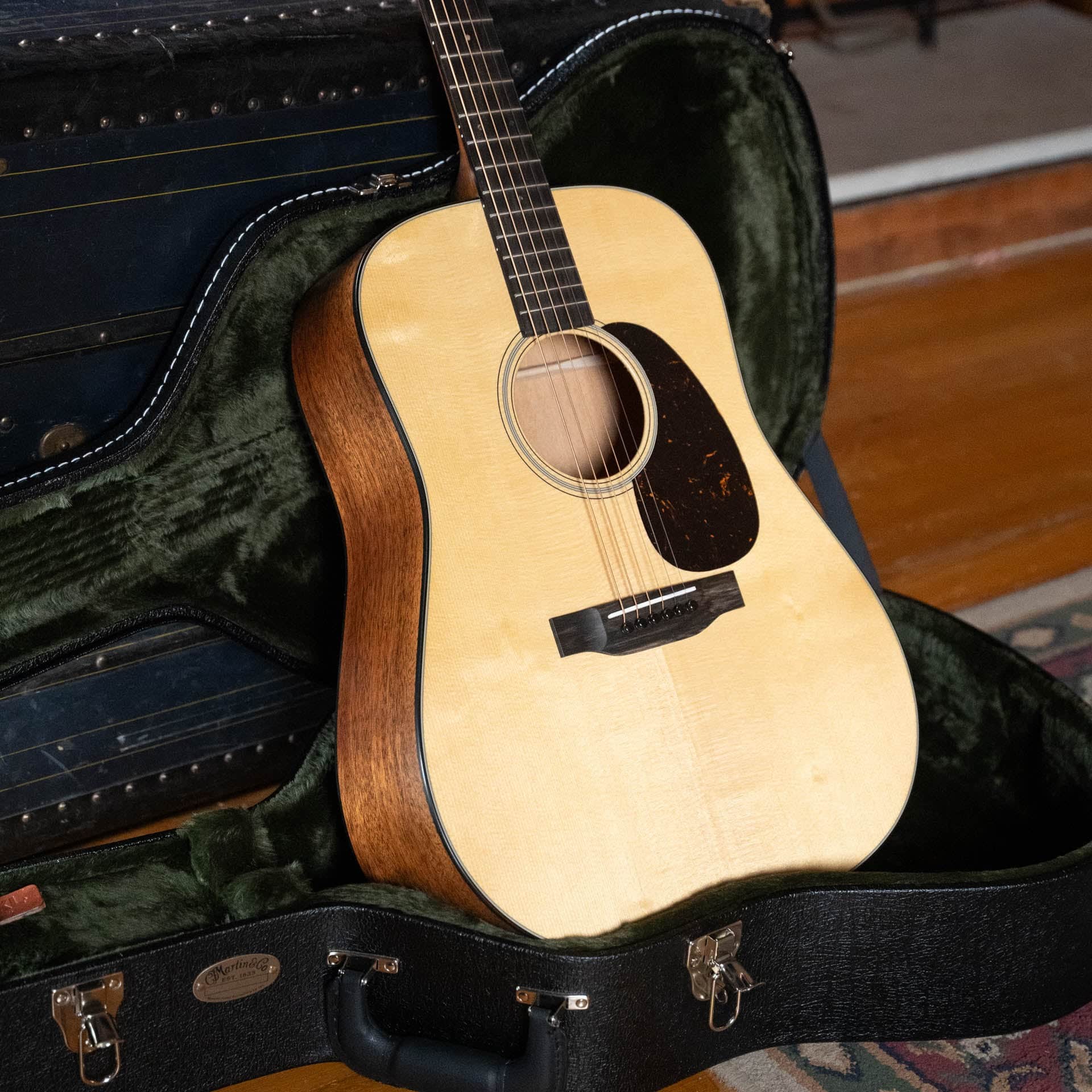
So what are you buying when you buy a custom or small-shop guitar today? Mostly the details: perfect binding, hand inlay, no gaps anywhere. You're also buying the experience, and a builder's own voice. Bourgeois, Boucher, Gallagher and Preston Thompson each have a sound they chase, and that's worth paying for if it's the sound you want.
Finish is the part of the build you can hear
The smartest machine we saw at either factory was Taylor's finishing line. The finish is electrostatically charged and goes on a lot like powder coating, so the coat is even all the way around, very little of it is wasted, and the extra gets recycled. It's a UV-cured finish, so a guitar can go through the machine and be cured in about 15 seconds. Taylor will tell you they'd spray nitro if they could, but in California it isn't practical at their scale.
Finish is where most of the money goes in a high-end guitar, because a gloss finish means coat after coat with sanding in between. Getting a thin, perfectly even finish in a fraction of the time is a big reason a production guitar costs less than a handmade guitar with the same woods. We think finish thickness is one of the biggest things you hear in a guitar's tone, and Martin would love to claim the same accuracy.
| What we saw | Martin | Taylor |
|---|---|---|
| Where | Nazareth, Pennsylvania, plus a factory in Mexico | El Cajon, California, and Tecate, Mexico |
| Guitars a day | Our rough guess: 200 to 300, counting Mexico | About 104 to 110 in El Cajon, more than 600 in Tecate |
| CNC work | Tops, bridges, fretboards, fret slots | Tops, bridges, fretboards, fret slots |
| Custom shop | Deliberately more hand work | Mostly built on the production line |
| Factory floor | Talk to anyone; one thing off-limits to film | Set interviews; a "do not film" sign on the fretting machine |
Two cultures, one goal
The difference you'd notice on a tour is the culture. At Martin, we could talk to anybody on the line, and people lit up when we asked how long they'd been there and what their job was. Some of them have been building Martins for 20 or 30 years. The message from the top is that the people working there are Martin guitars. At Taylor, there were certain people we could interview and film, and two machines stayed off-limits: a fretting machine behind a "do not film" sign, and a steam-and-vacuum side bender we didn't get to see at all.
We don't hold that against Taylor. Walking through with cameras slows people down, and Bob has spent a lot of money developing machines that other builders would love to copy. Martin shows you everything, and Taylor keeps a little secret sauce. Neither one is wrong. The people at both were great to us, and nobody at either factory ever knocked the other one's guitars.
"I don't think one or the other is more handbuilt. I think they're both working toward the same goal: to create consistent guitars at scale."That's Jason, and after all that arguing, John found he'd been saying the same thing. Martin holds on to more hand work partly because its buyers want a handmade guitar, or at least want to hear that a person built theirs. Taylor has fully embraced being the most efficient guitar factory it can be. The guitars come out of very similar processes either way.
Legacy, the 16 Series and Gold Label
John came home thinking about legacy. Martin has been building since 1833 and has to live up to the dreadnought and X-bracing every day, which makes new ideas harder for it to sell. He thinks the new Inception OM-35 is the best mix of innovation and old school Martin has built in a long time. We covered that same tension in why Martin struggles when it innovates. Taylor has been around since the '70s, so it's a legacy brand now too, and Gold Label is a step away from its own legacy in the other direction.
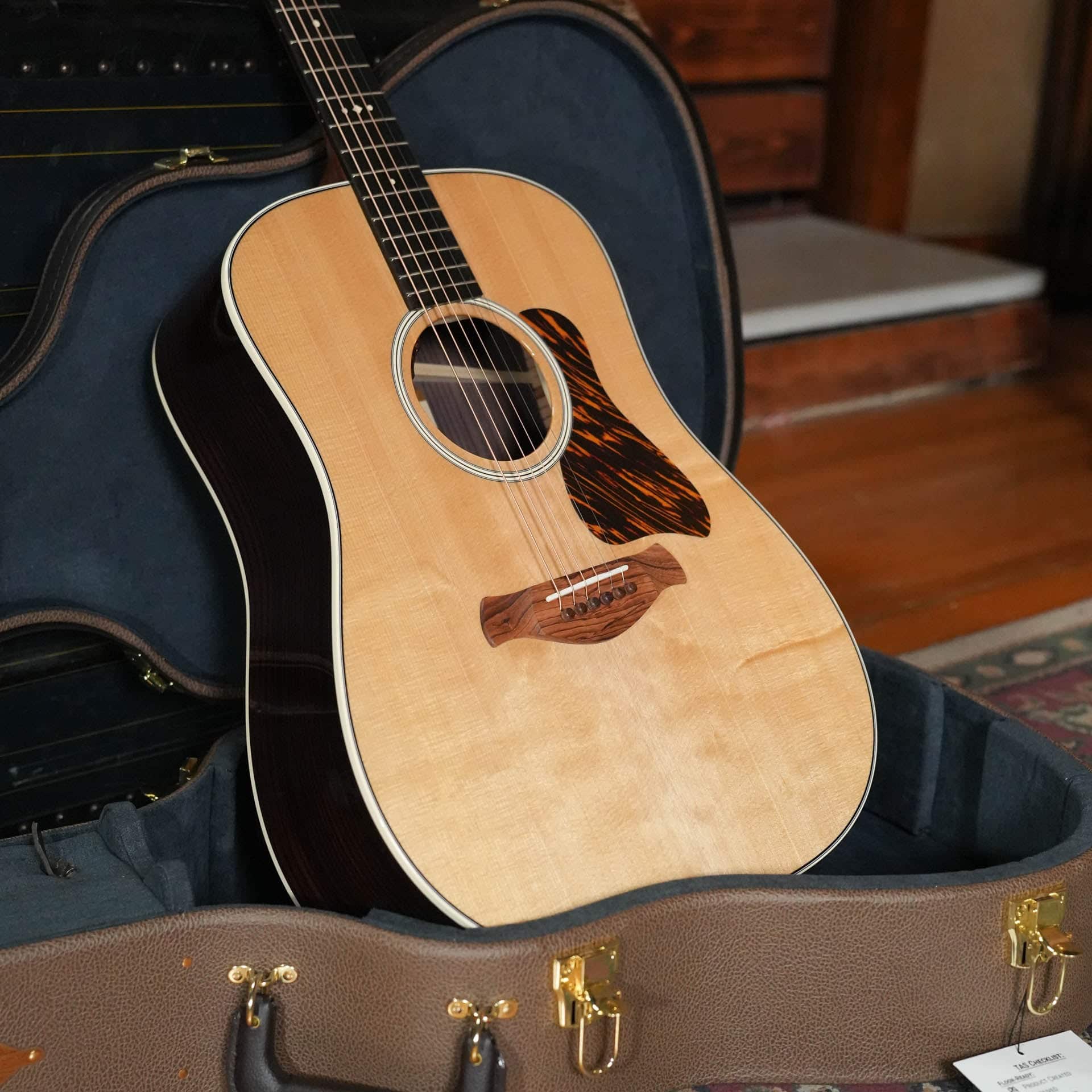
What we like most is how the lines are blurring. We watched the Martin 16 Series being built in Nazareth, Martin's take on a Gibson-style sound, and Taylor keeps adding to the Gold Label series. Bob isn't trying to build a Martin and Martin isn't trying to build a Taylor; each one is building toward players it hasn't reached before. Taylor fans can be just as hard on a traditional Martin as Martin fans are on a Taylor, and these guitars give both camps somewhere to meet.
Which guitar should you buy?
Don't let the handmade guitar label make the choice for you. Buy the sound and the feel you want, from the brand that builds it. If you're shopping today, here's where we'd start:
- Martin D-18 Satin #0620, $2,599.99: the standard Martin mahogany dreadnought, and the model we've played close to a hundred of.
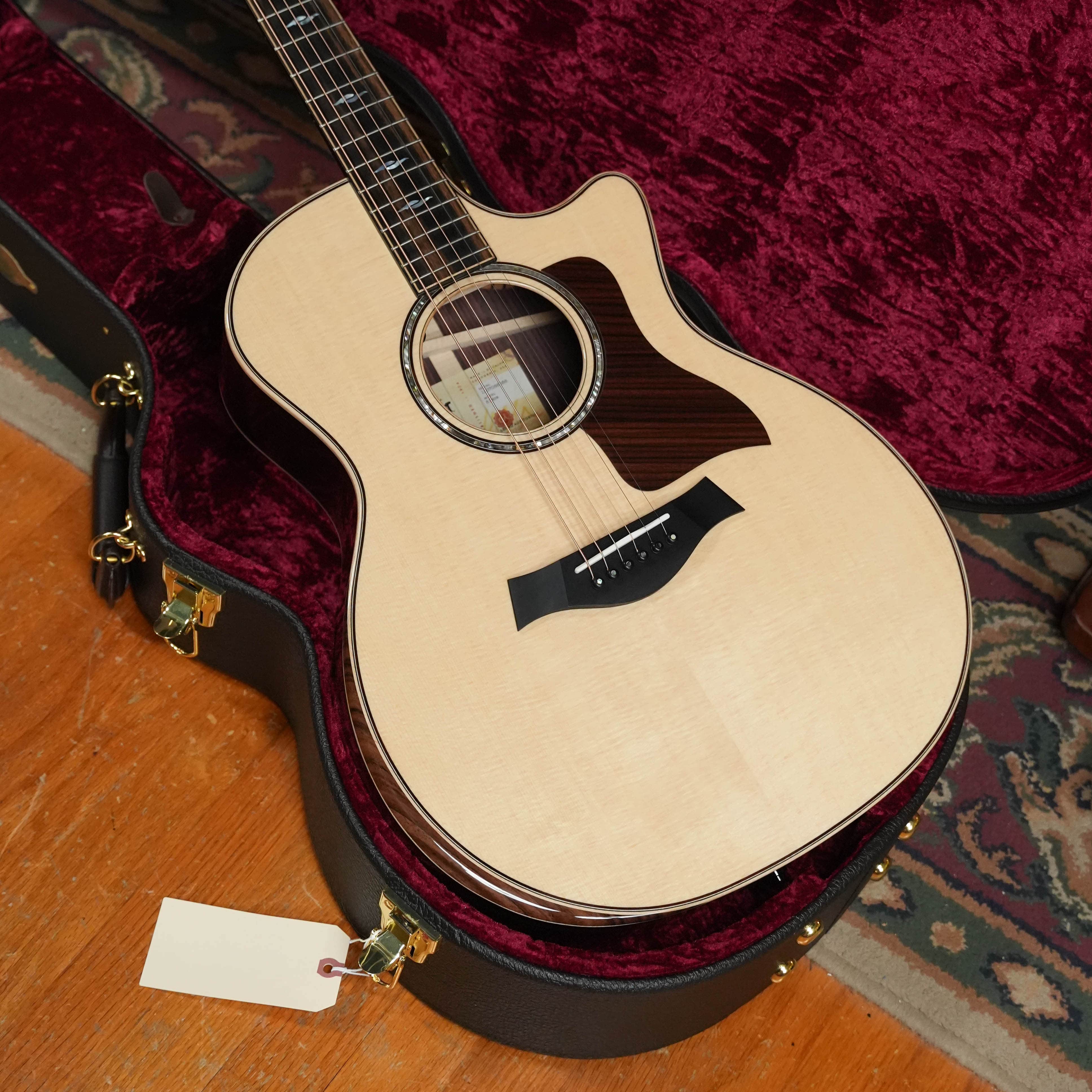
- Taylor 814ce #6068, $3,999: the grand auditorium most players picture when they hear "Taylor."
- Taylor Gold Label 710e #6024, $2,999: for the player who likes Taylor's playability but wants a traditional dreadnought.
- Martin Custom Shop "D-18" #0897, $8,761: when you want the last 1%, and a handmade guitar in the sense most people mean it.
For the full picture of how Nazareth works, see our earlier Martin factory post.
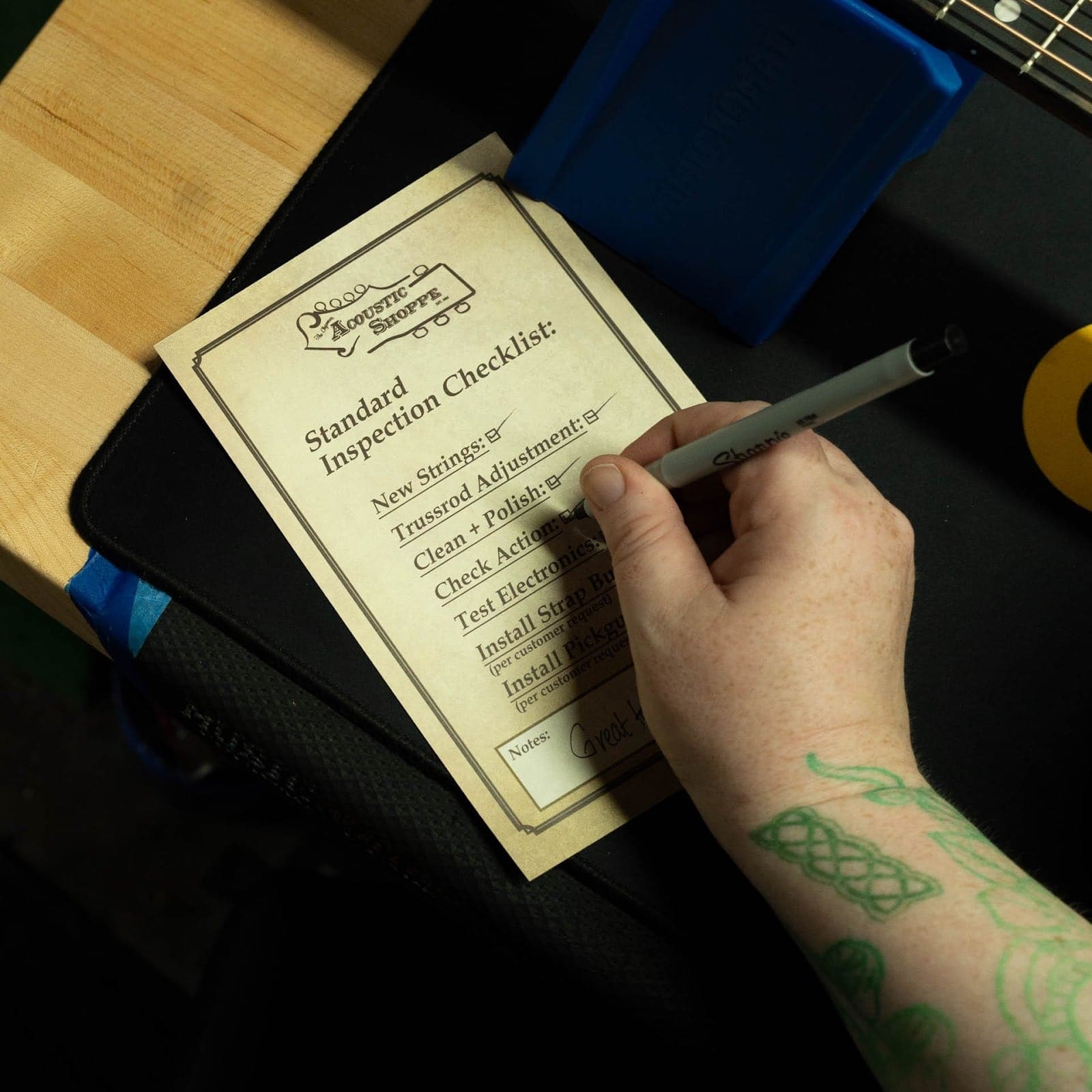
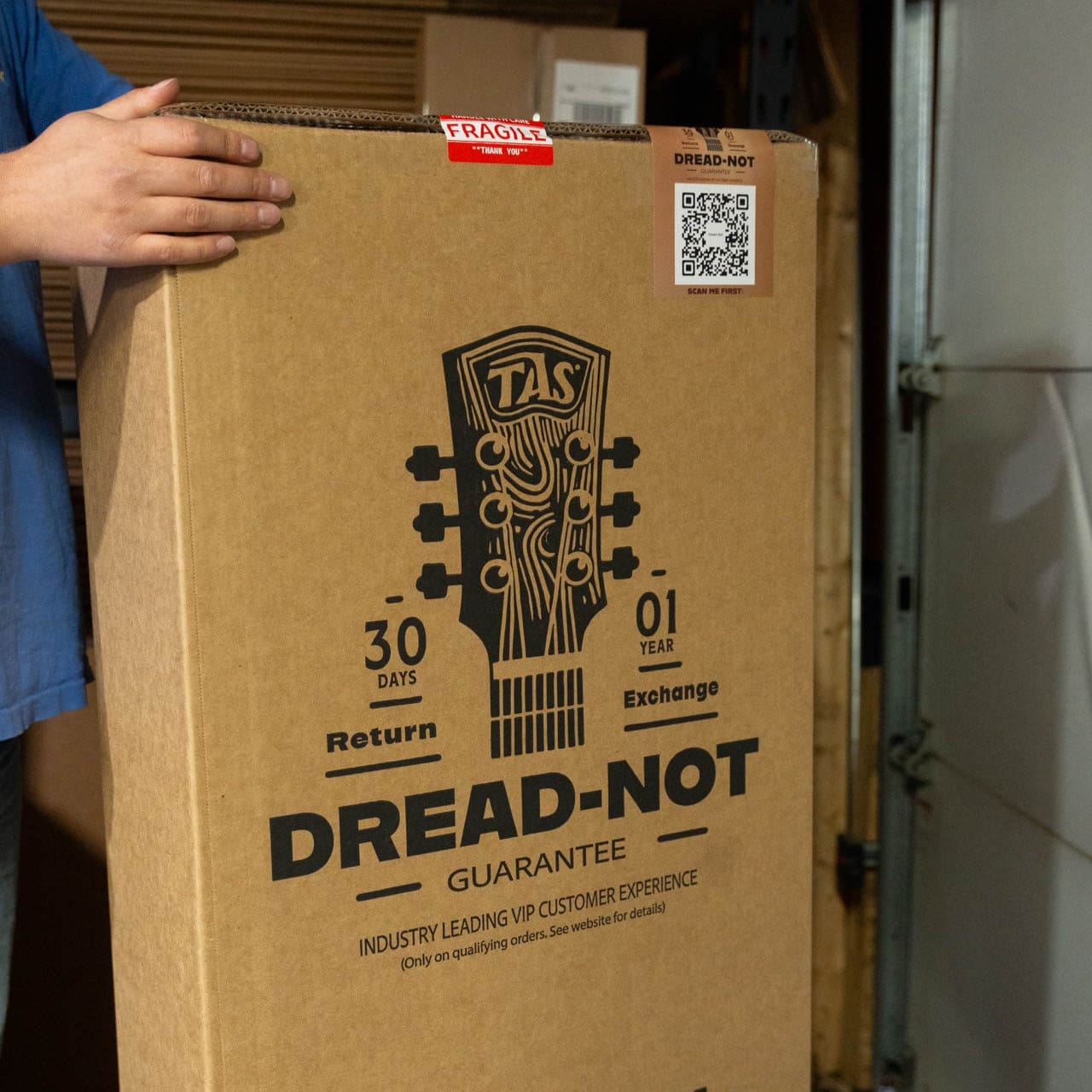
Whatever factory it comes from, every guitar we sell goes through our 23-Point Professional Inspection before it ships. Guitars $1,000 and up also carry the Dread-Not Guarantee: a full year to trade it in for up to 90% of the pre-tax purchase price in credit, less round-trip shipping, plus a 30-day in-home trial.
Related reading
- Taylor 710e vs HD-28: can Taylor's Gold Label dreadnought compete?
- Martin D-18 vs D-28 compared
- Taylor acoustic guitars are now at The Acoustic Shoppe
Go see one for yourself
If you get the chance to tour a guitar factory, any of them, take it. Every one we've been to is happy to show you around, and you'll catch something new each time. In the meantime, you can play both sides of this argument from home: browse every Martin we have in stock, the Taylor guitars on our wall, the Martin Custom Shop guitars, or shop acoustic guitars across every brand we carry. If you're after a handmade guitar from a small builder, we'll tell you honestly whether it's worth the premium for what you play.
The Acoustic Shoppe is an Authorized Taylor Premier Dealer and Gold Label Advantage Dealer.