
Table of Contents
- The myth: a signature Martin is a regular Martin with a name on it
- Why the 00-21 matters more than the name
- What the Martin Gram Parsons is built from
- Watch the Martin Gram Parsons review
- How it sounds and plays
- The reality: the premium is real, and so is the value
- What we'd change, and who should buy a standard Martin
- If you want a Martin like this one
- Related reading
Here's a view that cuts against the comment section: the Martin Gram Parsons 00-21 is a signature guitar we'd recommend for the guitar, not the name. Signature fatigue is real. Every few months Martin puts out another artist model, and plenty of players have decided they're all the same guitar with a famous name on the label and a higher price. We understand why. But after spending time with this one, our answer is that the Martin Gram Parsons earns its place in the lineup, and the reason is the 21 itself.
John put it plainly when this one came in: "This guitar makes me feel like I have a piece of vintage Martin tone." Below is why we think that, where the premium goes, and who should buy a standard Martin instead.
The myth: a signature Martin is a regular Martin with a name on it
The skepticism comes from somewhere. Some signature models really are a stock guitar with an inlay and a label, and buyers have learned to read the price bump as a fan tax. John doesn't wave that off. He knows a lot of players are tired of signature models, and he still makes the case for this one:
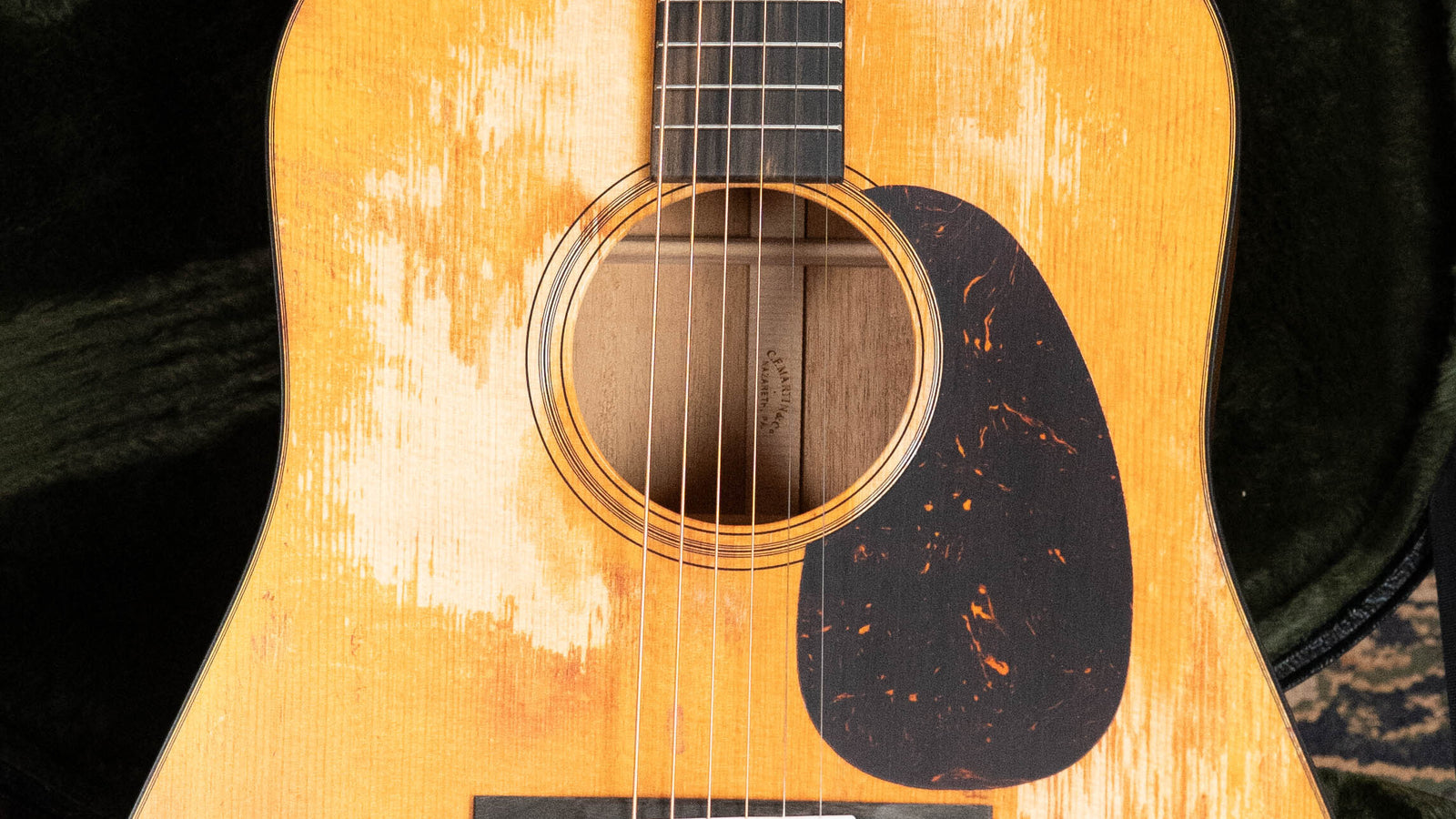
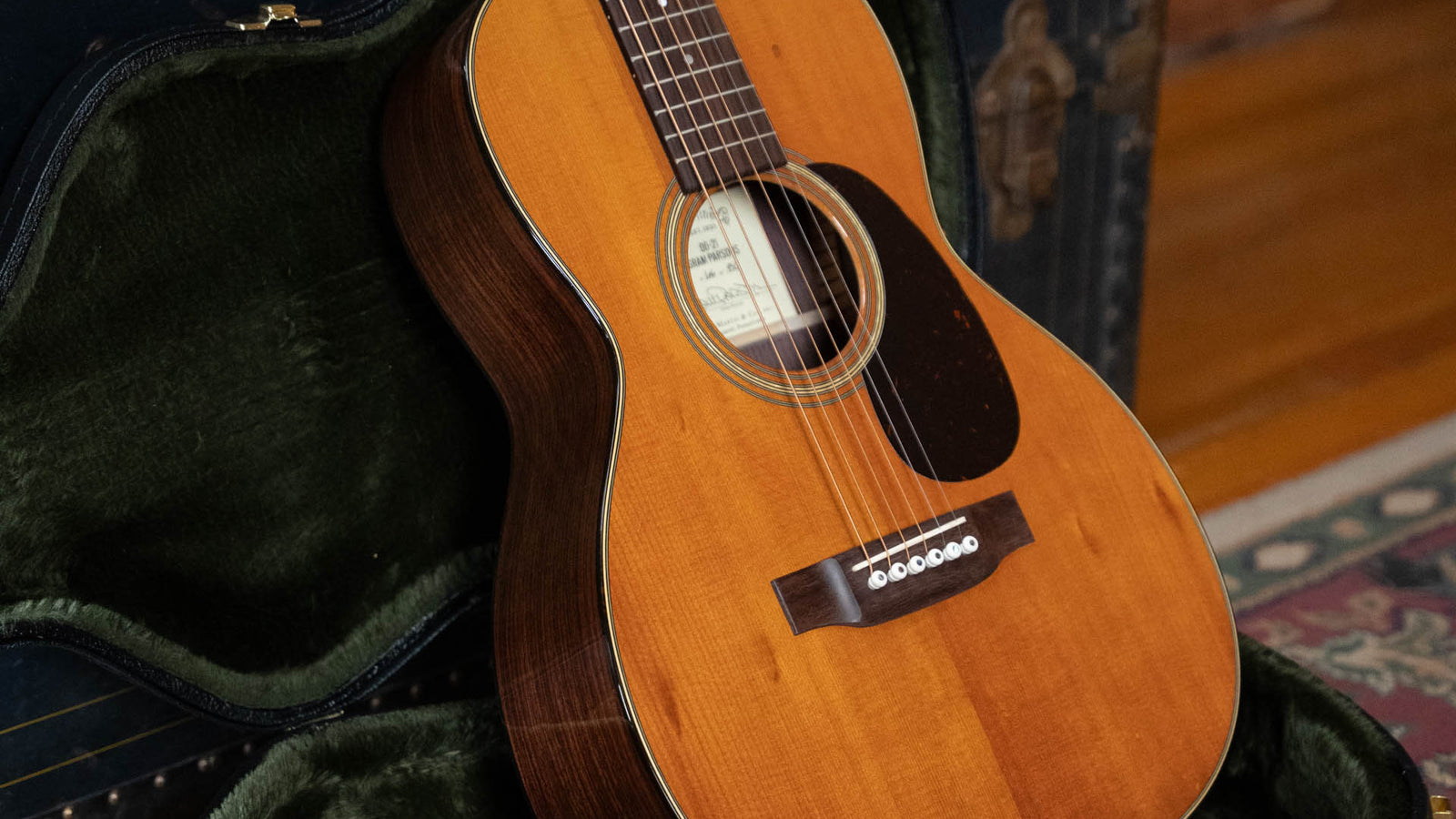
"Sometimes guitar companies come up with stuff that does actually make sense, and not just because somebody's name is on it. And I actually think this is one of those guitars." (John)The Martin Gram Parsons is a copy of the 1963 00-21 that Gram Parsons owned, built down to the player wear on his actual guitar. Martin is making 80 of them worldwide to mark what would have been his 80th birthday. The limited run is part of the story, but it isn't the argument. The argument is the model it's built on.
Why the 00-21 matters more than the name
The 21 is the part of Martin's history most players have never handled. It's a quiet configuration: rosewood back and sides like a D-28, but trimmed and bound simply, closer to an 18 in how it looks. We call it a hidden gem in the Martin world, and John calls the 00-21 "kind of an unsung hero." Martin has reissued the 21 before, but this version is the more accurate one, and it feels that way in your hands.
"The 21 is great because it's not fancy. It just has that look." (John)Here's the so-what for a player. You get rosewood's fuller, deeper voice without paying for the herringbone and abalone of a fancier style. In John's words, rosewood "gives you more of that D-28 tone without being dressed up all the way." If you've owned an 18 and a 28 and wished for something in between, this is that guitar.
What the Martin Gram Parsons is built from
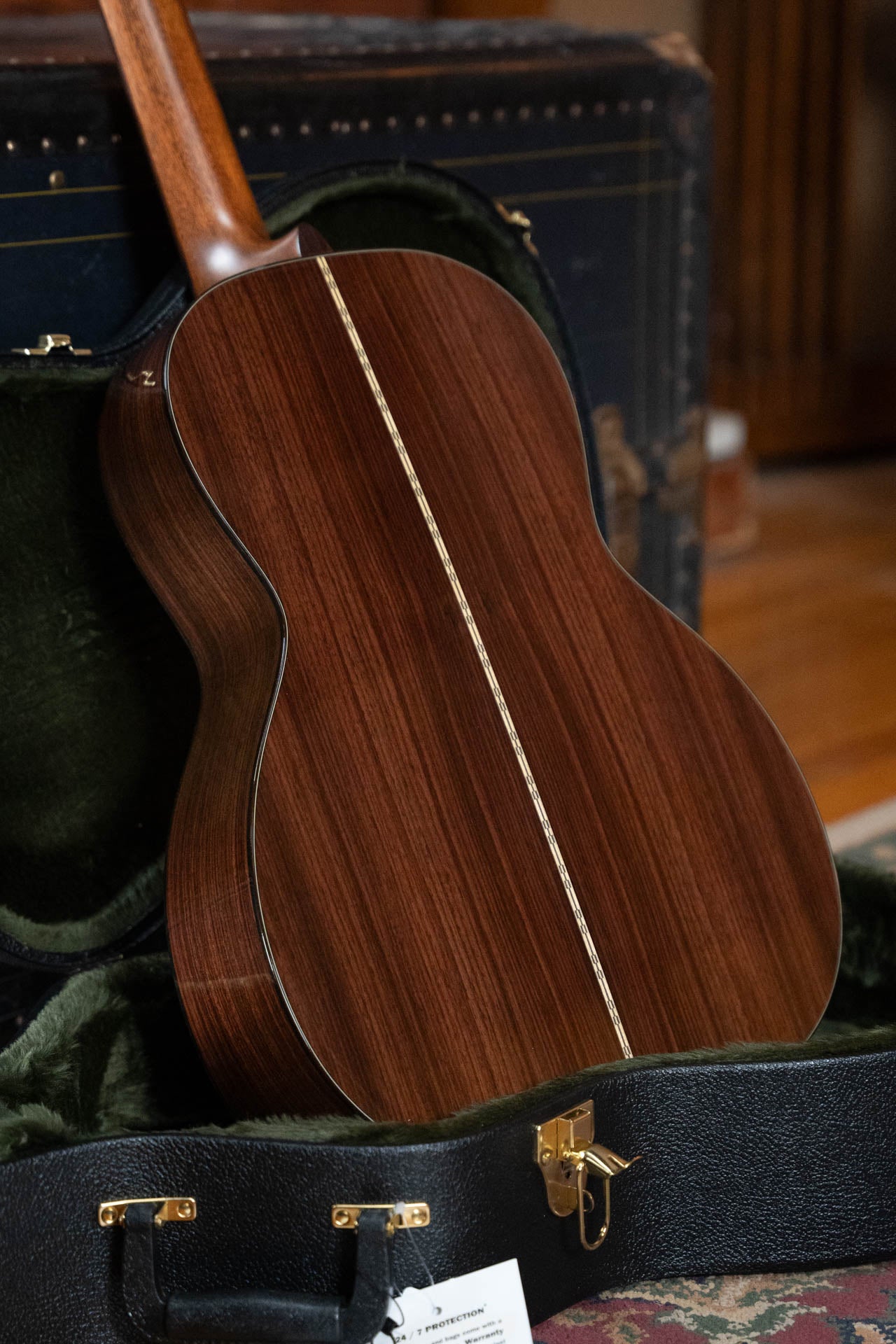
These specs come from our Shopify listing for the one we had. Each one changes how the guitar plays or sounds:
| Spec | Martin Gram Parsons 00-21 | What it does for you |
|---|---|---|
| Body | 00 (Grand Concert), 12 frets to the body | Small and comfortable, close to your body |
| Top | Old-growth Sitka spruce, VTS treated | Sounds played-in from day one |
| Bracing | Scalloped 1/4" Adirondack, VTS treated | Lets a small body move more air |
| Back and sides | Solid East Indian rosewood | Rounder lows and a fuller midrange than mahogany |
| Neck | Genuine mahogany, 1963 Gram Parsons profile, dovetail joint | A slight V that sits comfortably in the hand |
| Nut width / scale | 1 7/8" / 24.9" | Room for fingerstyle, easy tension for chords |
| Appointments | Style 28 inlays and rosette, faux tortoise binding, aging toner | Period-correct look without extra trim |
| Hardware | Nickel Golden Age side-mount tuners, bone nut and saddle | The slotted-headstock look of the original |
Ours listed at $5,499.99, with a hardshell case, and it has already found a home.
Watch the Martin Gram Parsons review
Jump to: who it's for (2:58) · the X factor (4:29) · what John would change (5:35) · is it worth it (7:05).
How it sounds and plays
A 00 surprises people. They expect a small guitar to sound small, and this one doesn't. John describes a "thick midrange" that's punchy and "just kind of grabs out there," with a character and warmth on top of it that "just feels cool." His own short version: "a simple, rich midrange, followed by a bold resonance." That's the sound of a 12-fret rosewood 00: clear in the middle, then a bloom that keeps going after the note.
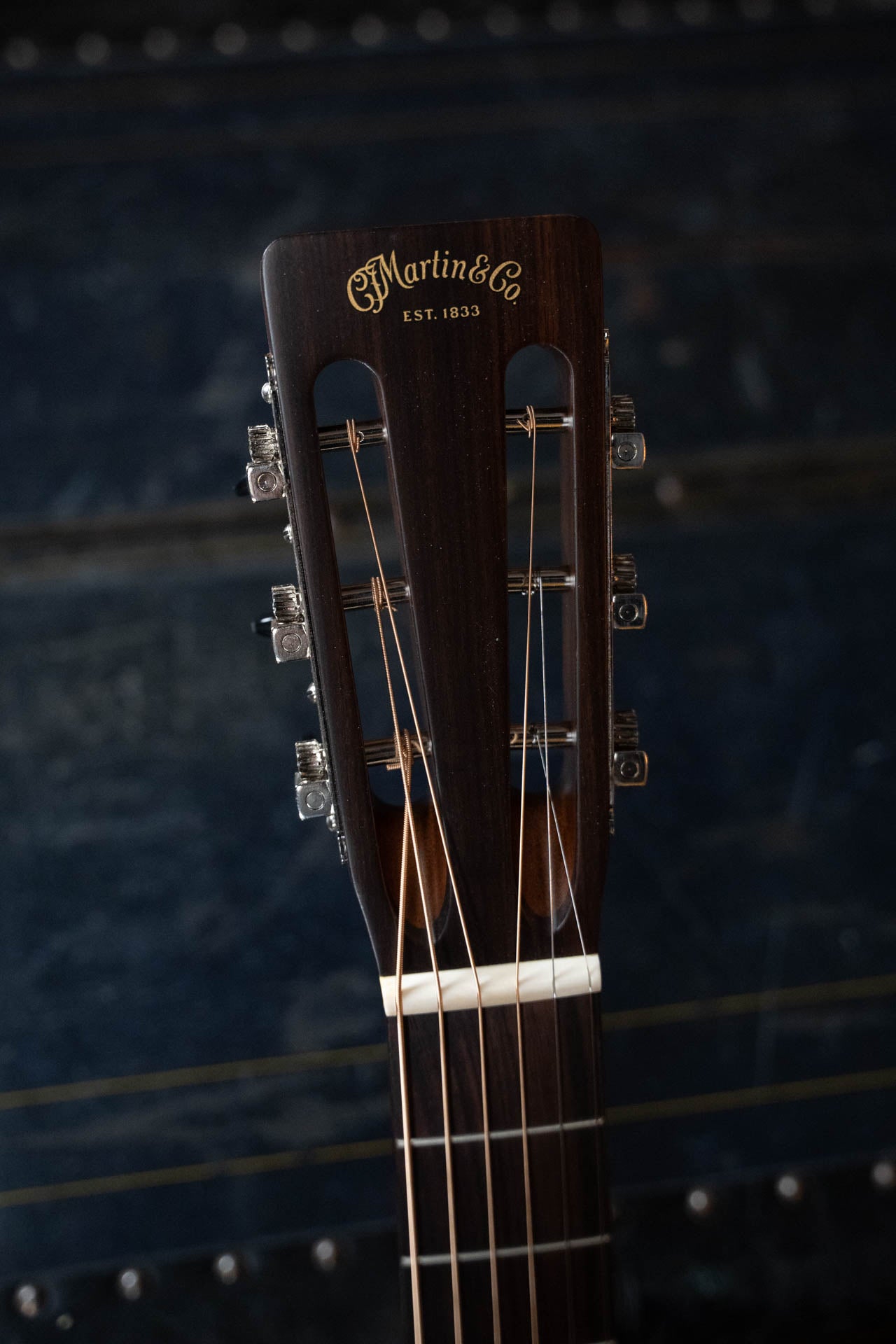
The neck is the part that worries people on paper. A 1 7/8" nut sounds wide if you play a modern 1 11/16" neck. John's take is that it isn't hard to play when it's done well, and this one is. There's a slight V to the profile, and he finds it really easy to play: "wide but comfortable," as he puts it. He says the whole guitar "feels like a vintage precision woodworking tool." Plain, well made, built to be used.
His verdict on the X factor: "a cool tone palette that's not found in your everyday Martin guitar."
The reality: the premium is real, and so is the value
We won't pretend there's no premium. John says it directly: you're paying extra for the celebrity tie-in and the signature. A standard Martin costs less. Where he lands is that the premium, here, adds something rather than just costing something:
"I don't know of anything in the current Martin lineup that has the same vintage feel, the same vintage tone." (John)He also thinks the Martin Gram Parsons sits in a sensible middle ground. It's priced above what the same guitar would cost without the name, but it isn't priced so high that only a collector could ever own one. For a Gram Parsons fan, that matters, and John counts himself as one.
What we'd change, and who should buy a standard Martin
The honest catch is the aging. The Martin Gram Parsons copies the wear patterns on Gram's actual guitar, with a darker, toned top. John's point is that not everybody needs that:
"I don't know that everybody's going to need to have the exact wear patterns of Gram's actual guitar." (John)If you want a clean, glossy guitar that you'll put your own wear into, the printed-wear look may bother you. We had the same debate about Martin's printed tops on the D-18 Street Legend and the Bonamassa 00-18, and it's worth reading both before you decide. John finds it "pretty darn cool." Not everyone will.
Buy a standard Martin instead if:
- You don't care about Gram Parsons and won't value the story or the limited run.
- You want a pristine finish rather than aged wear.
- You'd rather put the difference toward a dreadnought you'll play in a band. Our D-18 vs D-28 comparison covers that choice.
Who it's for: the player who wants a collector guitar that's truly about the guitar. In John's words, "no frills, just tone and character." He asks the question every buyer of a limited Martin faces: would you play it yourself, or would it sit in its case? We think this one deserves to get played.
If you want a Martin like this one
Finding a Martin Gram Parsons now takes some asking. Here's how to get close:
- Browse our Martin signature and artist editions. When another Gram Parsons comes in, it shows up there first.
- If you'd like one, ask us about ordering one and we'll tell you what we can find.
- Want a vintage-correct small Martin this week? Play the Martin OO-18 Joe Bonamassa 1937 Sunburst ($3,999.99), the mahogany 00 John points people to next, or the rosewood Martin 000-28 1933 Ambertone ($3,799.99).
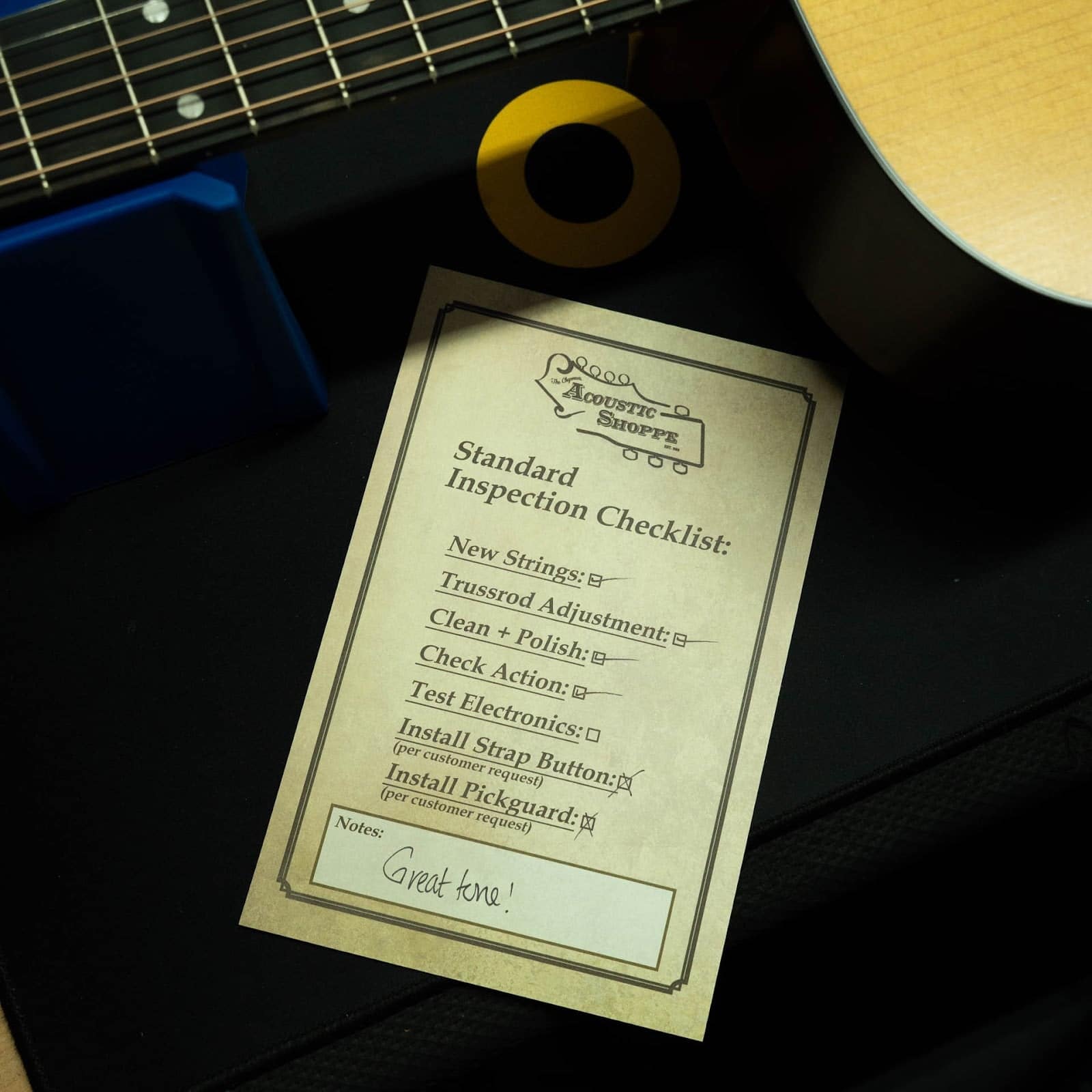
Every Martin we sell goes through our 23-Point Professional Inspection before it ships, so a guitar like this arrives playing the way it should. At this price our Dread-Not Guarantee covers it too: a full year to trade it in for credit of up to 90% of the pre-tax price, less round-trip shipping, plus a 30-day in-home trial.
Related reading
- Billy Strings D-28: why his signature Martin isn't a 1940 copy
- Martin Jason Isbell guitars: the 0-10E Retro and 0-17
- Martin guitar series explained: which Martin should you buy?
The Martin Gram Parsons is a rare thing: a signature model where the model matters more than the signature. If the 00-21 has always been the Martin you wanted to try, see everything Martin we carry in All Martin, or browse all of our acoustic guitars.