
Table of Contents
- What happened to Recording King?
- Who rebuilt it, and why they started over
- What the Recording King Standard series changed
- The Recording King Standard lineup and prices
- Recording King or Eastman E1?
- What we'd change
- Do you still need to spend $3,000 to $4,000?
- How to get a Recording King Standard guitar
- Who should buy a Recording King Standard
- Acoustic Shoppe FAQ
A lot of players believe a great-sounding acoustic starts somewhere around $3,000 to $4,000, and that anything under $1,000 is a compromise you'll want to trade out of in a year. Every guitar in the new Recording King Standard series is under $1,000, and that matters more than usual, because Recording King is a name with some baggage. If you bought one in the last few years, you might have gotten a great guitar, or you might have gotten one with a finish so thick it looked dipped.
So the real question about the Recording King Standard guitars is whether the brand actually fixed what went wrong, and whether a sub-$1,000 guitar can now get close to the $3,000 ones. We've carried Recording King since the shop opened, we watched it slip, and we had a hand in the comeback. Here's what changed, what we still wish were different, and who should buy one.
What happened to Recording King?
Recording King was one of the first brands we carried when we opened almost 13 years ago. The early run was good. The Dirty 30s and the standard dreadnoughts were well built for the price, and they sold well for us. Recording King itself goes back much further, to the 1930s catalog guitars, before Greg Rich, & The Music Link bought the trademark and brought it back as an import line with some cool designs.
Then the quality control started to slide. The finishes kept getting thicker, which is a common shortcut on import guitars: it's easier to keep spraying than to sand between coats. The edges start to roll over, the finish pools where the neck meets the body, and you get what we call a dipped look. Besides looking cheap, all that finish chokes the tone. Eventually The Music Link filed for bankruptcy, and a lot of players (and dealers like us) wondered whether those beginner-friendly price points on guitars and banjos were simply gone.
"I wouldn't say they were building bad instruments. They were inconsistent. Some of them would be a really good instrument, and the next one would have some issues."That inconsistency is the whole story. A $700 guitar that's great one day and has issues the next isn't a good buy, because you can't tell which one you're getting.
Jump to: the Recording King history at 0:38 · what's different about the new build at 10:35 · what John would change at 13:18 · the $3,000 question at 14:28.
Who rebuilt it, and why they started over
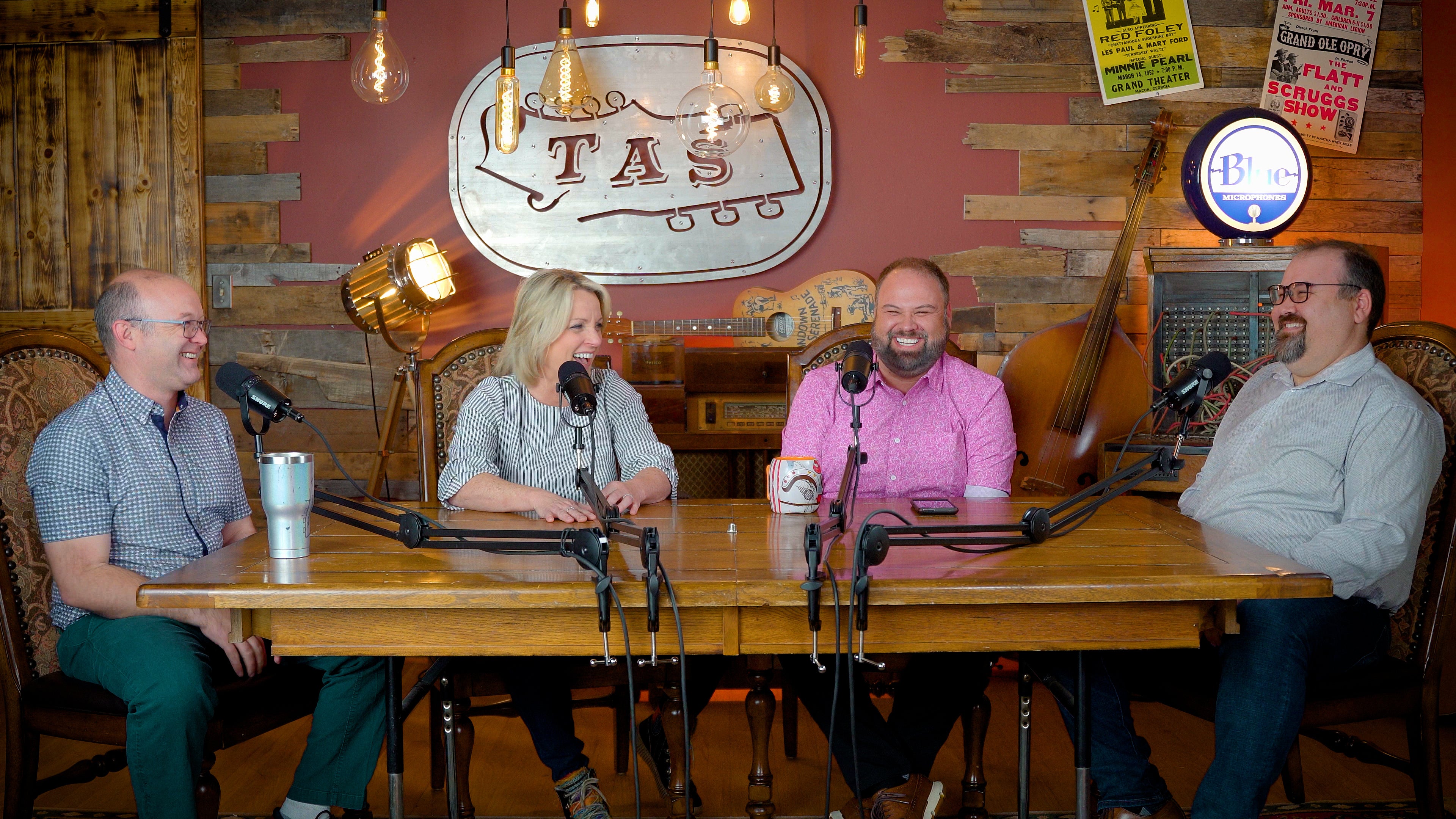
St. Louis Music, the same company behind Alvarez, picked up the distribution rights. Chris Meikle had been at the shop recording a podcast about Alvarez and Yairi guitars, and we'd talked then about what a shame it was that Recording King was going away. (Our earlier post covers the St. Louis Music acquisition and the Alvarez history; this one is about the guitars that came out of it.)
What impressed us is that they didn't just keep the line running. They stopped the presses, inspected a freight delivery of guitars, rejected the whole shipment and started from scratch. Chris had done the same thing with Alvarez years earlier, when Alvarez had the same thick-finish problem, and he'd figured out how to put a thin, clean finish on guitars in mass production, consistently. The Recording King Standard guitars are built in the Alvarez workshop for that reason: the crew there already knows the finish technique.
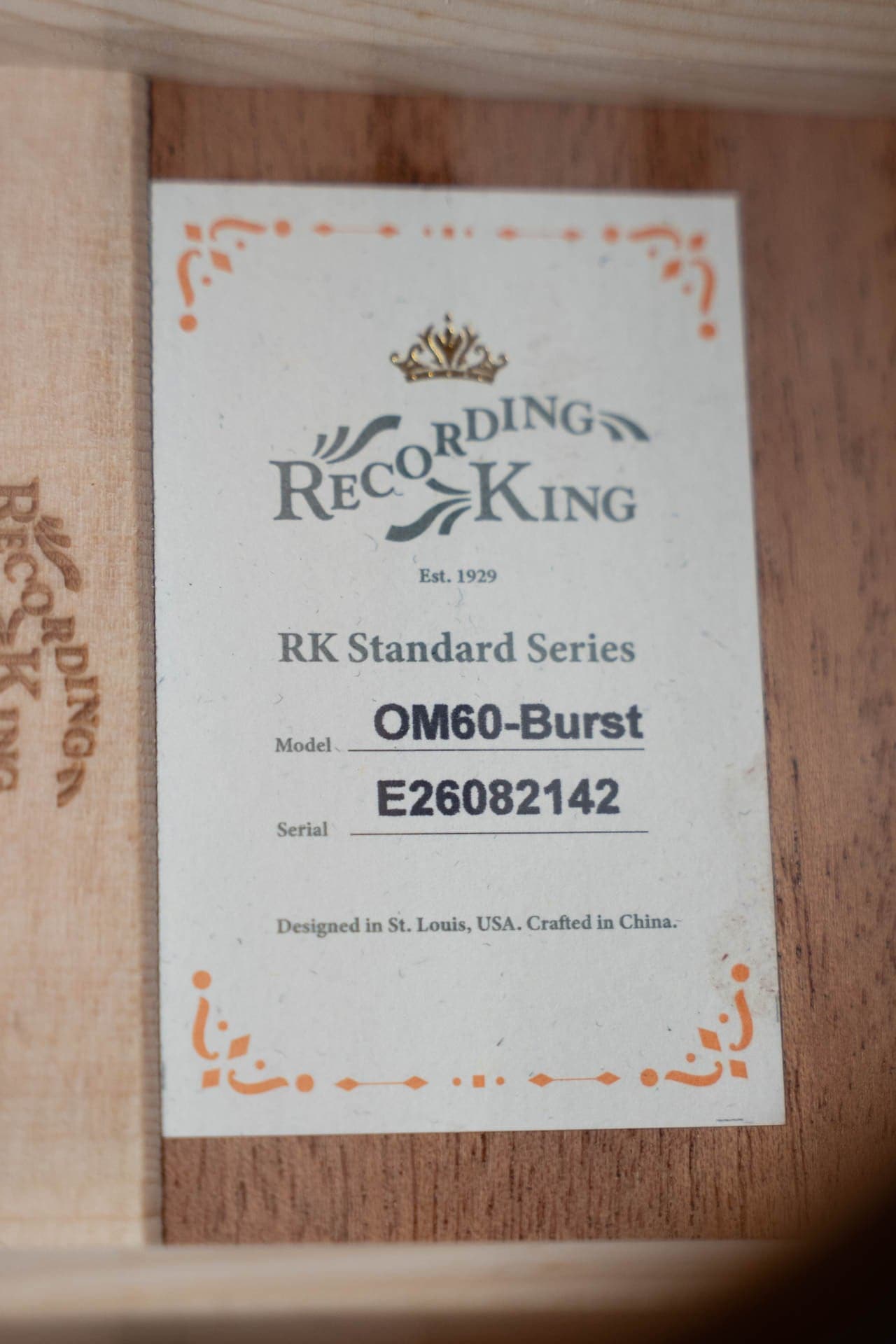
They also didn't want a second Alvarez with a different logo. Alvarez has a modern look and a modern voice (our Alvarez body-size comparison covers that line), and Recording King gave them room to build something more traditional: a dreadnought, an OM and a 000, voiced the old way. We were consulted throughout. We saw multiple prototypes and gave feedback aimed at one thing, a traditional sound that isn't what Alvarez is known for.
What the Recording King Standard series changed
Ask John what the X factor is between the old Recording Kings and the new ones and he'll say attention to detail, the little things. On affordable guitars those are usually the first corners cut, and they're the reason a cheap guitar looks cheap from across the room. Here's what changed:
- Thinner binding. Budget guitars tend to use a thick, wide binding. John pushed for a slimmer one ("Chris, you want to step this up? Let's do this"), the kind of trim you normally see on more expensive guitars.
- A thin finish at the neck joint. The guitars are still finished after the neck goes on, but the finish at the heel is so thin you don't see the buildup. That's the exact spot where the old dipped look showed first.
- Matte tuners made for the series. They had matte tuners made to fit the style, and our listings call them satin nickel open-gear tuners.
- Bulleted fret ends. No sharp edges when you slide up the neck, which is a detail you usually only get on higher-end imports.
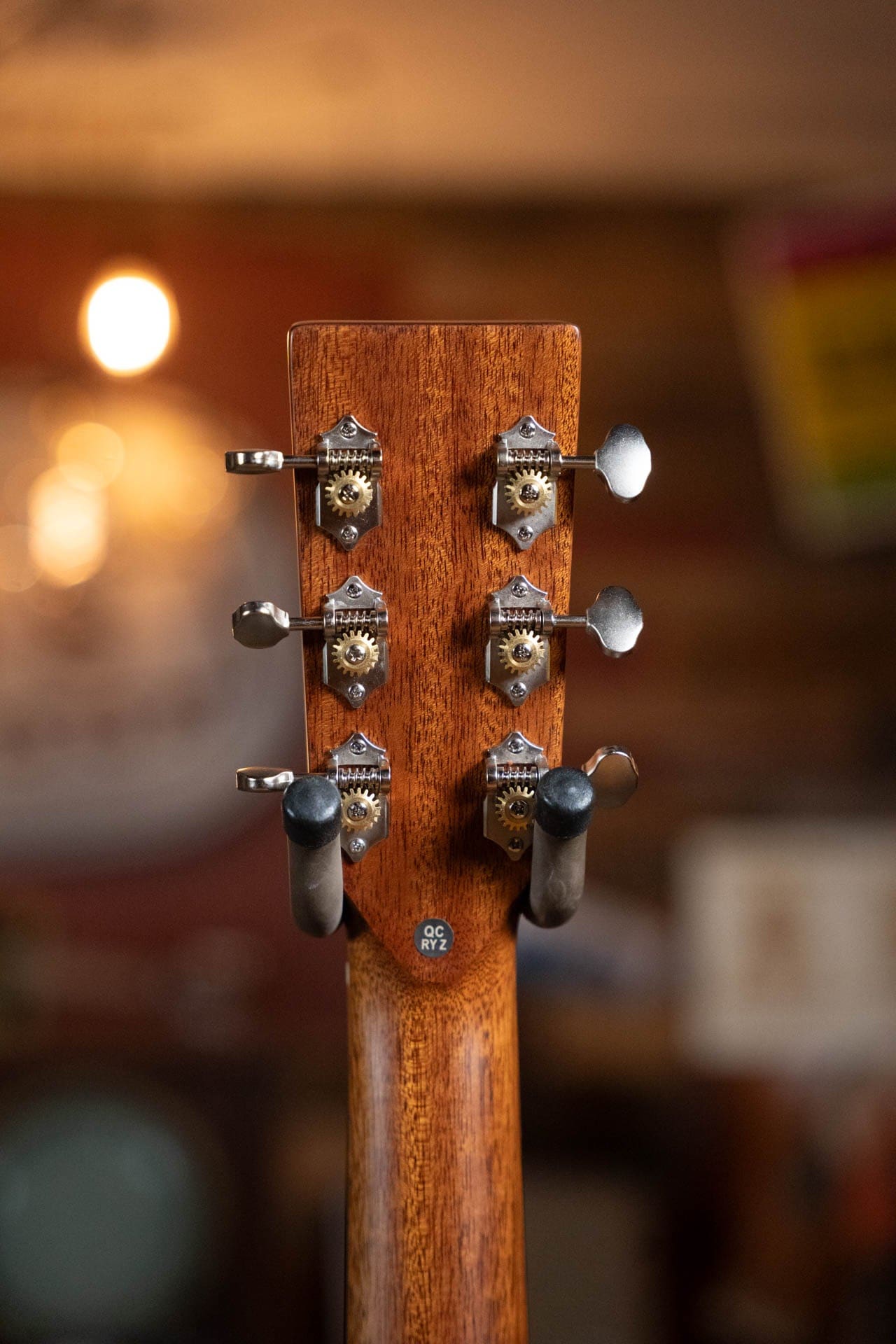
The finish itself is new, too. It was developed for this series, and it sits between the two usual choices:
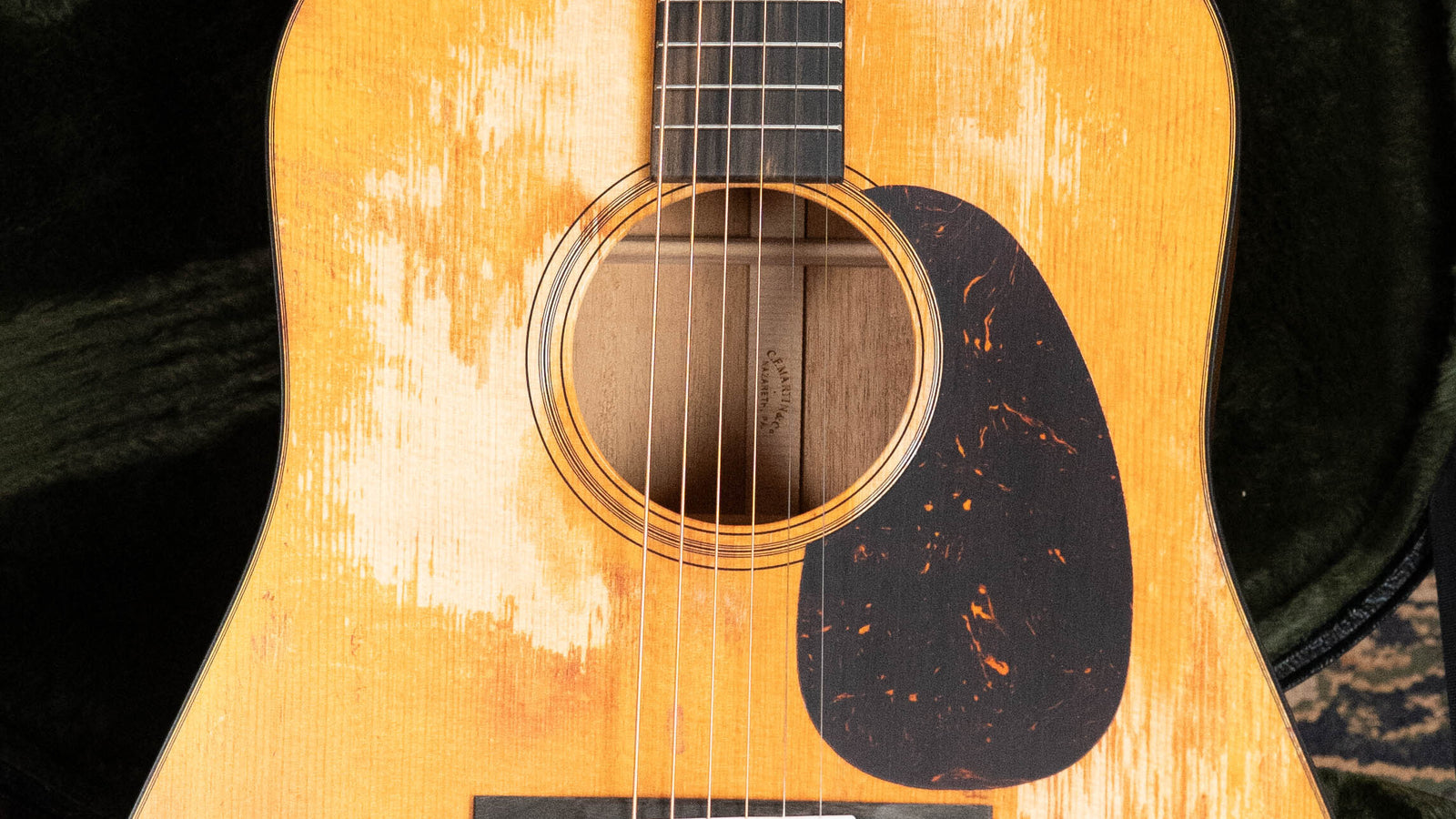
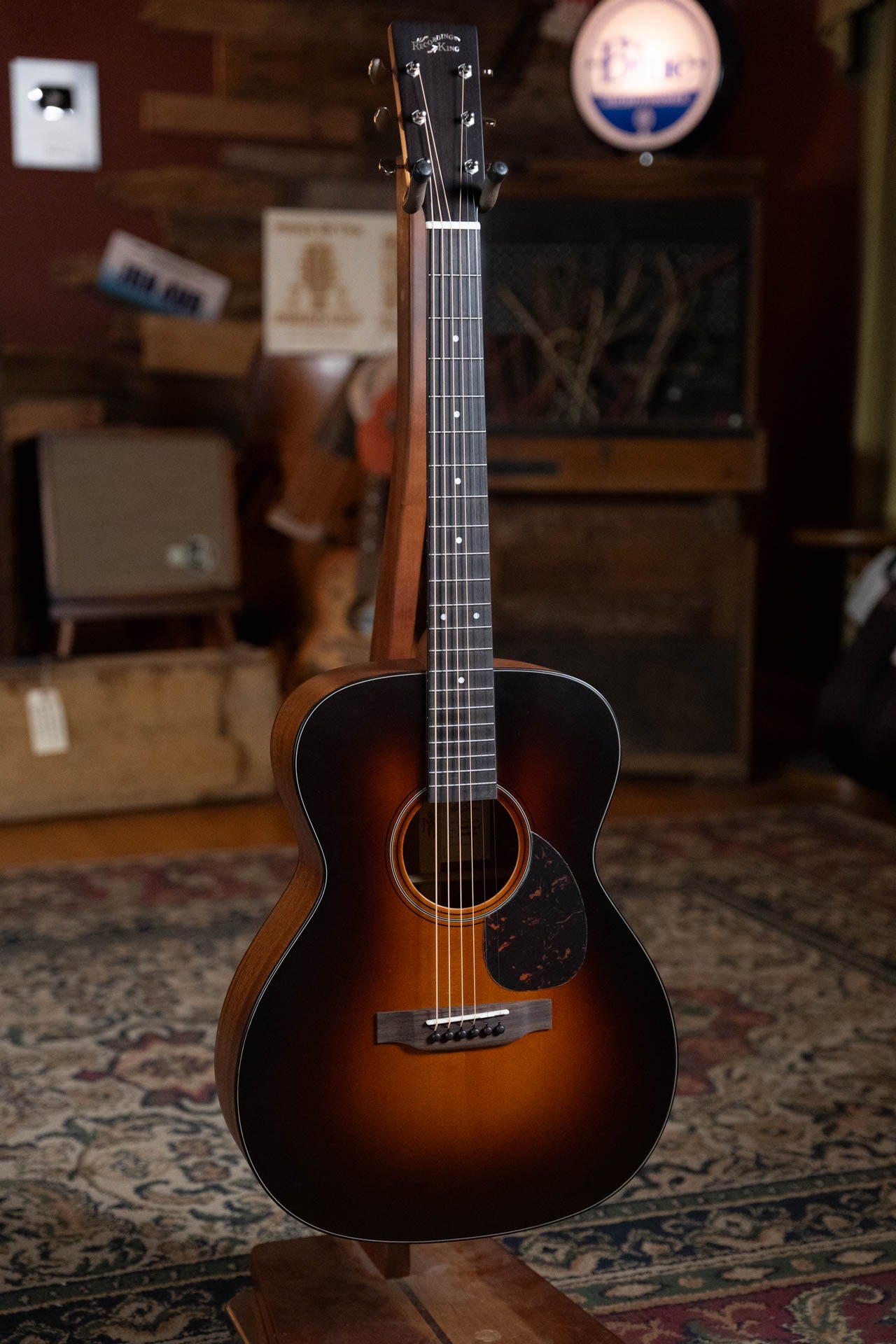
"It's not a true satin. It's not a gloss finish, but it's got a lot of character of both."Our listings call it a natural low gloss: a satin sheen rather than a polished shine, and thin enough that it doesn't bury the wood the way the old finishes did.
The Recording King Standard lineup and prices
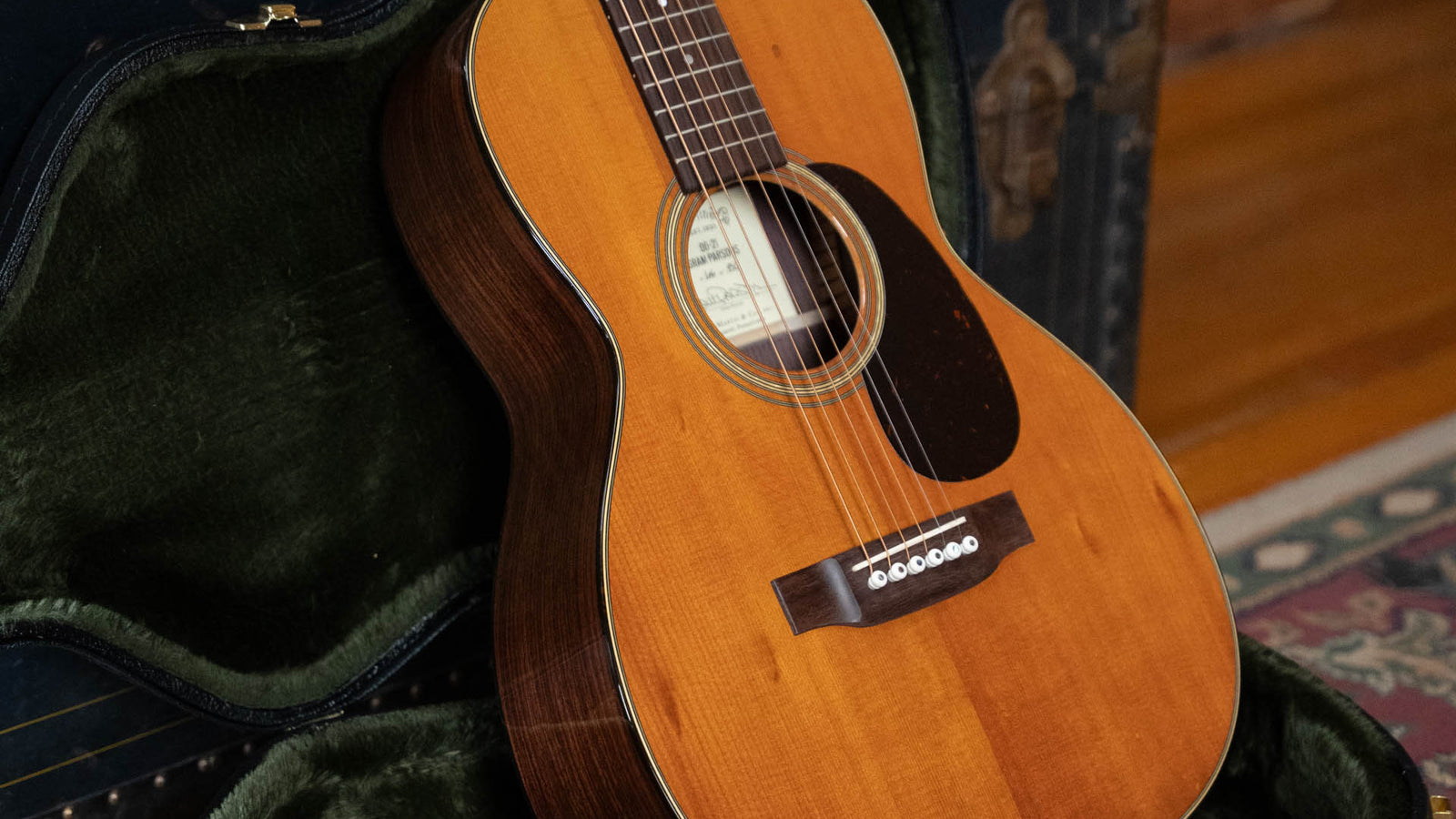
The shared spec is where the value shows up. Every model in the table has a solid top, solid back and sides, a 1 3/4" bone nut and bone saddle, a dovetail neck joint and a rosewood fingerboard. The wide nut gives your fretting hand more room between strings, and the dovetail is the traditional way to set a neck, which fits a series built to sound traditional. The spruce tops are thermo-cured AA Sitka, a heat treatment applied to the wood. Prices are from our store on November 3, 2026.
| Model | Body | Top / back and sides | Scale | Price |
|---|---|---|---|---|
| D60 | Dreadnought | Sitka / African mahogany | 25.4" | $749.99 |
| D70H | Dreadnought, herringbone | Sitka / East Indian rosewood | 25.4" | $949.99 |
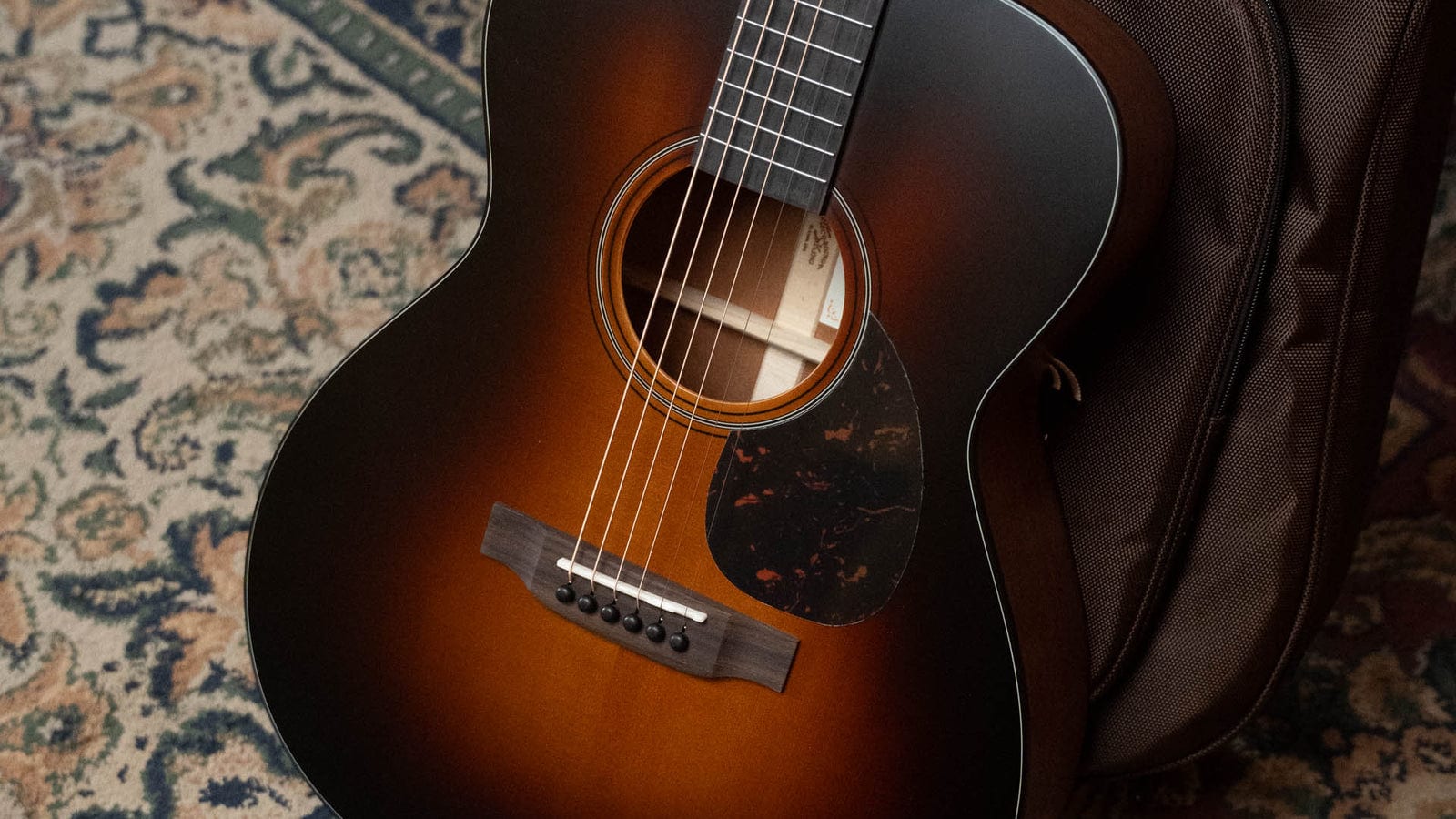
| OM60 | Orchestra model | Sitka / African mahogany | 25.4" | $749.99 ($799.99 Vintage Burst) |
| OM70H | Orchestra model, herringbone | Sitka / East Indian rosewood | 25.4" | $949.99 |
| 00060 / 00066 | 000, 12-fret | Sitka or all mahogany / African mahogany | 25.4" | $749.99 |
| BM70 Bluesmaster | 00 | Sitka / East Indian rosewood | 24.8" | $949.99 |
The Bluesmaster's shorter 24.8" scale means lower string tension than the dreadnoughts and OMs. Burst and Blacktop versions run up to $999.99. Most models are available as pre-orders right now, and we have an OM60 Vintage Burst in stock today.
Recording King or Eastman E1?
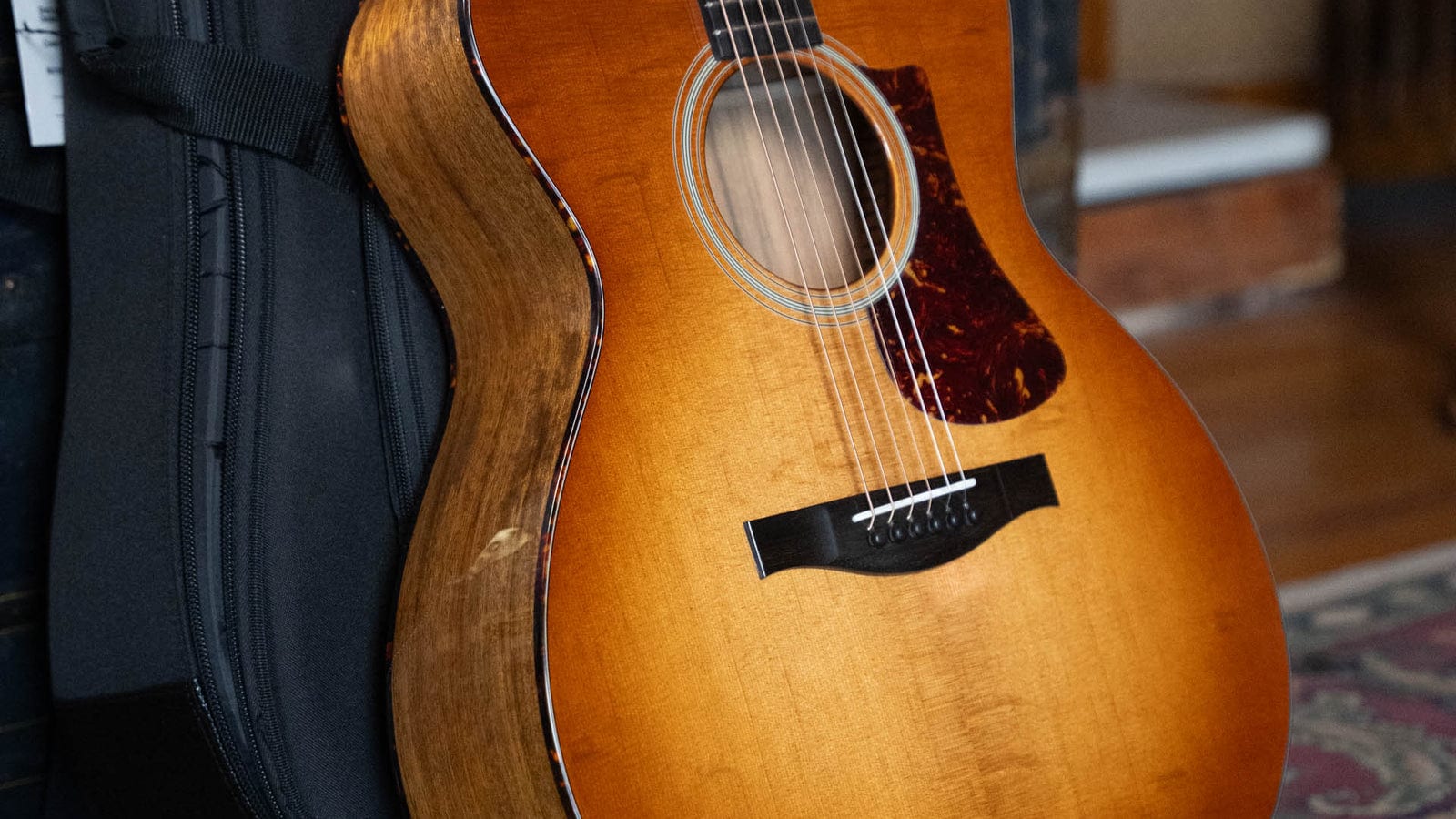
You know we love the Eastman E1 series. It's been our favorite traditional guitar at the right price, with a high-quality build, and both the OM and the dreadnought have done very well for us. So why carry something that competes with it? Because the Recording King Standard guitars are an alternative to it.
The E1 leans toward a more modern sound, closer to the boutique, Bourgeois-style voice. The Recording King goes the other way, toward a traditional sound and a traditional feel. If you've played an E1 and liked everything except the voice, this is the guitar to try next. Our E1SS and E1OOSS review scores the slope shoulders, and if gloss matters to you, John would put the Eastman Deluxe series right beside a Recording King, since those E1 Deluxe models are gloss.
What we'd change
There's nothing here John would call a deal-breaker, but he has a wish list, and he'll be the first to admit Chris could call him up and say, "John, you had your chance." Two things:
- Neck-off finishing. Finishing the body and neck separately and assembling afterward gives a cleaner look at the heel. Recording King is still working on a way to do that at this price.
- A gloss version, or at least a gloss top. John prefers the sound and focus of a gloss finish. He hears the warmth and woodiness this finish gives, but given the choice he'd still take gloss.
Maybe that's the next iteration, but as John puts it, this is a really good first step.
Do you still need to spend $3,000 to $4,000?
This is the question behind the whole series, and John's answer is honest both ways. Yes, you will hear a difference between a Recording King Standard and a $3,000 to $4,000 American-built guitar. But the gap is a lot smaller than it used to be, because import builders keep getting better.
"Does this sound every bit as good as any three or four thousand dollar American-built guitar? No, it doesn't. But boy is it going to come close."A lot of players will have a hard time justifying the extra cost for the difference they'll actually hear, and that's a good place for a $750 guitar to be. Jeremy put it this way: it isn't quite at Martin's level, but what you get for your dollar is much closer than we've ever seen from Recording King. We tested the same idea from the other direction in expensive guitar vs a $400 guitar.
How to get a Recording King Standard guitar
- Pick the body and woods from the table above, then open the Recording King Standard series page, or go straight to the D60 or BM70 Bluesmaster collections.
- If the one you want is in stock, it's ready to go. If not, the pre-order listing takes a deposit toward that model, not a specific guitar, and the photos show the model rather than your exact unit.
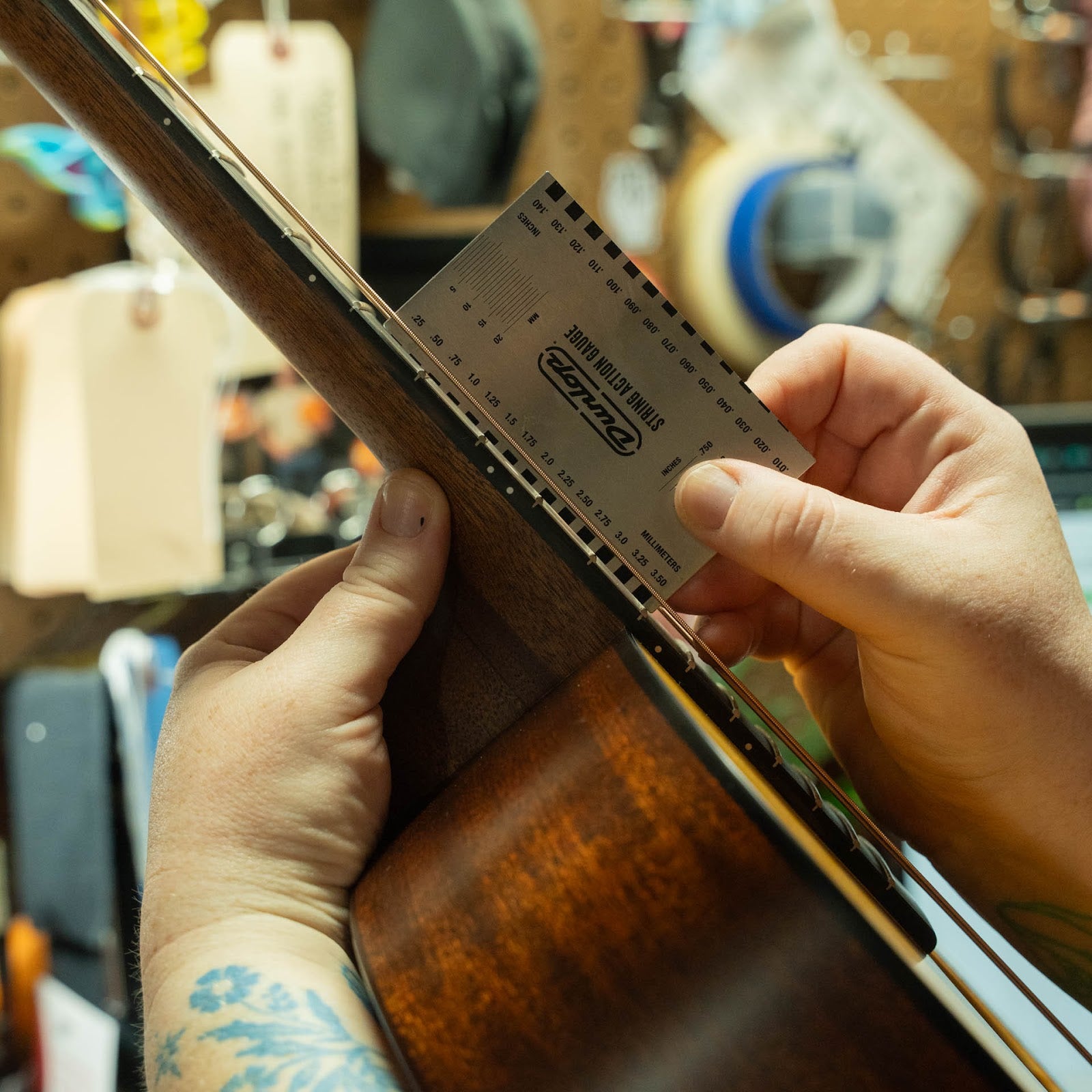
- Before it ships, your guitar goes through our 23-Point Professional Inspection.
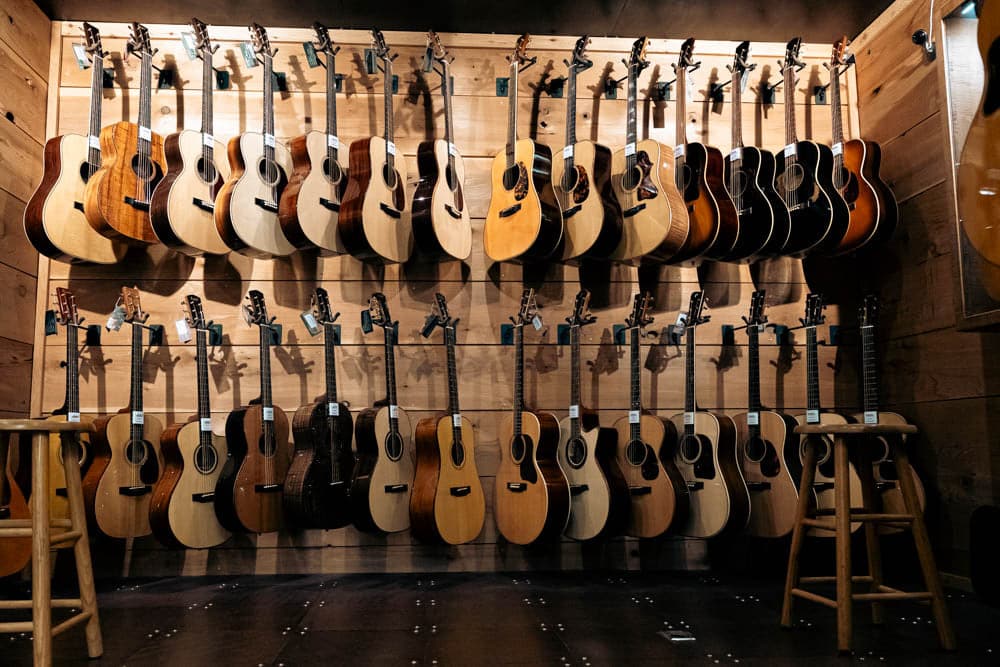
If you'd rather spread out the cost, there's financing through Synchrony. And if you're still deciding between this and everything else in the price range, our acoustic guitars are all in one place.
Related reading
- Acoustic guitar for beginners: we tested Google's top 10 under $600
- E10D vs LD60e vs FG5: three mahogany dreadnoughts, scored
Who should buy a Recording King Standard
Buy one if you want a traditional-sounding solid-wood guitar for under $1,000 and you can't justify the jump to $3,000 for the difference you'd hear. It's the price point beginners counted on when Recording King looked finished, now with the consistency it was missing, and it's the guitar we'd hand to anyone who liked the Eastman E1 but wanted an older voice. If gloss is non-negotiable, look at the Eastman Deluxe models instead, at least until Recording King builds that gloss top John keeps asking for. Start with the Recording King Standard series, or ask us which body fits how you play.