
Table of Contents
- The short answer: pick the Martin guitar series by budget first
- The entry Martin guitar series: X, Junior and Road
- The 15 and 16 Series
- Standard, Modern Deluxe and Authentic
- Body shape, wood and bracing
- John's favorite Martin feature: the serial number
- How to buy a Martin without regrets
- Which Martin guitar series is yours?
You've decided it's time for a Martin. Then you open the catalog and find X, Road, Junior, 15, 16, Standard, Modern Deluxe, Authentic and Custom Shop, with prices running from about $700 to well past $8,000, and a D-18 that seems to come in four versions. The Martin guitar series names don't tell you much on their own, and the spec sheets all start to look alike after the third tab.
So here's how we sort it out at the counter. Every Martin guitar series answers a different question: what you can spend, where the guitar is going to live, and how close to a 1930s Martin you want to get. Once you know your answers, the catalog gets a lot shorter.
The short answer: pick the Martin guitar series by budget first
Martin builds a quality guitar at every price point, from the least expensive models to the Custom Shop, so you don't have to spend a fortune to be happy. Our advice is simple, and we'd give it even if we didn't sell guitars:
"Figure out what you can spend on a guitar and then push it a little bit. You're usually never going to be unhappy with that."
Here's where each Martin guitar series sits today. These are the prices of the guitars in our stock on October 18, 2026, so they'll move as units come and go.
| Martin guitar series | In stock today (USD) | What it's for |
|---|---|---|
| X Series | $699 to $949.99 | A first Martin, or one that can take a beating |
| Junior Series | $749.99 to $949 | Smaller players, travel, the couch |
| Road Series | $999.99 to $2,099.99 | The step up for gigging and jams |
| 15 and 16 Series | $1,899.99 to $2,599.99 | All-mahogany 15s, slope-shoulder 16s |
| Standard Series | $2,599.99 to $5,499 | The D-18, D-28, HD-28 and friends |
| Modern Deluxe | $4,599.99 to $5,199.99 | Standard models with modern upgrades |
| Authentic Series | $8,499.99 | Pre-war reproductions |
Our Martin buyer's guide covers every series, body shape and wood. Jump to the X Series at 3:11, body shapes at 18:30, serial numbers at 24:39, or where to buy at 31:56.
The entry Martin guitar series: X, Junior and Road
The X Series is the most affordable way to own a Martin, and it isn't built from wood laminate. The backs and sides are HPL, a high-pressure laminate that's closer to a countertop material than to plywood. That makes it rugged, and it's easier on the environment than anything else Martin builds. Our favorites are the X models with a solid top over HPL back and sides, because you get the tone of solid spruce with a body that shrugs off bumps.
"These take a little bit more of a beating than any wood guitar."
If you have kids in the house and want a guitar that can live out of the case, this is the one we'd point you to. We put the two entry lines head to head in our Martin X Series vs Road Series breakdown.
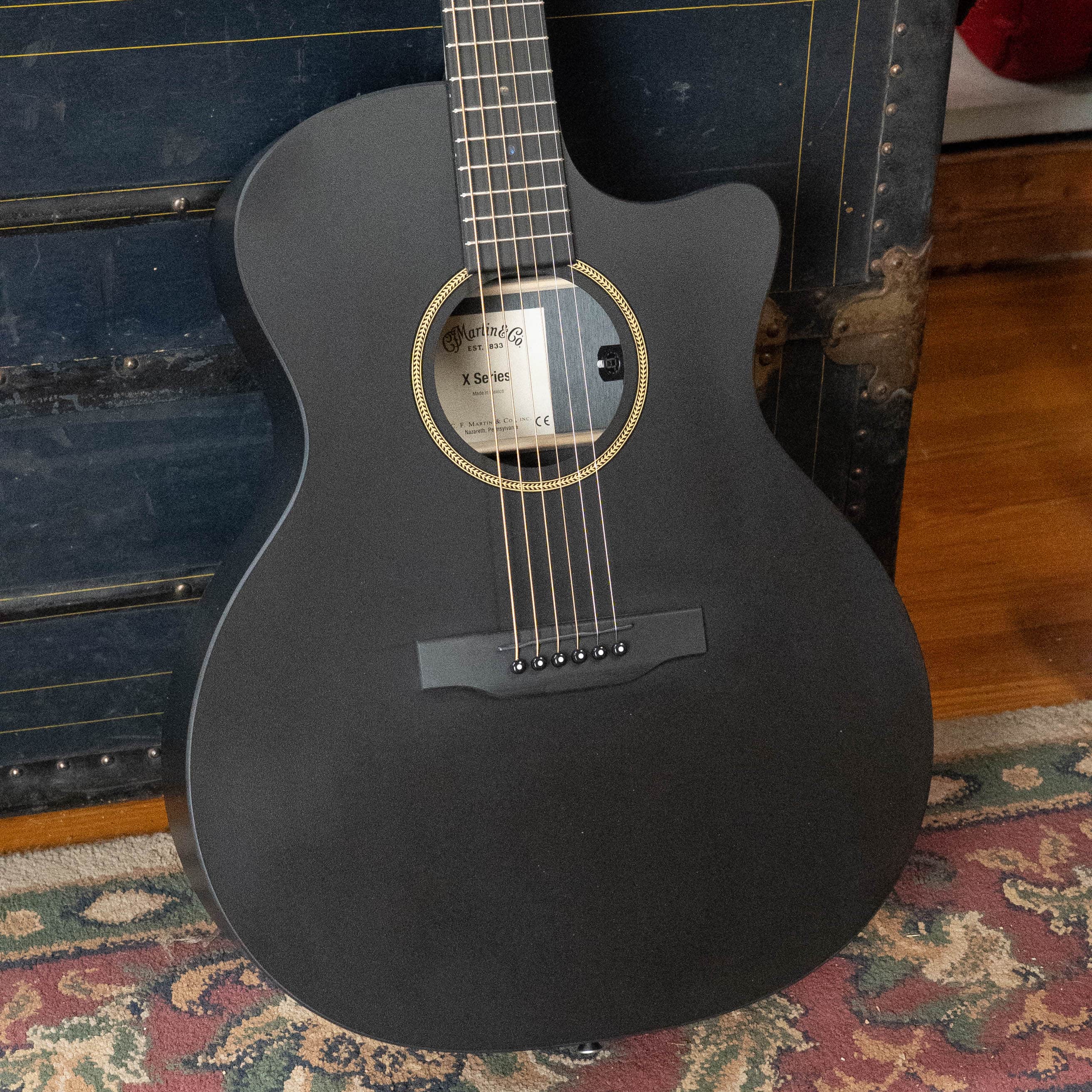
The Junior Series takes Martin's familiar body shapes and shrinks them, with a shorter scale and a smaller body, so it's easier to play for smaller frames or anyone who wants a comfortable couch guitar. You'll find Juniors in solid wood and in laminate. Our look at the Junior Series refresh covers the latest changes.
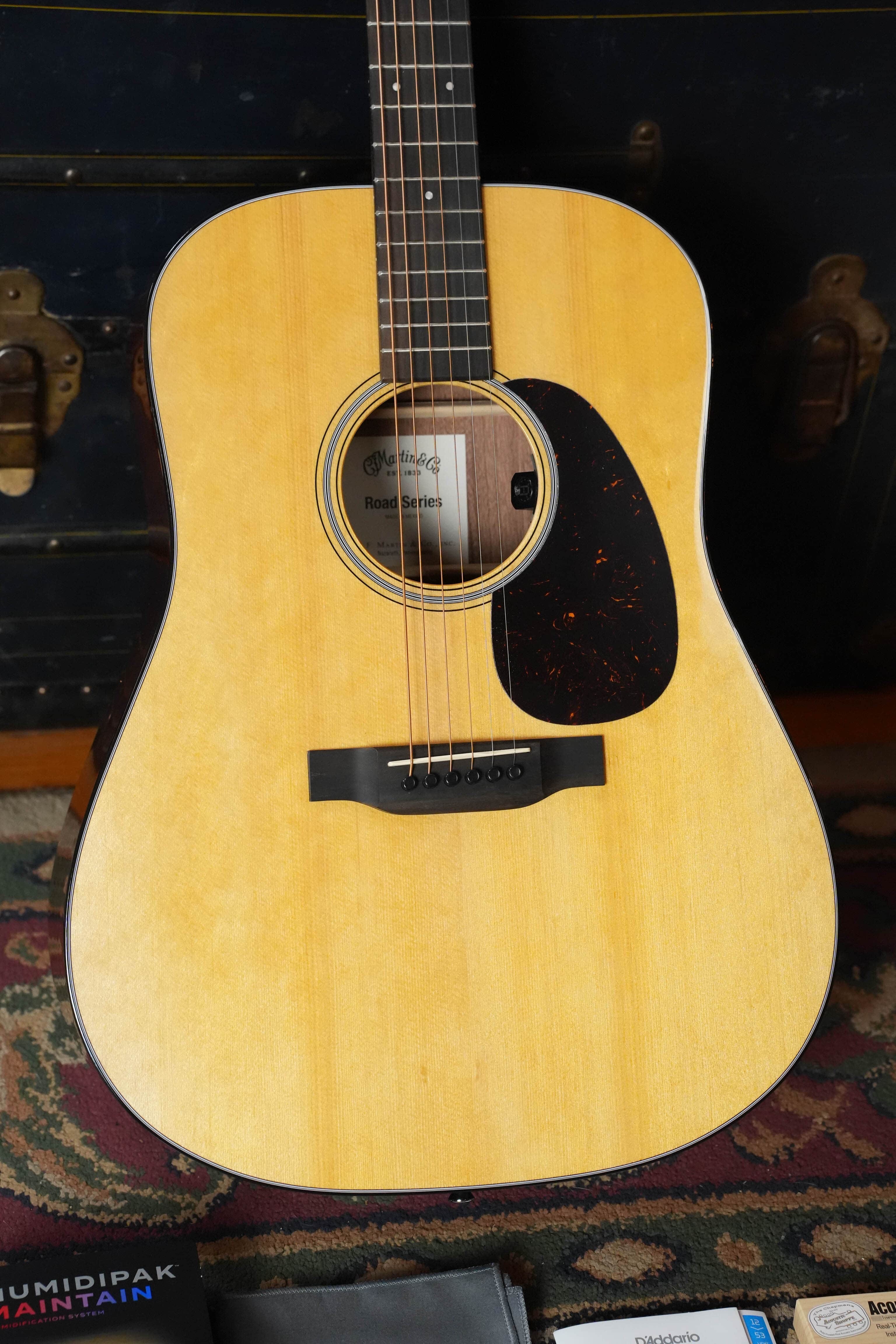
The Road Series is the step up. It's built in Martin's Navojoa, Mexico shop like the X, and the lineup mixes laminate back-and-sides models with all-solid ones, with cutaway and electronics options. It's a guitar you can take out of the house without worrying about it as much, and the all-solid models sit near the top of its price range.
The 15 and 16 Series
The 15 Series has always been all mahogany, top included. We'd call the sound muted yet dark, punchy without being in your face, and if you're recording and want a warm character, a mahogany top is the tool for it. We've known players who flatpick bluegrass on a D-15 and love it, so don't write it off as a quiet guitar. The 000-15M StreetMaster we have in stock is a good example.

The 16 Series has changed more than any other Martin guitar series over the years. Today it's built around slope-shoulder and jumbo bodies, and we cover that change in our Martin 16 Series review.
Standard, Modern Deluxe and Authentic
The Standard Series is the Martin everyone pictures: the D-18, D-28, HD-28, D-35 and 000-28. Most of the traditional-style guitars Martin builds come out of this line, and the numbering system you see everywhere started here. Browse the Martin D-28 on its own page, and if you're stuck between the two famous dreadnoughts, start with our D-18 vs D-28 comparison, then D-28 vs HD-28 for the rosewood question.
Modern Deluxe takes those standard models and adds modern features: a different neck shape and feel, and carbon fiber bridge plates that cut weight and keep the strength. It sounds different from the traditional versions, and that's not a bad thing, so traditional fans should give it a fair try.
"This is truly meant to be a player's guitar."
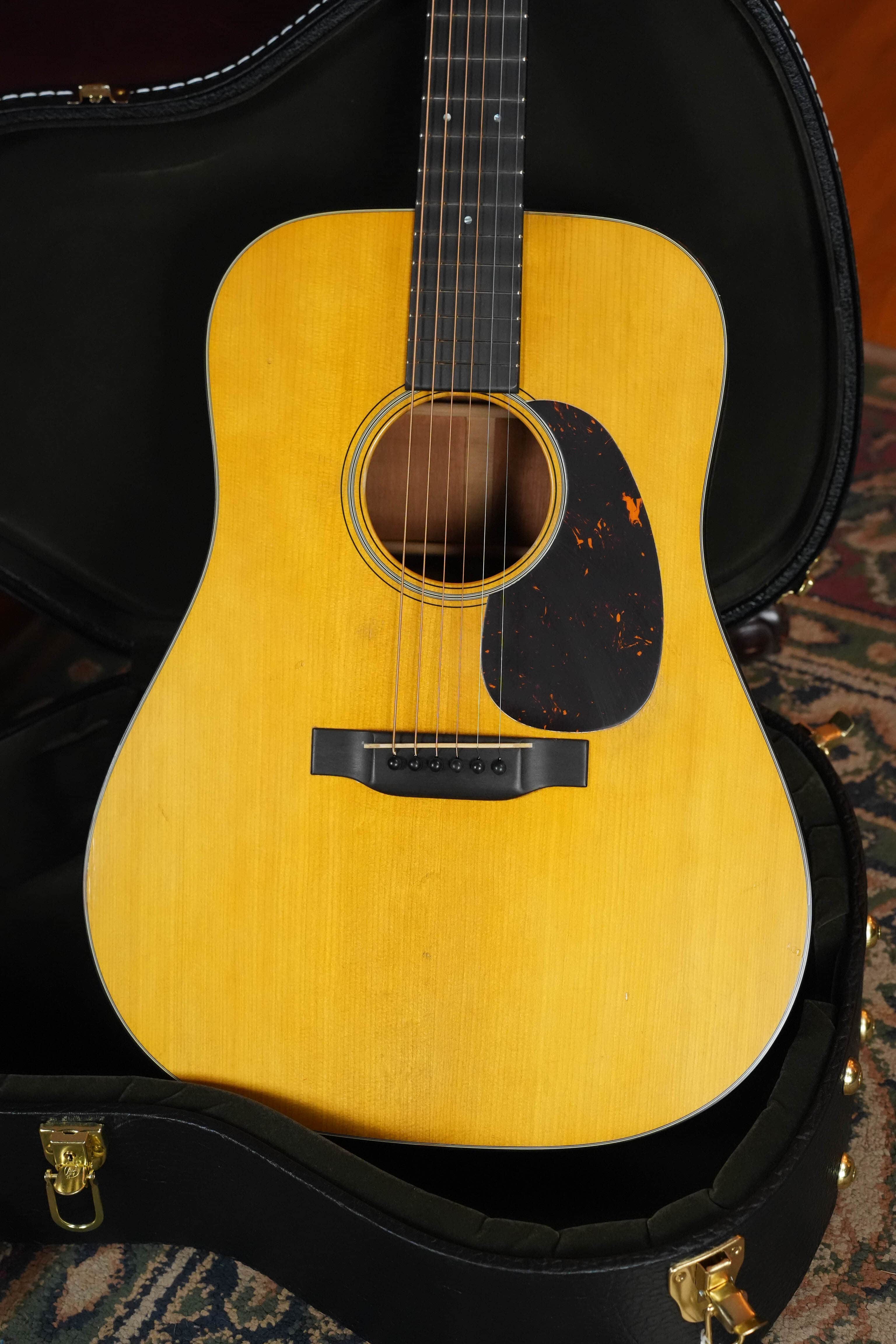
The Authentic Series is Martin rebuilding its 1930s and '40s guitars as closely as a production instrument allows. That means hide glue instead of modern glues, and a non-adjustable T-bar in the neck instead of an adjustable truss rod. There are aged versions too, with Martin's own relic treatment. It's the sound a lot of bluegrass and old-time players are chasing, which is why it comes up on our channel so often.
Past that you're into the Martin Custom Shop, where almost anything goes, and the signature and artist editions. A Custom Shop guitar says so on the neck block inside the body, and some dealers order their own Custom Shop runs. There's more in our Martin Custom Shop story.
Body shape, wood and bracing
The Martin guitar series sets the price. The body shape and wood set the sound:
- 0, 00 and 000: the more Os, the bigger the body. A single-O is high-mid forward and light on low end, and a 000 adds low mids and richness.
- OM vs 000: the same body, but the OM has the long scale, which gives it more volume and punch.
- Dreadnought: named after the British warship, and the loudest, most powerful Martin. "This guitar will absolutely jump out and grab you."
- Jumbo: a little more low end and a boomier bottom.
- Tops: Sitka spruce, or red (Adirondack) spruce for more volume and projection, at a higher price.
- Backs and sides: rosewood and mahogany are still the big two. Maple is brighter, and Martin used koa back in the 1920s Hawaiian craze.
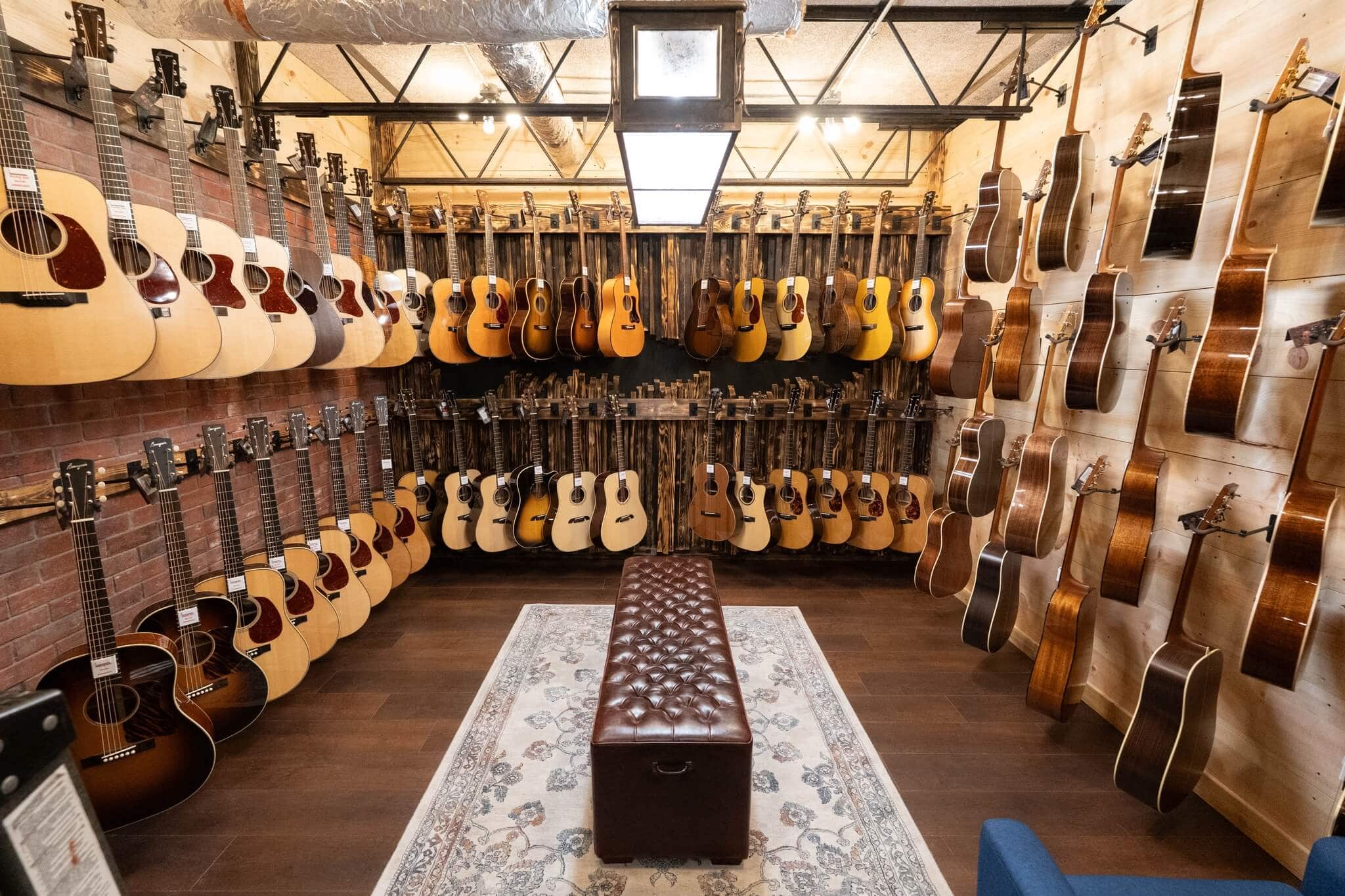
Comfort counts too. Lots of players love a dreadnought on stage and keep a smaller body at home for songwriting, because the shallower body is easier to get your arm over. That's why our dreadnought guitars and smaller bodies hang side by side.
Bracing is the other piece. Scalloped braces have wood carved out of the middle, which frees up the top and makes the guitar sound fuller and louder. On the 1930s dreadnoughts the X brace sat forward, closer to the soundhole. Martin moved it back in the late '30s to fight top bellies, which stiffened the top and cost some of that low end, and it has since brought the forward-shifted brace back on certain models. Our HD-28 1935 Sunburst has it.
John's favorite Martin feature: the serial number
John's favorite thing about Martin is a boring one. Martin serial numbers run in order no matter the model or style, and the last number of each year is published, so anyone can date a Martin in a couple of minutes. The number is stamped inside the body.

Martin builds in two plants: the original factory in Nazareth, Pennsylvania, and Navojoa, Mexico, which was modeled on Nazareth. The older Shenandoah and Sigma import lines weren't built in Nazareth, so check before you buy one used. You can see the Nazareth floor in our Martin factory tour.
How to buy a Martin without regrets
- Set the budget, then stretch it a little.
- Pick the body for where you'll play it.
- Pick the Martin guitar series from the table above.
- Buy from an authorized dealer. Martin's lifetime warranty covers the original owner, and only through an authorized dealer. If a used Martin is only a few hundred dollars under a new one, the new one's warranty may be worth the difference.
- Live with it before you decide, because a new guitar can take a while to grow on you.
Every Martin we sell goes through our 23-Point Professional Inspection, and we've sent Martins back because the neck set wasn't where we wanted it or there was a ding we wouldn't sell. We'll also handle warranty issues with Martin for you.
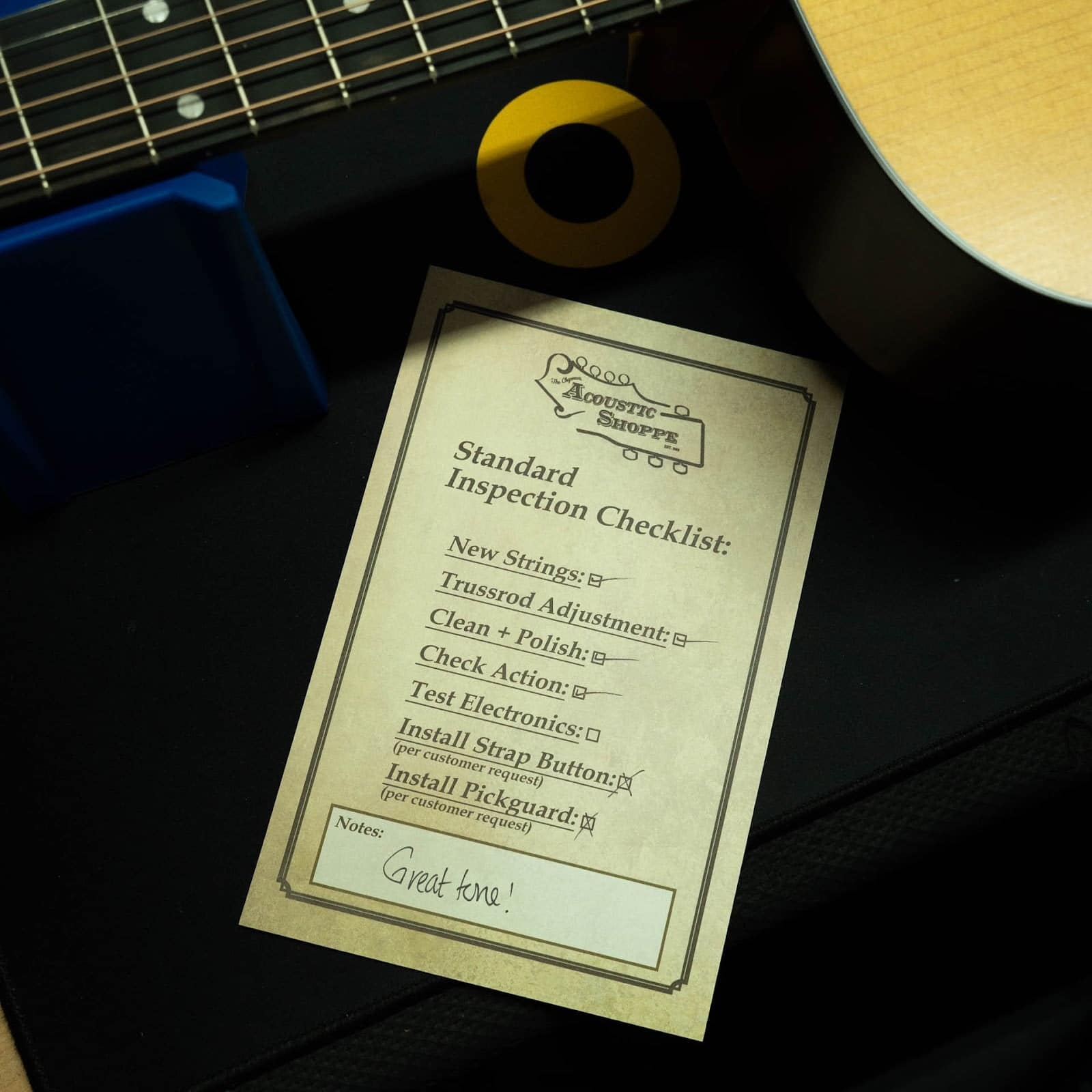
Most Martins land over $1,000, so they're covered by the Dread-Not Guarantee: a full year to trade it in for up to 90% of the pre-tax purchase price in credit, less round-trip shipping, plus a 30-day in-home trial. Take it to a jam, have your friends play it, and hear it in your own room.

Then take care of it. Keep it at 45 to 50% humidity and away from extreme heat and cold, because Martin's warranty expects it, and being a Martin doesn't make a guitar indestructible. Our humidifiers and care products cover it.
Related reading
Which Martin guitar series is yours?
If it's your first Martin, or it has to survive kids and car trunks, start with the X Series. If you gig and want solid woods without Standard Series prices, the Road Series is the step up. If you want the guitar in all the old bluegrass photos, it's the Standard D-18 or D-28, and the Authentic Series if you want it as close to pre-war as Martin builds. Hear 50-something Martins back to back below, then browse every Martin we have in stock or shop all acoustic guitars.