
Table of Contents
You've seen the photos of the Martin D-18 Street Legend and had the same reaction a lot of players did: why would anyone pay for a brand-new guitar made to look beat up? The comment sections decided early that it's a decal, a gimmick, or a fake. We think the critics got it wrong on all three counts, about how the finish is made, how the guitar sounds, and who it's really for. We've had one on the bench and in our hands, and the D-18 Street Legend turned out to be one of the best satin D-18s we've played.
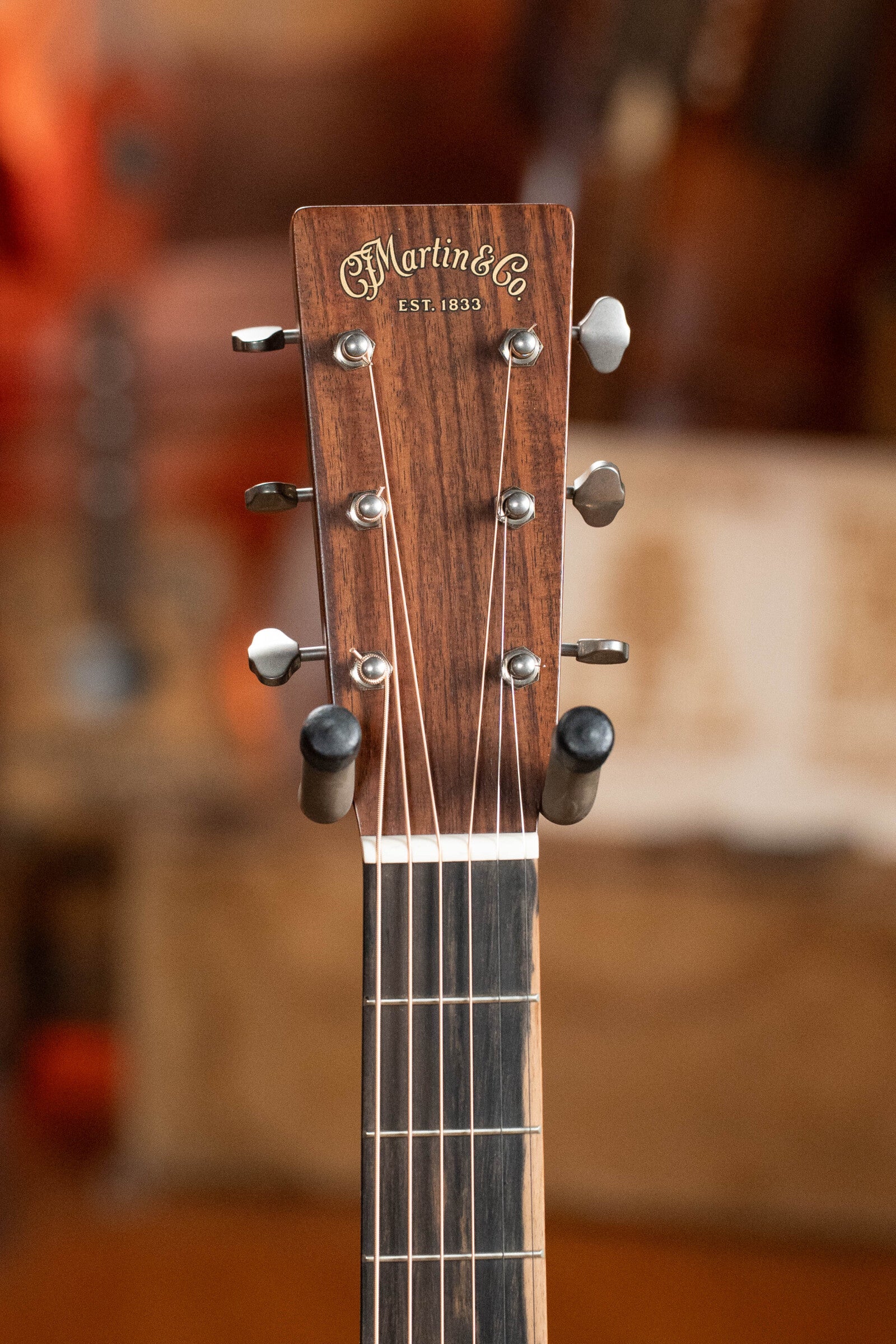
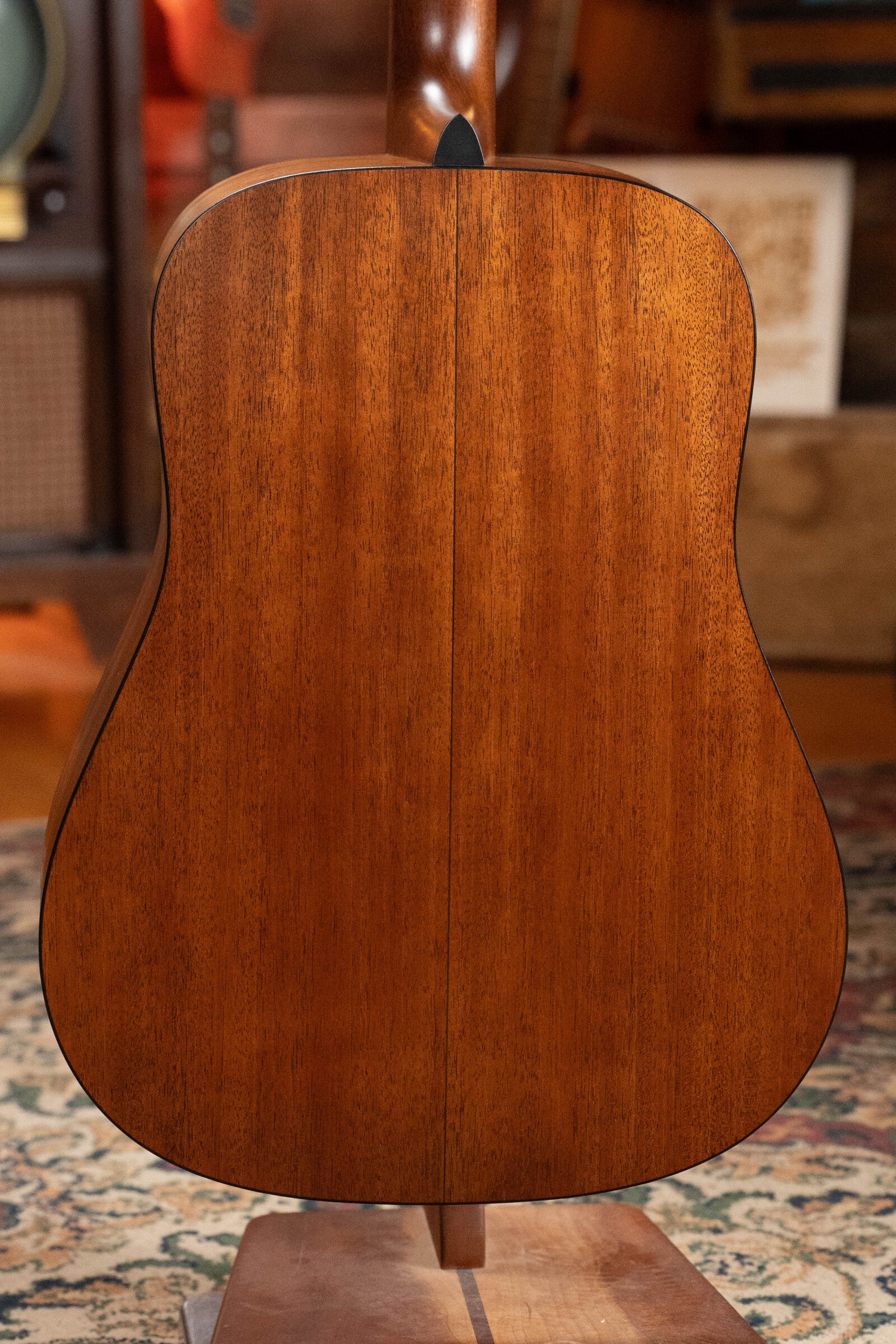
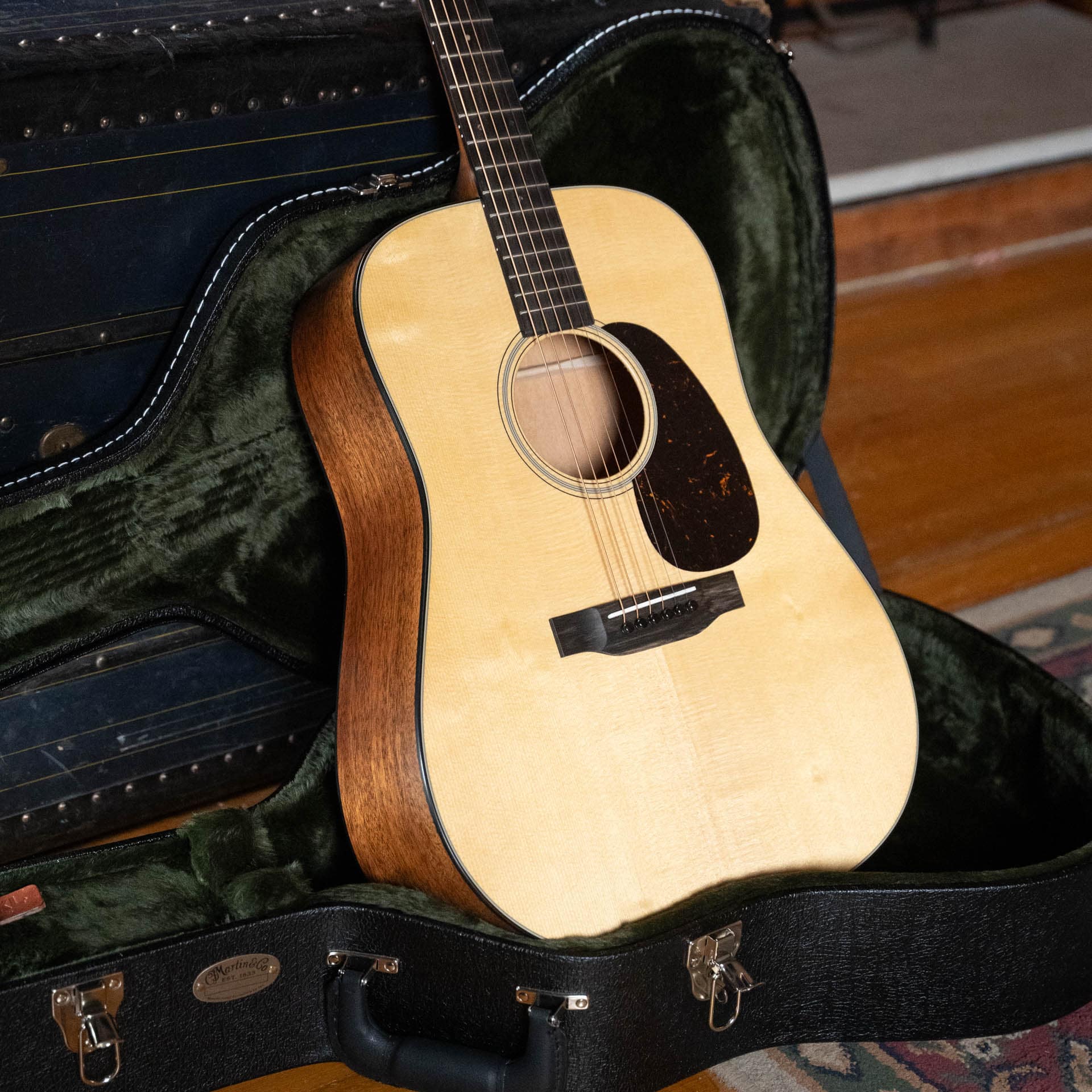
Here's the short version. Under the wear pattern, it's a standard satin D-18: solid spruce top, solid mahogany back and sides, forward-shifted scalloped bracing and a 1 3/4" bone nut. The "wear" is a real finish, sprayed on by a machine that can place color precisely enough to copy the marks on an old guitar. If you like the look, it's the only way to get it on a D-18 at this price. If you don't, buy the plain satin D-18 and get the same guitar.
Is the D-18 Street Legend finish a decal?
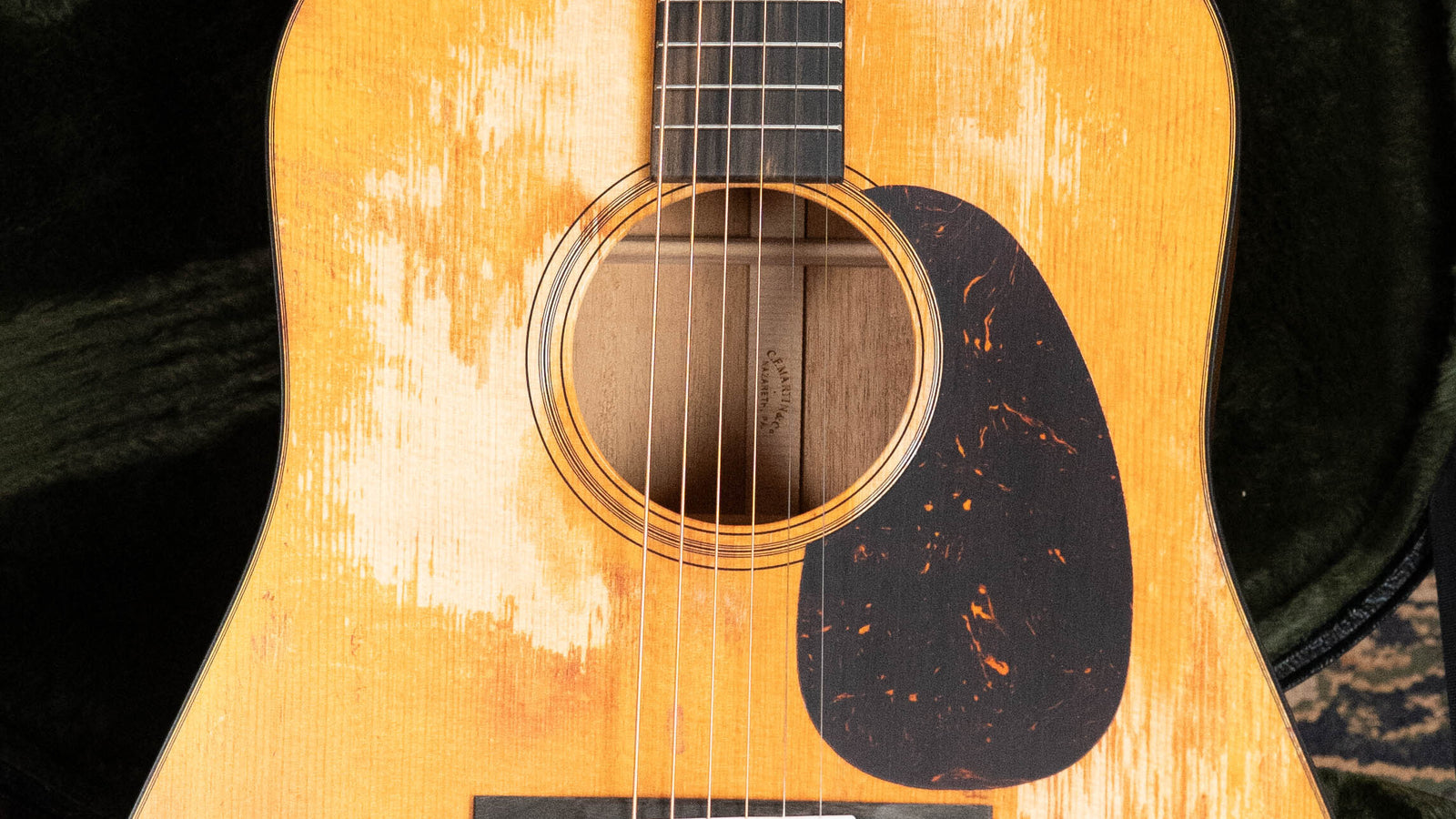
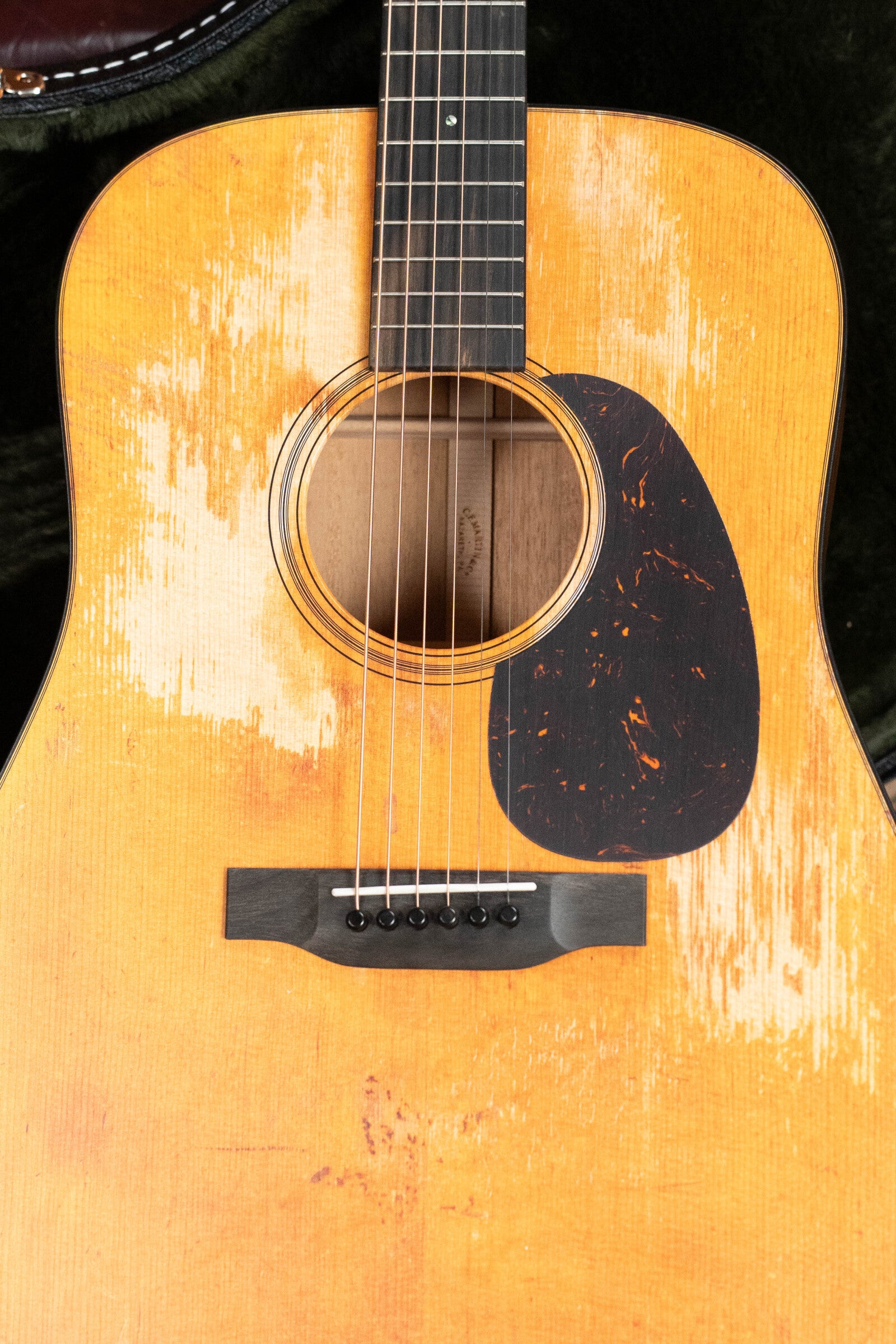
No, and this is the myth that started the whole argument. A lot of people assumed Martin printed an image and glued it down, or used the kind of water-slide transfer that melts into the lacquer. We asked Martin directly, and it's neither. The top goes under a digital sprayer that lays down a very thin, pigmented, water-based stain, the same way a sunburst gets sprayed, only with far more control over where each dot of color lands.
It's not really a printer. It's a finish printer.Martin already uses that sprayer on its satin Sunburst and Ambertone models. Somebody realized it was precise enough to reproduce the little wear marks and details of a real, played-in guitar, and the Street Legend came out of that. So when you look at the D-18 Street Legend from across the room and think you're seeing an old guitar, you're seeing real finish. Up close, the sheen gives it away, and that's fine. Nobody is hiding anything.
Jump to: how the finish is made (2:47) · how it sounds (7:05) · who it's for (8:30) · our scores (11:30) · tone sample (17:13).
Where the wear pattern comes from
The name tells you the idea. Martin scanned real, well-known guitars, including instruments in the Martin Museum collection, and turned the wear on them into a pattern the sprayer can reproduce. As far as we understand it, the pattern on this one traces back to Kurt Cobain's guitar. The process went roughly like this:
- Scan a real vintage guitar, every scratch and worn spot included.
- Touch up the scan by hand where it falls short. The original had a pickguard in place, for example, so someone had to work out what the top would look like underneath it.
- Spray that image onto a new satin D-18 top as colored finish, one guitar at a time on the same machine.
Martin has said more guitars are coming in the line. John's already joking about uploading his kids' faces, which, technically, the machine could probably do.
Why build it this way instead of aging it by hand?
This is the part the critics skip. Antiquing an instrument is a love-it-or-hate-it subject, and plenty of good players can't stand it. But every builder we've asked about it says the same thing: wearing a finish out convincingly is harder than making it pristine. You spray a good finish, then go back and sand, scratch and mark it so it reads as real wear, and that's slow, skilled and expensive work. Doing it at Martin's volume would be a problem.
The sprayer gets the aged look without anyone taking sandpaper to a good finish, and it keeps the price where a satin D-18 lives. For a buyer who's always wanted the look of a vintage guitar, there's no other way to get it at this money, short of beating up a guitar yourself. That's also why it fits right beside Martin's printed-top Bonamassa 00-18: same company, same willingness to try new finish tech, and the same online fight about it. If you want the bigger picture on what machines do and don't do in a guitar factory, our piece on touring Martin and Taylor covers it.
How does the D-18 Street Legend sound?
Satin-finish guitars have been coming out really well lately, and it isn't only Martin. Collings and some of the upper-end boutique builders are doing satin guitars too, because a thinner finish changes the sound: more open, more woody. The trouble with some satin guitars is that the openness turns honky and loose. This one doesn't. It keeps enough focus and control that it doesn't get boomy, while still sounding open from the first strum.
In my personal opinion, this is my favorite satin finish guitar yet.One of us still prefers a gloss finish and misses a little of the clarity a good lacquer gives you. That's a matter of taste. What surprised us most is how little break-in it needs. Ours arrived with dead strings; with a fresh set on, the D-18 Street Legend was a monster. If you want a guitar that sounds open right out of the box, without waiting years for a gloss finish to loosen up, this is the one.
The other honest point: the finish only changes how the guitar looks, and the satin sheen is what changes the sound. Compared to a standard satin D-18, the D-18 Street Legend is the same guitar, so the only difference you'll hear is between finishes, not between those two models. If you're weighing satin against gloss or mahogany against rosewood, our Martin D-18 vs D-28 comparison covers the next decision up.
Our D-18 Street Legend scores
We both scored it on a five-point scale. Here's where our two scores landed, side by side.
| Category | Our scores (out of 5) | Why |
|---|---|---|
| Tone | 4.6 and 4.75 | Open and responsive, but controlled; one of us misses gloss clarity |
| Playability and setup | 4.75 and 4.8 | Pleked, set up for a dreadnought player, comfortable neck |
| Build quality | 4.7 and 4.75 | Tight glue joints, clean fit everywhere we looked |
| Looks | 4.5 and 4.8 | John isn't sold on the pickguard; Jeremy loves the look |
| Overall value | 5 and 5 | A solid-wood Martin D-18 at satin money |
On playability, Martin now Plek-processes its guitars, and the setup is aimed at dreadnought players. The GE Modified Low Oval neck with Martin's High-Performance Taper is a little shallow for one of us, but we know most players prefer it that way. Build quality isn't at the level of our high-end boutique builds, and nobody should expect it to be at this price, but we didn't find a single issue.
Looks split us, which is the point of this guitar. John would have picked a different vintage guitar to copy, and the pickguard is his one knock. Jeremy just likes it. He's taken plenty of hate mail over antiqued instruments before, and he still gave it a 4.8, partly for the look and partly because a company that started in the 1800s is still pushing finish technology forward.
The honest catch
- Satin is less protective. A satin finish doesn't guard the wood as well as gloss, and if you ding it, it's very hard to repair cleanly.
- People will have opinions. Somebody at the jam will ask why you'd buy a "fake" old guitar. Underneath, it's a standard D-18 top with a finish on it, but you'll hear about it.
- It's purely cosmetic. Martin offers the same satin D-18 in natural, in Ambertone and in this Street Legend style. You're choosing a look, nothing else.
- We don't have one right now. Our last D-18 Street Legend sold at $2,499.
Who should buy the D-18 Street Legend?
It's for the player who has always wanted a Martin, loves the mojo of a worn vintage guitar, and wants a conversation piece that also happens to sound great. When it was unveiled at NAMM, one of us walked up to the booth and had to touch the top to see how Martin had done it, and other people will do the same with yours. And if you'd choose a satin D-18 anyway, at least one of us would pick this one over the plain version.
If you don't love the look, skip it and buy the satin D-18 #0620 at $2,599.99, which is the same guitar without the wear pattern. If you want a gloss finish and a vintage color, the D-18 1933 Ambertone #0226 is $3,199.99. And if you're open to other builders, our D-18 alternatives blind test and the E10D vs D-18 comparison show where Eastman fits against it.
Related reading
Buying a D-18 Street Legend from us
Every guitar we ship goes through our 23-Point Professional Inspection before it leaves the shop, so it plays the way it should the day it arrives.
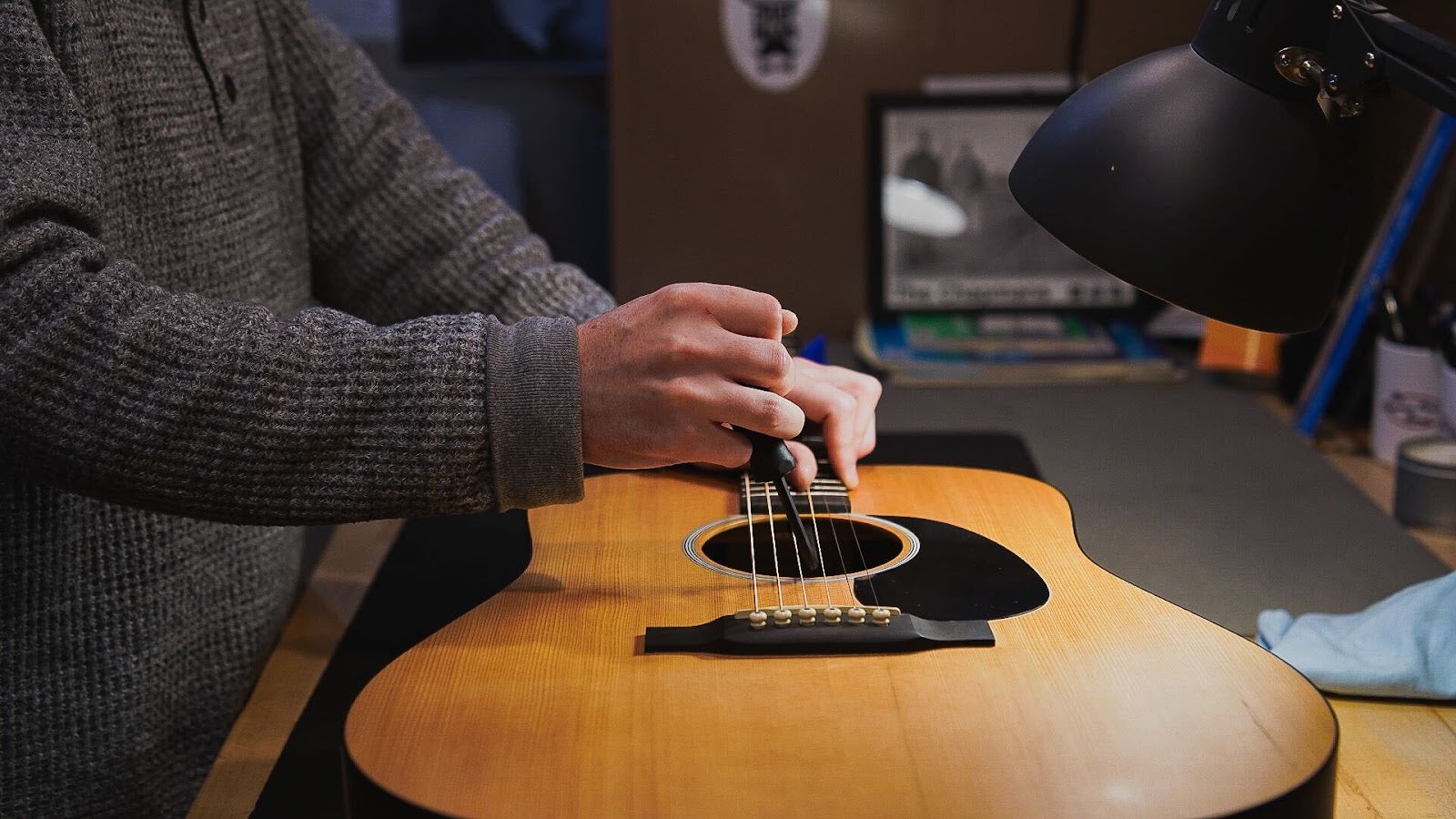
Any D-18 is covered by the Dread-Not Guarantee: a full year to trade it in for up to 90% of the pre-tax purchase price in credit, less round-trip shipping, plus a 30-day in-home trial and a humidity kit in the case.
Want a D-18 Street Legend? Ask us about ordering one. Or browse every Martin we have in stock, the dreadnought guitars on our floor, or all our acoustic guitars.