
Table of Contents
- The myth: an expensive guitar only sounds better to experts
- Why the $400 guitar deserves more credit than it gets
- What the expensive guitar actually gives you
- Where an expensive guitar's money goes
- The reality: can you hear the difference?
- The catch: who an expensive guitar is really for
- Which one should you buy?
It shows up in our comments every few weeks, usually from someone a year or two into playing: "At my level, I can't hear a difference between these guitars." If that's you, the question behind it is a fair one. Does an expensive guitar actually sound and play better, or are you paying for a name, a label and a story? Spending eight thousand dollars on a guitar only makes sense if the difference is something you can hear and feel, not something you have to take on faith.
So we played the cheapest and the most expensive guitars in the shop back to back: a Guild Bob Marley dreadnought at under $400 and a consignment Martin 1937 D-28 Authentic VTS at about $8,000. The answer wasn't close, and the $400 guitar still came out of it with more respect than we expected.
The myth: an expensive guitar only sounds better to experts
The idea goes like this. A beginner's ears aren't trained, the differences between guitars are tiny, and the premium on an expensive guitar is mostly for collectors who already know what to listen for. There's some truth in the first part. When you're first learning, you're far more worried about getting your fingers to land on the right notes than about overtones, and that's how it should be.
Where the myth goes wrong is the second part. The differences between a $400 dreadnought and an $8,000 one aren't tiny, and you don't need years of playing to hear them. Watch the whole comparison here, with the back-to-back tone samples starting at 13:48:
- 7:06: the Guild's specs, and why a scalloped brace surprised us at that price
- 8:18: the Martin 1937 D-28 Authentic's specs
- 13:48: both guitars back to back, no talking
- 16:51: John's verdict
Why the $400 guitar deserves more credit than it gets
We'll admit the Guild was a surprise. When the order went in, a few people in the shop gave it the "oh no, here we go" look. Then it arrived, and it turned out a whole lot better than any of us expected. It plays in tune all the way up the neck, it has some low end and some richness to it, and it doesn't fight your fingers. It is not a premium-sounding guitar, and nobody here would tell you it is, but it's a guitar that won't hold a new player back.
The Guild we tested had a solid spruce top with laminate mahogany back and sides, and that combination is our floor for a first guitar. We don't recommend going with anything less than that. A satin poly finish and the laminate back and sides are where a guitar like this saves its money, and neither keeps it from playing well. If you want the long version of that argument, our solid vs laminate guitar breakdown goes through it piece by piece.
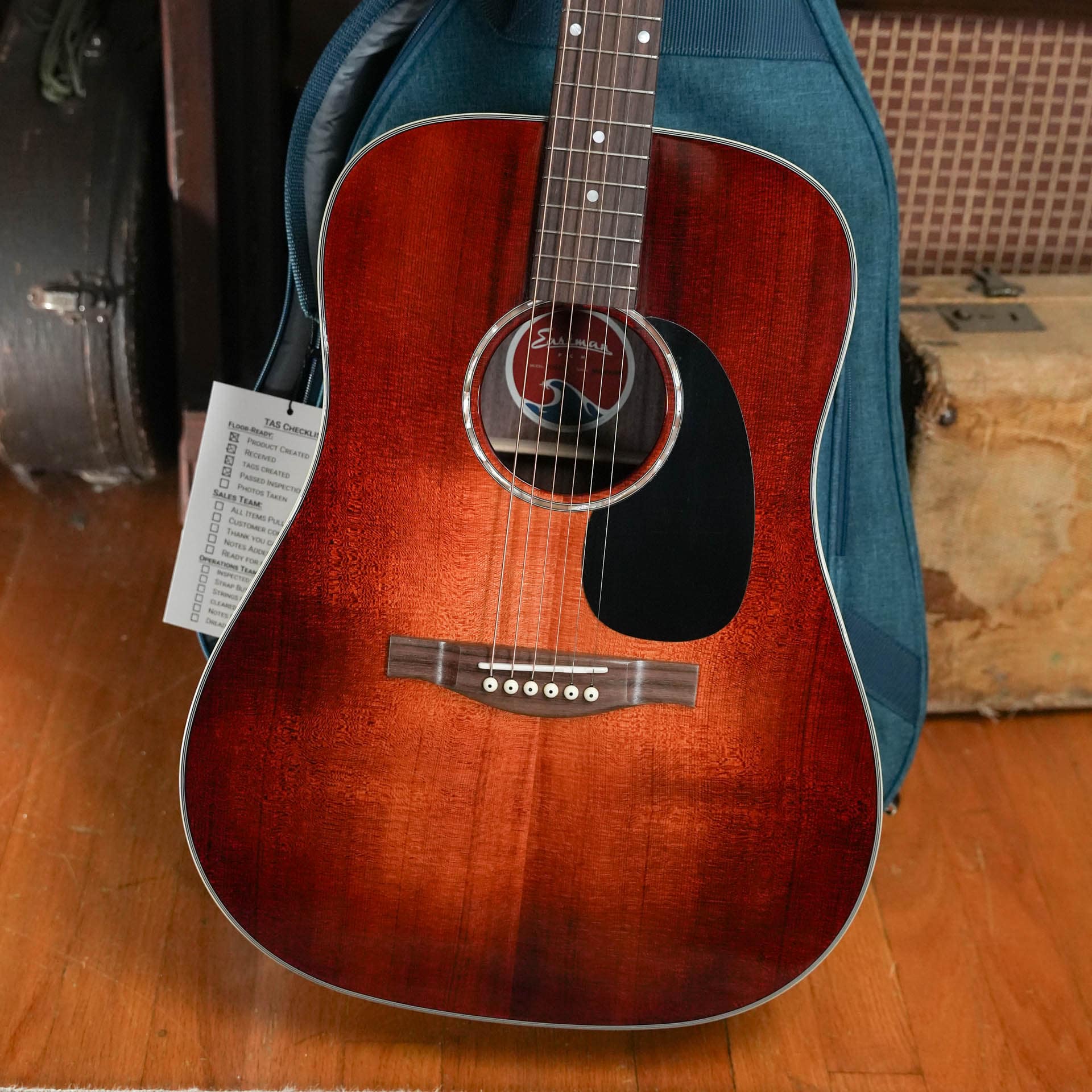
A few things on the Guild showed how far budget guitars have come. It had a two-way truss rod, so the neck relief can be adjusted in either direction as the guitar settles in, along with a bone nut and saddle and scalloped X bracing, which you don't expect to find at that price. One of us learned on a junker in an after-school guitar program at seven or eight years old, and the gap between that guitar and what the same money buys now is night and day. We're in something like a golden age of beginner guitars. There are still some duds out there, and we found a few when we tested the internet's top picks in our acoustic guitar for beginners comparison, but there are more good options under $500 than there have ever been.
On a cheap guitar, the setup and playability matter more than the wood. A beginner needs a guitar that's easy on the fingers, doesn't buzz and still has decent tone, because that's what helps you get along and progress as a musician. That's why every guitar we ship, at any price, goes through our 23-Point Professional Inspection before it leaves the building.
What the expensive guitar actually gives you
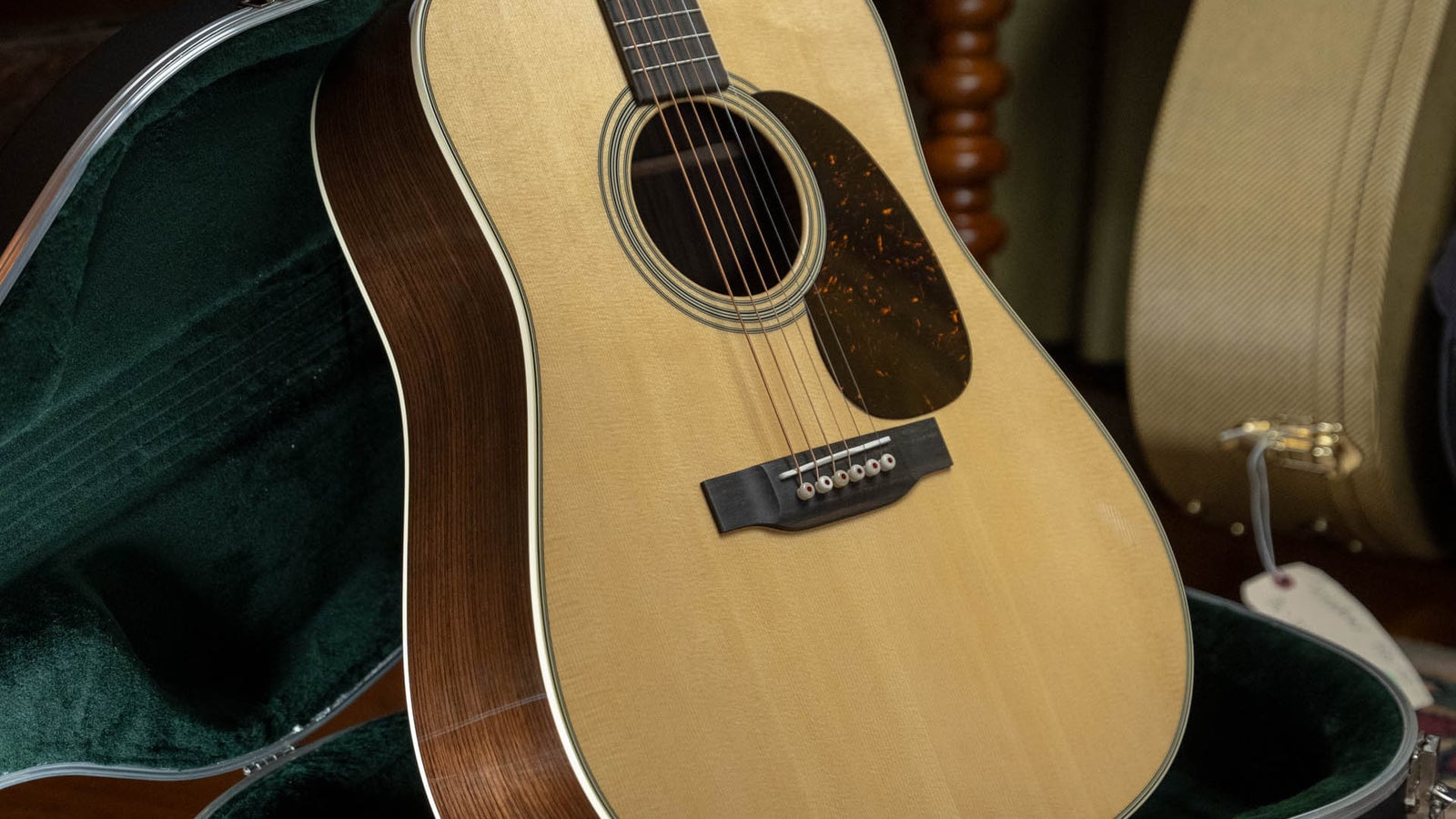
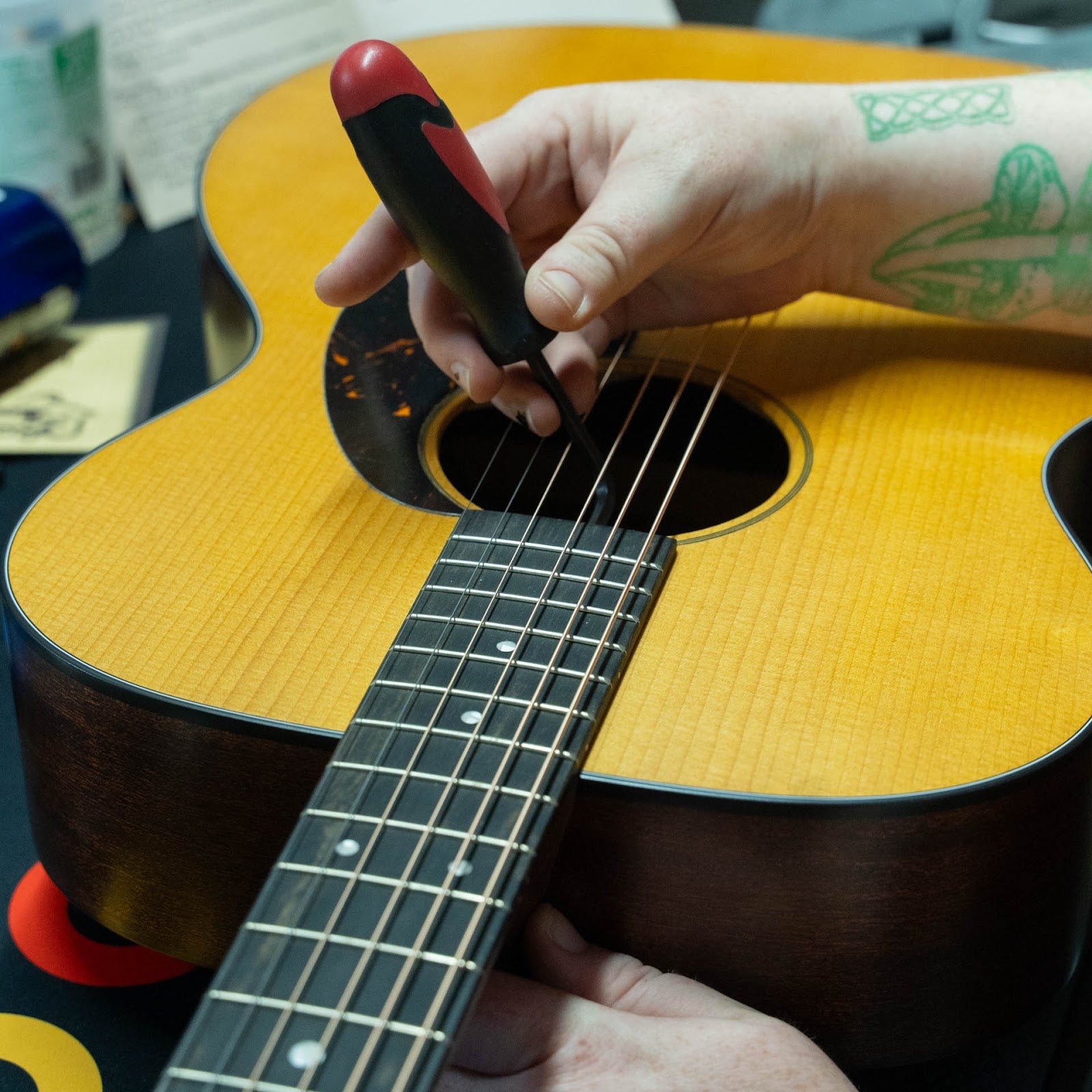
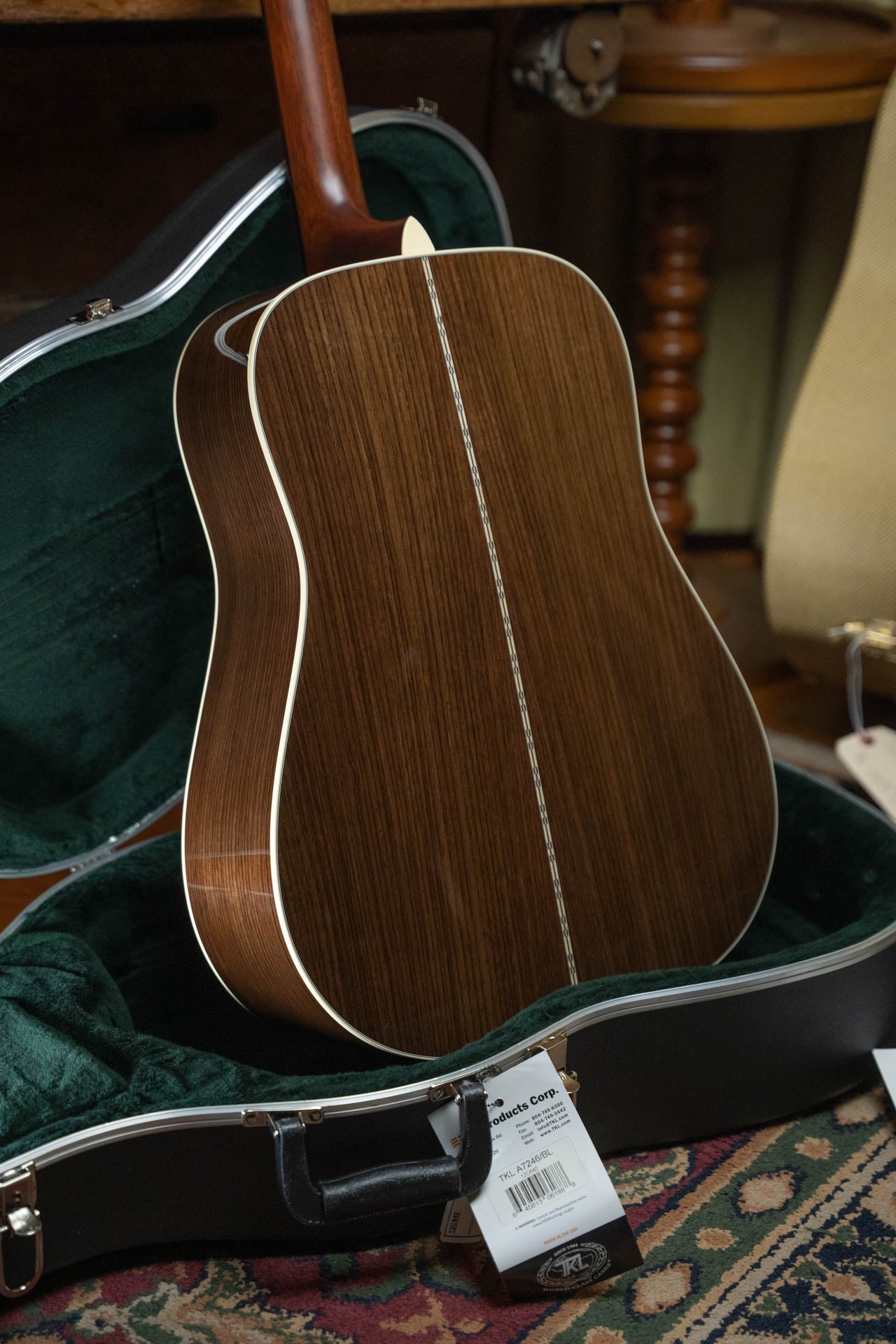
The Martin was the opposite end of everything. Martin patterned the 1937 D-28 Authentic after one of the most desirable guitars it ever built, and the one we had used an Adirondack spruce top with Martin's VTS aging treatment, Madagascar rosewood back and sides (Martin has since moved the Authentic to Guatemalan rosewood), hand-scalloped forward-shifted X bracing, an ebony fretboard and bridge, a gloss neck, and a non-adjustable T-bar in the neck just like the 1937 original, which adds a little mass to the neck. Every one of those choices is about getting the sound of a prewar D-28 rather than a modern one.
The neck is the first thing you notice. It has the 1937 profile, a V-ish shape that starts modest at the nut and grows the farther up you go, a little like a baseball bat, on the same 1 3/4" nut width as the Guild.
Then you play it. Tons of low end, tons of volume, tons of power, with a fullness across the whole tonal spectrum and a pop and a balance everywhere on the fretboard. It's everything you'd want out of a D-28. And this is where the myth falls apart, because you don't need trained ears to hear a guitar that much bigger and more even than the one next to it.
The best way we know to describe it is cars. A cheap used car gets you from point A to point B, and it'll do the job. It won't have the bells and whistles, and it'll ride like a tank and beat you up on the way. A Lexus glides, and you hardly know you're moving. That's the difference here, in playability and in tone: the Martin is a luxury experience, and the Guild is honest transportation.
Where an expensive guitar's money goes
You can trace where the money goes on the Authentic:
- Wood. The cost of Adirondack spruce and solid rosewood is extremely different from a laminate back and sides.
- Hours. More luthier time goes into each one, from hand-scalloping the braces to the finish work.
- Hide glue. When Martin brought this guitar back, it built a new, more tightly climate- and humidity-controlled room for the hide glue work, because hide glue is volatile and a couple of degrees in the room changes how it cures.
- Research. To build an Authentic, Martin measured original 1937s and took a lot of notes to replicate them, and that development cost is in the price too.
"If Martin could build that guitar in this price range, I'm sure they would do it, and they would explode over the market." JohnIt just isn't possible. To get a guitar down to $400, something has to give, and tone and playability are among the things that give.
The reality: can you hear the difference?
Side by side:
| What we compared | Guild Bob Marley (A-20) | Martin 1937 D-28 Authentic VTS |
|---|---|---|
| Price when we tested (March 2023) | Under $400 street | About $8,000, used |
| Top / back and sides | Solid spruce / laminate mahogany | Adirondack spruce, VTS / Madagascar rosewood |
| Bracing | Scalloped X | Hand-scalloped, forward-shifted X |
| Sound | In tune, some low end, not premium | Big low end, volume, power, balanced everywhere |
| Who it's for | A first guitar, or a Bob Marley fan | A serious player or a collector |
"They sound and play exactly the same. That's not true. They sound and played completely different." JohnJohn's joke is the whole point. Of all the shootouts we've done, this is the one where nobody would have trouble picking one guitar from the other, whether they're the one playing it or just in the room listening. You can hear it and you can feel it. That doesn't make the Guild a bad guitar. It means the expensive guitar is doing something the cheap one can't, and the reason is simple:
"There's only one way to do it. It's going to be with more expensive woods, more time, more energy." JohnIf you want to hear the same question asked in smaller steps, our Martin D-18 vs D-28 comparison and our D-28 vs HD-28 post look at what changes inside Martin's own line.
The catch: who an expensive guitar is really for
The Martin is meant for a serious musician or a collector, somebody who already knows the difference in build quality, or who has some money set aside and wants the guitar everyone reaches for when they come over. When you're first playing, you're not that worried about tone. You're worried about getting your fingers to hit the right notes, and a good entry-level guitar is built for exactly that job.
What the cheap guitar does that the expensive one can't is get you started, and start building your ear. Play a good entry-level guitar long enough and you begin to hear what separates it from something like the Authentic. That's the appreciation that eventually makes the expensive guitar worth it to you, and it's why there's nothing wrong with a big range of guitars at every price. Where you land depends on where you are in your musical journey and where you are financially, and there are more good options at both ends than there have ever been.
Related reading
- Furch guitars: can you hear the $5,000 sound difference?
- Handmade guitar or machine-built? What we learned touring Martin and Taylor
- Best acoustic guitar under $500: our top 5, scored
Which one should you buy?
If you're just starting, buy a solid-top guitar with a good setup and don't feel bad about the price. The Eastman PCH2-D-CLA at $499 is built the way we told you to shop: a solid thermo-cured Sitka spruce top, laminated rosewood back and sides, a 1 3/4" bone nut and a padded gig bag. You can also shop acoustic guitars at every price we carry.
If you're a serious player who wants that luxury-car feel, or a collector after the finest build you can get, that's where an expensive guitar earns its price. The Authentic in this comparison has sold, but the Martin D-28 Gloss at $3,499.99 gets you the classic rosewood dreadnought, and the rest of our Martin guitars go up from there. Used and consignment instruments like the Authentic turn up in our Dread-Not Certified Used guitars, so it's worth checking there too.
A guitar at this price comes with our Dread-Not Guarantee: a full year to trade it in for up to 90% of the pre-tax purchase price in credit (less round-trip shipping, and depending on condition), plus a 30-day in-home trial, so you can take an expensive guitar home and find out whether you hear the difference in your own room before you commit.