
Table of Contents
- The short list: banjo accessories for beginners
- Picks: start cheap, then find the one you won't take off
- A clip-on tuner, not a phone app
- A capo, then spikes for the fifth string
- Strings and bridges: the cheap way to change your tone
- The banjo accessories that protect it: case, strap and cloth
- Humidity: why banjos show it first
- Jim's three setup checks
- The kit by budget
- Who this list is for
You've got a new five-string home, the case is open on the couch, and the accessory pocket is empty. The store sells a whole wall of banjo accessories for beginners, and nothing on the packaging tells you which of them you'll use every day and which will sit in a drawer. Jim Pankey teaches banjo for a living, and his advice runs the way a student's budget does: the cheap version that works, then the upgrade worth saving for.
Jim's list of banjo accessories runs to ten things. Most cost a few dollars, a couple are worth saving for, and one (a humidity pack) keeps the neck playable through the seasons. Here they are, picks first.
The short list: banjo accessories for beginners
- Finger picks and a thumb pick, because three-finger style needs two metal finger picks and one thumb pick.
- A clip-on tuner that reads the banjo, not the room.
- A capo, which is essential the first time you play with anyone else.
- A spare set of strings kept in the case.
- A spare bridge, the cheapest tone change you can make.
- A case: a gig bag, an arched hardshell or a flight case.
- Fifth-string spikes, once you start using a capo.
- A cleaning cloth.
- A strap, even if you only play sitting down.
- A humidity pack.
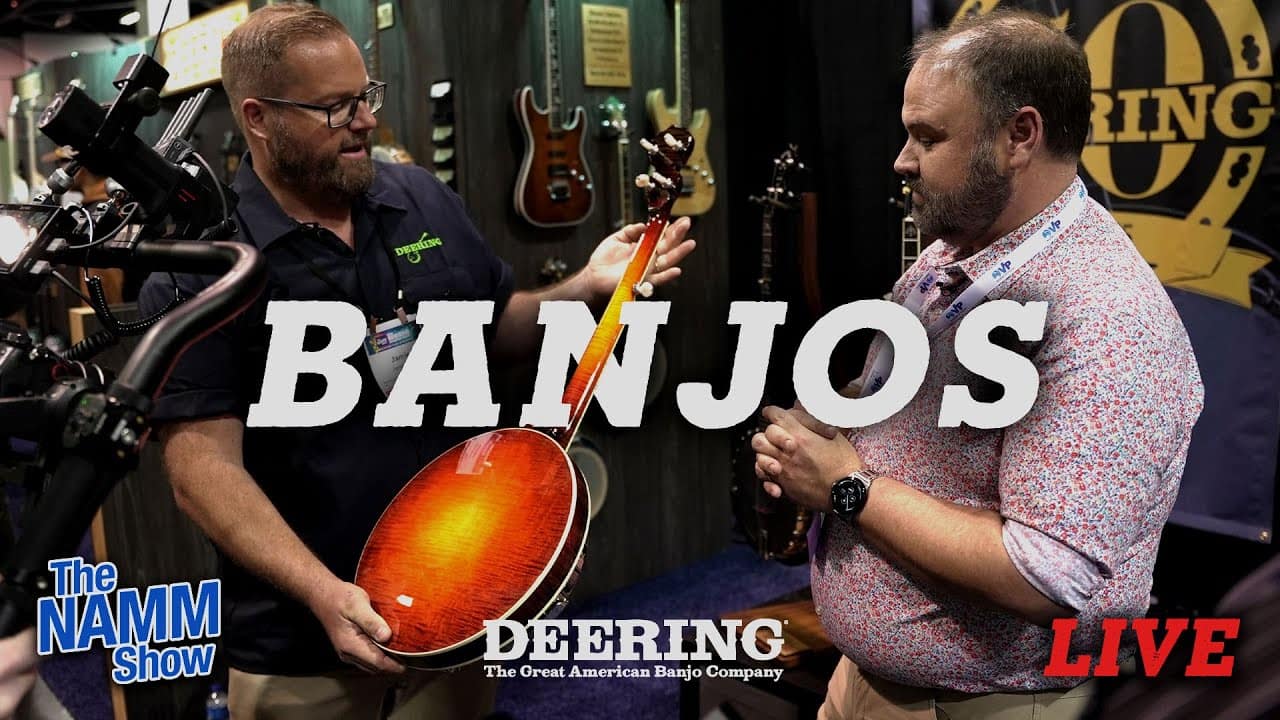
Watch Jim go through all ten, plus the three setup checks he makes on any new banjo:
Jump to: picks at 0:31, capos at 6:14, cases at 13:25, humidity at 21:58, and Jim's setup tips at 24:01.
Picks: start cheap, then find the one you won't take off
Jim starts every student on Dunlop finger and thumb picks. Every music store carries them, they come in several gauges, and they're cheap enough that you can buy a few and find out what you like. Our Dunlop brass finger picks are $2.99 for a pair. For a thumb pick, he likes Dunlop's Calico.
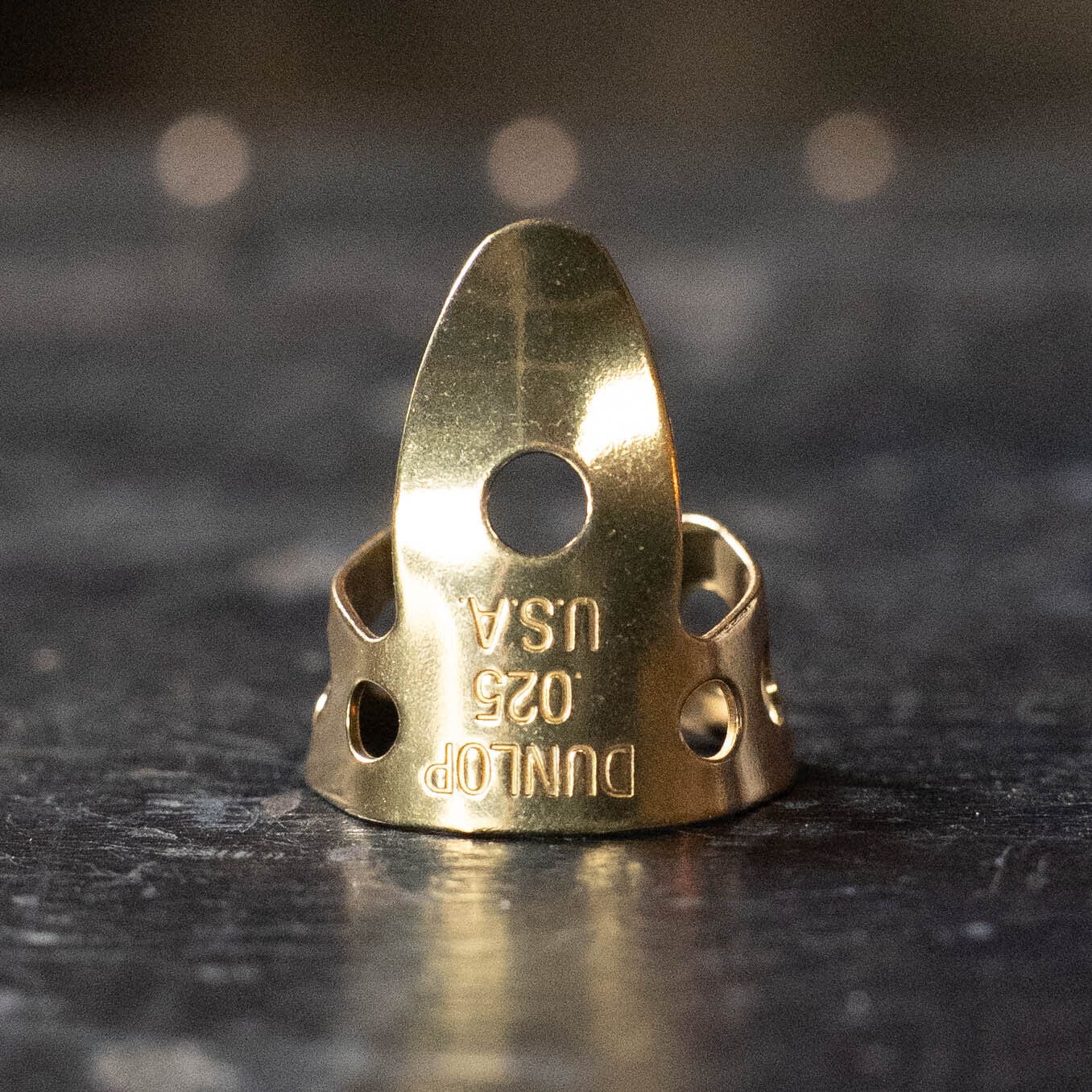
The next step is ProPik. A lot of Jim's students like the split-wrap models because the double band holds without being pinched tight, and ProPik makes several blade shapes and angles to try once you've played a while. At the top end, the BlueChip thumb pick is Jim's one fixed choice. He's had his since 2009, and unless you gouge at the head, the only wear is a little at the tip. It's brighter and slick from the first day. BlueChips are out of stock right now, so check the banjo finger and thumb pick collection for what's in.
"That's non-negotiable." (Jim Pankey, on his BlueChip thumb pick)One tip that costs nothing: Jim bends his finger picks to the curve of his fingers and lets them extend about an eighth of an inch past the tip, because it's more comfortable. Some players wear theirs closer, and John Hickman wore his straight.
A clip-on tuner, not a phone app
A phone app works fine in a quiet room, but in a jam, a shop or a festival campground it hears everybody's instrument. A clip-on reads the vibration of your banjo, so it ignores the noise. Snark makes good affordable ones. One of our favorites for banjo is the D'Addario Micro Banjo Tuner ($22.99), which mounts on the tension hooks and stays on the banjo, even in the case.
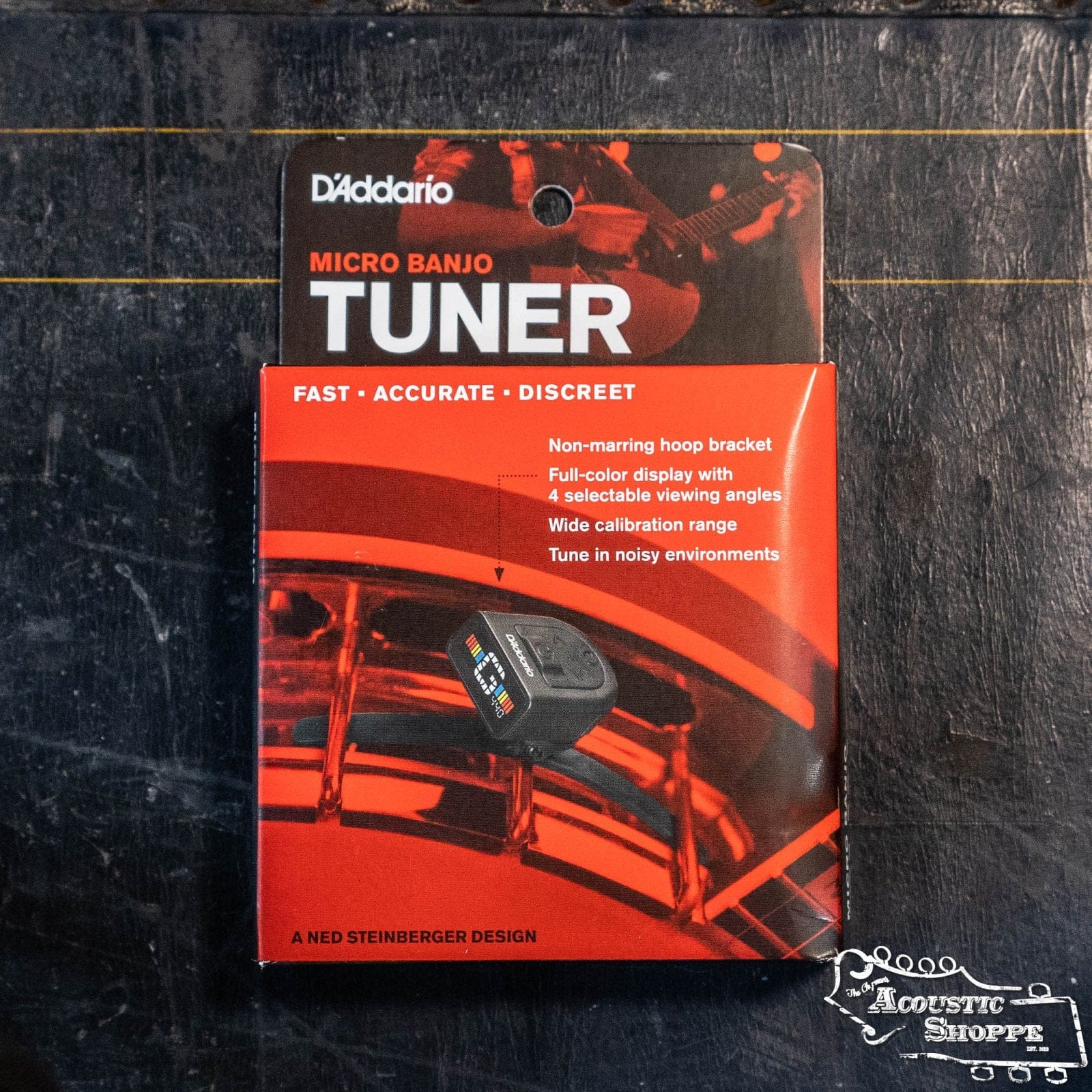
"Nobody borrows it, which means nobody keeps it."For the most accurate reading, the Peterson StroboClip HD ($59.99) has a banjo mode that reads the front of each note, since a banjo note dies away fast. Jim calls a strobe "maybe a little bit overkill," though he likes them. The rest are in the tuner collection.
A capo, then spikes for the fifth string
The day you play with another person, you'll need a capo. The D'Addario NS Capo Lite ($10.99) is small, adjustable and does the job. The Shubb has been the standard forever, and Jim still has the one he bought in the '70s. The Shubb C5b is $24.95.
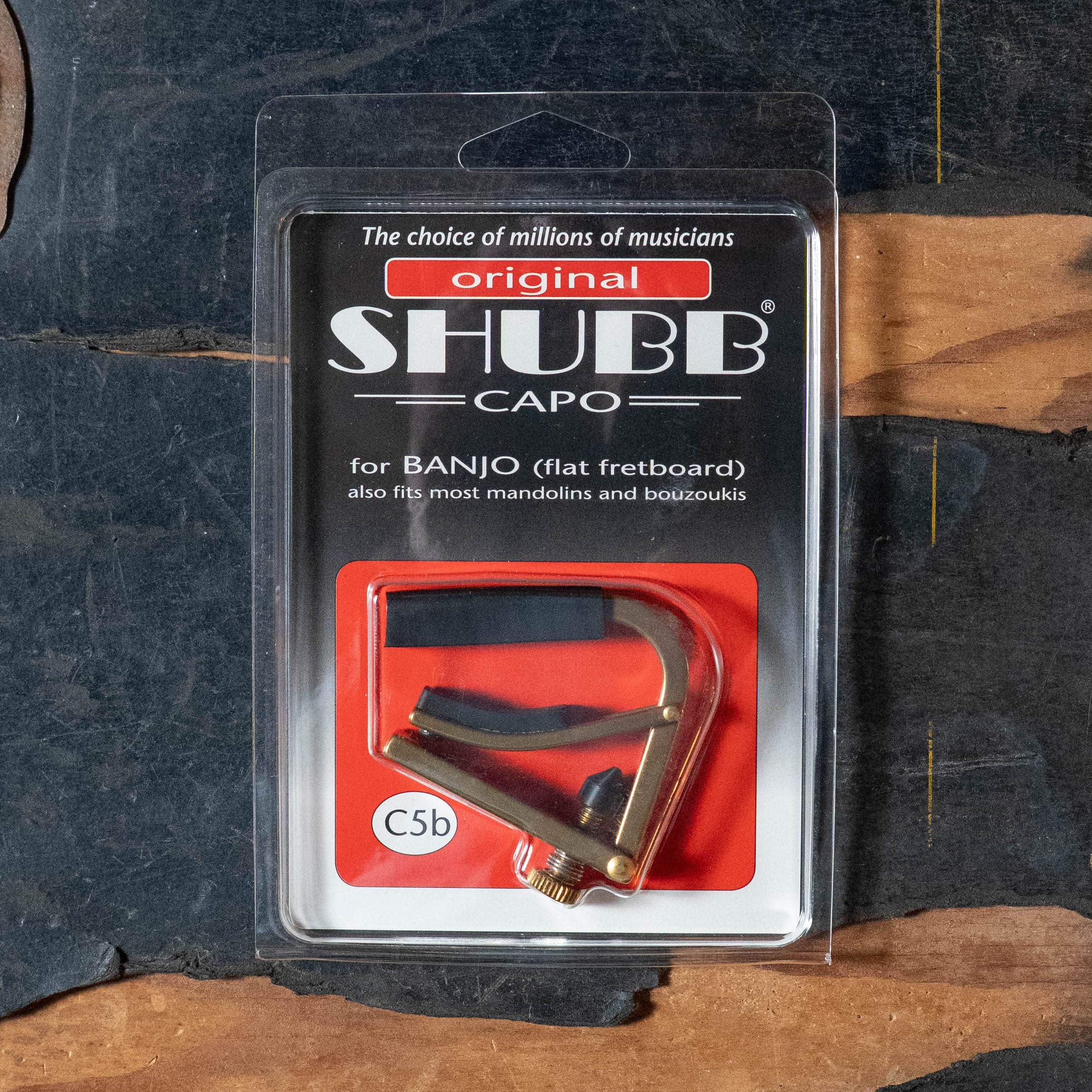
Elliott and Kat Eyes make the premium capos, and Jim thinks they're worth the money because you buy one once. Both stay on the neck, so you don't lose them, and losing four $25 capos costs about what one good one does. We have the Elliott B770E banjo capo at $215, and there's more in our Elliott capo story. The rest are in the banjo capo collection.
Capo up two frets and the short fifth string has to come up two frets too. Most pros use spikes. They really are model-railroad spikes, and you slip the string under the head so it holds it down like a finger. Jim runs his at the 7th, 9th and 10th frets, plus the 8th for a group that plays in B-flat. Sliding fifth-string capos work too, but they stick out, cover the dots and rattle when you're not using them.
Strings and bridges: the cheap way to change your tone
Strings are the easiest banjo accessories to experiment with, and Jim counts that as an advantage banjo players have over almost everybody: most sets cost $5 to $10, so you can try them all. Jim used the Vega V700 light set for years, and our Vega Bluegrass Light set is $4.99. He also likes the whole GHS line, and his current set is a La Bella light. Whatever you pick, keep a spare set or two in the case, because you will break a string at the worst moment. Browse the banjo strings collection.
Bridges are the part banjo players swap most. Every maker's maple-and-ebony bridge differs in mass and thickness, and those differences change the sound.
"You can change the sound of your banjo drastically by changing to a different bridge." (Jim Pankey)The stock Grover is still on a couple of Jim's banjos because it sounds right on them, and a Grover 77 is $8.95. From there, Snuffy Smith bridges made a difference he could hear, and Brian Hooper's bridges (the ones with the lightning bolt) are his premium pick. Spare bridges are in banjo parts and tools.
The banjo accessories that protect it: case, strap and cloth
All of Jim's banjos live in their cases, even the ones that never leave the house, because a case keeps humidity and temperature steady and keeps out kids, dogs and furniture moves. A padded gig bag like the Ortega Pro Series ($69.95) is easier at a festival or on a plane, and you're less likely to sit on it. For a hardshell, we recommend an arched top, because a flat lid can flex down onto the banjo. Flight cases from Hoffee and Calton protect the most and can cost more than the banjo inside, which is worth it for one you can't replace; ask us about ordering one. Hardshells are in the banjo case collection.
A strap matters even when you're seated, because banjos tend to dive at the neck. Jim tells every new student to get a leather strap with an unfinished inside, so it grips instead of sliding, attached to the bracket loops. Our banjo straps start with the Levy's padded leather at $49.99, and our strap buying tips cover fit. For cleaning, a flannel or microfiber cloth wipes sweat off the wood and strings after you play, and Deering's $7 care cloth takes tarnish off the nickel. Neither of us polishes as often as we should, and nickel goes gray if you let it.
Humidity: why banjos show it first
Metal doesn't need humidifying, but the wood does, and the neck most of all. Jim has opened a case on the road to find his action had dropped all the way down. Wood shrinks and frets don't, so fret ends start poking out, and on a bound board they can push through and crack the binding.
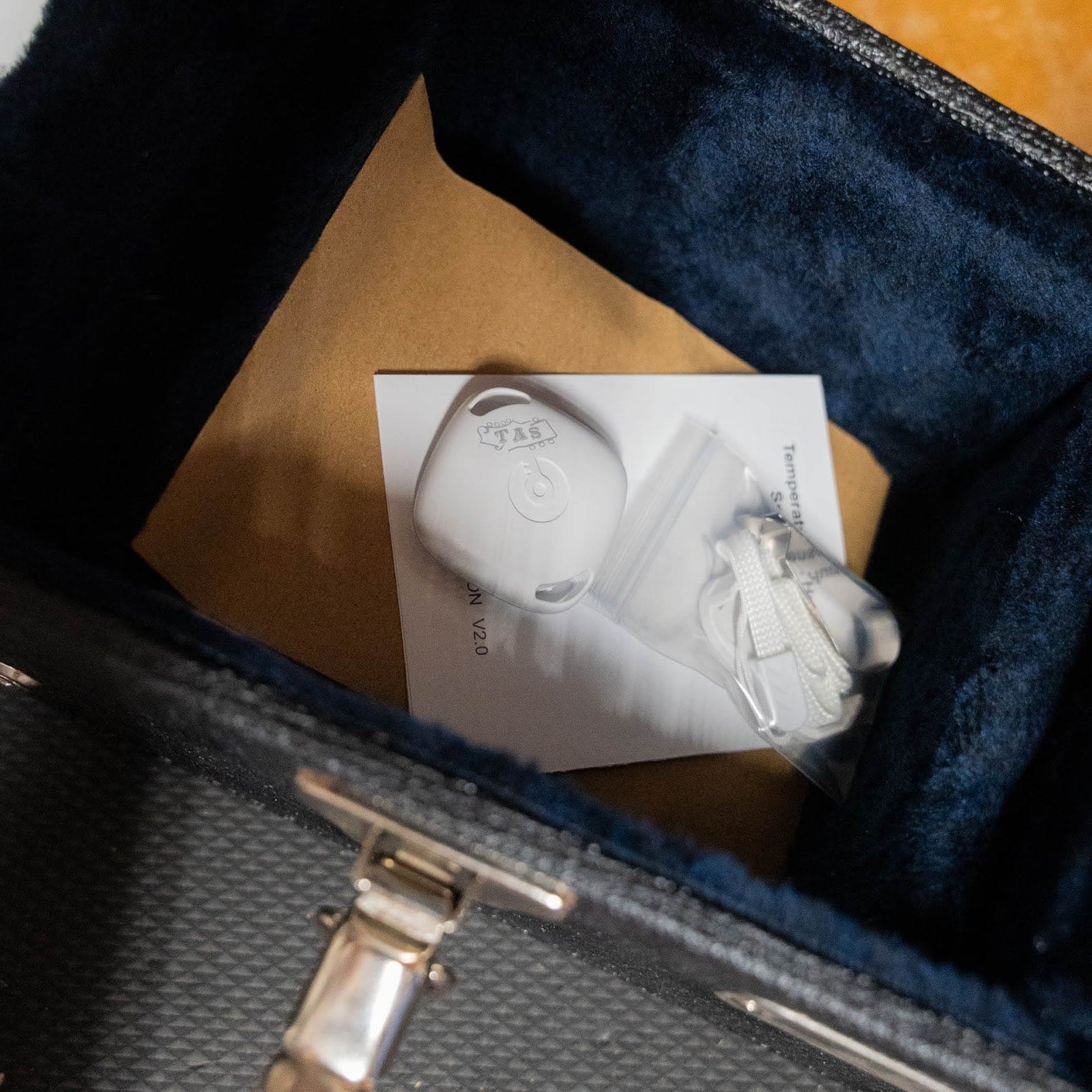
"Banjos will show playability issues due to humidification before just about any other instrument."The long neck flexes so easily that you can bend a note half a step just by pushing on it. That's why a humidity pack belongs with your other banjo accessories from day one. Jim keeps a D'Addario Humidipak or an Oasis in the case when he travels. The Humidipak starter kit is $25.99, and Humidity 101 explains the basics.
Jim's three setup checks
- String height. Jim likes about an eighth of an inch at the 12th fret. Sometimes the fix is just head tension: a new banjo's head may not be as tight as it ought to be, and he tightens it until it sounds right. Sometimes it's the truss rod.
- Nut height. With a string fretted, the gap at the first fret should be about the thickness of a page from a phone book.
- The tailpiece. On a Presto, he sets the base just off the head and the front about 3/8" above it.
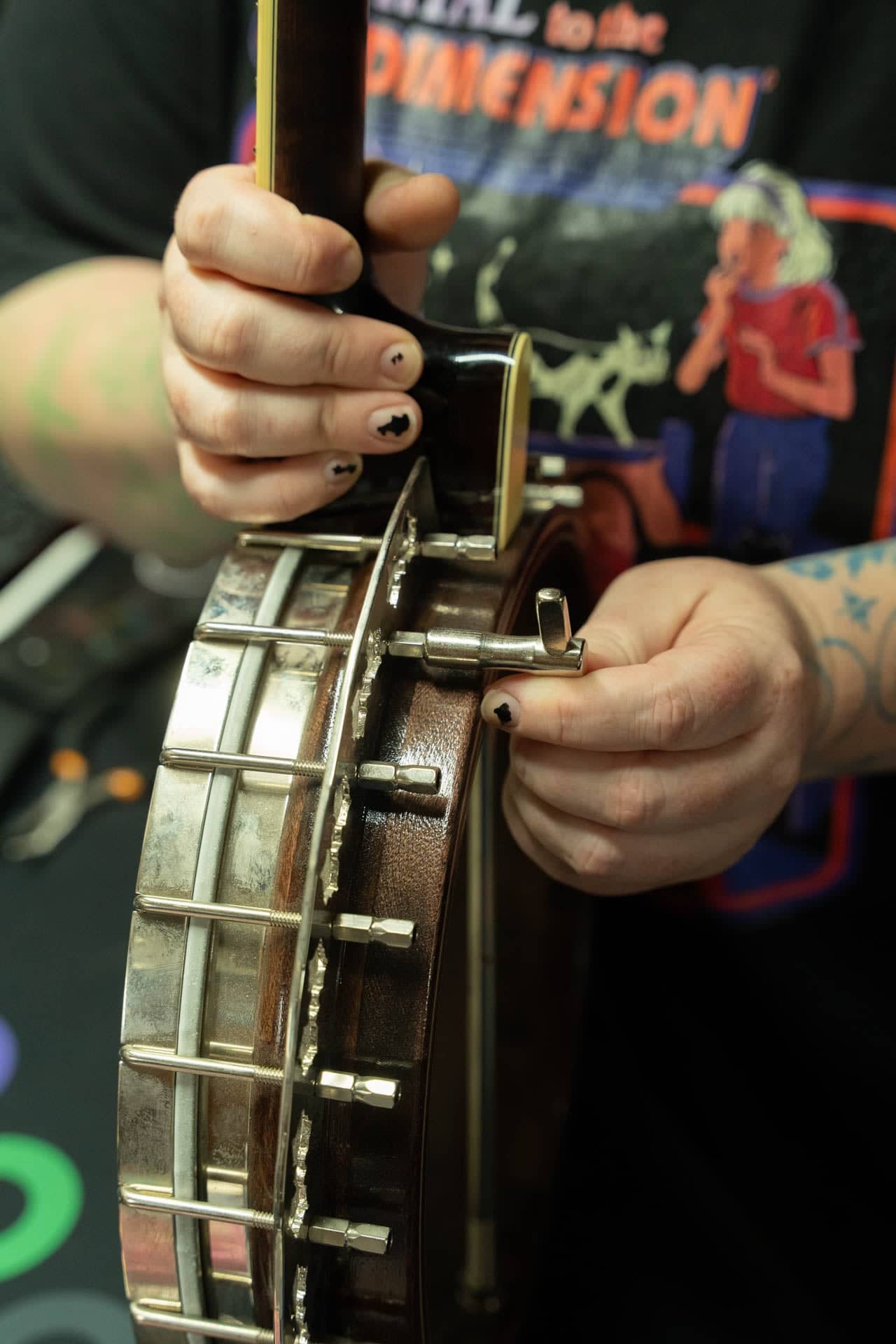
If you aren't comfortable adjusting any of that yourself, bring it to someone qualified. Every banjo we sell gets our 23-Point Professional Inspection on the bench before it ships.
The kit by budget
Here are Jim's tiers for the core banjo accessories, with our prices today (the video is from February 2025).
| Item | Start here | Step up | Premium |
|---|---|---|---|
| Picks | Dunlop ($2.99 pair) | ProPik split wrap ($15.99 pair) | BlueChip thumb pick (out of stock) |
| Tuner | Snark clip-on | D'Addario Micro Banjo ($22.99) | Peterson StroboClip HD ($59.99) |
| Capo | NS Capo Lite ($10.99) | Shubb C5b ($24.95) | Elliott B770E ($215) |
| Strings | Vega Bluegrass Light ($4.99) | GHS light | La Bella light |
| Bridge | Grover 77 ($8.95) | Snuffy Smith | Brian Hooper |
Related reading
- Clawhammer vs three-finger: Jim Pankey's first lesson in each style
- Deering Goodtime: which one to buy first
- Rolled vs cast tone rings
Who this list is for
If you're in your first month with a five-string, buy the first column of that table plus a strap and a humidity pack, and you'll have what Jim's students start with. If you've played a year and want more out of the same banjo, the banjo accessories worth spending on are a better bridge and a capo you'll keep. Our banjo accessories collection has everything above in one place, Jim's own gear list shows what he plays, and if you still need the banjo itself, start with our banjo collection.