Table of Contents
- Clawhammer banjo vs three-finger: what's the difference?
- Start in open G (both styles)
- Your first clawhammer banjo lesson: the claw and the bum diddy
- Your first three-finger lesson: picks, the pinch and the roll
- The second chord and the first song
- How to practice either style
- Which banjo for clawhammer, and which for three-finger?
- Clawhammer banjo or three-finger: which should you learn first?
You've got a five-string banjo in your lap, or you're about to buy one, and the first real decision shows up before the first song: clawhammer banjo or three-finger? One is played with a bare finger and a downstroke, the other with metal picks and rolls, and they lead to different music: old-time on one side, bluegrass on the other. A lot of beginners pick a style from whichever lesson they click first.
Jim Pankey teaches both, and his first lesson in each style runs about six minutes. Side by side, the two lessons start in exactly the same place and only split at the right hand. Here's what each style asks of you on day one, how to practice it, and which banjo makes sense for each.
Clawhammer banjo vs three-finger: what's the difference?
These are the two styles Jim plays most, and he sums up the split in a sentence each. Clawhammer, which old-time players also call frailing, is played without picks, and the motion is a downstroke. That's the sound of Grandpa Jones and Stringbean. Three-finger playing uses finger picks, was made popular by Earl Scruggs, and is what you hear all through bluegrass and a lot of country music.
| Clawhammer banjo | Three-finger (Scruggs style) | |
|---|---|---|
| Picks | None: index or middle finger | Two metal finger picks and a thumb pick |
| Right-hand motion | A downstroke into the strings; the thumb hooks the fifth string | Thumb, index and middle pick the strings in patterns |
| First pattern | "Bum diddy" | Basic rhythm (the pinch), then the alternating roll |
| Music | Old-time | Bluegrass and country |
| Usual banjo | Open-back | Resonator |
Both lessons begin with the same tuning and end with the same two chords and the same song, so your first half hour with the banjo looks the same whichever way you lean.
Start in open G (both styles)
Both lessons tune to open G, which is the standard tuning for a five-string banjo. Jim counts the strings from the floor to the ceiling, so the string closest to the floor is the first string:
- First string: D
- Second string: B
- Third string: G
- Fourth string: D
- Fifth string, the short one with its tuner partway up the neck: G
Strum the open strings and you're already playing a G chord. As Jim puts it, "you already know one chord." A clip-on tuner gets you there in a minute; the D'Addario Eclipse headstock tuner is on Jim Pankey's gear list, along with the rest of what he plays.
Jump to: the clawhammer right hand at 1:00 · "bum diddy" at 2:29 · the D7 chord at 3:26 · Skip to My Lou at 4:02.
Your first clawhammer banjo lesson: the claw and the bum diddy
Clawhammer banjo uses one finger to strike the strings, either your index or your middle finger (Jim calls his middle finger his "social finger"), and he says either one is fine, so use whichever feels more natural. He mostly plays with his middle finger. Curl your hand into a loose claw shape:
"It's almost like you're knocking on a door. That's what you're looking for."If you come from guitar, the direction of the motion is the new part. You aren't brushing up and down across the strings. Your arm moves toward the banjo head, the finger strikes a string on the way in, and your thumb lands and stops on the fifth string, hooked there. Then the hand pivots back up and out: strike down, pivot up. Jim exaggerates that motion on purpose, and he wants you to exaggerate it too in the very beginning, since that motion is the whole stroke.
"I'm not strumming up and down like a guitar, but it's actually moving into the instrument."That stroke turns into the clawhammer banjo rhythm everybody knows as "bum diddy." Here it is in order:
- Bum: strike down into a string and let it ring for the full beat.
- Did-: strike down again.
- -dy: as your hand comes back out, the thumb that's hooked on the fifth string plays it.
If you read music, that's a quarter note and two eighth notes, counted "one, two-and." You can play it on any single string, or strike several strings at once on the "did-" and finish on the fifth string. That's the whole right hand for your first few weeks.
Your first three-finger lesson: picks, the pinch and the roll
Bluegrass banjo needs a little kit: two metal finger picks and a thumb pick. Jim says you can start without them, but you're definitely going to want them, and you'll find all three in our banjo finger and thumb picks.
The first pattern is what Jim calls basic rhythm; some players call it a pinch pattern. The thumb plays the third string, then the thumb and middle finger pinch the first and fifth strings at the same time. Next time around, move the thumb up to the fourth string. Count it "1, 2, 3, 4" and you have a bluegrass backup pattern. While you play, Jim rests his pinky on the banjo head to keep his hand from wandering. Some players use the ring finger, some use both, and he doesn't treat it as a rule:
"It's an anchor, but it's not really."The second pattern is the alternating roll, also called the square roll: thumb on the third string, index on the second, thumb on the fifth, middle on the first. That's 3-2-5-1, and then you swap the thumb to the fourth string for 4-2-5-1.
The second chord and the first song
Both styles add the same second chord, D7. Put your index finger on the second string at the first fret, right up against the fret wire, close to it without sitting on top of it. Then put your middle finger on the third string at the second fret. That's it, and the shape is the same for clawhammer and for rolls.
"With two chords you can play a ton of songs."Both lessons finish on Skip to My Lou, which moves between G and D7 and back. In clawhammer, play bum diddy on the third string through the changes. In three-finger style, start with the roll, and once that's comfortable, play the pinch on the G and the roll on the D7. Jim's point is that you can mix them up, and that mix is what gets you started playing bluegrass banjo.
How to practice either style
Jim's best advice in either lesson is about practice. Spend some couch time with it: put something on TV, sit with the banjo in your lap, and work the right hand and your two chords, open G and D7, for a couple of weeks.
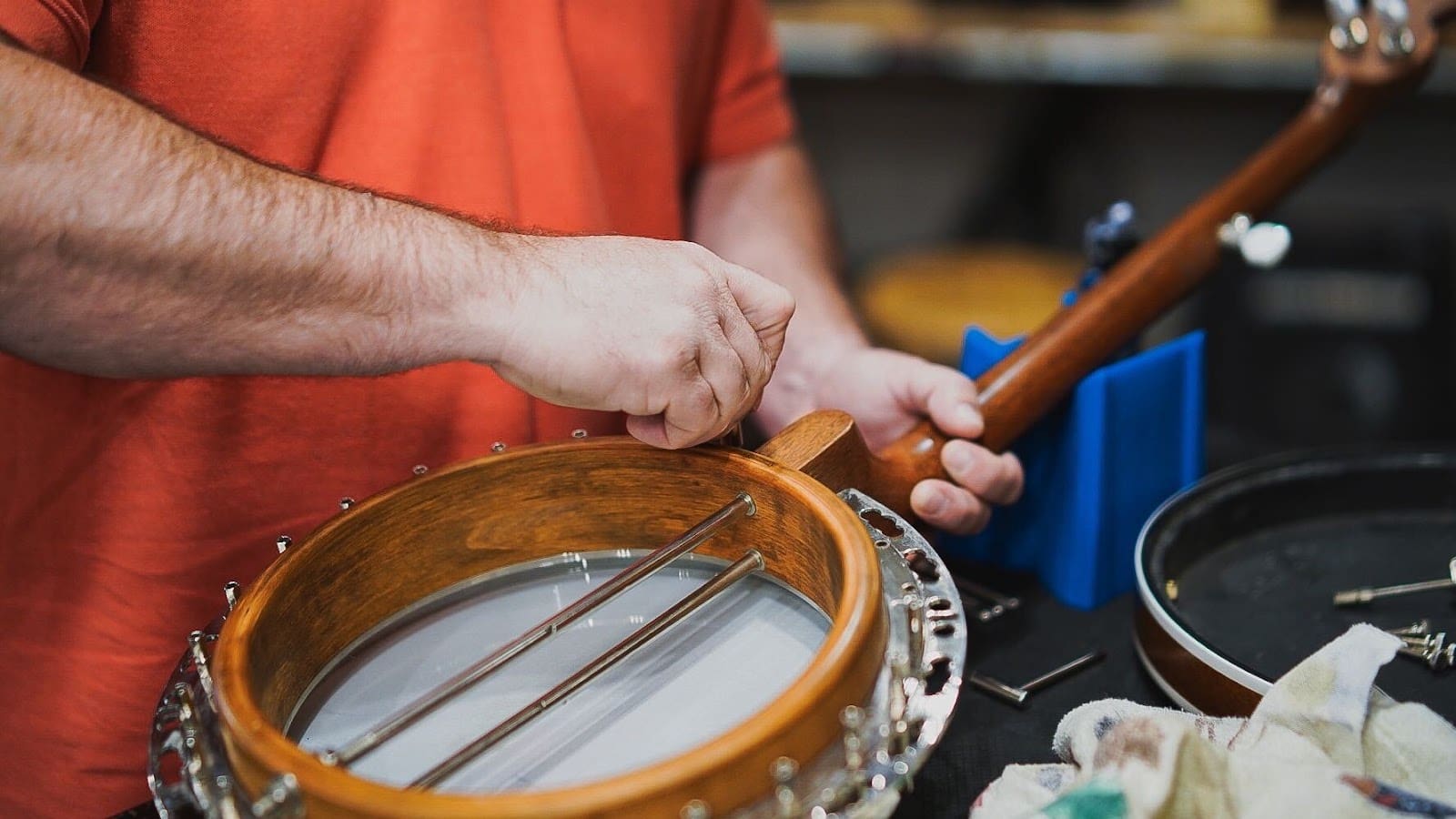
"I promise you it'll make sense. You can do this."A banjo that plays in tune and doesn't fight your fretting hand makes those two weeks a lot easier, which is why every banjo we sell gets our 23-Point Professional Inspection on the bench before it ships.
Which banjo for clawhammer, and which for three-finger?
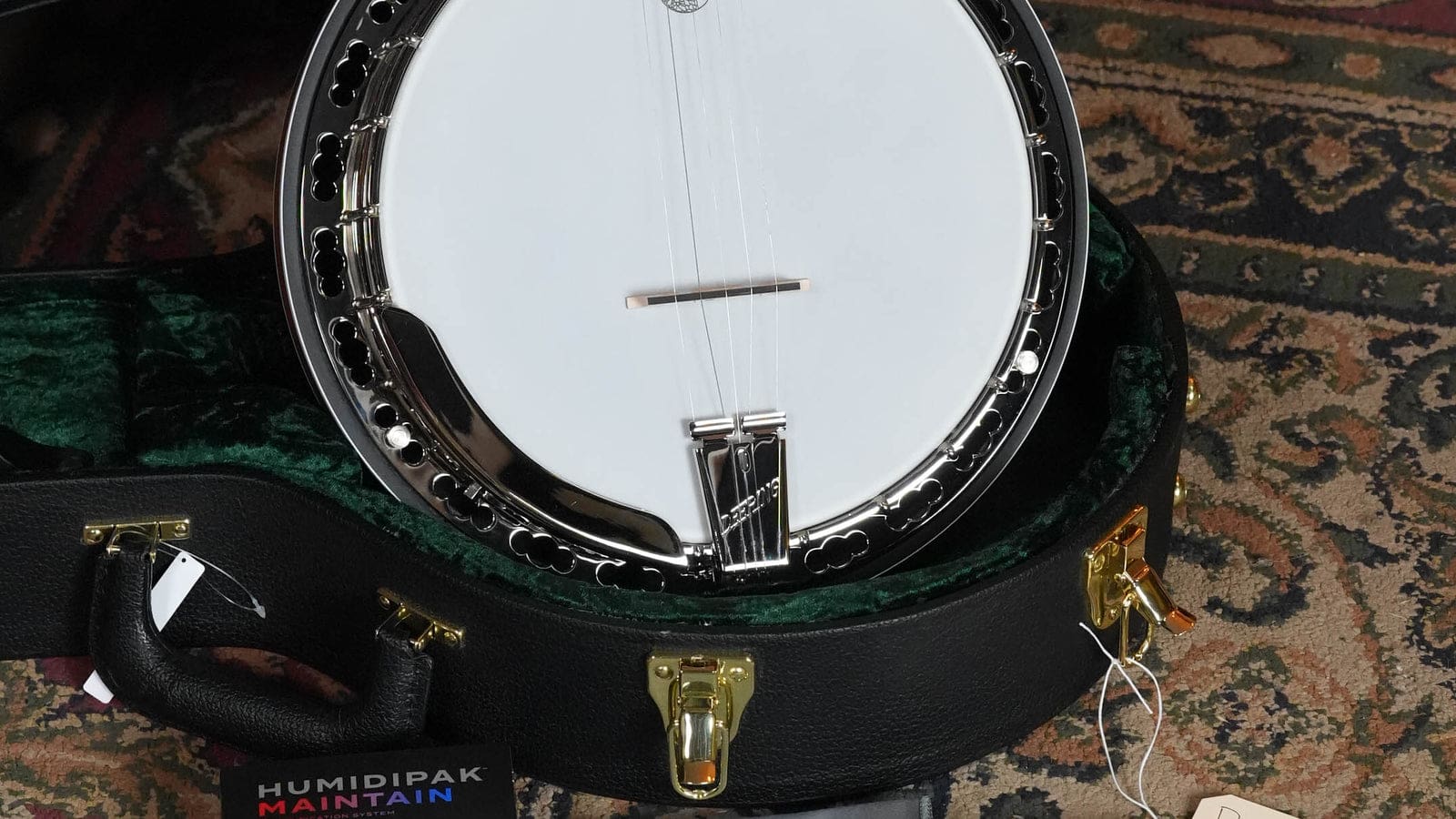
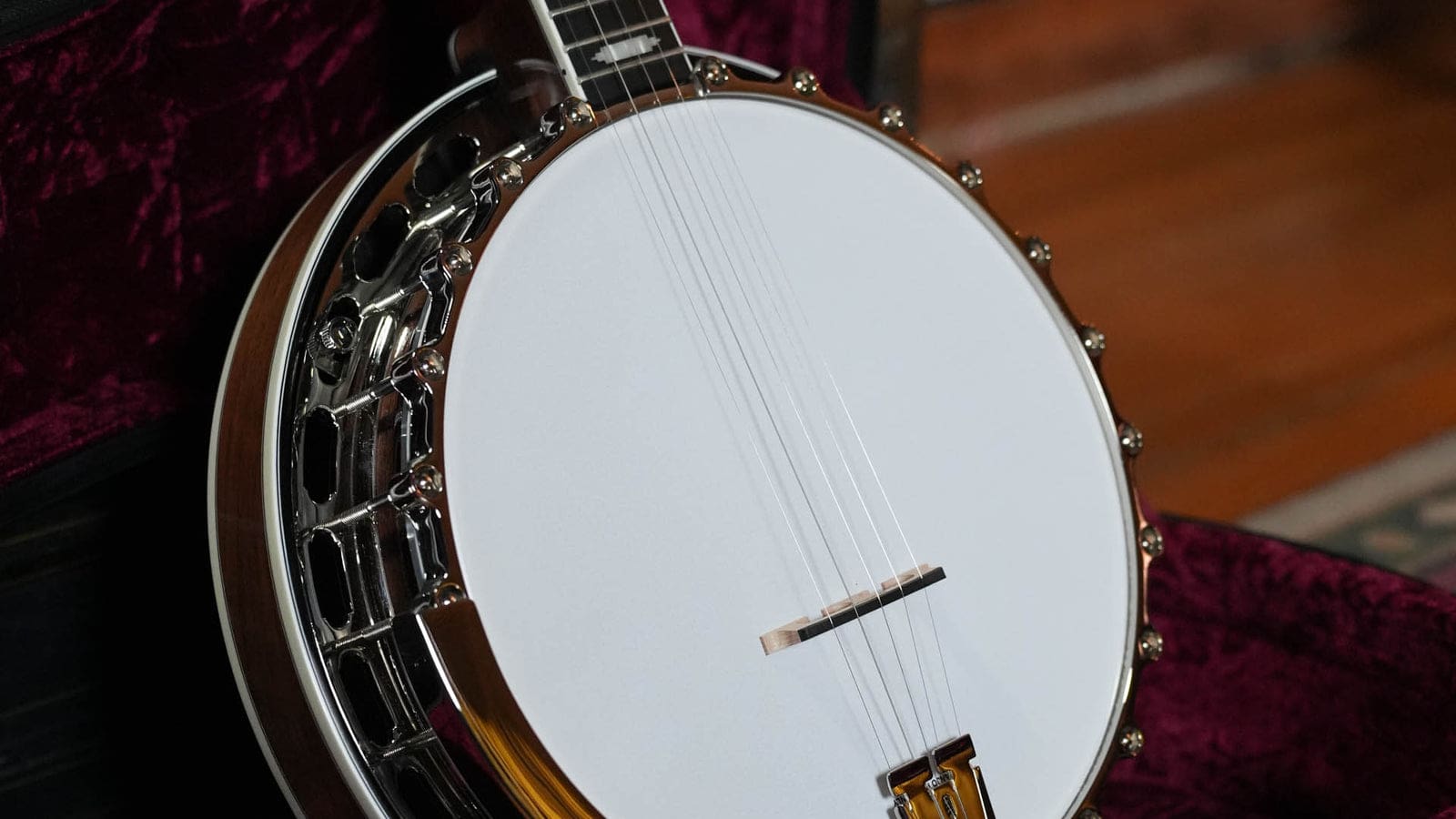
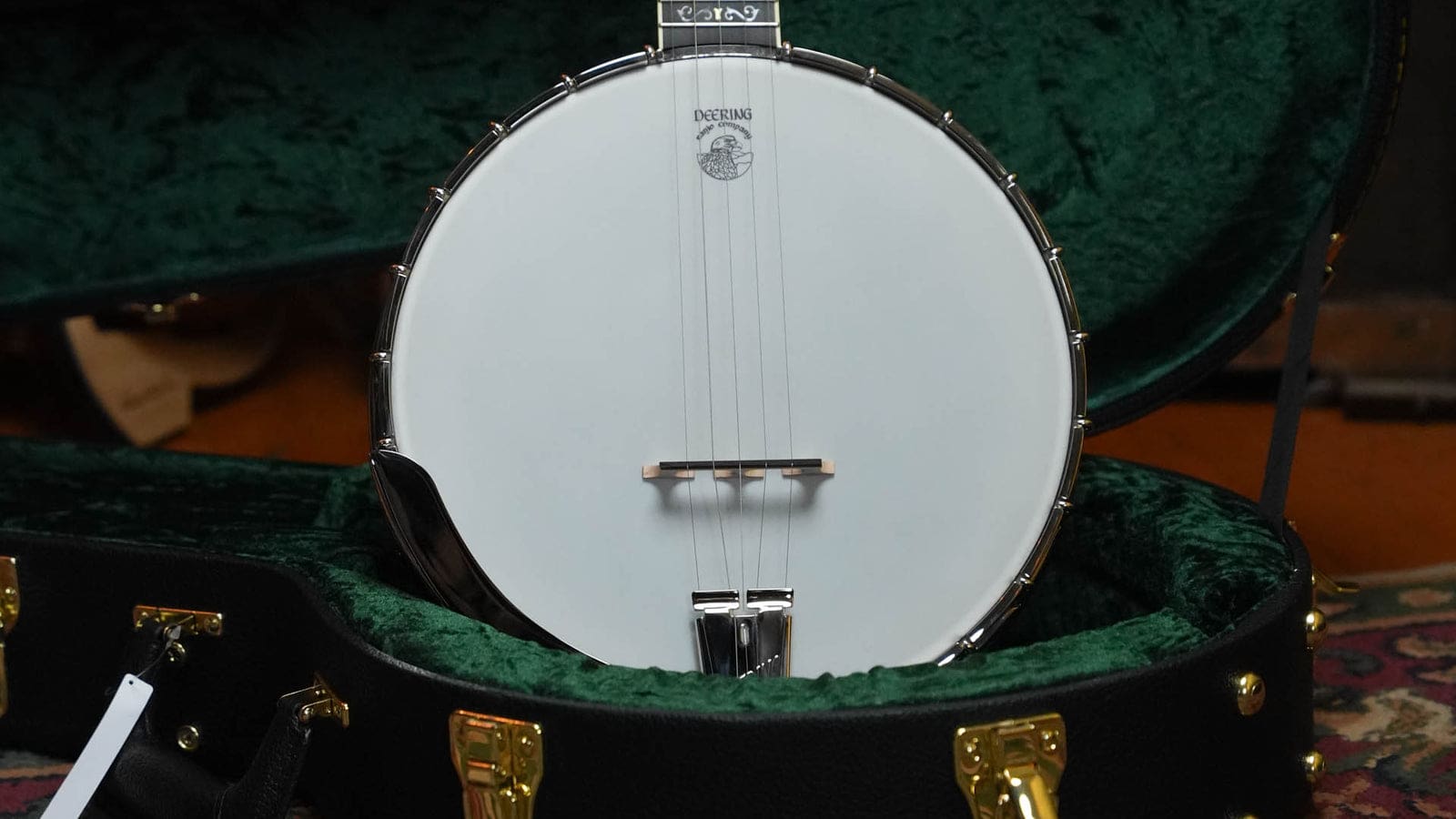
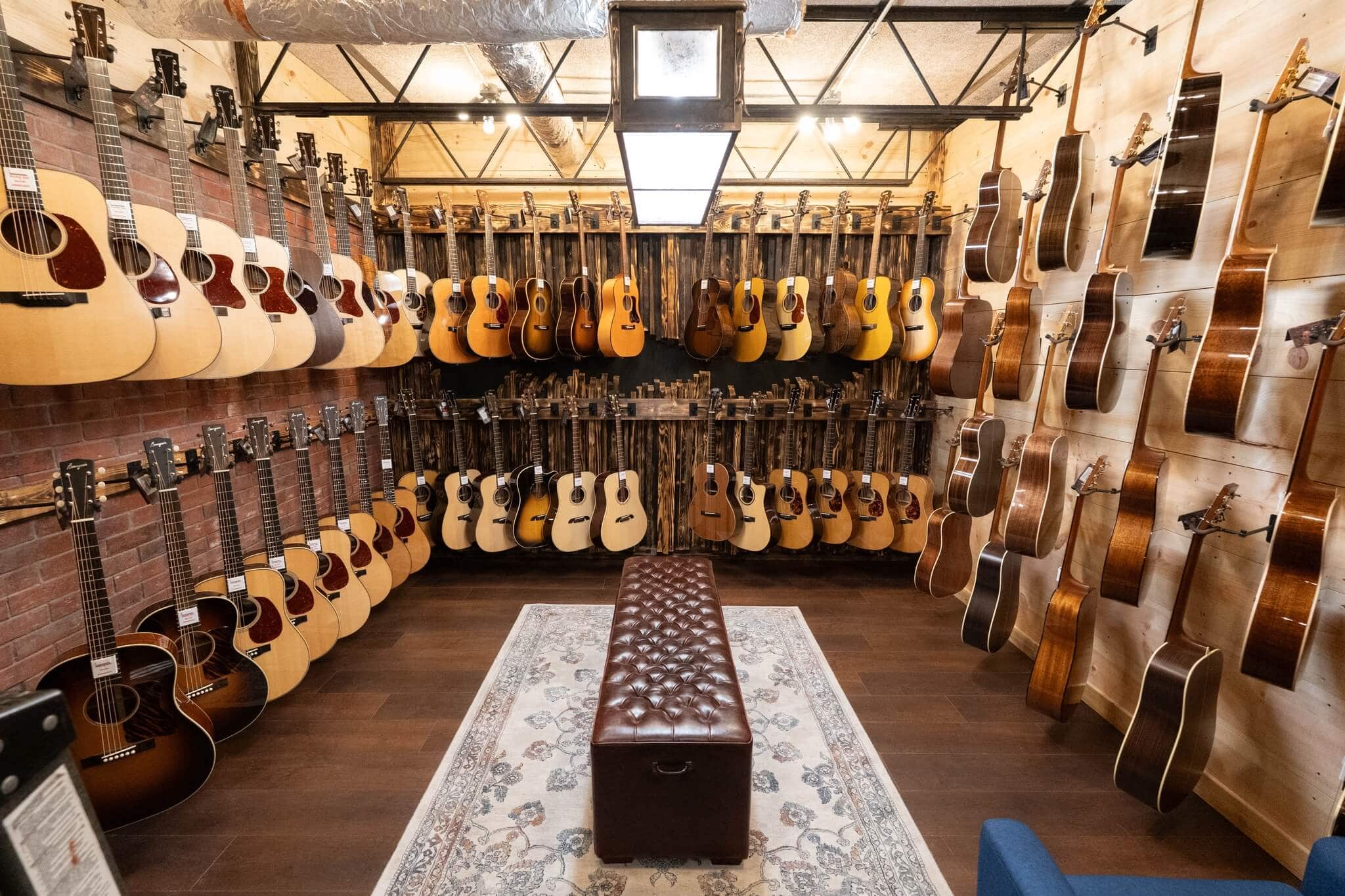
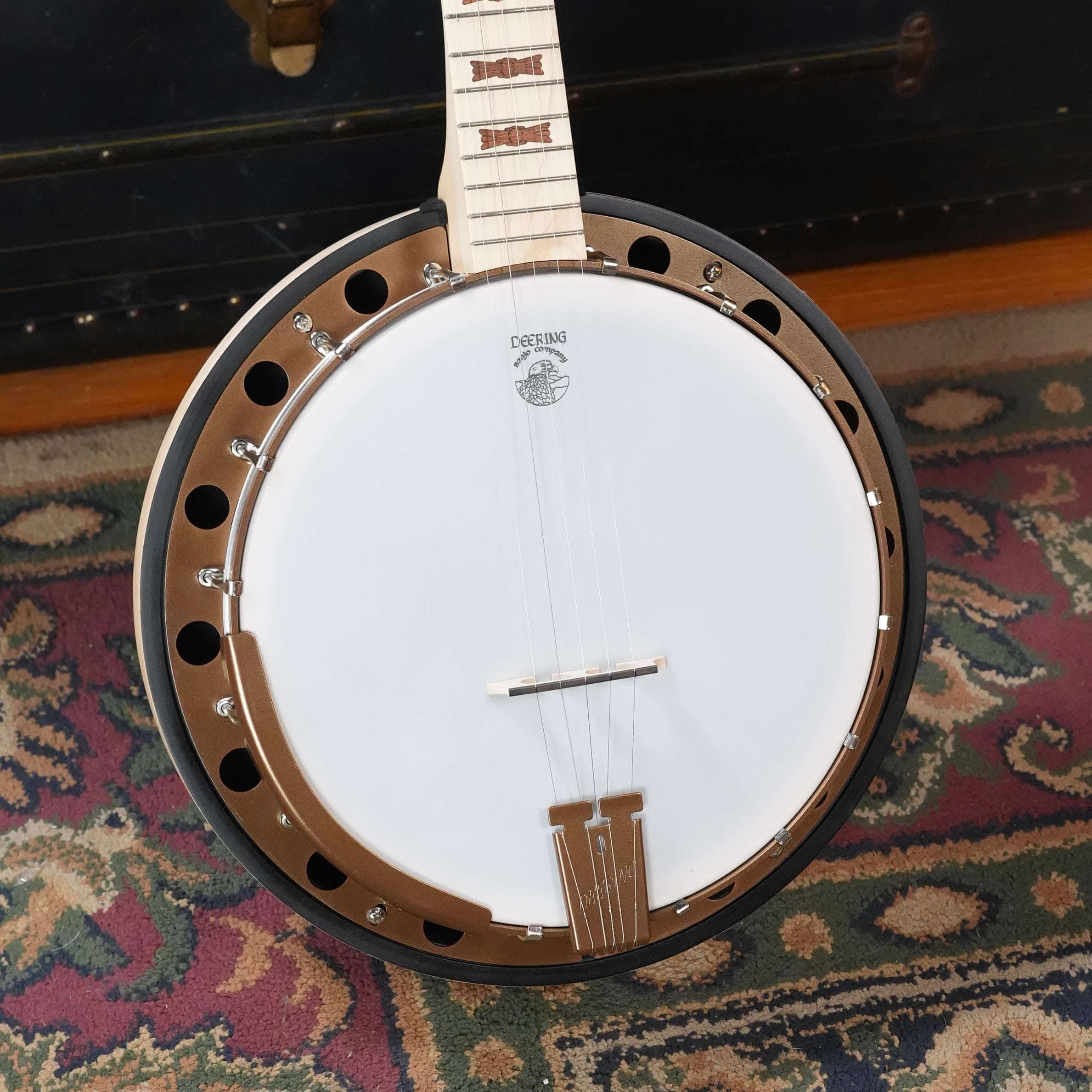
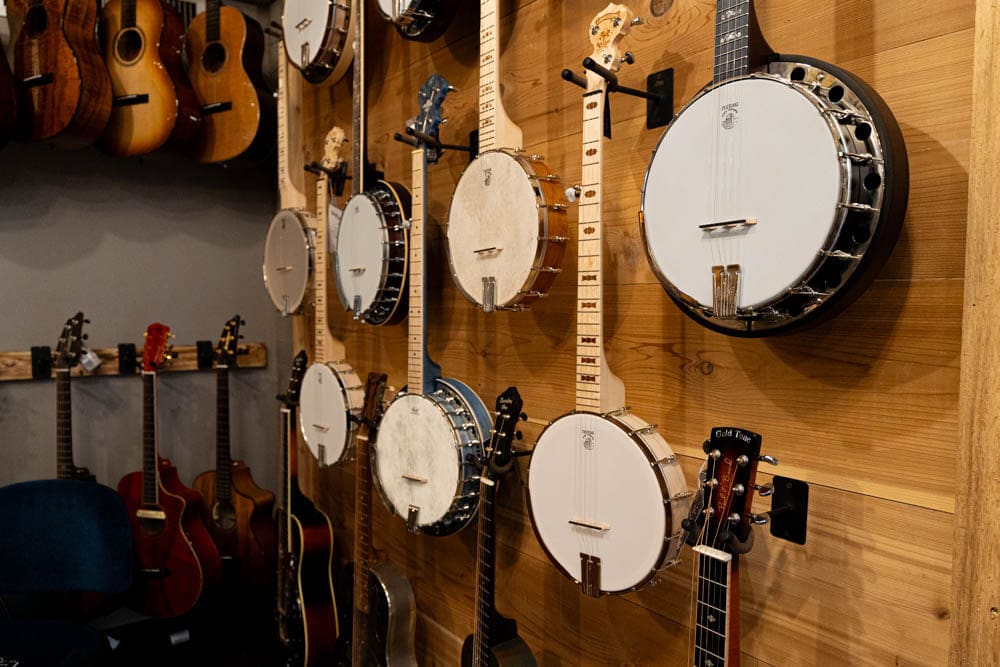
For clawhammer banjo, most players reach for an open-back, with no resonator on the back of the pot; the Gold Tone below is built that way for clawhammer and old-time. Three-finger players usually want a resonator banjo, which Deering adds to the Goodtime Two for projection in bluegrass and ensemble playing. Here's what's on our wall today:
- Gold Tone OME Jasmine ($2,995): an open-back built for clawhammer and old-time. Its 28.188-inch scale is a little longer than most, so expect a slightly longer reach for your fretting hand, and it comes strung in open G with light-gauge strings.
- Deering Goodtime Two ($849): an American-made resonator banjo that weighs about 6 pounds, with the projection a three-finger beginner needs in a jam.
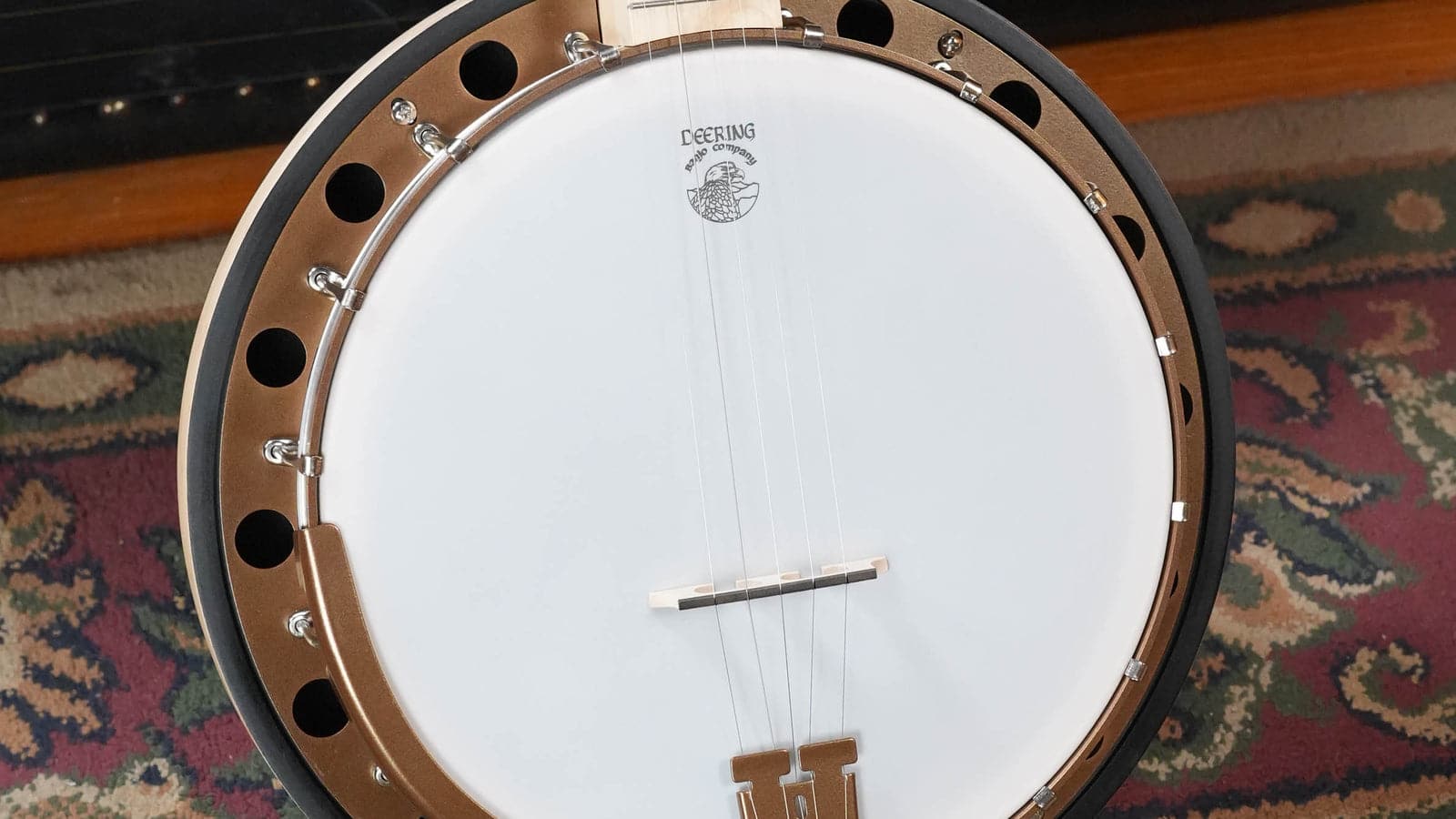
- Deering Clawgrass No.2 ($4,799): for the player who wants both styles on one banjo. Its wide D-shape neck gives a clawhammer fretting hand more room, and its bell bronze tone ring has the volume for bluegrass. If tone rings are new to you, our rolled vs cast tone ring guide explains what that ring does.
- Pre-owned S.S. Stewart open-backs start at $1,199.99, including an 1895 Banjeaurine and a c. 1889 pony-scale banjo, for the clawhammer banjo player who wants an instrument from the era the old-time style grew up in.
The open-back Deering Goodtime, Deering's beginner banjo, is sold out as we write this. Our Deering Goodtime banjo guide covers why it's the beginner's default and which version to wait for. Prices and stock above are from October 2026 and change fast, so check our Deering banjos and the collections linked below for what's on the wall now.
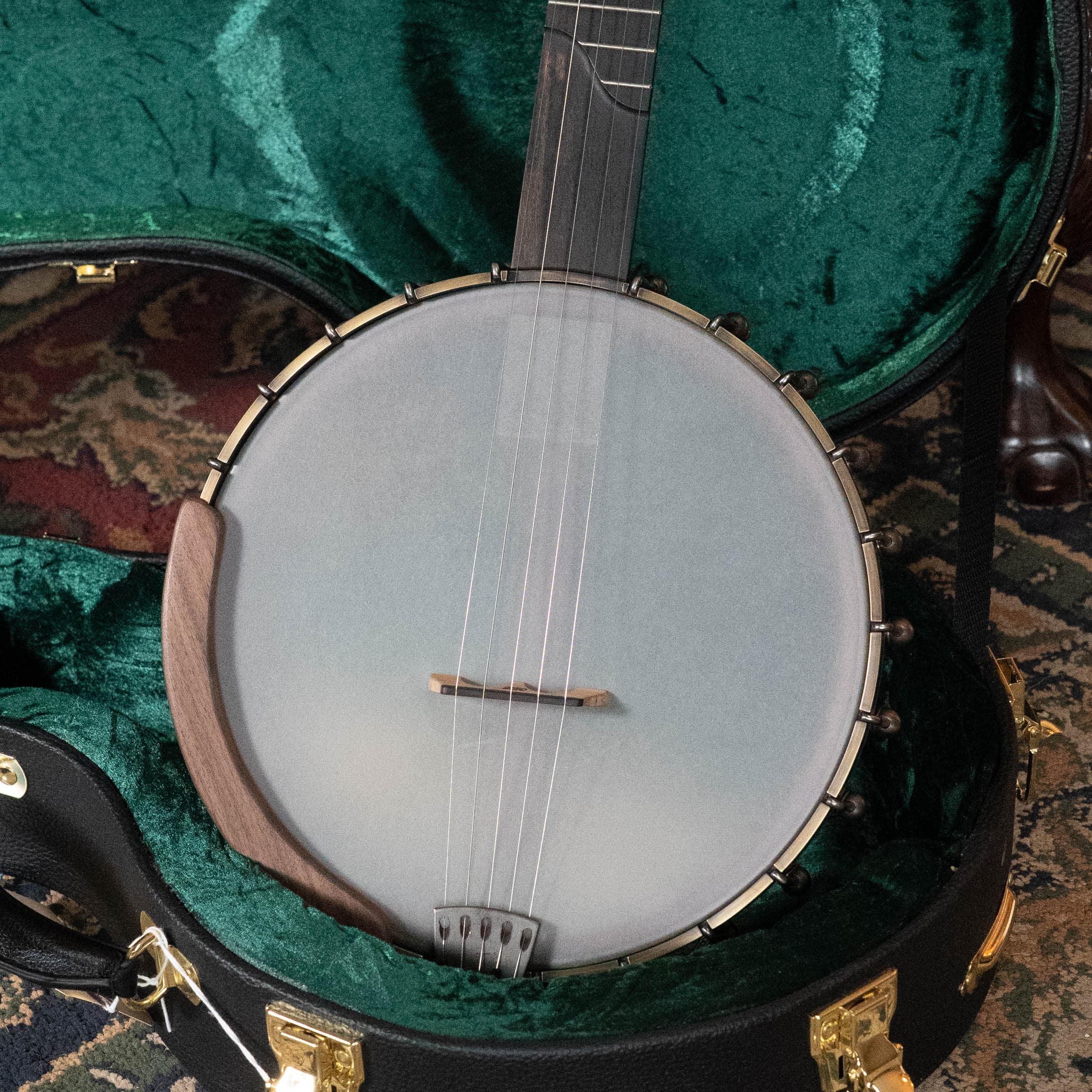
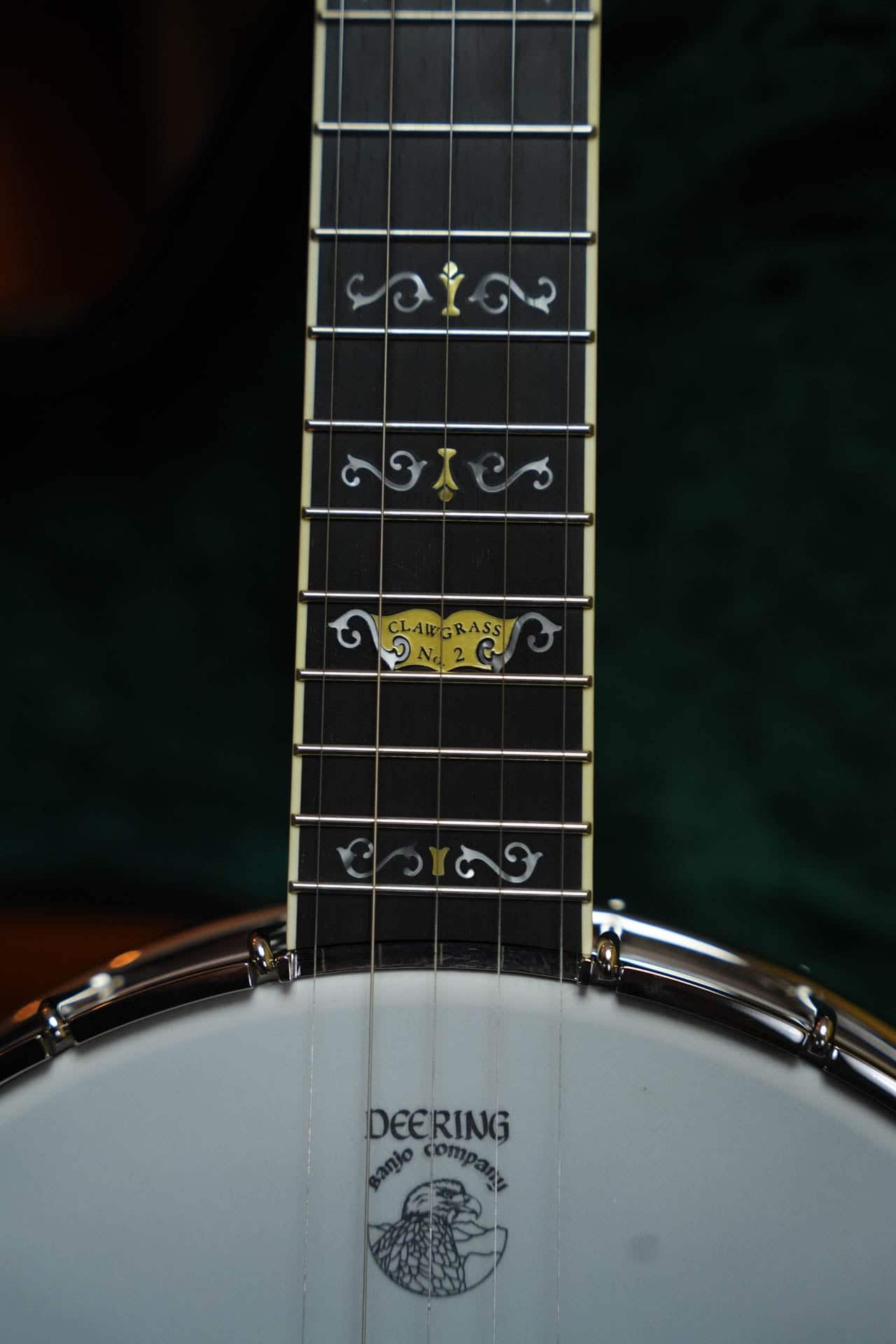
The Jasmine and the Clawgrass come with our Dread-Not Guarantee: a full year to trade the banjo in for up to 90% of the pre-tax purchase price in credit, less round-trip shipping, plus a 30-day in-home trial. If you start on clawhammer and a year later the roll has you hooked, you aren't stuck with the wrong banjo.
Related reading
- Scott Avett banjo review: Deering Truth vs Vega Avett Star
- Alan Munde: banjo man for the ages
- 5 tips for buying a banjo or guitar strap
Clawhammer banjo or three-finger: which should you learn first?
Let the music you want to play decide. If you love old-time music and the Grandpa Jones sound, learn clawhammer banjo on an open-back banjo and work on bum diddy until it's automatic. If Earl Scruggs and bluegrass jams are what got you here, buy a set of picks, learn the pinch and the roll, and look at our resonator banjos. Either way, tune to open G, learn D7, give it two weeks of couch time, and then come play a few of the banjos on our wall.