
Table of Contents
- What changed at the Deering NAMM booth?
- Why the Deering Goodtime went from nickel to bronze
- The Goodtime six-string: a banjo for guitar players
- The White Lotus: tone-ring punch without the tone ring
- Cherry rims and newer heads: what Jens heard
- Deering at 50: the anniversary Sierra and the one-offs
- What you get when you buy a Deering from us
- Which of these Deerings fits you?
If you've been shopping for a Deering lately, you've probably noticed the banjos don't look quite like the ones in older photos and videos. The Goodtime hardware is a warm bronze color now instead of bright nickel, the six-string has a darker fingerboard with block inlays, and the White Lotus carries ebony where it used to have stained maple. None of that is a mistake on the listing. Most of those changes were on display at the Deering NAMM booth, and we were there both years.
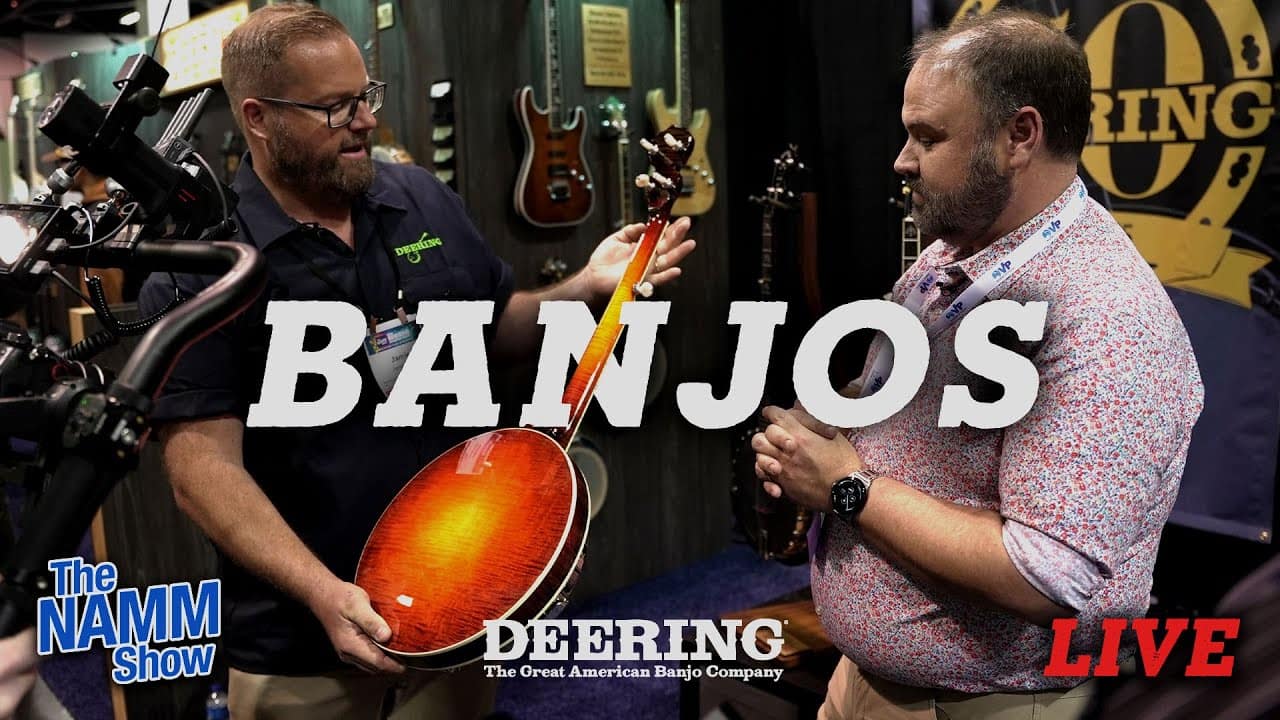
Jamie Latty of Deering had the new models out at two shows: 2023, with Jens Kruger playing them, and 2025, the year Deering turned 50. Here's what changed at the Deering NAMM booth, why Deering changed it, and which of those banjos you can actually buy from us today.
What changed at the Deering NAMM booth?
The short answer, in the order a buyer runs into it:
- Bronze hardware on the Goodtime. The Goodtime and Goodtime Special moved from nickel to a bronze finish as the permanent standard. The Artisan models keep nickel.
- A pau ferro fingerboard on the Goodtime six-string, open back and resonator, with new block-style inlays.
- An ebony fingerboard on the White Lotus, the white oak banjo with no tone ring.
- A 50th Anniversary Sierra limited to 10, plus a handful of one-off finishes Deering built for the show.
Jump to: the bronze Goodtime at 2:13 · the 50th Anniversary Sierra at 5:43 · the tequila burst Sierra at 6:55 · the "blurple" banjo at 7:48.
Why the Deering Goodtime went from nickel to bronze
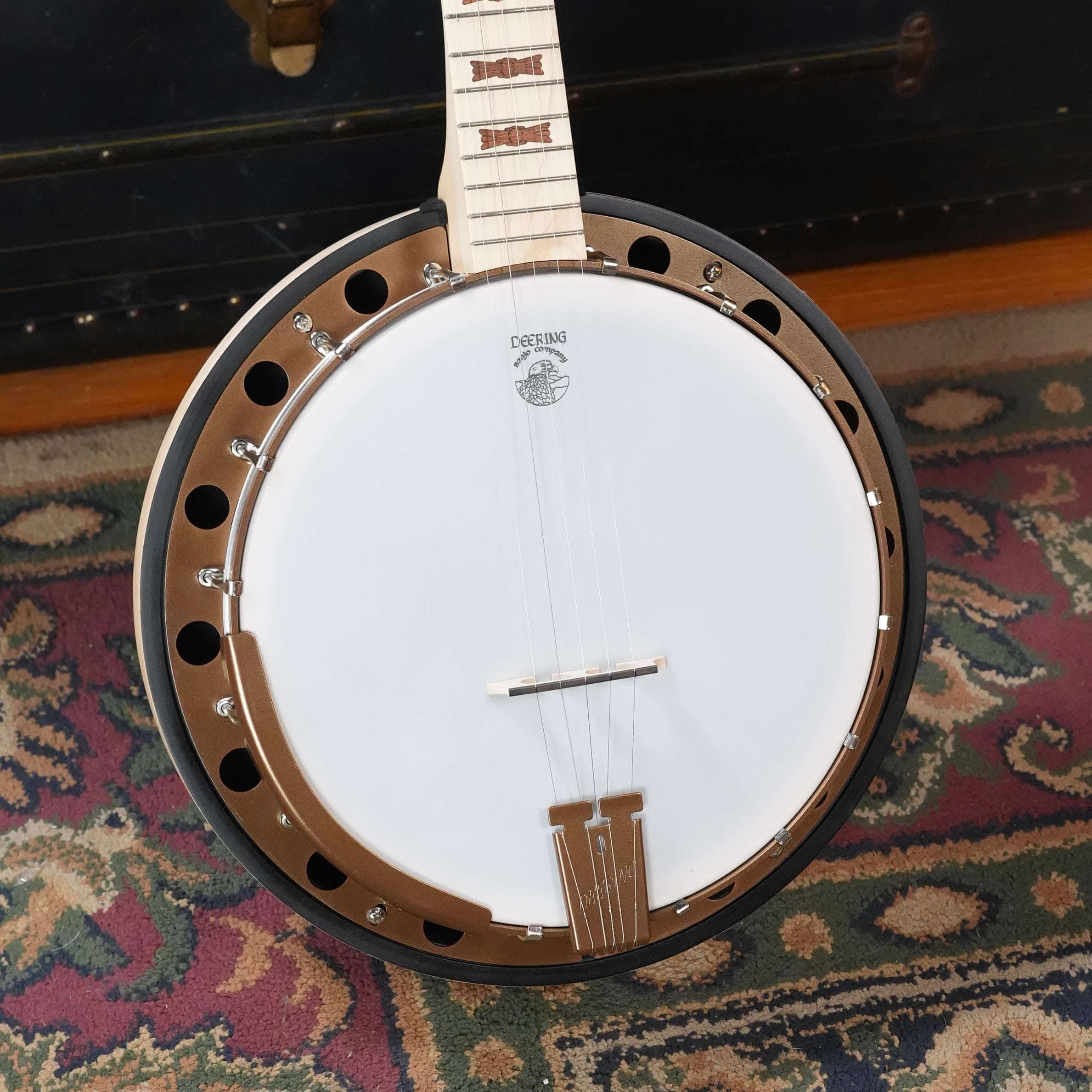
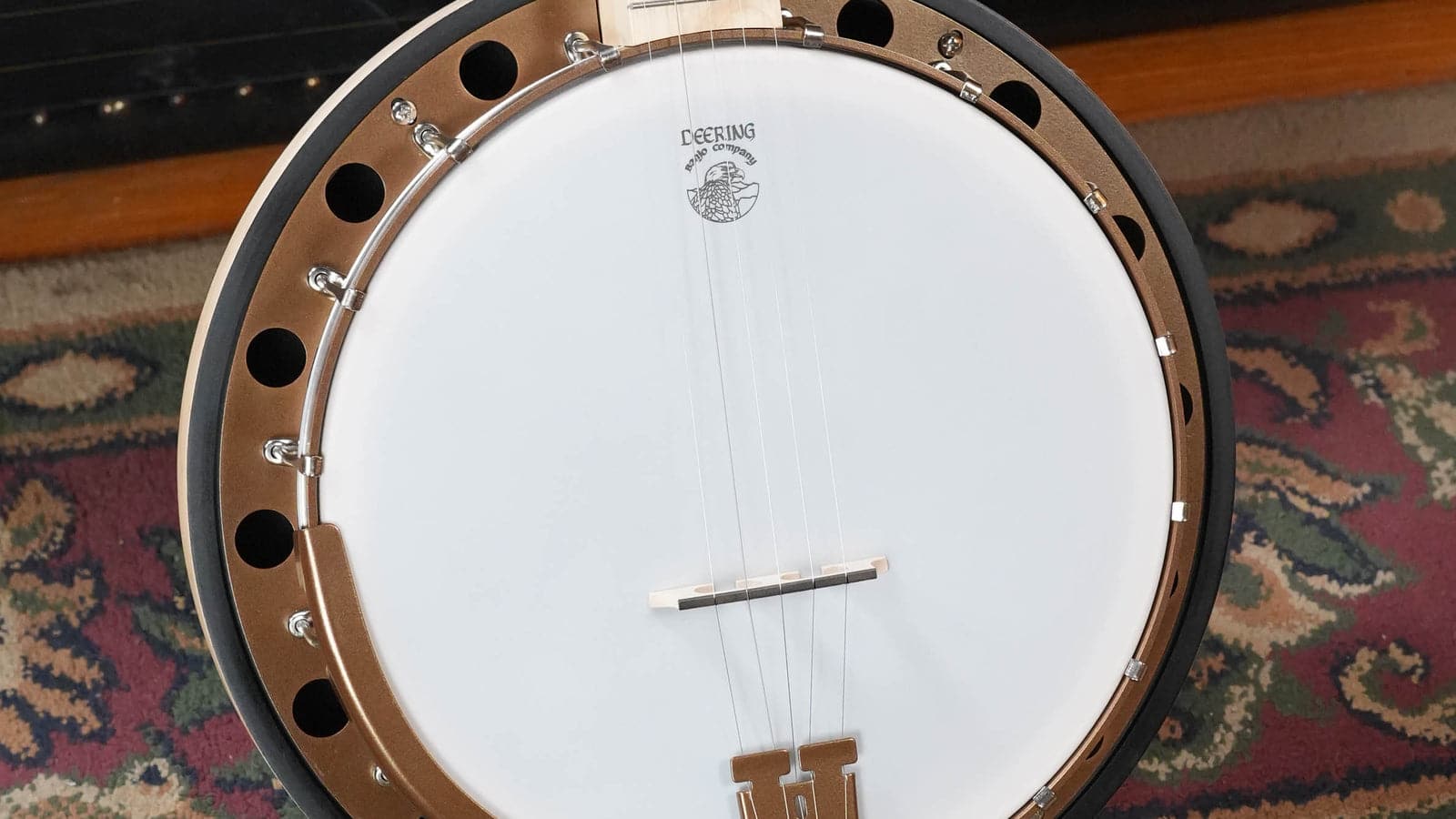
This is the change most buyers notice first, and Jamie's reasons for it are practical. The bronze finish is hypoallergenic, it doesn't tarnish, and a beginner doesn't have to clean every nook and cranny of the hardware to keep it looking right. It's the same banjo with the same sound, still made in the USA, and it holds up far better than the nickel did. Deering is right on the coast in San Diego, and Jamie counts salt sea air as one more reason to choose it.
The allergy point is real, and we've seen it in our own shop. One of our staff got her first mandolin, started learning, and found out the hard way that she has a nickel allergy, because her arm rested on the tailpiece. She now wears a cover on her arm to play. A new banjo player may not know they have that allergy until they've been playing for a few weeks, which is a good reason to start on hardware that won't cause it.
"I know all you traditionalists are like, yeah, but I like nickel. That's cool too, but this stuff does wear way better."
The switch covers the Goodtime and the Goodtime Special. The Artisan Goodtimes stay nickel, so our Artisan Goodtime Special #3254 ($1,599) still has the classic look. If you want bronze today, the Goodtime Two #2617 is $849, and the Goodtime 19-fret tenor #92620 is $599 with a bronze powder finish on the hoop, hooks, tailpiece and armrest. For the full story of why Greg Deering built the line in the first place, read our Deering Goodtime banjo guide.
The Goodtime six-string: a banjo for guitar players
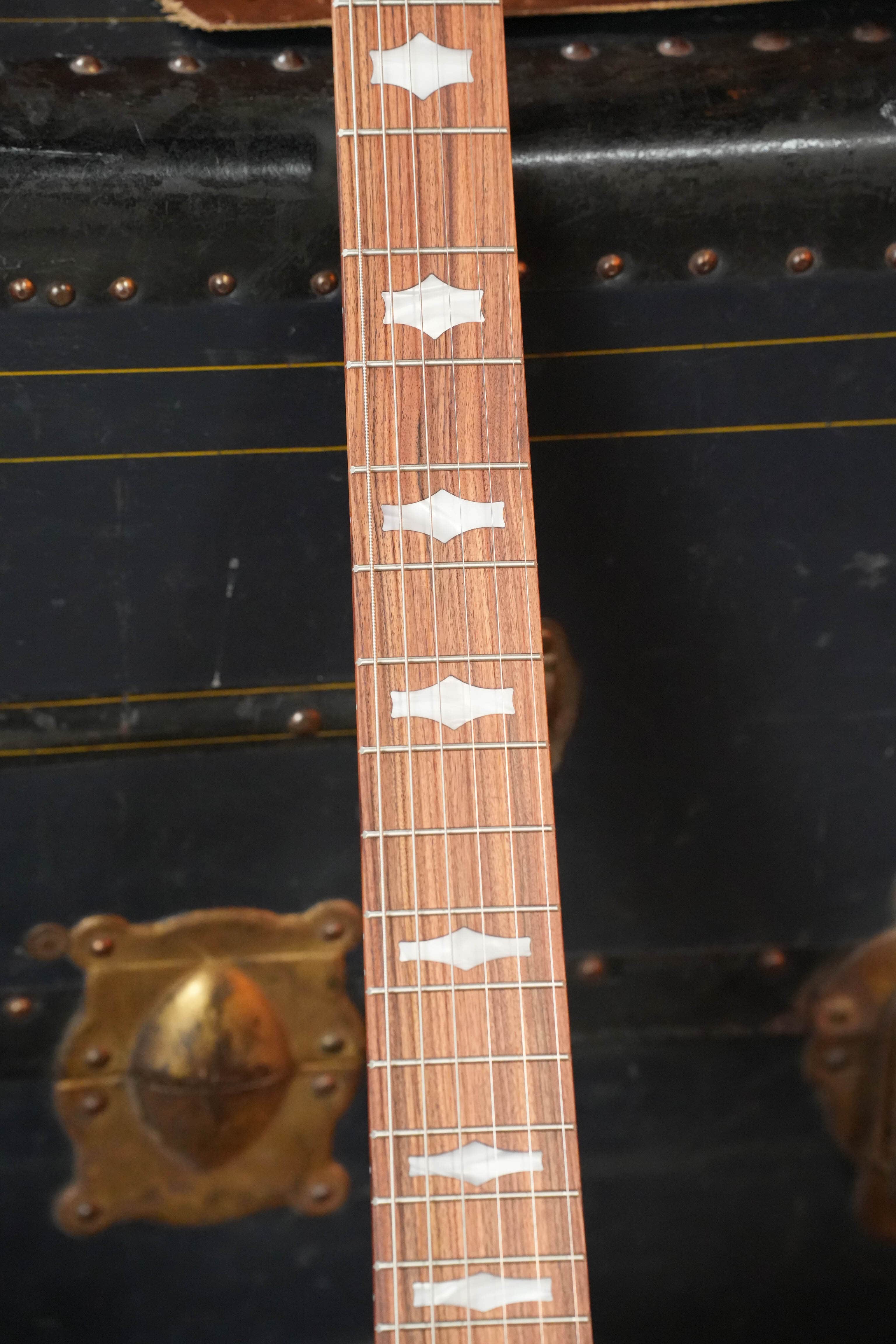
At the 2023 Deering NAMM booth, the first banjo Jens Kruger picked up wasn't a five-string at all. It was the Goodtime six-string, which Deering had just moved from a midnight maple fingerboard to pau ferro, with new block-style inlays that Jamie says have "some banjo-ish things going on." Jens thought they looked like the block inlays on expensive jazz guitars.
He liked how it played, too. A six-string banjo has a different feel, but Jens says it "feels more at home than you would think," which is the whole point of the instrument: guitar tuning, guitar chord shapes, and a banjo's voice coming out of the pot.
Our Goodtime 6 R #2620 ($1,539) has that pau ferro board and block inlays, a 26 1/4" scale and a 1 11/16" nut, so your guitar hand doesn't have to relearn anything. It also has a factory-installed Kavanjo pickup, which lets you plug straight into an amp or a direct box on stage, and it weighs about 5.5 pounds. One note if you're matching it to the bronze Goodtimes above: this one has polished nickel hardware.
| In stock today | Price | Tone ring | Hardware | Weight (lb) |
|---|---|---|---|---|
| Goodtime 19-fret tenor #92620 | $599 | None | Bronze powder finish | 4.5 |
| Goodtime Two #2617 | $849 | None | Bronze | 6 |
| Goodtime 6 R six-string #2620 | $1,539 | None | Polished nickel | 5.5 |
| Artisan Goodtime Special #3254 | $1,599 | Steel | Nickel | 8 |
Prices, weights and specs are from our listings in October 2026.
The White Lotus: tone-ring punch without the tone ring
The banjo that got the most attention from Jens at the Deering NAMM booth was the White Lotus. It has a white oak rim and no tone ring, and Deering had just upgraded its fingerboard from midnight maple to ebony. Jamie calls it a really popular model for Deering, mostly because it's so light.
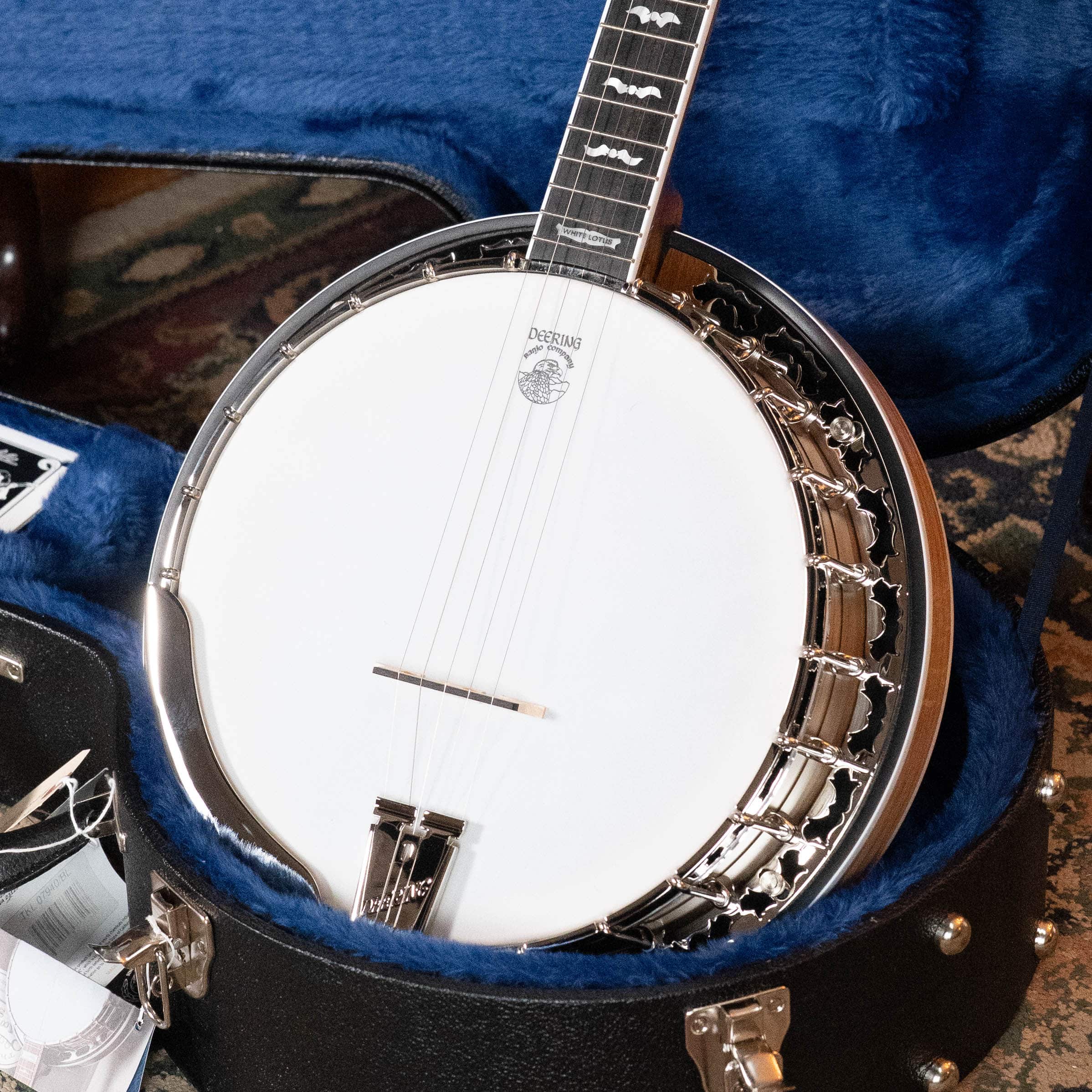
Jens thinks it comes down to the wood. White oak is hard, and because its fibers are so long, a rim made from it is very stiff, so it becomes vibrant enough that "it almost sounds like it has a tone ring in it." Deering actually built the first one with a tone ring, because that's what you're supposed to do. It didn't sound good.
"It felt like it was choking and suffocating the wood."
So they tried it without one, it came to life, and that became the model. John has handed it to a lot of players over the years who say they can't handle a heavy banjo anymore but insist they've got to have a tone ring, and his answer is always the same: try this one, you'll be surprised. Jens judges a bluegrass banjo by its fourth string, because "we want that string really to rattle," and when he dug in, the White Lotus did exactly that.
Jump to: the six-string at 2:55 · the White Lotus at 4:20 · the cherry Vintage Star at 8:28 · the Skyntone head at 12:59.
Our last White Lotus listed at $2,949, and we don't have one in stock as we write this, so ask us about ordering one. If you want to understand what a tone ring adds before you decide you can live without one, our rolled vs cast tone ring guide covers it.
Cherry rims and newer heads: what Jens heard
The rest of the 2023 Deering NAMM booth was about wood and heads. Deering showed a Vintage Star built in cherry with a pre-mounted hide head. Jens helped design the Vintage Star, and he calls the cherry version a very mellow banjo, so rich that you can hear "a lot of different tone colors" when you play by yourself. A lot of the great old-time banjos from 100 years ago were cherry, and he thinks there's a distinct sound to it. If old-time and clawhammer playing is where you're headed, our clawhammer vs three-finger guide is a good next read.
There was also a limited cherry-rim Goodtime with Remo's Skyntone head. Jens hears that head as sitting between a Fiberskyn and a Renaissance: warmer than a Renaissance, but not as dead as a Fiberskyn, and on a resonator banjo it sounds like calfskin. That limited run from the Deering NAMM booth sold through long ago, but Jens's verdict on the Goodtime line still stands. He once visited Earl Scruggs at home, and Earl kept a little banjo on the couch to play while he watched TV.
"Any banjo player should have a Goodtime."
His reasoning is that they're almost indestructible and you can always just pick one up and play, and he still calls the Goodtime range the best bang for your buck.
Deering at 50: the anniversary Sierra and the one-offs
Deering started in 1975, so the 2025 Deering NAMM booth was an anniversary party. The headliner was the 50th Anniversary Sierra, limited to 10 banjos: all gold-plated hardware, the 06 tone ring, a nameplate with the 1975 to 2025 dates, gold mother-of-pearl inlays in place of the Sierra's usual pearloid, a bound neck, a double-bound ivoroid resonator, a bound heel cap, and a finish Deering calls sepia burst. Underneath the gold it's still a Sierra, with the same bell bronze tone ring that makes the standard model Deering's starting point for pro bluegrass tone, so it's a banjo for the Deering fan who wants a numbered piece of the company's 50th year and will actually play it.
Next to it was a one-off Sierra with ivoroid binding, AAA flame maple and a tequila burst on the back, which retailed at about $3,999 at the time, not much more than a standard Sierra. And there was the one Jamie calls love it or hate it: a blue-to-purple burst on maple with double black binding, a matching bridge and a matte black head, inspired by a "blurple" armrest. That one sold at the show, but Deering can build another.
None of the Sierras from the Deering NAMM booth are in stock, and we don't have a standard one right now either. If one of these is the banjo you want, ask us about ordering it, and read our Deering Sierra vs Goodtime guide to see where the standard Sierra sits in the line.
What you get when you buy a Deering from us
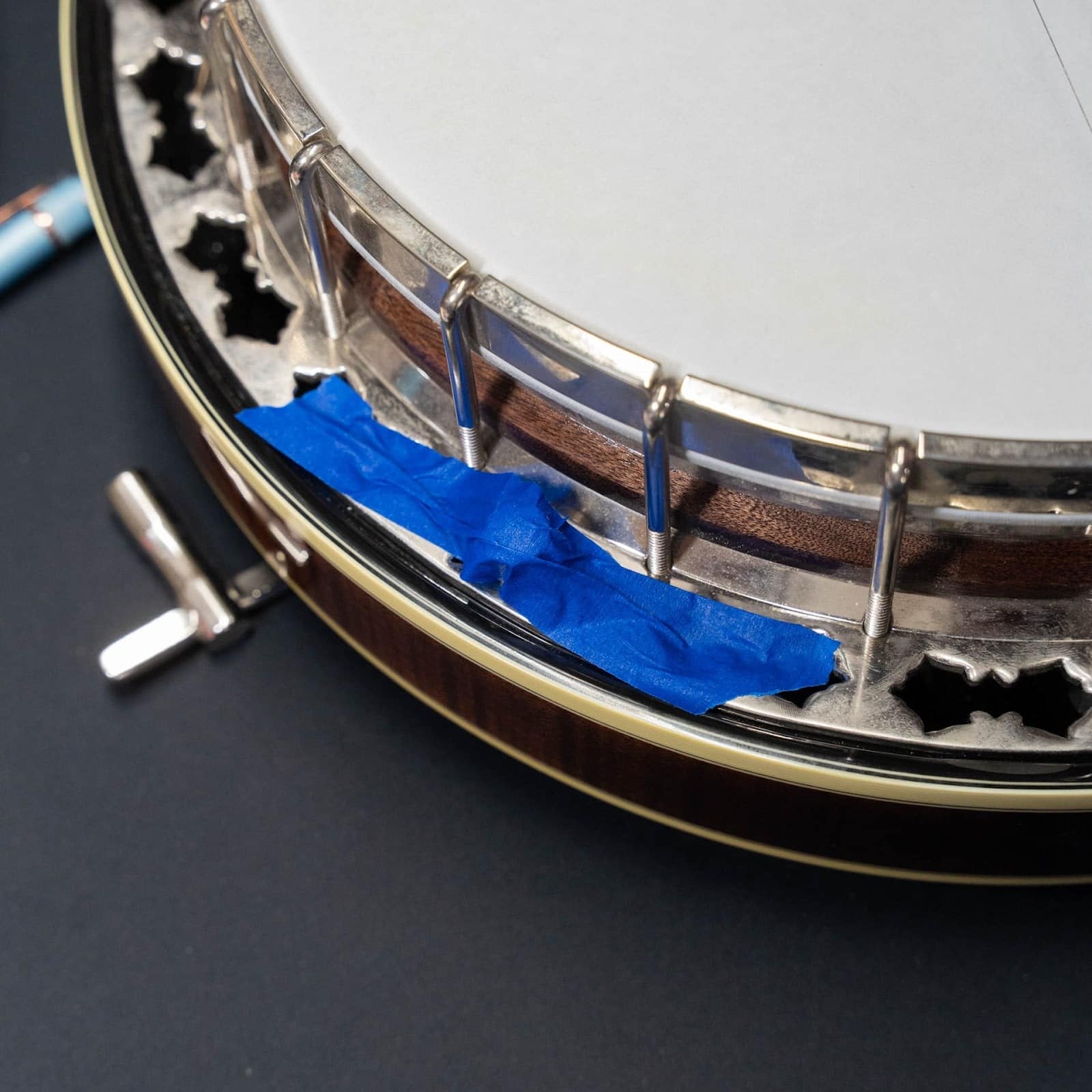
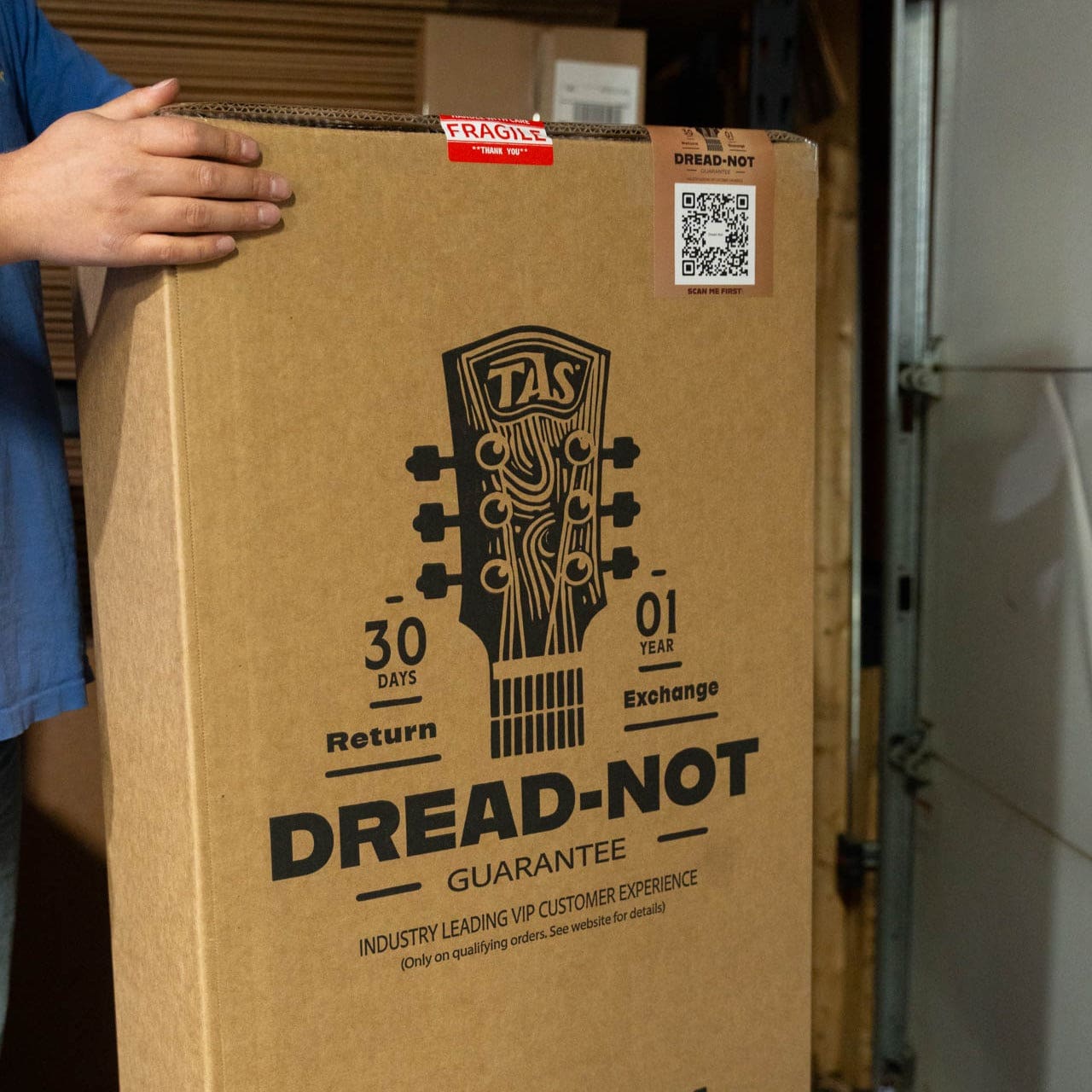
Every banjo we ship goes through our 23-Point Professional Inspection, so it arrives adjusted and ready to play. The Goodtime 6 R, the Artisan Goodtime Special and the pro Deerings in our Deering banjo collection are all over $1,000, so they also come with the Dread-Not Guarantee: a full year to trade it in for up to 90% of the pre-tax purchase price in credit, less round-trip shipping, plus a 30-day in-home trial. To spread out the cost, we also offer financing through Synchrony.
Related reading
- Scott Avett banjo review: Deering Truth vs Vega Avett Star
- Deering Banjos: the company's history and lineup
Which of these Deerings fits you?
Here's how the banjos from the Deering NAMM booth line up for different players:
- A bronze Goodtime Two if you're starting out, or if nickel bothers your skin. It's light, and the bronze hardware won't need polishing.
- The Goodtime 6 R if you already play guitar and want a banjo sound on stage without learning a new tuning.
- The Artisan Goodtime Special if you want a tone ring and the classic nickel look.
- A White Lotus if you're tired of carrying a heavy banjo but your ear still wants tone-ring punch.
- A Sierra, standard or special, if you're ready for Deering's bell bronze tone ring and a banjo you won't outgrow.
Browse our resonator banjos and open-back banjos, or get in touch and tell us what you play now. We'll tell you which Deering we'd pick for you.