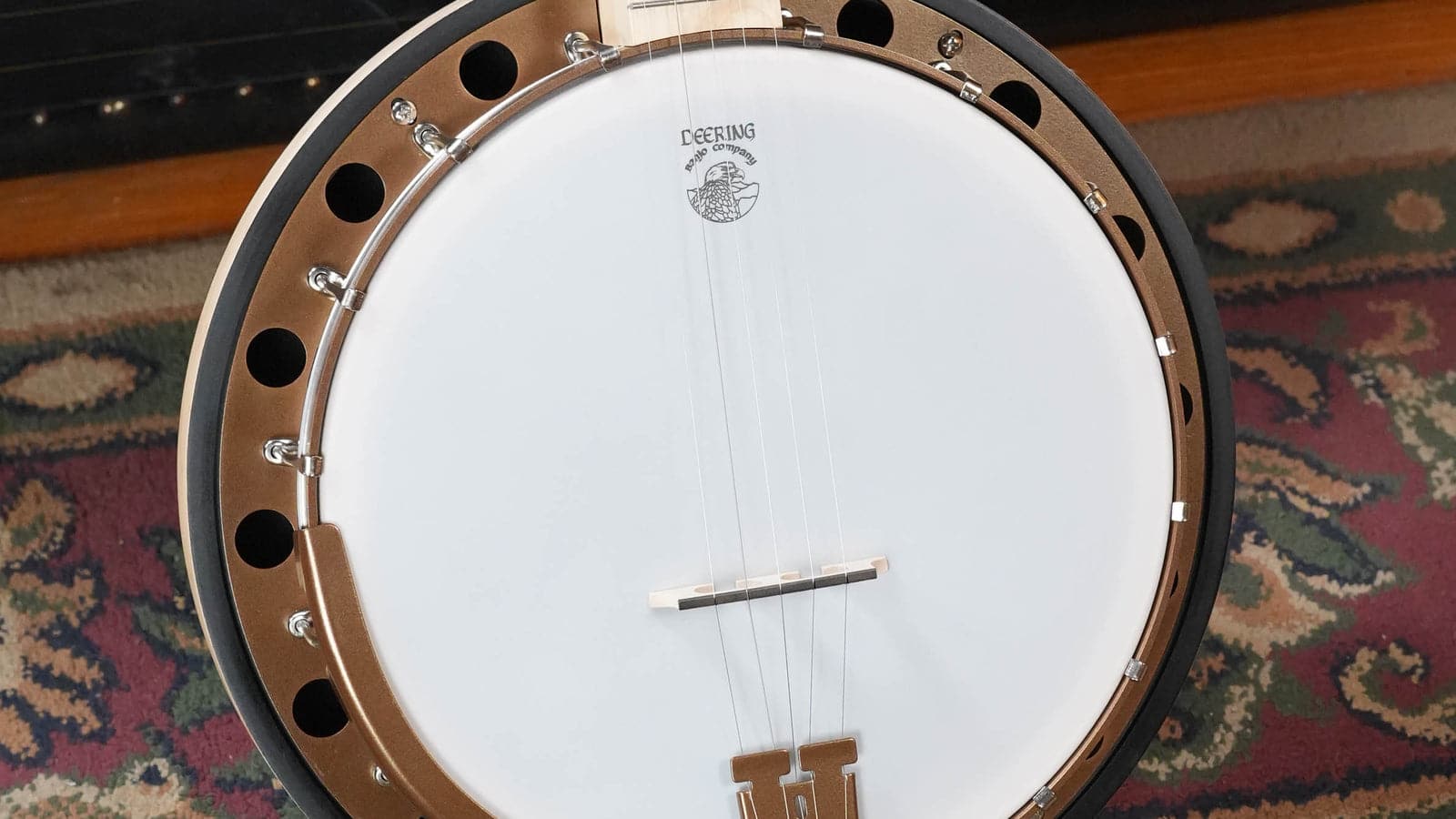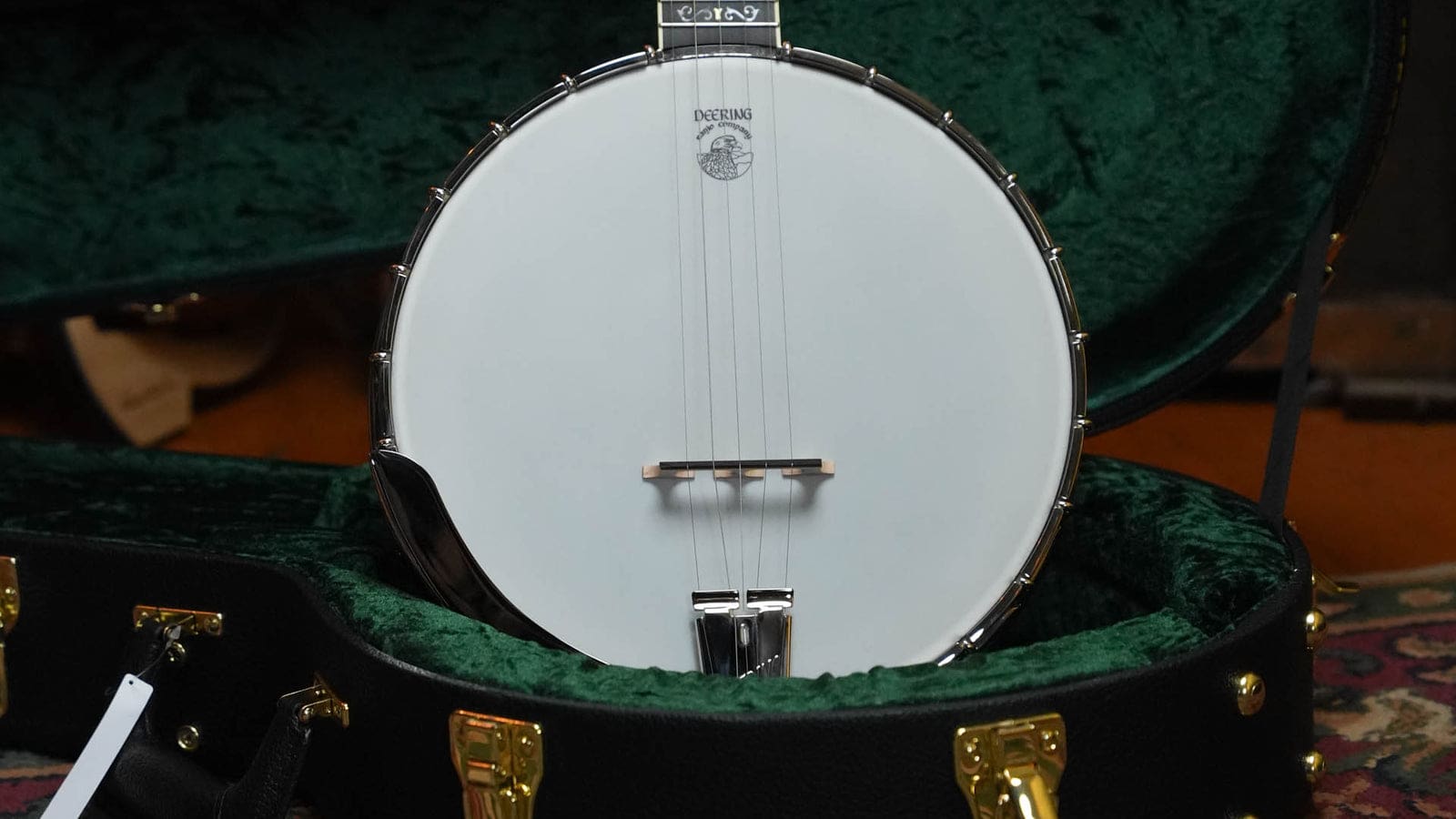

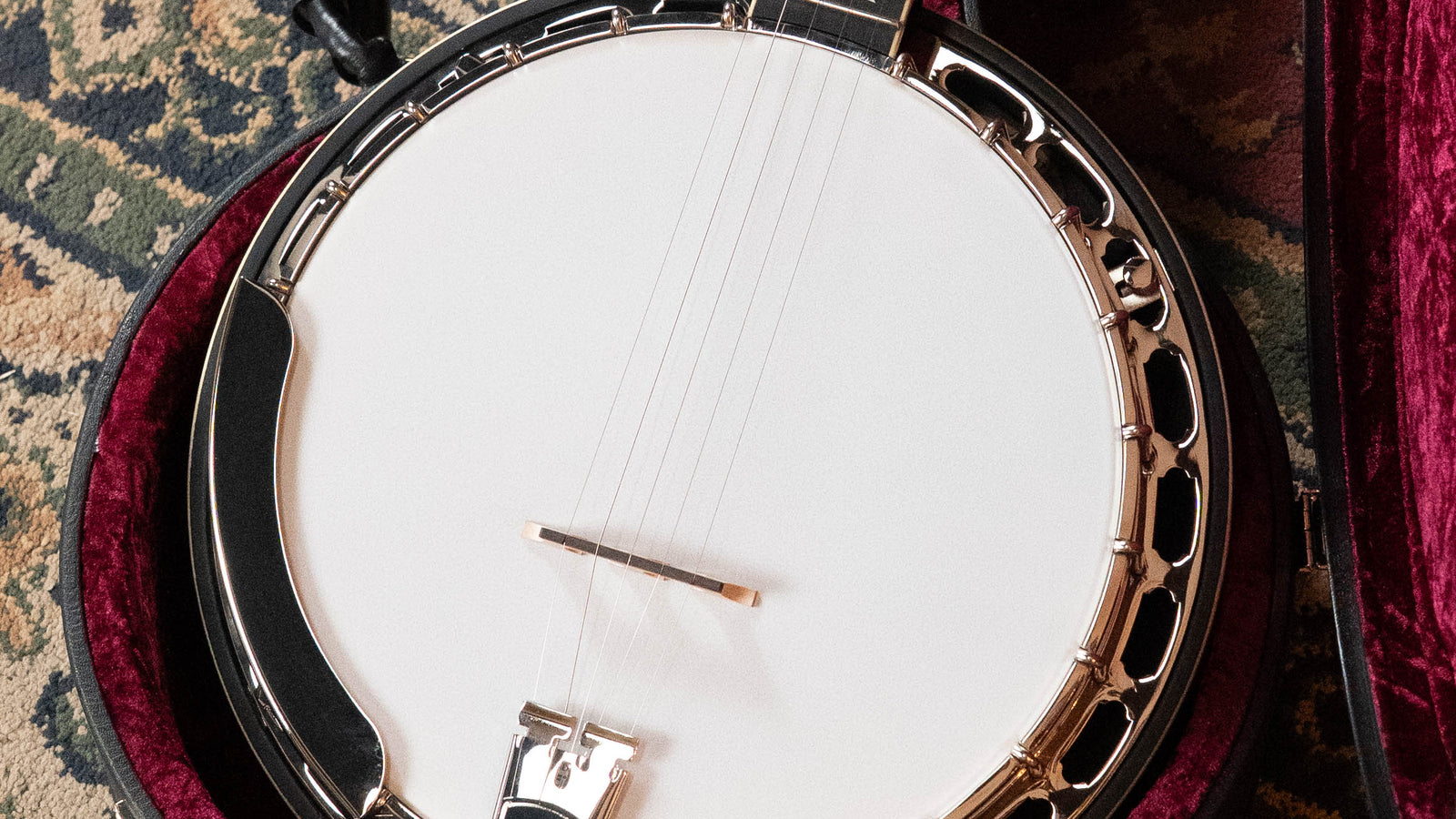
Shop for your first real banjo and the prices jump fast. A Deering Goodtime Two is $849, the Goodtime Special next to it is $1,599, and the bluegrass banjos on the wall behind them start around $2,000 and climb from there. Read the spec sheets and one line keeps showing up as the reason: the banjo tone ring. Some banjos don't have one, some have a simple rolled ring, and the expensive ones have a heavy cast ring with a name and a number on it.
So what does a banjo tone ring actually do, and is the jump worth your money? We asked Jim Pankey, banjo teacher and one of our TAS Community Pros, to play a rolled-ring banjo and a cast-ring banjo side by side. The difference is real, and which one you should buy comes down to one question about where you're headed as a player.
What does a banjo tone ring do?
A banjo tone ring is a metal ring that sits on top of the wood rim, so the head rests on metal instead of wood. Jim traces it back to the tenor-banjo days, when banjos played jazz and had to compete with horns. Builders chased volume, first with the resonator to push the sound forward, and then with the discovery that a head sitting on something more rigid than wood vibrates more.
That rigid seat is the whole idea, because it lets the head ring longer and louder, and it adds what Jim calls a "ringy, bell-like" quality. On a bare wood rim the vibration slows down and dies sooner. Every banjo tone ring since then, from a simple brass hoop to a 20-hole cast bronze ring, is a different answer to the same question: how much mass, and what shape, makes the head sound best?
The short answer from Jim's test: a rolled ring is a big step up from no ring at all, and a cast ring is another level above that.
Jump to: how tone rings started (3:05) · the side-by-side demo (8:04) · Jim's verdict (9:07).
Rolled vs cast: how each banjo tone ring is built
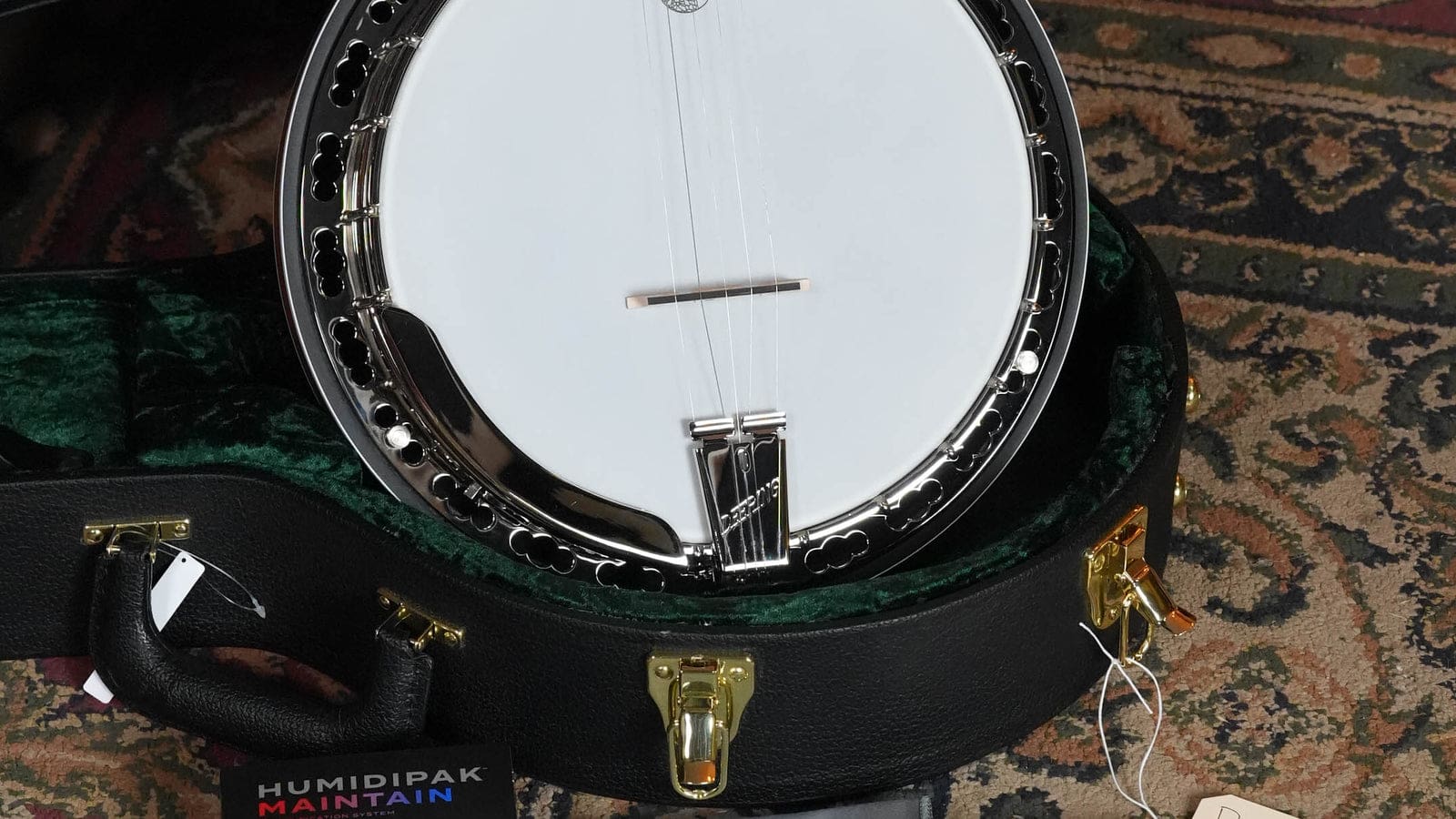
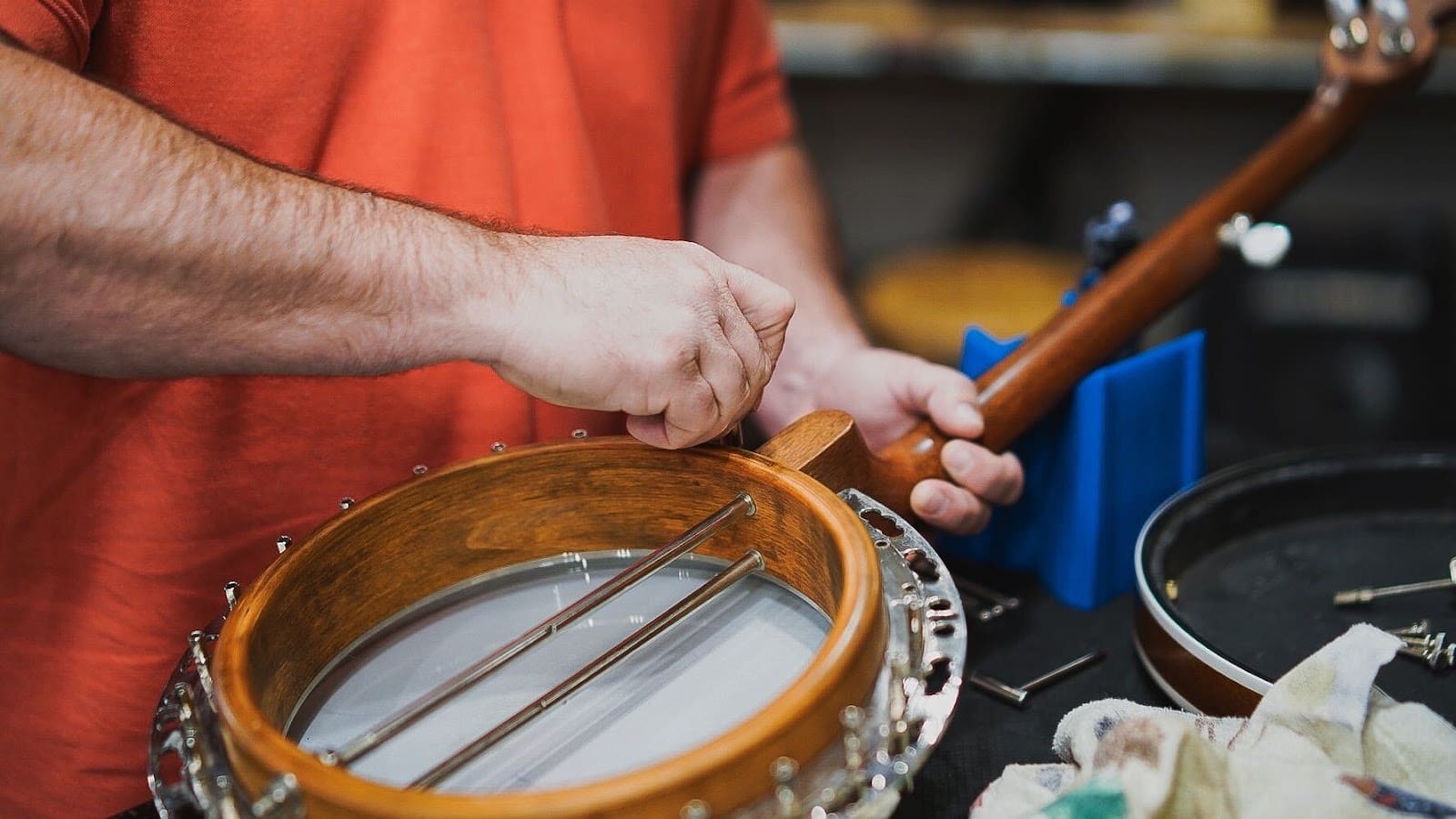
A rolled tone ring starts as square brass rod. It's rolled through a machine into an 11-inch circle, rounded on top, and it simply sits on top of the rim. Take the banjo apart and it lifts right off. It's light and inexpensive to make, and it's what you'll find on a lot of student banjos.
A cast tone ring is formed in a mold, and it's much heavier. It has its own raised shape underneath and seats over the rim, so it's extremely rigid. Take a cast ring out and tap it, and it rings on its own, so it's adding its own voice to everything the head does. This is the ring behind the classic bluegrass sound.
The holes are part of the story too. Early makers tried everything: no holes, 18 holes, different patterns, because the holes add "sound pockets," another path for the sound to come through the ring. The 20-hole ring is what most players now think of as the standard bluegrass banjo tone ring, though you'll still see no-hole rings on banjos built to a particular prewar recipe.
| Setup | How it's built | What it does to the sound | Who it suits |
|---|---|---|---|
| No tone ring | Head sits on the wood rim | Softer and shorter; notes run together | Lightest banjos, first-time players |
| Rolled brass ring | Brass rod rolled to 11", sits on the rim | Louder, more sustain, a ringy, bell-like edge | Students, players who want a lighter banjo |
| Cast ring | Molded, heavy, seats over the rim | Focused, clear note separation, quick attack | Anyone set on playing bluegrass |
How rolled and cast tone rings sound side by side
Jim's take on the rolled ring is simple:
"Having the rolled tone ring is a huge upgrade from a non-tone ring altogether."
You gain the sustain a plain wood-rim banjo doesn't have. But the cast ring is where things change, and this is the part that's hard to read off a spec sheet. Here's what the cast ring adds:
- Focus. "When you get to the cast ring, the sound is more focused," Jim says.
- Note separation. Even with several notes ringing at once, every note is clearer.
- A quicker attack. Without a cast ring, notes come out a little blunted and roll into each other. With one, the front of each note snaps, so every picked note in a roll is heard on its own.
- Weight. All that mass is real. A cast-ring banjo is the heavier one to carry.
That separation is why the cast banjo tone ring is the bluegrass ring.
Which banjo tone ring should you buy?
Jim's advice is plain. If your budget starts at a banjo with no ring, a rolled ring is a great next step. If you've decided you're going to be a bluegrass banjo player, skip the middle and buy the cast ring:
"If you're going for that full-on 'I'm going to be a bluegrass banjo player,' buy that one. It makes a big difference."
He's honest that the price difference is noticeable, and he doesn't think every student needs the cast ring on day one. A rolled-ring banjo is one of his top recommendations for any student. You'll learn on it, and by the time you've played it a while you'll know whether you want to upgrade. For some players it's the last banjo they'll need, especially if they don't want to lug a heavy banjo around. It's the same advice we give on the Deering Goodtime line: start on something good enough that it doesn't hold you back, then step up when your ear tells you to.
Here's how that ladder looks with the banjos we have today:
- No tone ring, lightest weight: the Deering Goodtime Two #2617 ($849, about 6 lb), a resonator banjo that's easy to hold for long practice sessions.
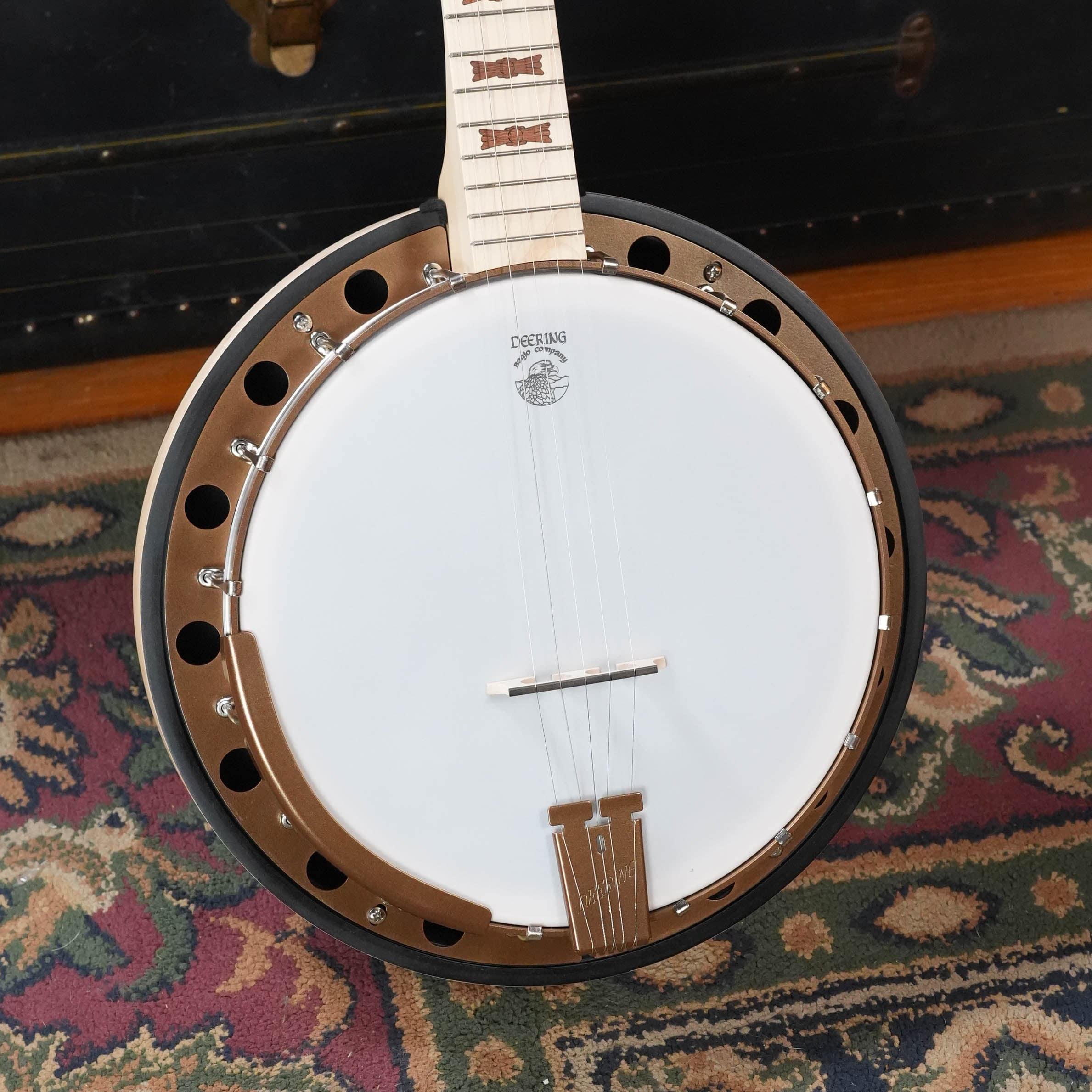
- A ring without the weight of a cast one: the Deering Artisan Goodtime Special #3254 ($1,599, about 8 lb), built around Deering's patented steel tone ring instead of a rolled brass one.
- A heavy bluegrass ring at a step-up price: the Gold Tone OB-3 Twanger #2475 ($2,099.99) with a no-hole brass flat-top ring.
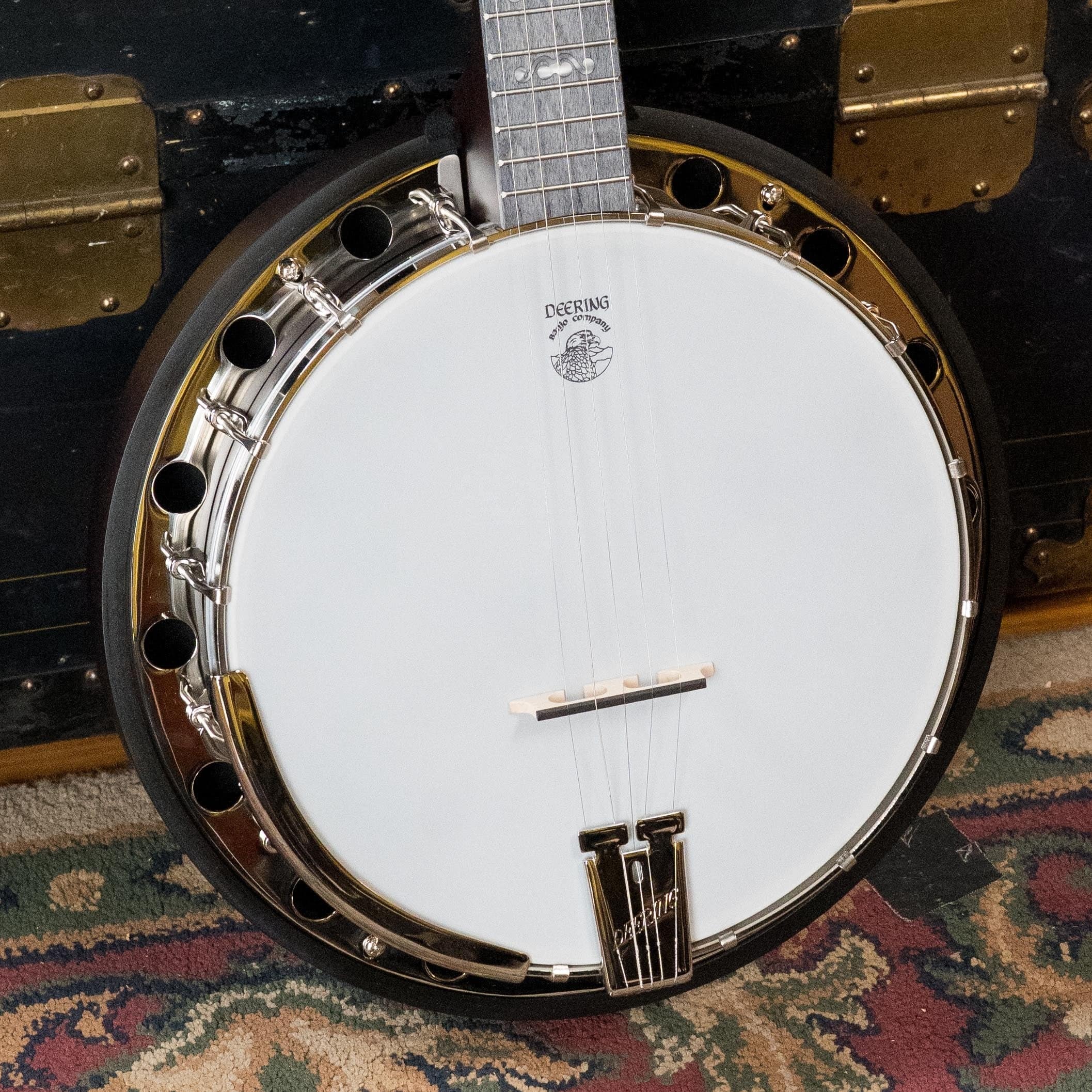
- The 20-hole standard: the Gold Tone OB-Grandee #8700 ($3,199.99) with a 20-hole bell brass flat-top ring.
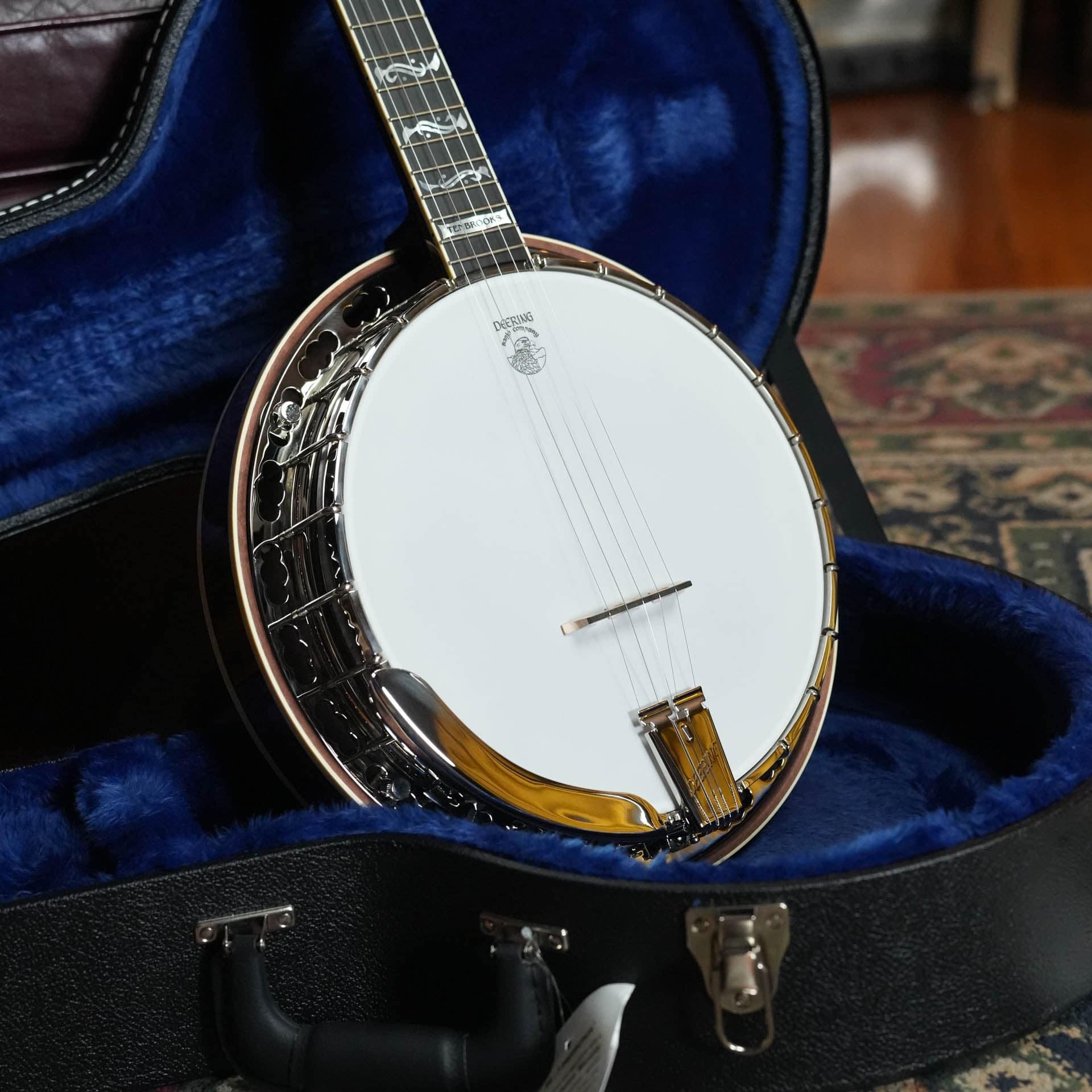
- A professional bronze ring: the Deering Tenbrooks Saratoga Star #0558 ($6,549) with Deering's -06- bronze ring.
Banjo tone rings we have in stock today
The two banjos in Jim's test were a Recording King Songster with a rolled brass ring ($599 at the time) and a Recording King Madison with a cast ring ($1,199). Neither one is on our site right now, so this table is what we'd point you to today. Prices and ring types come from our listings, checked the day this was written.
| Banjo | Tone ring | Price |
|---|---|---|
| Deering Goodtime Two #2617 | None | $849 |
| Deering Artisan Goodtime Special #3254 | Deering steel ring | $1,599 |
| Gold Tone OB-3 Twanger #2475 | Brass flat top, no holes | $2,099.99 |
| Gold Tone OB-Grandee #8700 | Bell brass flat top, 20 holes | $3,199.99 |
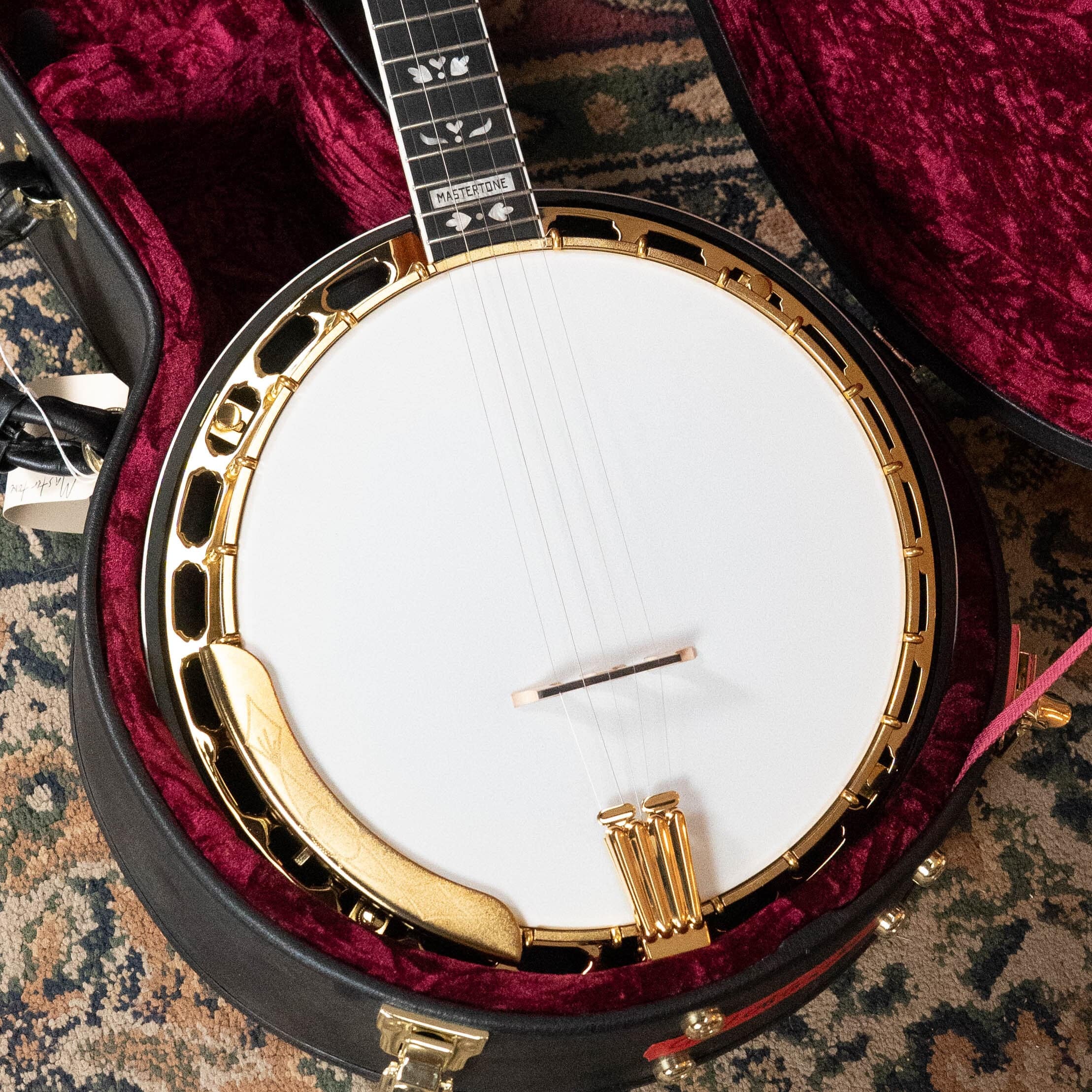
| Gold Tone OB-12 #8307 | Pre-War Formula brass flathead | $3,499.99 |
| Deering Tenbrooks Saratoga Star #0558 | -06- bronze | $6,549 |
Not every great banjo uses a metal ring, either. The Truth in our Scott Avett banjo review uses a Hartford Grenadillo ring. For how the Twanger and the OB-12 play, see our Gold Tone banjo guide, and if you're choosing between a Goodtime and a pro-level Deering, our Deering Sierra banjo guide walks through that step. Not sure which style you'll play yet? Start with Jim's first lessons in clawhammer and three-finger.
Related reading
- Deering banjos: American made, from the Goodtime up
- Ozark music history: Alan Munde, banjo man for the ages
Buying a banjo with the tone ring you want
If you're starting out and want something light, the Goodtime Two gets you playing without a heavy pot in your lap. If you've already decided bluegrass is the goal, take Jim's advice and go straight to a heavy bluegrass ring. In our stock today, that starts with the Twanger. Browse all of them in our resonator banjos, see open-backs in open-back banjos, or look at everything in the banjo collection. Jim's own picks are on Jim Pankey's gear list.
Every banjo we ship gets our 23-Point Professional Inspection first, so whichever banjo tone ring you choose, it arrives ready to play. Banjos $1,000 and up are covered by the Dread-Not Guarantee: a full year to trade it in for up to 90% of the pre-tax purchase price in credit, less round-trip shipping, plus a 30-day in-home trial. So if you start on the Goodtime Special and your ear wants a heavier bluegrass ring a few months later, your trade-in credit goes toward it.