
Table of Contents
Maybe you've played guitar for years and finally want to learn banjo, or you're buying a first banjo for a kid who can't stop talking about it. Either way, you hit the same problem fast: the banjos that look affordable don't always stay in tune, and the ones that do can cost more than you planned to spend on an instrument you're still learning. The Deering Goodtime banjo is the name that comes up first in that search, so the real question is whether it earns the reputation.
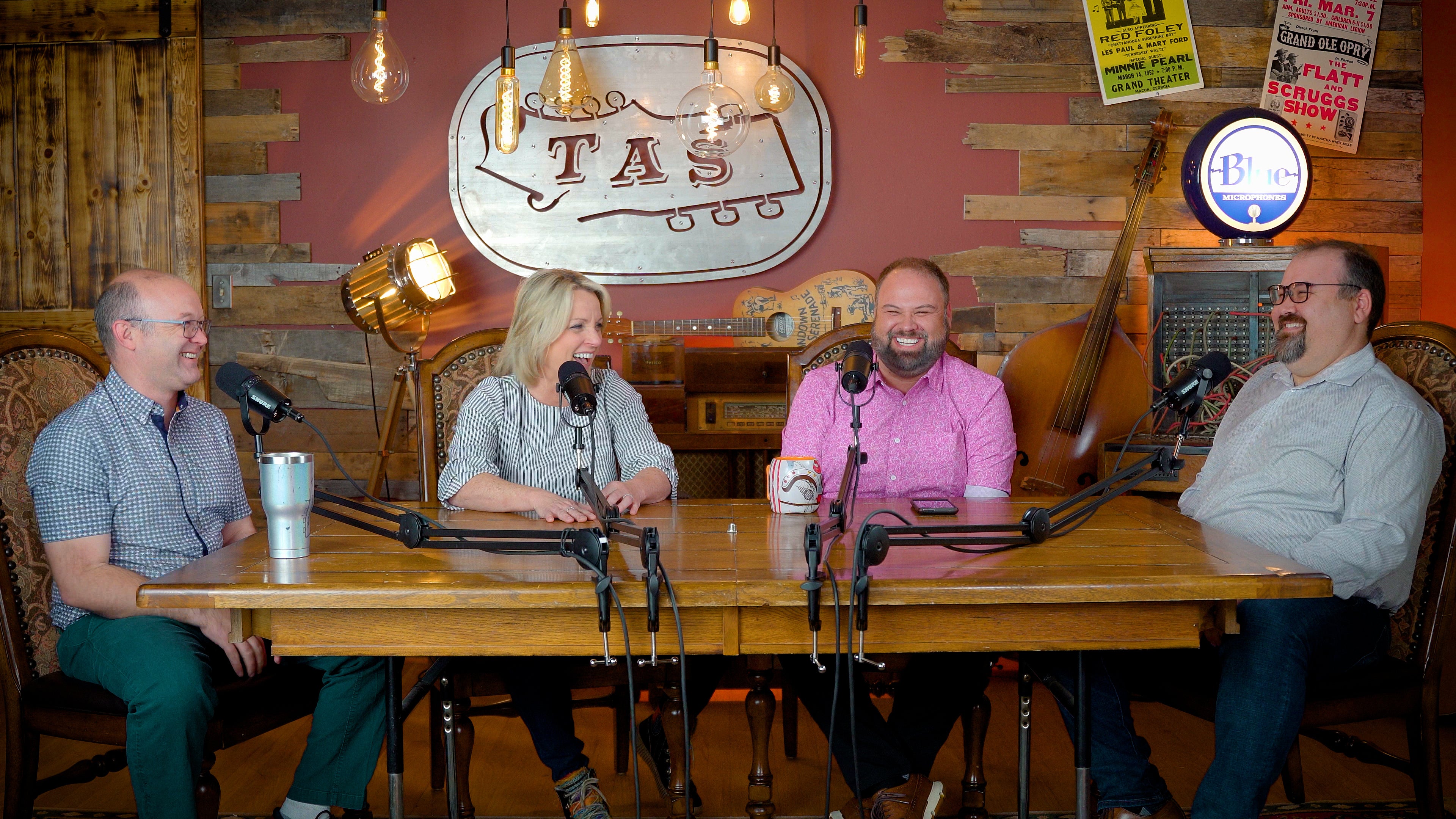
The best answer comes from the people who build it. Greg Deering, who founded Deering Banjo Company, and his daughter Jamie Deering, the company's CEO, talked through why the Goodtime exists, what went into it, and where it's headed. Their reasons come down to what a first-time buyer needs: a banjo that stays in tune, isn't heavy, and doesn't cost what a pro banjo does.
Why does the Deering Goodtime banjo exist?
Greg's answer is personal. He wanted to build the banjo he couldn't get as a kid, and to make his profit by giving the player more than they paid for, rather than by charging what the market would bear.
"I've been personally motivated to build the banjo I could have afforded when I was 13, and have it be a good banjo." (Greg Deering)
Deering was already building the Boston, the Sierra, the Deluxe and the Calico, and Greg wanted something American-made at a lower price. He worked out how to make the rim with a finger joint long before the Goodtime shipped. Getting the company to the point where it could afford the tooling and the marketing took almost ten years, and he calls that a frustrating stretch: the design was done, but the foundation to build it wasn't there yet. Goodtimes finally went into production in the '90s.
Deering's own description of the target is a banjo "you could learn on and actually succeed." Back then, a good beginner banjo that stayed in tune when you played up the neck usually cost around $2,000. The Goodtime was built to close that gap, and that goal still shapes every Deering Goodtime banjo on our wall (you can read more on the company's history in our Deering Banjos brand overview).
What Deering builds into every Goodtime
Jump to: the durability testing at 1:34 · the wood and the weight at 2:28 · the powder "Freedom Finish" at 3:46.
The interview dates from the summer of 2022, on the way to that year's NAMM show, but the build choices it covers are still how the Goodtime line is made. Here's what Deering says goes into each one:
- The same wood as the upper line. Deering says other brands may use softer wood that won't age well, and that the Goodtime gets the same quality of wood as its more expensive banjos, so it keeps sounding good over the years.
- A 3-ply violin-grade maple rim. Every Goodtime we have listed today confirms it, from the open-back tenor to the Goodtime Special. The rim is the heart of the banjo's tone, so this is where cutting corners would show first.
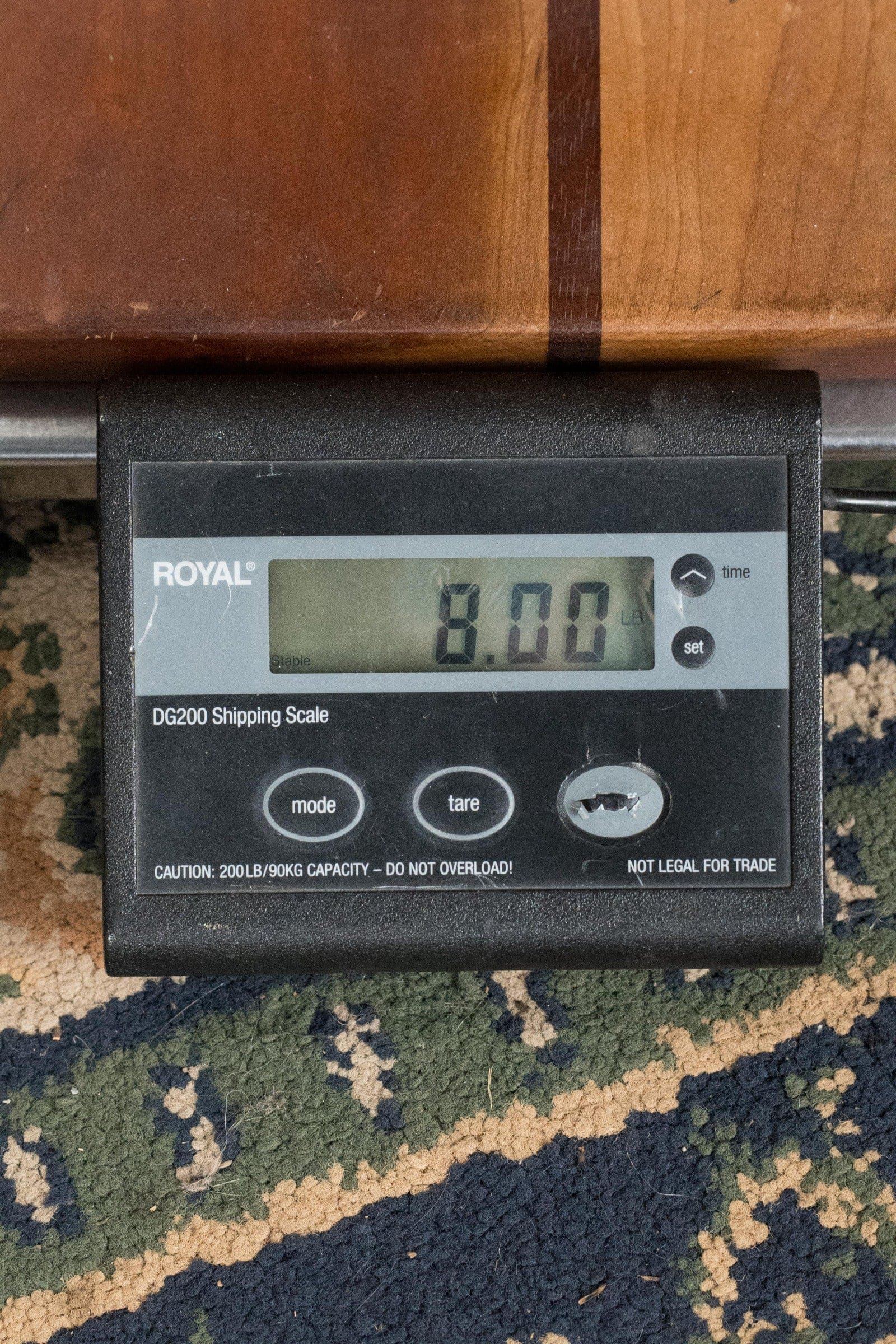
- Light weight, on purpose. A banjo is a lot heavier than a guitar, and Deering didn't want that weight to be the reason someone quits. Our Goodtime Two weighs about 6 pounds; the 19-fret tenor is 4.5.
- A neck built to stay stable, so the banjo plays in tune up the neck and doesn't need constant attention.
- Made in America, which Deering credits for the consistency from one banjo to the next.
The durability testing says a lot about who the banjo is for. Before the design was final, Goodtime prototypes went camping, went on canoe trips, and went everywhere a banjo you don't want to baby would go. The point was a Deering Goodtime banjo you could take anywhere without worrying about it, because nobody wants to take an irreplaceable instrument to the lake.
The powder finish, and why it matters if you sweat
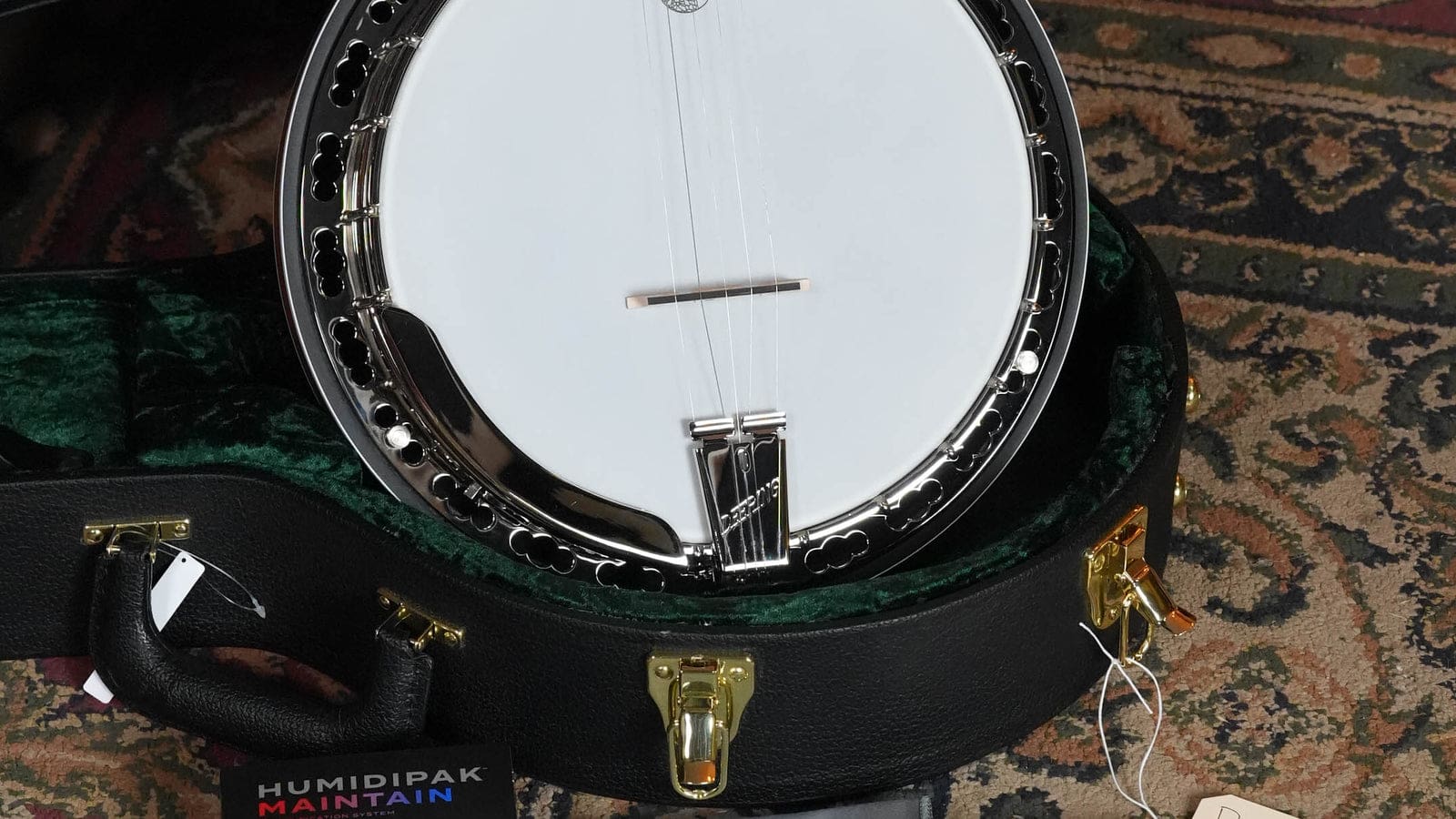
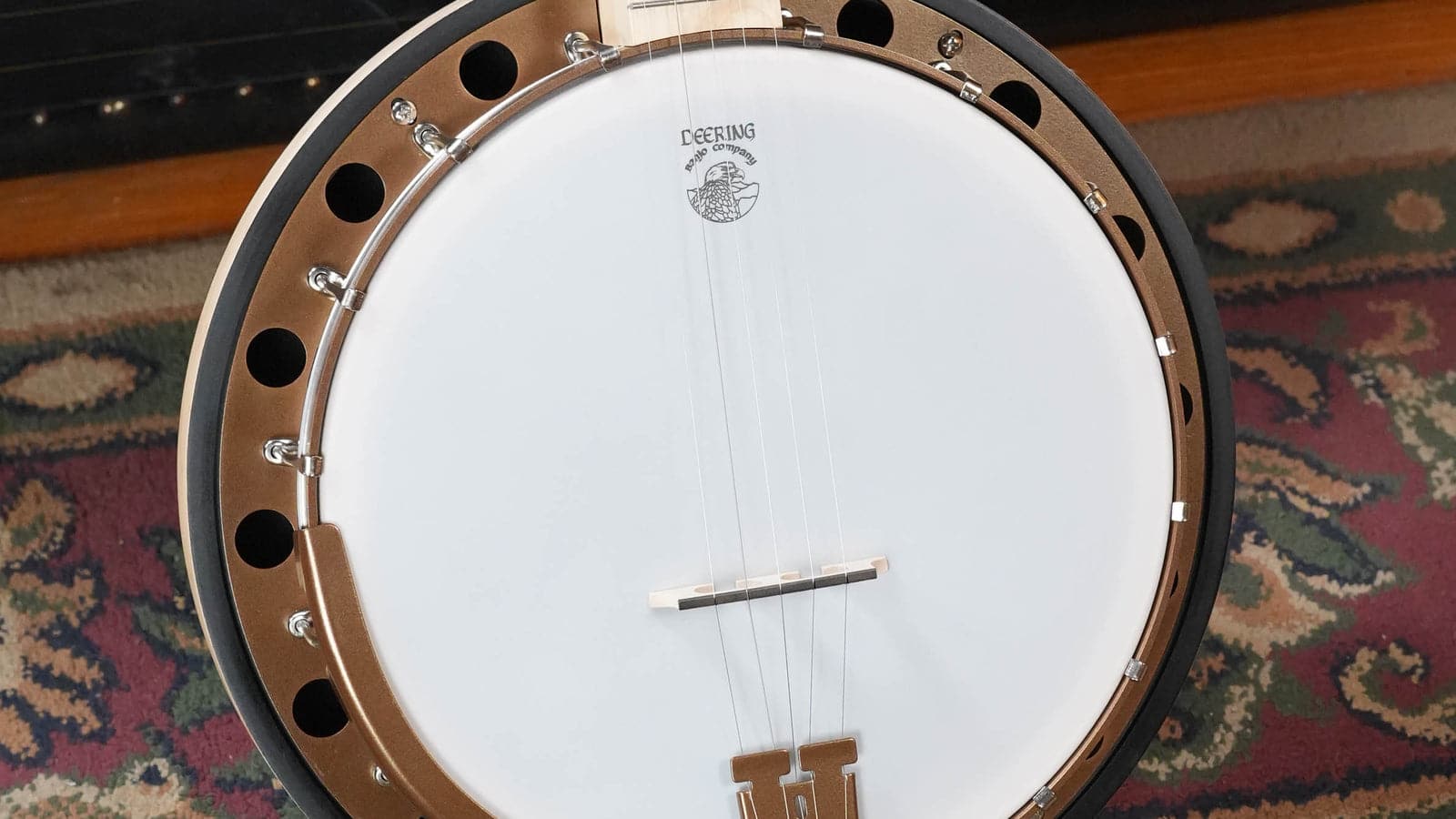
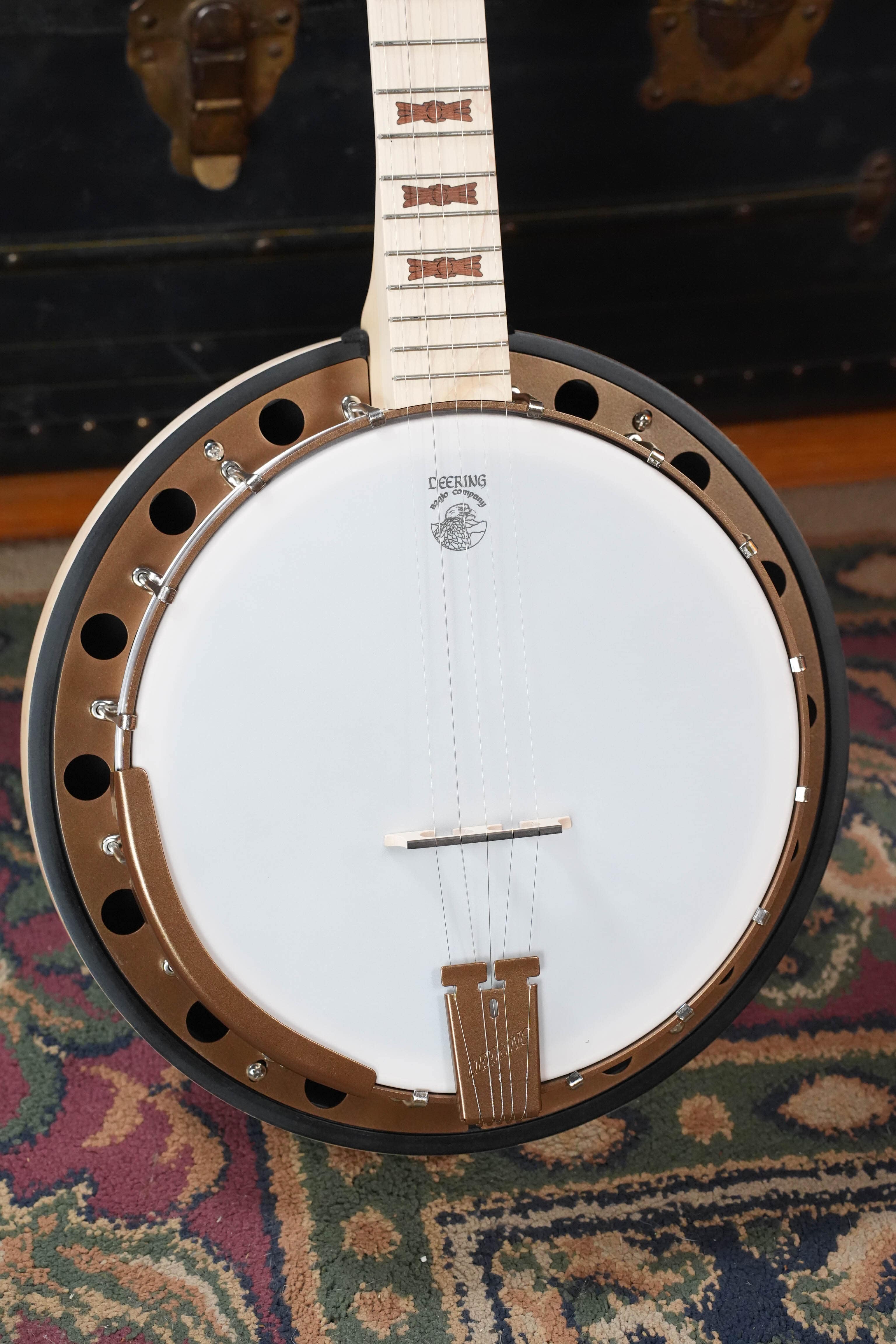
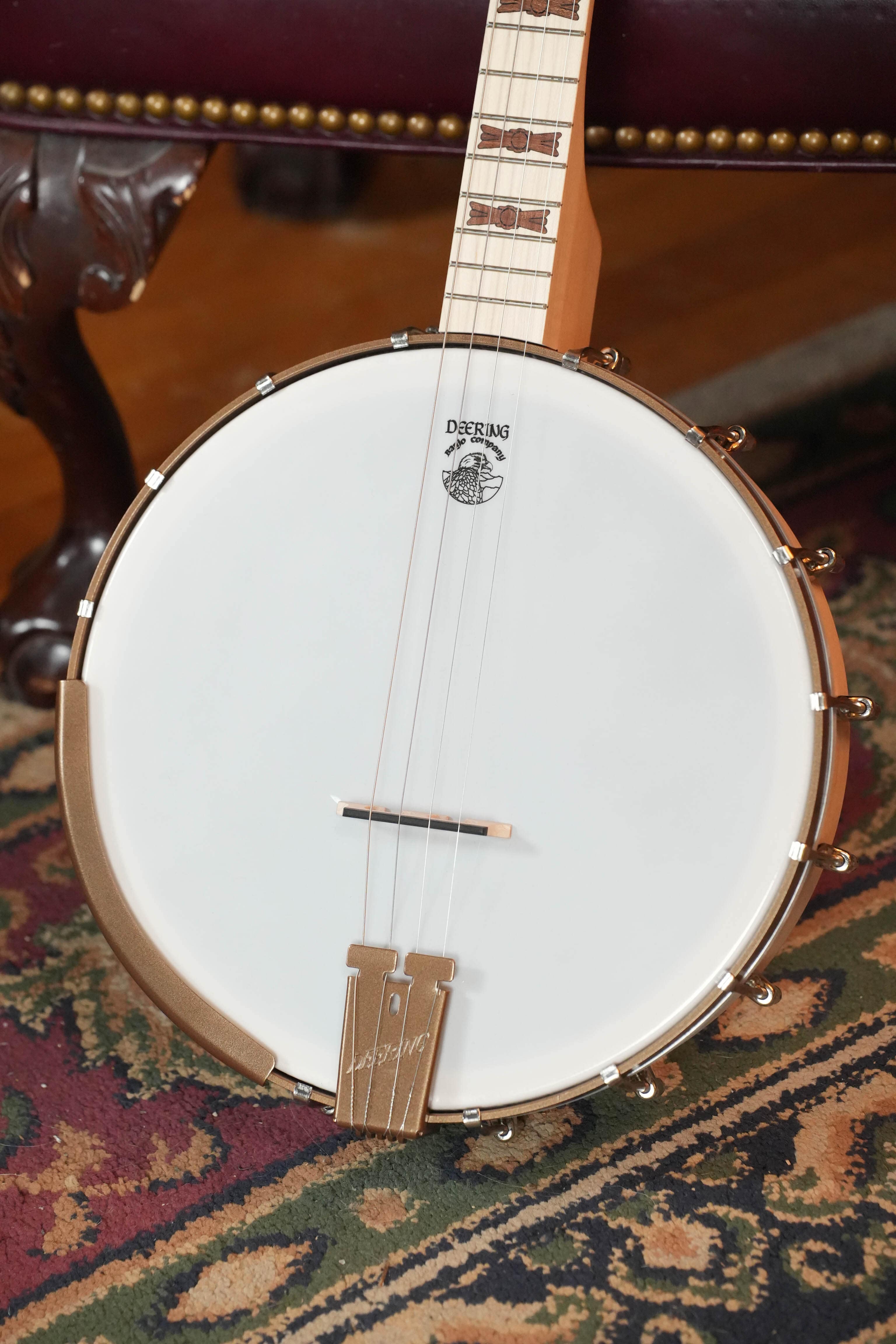
The newest change, as of 2022, is a powder finish Deering calls the Freedom Finish. Deering is clear that it isn't the thick coating you'd see on a dune buggy; it's applied as a thin layer meant for an instrument. By 2022 they were already using it on custom banjos and as standard on several models, and that summer they previewed a limited run of Goodtimes with dark bronze hardware. Our Goodtime 19-fret tenor #92620 has a US Bronze powder finish on the tension hoop, J-hooks, tailpiece and armrest, and you can see the bronze flange and tailpiece on our Goodtime Two at the top of this post.
"You sweat on it, it doesn't change color, you don't have to polish it." (Deering Banjo Company)
Deering gives three reasons it matters. It doesn't tarnish the way nickel plating does, so there's no polishing. It takes fewer chemicals to apply than metal plating. And it's hypoallergenic: some players only find out they're allergic to nickel after a sweaty show leaves a rash where their arm rests on the banjo, and Deering has made powder-coated armrests for artists for exactly that reason. If your forearm reacts to nickel, a Deering Goodtime banjo with powder-coated hardware is worth asking us about.
Which Deering Goodtime banjo should you buy?
The Goodtime is a family of banjos built on the same rim and neck, and the right one depends on the music you want to play. Here's every Deering Goodtime banjo we have listed today, with prices from our site as of October 2026:
| Model | Style | Weight (lb) | Price | Best for |
|---|---|---|---|---|
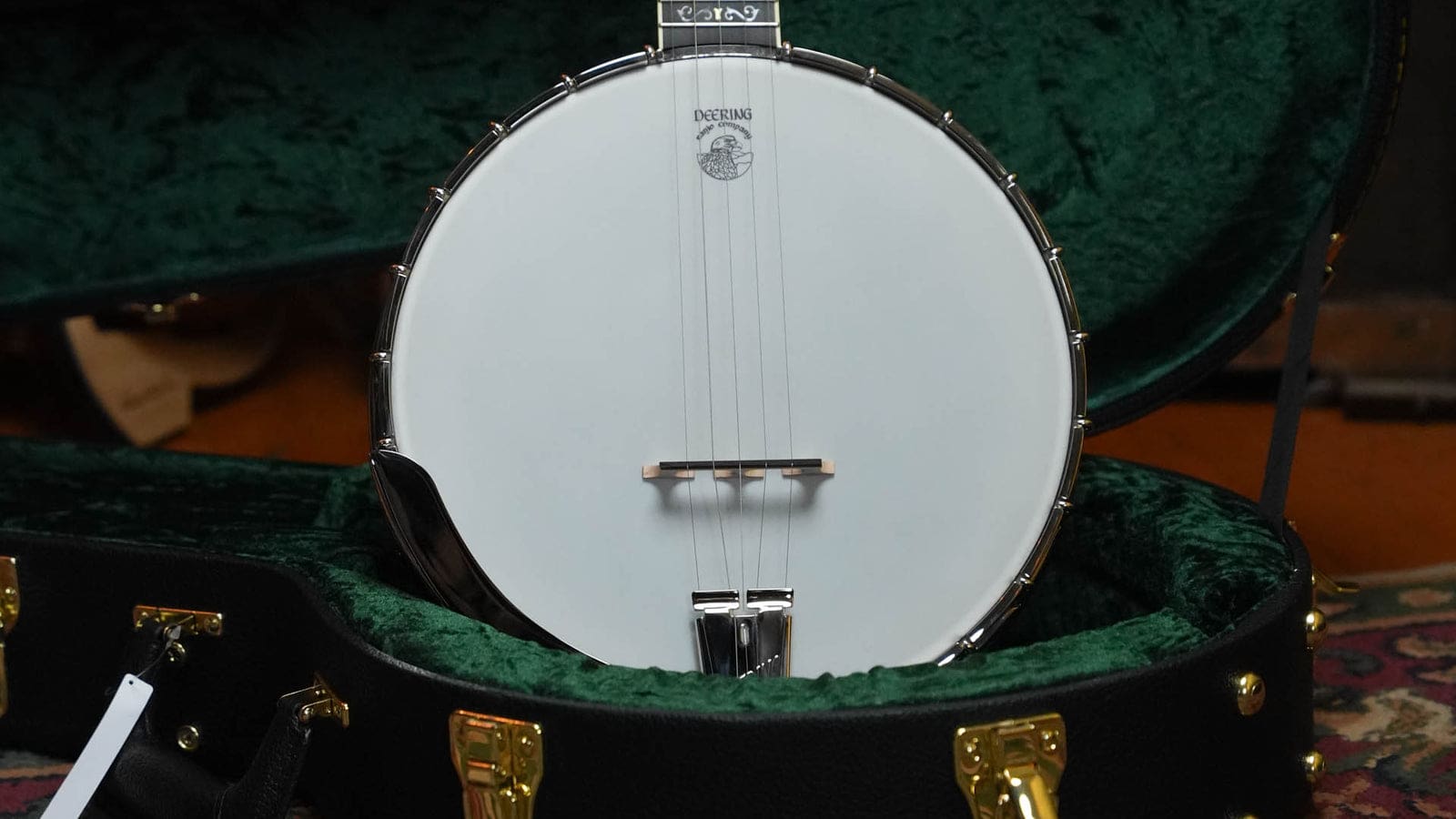
| Goodtime 19-Fret Tenor #92620 | Open-back, 4-string, 23" scale | 4.5 | $599 | Irish trad and jazz chording |
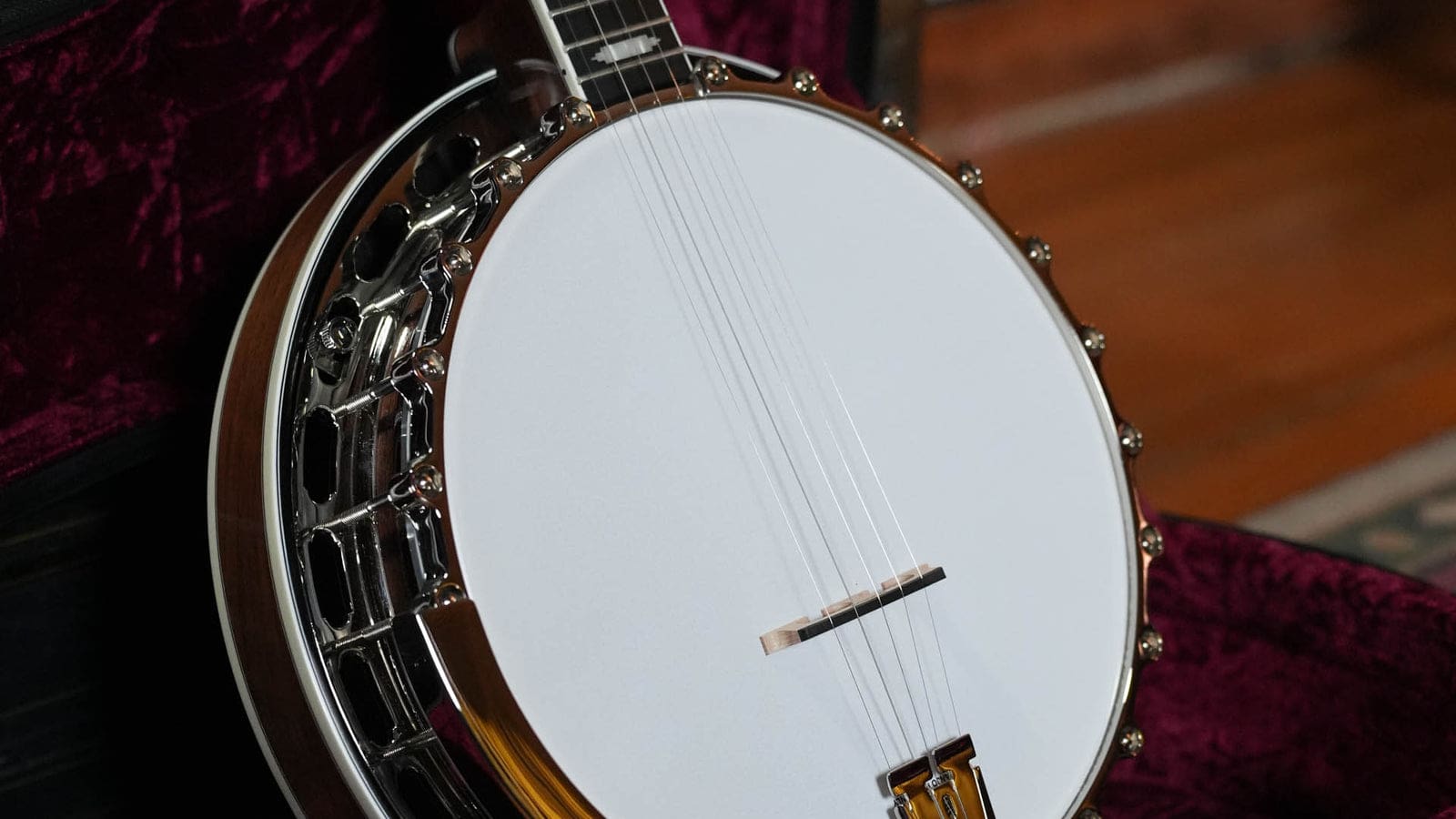
| Goodtime Two #2617 | 5-string with resonator | 6 | $849 | Learning bluegrass |
| Goodtime 6R with Kavanjo pickup #2620 | 6-string with resonator | 5.5 | $1,539 | Guitarists who want a banjo voice on stage |
| Artisan Goodtime Special #3254 | 5-string with resonator and steel tone ring | 8 | $1,599 | A first step up |
The plain open-back Goodtime, the one Greg built for his 13-year-old self, is sold out on our site right now, so ask us about the next one if that's the model you want. To pick between the rest, work through these in order:
- Pick the music first. Clawhammer and old-time players want an open-back; see our open-back banjos. Three-finger bluegrass players want a resonator, which projects forward; see our resonator banjos.
- Pick the string count. Five strings for bluegrass and old-time. Four strings on a short scale for Irish and jazz. Six strings tuned like a guitar if you want banjo tone without learning new chord shapes.
- Decide how far you'll grow with it. The Goodtime Special adds Deering's patented steel tone ring, and our listing describes it as having a sharp, focused attack with a bright pop. If you're curious how tone rings change a banjo's voice, our rolled vs cast tone ring guide covers the next level up.
The honest limits of a Goodtime
A Deering Goodtime banjo is built to a price, so it's lighter and simpler than a pro bluegrass banjo, and of the models we have listed, only the Goodtime Special has a tone ring in its specs. Greg's whole point was a banjo that plays and sounds good at a price more people can afford, and the weight was kept down on purpose. If you already know you want a heavier, pro-level bluegrass banjo, look at Deering's higher lines in our Deering collection, or at the Deering Truth and Vega Avett Star at the other end of the catalog.
Deering also isn't done. A friend at NAMM told Greg the Goodtime was so good that he now had to build one for even less money. Greg's answer: that banjo is already designed, and it's waiting on the company being able to afford to build it. The Goodtime itself waited almost ten years between design and production, so Greg is used to that kind of wait.
What you get when you buy a Goodtime from us
Every banjo we ship, the $599 tenor included, goes through our 23-Point Professional Inspection, so it arrives in tune and playable, ready to start learning on. On the Goodtime 6R and the Goodtime Special, which are over $1,000, you also get the Dread-Not Guarantee: a full year to trade it in for up to 90% of the pre-tax purchase price in credit, less round-trip shipping, plus a 30-day in-home trial. If you outgrow the Goodtime, that credit goes toward the next banjo.
A few small upgrades fit the Goodtime well. The Dr. Arm GT armrest is made for it, and our banjo collection has cases, straps and picks.
Related reading
- 5 tips for buying a guitar, banjo, mandolin or Dobro strap
- Ozark music history: Alan Munde, banjo man for the ages
Who the Deering Goodtime banjo is for
Buy a Goodtime if you're learning, or buying for someone who is, and you want a banjo that stays in tune and won't make you quit because it's heavy or hard to play. It's also the banjo for the player who wants something to throw in the truck for camping or a porch jam without worrying about it. Start with the Goodtime Two if you're headed for bluegrass, or the open-back if you're headed for clawhammer, and step up to the Goodtime Special when you want more cut in a jam. Browse every Deering Goodtime banjo in stock in our Deering collection, or get in touch and we'll help you pick.