
Table of Contents
- What separates a Deering Sierra banjo from a Goodtime?
- The Goodtime Two: a first banjo that holds its value
- The Artisan Goodtime Two: what the extra money buys
- The Goodtime Special: when you miss the tone ring
- The Deering Sierra banjo: the start of the pro level
- Should a beginner start with a Deering Sierra banjo?
- What you get when you buy a Deering from us
- Which Deering should you buy?
You've decided on a Deering, which is the easy part. The hard part is the price spread: a Goodtime Two sits under $900, and a Deering Sierra banjo costs about four times that, with an Artisan Goodtime and a Goodtime Special in between. All four share the same rim size and the same Deering name on the head, so it's fair to wonder what the extra money actually buys, and whether a beginner should ever start at the top.
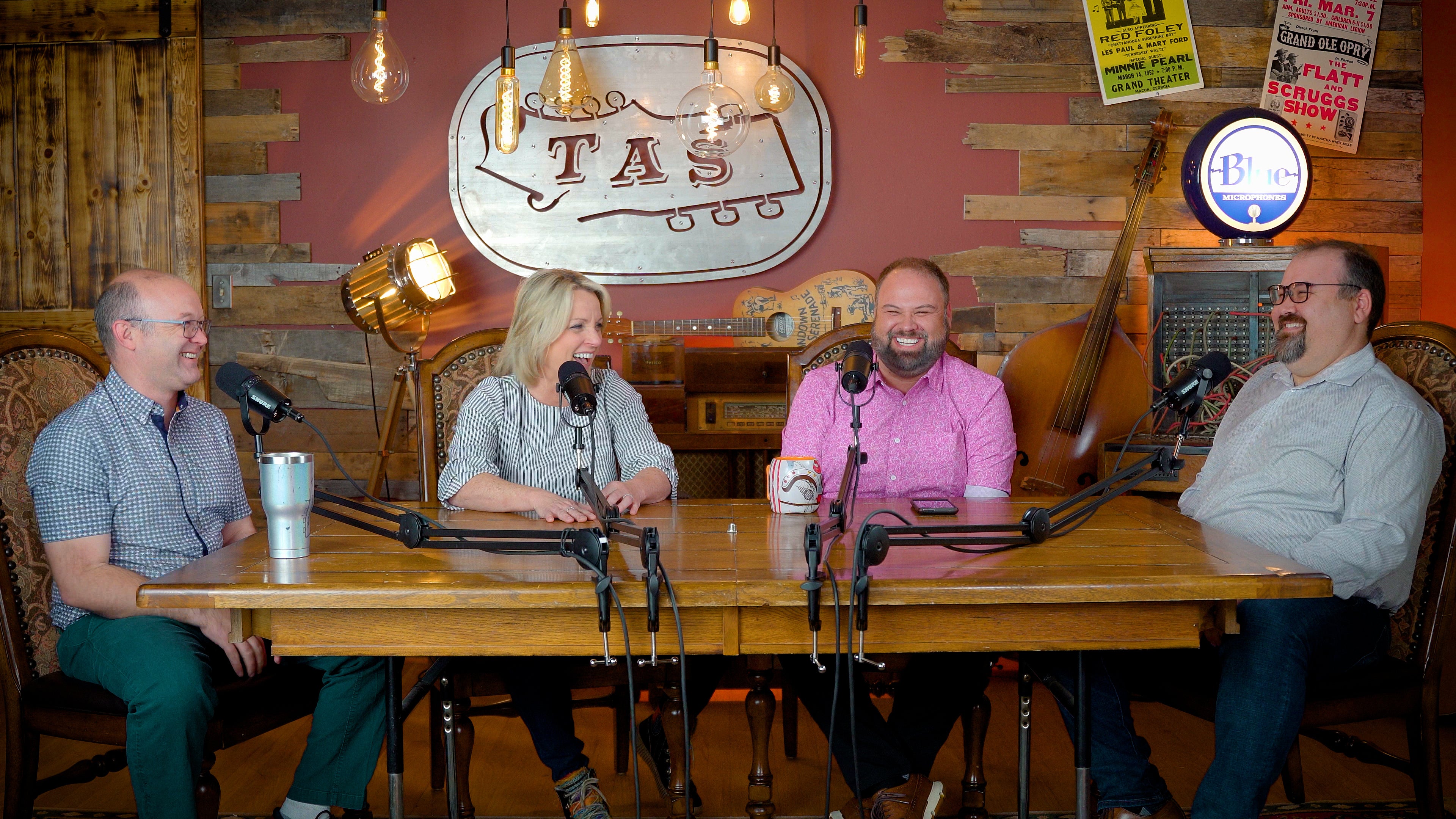
So we lined up four Deering resonator banjos, the Goodtime Two, the Artisan Goodtime Two, the Goodtime Special and the Sierra, and our friend Aaron McDaris played all four back to back. The differences come down to three things you can point to: the neck, the tuners and the tone ring. Here's what each step up changes, and which one we'd hand you depending on how serious you are about learning.
What separates a Deering Sierra banjo from a Goodtime?
Start with what all four share: an 11-inch, 3-ply violin-grade maple rim with a frosted head, built in America. Deering designed jigs and tooling so the Goodtime could stay American-made at a lower price, so you're not choosing between a good rim and a bad one. You're choosing what gets built on top of it.
The short answer: the Goodtime Two and the Artisan have no tone ring, the Goodtime Special adds a steel one, and the Deering Sierra banjo steps up to a cast bell bronze tone ring with an ebony fingerboard and a mahogany neck. That tone ring is the line between a banjo you learn on and a banjo that sounds like the bluegrass records you're learning from.
Jump to: the Goodtime Two and Artisan at 1:11 · the Goodtime Special at 3:41 · the Sierra at 5:17 · Aaron playing all four at 12:30.
| Model | Tone ring | Neck and fingerboard | Tuners | Weight (lb) |
|---|---|---|---|---|
| Goodtime Two | None | Rock maple, no separate fingerboard | Sealed geared | 6 |
| Artisan Goodtime Two | None | Rock maple, separate fingerboard, Artisan inlays | Planetary | 6.5 |
| Artisan Goodtime Special | Patented steel | Rock maple, Artisan inlays | Planetary | 8 |
| Sierra (mahogany) | Deering -06- 20-hole bell bronze | Quartersawn mahogany, ebony fingerboard | Deering planetary, Gotoh geared 5th | 11 |
Specs are from our current listings, and every price in this post is from our site in October 2026 (the video is from August 2024, when the four ran $799 to $2,949). The weights tell the story: no tone ring keeps a Goodtime around 6 pounds, the steel ring adds two, and the bronze ring and heavier hardware take a Deering Sierra banjo to about 11.
The Goodtime Two: a first banjo that holds its value
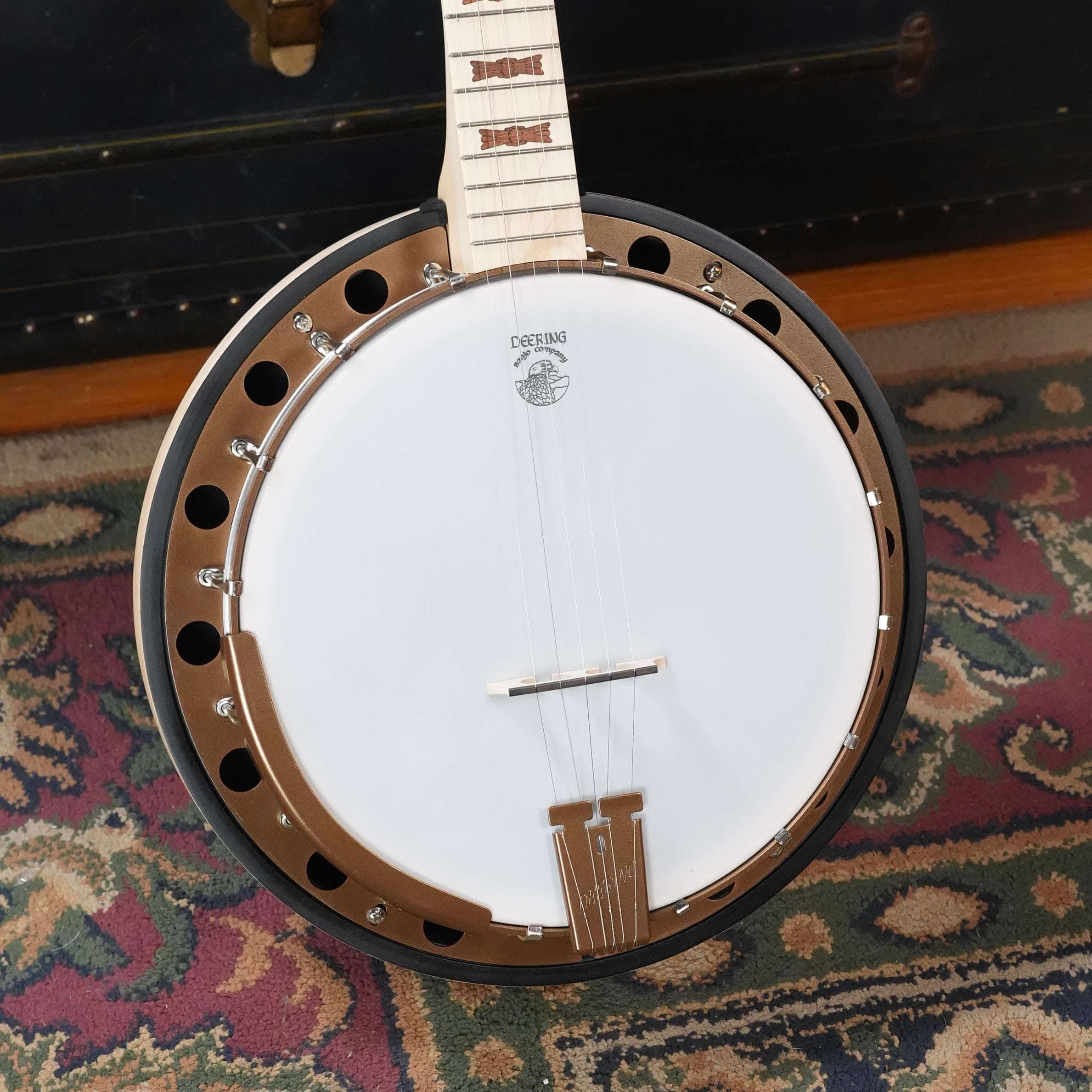
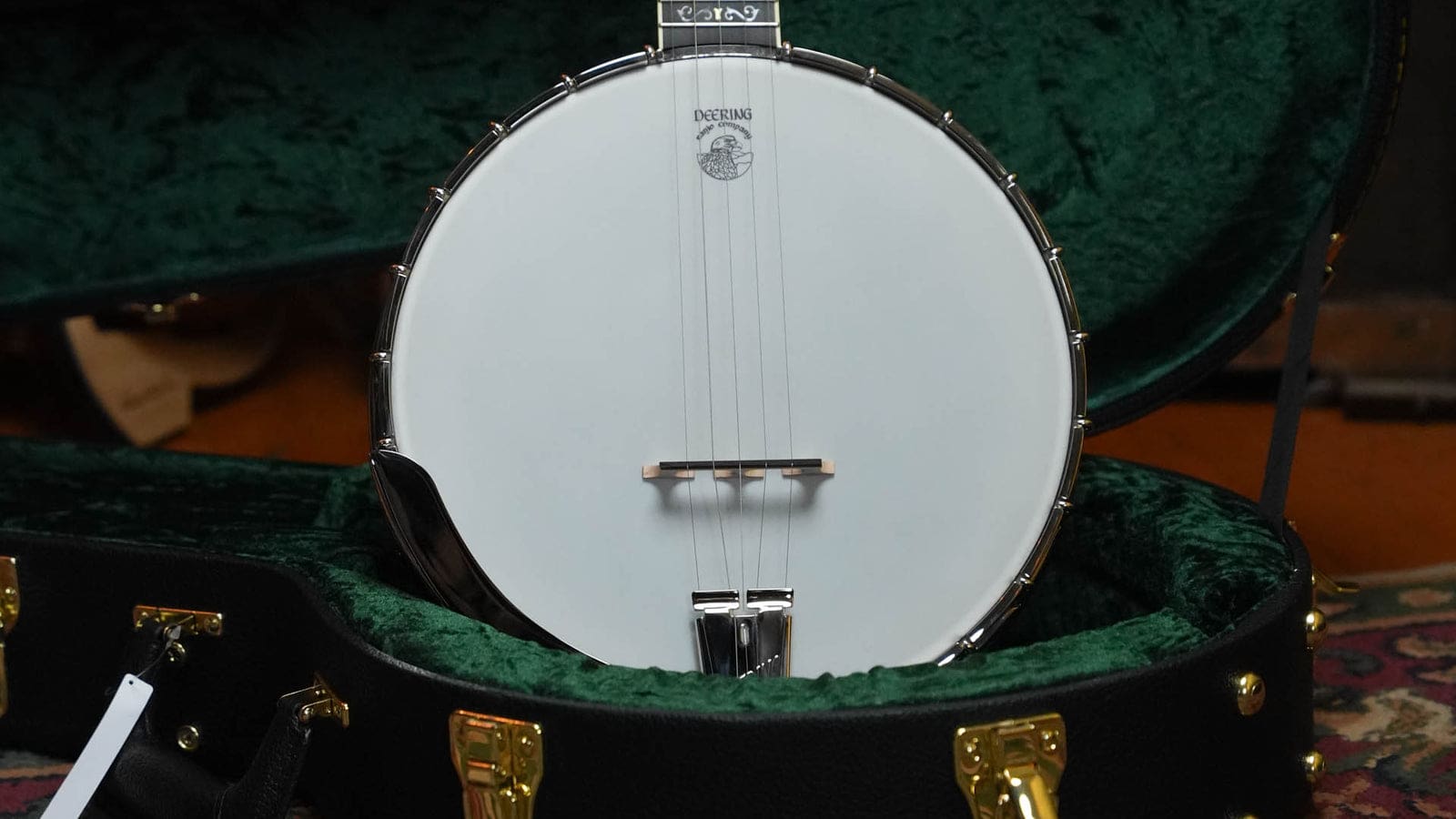
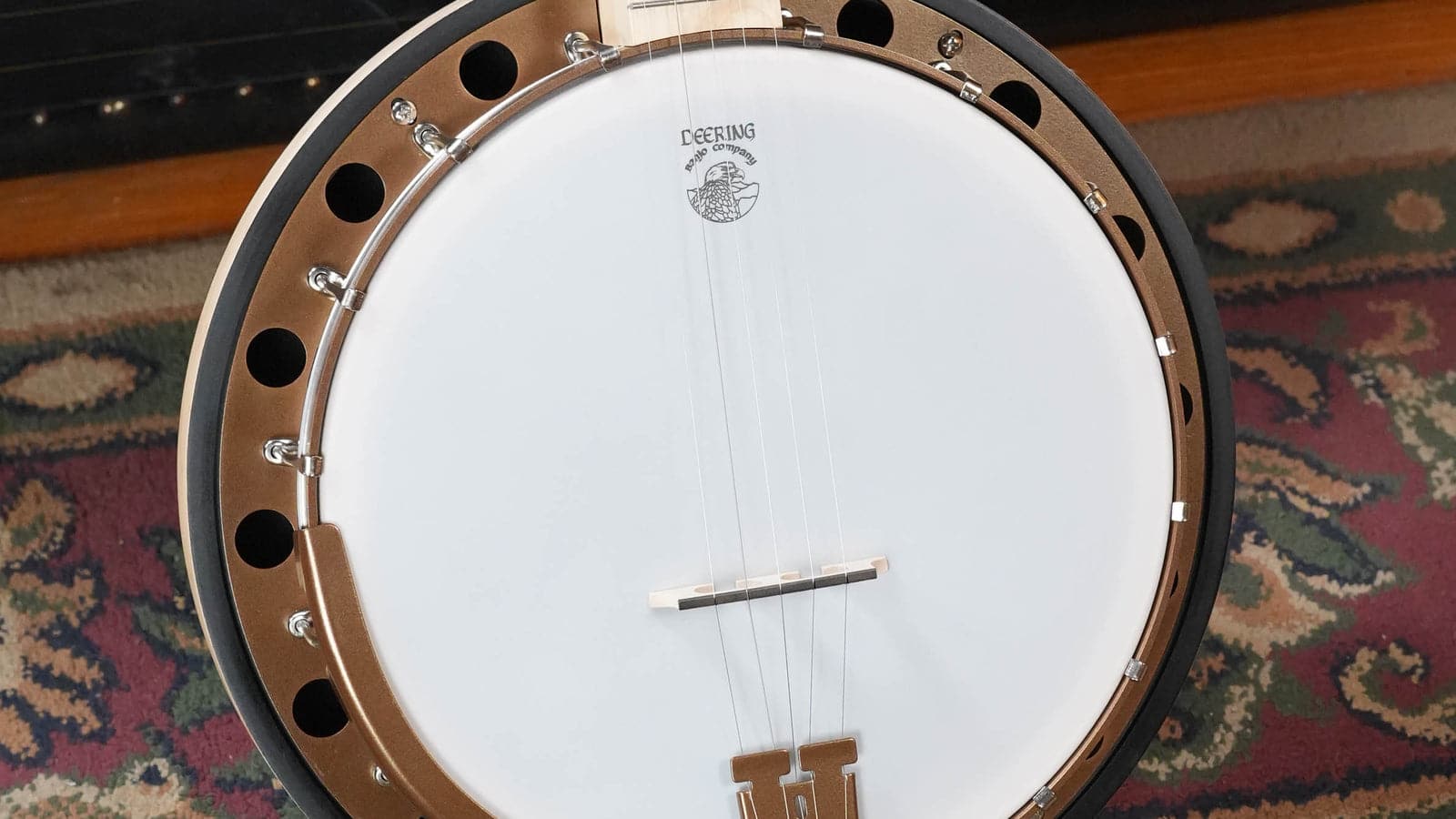
The Goodtime Two is the one we'd point most first-time bluegrass players to, and it comes with the resonator already on and set up. The Deco version has its own inlays and Deering's powder-coated finish in bronze instead of nickel plating. Nickel tarnishes and wears through; the powder coat lasts longer, and it's hypoallergenic, which matters more than people expect if your forearm reacts to nickel. Our Goodtime Two #2617 is $849 today.
We like the light weight a lot; every banjo player loves a light one. The trade-off is that you'll learn fast where its limits are. It gets you going, and because a Goodtime holds a lot of its value, it helps you resell when you're ready to move up. It's the banjo for the player who wants to find out whether they'll take it seriously, but is serious enough to want a good one. For the full story behind the line, read our Deering Goodtime banjo guide.
The Artisan Goodtime Two: what the extra money buys
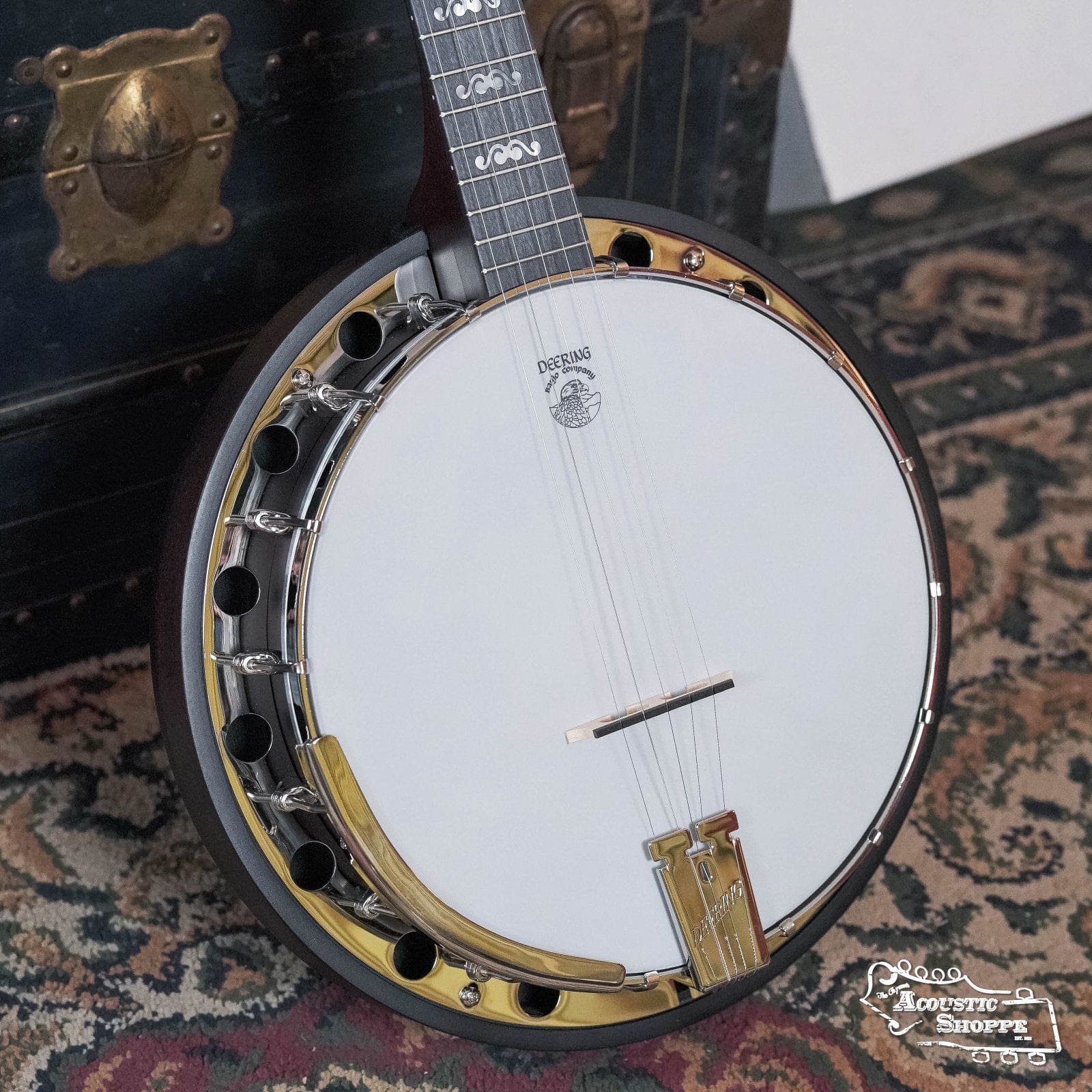
The Artisan is the same banjo underneath, with three upgrades you can see and feel. The dark mahogany stain is the obvious one. The more important two are a separate fingerboard with vintage-style Artisan inlays, where the standard Goodtime has a plain maple neck with no fingerboard, and planetary tuners. Planetary tuners are preferred by just about every banjo player we know. They cost a little more, and on a banjo you'll be tuning every time you pick it up, they're a worthwhile upgrade.
This is the step for the player who already knows a few extra dollars will make a big difference to them. We don't have an Artisan Goodtime Two in stock right now, so ask us about ordering one.
The Goodtime Special: when you miss the tone ring
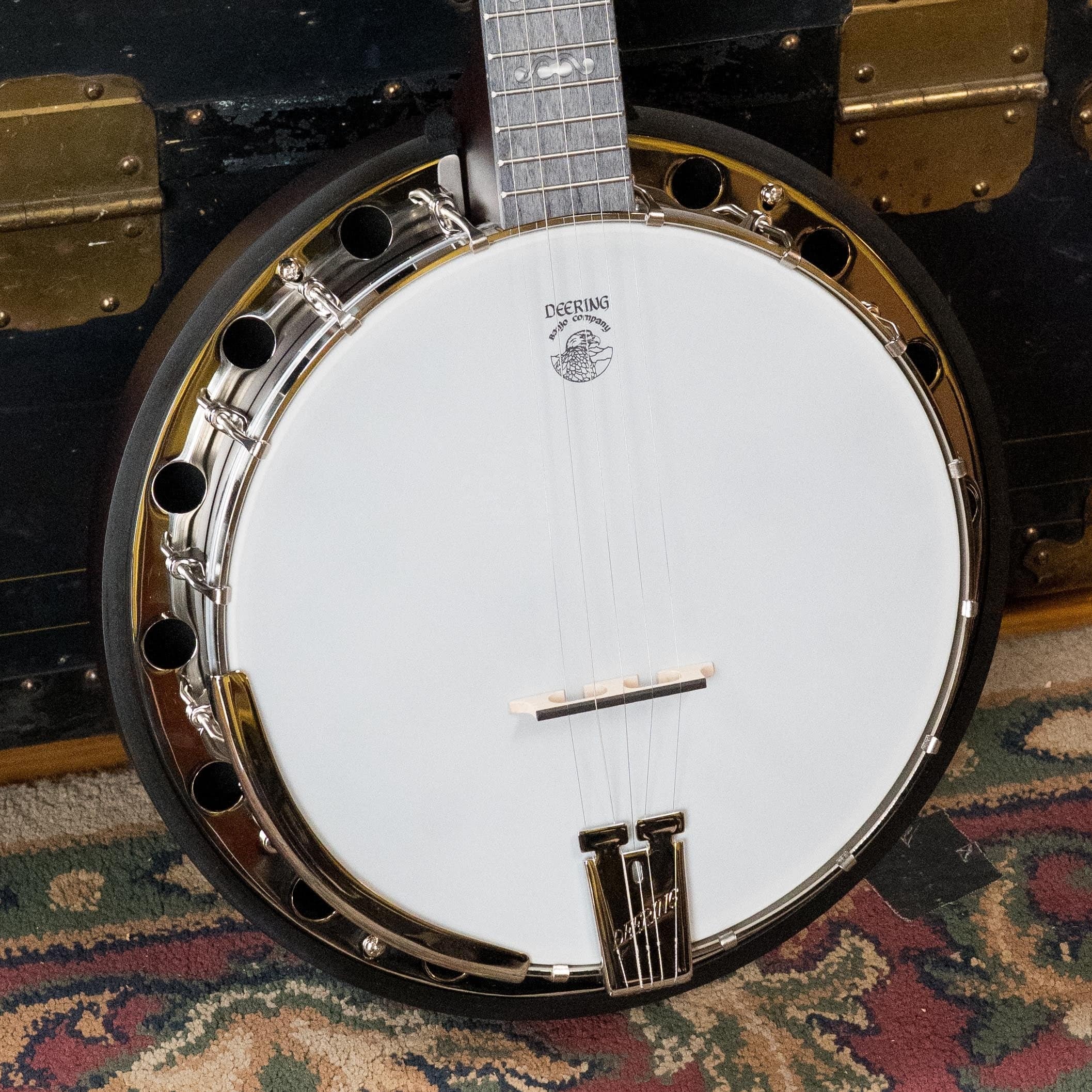
Here's where the banjo really changes. The Goodtime Special keeps the Goodtime rim and maple-over-poplar resonator, and adds Deering's patented steel tone ring. You feel it the moment you pick it up: it has some weight to it, about 8 pounds, though it's nowhere near the weight of a full pro banjo.
"I can't quite spend the budget on this one, but I know that there's a tone ring sound and I'm missing it, and I want to have that."
That's the Goodtime Special buyer exactly. You've played a banjo with a tone ring, you know the sound, and the Goodtime Two isn't giving it to you. The Artisan Goodtime Special #3254 is $1,599 on our site today. The all-black Blackgrass Edition is another way to get a Goodtime Special, with a satin black finish and a black head (you'll want sunglasses). Our last one has sold. If you want to know how a steel ring compares with the bronze rings further up, our rolled vs cast tone ring guide goes deeper.
The Deering Sierra banjo: the start of the pro level
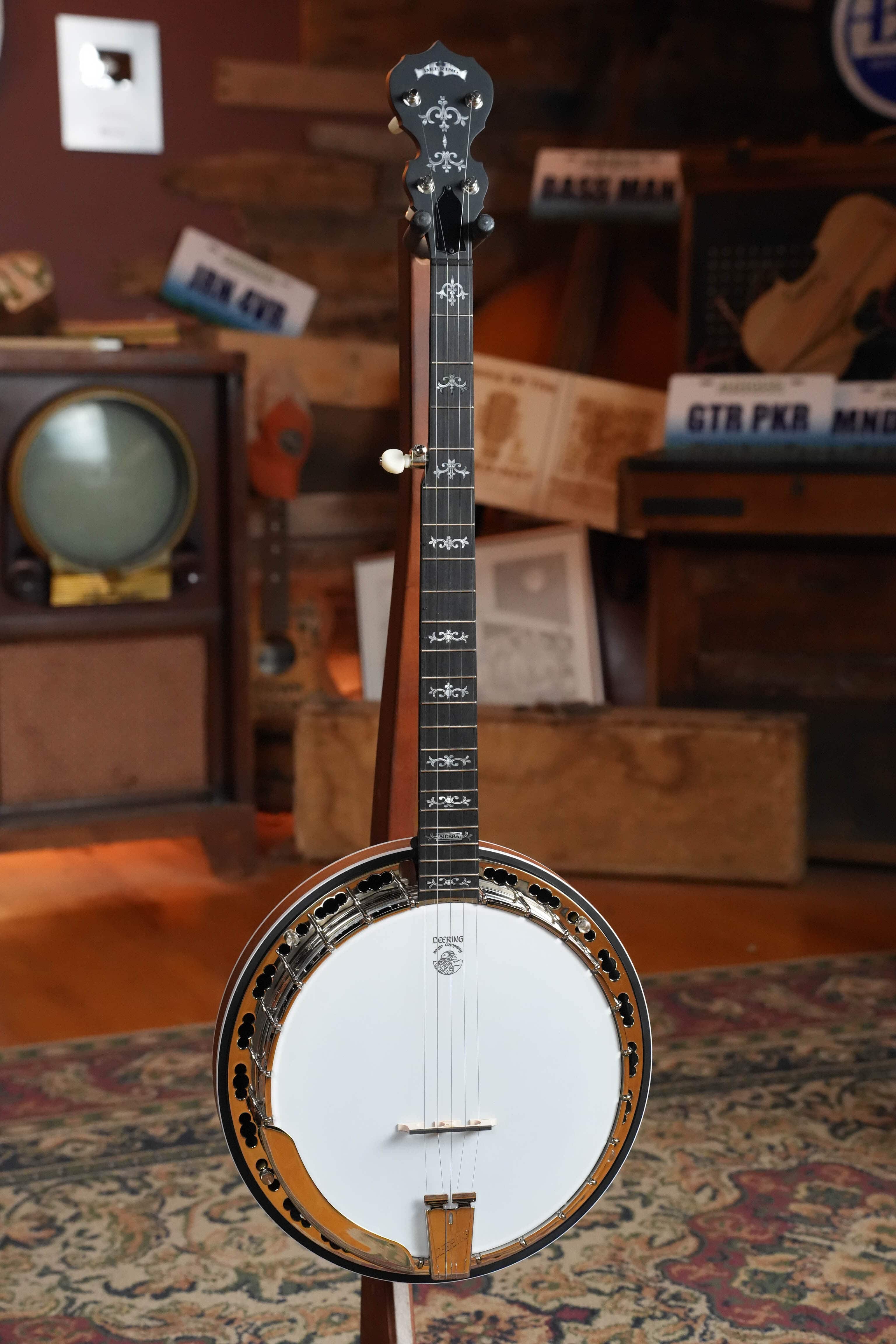
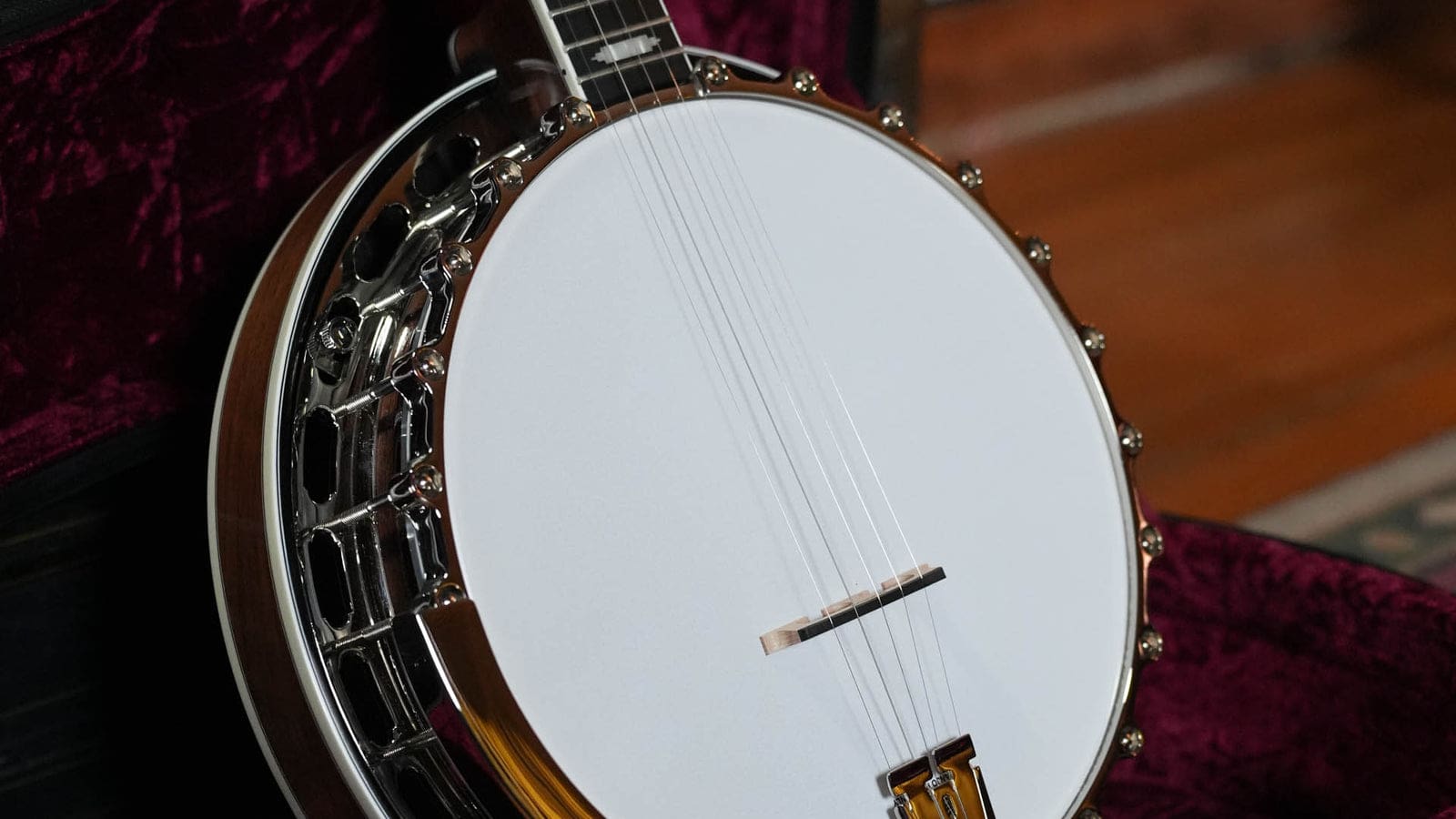
The Sierra is probably the most popular banjo Deering makes, and it's been around a long time. With it you've stepped up into a professional banjo, and the reason is the spec sheet. The neck is quartersawn mahogany with a satin brown finish and an A-grade ebony fingerboard. The rim is the same 3-ply maple, but now it carries Deering's -06- 20-hole bell bronze tone ring, a full cast ring and the same formulation Deering uses across its pro banjos. That cast bronze ring, in place of the Goodtime Special's steel one, is what gives the Sierra the bluegrass sound everybody wants.
The rest of the banjo is built to Deering's pro spec to match, from the one-piece cast flange and brass tension hoop to the True Tone tailpiece and the Gotoh geared fifth-string tuner, and it ships in a hardshell case. Our listing calls the mahogany Sierra strong, clear and balanced, with plenty of crack for bluegrass and some warmth from the mahogany neck and resonator. It's the beginning of the high end of five-string banjo.
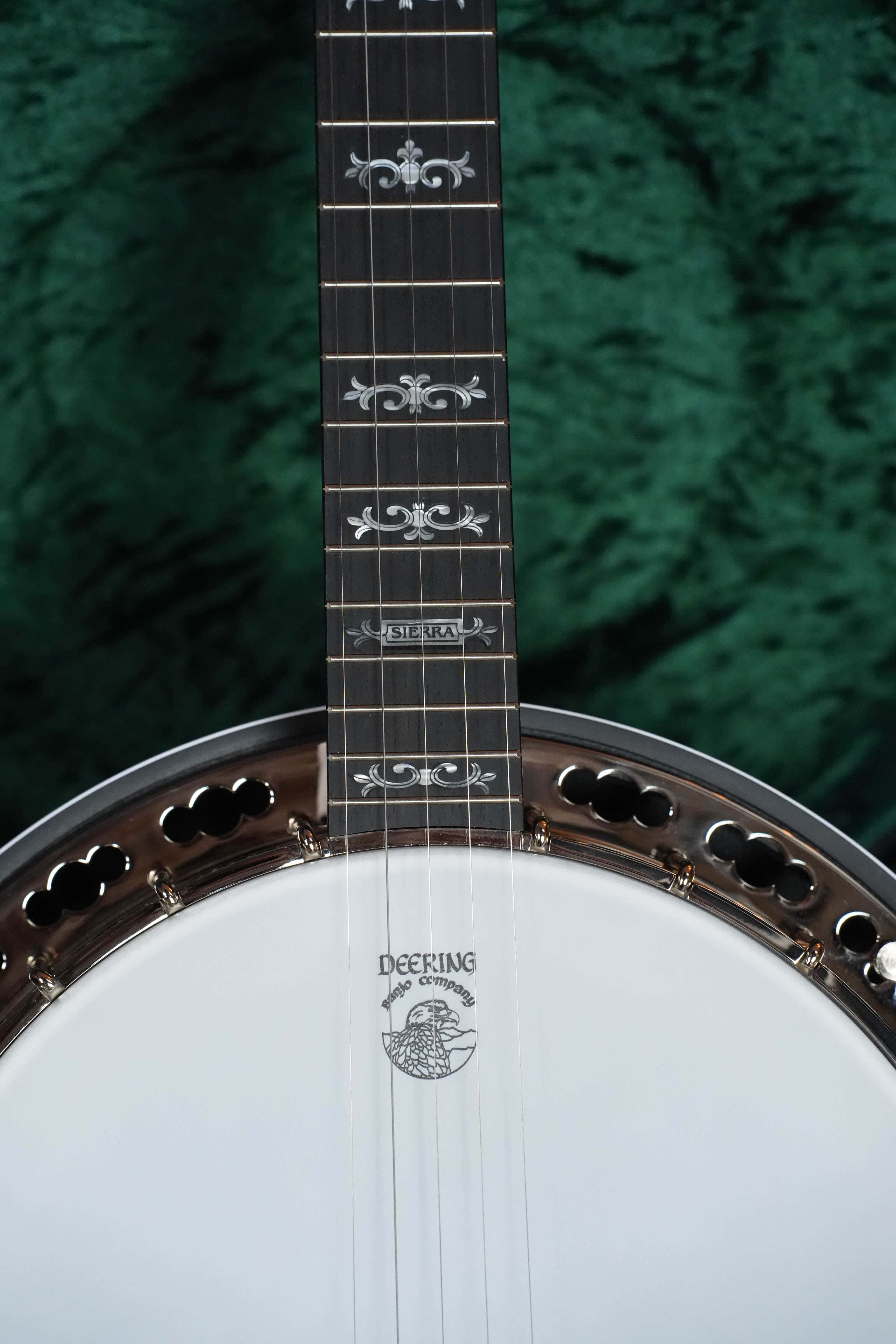
Our last mahogany Deering Sierra banjo listed at $3,499, and we don't have one in stock as we write this. Deering also builds a maple Sierra. Ask us about ordering either one, or see what's on the wall today in our Deering banjo collection, which also has pro models past the Sierra like the Clawgrass No.2 and the Tenbrooks Saratoga Star.
Should a beginner start with a Deering Sierra banjo?
Aaron sees this a little differently than we do, and both sides are worth hearing.
"There is nothing more frustrating than having an instrument hold you back."
Our side: start on a banjo good enough that it isn't fighting you. That doesn't mean buying the top model will make you good, because nothing replaces practice. Plenty of people don't want to spend a lot up front before they know what they're looking for, and that's fine. Start at the Goodtime Two and build up, or start at a quality level you'll be happy with for a long time. If you're a first-time buyer who walks straight to the Sierra, you've made a decision: you're taking this seriously, and you're giving yourself every advantage. It may not be the last banjo you buy, but it won't hold you back from anything you want to do.
Aaron's side: he doesn't buy the idea that a cheap banjo keeps you from becoming a great player, because he's seen too many great pickers who started out on some really awful instruments.
"You can pick up any banjo no matter what level you're at and play it, but if you are serious about it, I would encourage you to always seek the next better level."
He remembers playing Silver City as a kid, maybe two years into the banjo, when an older player told his dad that if he wanted his son to excel, he should spend a little more and get him a better instrument. Aaron's banjo wasn't bad; the man saw something more there. That next level keeps you interested. Some days you practice because you have to. The good days are when you can't wait to get it out of the case and hit a note.
That's the part we agree on most. If your ear is already tuned to the sound of a full tone ring and you buy a banjo without one, you'll always be chasing that sound, and part of the reason you're not getting it is the banjo.
What you get when you buy a Deering from us
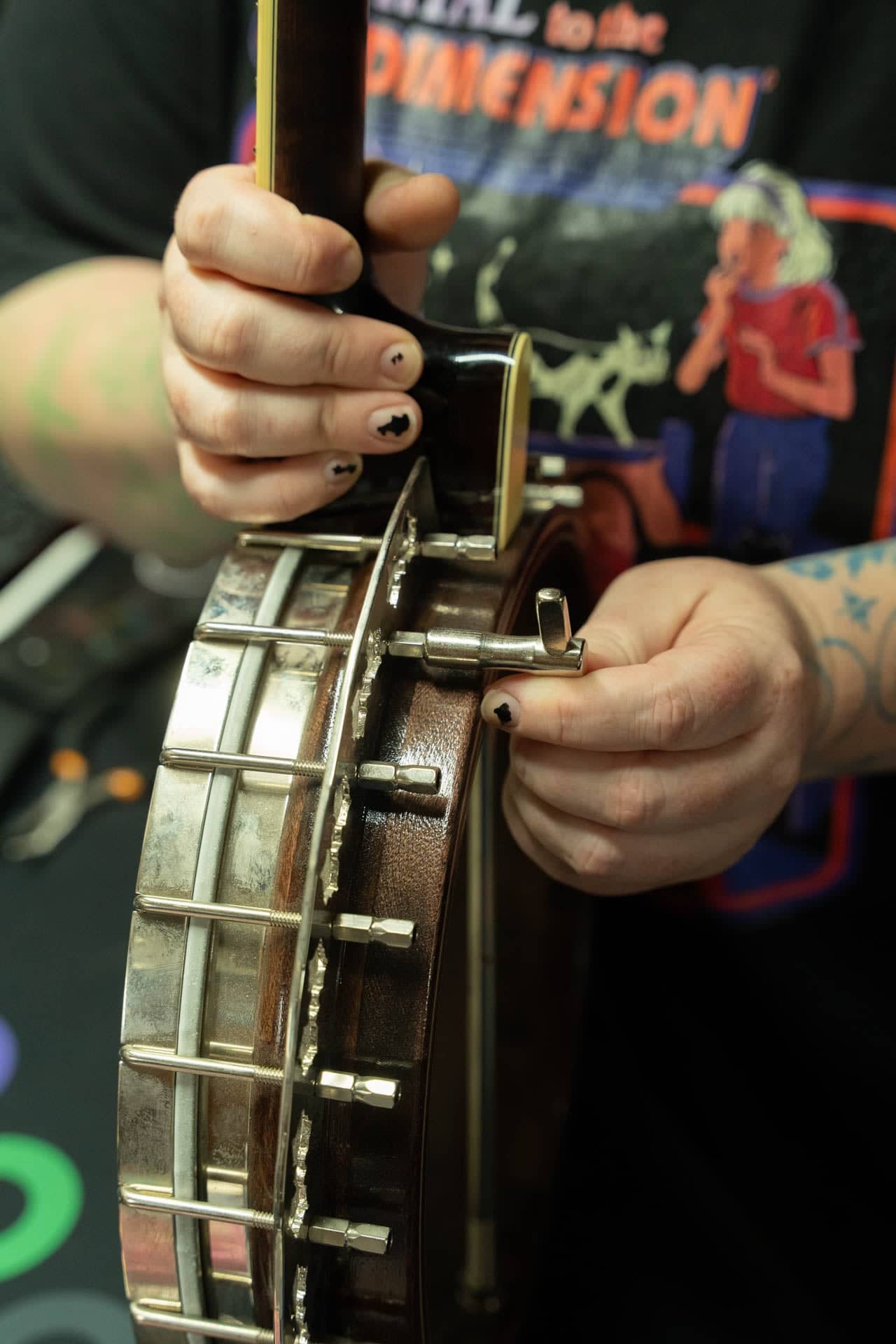
Every banjo we ship, from the $849 Goodtime Two up, goes through our 23-Point Professional Inspection, so it arrives adjusted and ready to play rather than needing a trip to a repair shop first.
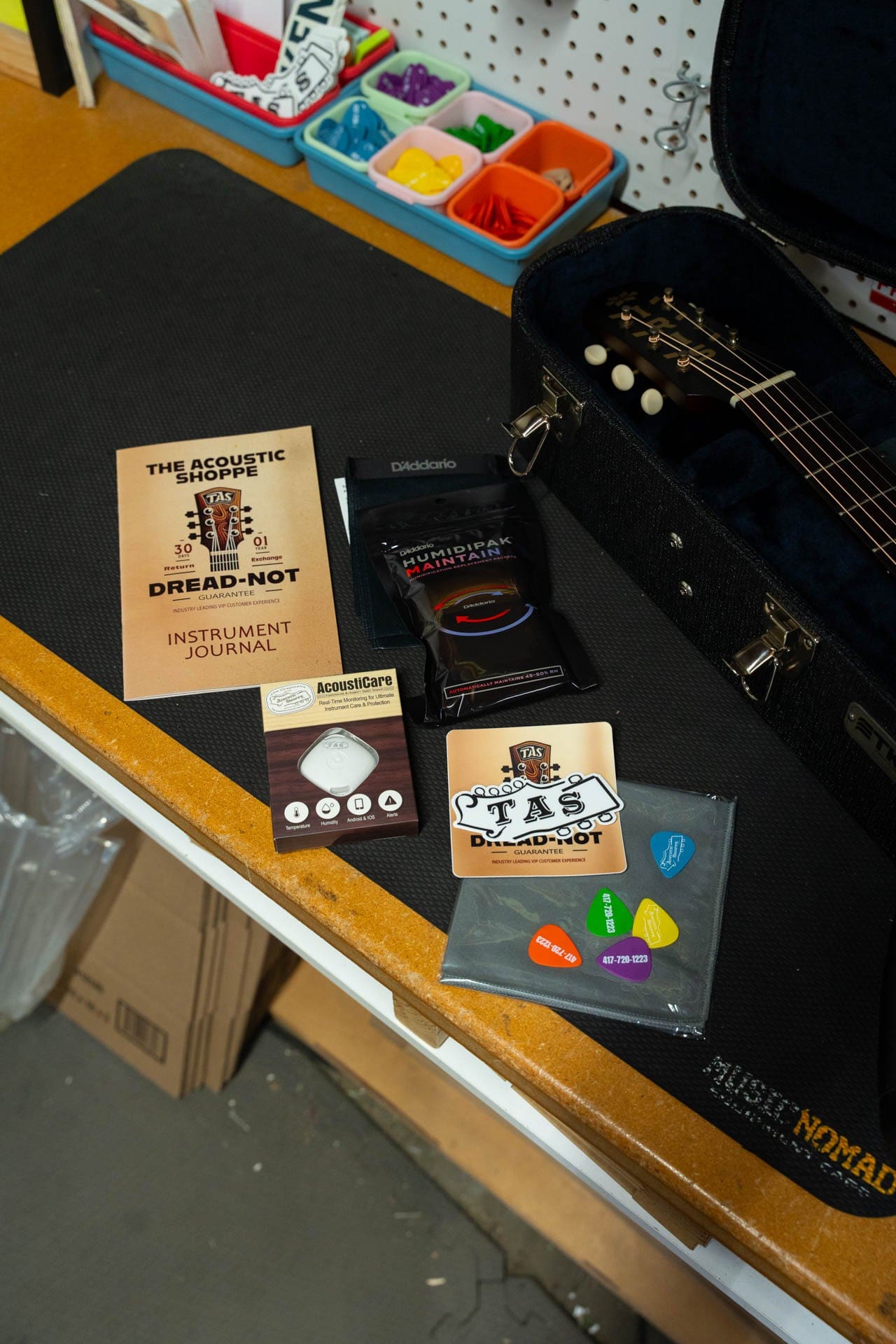
The Goodtime Special and the Sierra are both over $1,000, so they also come with the Dread-Not Guarantee: a full year to trade it in for up to 90% of the pre-tax purchase price in credit, less round-trip shipping, plus a 30-day in-home trial. That fits the way Aaron talks about stepping up. Start on a Goodtime Special, and if you're ready for a Deering Sierra banjo within the year, the credit goes toward it. To spread out the cost, we also offer financing through Synchrony.
Related reading
- Deering Banjos: the company's history and full lineup
- Scott Avett banjo review: Deering Truth vs Vega Avett Star
- Ozark music history: Alan Munde, banjo man for the ages
Which Deering should you buy?
- The Goodtime Two if you want to find out whether banjo sticks, without buying something that holds you back. It's light, it holds its value, and it resells when you move up.
- The Artisan Goodtime Two if you already know you'll play it and you want the separate fingerboard and planetary tuners for a few more dollars.
- The Goodtime Special if you've heard a tone ring and you miss it, but the Sierra is past your budget for now.
- The Deering Sierra banjo if you've decided you're serious and want the bell bronze tone ring, the ebony board and a banjo you won't outgrow for a long time.
Not sure which side of that line you're on? Browse our resonator banjos, or get in touch and tell us what you're playing now and what you want to sound like. We'll tell you which Deering we'd pick for you.