
Table of Contents
- Dreadnought vs OM: the short answer
- How we compared the shapes
- What does a dreadnought do best?
- What is an OM guitar, and who is it for?
- Dreadnought vs OM, side by side
- Why two guitars on stage shouldn't be the same shape
- What about parlors and the shapes in between?
- Hear the dreadnought vs OM difference yourself: two matched pairs
- So which shape should you buy?
- Acoustic Shoppe FAQ
"Which body shape is right for me?" We get that question in calls and emails more than almost any other, and it usually comes down to dreadnought vs OM. Both shapes run the whole price range, from a $499 Eastman to a custom shop build, so the shape question doesn't go away as your budget grows. Spec sheets don't help much either, because they list woods and measurements and say nothing about how the guitar will feel on your knee or sound under your right hand.
The cleanest way to answer it is to take the woods out of the argument. We played a dreadnought, an OM and a parlor from the same builder, in the same series, with the same top and the same back and sides, so the only real difference was the body. Three guitars that should have sounded alike came out sounding distinctly different, and each one won at a different kind of playing.
Dreadnought vs OM: the short answer
If you play hard with a flat pick, strum behind a singer or need to hold your own in a jam, buy the dreadnought. If you fingerpick, play softly as often as you play hard, or want a guitar that's easier to hold for an hour on the couch, buy the OM. If you do a bit of everything, the OM is the one we'd point you to first, because it covers more ground than either of the extremes.
The rest of this post explains why, and we'll finish with two matched pairs we have on the wall right now, so you can hear the dreadnought vs OM difference for yourself without the tonewood muddying it.
How we compared the shapes
The three guitars were from Bedell's Revolution series: an Adirondack spruce top with cocobolo back and sides on all three, the same neck, the same binding and the same price for each size. Bedell doesn't build a grand auditorium, so the comparison covered the three traditional shapes people ask about most. Cocobolo is a dense, oily wood that doesn't always sound its best unless the builder really knows how to voice it, and Bedell is one of the few we trust to do that, which is why this series made a fair test.
Jump to: why same-wood guitars make a fair test (4:40) · the playing comparison (5:24) · our verdict on each shape (10:28) · two guitars on one stage (12:21).
That Revolution trio has sold through since, but the method still holds. Keep the builder and the woods the same, change only the shape, and you hear what the body is doing, which is the whole dreadnought vs OM question.
What does a dreadnought do best?
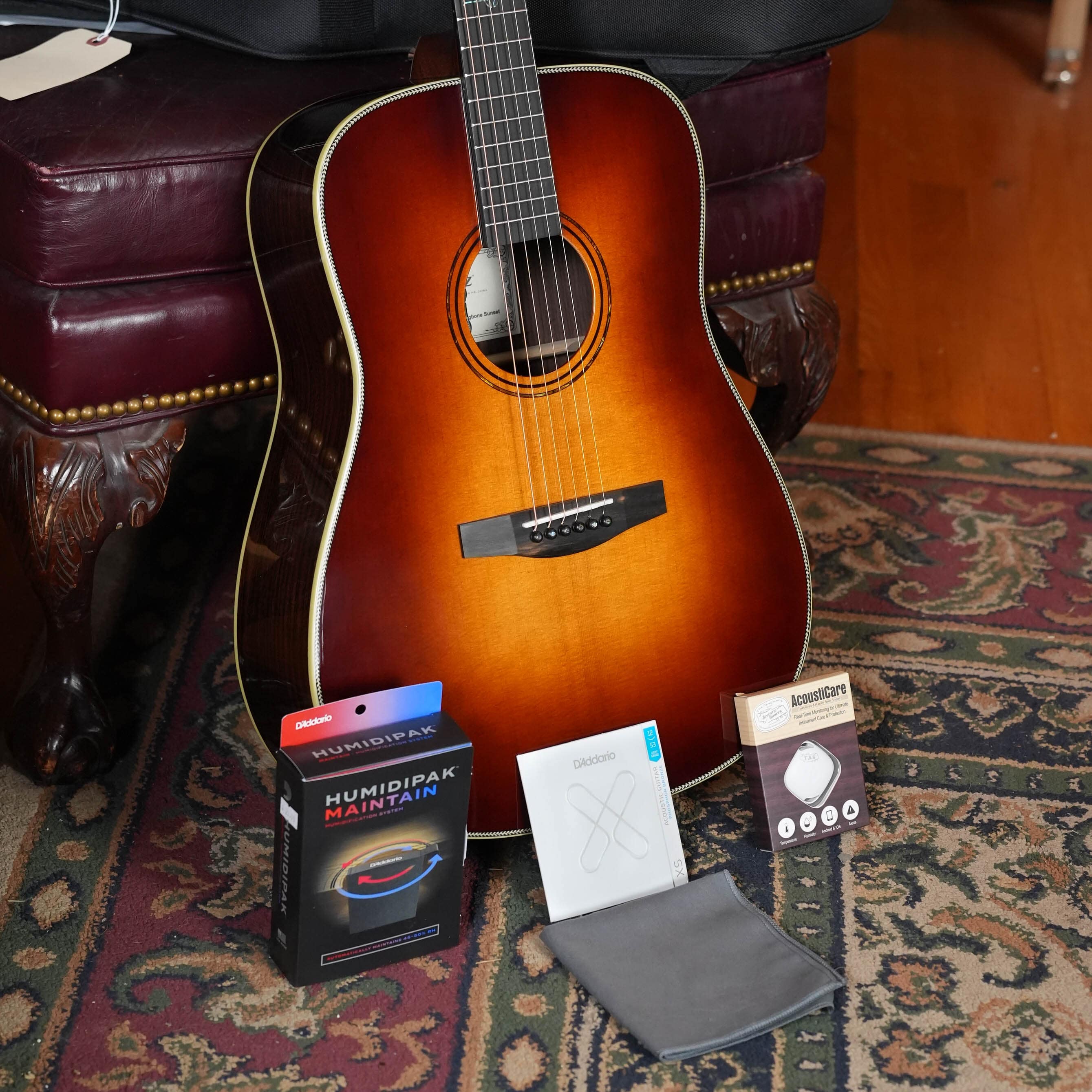
The dreadnought is the big, square-shouldered body most people picture when they hear "acoustic guitar," and it's the shape most bluegrass rhythm players reach for. Its strength shows up the moment you dig in with a pick.
"The dreadnought obviously excels when you hit it with a flat pick. It just wants to come out there."
That's the dreadnought's job: power and low end under a heavy right hand. We think the square shoulder has a lot to do with how full the Bedell sounded. A bigger body gives you more headroom, so strumming harder makes the guitar louder and fuller instead of making it choke. If you play behind a singer, flatpick fiddle tunes or need to be heard over a banjo, that's the guitar doing exactly what you bought it for.
The catch is size. A dreadnought is a lot of guitar to hold, and if you're not tall, the upper shoulder pushes your strumming arm up and out. Plenty of players love the sound of a dreadnought and still find they don't want that elbow up in the air for a long evening of playing.
What is an OM guitar, and who is it for?
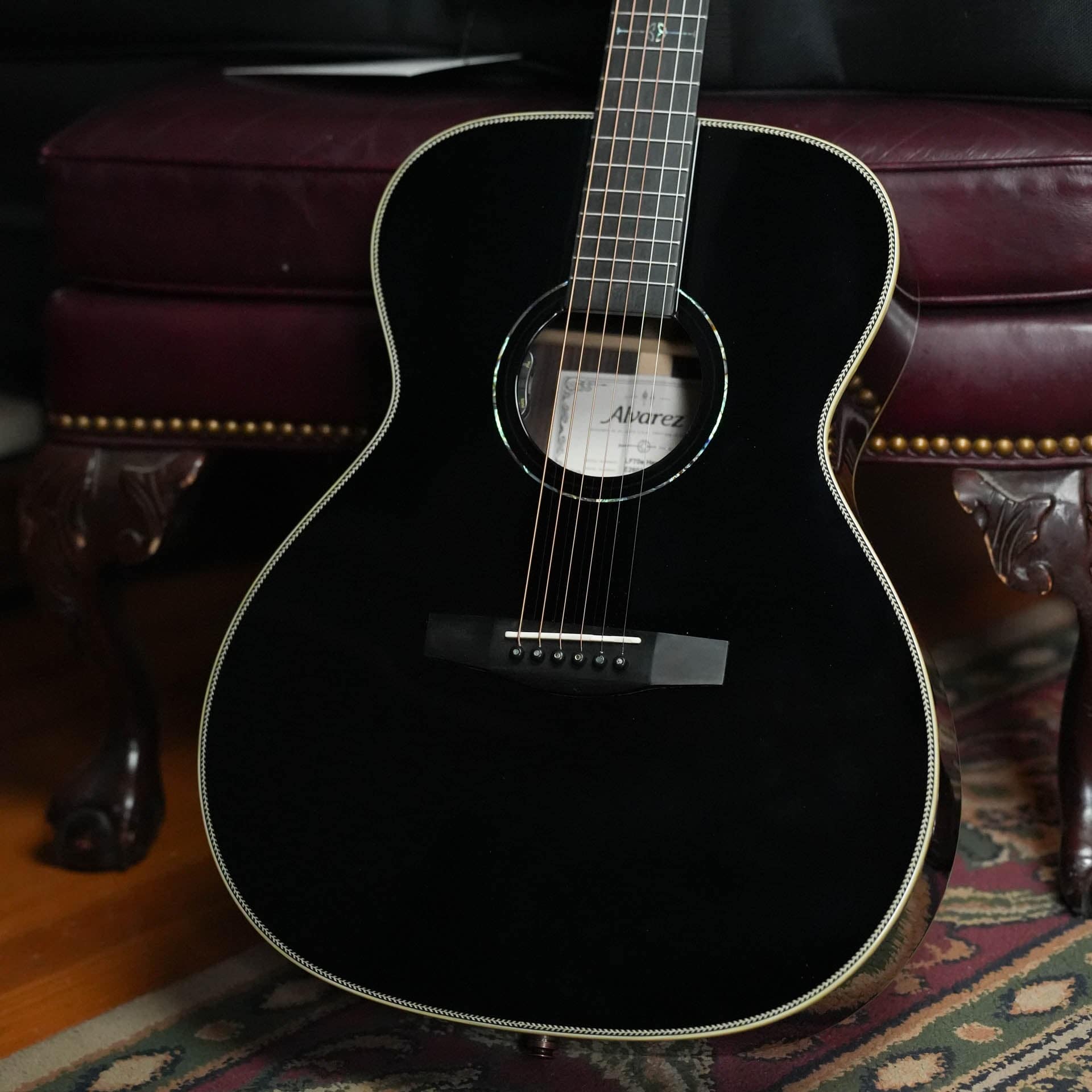
An OM guitar (orchestra model) is a smaller body than a dreadnought, with a narrower waist, so it sits closer to you and is easier to wrap your arm around. For us, the OM sits in the sweet spot between the two extremes:
"If you're a person who just really loves all of the above, I want to play it hard, I want to play it light, I want to fingerpick, the OM is a great way to do that."
Here's who the OM guitar suits best:
- Fingerstyle players. A smaller body answers a light touch with clear, separated notes instead of needing to be driven hard.
- Players who switch between soft and hard. You can fingerpick a verse and strum a chorus without the guitar feeling out of its depth either way.
- Smaller players and couch players. If a dreadnought's shoulder wears on you, the OM is the comfortable answer that keeps a full voice.
- Bluegrass players who want comfort. Sean Watkins of Nickel Creek broke the mold by playing an orchestra model guitar in bluegrass, so the OM isn't off limits in a jam.
The honest limit is headroom, and it's the real trade-off in dreadnought vs OM. Most small-bodied guitars bottom out when you play them as hard as a dreadnought, and the tone flattens instead of getting louder. The Bedell OM was one of the few small bodies we could dig into almost as hard as the dreadnought without that happening, and that's a credit to the builder, not something you should expect from every OM.
Dreadnought vs OM, side by side
Here's how the two shapes compare, with the scale lengths taken from the matched pairs we stock today. Scale length isn't fixed by the shape name, so check each guitar's spec sheet.
| Dreadnought | OM | |
|---|---|---|
| Where it shines | Flatpicking, hard strumming, jams | Fingerpicking, mixed soft and hard playing |
| Under a heavy pick | Gets louder and fuller | Can bottom out on many builds |
| Comfort | Big shoulder, arm sits higher | Narrower waist, easier on the couch |
| In a band or studio | The main rhythm guitar | Sits beside a dreadnought without crowding it |
| Scale on our pairs | 25.4" (Eastman), 25 1/2" (Alvarez) | 24.9" (Eastman), 25" (Alvarez) |
| Nut width on our pairs | 1 3/4" | 1 3/4" |
The shorter scale on both OMs means slightly less string tension, so bends and fingerpicking feel a touch easier. The 1 3/4" nut on all four gives your fretting hand the same room between strings, so the dreadnought vs OM choice here comes down to the body.
Why two guitars on stage shouldn't be the same shape
This is the part of the dreadnought vs OM question people don't think about until they're in a band. When two guitarists play together, matching bodies work against you:
"If you have two dreadnoughts up there, they just kind of compete with each other for all the attention and all the tone."
Mix the shapes, almost like an orchestra uses different instruments for different ranges, and each guitar gets its own space. The same idea works in the studio. When you layer a second guitar part, capo up and play it on a smaller body so the two parts aren't stepping on each other. If you already own a dreadnought, that's a good argument for making your next guitar an OM.
What about parlors and the shapes in between?
The parlor was the third guitar in our comparison. It has the most upper-end projection and brightness of the three, and it pays off for fingerpicking, with clear articulation even on soft finger movements. It's also the most relaxed guitar to play from a lounge chair, which is why one of us keeps an Eastman parlor around for exactly that. Browse them in our parlor guitars collection.
Between the parlor and the dreadnought there are more shapes than these three, including the grand auditorium we left out because Bedell doesn't build one. Our concert and grand auditorium guitars collection covers that middle ground, and our Alvarez size comparison walks through more body sizes from one builder.
One caution: these are generalities. We know players who strum the fire out of small-bodied guitars, and fingerstyle players who play dreadnoughts and jumbos. The shape tells you where a guitar is most at home, not what you're allowed to play on it.
Hear the dreadnought vs OM difference yourself: two matched pairs
The best way to settle dreadnought vs OM is the way we did it: same builder, same woods, different shape. We have two pairs in stock today that let you do exactly that.
- Alvarez Laureate 70 series, $1,599 each. The LD70e dreadnought and the LF70e OM are both solid Sitka spruce over solid East Indian rosewood, with ebony fingerboards, bone nuts and LR Baggs pickups. There's also an LP70e parlor in the same woods, so you can repeat our three-shape comparison. Here's why we like the Laureate series.
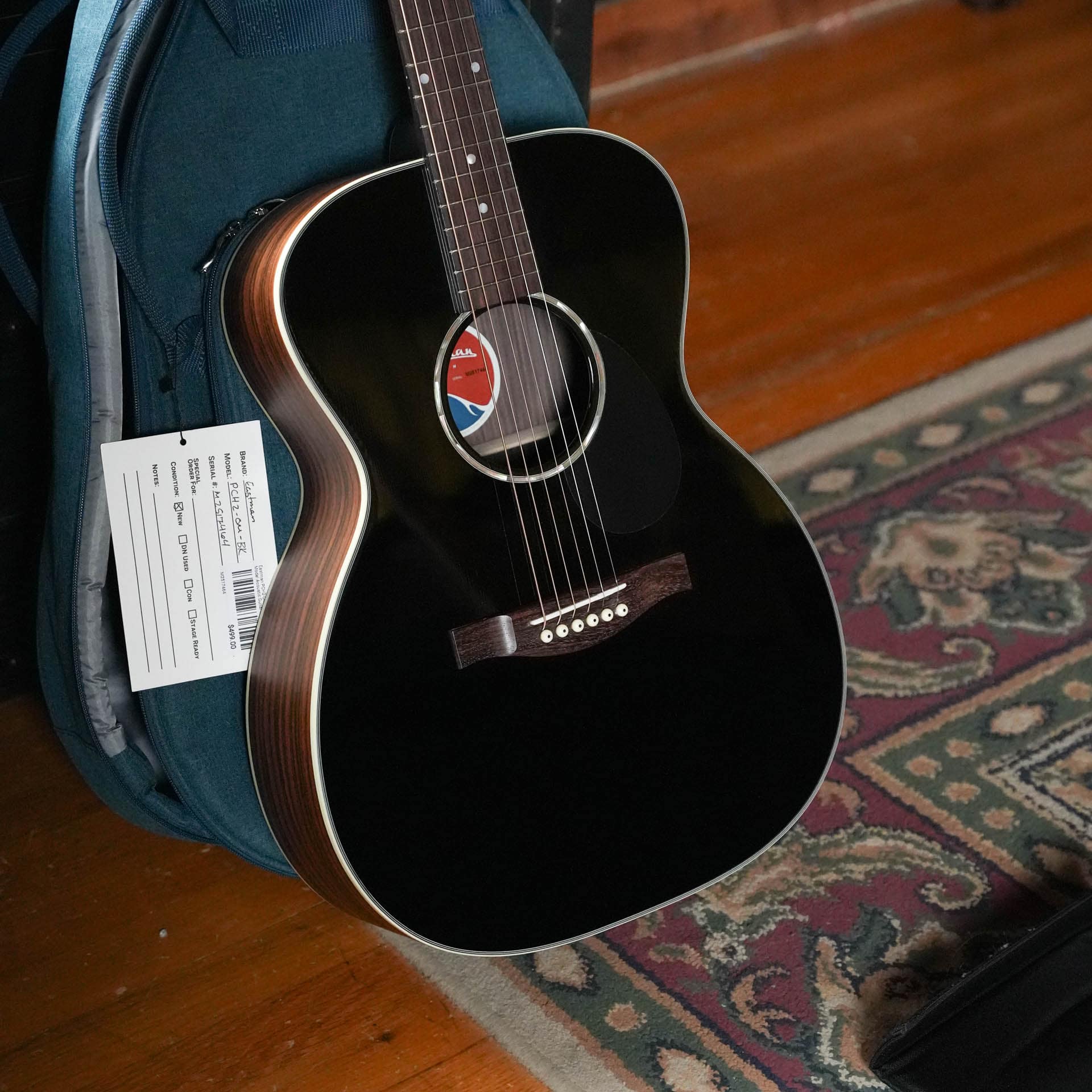
- Eastman PCH2, $499 each. The PCH2-D-CLA dreadnought and the PCH2-OM-BK OM share a solid spruce top, laminated rosewood back and sides, a bone nut and saddle, and a padded gig bag. It's the most affordable way to find out which shape you prefer before you spend more.
The pair you pick changes the woods but not the lesson, and if you want to hear how wood changes things on top of shape, read our mahogany vs rosewood breakdown, or E10D vs LD60e vs FG5 for three mahogany dreadnoughts scored against each other.
Whichever shape you choose, every guitar we ship gets our 23-Point Professional Inspection before it leaves the shop, so it plays the way it should the day it arrives.
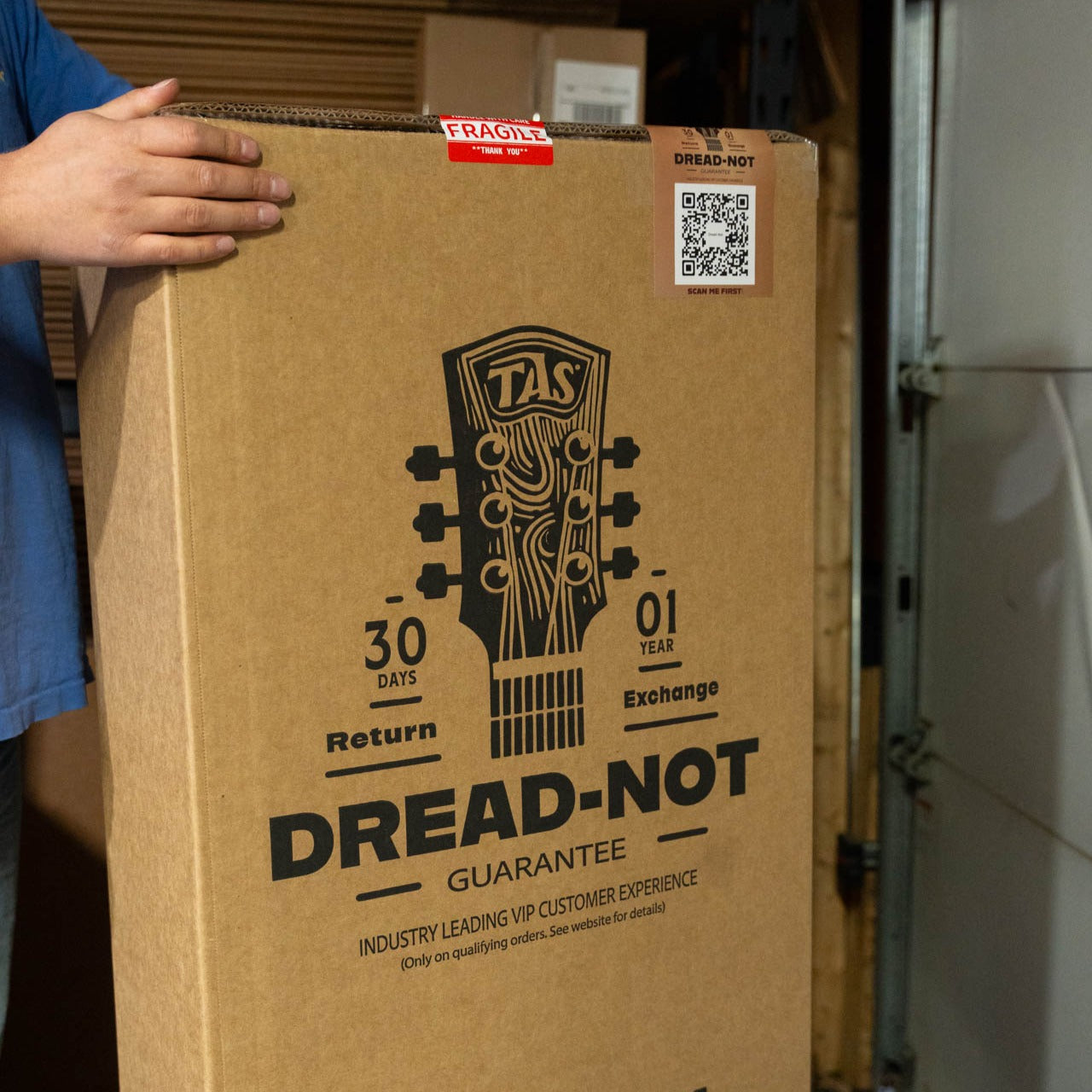
The Alvarez pair is also covered by our Dread-Not Guarantee. You get a full year to trade it in for up to 90% of the pre-tax purchase price in credit, less round-trip shipping, plus a 30-day in-home trial. If you guess wrong on shape, you're not stuck with it.
Related reading
- Why tonewood matters
- D-18 alternatives: six mahogany dreadnoughts, played blind
- Top 5 guitars for songwriters
So which shape should you buy?
If you're the strummer, the flatpicker or the rhythm player in a band, buy the dreadnought, and shop our dreadnought guitars. If you fingerpick, play at home more than on stage, or want one guitar that handles soft and hard playing, buy the OM, and start with our OM and 000 guitars. If you already own one shape, the other one makes the better second guitar. You can see every body style together in our acoustic guitars collection, and if you're near Springfield, come play a matched pair side by side.