
Table of Contents
- What the FG9 is, and why people compare it to a D-18
- Test one: FG9 vs D-18, played blind
- Test two: the FG9 R against a Bourgeois and a Gallagher
- What John heard, and why the FG9 was his favorite
- The catch: where the D-18 and the boutique guitars still win
- FG9 vs D-18: who should buy which
- How we get an FG9 or a D-18 ready to ship
- Find your dreadnought
A standard Martin D-18 costs $2,999.99 on our wall today, and a Yamaha FG9 M runs $4,099. So the first question anybody asks about the FG9 vs D-18 is a fair one: why would you pay more for a Yamaha than for the mahogany dreadnought that became the standard everybody knows by ear? And if the FG9 really is worth that money, does it belong with the boutique guitars that cost a good deal more again?
Spec sheets won't settle it, because on paper these are all solid-top, solid-wood dreadnoughts with bone nuts and ebony boards. So we did what we always do when the argument gets loud: we played them blind, first the FG9 M against a D-18, then an FG9 R against a Bourgeois and a Gallagher. The Yamaha held its own both times, and in the second test it was John's favorite of the three.
What the FG9 is, and why people compare it to a D-18
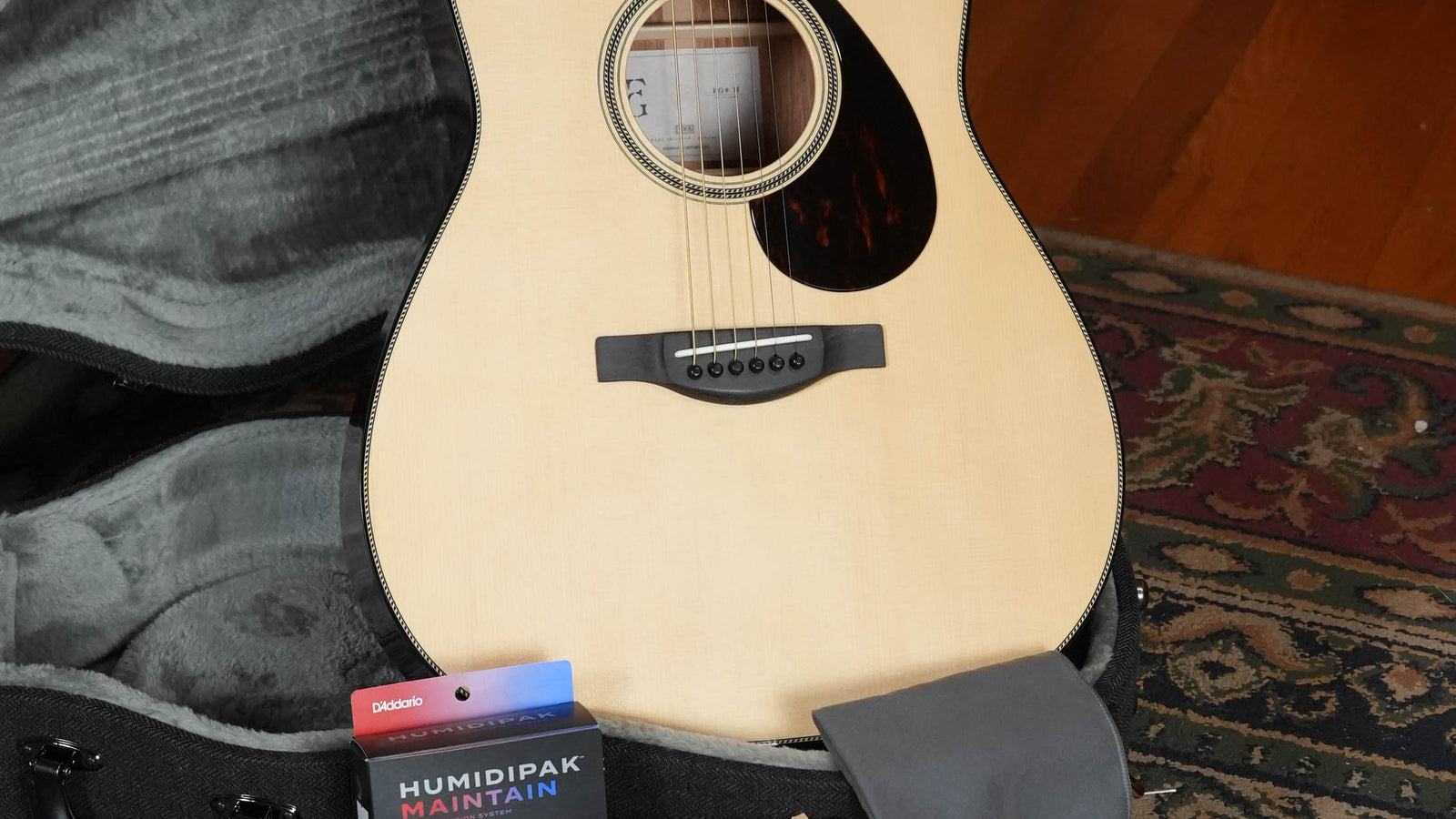
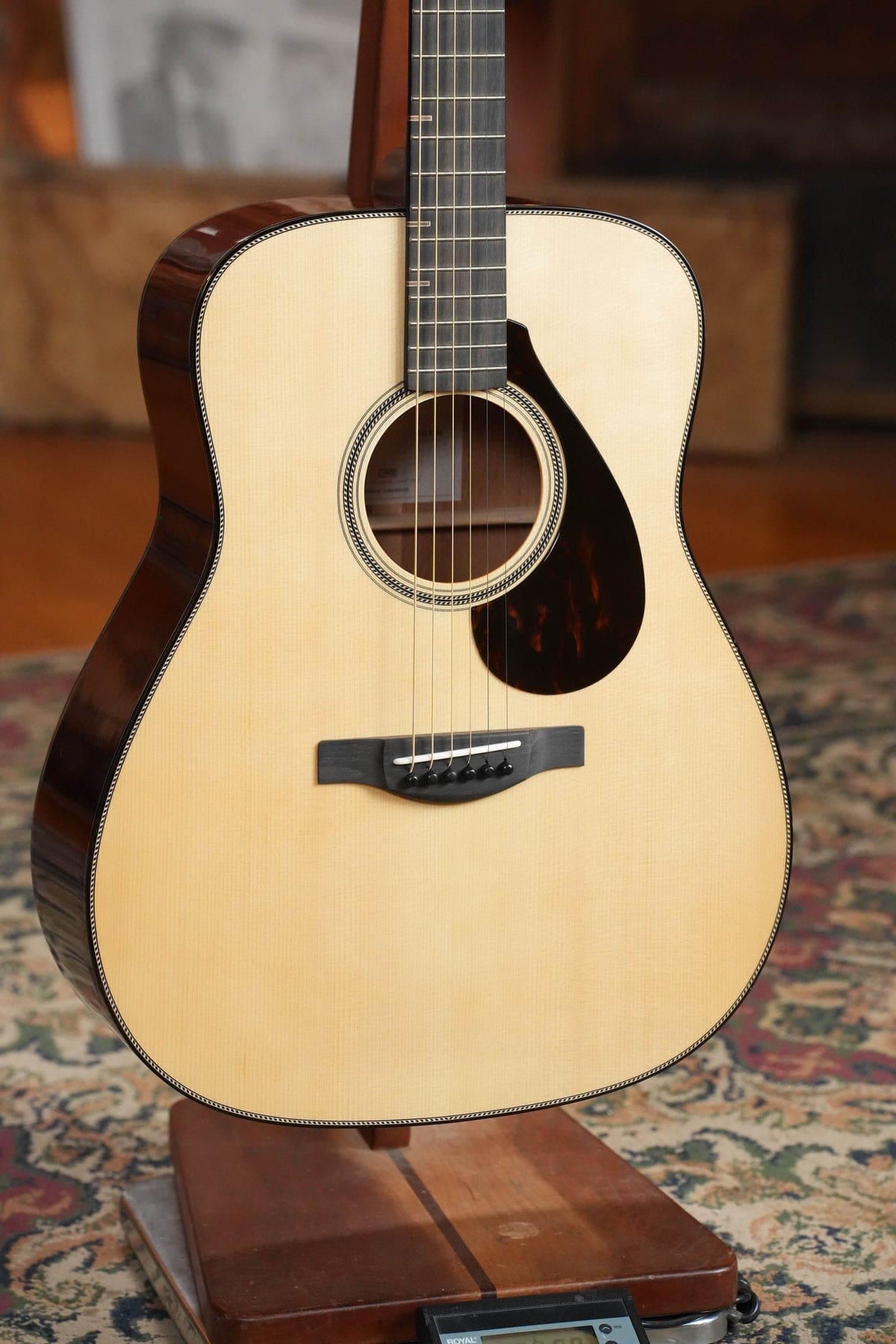
The FG9 is Yamaha's high-end dreadnought, built in Japan, and it comes two ways. The FG9 M features a solid Adirondack spruce top with solid African mahogany back and sides, which makes it the natural rival to a D-18. The FG9 R swaps in solid Indian rosewood, which puts it up against rosewood boutique dreads. Both carry an ebony fingerboard and bridge, a bone nut and saddle, Gotoh SXN510 open-gear tuners and a 25 9/16" scale, plus a 1 3/4" nut that gives your fretting hand a little more room between strings, the same width as a current D-18.
The top is where the two guitars part ways first. Martin builds the standard D-18 with a Sitka spruce top, and the Adirondack top on the FG9 M is the upgrade, with a totally different voicing to go with it. The FG9 also leans harder into boutique touches: more time spent on the inlay work and the look of the instrument, where the D-18 stays a plain-bound workhorse flatpicking guitar. If you want the full rundown of those details (the washi paper label, the neck that flows into the headstock, the rope binding), our ten things to know about the Yamaha FG9 covers them one by one.
Jump to: the three guitars and their prices (1:29) · the blind test (4:16) · John's verdict (7:07).
Test one: FG9 vs D-18, played blind
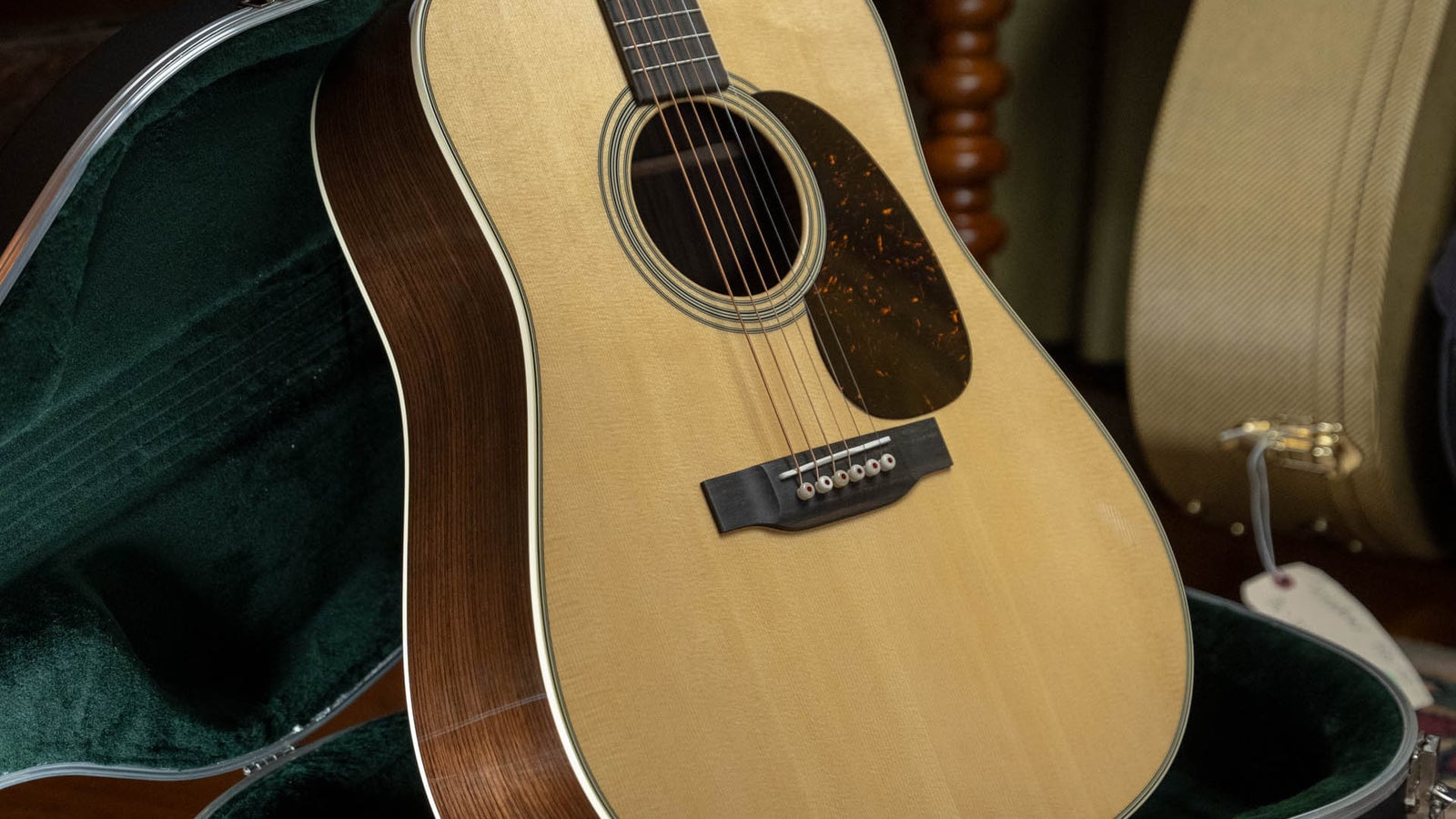
The D-18 in this round was a 2017 model, so not the current generation, but close enough to stand in for what most people picture when they hear "D-18": mahogany back and sides under a spruce top. The FG9 M was the first one we ever had in the shop for sale.
There's a thickness to Martin guitars that is just classic, and if you love that sound, you do.That thickness is the reason the FG9 vs D-18 question is interesting at all. A lot of the boutique world has drifted toward a more modern sound in recent years, with more shimmer and sizzle up top and more separation between individual notes. That was deliberate, because there are more lead players now than when Martin started building steel-string guitars, and note separation helps a lead line cut. What impressed us about the FG9 is that it pulls back toward that Martin kind of thickness instead of chasing the shimmer, which is something other high-end builders have been moving away from.
Neither guitar lost. They have different enough voices that either one could end up in our own collections, and the D-18 still carries something the Yamaha can't buy: Martin's name and its history of building dreadnoughts. When it came time to pick, one of us wouldn't choose, and the other went with the FG9.
| FG9 vs D-18 | Yamaha FG9 M | Martin D-18 (standard) |
|---|---|---|
| Top | Solid Adirondack spruce | Solid Sitka spruce |
| Back and sides | Solid African mahogany | Solid mahogany |
| Bracing | Scalloped X | Forward-shifted, scalloped X |
| Nut width | 1 3/4" | 1.75" |
| Look | Rope binding, boutique trim | Plain workhorse trim |
| Price today | $4,099 | $2,999.99 |
Prices are from our inventory on the day this was written; both videos were filmed in early 2024, so prices quoted in them have moved.
Test two: the FG9 R against a Bourgeois and a Gallagher
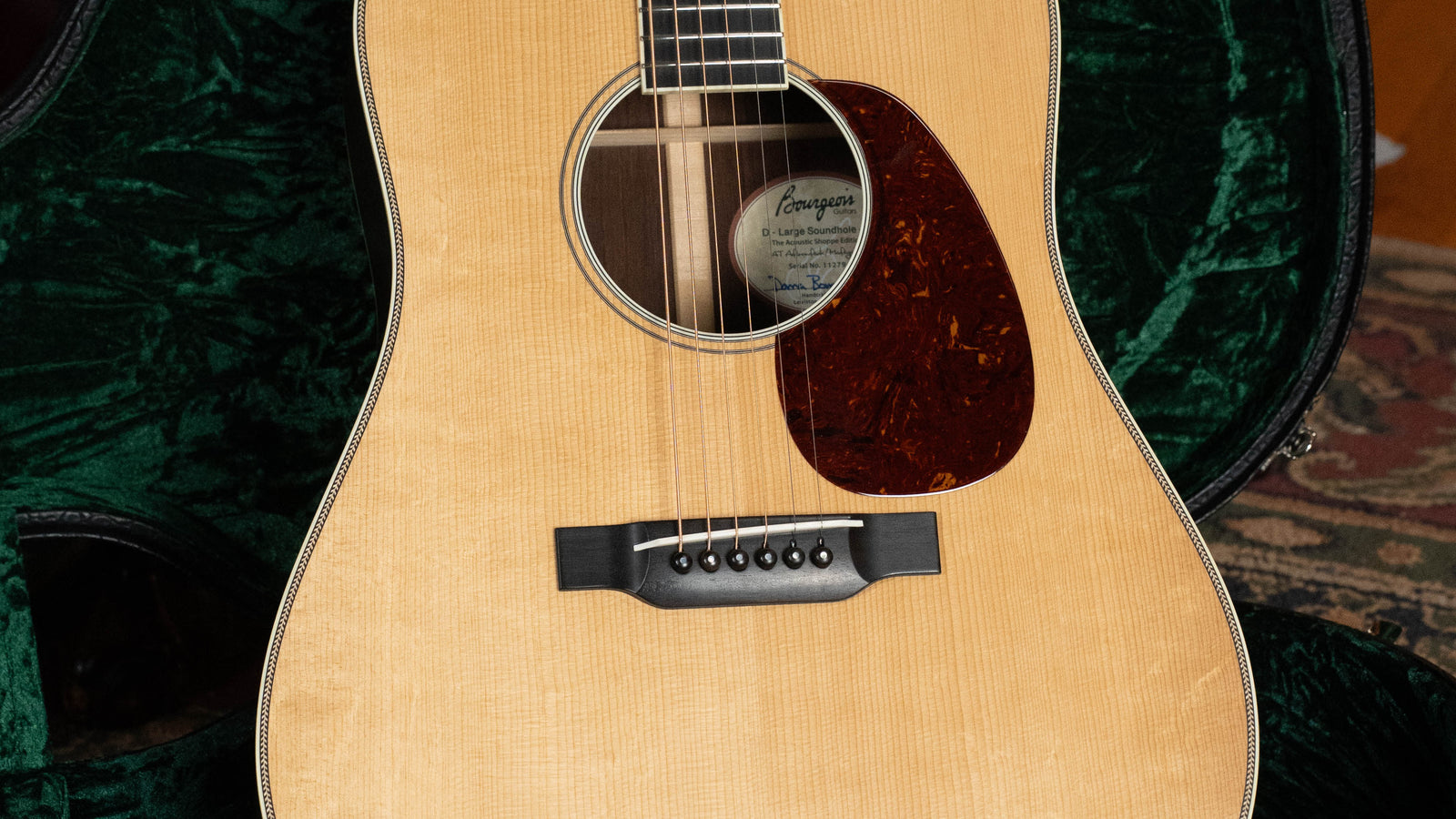
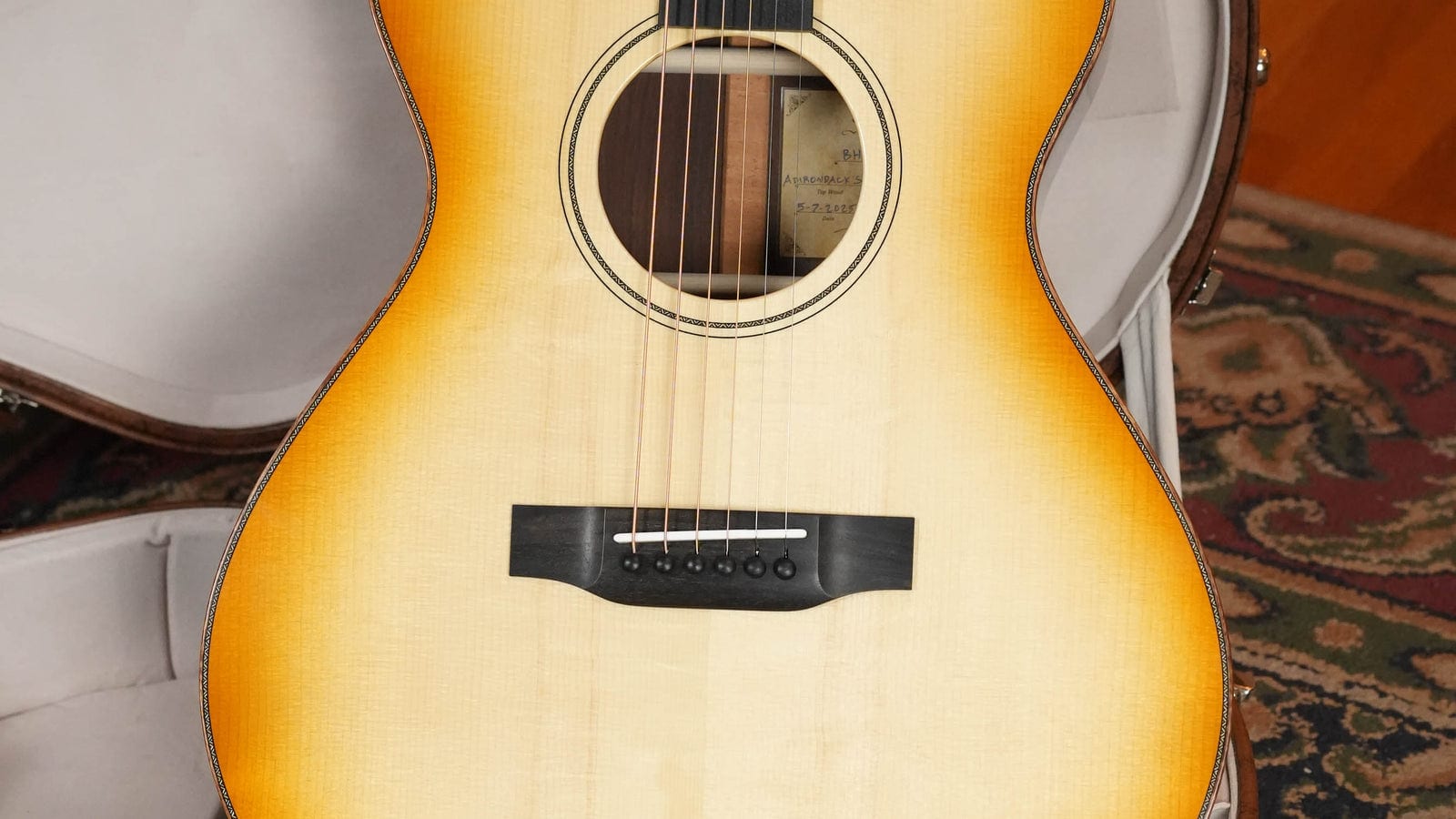
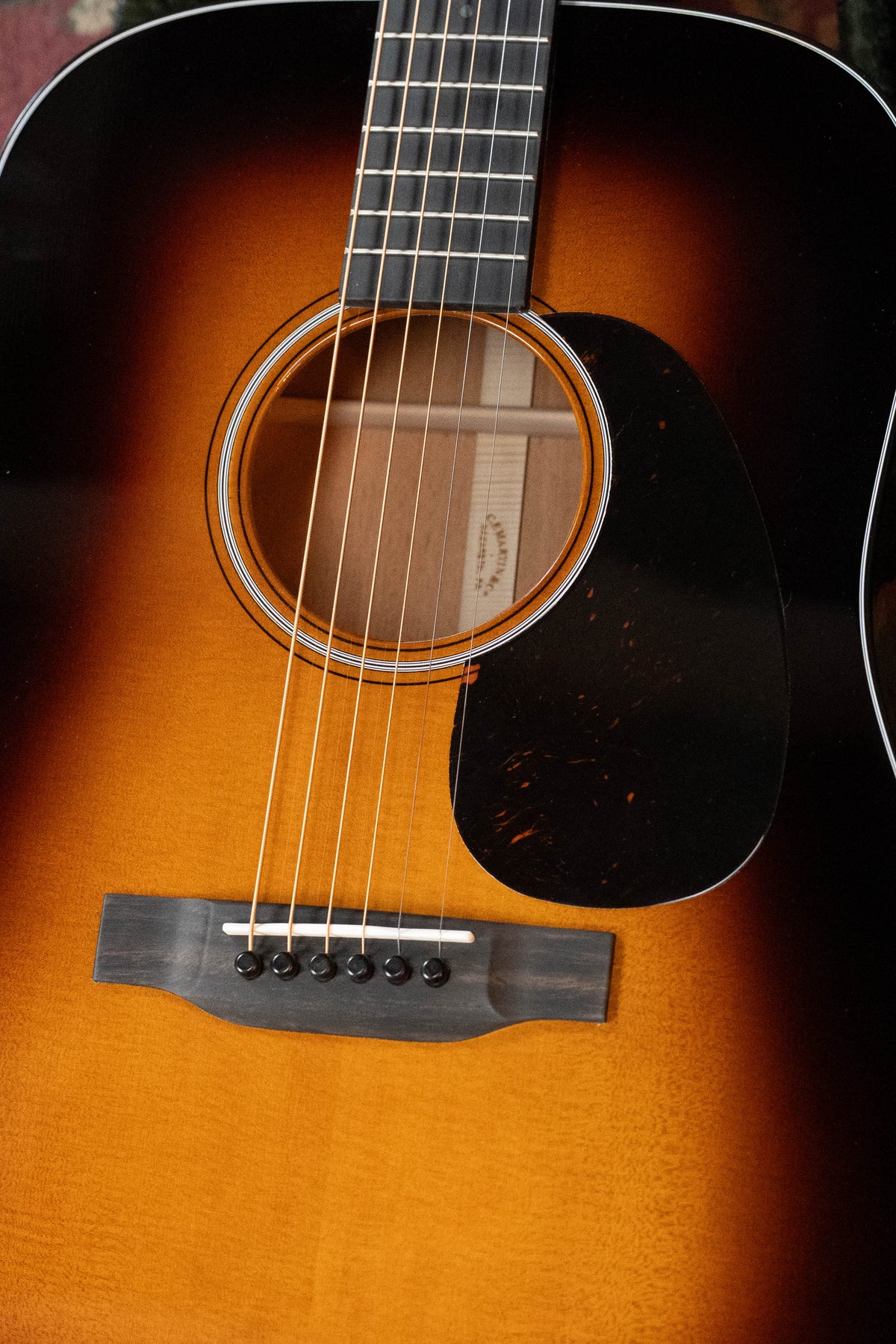
The harder question is whether the Yamaha belongs in the boutique conversation, so for the second test we picked three rosewood dreadnoughts with Adirondack tops and very similar builds: a Bourgeois Vintage Heirloom with a torrefied top, a custom-shop Gallagher G-70 that we ordered with an Adirondack top (it doesn't normally come that way), and an FG9 R. When we filmed it, the Bourgeois was close to $6,900, the Gallagher about $4,700 and the FG9 about $4,100. John played the same song on each one, blind.
None of these guitars was supposed to win by sounding like the others. Dana Bourgeois is known for a precise, consistent tone, Gallagher has built its own voice since the relaunch, and the FG9 lands somewhere else again. If every builder chased the exact same sound, the guitar world would be pretty boring, with everybody building one guitar and putting a different name on the peghead.
Jeremy wasn't surprised that all three sounded good. His point was about how you hear them:
If you have a gap in time, it's really hard for your memory to dial in on what the differences were.Back to back, with the cuts instant, you can hear what you'd miss if you played one guitar in the shop and another ten minutes later. One request from us, though: don't judge this on a phone speaker. Use headphones or decent speakers, or just trust our ears.
What John heard, and why the FG9 was his favorite
- Bourgeois: exactly what he expected, a more articulate low end, very detailed and crisp, and it didn't boom. It was a little short on bass, which a Bourgeois will grow into, and that controlled low end also tends to sound great on microphones.
- Gallagher: the Gallagher sound, strong in the mids with a lot of crisp brightness on top.
- FG9: the widest frequency response of the three, with great low end, good sustain and a top end that stayed round even though it was crystal clear.
Honestly, and this may surprise you, of the three my favorite was actually the FG9.Some of that is John's own taste. He owns a 1940 D-18 with a big, full low end and a Bourgeois with a lot more clarity, and Jeremy thinks the FG9 bridges the two. John likes a little more bottom end with control, and he felt more of the FG9 in the room:
In the room, I feel more of this guitar as I play it. It feels like it's coming back at me a little stronger.Jump to: the FG9 vs D-18 blind round (1:46) · what we heard (3:03) · the reveal (5:16).
The catch: where the D-18 and the boutique guitars still win
- Price. On money alone, the FG9 vs D-18 math favors the Martin: the standard D-18 is about $1,100 less than an FG9 M. If the Martin sound is the sound you want, you don't need to pay more to get close to it.
- The name. A D-18 carries Martin's provenance and history. The FG9 is new to the high-end world, and it still has to earn its place there.
- Microphones. John's pick was what he heard in the room. On mics, the Bourgeois's controlled low end or the Gallagher's crystalline top could easily come out ahead.
- Taste. John is at the point in his playing where he's looking for new voices. If you want the classic D-18 sound and nothing else, buy the Martin.
Our six D-18 alternatives played blind goes deeper on mahogany dreadnoughts, and if you're also weighing rosewood, our D-18 vs D-28 comparison lays out what changes when the back and sides do.
FG9 vs D-18: who should buy which
Buy the FG9 M if you love the thickness of a mahogany Martin but want an Adirondack top and a more finished, boutique-looking instrument. Buy the FG9 R if you've been shopping rosewood boutique dreadnoughts and want to spend less without giving up what we heard in the blind test. If you also play out, the FG9 is available with Yamaha's Atmosfeel pickup, which we cover in our Atmosfeel and FG9 breakdown.
Buy the D-18 if you want the reference sound for a mahogany dreadnought at the lower price, or the name on the headstock matters to you. And if the money is there and you want a builder's voice, a Bourgeois Vintage Heirloom dreadnought or a Gallagher is still the real thing.
| In stock today | Woods | Price |
|---|---|---|
| Yamaha FG9 M #112A | Adirondack / African mahogany | $4,099 |
| Yamaha FG9 R #126A | Adirondack / Indian rosewood | $4,199.99 |
| Martin D-18 #5127 | Spruce / mahogany | $2,999.99 |
| Gallagher Bluegrass Bell #4528 | Torrefied Adirondack / rosewood | $5,400 |
How we get an FG9 or a D-18 ready to ship
Whichever side of the FG9 vs D-18 question you land on, the guitar gets the same 23-Point Professional Inspection on our bench before it ships.
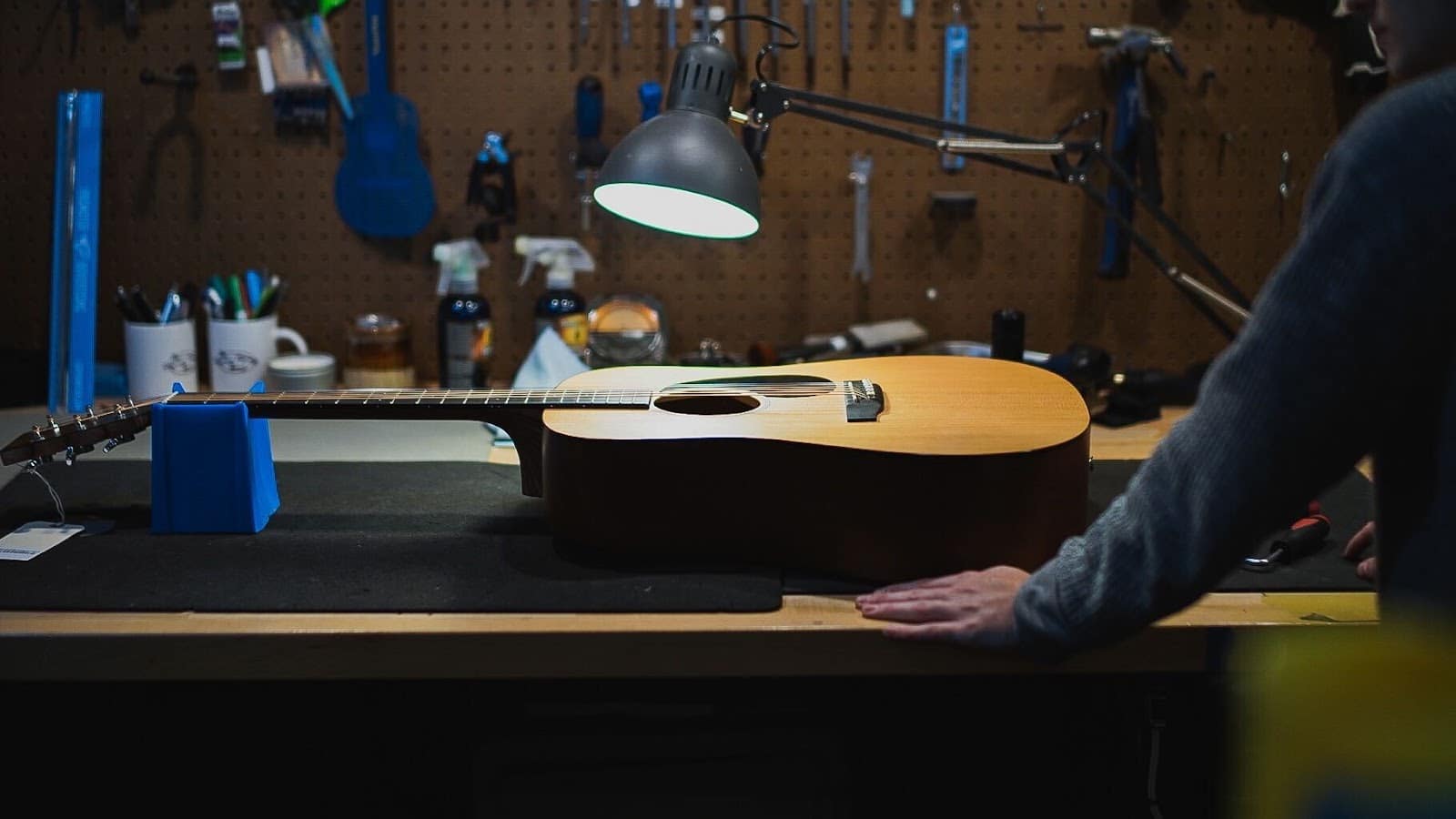
Every guitar here is over $1,000, so each one comes with our Dread-Not Guarantee: a full year to trade it in for up to 90% of the pre-tax purchase price in credit, less round-trip shipping, plus a 30-day in-home trial. That matters on a comparison like this one. Take the FG9 home, play it next to whatever you own, and if the D-18 turns out to be the guitar you wanted, you're not stuck.

Related reading
- Mahogany vs rosewood, with the FG9 M and R played blind
- Eastman E10D vs D-18 blind test
- New Gallagher guitars from Fretboard Summit 2026
Find your dreadnought
Both FG9s live in our Yamaha guitars collection, and the D-18s are in our Martin guitars collection. To hear the boutique side, browse Bourgeois and Gallagher, or line them all up in our dreadnought guitars and the full acoustic guitars collection. If you're still stuck on the FG9 vs D-18 decision, give us a call and we'll talk through both with you.