
Table of Contents
- Where the Brazilian rosewood myth comes from
- The two guitars: one Brazilian, one Indian, same blueprint
- What players expect to hear
- Brazilian rosewood vs Indian, played blind
- Is Brazilian rosewood worth it?
- The catch, and the reasons that aren't about tone
- If you want the wood, or want to hear it first
- Buying a guitar at this level from us
- Who should buy Brazilian rosewood
Spend an evening on a guitar forum and you'll watch the same fight break out every few pages. Somebody posts a Brazilian rosewood dreadnought with a price tag that looks like a used truck, and within an hour someone else swears there's no difference in tone at all, that it's the same guitar in a prettier suit. If you're the one holding the credit card, that argument matters, because the step up from Indian rosewood is an expensive one.
We grew up hearing the "no difference" side. Then more Brazilian rosewood guitars kept showing up, and everybody who played one said there was a difference. So we took two Preston Thompson dreadnoughts built to the same pattern, one Brazilian and one East Indian, and played them blind. Brazilian rosewood did sound different. Just not by as much as the price gap suggests, and not for every player.
Where the Brazilian rosewood myth comes from
For most of the last century, Brazilian rosewood was simply what a great rosewood guitar was made of. Every major builder used it, and so did furniture makers, because the wood is so striking: dark, with black ribbons and the spider-web figure people still chase. That popularity is what ended it. Over-harvesting was tearing up the Brazilian rain forest, and because other rosewoods look so similar, nobody at the border could tell a legal board from an illegal one. So the trade was shut down almost completely, since the late 1960s by John's count. Legal Brazilian still turns up, but it's tightly controlled and rare.
For years, players argued there was no sonic difference at all between Brazilian and East Indian rosewood, and people said they'd run the tests to prove it. But every species of wood sounds a little different, so "zero difference" was always hard to believe. The question worth answering is how big the difference is, and who it's worth paying for.
The two guitars: one Brazilian, one Indian, same blueprint
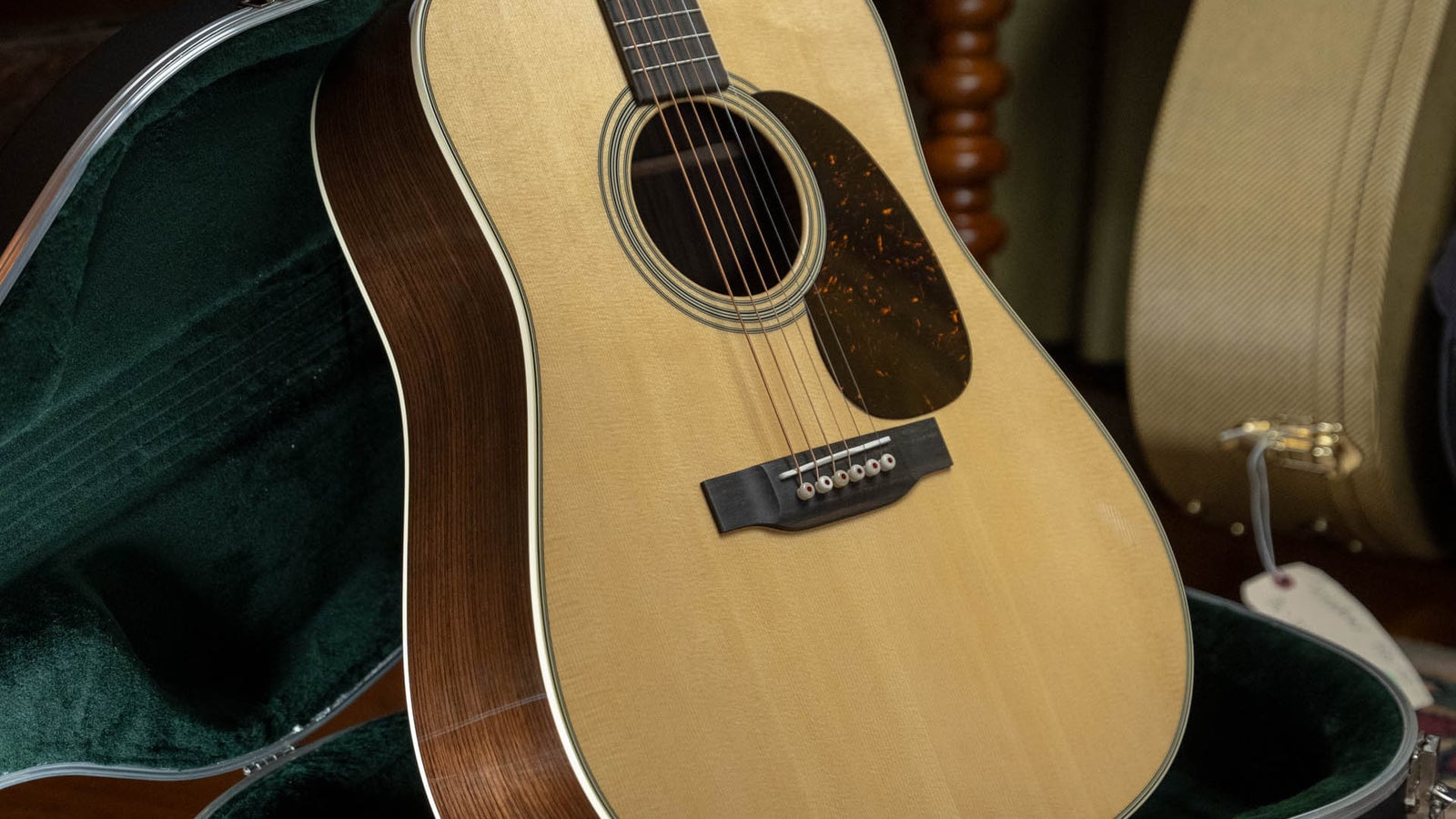
The Indian guitar is a Thompson D-EIA, East Indian rosewood with an Adirondack spruce top, a bound fretboard and a bound headstock. It belongs to Trent, our photographer and videographer, and he'd been touring with it for about three years. The Brazilian rosewood guitar was a brand-new custom dreadnought we'd had built for a customer. Same builder, same body, same top wood. The back and sides are the difference we were testing.
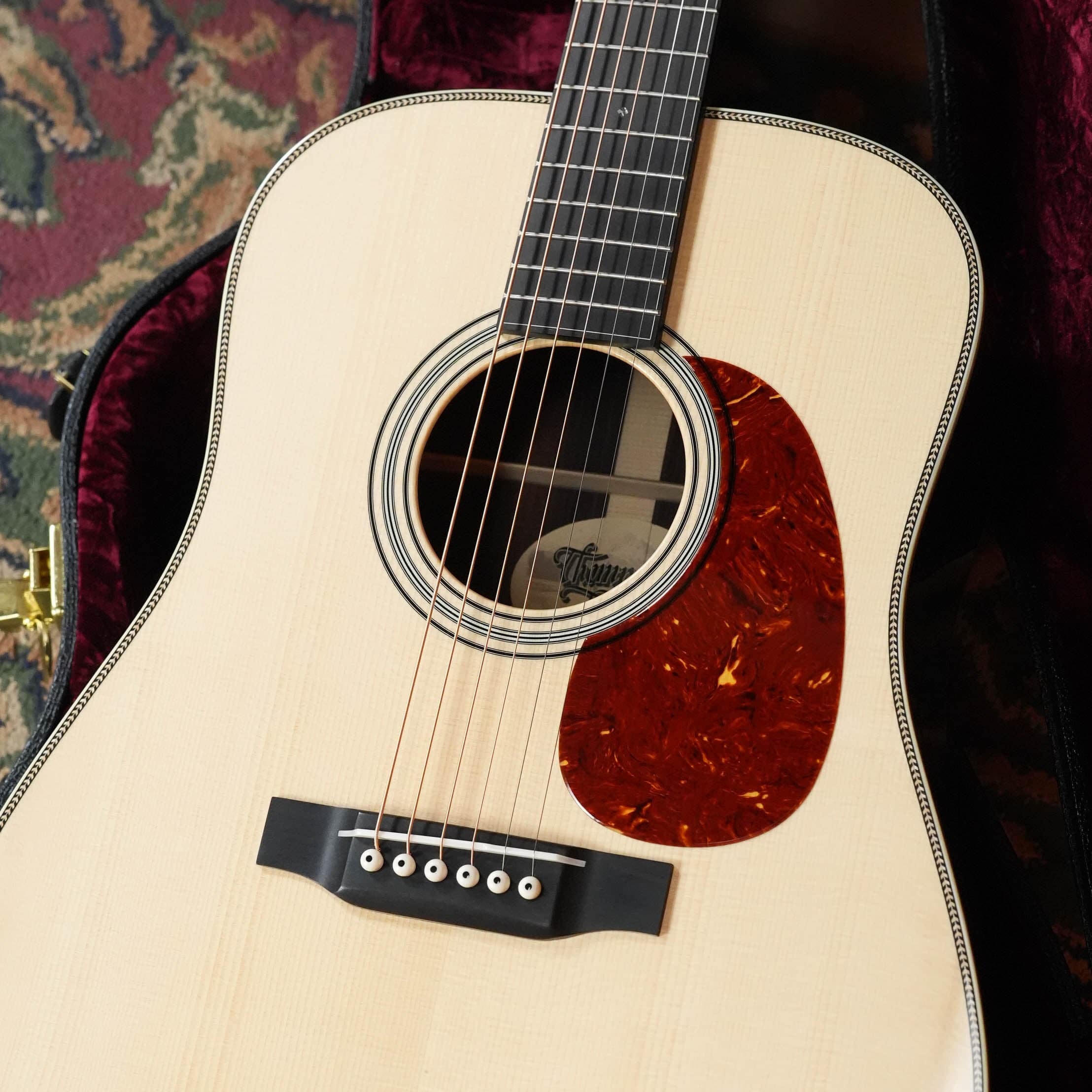
One thing to keep in mind: the Indian guitar was three years old and had been on tour, and the Brazilian was fresh off the bench. Some of what we heard could be age, and some could be the normal variation between two handmade guitars. We'd rather tell you that up front than pretend a two-guitar test settles anything forever.
Jump to: the shootout at 7:16, the verdict at 8:38, and back-to-back tone samples at 15:20.
What players expect to hear
The usual story goes like this. Brazilian rosewood is a little denser than Indian, which makes it a bit harder and gives it more brightness and a tighter low end. Indian rosewood is supposed to carry a thicker low-mid area. That's what we hear most often from people comparing the two, and it's a reasonable place to start listening.
We also don't think it's night and day, because a lot of luthiers can work their magic and tailor either wood a little more toward one sound or another. A great builder narrows the gap, which is one more reason the argument never settles.
Brazilian rosewood vs Indian, played blind
We played both guitars back to back with the bodies blurred out, so the only clue was the sound. Here's what we heard.
| What we listened for | Brazilian rosewood | East Indian rosewood |
|---|---|---|
| Low end | Tighter and bigger, with more punch | Softer attack, a little less punch |
| Attack | More overall attack and fullness | A little softer |
| Top end | Very similar | Very similar |
| Overall size | Sounded a bit bigger | Slightly smaller |
| Look | Dark, rich color, wild figure | Browner, straighter grain |
So the difference is real, and it's slight. The Brazilian rosewood guitar had a tighter, bigger low end even though it was the brand-new one. The Indian guitar's low end had a softer attack and not quite as much punch. The top end felt almost identical.
There is a slight, and I mean slight, difference between these two guitars.We also suspect some of it is a feel thing. Sitting behind a guitar, you feel things that a pair of computer speakers or headphones won't show you. We've done blind tests where we felt a significant difference, and part of that is being in the room with the guitar in our hands. Tell us in the comments on the video whether you could hear it.
Is Brazilian rosewood worth it?
Tone alone, we wouldn't call it a substantial difference, and we'd be happy playing either guitar. The real answer depends on where you are in the price ladder, and it helps to think of guitar money in steps:
- From a $500 guitar to a $1,000 guitar, the difference in tone is dramatic.
- From $1,000 to $3,000, it's smaller, but still significant.
- From $3,000 to $6,000, it's much smaller again.
- Past that, every step is diminishing returns.
Brazilian rosewood lives at the top of that ladder. It's an expensive upgrade for a small change, but there's no other way to get that particular change. If you've played a lot of guitars and you keep hearing a little something that's missing, this may be the only way to get it.
I've played a lot of Brazilian rosewood guitars. I don't think anything else does it all the way.We'd compare it to a serious golfer and a putter, or a fisherman and a rod. A casual player won't feel the difference and shouldn't pay for it. The enthusiast who has developed that feel will, and to that person the upgrade is absolutely worth it. If you're the player who hears it, feels it, and recognizes it as the thing you've always wanted from a guitar and never got, spend the money on a Brazilian rosewood guitar.
The catch, and the reasons that aren't about tone
The catch is that most people probably won't care, or can't really hear a big enough difference to justify the price. A three-year-old Indian rosewood Thompson that's been on the road sounded close enough to a brand-new Brazilian rosewood one that we'd take either home.
Tone isn't the only reason people buy it, though. There are other fair reasons to make the jump:
- Appearance. Indian rosewood can't give you that dark, rich Brazilian color and figure.
- Rarity. There aren't many Brazilian rosewood guitars out there, and owning something that unusual matters to some players.
- Collectibility. Rarity and a protected wood give a Brazilian guitar a different place in a collection.
One spec-sheet trap to know about: "Brazilian rosewood" on an entry-level guitar doesn't always mean the wood. Our Martin 000-X2E, for example, is listed as Sitka over HPL with a Brazilian rosewood pattern. That's a laminate with the look of the wood, at $749, and it's a fine guitar for what it is, but it's not part of this conversation.
If you want the wood, or want to hear it first
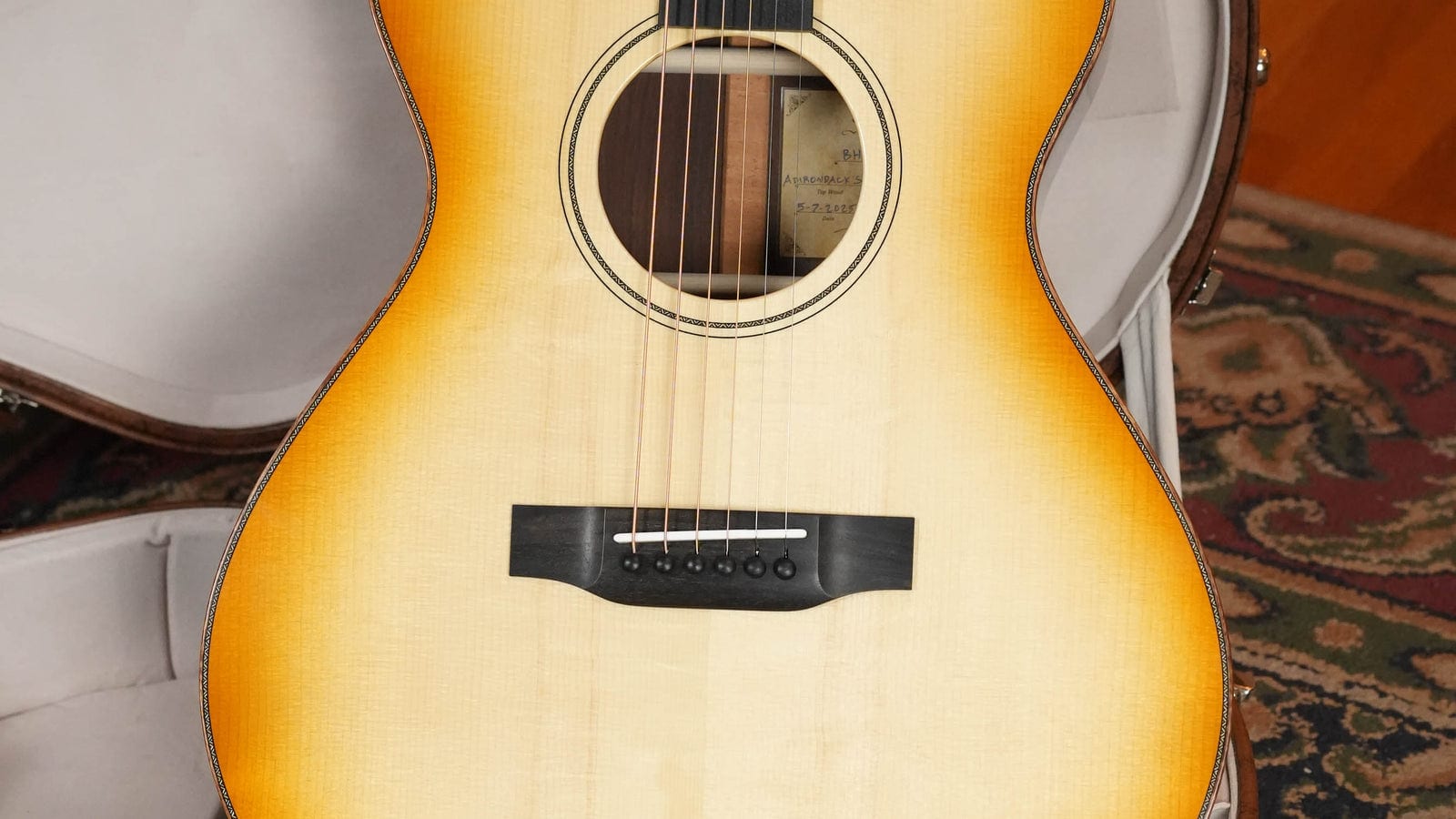
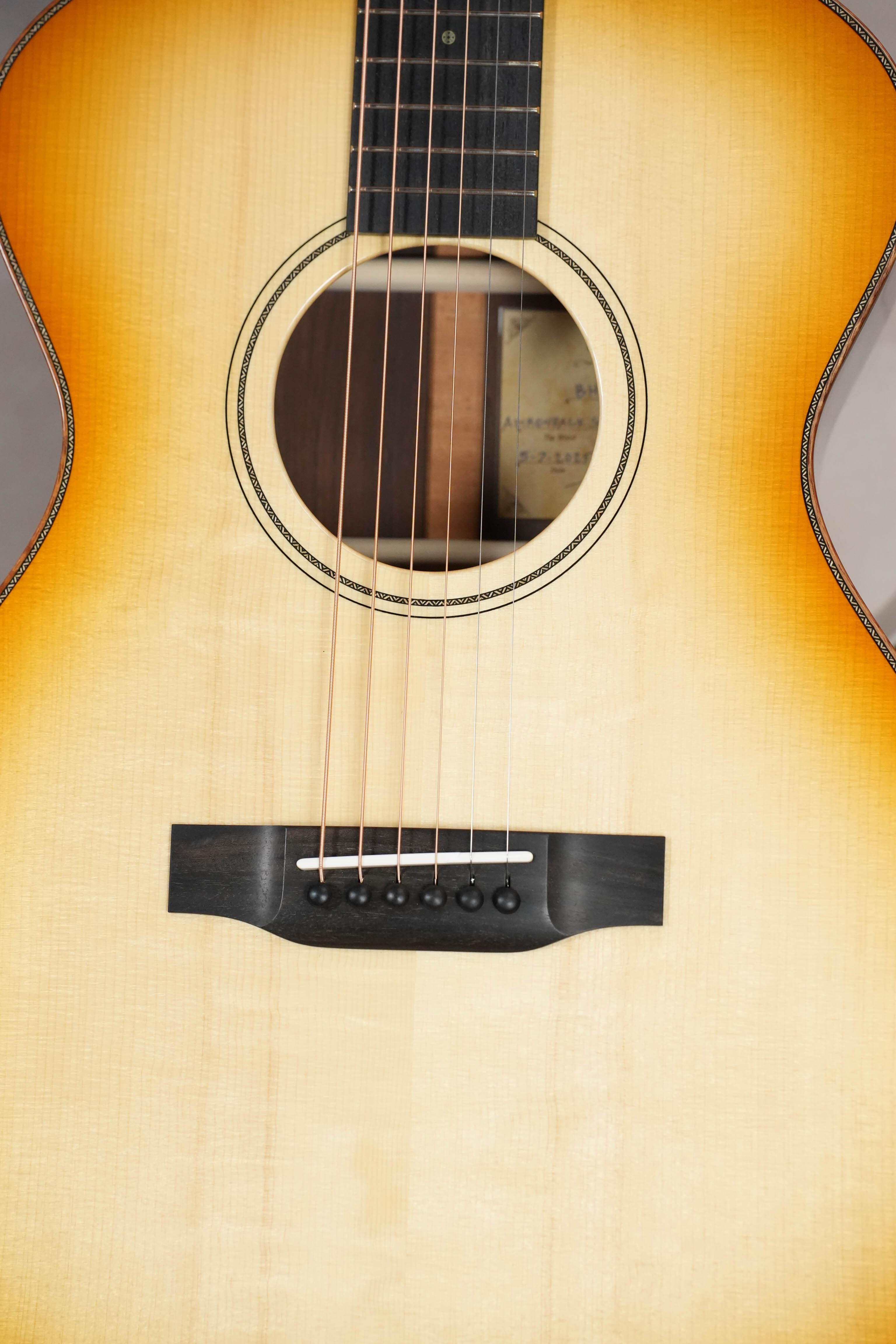
Right now our in-stock Brazilian is a pre-owned 2025 Bedell Bahia Limited Edition OM at $6,999: an Adirondack spruce top over Brazilian rosewood back and sides, in near-mint condition. It's an OM rather than a dreadnought, and it's built without electronics, so it's a way into Brazilian rosewood without commissioning a custom build. The rest of the line is on our Bedell guitars page.
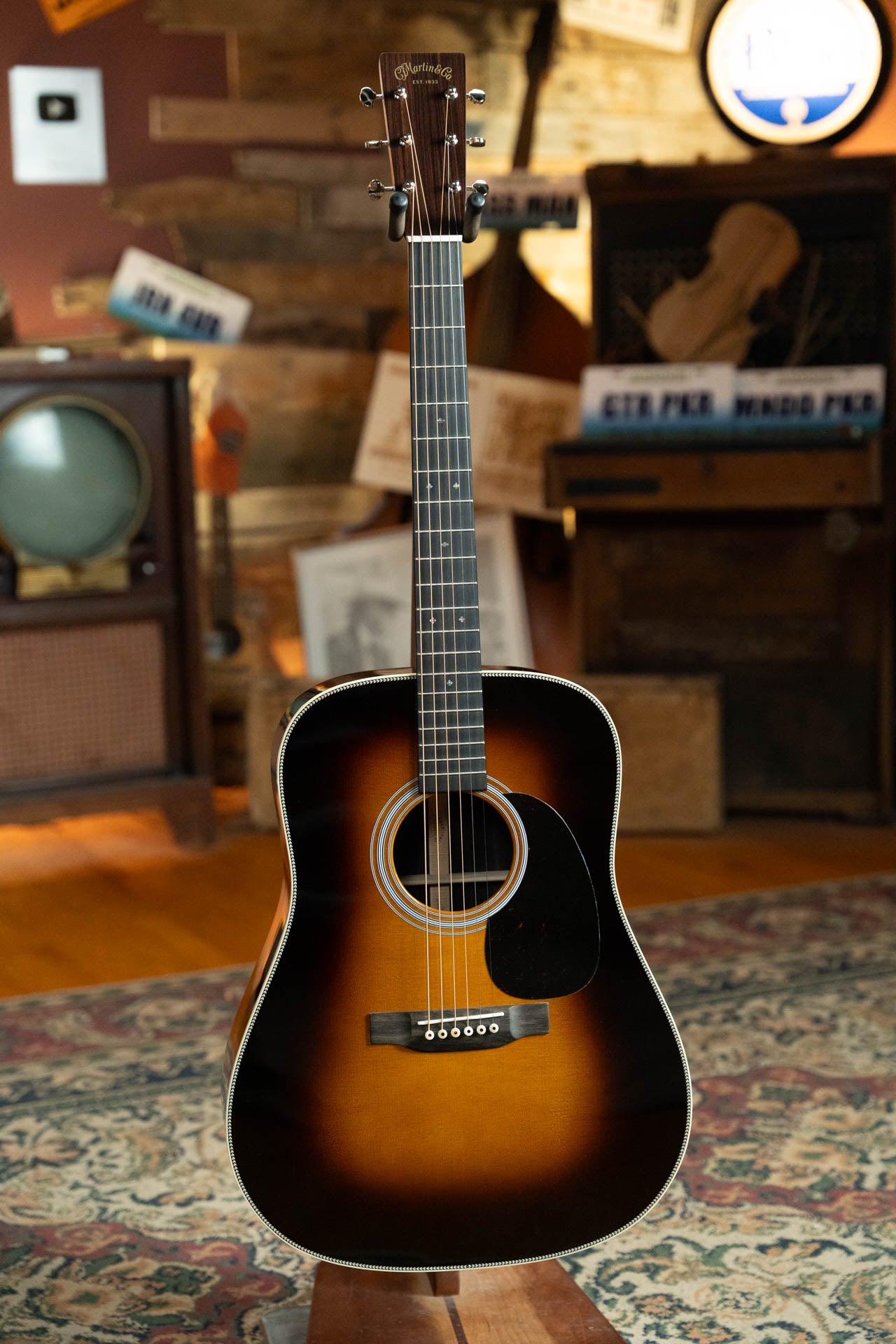
If East Indian rosewood is the smarter buy for you, there's plenty to play. The Martin HD-28 1935 Sunburst is $3,899.99, the Atkin 00037 DLX is $6,299, and our dreadnought guitars page has the rest. For the mahogany side of the rosewood question, start with our mahogany vs rosewood comparison, and for the HD-28 against its sibling, our D-28 vs HD-28 breakdown.
No Preston Thompson is in stock today. They're on our Preston Thompson guitars page when they come in, and if you want one built in Brazilian or Indian rosewood, ask us about ordering one. We've also had our eye on Madagascar rosewood as the in-between option at an in-between price, and we'd love to put it in a test like this one. Our Preston Thompson D-HRA review covers another Thompson dreadnought, and Thompson is on our list of the best boutique guitar builders.
Buying a guitar at this level from us
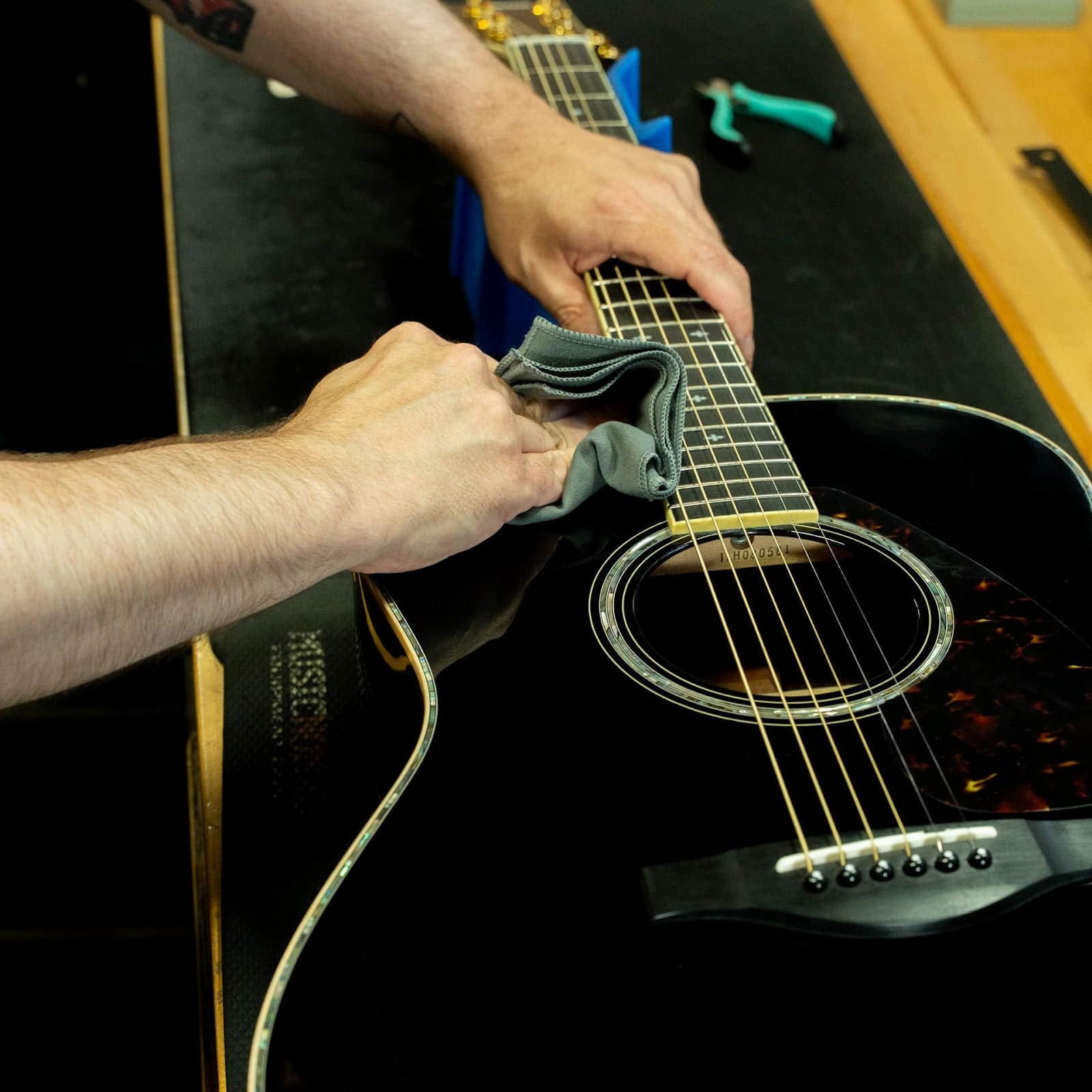
At this price you should get to live with the guitar before you commit. Every guitar we ship gets our 23-Point Professional Inspection on the bench before it goes in the box.
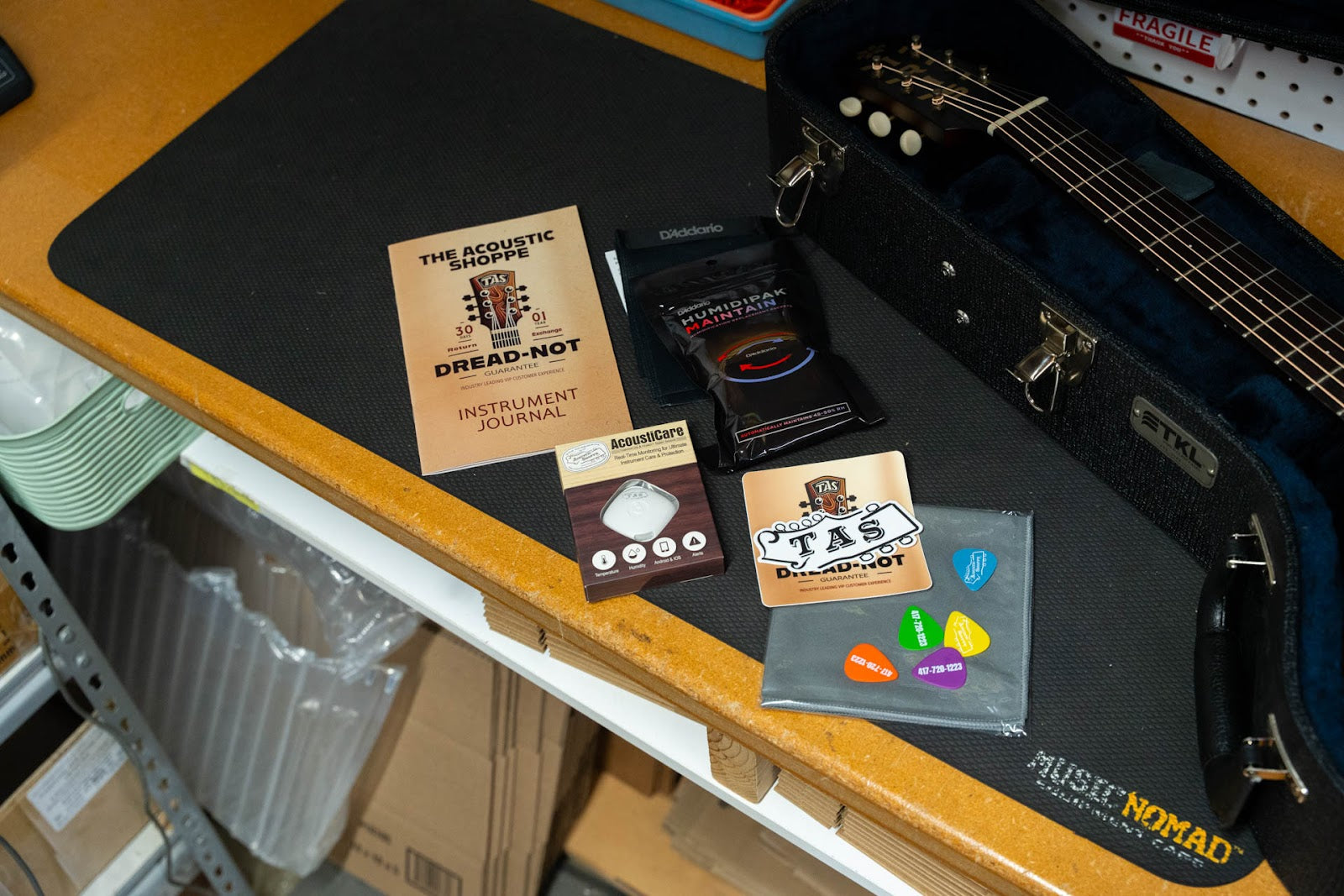
Guitars of $1,000 and up are covered by the Dread-Not Guarantee. For a full year you can trade the guitar in for up to 90% of the pre-tax purchase price in credit, less round-trip shipping, depending on its condition. You also get a 30-day in-home trial, which matters here more than anywhere: the only real way to know whether you're the player who hears Brazilian rosewood is to play one in your own room.
Related reading
- Martin D-18 vs D-28: mahogany or rosewood
- Tom Bedell and sourcing tonewood responsibly
- Preston Thompson guitars at The Acoustic Shoppe
Who should buy Brazilian rosewood
Buy Brazilian rosewood if you've already owned good rosewood guitars, you can hear the tighter low end and the extra punch, and that's the thing you've been missing. Buy it if the look, the rarity and the collectibility matter to you as much as the tone. If you're still climbing the lower steps of the price ladder, where each step buys a much bigger change, spend it there first; tone-wise, we'd be happy with either wood. Either way, shop acoustic guitars with us, play what we recommend in your own home, and let your ears settle the argument.