
Table of Contents
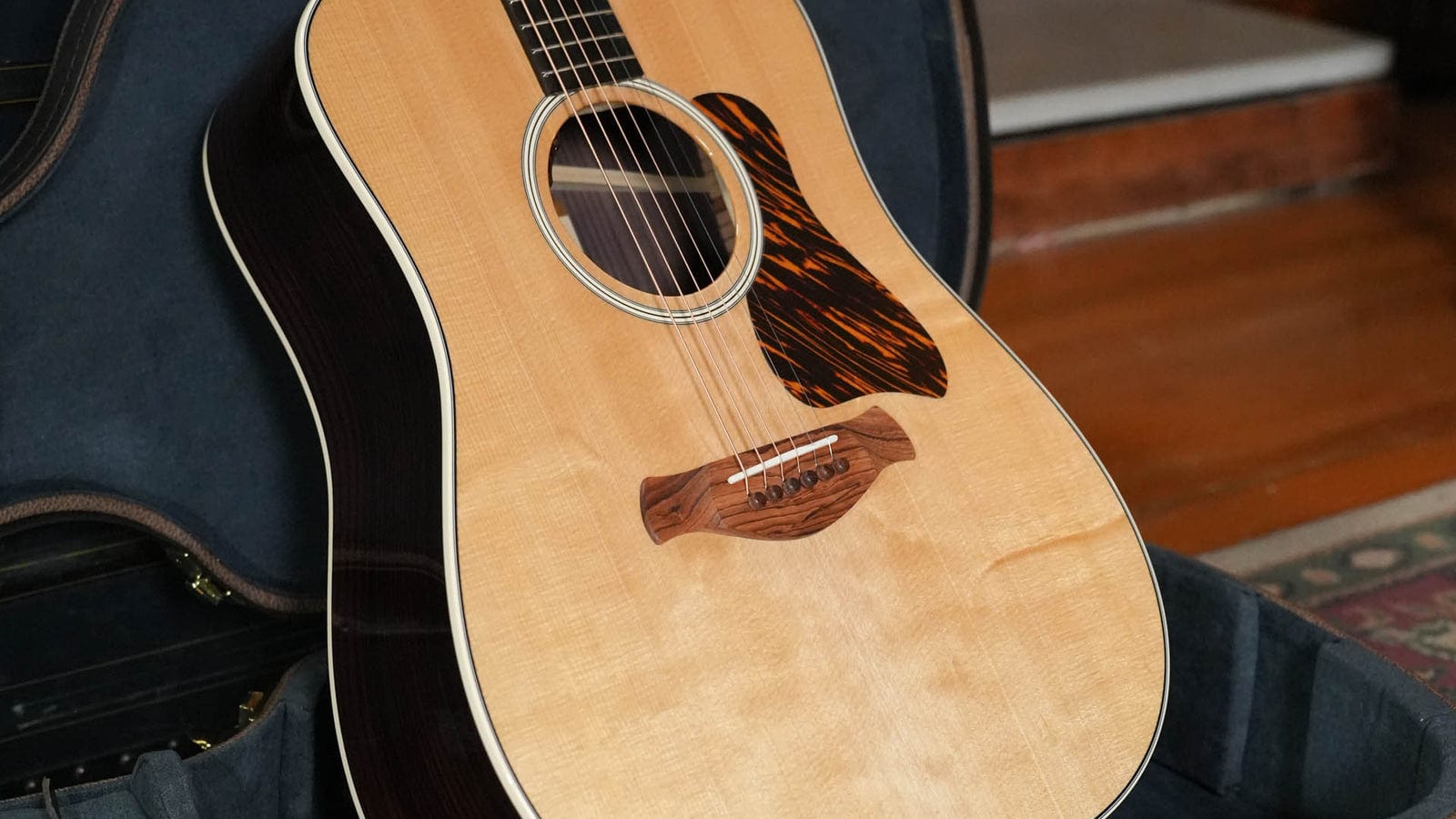
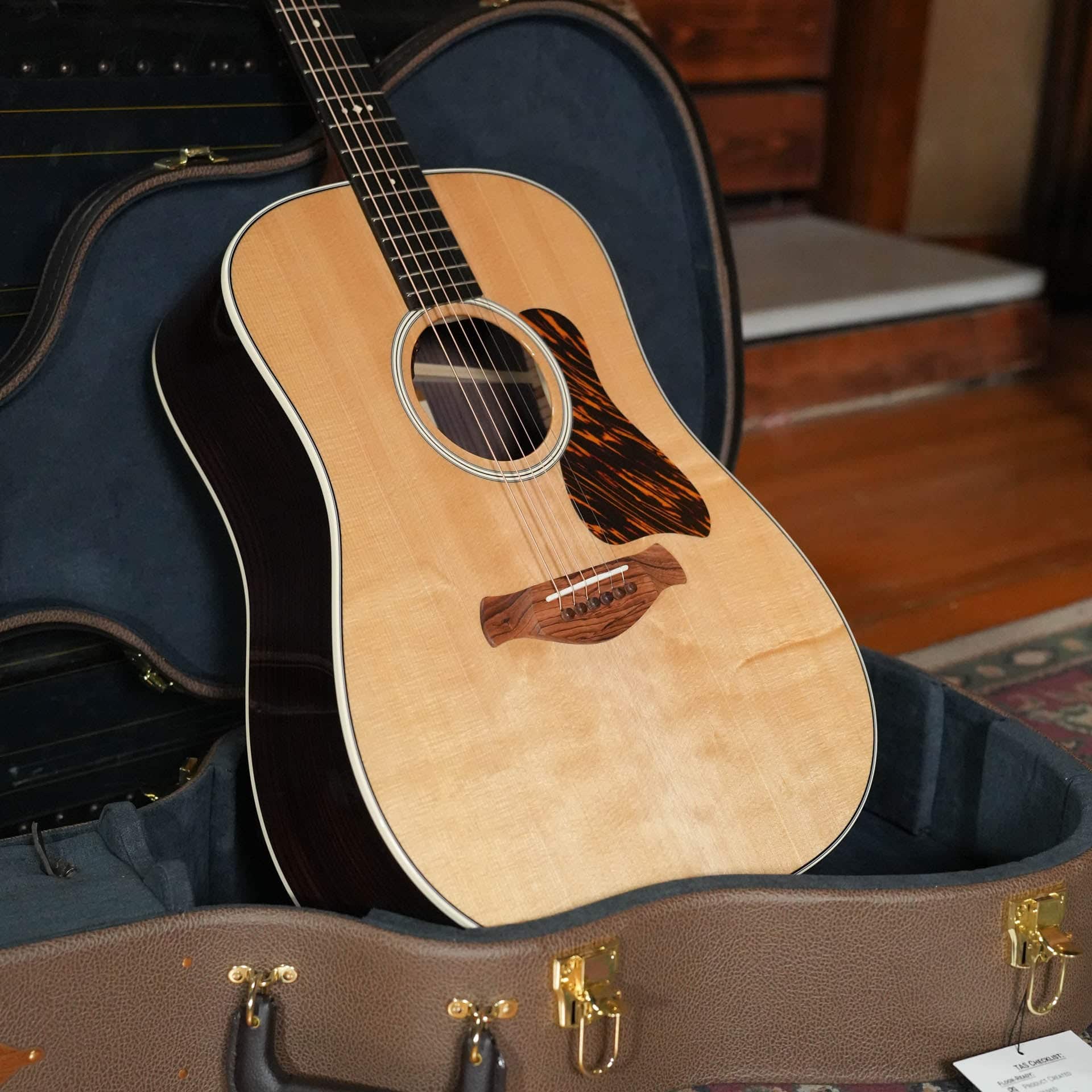
The new Gold Label 710e is the closest Taylor has ever come to the rosewood dreadnought sound, and in our Taylor 710e vs HD-28 shootout it still didn't sound the same as the Martin. Both are square-shoulder dreadnoughts with spruce tops over solid Indian rosewood back and sides. The HD-28 sells for $3,699.99 and the 710e for $2,999, and they get to a similar place by very different roads.
We played them back to back on camera. Below is what John liked about each, what he'd change, and who each one is for.
Why Taylor built a square-shoulder dreadnought at all
When Taylor launched the Gold Label series last year, it was pitched as the brand's vintage-inspired line. Reps came through the shop telling us Taylor finally had a Martin-sounding guitar. It didn't look like a Martin, and it didn't totally sound like one either. That was fine with us. It just wasn't the guitar the pitch described.
This year Taylor added two square-shoulder dreadnoughts to the Taylor Gold Label lineup, and that changed the conversation. The 710e is the rosewood one. Our guide to all five Gold Label models covers the mahogany side of the family, and our Taylor Fretboard Summit 2026 recap covers what else is new in Gold Label.
We think every big builder is working its way toward the middle right now. The three biggest names spent years in their own corners, each saying "we do this best." Martin has been adding Gibson-flavored models and grand auditorium shapes. Taylor, known for a modern sound that some players in the other camp never warmed to, is saying it can build something in that vein and keep its own DNA. We took the other side of that question in our Martin vs Taylor post on why Martin struggles when it innovates.
710e vs HD-28 specs, side by side
On paper these two are closer than any Taylor and Martin pairing we've set side by side. The differences that matter are under the top and at the neck joint.
| Spec | Taylor Gold Label 710e | Martin HD-28 |
|---|---|---|
| Top | Torrefied Sitka spruce | Spruce, aging toner |
| Back and sides | Solid Indian rosewood | Solid East Indian rosewood |
| Bracing | Fanned V-Class with Tonal Rout | Forward-shifted scalloped X (Golden Era) |
| Neck joint | Action Control Neck (adjustable) | Dovetail |
| Neck profile | Standard Carve | GE Modified Low Oval, high-performance taper |
| Scale / nut width | 25-1/2" / 1-3/4" | 25.4" / 1-3/4" |
| Electronics | L.R. Baggs Element VTC | None |
| Price (USD) | $2,999 | $3,699.99 |
The scale lengths are a tenth of an inch apart and the nut widths match, so your fretting hand lands in the same place on both. The 710e vs HD-28 gap is widest at the bracing. The HD-28 uses Martin's forward-shifted, scalloped X-bracing. The 710e uses Taylor's fanned V-Class with a Tonal Rout. John put the 710e's sound down to Taylor's modern innovations in general: because of them, it has less of the low-end overtone bloom you hear from the HD-28. The Action Control Neck lets the neck angle, and with it the action, be adjusted at the joint, where the HD-28's dovetail is set for good. The 710e also ships with a pickup installed. The HD-28 has no electronics, so you would add your own pickup.
Jump to the part of our 710e vs HD-28 video you want:
- 3:27, what makes each guitar special
- 4:32, John's honest critique of both
- 6:32, the two guitars played back to back
- 8:46, the final verdict
What the HD-28 does that copies still miss
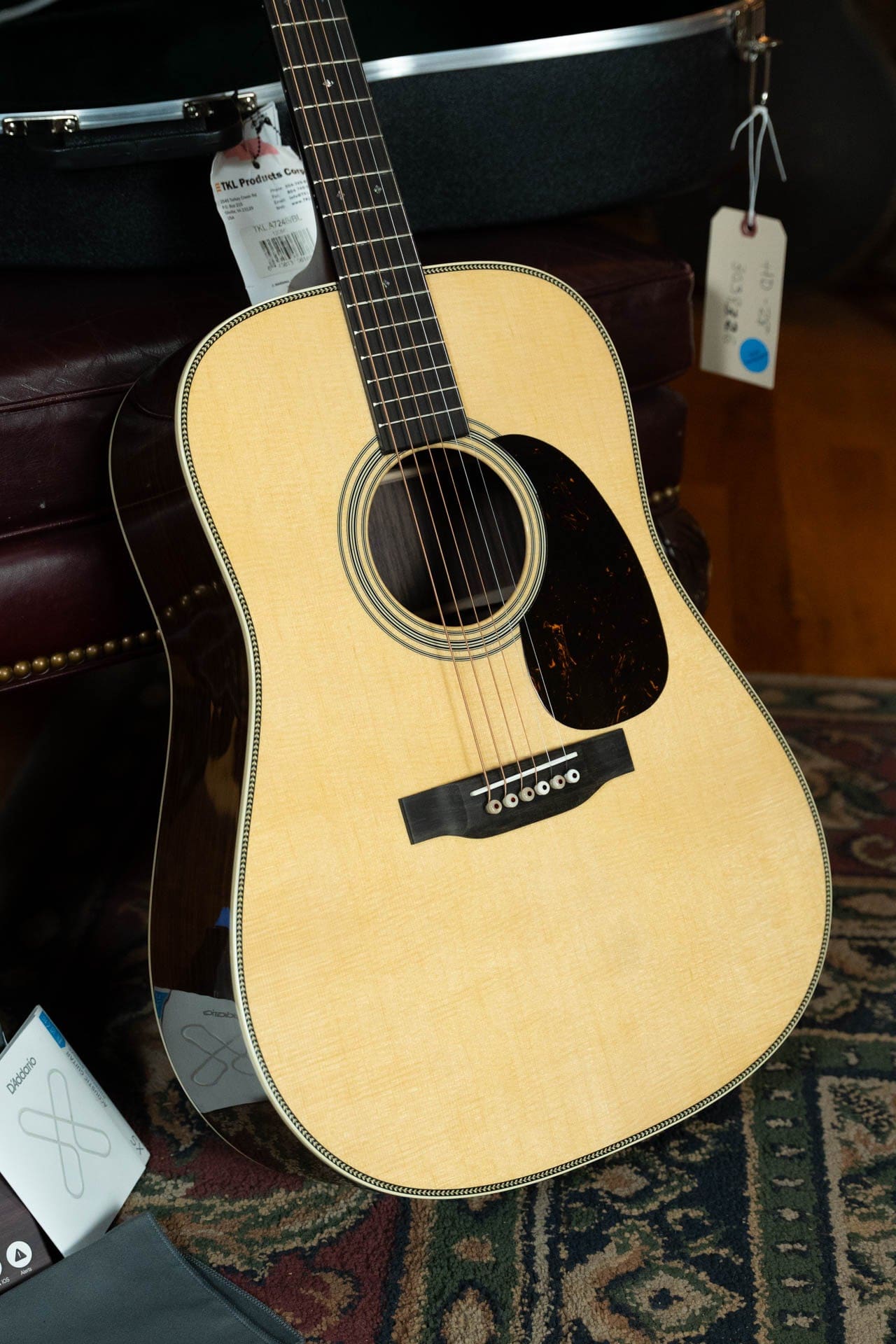
John didn't hedge on the Martin. His point was that even builders who make a nearly identical-looking guitar don't get the same depth out of it, and most of them aren't trying to. The HD-28 has the warmth and depth a lot of us grew up listening to.
"The HD-28 is officially the rosewood dreadnought sound that we all know and love." John ChapmanThe HD-28 buyer is the traditionalist who wants headroom and a big fundamental low end. The bark and growl of this guitar is what that player is used to hearing. Martin has spent over a century refining that low end and that thump, and John's view is that nobody is taking it away from them.
How the Gold Label 710e sounds next to it
John called the 710e a modern version of the rosewood dreadnought, and good in its own right. He heard a little different highs and lows, less low-end bloom than the HD-28, and a midrange that cuts through in its own way. If you've played Martins for years, you'll notice what's missing, and John says so plainly in the drawbacks below.
On camera we called the 710e the more modern stage performer, and two parts of the build back that up for a gigging player. The Action Control Neck means action can be adjusted at the neck joint. The L.R. Baggs Element VTC means you plug in at the gig with nothing added. The HD-28 leaves both of those jobs to you and your tech.
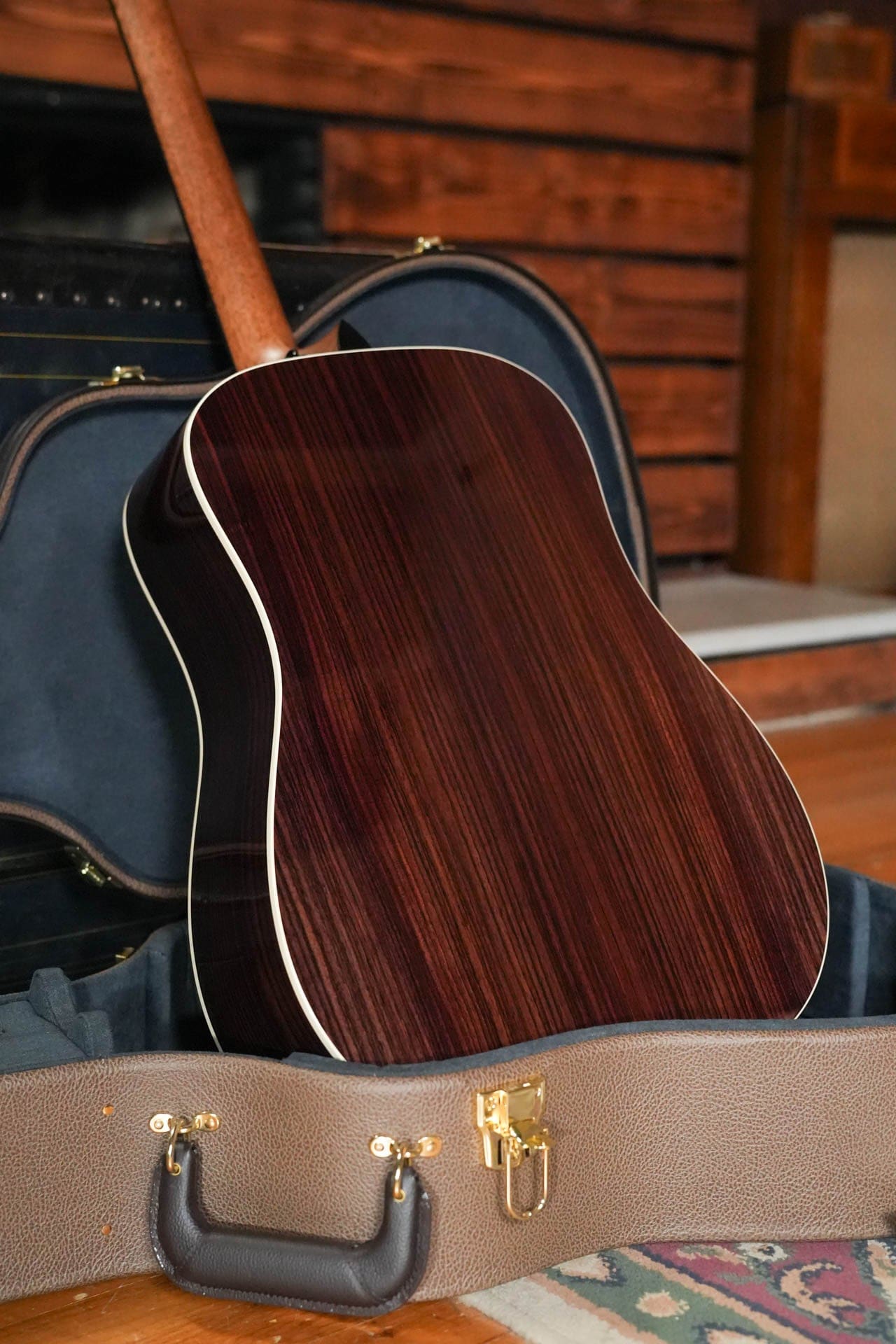
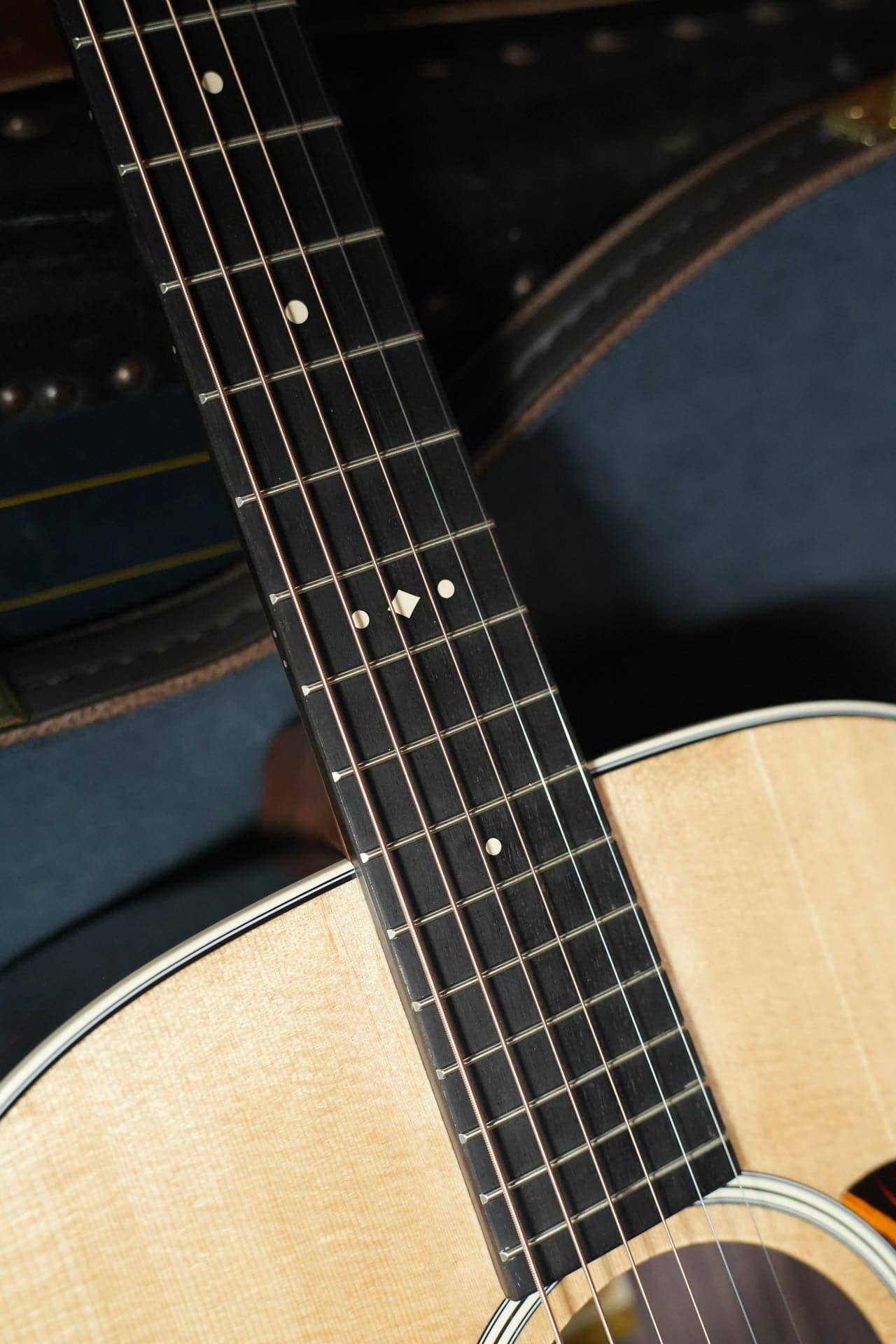
The neck is where the 710e wins over players who have fought a Martin neck. John singled out the comfort of the 710e's neck in his verdict, and his critique of the HD-28 ran the other way: the Martin's neck shape doesn't suit a lot of players. If a GE Modified Low Oval has never felt right in your hand, the 710e's Standard Carve is the one to try.
The honest drawbacks of each
Jeremy asked John for an honest 710e vs HD-28 critique, and he gave one.
The HD-28. There has always been a bias against Martin playability. Martin has come a long way with its setups, and they're a lot better than they were. It is still not as easy to play as the Taylor, and the neck shape doesn't suit a lot of players. Then there's the low end.
"Is it boomy? Yes, it is. Is it sometimes too much low end and too much power? Absolutely." John ChapmanWhether that's a flaw depends on the kind of player you are. If you want the boom, it's the reason to buy the guitar.
The 710e. The first thing is the look. Someone shopping for a square-shoulder dreadnought expects a certain silhouette, and Taylor has its own look on purpose, because it doesn't want to come off as a copy. The second is the sound. As close as it comes, the 710e hasn't hit the same tonality and the same punch.
"It does lack some of that low-end overtone bloom that kind of happens with these guitars." John ChapmanIt misses some of the power and presence that anyone who has played Martins for years will listen for. John's take is that this isn't all bad: it gives you a different version of the same sound.
710e vs HD-28: which one should you buy?
Jeremy asked whether the new Gold Label could dethrone the Martin. John's answer was no, and that it didn't need to. His verdict was that Taylor understood the assignment.
"This is the closest thing that Taylor has ever come to this sound. It's not the same. And I'm okay with that." John ChapmanHe added that we didn't need another Martin copy. We needed Taylor to show what its own DNA can do with a rosewood dreadnought, and both guitars have a spot in that world. Here's how we'd sort 710e vs HD-28 buyers:
- Buy the Martin HD-28 if you want the classic rosewood dreadnought sound, with the low end, the thump and the headroom traditional players lean on. Accept that it's boomy and that the neck may take some getting used to.
- Buy the Taylor Gold Label 710e if you want a rosewood dreadnought voice in the same vein, plus modern innovations: V-Class bracing, a comfortable, adjustable neck and a pickup already installed, for $700 less.
- If the HD-28's low end sounds like too much, compare it with its mahogany sibling in our Martin D-18 vs D-28 comparison.
Taylor is new to our shop this year, and the 710e gives our customers a second choice inside the rosewood dreadnought world, next to the Martins we carry. Expect more Taylor and Martin head-to-heads from us.
Related reading
- Taylor Trey Hensley Gold Label 510e: a Taylor built for bluegrass
- Martin D-28 Billy Strings: the signature dreadnought
- Dreadnought vs. OM: choosing your guitar shape
Buying either one from The Acoustic Shoppe
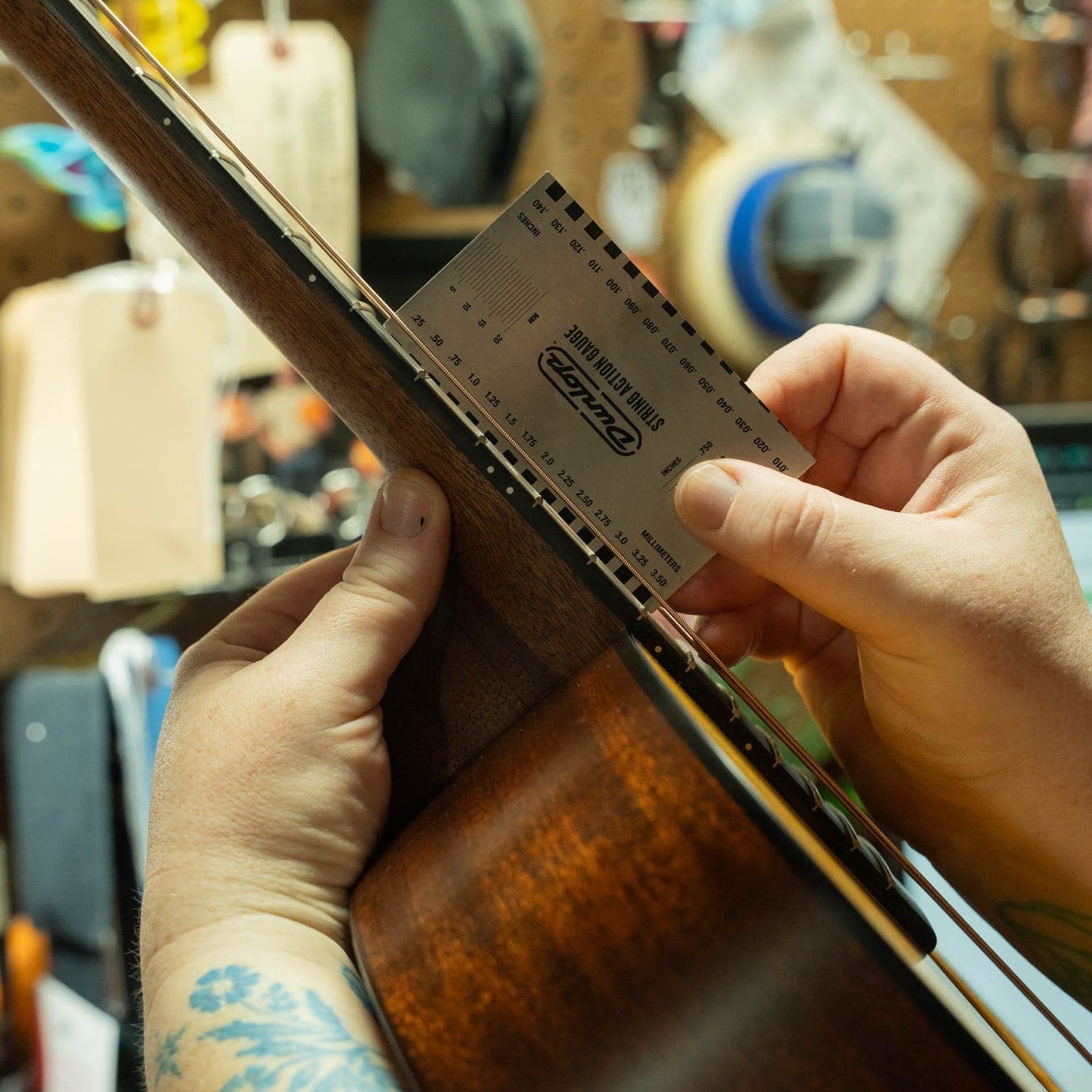
Every guitar we ship goes through our 23-Point Professional Inspection before it leaves the building. String height gets measured, not guessed, so the guitar plays the way it should the day it arrives.
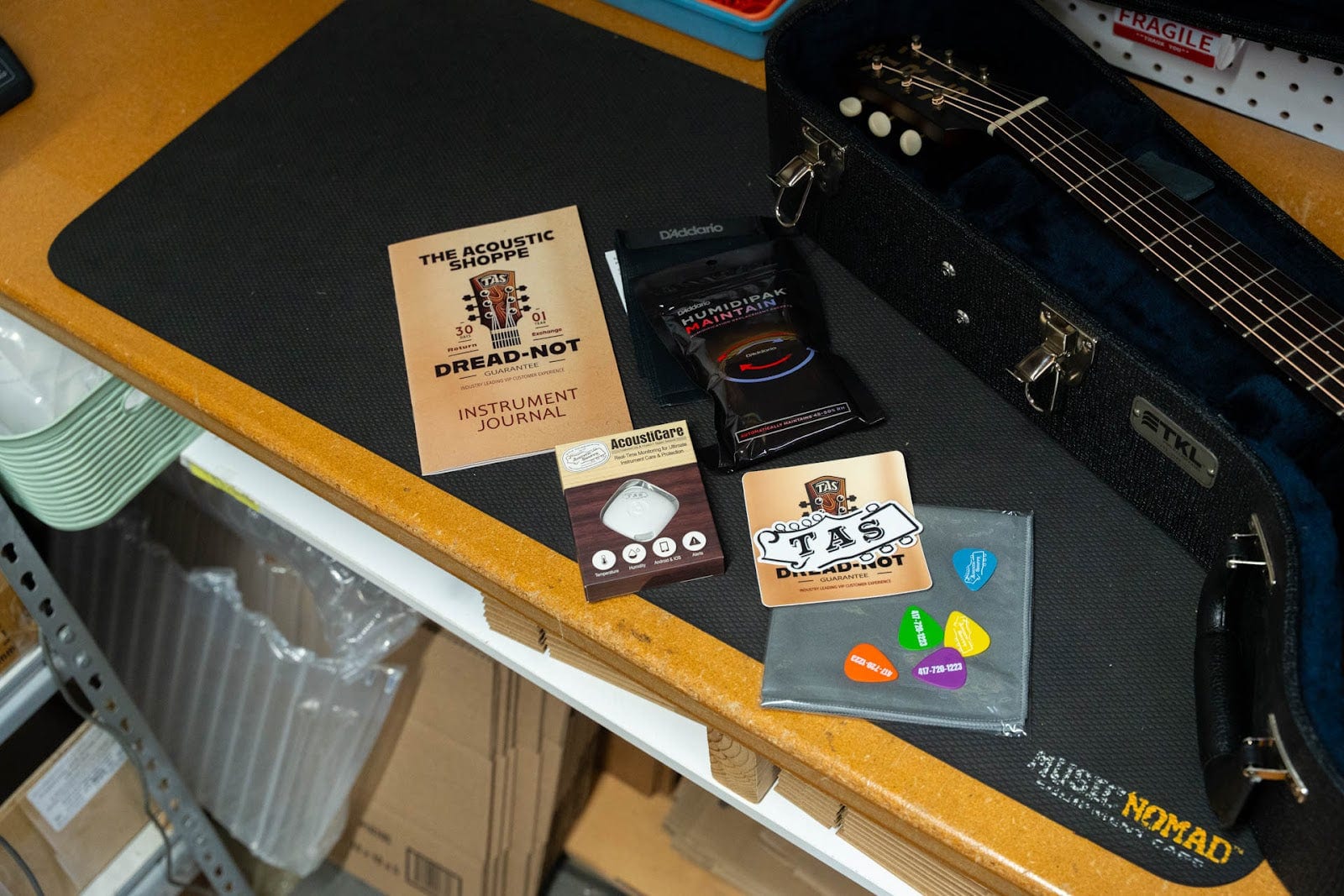
Both guitars are over $1,000, so both come with the Dread-Not Guarantee. The part that matters most if you're torn on 710e vs HD-28 is the 1-year 90% trade-in credit (pre-tax, less round-trip shipping). If you buy the 710e and find you want the HD-28's boom after all, or the other way around, most of what you paid comes back toward the other guitar. You also get a 30-day in-home trial and our humidity kit.
Right now we have a Taylor Gold Label 710e, serial ending 6024, and a Martin HD-28, serial ending 7930, in stock, so you can settle the 710e vs HD-28 question with both guitars in hand. Browse the rest of our Taylor guitars, every Martin guitar we carry, all of our dreadnought guitars, or every guitar in stock. If you want to know what the numbers in a Taylor model name mean, we can decode any Taylor model number.
The Acoustic Shoppe is an Authorized Taylor Premier Dealer and Gold Label Advantage Dealer.