


Table of Contents
- Why learning mandolin trips up so many new players
- 1. Turning the wrong tuning peg
- 2. Treating a pair of strings like two strings
- 3. Too much tension in both hands
- 4. Using a pick that's too thin
- 5. Using one finger to play up and down the neck
- 6. Deciding your hands can't make the shape
- 7. Giving up on learning mandolin too soon
- A mandolin that plays right makes learning mandolin easier
- Who this is for, and where to go next
A few weeks into learning mandolin, most players hit the same wall. Your fingertips are sore, the G chord feels like it was built for somebody else's hand, and every so often you crank a tuning peg for what feels like a full minute while the note you're picking doesn't move at all. It's easy to decide the instrument is the problem, or that your hands just aren't mandolin hands.
Jeremy has taught a lot of new mandolin players, and he sees the same handful of habits over and over. None of them mean you're doing it wrong for good. They're the things almost everyone does at first, and each one has a simple fix. Here are the seven he'd fix first, starting with the one that breaks the most strings and ending with the one he calls the biggest mistake of all.
Why learning mandolin trips up so many new players
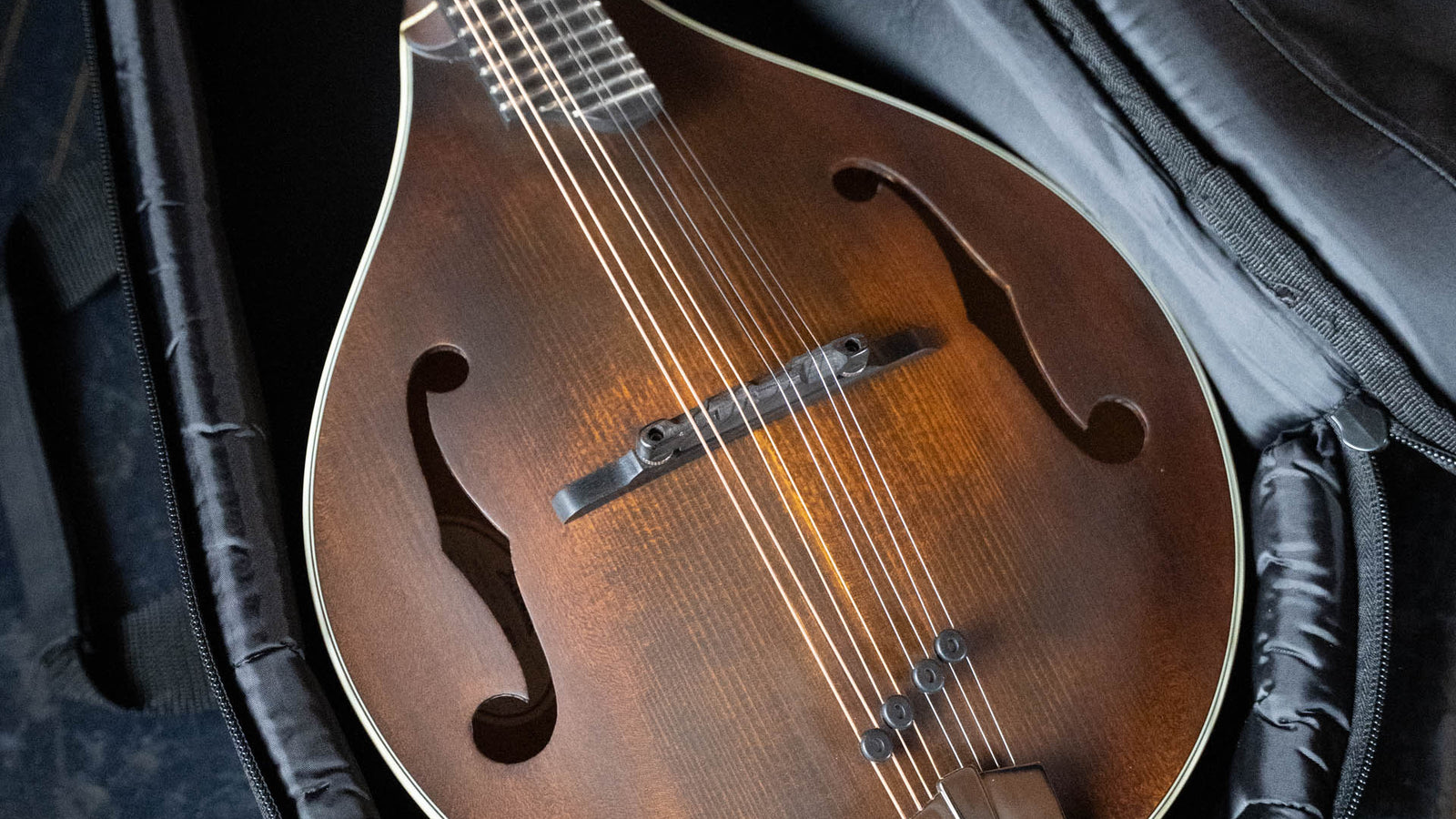
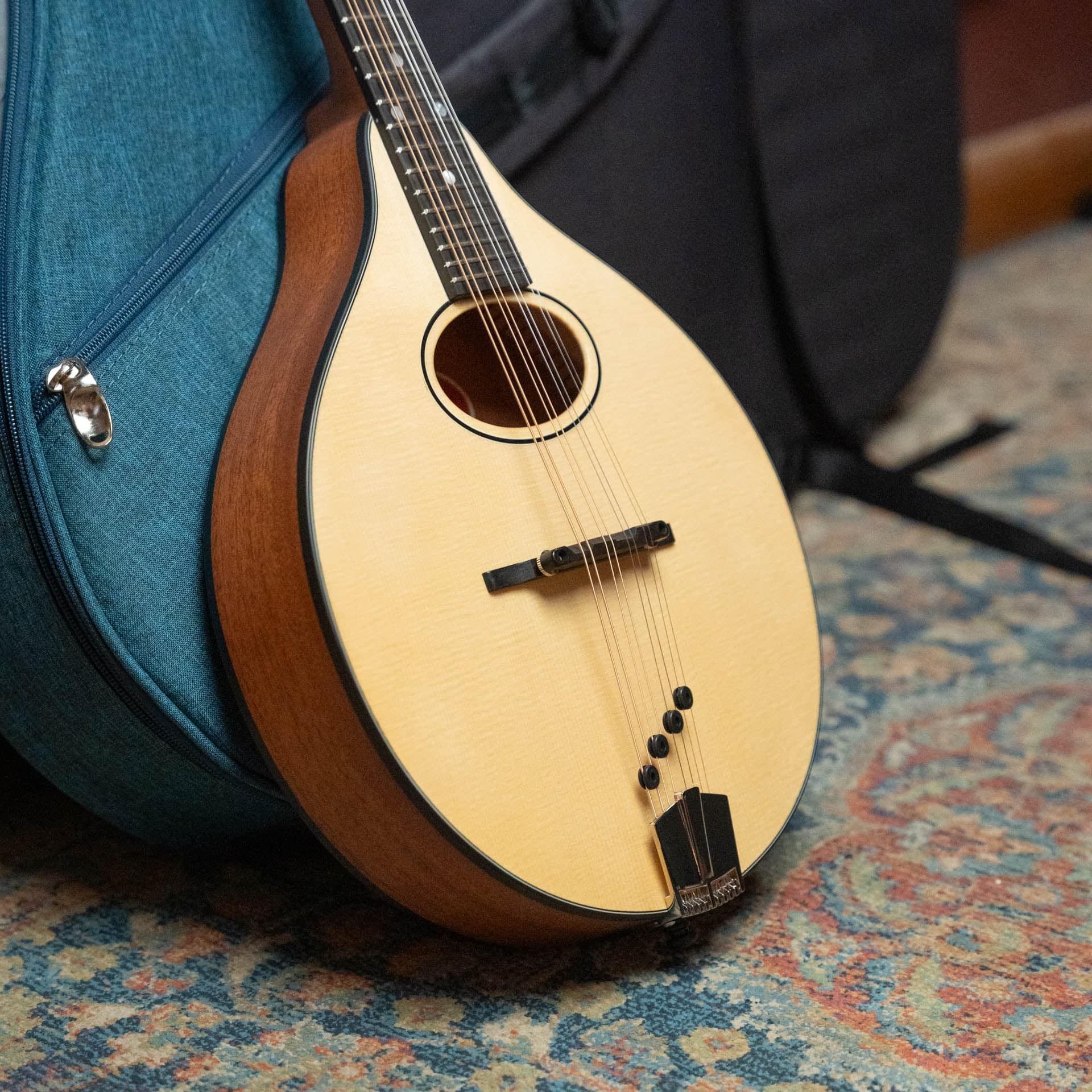
A mandolin puts eight strings and eight tuning pegs in a very small space, and the strings come in pairs. Nothing about that is obvious the first week, so it helps to know the mistakes before they turn into habits. Here's the short version of the mistakes we see most in the first months of learning mandolin:
| Mistake | What you'll notice | The fix |
|---|---|---|
| Turning the wrong peg | The note won't change, then a string snaps | Trace the string to its peg before you turn |
| Picking one string of a pair | A thin sound and more missed notes | Hit both strings on every down and up stroke |
| Too much tension | The pick catches, your arm cramps | Loosen your grip so the pick can flex |
| A thin, flimsy pick | A tinny, plastic tone | Go to about 1 mm |
| One finger doing all the work | Your whole hand chases notes up the neck | Two frets per finger |
| "My hands won't do that" | Big chord shapes feel impossible | Train the stretch up the neck first |
| Giving up too soon | Practice feels slow and unrewarding | Stick with the fundamentals |
Some of these are easier to hear than to read, so here are all seven with the fixes played, in about six minutes.
Jump to: double strings at 1:10, the pick at 2:36, the stretch tip at 4:30.
1. Turning the wrong tuning peg
With four pegs on each side of the headstock, it's easy early in learning mandolin to pick one string with your right hand and turn the peg for a different one with your left. You keep turning, the pitch never moves, and the string you're actually tightening keeps climbing until it breaks.
"Almost every student I've had has broken a string because they don't know which one they're tuning." (Jeremy)The fix takes five seconds. Before you turn anything, trace the string you're picking from the spot where you pick it all the way up to the peg it winds around, and count it. Make sure the string you're tuning is the same string you're plucking. Our guide on how to tune a mandolin to GDAE walks through the order once you know which peg is which.
2. Treating a pair of strings like two strings
Every note on a mandolin has two strings, and when you're first learning mandolin that's confusing. New players tend to get very precise and very small with the pick, so they end up hitting one string of the pair or the other. The pair is meant to be played as if it were one string, on both the down stroke and the up stroke.
Missing half the pair costs you twice. You lose the sound that makes a mandolin a mandolin, which comes from two strings ringing at once, and you cut your chances of a clean note in half. When Jeremy plays a pair, sometimes only one of the two notes is clean, but played together all you hear is the clean one.
"You get two chances at a clean note if you play both strings on both strokes." (Jeremy)3. Too much tension in both hands
Because everything about learning mandolin is new, it seems like you have to hold the neck and the pick hard to get a clean note. Jeremy's experience is that it does the opposite. When your right arm is tense and you clamp the pick, it gets stuck in the strings instead of moving through them.
Loosen your grip a little and the pick can flex in your hand. That loosens up your arm, so you get more speed and less cramping, and the pick glides over the strings. In Jeremy's words, "a loose grip is going to make it sound much better."
4. Using a pick that's too thin
A lot of guitar players come to mandolin with the thin pick they strum with, and on a guitar that works fine. With eight strings doubled up, a mandolin really brings out the plastic sound of a thin pick, so all you hear is a tinny, thin tone. Jeremy prefers a pick of about one millimeter, which gives the mandolin a punchier, stronger tone.
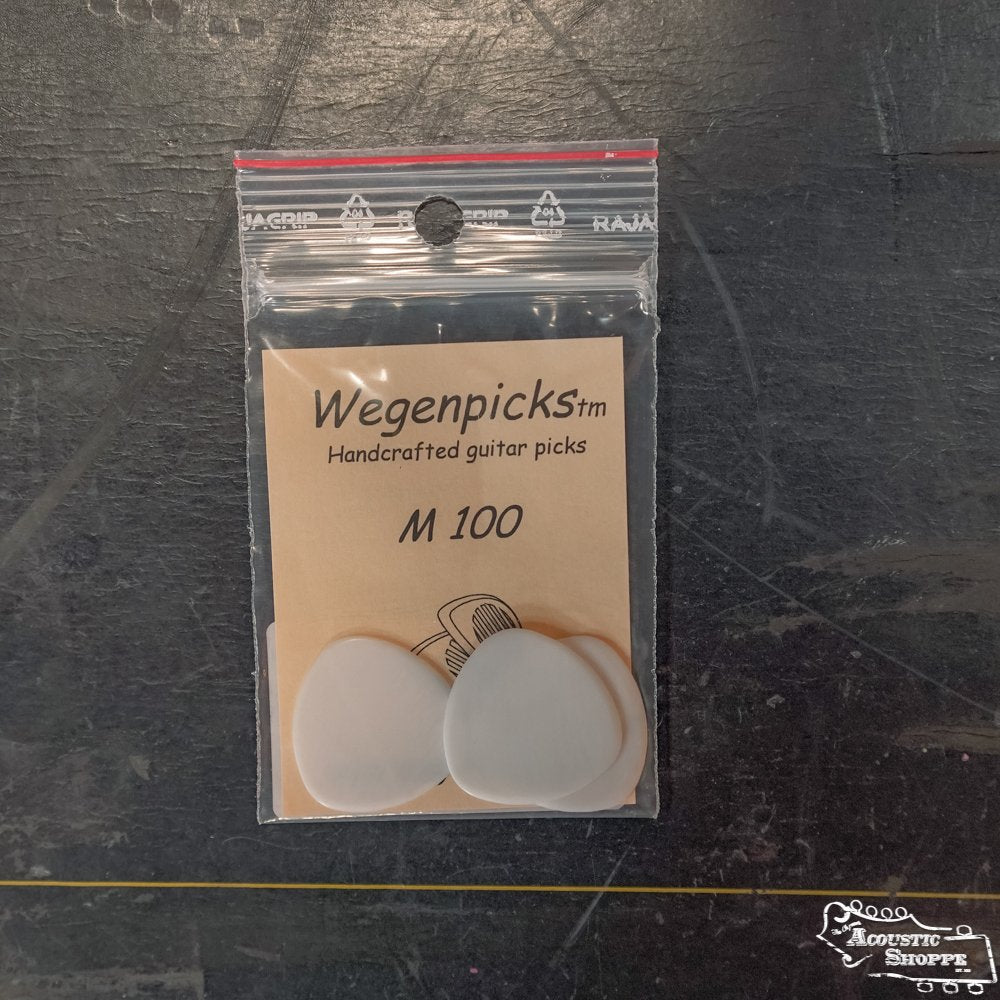
If you want to try that thickness, the Wegen M100 1.0 mm triangular picks come in a pack of three for $18.49, and the rest of our mandolin picks are in one place to compare.
5. Using one finger to play up and down the neck
A lot of new players use the same finger for every note and slide their whole hand up and down the neck to reach them. That makes the instrument a lot harder than it needs to be. On mandolin, assigning each finger its own frets works out well, and for the most part it's two frets per finger:
- First finger on the first and second frets
- Middle finger on the third and fourth frets
- Ring finger on the fifth and sixth frets
- Pinky on the seventh fret, once you're ready to add it
Set up that way, your hand stays in one position, the fingers stay out of each other's way, and the notes come to you instead of you chasing them.
6. Deciding your hands can't make the shape
Learning mandolin means learning some big stretches, and the bluegrass-style G chord, with the pinky reaching way out, is the one that convinces new players their hands are too small. Jeremy hears "my hands won't do that" from students all the time. His answer is that his left hand has been making that shape for 30-some years. If he tries it with his right hand, which is his dominant hand but has never made these chord shapes, he can't do it either. You're building muscles your hand doesn't have yet.
His tip: don't start down by the nut, where the frets are widest. Move way up the neck, as high as the 10th fret, and practice the same spacing there, where the frets sit closer together. Your fingers learn to hold those wide positions, and over time your hand can make the shape down low too. Our six mandolin chords for beginners are a good set to practice that way.
7. Giving up on learning mandolin too soon
Any instrument has a big learning curve at the start, whether it's mandolin, guitar or trumpet. You'll have some hurt fingers and some bad notes, and it won't come as easily as it might seem at first. The early weeks are mostly fundamentals, which aren't as exciting or rewarding as playing songs.
Once you get over that hill, it starts to snowball. Everything you learned before adds to the next song, so each one gets easier and more fun, and when you start playing with other people, that's where the real magic happens.
"I think the number one mistake people make is giving up too soon." (Jeremy)A lot of the time you're right on the verge of everything clicking into place. The time and effort are more than most people expect, so stick with it, because there's a lot of enjoyment on the other side of that hill.
A mandolin that plays right makes learning mandolin easier
Half of these mistakes come down to technique, but you'll fix them faster on an instrument that plays the way it should. Every mandolin we sell goes through our 23-Point Professional Inspection before it ships, so the instrument isn't working against you while your hands catch up.
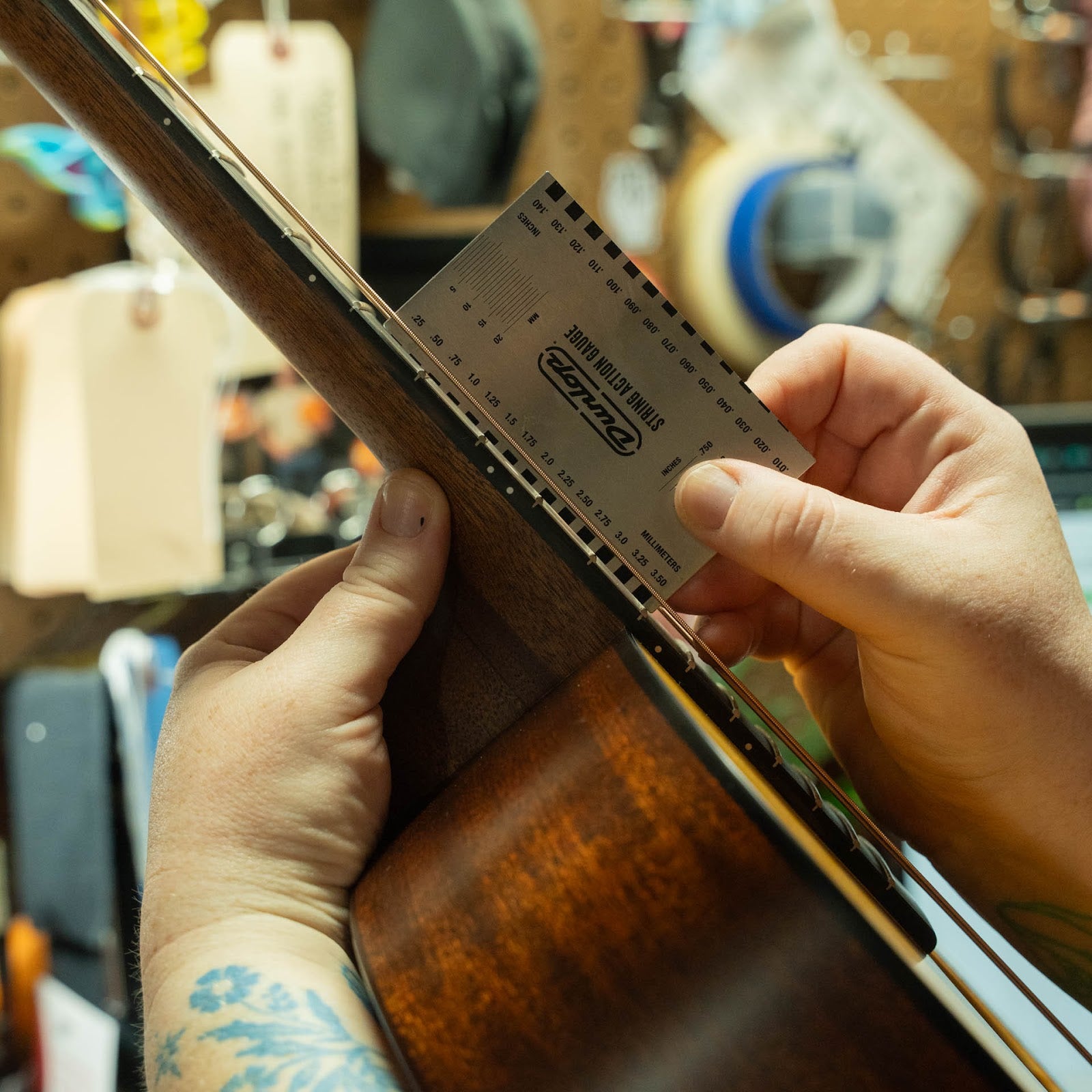
These are three of the Eastman mandolins we have in stock today, at three steps up in price:
| Mandolin | Body | Price today |
|---|---|---|
| Eastman PCH-M104 | A-style | $449 |
| Eastman MD305 | A-style, hand-carved | $729 |
| Eastman MD315 | F-style, hand-carved | $1,099 |
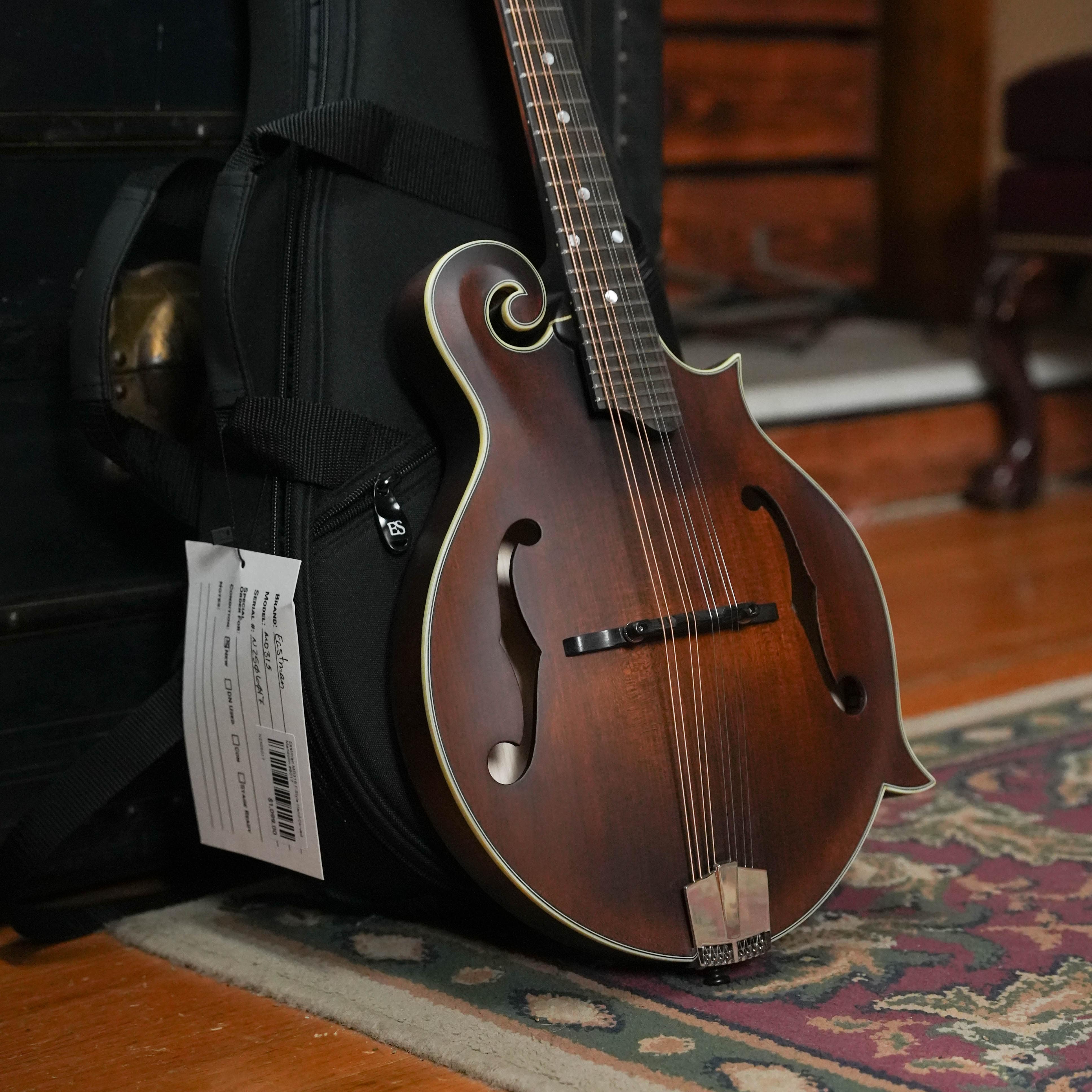
If you're torn between the first two, our PCH M104 vs Eastman MD305 comparison plays them side by side. We're the #1 worldwide dealer for Eastman guitars and mandolins, and today there's more than one of each to choose from. The MD315 is over $1,000, which puts it under our Dread-Not Guarantee: a 30-day in-home trial and a full year to trade it in for up to 90% of the pre-tax purchase price in credit, less round-trip shipping.

Related reading
- Mandolin instrument guide: the mandolin family, A vs F and your first mandolin
- A-style vs F-style mandolins compared
- A free lesson: Amazing Grace on mandolin with tremolo
Who this is for, and where to go next
If you've had a mandolin for a few weeks and it's starting to feel harder instead of easier, start with the pick and the tension, because those two change the sound the same day. If you're still shopping for your first one, look through our A-style mandolins or the full mandolin collection, and pick one you'll want to keep playing while learning mandolin gets easier.