
Table of Contents
- How Bob Taylor and Greg Deering met over a banjo
- Two days in a day: why both shops built their own tools
- How Taylor and Deering learned to sell
- Why a Taylor guitar doesn't sound like a Martin
- How Greg Deering built better banjos with Jens Kruger
- Bob Taylor and Greg Deering, side by side
- Where to start with Taylor and Deering at our shop
- What comes with every instrument we ship
- Which one is for you
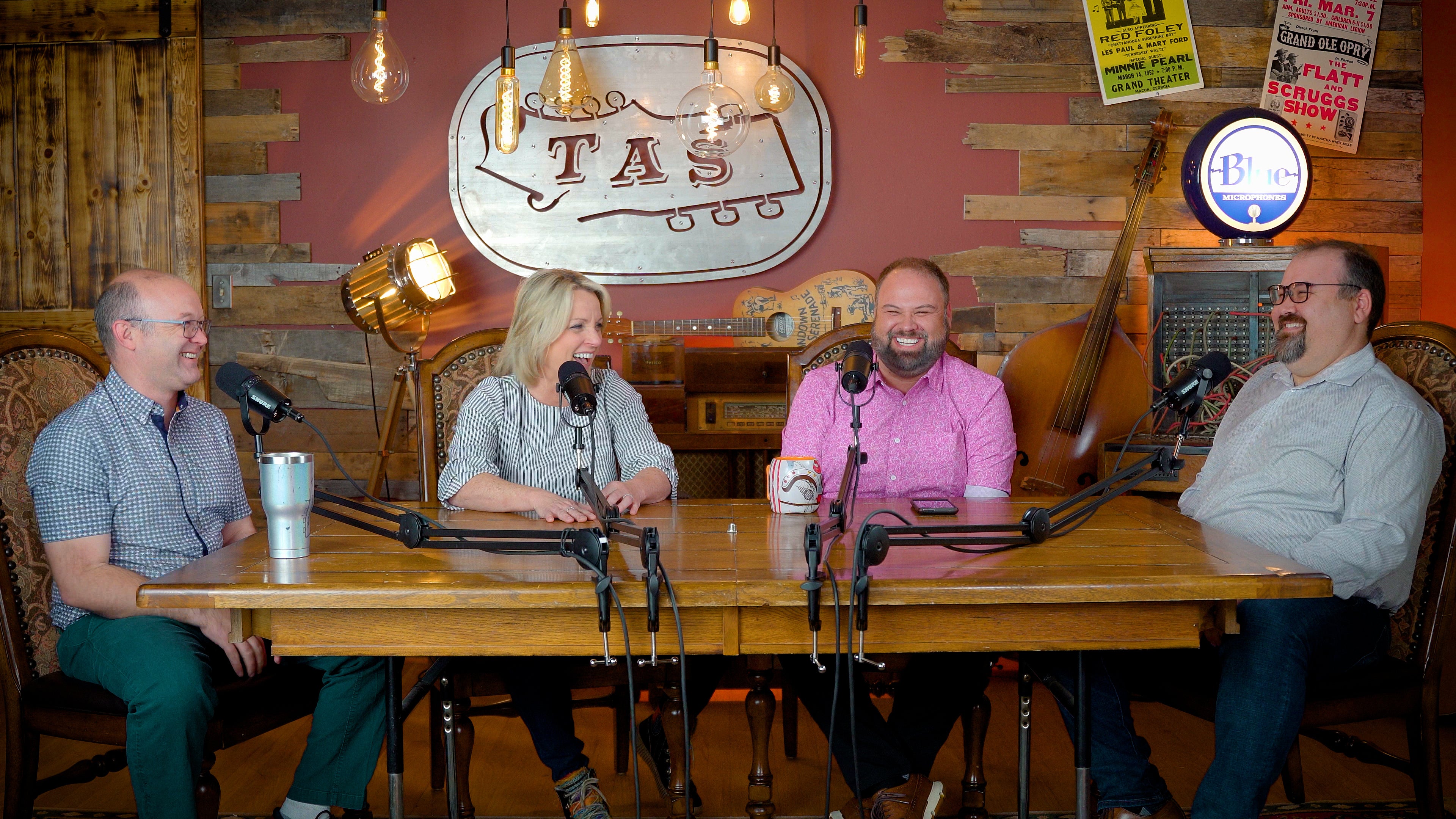
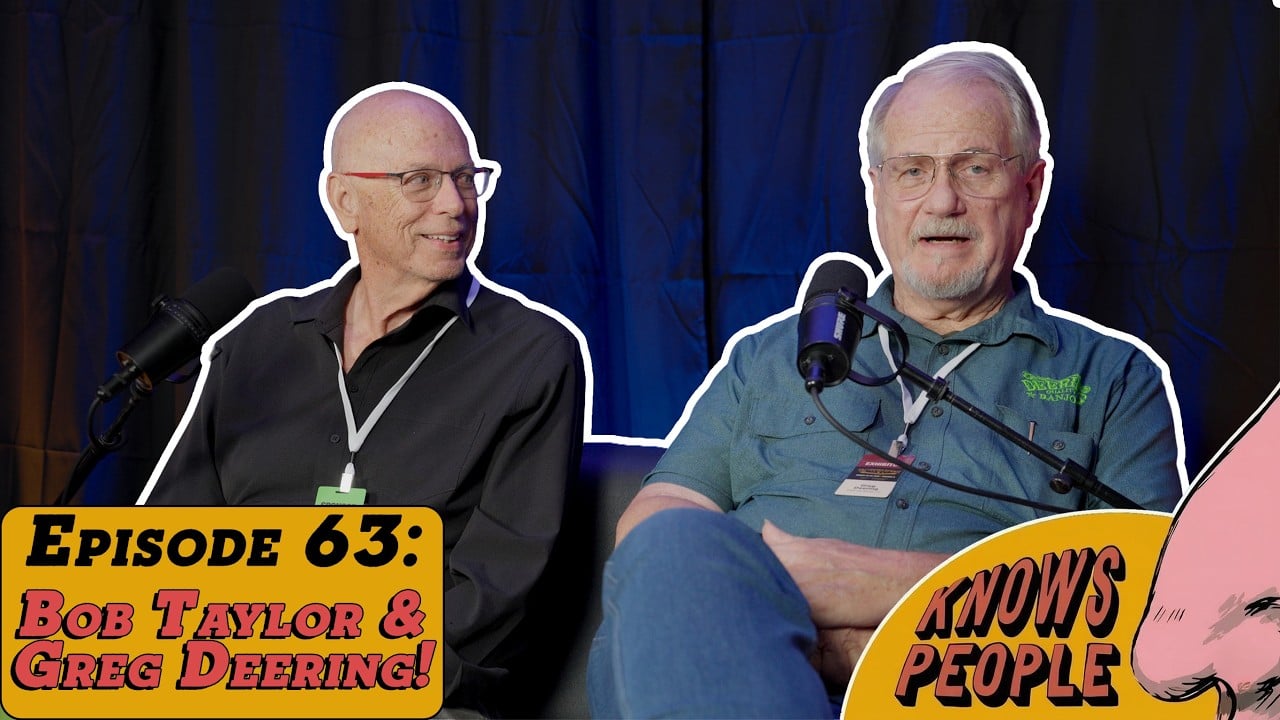
Pick up a Taylor grand auditorium and a Deering banjo in our showroom and they feel like they come from two different worlds: one built for fingerstyle and the studio, the other for a bluegrass jam. What most players don't know is that Bob Taylor and Greg Deering started out in the same little shop in Lemon Grove, California, sharing benches, tools and keys to each other's doors. We got both founders in one room at Fretboard Summit 2026, and the story of how two of the biggest names in acoustic instruments grew up side by side explains a lot about why a Taylor plays like a Taylor and a Deering sounds like a Deering.
The short version: neither of them set out to copy Martin or Gibson. They built their own tools, figured out selling the hard way, and decided early that being different wasn't a problem to fix.
How Bob Taylor and Greg Deering met over a banjo
It started with a banjo, not a guitar. In high school, Bob Taylor played banjo with a couple of friends, John and Tony Prim, and Greg met him at their house. Greg had been playing for six years. Bob had been playing for about six months, and Greg says he was already the better player.
They met again at the American Dream, a small repair and building shop in Lemon Grove. Greg had walked in on the day it opened, May 1, 1970, uninvited, and started helping build benches. When the owners said they didn't want repair work, he offered to take it home and do it himself. A few months later he had a bench in the corner. Bob Taylor arrived in September 1973 with three guitars he'd built in his high school wood shop, the first one a 12-string traced from a friend's Yamaha because he couldn't afford the one he wanted.
"I didn't know guitar making was a thing. I was just making guitars for myself." Bob Taylor
For a short stretch after Taylor Guitars started, Greg actually worked for Bob, building five-string banjo necks for Geoff Stelling on Taylor's clock. Greg later hired Larry and Kim Breedlove, and Kim drew the Deering eagle logo the company still uses.
Jump to: the American Dream shop at 8:41 · how Taylor learned to sell at 42:27 · why a Taylor isn't a Martin at 53:53 · Jens Kruger and Deering at 1:04:01.
Two days in a day: why both shops built their own tools
The habit that shaped both companies is one they share. Bob Taylor says he worked "two days a day": one day building a guitar, and one day building the tools so the next guitar would go faster and come out the same. Sometimes the tool was a stick with eight marks on it so he didn't have to find a tape measure. Greg did the same thing with banjo rims, inventing jigs because nothing on the market did what he needed.
The two of them would stay at the shop so late that their wives called each other to find them. Greg taught Bob what a spindle shaper was and how a pattern on one could shape a neck profile. When Deering moved into the same multi-tenant building as Taylor, each had a key to the other's shop, because neither owned every machine.
That's why a Taylor neck feels the same from one guitar to the next, and why a Deering neck joint fits as cleanly as it does. Consistency was the goal from the first day, and they built the machinery to get it.
How Taylor and Deering learned to sell
Building good instruments didn't pay the bills by itself. Bob Taylor is clear that the real secret of Taylor is his partnership with Kurt Listug, who has run marketing, sales and finance for 52 years while Bob built the factory. Eleven years in, Taylor was making 22 guitars a week with about 60 unsold guitars in cases. Kurt wrote the schedule on a whiteboard, red for unsold and black for sold, and every time he thumbed out a red number and rewrote it in black, the shop couldn't wait for the next one. Then, over about three weeks, something clicked, and the red numbers kept turning black. Last year Taylor built around 175,000 guitars.
At Deering, Greg's wife Janet played Kurt's role, keeping the books, running sales and working production. Their first banjo taught them a pricing lesson in four steps:
- Greg wanted the prototype, the Intermediate, to retail for $150.
- Once it was built, the price had to be $175, and dealers asked why it was so cheap.
- They raised it $100, and dealers still asked the same question.
- They raised it another $100, and stores started ordering.
In 1983 Janet and Greg's mother drove a pickup with a camper across the country for ten weeks, opening dealers town by town from the yellow pages. Deering still sells to some of those shops. Janet's take on it after the first orders came in: "It's more like teaching people than selling."
Why a Taylor guitar doesn't sound like a Martin
Greg owned a 1962 D-18, and every time Bob finished a guitar he thought was better, they'd play the two side by side. The first one that clearly beat the D-18 was Bob's first 810. Bob Taylor puts it plainly: Taylors sounded different from Martins, and there was an appetite for that.
Taylor's first customers were electric players in Los Angeles who liked the easy necks. Then came pickups, and in Taylor's 20th year the grand auditorium with a cutaway, the shape Bob says built the company. He watched it play out at Winfield in the '90s: nearly every one of 52 flatpicking contestants played a Martin or a Martin copy, and 45 of the 47 fingerstyle players had a Taylor.

"We're just really not Martin, and we're our very own thing. And that's not a bad thing." Bob Taylor
We agree, and it's why we carry both. A Martin dreadnought and a Taylor grand auditorium are different tools for different jobs, and recording engineers figured that out early: Bob says they kept a Taylor in the studio because it's easier to add sound than to take it away. Bluegrass is changing too. Trey Hensley plays a Gold Label now (here's our review of his Gold Label 510e), and Bob says Gold Labels are turning up in bluegrass circles because they work. For the bigger picture, read our Martin vs Taylor breakdown and what we learned touring both factories.
The Dan Crary model is the best example of how Bob Taylor works. Dan spent four days at the shop with two guitars and a tube of superglue, and they changed one thing at a time, cutting tops off and re-bracing them, hearing a new version every hour and a half. Dan wanted a maple neck because it would be stiffer, and it killed the guitar. What they ended up with was a very hard spruce top sanded thin, with bracing Bob says "could hold up this ceiling."
How Greg Deering built better banjos with Jens Kruger
Greg's goal never changed from the day he couldn't afford the $400 Vega Pete Seeger he wanted at 13:
"I was motivated to build banjos that could be the very best they could be that people could afford." Greg Deering
That's the thinking behind the Deering Goodtime. For years Deering heard "wish it was a Gibson," even while it was quietly selling more banjos than Gibson. The turn came when Jens Kruger joined more than 20 years ago. Greg credits Jens with helping Deering build banjos as good as the pre-wars, or better, and with changing how the whole banjo world thinks about tone rings. Jens still works for Deering, and Greg says the plans the two of them are making now are as intense as ever. In one week testing a hybrid eucalyptus, they built three different banjos.
Bob Taylor and Greg Deering, side by side
The two companies still borrow from each other. When Bob Taylor ran out of ideas for Taylor's 35th anniversary inlay, Greg drew it, on the condition that Deering could use it for its own 35th the next year. Taylor's well-known Cindy inlay started as a peghead pattern Greg drew for a customer's long-neck banjo, which Bob borrowed for a guitar he built for his wife, Cindy.
| Milestone | Taylor | Deering |
|---|---|---|
| Start at the American Dream | September 1973 | May 1, 1970 (Greg) |
| Business partner | Kurt Listug, 52 years | Janet Deering |
| First big break | Grand auditorium cutaway, year 20 | Jens Kruger, 20+ years ago |
| Shared design | 35th anniversary inlay (drawn by Greg) | Cindy inlay (from a Greg peghead) |
Where to start with Taylor and Deering at our shop
We spent years asking to become a Taylor dealer, and it finally happened this year (here's what that means for you). Deering we've carried for a long time. Here's what's on the floor today:
- Taylor 814ce #6068 ($3,999), the grand auditorium cutaway Bob Taylor built the company on
- Taylor Gold Label 710e #6024 ($2,999), a Gold Label dreadnought, from our Gold Label collection
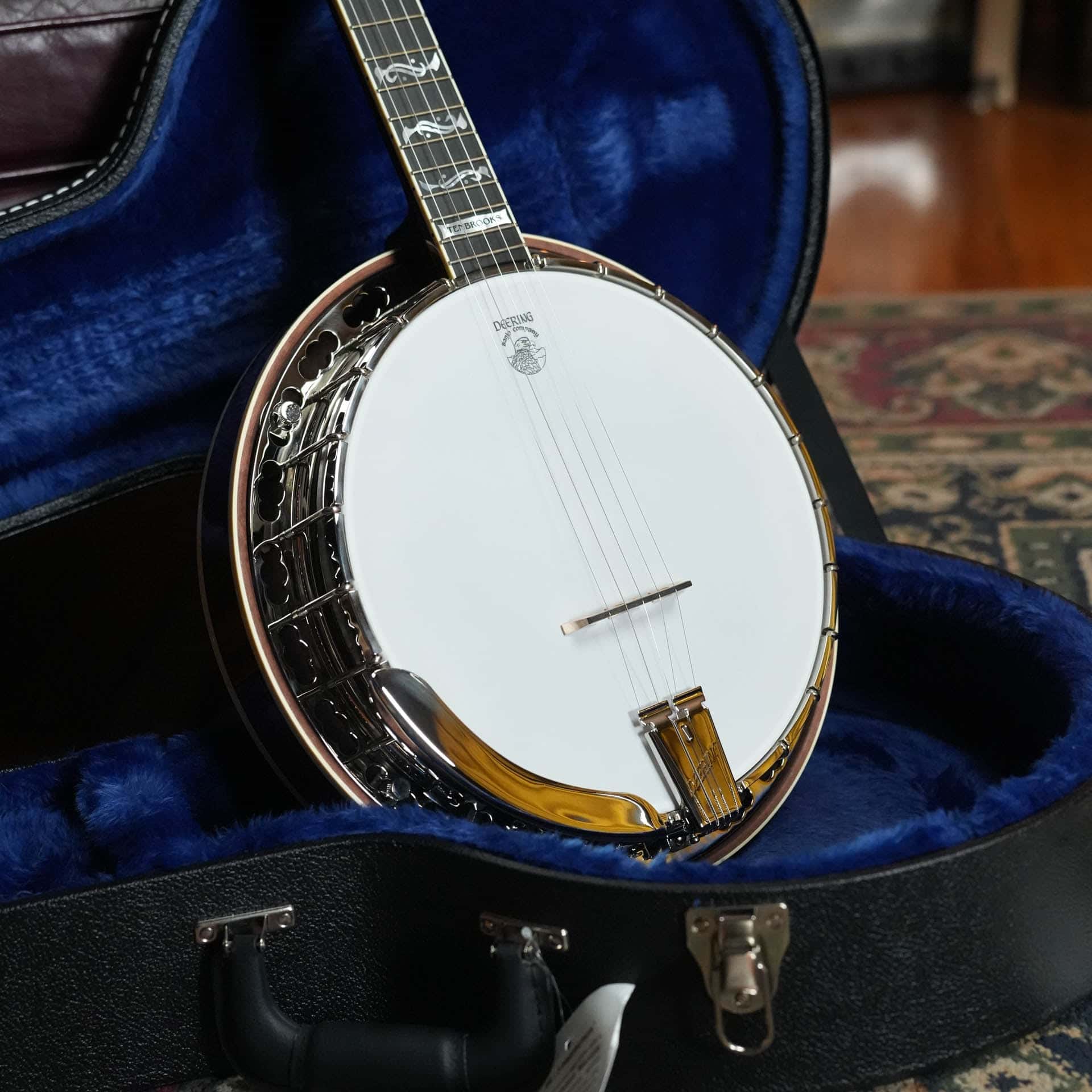
- Deering Goodtime Two #2617 ($849), Greg's "best banjo people can afford" idea in practice
- Deering Clawgrass No.2 #0127 ($4,799) and the Tenbrooks Saratoga Star #0558 ($6,549)
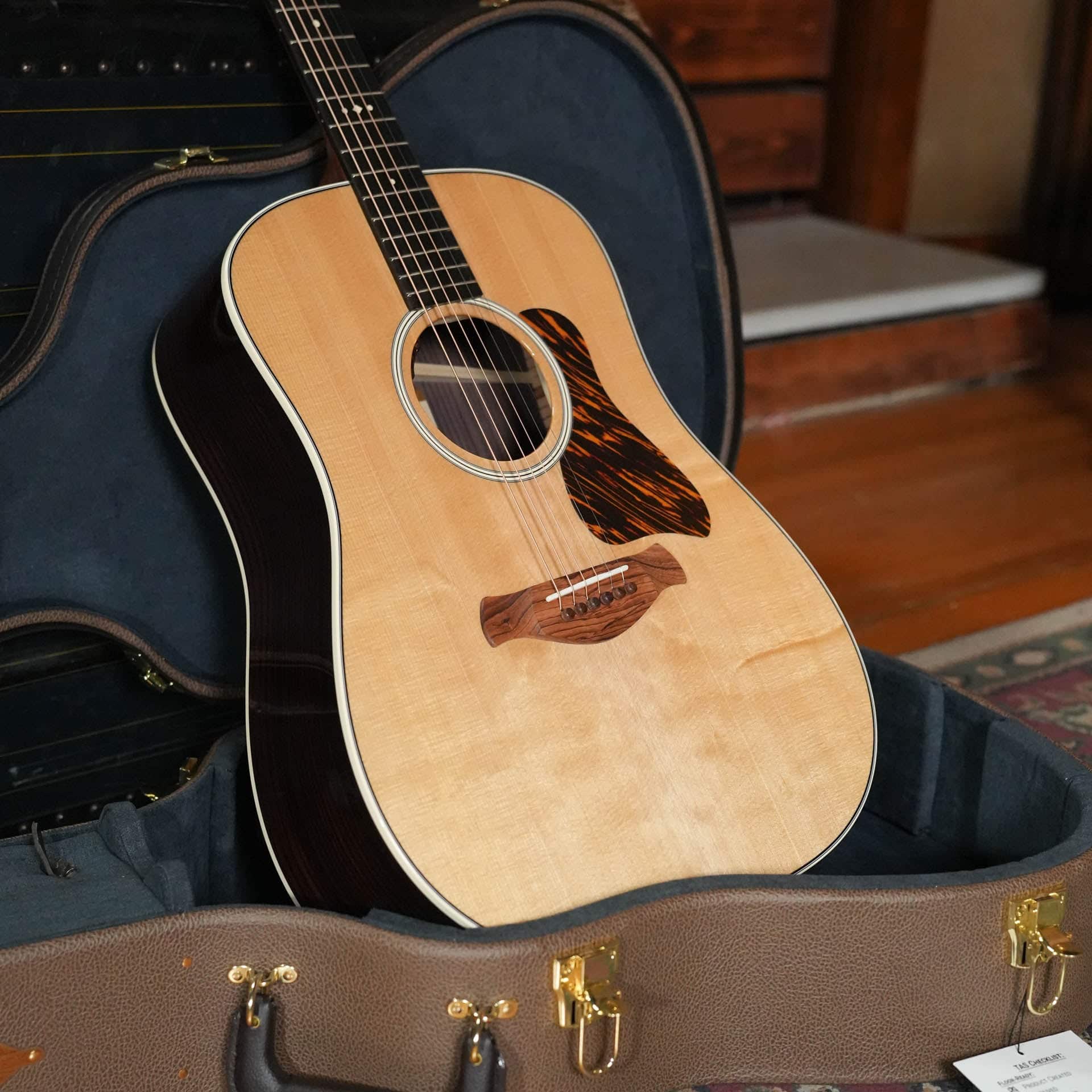
Don't see the model you want? Ask us about ordering one. You can browse every Taylor guitar in stock, every Deering banjo, or shop acoustic guitars from every brand we carry.
What comes with every instrument we ship
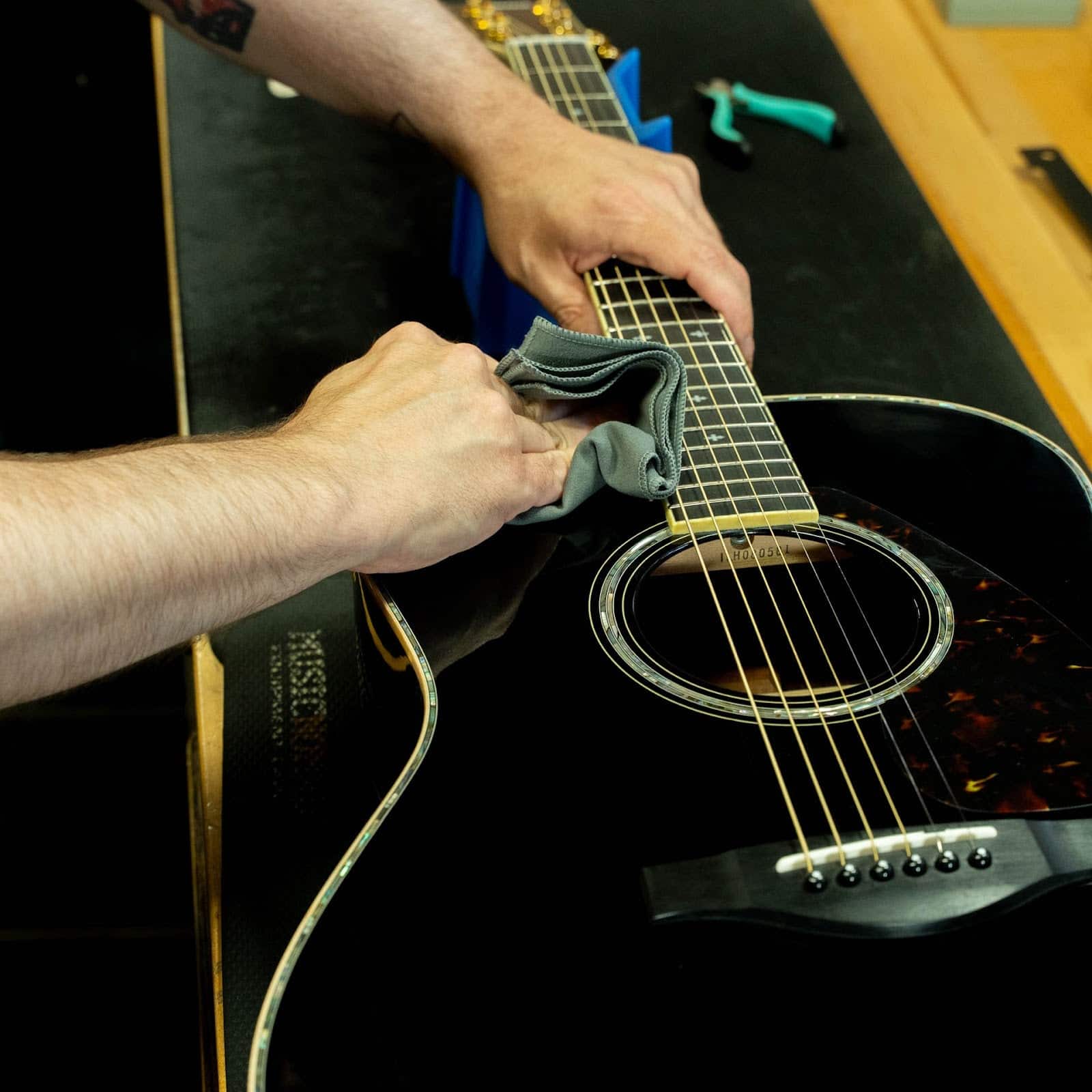
Every guitar and banjo gets our 23-Point Professional Inspection before it leaves, so the neck Bob Taylor or Greg Deering designed plays the way they meant it to when you open the case.
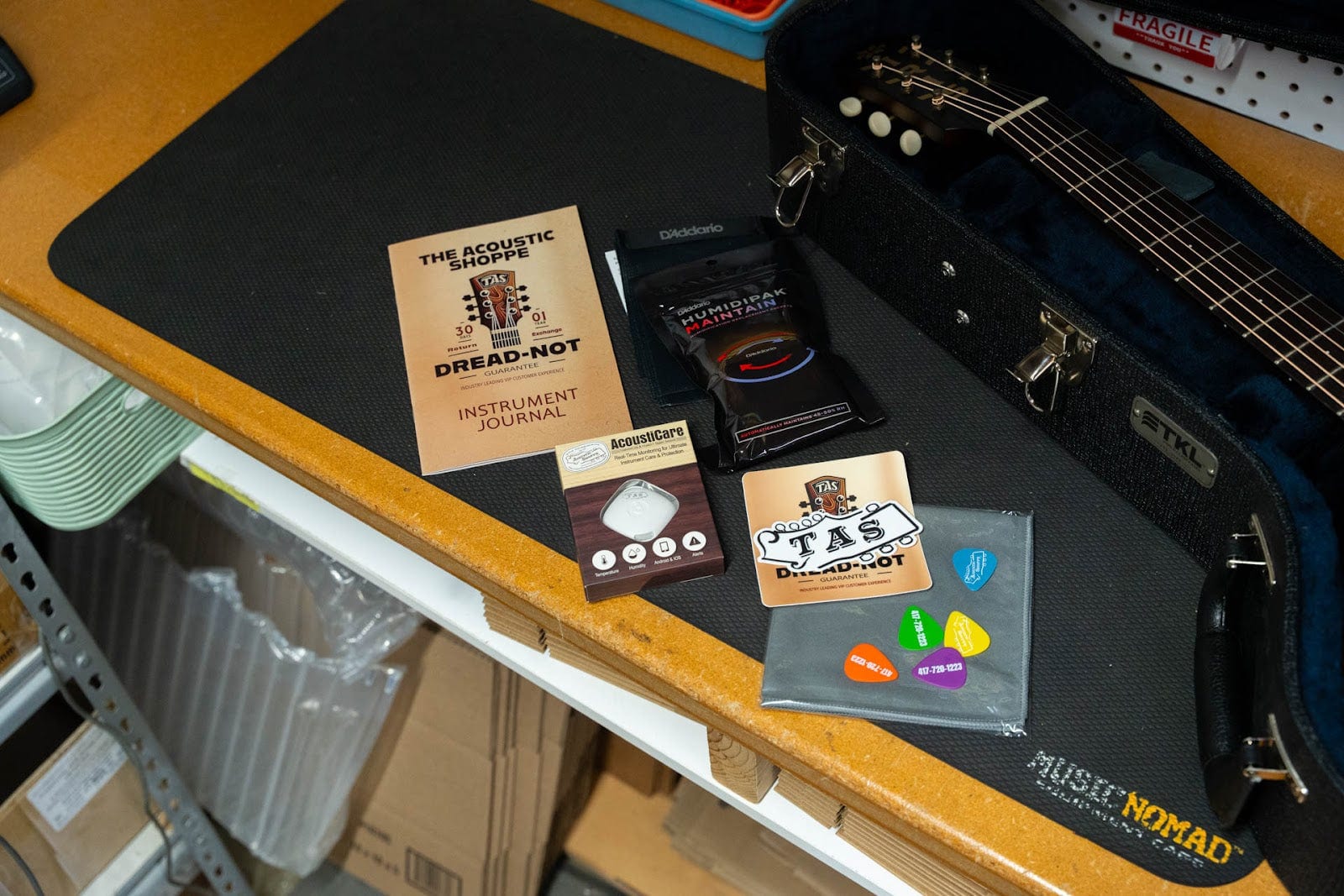
Instruments $1,000 and up are covered by the Dread-Not Guarantee: a full year to trade it in for up to 90% of the pre-tax purchase price in credit, less round-trip shipping, plus a 30-day in-home trial and a humidity kit.
Related reading
- Taylor at Fretboard Summit 2026: a Brazilian rosewood 917 and what's new in Gold Label
- Deering Sierra or a Goodtime? How to choose your Deering
- Rolled vs cast tone rings: which banjo tone ring is better
Which one is for you
If you play fingerstyle, sing over your own guitar, or plug in most nights, a Taylor grand auditorium is the guitar Bob Taylor built his company for. If you want a Taylor that holds its own in a bluegrass jam, start with the Gold Label. If you're picking up the banjo, a Deering Goodtime is exactly what Greg set out to build, and when you're ready for a serious bluegrass banjo, the resonator Deerings on our wall come out of the 20-plus years Greg has spent building with Jens Kruger. As Bob puts it, "You got to have the stuff and you got to have the people." They make the stuff. Come play it.
The Acoustic Shoppe is an Authorized Taylor Premier Dealer and Gold Label Advantage Dealer.