
Table of Contents
- Dreadnought vs. OM is perhaps the most debated comparison in the acoustic guitar world, as these two body styles represent the two most popular paths a player can take.
- What Is the Main Difference in Body Size?
- Which Shape Offers More Volume and Bass?
- Who Should Choose an OM Over a Dreadnought?
- How Do They Compare Side-by-Side?
- What Should You Know About Tonewoods and Shapes?
- Are There "In-Between" Options?
- Frequently Asked Questions about Guitar Shapes
- Which Shape Will Inspire You to Play More?
- Acoustic Shoppe FAQ
Dreadnought vs. OM is perhaps the most debated comparison in the acoustic guitar world, as these two body styles represent the two most popular paths a player can take.
Choosing between the raw power of a big-bodied dreadnought and the refined balance of an Orchestra Model (OM) is more than just a matter of aesthetics; it’s about how you want your music to feel and sound. At The Acoustic Shoppe, we’ve helped thousands of players navigate the Dreadnought vs. OM choice, and it always comes down to the relationship between the player’s body and their sonic goals. Whether you are a bluegrass flatpicker needing to cut through a mandolin and banjo, or a delicate fingerstylist looking for piano-like clarity, understanding the nuances of these designs is the first step toward finding your "forever" instrument.
What Is the Main Difference in Body Size?
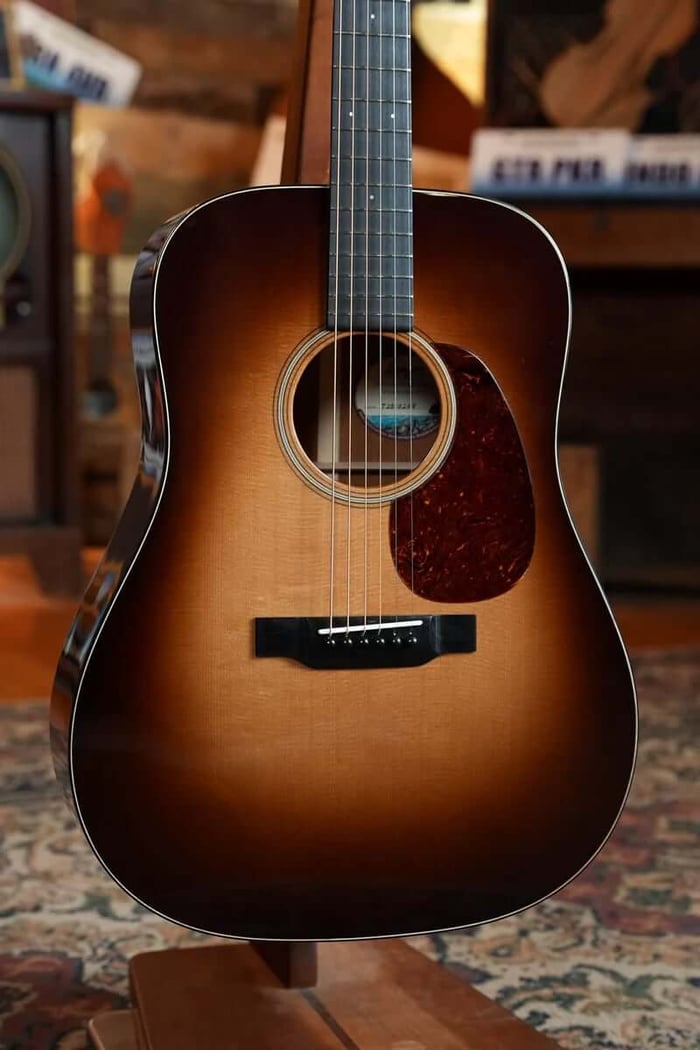
The most obvious distinction in the Dreadnought vs. OM debate is the physical footprint. The Dreadnought is the "big brother"—it’s deep, wide-waisted, and designed to move a large volume of air. Named after a class of massive battleships, its square shoulders and deep body (typically nearly 5 inches) create a substantial physical presence.
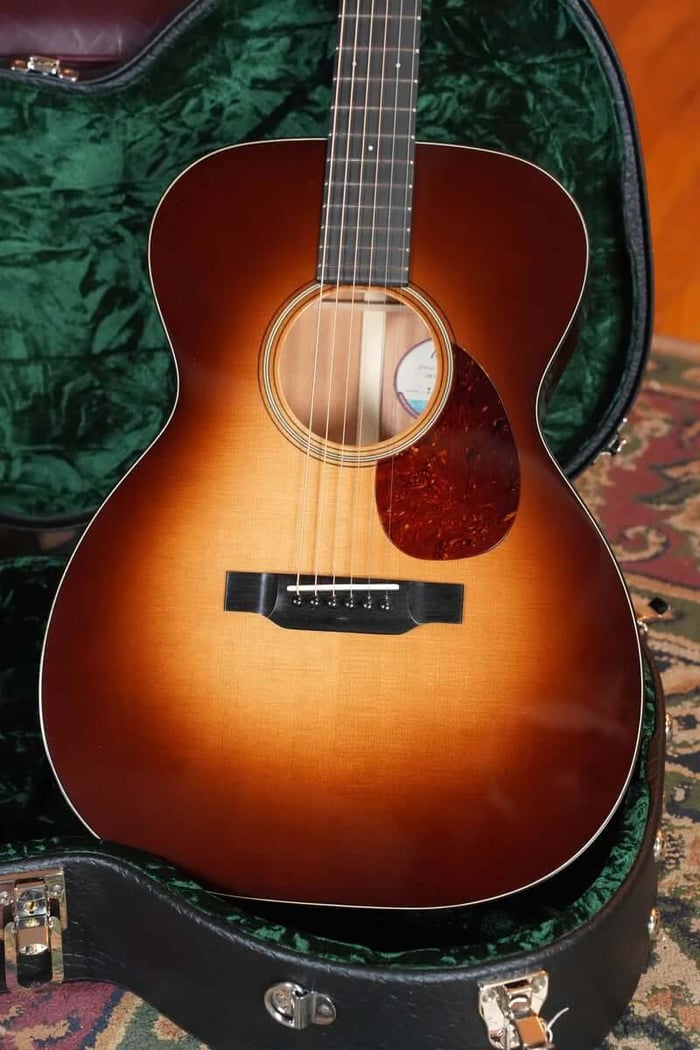
In contrast, the OM (Orchestra Model) features a much tighter waist and a shallower body depth. Originally designed in the late 1920s to help banjo players transition to guitar, the OM was the first Martin design to feature 14 frets clear of the body. This makes the OM significantly more comfortable for couch playing or for smaller-framed musicians, whereas the Dreadnought can sometimes feel like you’re "reaching over" a box. For many players, the ergonomic "hug-ability" of an OM is the deciding factor before they even strike a chord.
 Which Shape Offers More Volume and Bass?
If your goal is to be heard in a crowded room or a high-energy bluegrass jam, the Dreadnought is the undisputed king. Its large internal air volume creates a "boomy" low end and massive projection. When you strum a Dreadnought, you feel it in your chest. The "scooped" EQ profile—meaning emphasized lows and highs with a slightly recessed midrange—makes it the perfect vocal accompaniment, as it leaves a "hole" in the frequency spectrum for a singer's voice to sit.
However, if you are looking for clarity and note separation, the OM excels. Because the body is smaller and the waist is tighter, the air inside moves faster and with more compression. It doesn't produce as much low-end "rumble," which prevents the sound from becoming "muddy." This allows the individual notes to pop with better balance across the strings. In a recording studio, engineers often prefer an OM because it requires less EQ adjustment to sit perfectly in a mix.
Who Should Choose an OM Over a Dreadnought?
Fingerstyle players almost always gravitate toward the OM. The tighter waist keeps the guitar stable on the lap, and the balanced EQ ensures that light fingerpicking is articulate and sweet. Because the top of an OM is smaller, it takes less energy to get the wood moving, meaning you don't have to play hard to get a full, rich sound.
Conversely, heavy strummers and flatpickers usually stick with the Dreadnought to take advantage of its "headroom"—the ability to be played hard without the sound "breaking up" or distorting. If you have a heavy right hand, an OM might "bottom out," whereas a Dreadnought will simply get louder and more authoritative.
How Do They Compare Side-by-Side?
To help visualize the trade-offs in the Dreadnought vs. OM matchup, consider the following comparison:
| Feature | Dreadnought | OM (Orchestra Model) |
| Primary Strength | Volume, Bass & Power | Balance, Clarity & Comfort |
| Best Playing Style | Heavy Strumming / Flatpicking | Fingerstyle / Light Strumming |
| Comfort Level | Large / Boxy / Deep | Mid-sized / Ergonomic / Shallow |
| Tone Profile | Boomy, "Scooped" Mids | Punchy Mids, Even Trebles |
| Standard Scale | 25.4" (Long Scale) | 25.4" (Long Scale) |
What Should You Know About Tonewoods and Shapes?
While the shape determines the "personality" of the guitar, the tonewoods act as the "flavor." A mahogany Dreadnought will have a punchy, fundamental-focused sound that is great for lead runs, while a rosewood Dreadnought offers the classic "thump" and overtones associated with iconic bluegrass recordings.
When applying these woods to an OM, the effects are magnified. A rosewood OM can sound surprisingly deep and lush, almost mimicking a larger guitar, while a mahogany OM is the ultimate tool for recording, offering a laser-focused midrange that cuts through any arrangement. Understanding Why Tonewood Matters influences these shapes is key to fine-tuning your search.
Are There "In-Between" Options?
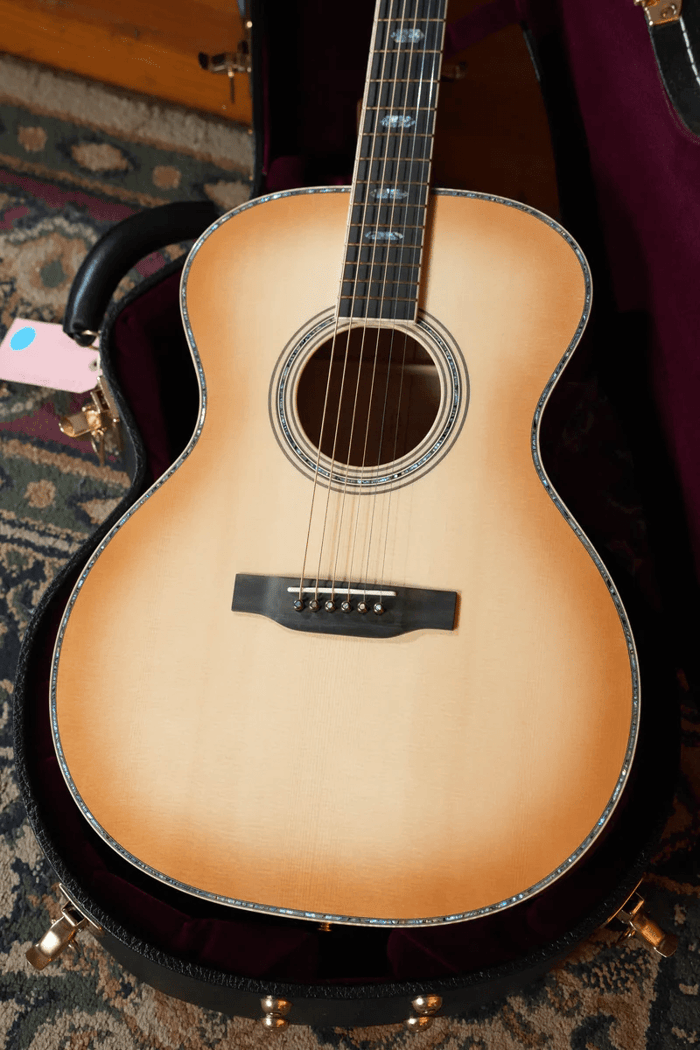
If you find yourself stuck in the Dreadnought vs. OM deadlock, there are hybrid shapes to consider. Many manufacturers offer "Grand Auditorium" or "0000" (M-size) guitars. These often feature the width of a Dreadnought but the tighter waist and thinner depth of an OM. However, for most purists, the choice remains between the two titans of the industry.
Before making a final decision, it is also worth choosing the Right Scale Length, as some 000 models (which look like OMs) feature a shorter scale that reduces string tension, making them even easier to play than a standard OM.
Frequently Asked Questions about Guitar Shapes
Can I play bluegrass on an OM?
While it is certainly possible, you may struggle to be heard over banjos and fiddles in an unamplified setting. The Dreadnought is the industry standard for bluegrass specifically for its ability to compete in volume. However, for solo bluegrass practice at home, an OM is a fantastic, comfortable alternative.
Is a 000 the same as an OM?
They share the same body silhouette, but there are key differences. An OM typically has a longer scale length (25.4") and a wider nut width (1 3/4"), whereas a 000 often features a short scale (24.9") and sometimes a narrower nut. The OM provides more string tension and "punch," while the 000 is softer and easier on the fingers.
Which Shape Will Inspire You to Play More?
Ultimately, the Dreadnought vs. OM debate ends with your personal comfort. A guitar that sounds like a cannon is useless if it causes you shoulder pain after twenty minutes of playing. Conversely, a comfortable OM won't satisfy you if you're constantly digging in and wishing for more bass response. We always recommend sitting down with both. Put them on your knee, play your favorite licks, and listen to how the guitar responds to your touch.
Ready to find your perfect fit? Whether you prefer the rumble of a big body or the precision of a small one, we have the instrument for you. Visit us at The Acoustic Shoppe to A/B these shapes in person!
Shop our full collection of Dreadnought and OM instruments now!
Explore More Resources:
Acoustic Shoppe FAQ
Which guitar shape is better for smaller players?
The OM (Orchestra Model) is generally better for smaller players or those who play while seated, as its tighter waist and shallower body depth make it more ergonomic and comfortable than the larger Dreadnought.
Does a Dreadnought always have more bass than an OM?
Generally, yes; the larger internal air volume of a Dreadnought naturally produces more low-end "thump" and resonance compared to the more balanced, mid-range focused tone of an OM.
Which body style is best for recording in a studio?
Many engineers prefer the OM for recording because its balanced EQ and lack of overwhelming bass make it easier to mix, whereas a Dreadnought may require more post-production to manage low-end "mud".
Can you use an OM guitar for heavy strumming?
While you can strum an OM, it has less "headroom" than a Dreadnought. Heavy strumming on an OM may cause the sound to compress or distort, while a Dreadnought is designed to handle a more aggressive right-hand technique.
Why do bluegrass players prefer Dreadnought guitars?
Bluegrass players prioritize the Dreadnought for its massive volume and projection, which allows the guitar to be heard clearly alongside loud instruments like the banjo and fiddle.
Is the scale length the same on both models?
Typically, both standard Dreadnoughts and OMs feature a long scale length (25.4"), which provides higher string tension and more "punch" compared to short-scale models like the 000.
Which shape is better for fingerstyle guitar?
The OM is the gold standard for fingerstyle because its smaller top is more responsive to a light touch, and its balanced note separation ensures each fingerpicked note is clear and articulate.